Please note that the FactCheckHub has not obtained any right from the authors or copyright owners of all third-party contents from embedded links and shall incur no liability in this regard.
The Senior Special Assistant to Governor Kayode Fayemi on Public-Private Partnerships, Bunmi Bello, has said the gubernatorial election held in Ekiti state recorded no incidence of vote-buying.
She disclosed this on Saturday, June 18, 2022, during an interview with Arise News correspondent, Oba Adeoye, at a polling unit in Ido-Osi Local Government Area of the state and monitored live on the television channel amidst the ongoing governorship election.
When asked to respond to the allegation of voters’ inducement earlier made by Segun Oni, the Social Democratic Party (SDP) candidate in the election, Fayemi’s aide described the claim as a mere allegation, insisting there was no such incident.
“It is an allegation. You don’t have proof. Anybody can just wake up and say they are buying votes there,” Bello stated during the interview.
“You cannot buy votes where I am against my party. All their agents are there. There is no way that could have been possible. There is awareness, and they have party agents. Everybody is on the ground.
“In the town, everywhere is calm. So, there is nothing like vote-buying,” she added.
Fayemi, the outgoing Governor of Ekiti State on the platform of the All Progressives Congress (APC), had described the electoral process as peaceful when he spoke to journalists.
CLAIM
That there was nothing like vote-buying in the 2022 Ekiti state governorship election.
THE FINDINGS
Findings by The FactCheckHub show that the claim is FALSE.
Checks revealed that several incidents of vote-buying were reported at different polling units while the voting exercise was ongoing in parts of Ekiti state on Saturday.
Agents of APC, the ruling party in the state, were seen inducing voters with cash and online transfer in Oye-Ekiti, Ado-Ekiti and Emure LGA, The ICIRreported.
Similarly, media observers from different local governments in the state, in a statement, collectively decried the alarming rate of vote-buying during the governorship election in the state.
THE VERDICT
The claim by Bunmi Bello that there was nothing like vote-buying in the 2022 Ekiti governorship election is FALSE; media reports confirmed that there were cases of voters’ inducement during the poll.
VIRAL social media posts have circulated that the governorship candidate of the Action Democratic Party (ADP), Erelu Kemi Elebute-Halle, has stepped down for a rival, Segun Oni at the ongoing governorship election in Ekiti State.
Oni is the governorship candidate of the Social Democratic Party (SDP) in the state.
A Facebook user, Ayodeji Ogunleye Maliki, first posted the claim with a caption: “BREAKING NEWS
“ERELU KEMI ELEBUTE STEP DOWN FOR SDP CANDIDATE, DIRECTS HIS FOLLOWERS ACROSS THE STATE TO VOTE FOR ENGINEER SEGUN ONI.”
The claim has surfaced here and here on Facebook with multiple reactions.
CLAIM
Kemi Elebute has stepped down for the SDP candidate and directed her followers to vote Segun Oni.
The viral false claim on Facebook.
THE FINDINGS
Findings by The FactCheckHub show that the claim is FALSE.
Checks by The FactCheckHub show that the governorship candidate of the ADP, Kemi Elebute-Halle had debunked the claim in a tweet obtained from her Twitter handle, @EreluKemiHalle.
The Cable newspaper also reported that Elebute-Halle cast her vote earlier today at the polling unit eight, ward 10 of Ikole LGA in Ekiti state, and did not make any statement about stepping down.
THE VERDICT
The claim that the ADP governorship candidate, Erelu Kemi Elebute-Halle, has stepped down for the SDP governorship candidate, Segun Oni, is FALSE.
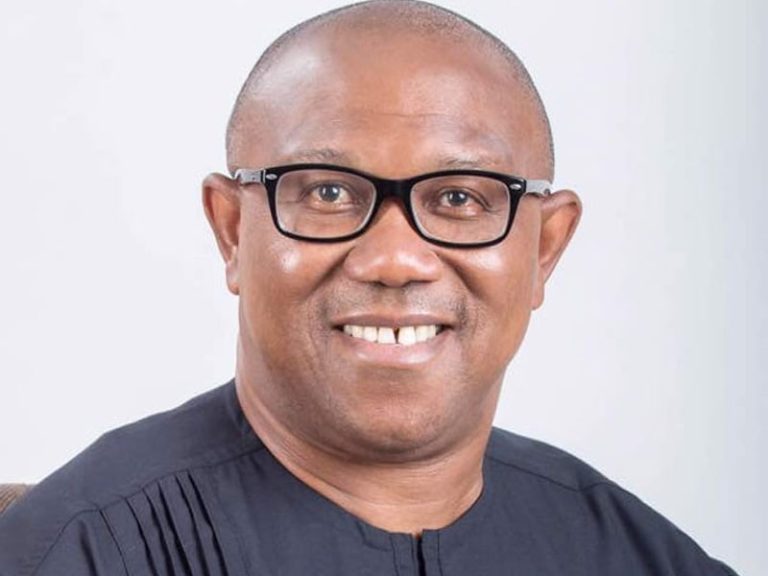
CLAIM: That Peter Obi shared money ‘in appreciation of our loyal supporters in #EkitiDecides2022’.
VERDICT: A Google Reverse Image Search of the image revealed that the photo has been online since 2017. It has been published by several news blogs including Legit.ng and The Herald. Thus, the claim is MISLEADING.
CLAIM: The Senior Special Assistant to Governor Kayode Fayemi on Public-Private Partnerships, Bunmi Bello, said that there was nothing like vote-buying in the 2022 Ekiti state governorship election.
VERDICT: Agents of the All Progressives Congress (APC) in the state were seen inducing voters with cash and online transfer in Oye-Ekiti, Ado-Ekiti and Emure LGA, The ICIRreported.
Also, media observers from different local governments in the state decried the alarming rate of vote-buying during the state’s governorship election. Thus, the claim is FALSE.
CLAIM: Kemi Elebute has stepped down for the SDP candidate and directed her followers to vote Segun Oni.
VERDICT: Kemi Elebute-Halle has debunked the claim via her Twitter handle. Also, a media report published by The Cable shows that she cast her vote in Ekiti earlier today. Thus, the claim is FALSE.
A VIRAL claim on the internet says Segun Oni, the candidate of the Social Democratic Party (SDP) in the ongoing Ekiti governorship election, holding today, has withdrawn from the gubernatorial race.
The claim alleged that the former party chieftain of the Peoples Democratic Party (PDP) had aligned his support for the PDP candidate, Bisi Kolawole.
It came in a two-page letter dated Friday, June 17, 2022 and was purportedly sent from Oni’s Office as well as signed by him.
Oni, who was a former governor of the state, had on February 5, 2022, announced his defection from the PDP to the SDP and his intention to participate in the governorship election of Ekiti state.
The letter (archived here) which was retrieved from a Twitter user “Alpha male-74” with the username, @OtuBamArujeje has been widely circulated on Twitter and generated reactions from the early hours of Saturday’s election.
This false claim circulated on Twitter early Saturday.
Attached with it is a caption that reads, ” Segun Oni withdraw from #EkitiDecides2022 race”.
CLAIM
“Segun Oni withdraws from Ekiti governorship race, declares support for PDP candidate, Bisi Kolawole”.
In a disclaimer issued by the Spokesperson of the SDP in Ekiti state, Gani Salau, it reaffirmed Oni’s active participation in the governorship race, stressing that the former governor has not withdrawn nor declared support for any other candidate.
“The letter is a figment of the imagination of the opposition,” he told The Cable Newspaper.
“Segun Oni is not withdrawing. How can he withdraw on the day of the election? It is the work of the opposition. We are on the verge of victory, and we are going to triumph. It is unfortunate that such a letter is being circulated,” he noted.
Other media organizations such as Daily Trust and The Sun have also reported the dismissal of the claim from the Ekiti Chapter of the Social Democratic Party.
Similarly, the House of Assembly candidate, Babajide Akomolafe, who is contesting under the platform of the SDP, also dismissed the claim via a telephone conversation with The FactCheckHub.
“It’s a lie. He has not withdrawn,” he said.
“I have also spoken with Dare Bejide, his campaign Director-General. It’s not true,” he reaffirmed.
THE VERDICT
Based on available public records, the claim that Segun Oni withdrew from the Ekiti governorship race and declared support for the PDP candidate, Bisi Kolawole, is FALSE.
THE Indigenous People of Biafra (IPOB), a separatist group in Nigeria, is pushing for the establishment of a sovereign state for the people of the south-east extraction.
The group’s motivation to exit the Nigerian federation is due to years of perceived marginalisation. The claims of disenfranchisement partly stem from political appointments and developments since the end of the civil war in 1970.
The Biafra secessionist movement was first championed by the late Odumegwu Ojukwu, the military governor of the Eastern region who served between 1966 and 1967. The call for secession led to a civil war between Biafra and Nigeria spanning about three years. No less than a million Igbos lost their lives during the war, with the Nigerian government emerging victorious.
In 1999, the agitation for secession was taken over by the Movement for the Actualisation of the Sovereign State of Biafra (MASSOB), another entity from the southeast, led by Ralph Uwazuruike.
In 2012, IPOB was founded by Nnamdi Kanu, emerging as a prominent group seeking the actualisation of Biafra.
The separatist’s campaign for secession peaked when President Muhammadu Buhari came into power in 2015. The Buhari-led administration has been accused of being “hostile” towards the southeast region.
Nnamdi Kanu.
The group, on many occasions, has accused the federal government of plans to wipe out Igbos through military operations in the region. Kanu has also repeatedly criticised the federal government for refusing to hold a national referendum to determine the country’s future.
CONFLICT BETWEEN IPOB AND THE NIGERIAN GOVERNMENT
IPOB resorted to threats to election boycott and violence to push for a referendum on Biafra. These threats pitched the group against the Nigerian government, which accused them of trying to cause division in the country.
Consequently, Kanu was arrested in 2015 on a six-count charge bordering on treasonable felony, managing an unlawful society, publication of defamatory matter, illegal possession of firearms, and improper importation of goods.
He was charged alongside two other IPOB members, Benjamin Madubugwu and David Nwawuisi. But on 9 November 2016, the charges were amended to 11 counts with the inclusion of treason and some other offences. However, a federal high court in Abuja revoked six out of the eleven-count charges in 2017.
He was detained for over a year and released on bail in April 2017 for health reasons.
Kanu’s bail was on the condition that he must not hold rallies, must not grant interviews, must not be in a crowd of more than ten people, and must provide three sureties in the sum of N100 million each. He was also asked to deposit his Nigerian and British passports with the court and provide reports on his health and treatment progress monthly.
However, he jumped bail in September 2017 after going into hiding during a military operation in the southeast, where his country home in Abia was invaded.
An IPOB protester waves a Biafran flag.
Kanu was later sighted in Israel in 2018, where he had threatened to return to Nigeria “with hell”. As a result of his continued absence in court, his bail was revoked by an Abuja federal court with an arrest warrant issued against him.
FORMATION OF EASTERN SECURITY NETWORK (ESN)
Kanu was resolute in his castigation of the Nigerian government, and his followers had also increased in his absence. At the same time, the agitation continued to grow stronger.
In December 2020, the group launched its security outfit dubbed the Eastern Security Network (ESN), thereby undermining the state apparatus. Kanu said ESN was formed to combat terrorism on Biafraland and protect southeasterners from “criminal activities”.
The IPOB leader maintained that the failure of southeast governors to secure the lives and property of Igbo people led to the formation of the security network. However, after establishing the group, there was a spike in attacks against security and government infrastructure in the region.
The police have repeatedly linked the attacks to IPOB, but the group has denied involvement in any violent attacks. IPOB, in turn, accused the Nigerian government of sponsoring the suspects to wreak havoc in the southeast and pin the deeds on its members.
The group alleged that members had been victims of the extra-judicial killings leading to the deaths of over 20,000 members by the Nigerian security agencies.
LEVERAGING SOCIAL MEDIA
As part of its campaign against the Nigerian government, IPOB has deployed disinformation to drive its secessionist agenda. Radio Biafra was established to further this campaign, reaching its supporters within and outside Nigeria. In some of its messages, the group refers to the country as “a zoo” and “animal kingdom”.
One of the false claims circulating on social media by pro-Biafra supporters.
The group also leverages social media platforms to whip up sentiments against the government and its critics with the goal of garnering sympathy from the public. Social media has also presented opportunities for misinformation to spread fast and reach a wider audience; hence, a large percentage of IPOB followers are found on different platforms, consistently sharing and spreading their ideologies and, most times, fake news.
There is ample evidence of manipulation of public discourse and general public opinion. IPOB has a Facebook and Twitter accounts network that regurgitates what a central authority dishes out. There are also individual accounts and groups dedicated to its cause on social media. Their propaganda is a continuum built upon small pieces of information in public and adds their twist to yield a certain slant that suits their narratives.
Many of the accounts post the same contents; the initial post originates from an account, and the others spread and amplify them within a short period. Also, most accounts have the same profile picture – mostly that of Kanu in Igbo traditional attire.
A large IPOB diaspora also shares the group’s disinformation in other countries. The group has also employed the services of an American lobbying firm, BW Global Group, to help promote IPOB to achieve its secession objective. The one-year deal took effect from March 1, 2021, and cost Kanu and IPOB $750,000.
DISINFORMATION CAMPAIGN
To drive home its agenda, IPOB has over the years shared fake reports of world leaders supporting the Biafra agenda. Fabricated and altered texts accompanied with images of the world leaders are shared on social media, so as to create the impression that they identify with the movement.
One such post was titled “Russia warns Nigeria about Biafra”. The post shared on Facebook claimed that Russian President Vladimir Putin warned that Nigeria would not have peace unless it granted the demands of Biafrans. The post was shared by one Anyaeche Chukwuma.
Screenshots of the alleged claim.
The post garnered 96 shares. Some of the accounts that shared the post were Biafra-affiliated groups, including Biafra News Today. An online search showed that the post was first uploaded by an account of Obinna Felix Attah in March 2021.
In January 2021, a post by African Voice TV (archived here) claimed that Ivory Coast president Alassane Ouattara had asked the UN to declare Nigeria as an independent state. The report was shared and retweeted by IPOB-affiliated pages.
Screenshot of the alleged statement by the Ivorian President.
Another report, “India PM asks Nigeria to pay attention to Biafra,” by African Voice Network, (archived here) claimed that India’s Prime Minister Narendra Modi had also declared his support for IPOB at a session of the UN General Assembly.
IPOB-affiliated groups retweeted the claim, but it was found that the date and time where the Indian PM purportedly made the remark was not mentioned. Past speeches delivered by the Indian PM at sessions of the UN general assembly were also reviewed, and none referred to the secessionist group.
This false claim was re-shared by IPOB supporters multiple times.
The post was also shared on several blogs and on YouTube.
Elsewhere, another post claimed that former president Olusegun Obasanjo shared his admiration for Nnamdi Kanu in 2021. The former president of Nigeria allegedly admired Kanu’s resilience.
The false claim attributed to former Nigerian President, Olusegun Obasanjo.
Another viral post on Twitter, in February 2022, was also attributed to the former Nigerian president.
Another false claim attributed to Obasanjo.
But Obasanjo has since denied the statements.
The group also capitalised on President Muhammadu Buhari’s medical vacation to the UK in 2016 by claiming that he was dead. The posts alleged that in the absence of Buhari, Nigeria was under the leadership of one Jubrin from Sudan. Nnamdi Kanu first peddled the rumour with various pictures and video contents to back the claim, which has been proved to be false.
The false claim on President Buhari’s health.
He also made use of live Facebook broadcasts and videos to promote the claim.
A viral post also accused the Nigerian government of mislabelling IPOB members as terrorists. The post was attributed to Chris Smith, a United States House of Representatives member. Although Smith, in 2018, expressed concern about reports of the harassment of opposition leaders in Nigeria during the 2019 general election, the US lawmaker was, however, not quoted to have made the purported claim.
A few other unverified claims against people seen as anti-Biafra, which have been shared many times, have been archived here.
A common factor with all the fabricated posts was no mention of the date or venue where the world leaders purportedly made the statements. Also, no credible news medium in the country reported them.
USE OF ALTERED IMAGES
Additionally, popular Igbo Nigerian personalities have been depicted as supporting the Biafran struggle by wearing the group’s paraphernalia. These images are largely edited and misleading.
Altered Image of Nyesom Wike, Rivers state governor, in Biafran attire vs real image shared as far back as 2018.Reverse Image search shows this image of Ifeanyi Ugwuanyi of Enugu state has been shared in an article by Daily Post in 2018.Altered omage of Okezie Ikpeazu, governor of Abia state, wearing Biafra clothing vs original image.
COORDINATED MESSAGES ACROSS MULTIPLE SOCIAL MEDIA PAGES
Several pages are also dedicated to posting disinformation content about Biafra. Three of the accounts, Biafra Newspaper, Eastern Breaking News, and Biafran Update, are not run from Nigeria. The top locations are the UK, Turkey, and one account from Equatorial Guinea.
Another popular narrative that has been shared by Biafra-related pages since the Russian invasion of Ukraine states that “Russia never had black slaves”.
Different pages have shared this message in different groups since the invasion. It states that Russia did not colonise any African country or enslave black people. The first publicly available post with this message was posted on Ntemfacofege (a public group run from Cameroon) on February 26, 2022, before making its way to Biafran pages.
Screenshots of posts saying Russia did not colonise Africa.
The statement was attributed to ‘Benjamin Ayok Bitrus’
The posts on Russia appeared to have been shared to buttress IPOB’s claim that Russia supports Biafra and that the West is against the secessionist agenda.
Between March 6 and 7, 2022, a memo allegedly from the management of the Federal University Dutsinma (FUDMA) was syndicated by accounts in the Biafra watch list. The memo reportedly banned Christians from Sunday Service and gave directives for Christian activities to be held on Tuesdays and Thursdays between 6 pm and 7 pm. But the memo was later debunked by the school management.
One of the false claims circulating on social media by pro-Biafra supporters.
A group of accounts also shared the same message and images on Twitter. The major actors in this network were @BiafranTweets which was retweeted by 289 accounts, followed by @stancity44 and@BIAFRAEzinne.
An IPOB page, Radio Biafra Freedom, also shared a video discussing the insecurity in Nigeria with a misleading caption claiming that the Nigerian government is sending money to support Ukraine against Russia.
The information is not verifiable, although the Nigerian government blocked its citizens from being recruited into the war. This same account shared content surrounding the Nigerian civil war. It ended this post by calling Russia’s invasion an act of self-defence against colonisation by NATO.
Screenshot of misinformation shared by pages
Biafra-affiliated pages have also claimed that the UK is in recession and has to make deals with the Middle East and Nigeria to tackle its fuel crisis. This information has been debunked by independent fact-checkers from Africa Check. This misinformation was first shared by Carol Monday, a Facebook user.
HOW DISINFORMATION AFFECTS NIGERIA
The ever-increasing calls for secession have been threatening Nigeria’s unity and affecting the economy of the southeast. The disinformation campaign employed by IPOB has worsened the ethnoreligious division in the country and caused more insecurity in the affected zone. Anyone who speaks in support of the Nigerian government or against the group is categorised as anti-Biafra and faces criticism from the secessionists.
Employing this narrative, the group has been able to get young men in the southeast to attack government institutions like police stations, security checkpoints, and INEC offices and facilitate jailbreaks. The propaganda leads to what the media fears may become an insurgency in the region. The federal government has also not relented in its crackdown on the group.
In December 2020, Nigeria was listed among countries that violate religious freedom by the United States. The Federal Government of Nigeria had attributed this to the “misleading” campaign against it by IPOB. The presidency accused IPOB of paying American lobbyists to “spread falsehood” about Nigeria. The country was eventually removed from the list.
Also, part of the tools used by the group to show its blatant disregard for the Nigerian authority is the sit-at-home order. The order was employed to add pressure to their quest to actualise an independent nation of Biafra.
The sit-at-home order was first introduced to acknowledge Biafra heroes who died in the Nigeria-Biafra War. But it was later extended to days when Nnamdi Kanu was to appear in court for his trial. The order also became a tool to wield control over the region. Those who do not comply are forcefully dealt with.
The sit-at-home order was suspended in early 2022, but some parts of the region have continued to observe the IPOB-led directive out of fear– which further affects business activities in the area.
On democratic processes, in 2017, the group warned that it would not allow governorship polls in Anambra state. It also threatened to boycott the 2019 elections. But it later relented its stance. But the fear of the group has caused a growing voter apathy during elections in the zone.
However, Emma Powerful, IPOB spokesman, denied that the group uses disinformation to advance its secessionist agenda.
Powerful said the group does not associate itself with rumour-mongers and is not affiliated with accounts that share fake news.
“The point is that not every profile you see Nnamdi Kanu’s picture means they support Biafra. Some of them are enemies, working with the government, the DSS, so that people can be thinking that they are real Biafra platforms.
“We know those in support of Biafra and those trying to cause confusion in the name of IPOB. Most of the information you see on social media, some of them are not real. We know what we are passing through. They are blackmailers,” Powerful said.
Screenshot of misinformation shared pro-Biafra group on YouTube.
On posts shared by Nnamdi Kanu, which have been flagged as fake, the IPOB spokesperson insisted their leader had no reason to lie but only to speak the truth.
“It is not supposed to be hard to understand the real ones and real news unless you are a double-standard person; someone that doesn’t like IPOB. As I told you, so many people use Nnamdi Kanu’s pictures to propagate their fake news so that people may think they are real,” he said.
“IPOB has platforms like Radio Biafra and IPOB community radio that is real. But these DSS people use some of these accounts to deceive the public.”
On allegations that IPOB is behind the increasing violence in the southeast, Powerful maintained that the group is made up of peaceful individuals.
“We protect our people, our women in the forest, in the bushes, and every other place. Those people are our enemies and they cannot change our narrative. We are not deterred. We know what we are looking at and we are going to get it,” he said.
But despite Powerful’s rebuttal, the disinformation propagated by pro-IPOB groups has not in any way reduced.
As Nigeria prepares for the 2023 elections, more false stories against the Nigerian government are still being churned out by supporters of the group — particularly news on how the Fulanis, allegedly backed by the government, are gearing towards subjugating other ethnic groups through the imposition of their candidate in the forthcoming election.
EDITOR’S NOTE:
In the fourth paragraph, we erroneously referred to Uchenna Madu as the MASSOB leader. The MASSOB group was led by Ralph Uwazuruike.
IN his nationwide broadcast on Sunday, 12th of June 2022 in commemoration of the 2022 Democracy Day, Nigeria’s President Muhammadu Buhari said recent primary elections conducted by political parties in the country for the 2023 general elections were peaceful and orderly.
In his speech live-streamed on Channels TV, Buhari noted that he arrived at the conclusion having followed the primary elections from the state level to the presidential level.
“Recently, all registered political parties conducted primaries to select their candidates for the 2023 general elections.
“These primaries were peaceful and orderly. Those who won were magnanimous in their victories,” Buhari said.
He added: “I followed the party primaries closely from the state level to the Presidential level. I was very impressed to see across all the political parties that most candidates ran issued-based campaigns. The language and tone throughout were on the whole measured and controlled.”
Political parties in Nigeria conducted their primary elections recently to select their flagbearers for the forthcoming 2023 general election following the directive of the Independent National Electoral Commission (INEC) to conclude the processes by June 9, 2022.
The 2022 Democracy Day is Buhari’s last as the nation’s president as he leaves office on May 29, 2023.
But how true is Buhari’s claim?
Checks by TheFactCheckHub show that the president’s claim that primary elections of political parties at all levels were peaceful and orderly is MOSTLY FALSE.
Even though the primary elections were peacefully conducted in some parts of the country, findings by The FactCheckHub show that the processes were marred by political thuggery, killings, stealing of ballots, and other forms of violence in several instances.
Violence was witnessed especially during the primary elections by some chapters of the ruling All Progressives Congress (APC), the party that the president himself belongs to, and the main opposition party, the Peoples Democratic Party (PDP).
Infographic showing Nigerian states that recorded violence during 2022 primary elections. CREDITS: The ICIR.
Findings by TheFactCheckHub from credible media reports show that cases of violence were reported in no fewer than nine states and at least, five cases of fatality were recorded during the exercises:
1. Lagos: Lives lost, voters chased away
Media reportsconfirmed that armed thugs disrupted the House of Assembly primary election of the APC held in the Alimosho area of Lagos state.
It was reported that armed political thugs clashed and used dangerous weapons including guns, cutlasses, knives and bottles, to fight and chase people away during the primaries.
Delegates, party faithful, electoral officers, and security personnel were whisked out of the election premises following the outbreak of the violence which marred the election process.
It was reported that hoodlums took to the major road firing gunshots, disrupting vehicular and pedestrian movement, while shops and residentials around the area were locked up immediately.
According to a Daily Trust report, no fewer than two persons were confirmed dead after the announcement of the results.
2. Ondo: Ballot stealing
Cases of violence were also reported during the House of Representatives’ primary election of the APC in some federal constituencies in Ondo State, the Vanguard newspaper reported.
It was reported that thugs disrupted the election in Akure South/Akure North Federal Constituency by chasing away the delegates and the electoral officers at the scene.
It was also reported that political thugs forcefully gained entrance into the hall, beat the security at the entrance, and carted away the ballot box from the agents during the election.
Thisday newspaper also reported that gunshots were fired at the venue of the primary election of the party.
3. Oyo: Journalists were teargassed
The Guardian reported that violence occurred at the House of Representatives and State Assembly primaries conducted by the Oyo State chapter of the PDP.
Some voters claimed they were chased out of the venue of the primary election and cases of alleged use of force and intimidation were also reported by the media.
Similarly, the Vanguardreported that policemen fired teargas at journalists at the venue of the governorship primaries of the PDP in the state.
4. Nassarawa: Angry youths disrupted poll
Hundreds of angry youths disrupted the Nasarawa West senatorial primary of the APC held in Keffi LGA of the state, Daily Trust reported.
The national daily reported that violence erupted at the venue of the primary election following alleged alteration of the delegates’ list by the national body of the party.
A correspondent of the medium who was at the scene reported that gunshots rented the air after the youths had a confrontation with security personnel.
5. Ekiti: Violence halted exercise
The APC House of Representatives primary election for Ekiti Central Federal Constituency II conducted on the 27th of May, 2022 was declared inconclusive following violent disruption of the exercise, The Punch reported.
The election was disrupted by political thugs while the Electoral Officer, Akin Alebiosu, had his head smashed with stone and planks during the incident.
6. Abia: Violence disrupts Senatorial primary
Violence was also recorded during the PDP primary election for Abia North Senatorial District held on the 25th of May, 2022, the PM NEWS reported.
7. Bayelsa: One life lost
In Bayelsa state, the primary election exercise of the PDP turned violent at Constituency One in the Ogbia Local Government Area.
A man identified as Michael Isaiah, nicknamed ‘Tompolo’, was shot dead during the incident, Thisday newspaper reported.
The violence followed an argument over the authenticity of the delegates’ list by the party members.
8. Cross River: 2 people died, Policemen were shot
One person was allegedly shot dead, and some cops were injured during a clash between suspected hoodlums and some policemen at the venue of the Akpabuyo/Bakassi/Calabar South Federal Constituency primary election of the APC, The Punch reported.
Earlier before the incident, a policeman had been killed during the House of Representatives’ primary of the PDP in the state. The policeman was identified as Martins Mbang, The Punch also reported.
Thugs invaded the venue of the primary election conducted by the APC to elect a candidate for the Kaduna North senatorial district, The Cablereported.
Following the invasion of the venue, cameras and other electronic gadgets of some journalists covering the event were seized.
THE VERDICT
The claim by President Buhari that the primary elections were peaceful and orderly is MOSTLY FALSE. Findings show that cases of violence during the primaries conducted by political parties, especially that of the PDP and APC claimed the lives of no fewer than five people. Stealing of ballots, firing of gunshots, and thuggery among other violent disruptions were also reported.
KOGI State Governor, Yahaya Bello, has claimed that there has been no strike action in the state-owned tertiary institutions since he became the governor in 2016.
He made the claim on the 7th of June 2022 while canvassing for delegates’ support at the just-concluded All Progressives Congress (APC) convention held in Abuja.
“Distinguished ladies and gentlemen, today, we have a lot of our students from various tertiary institutions at home; they are not in the school. Their future is being toiled with. When I assumed office in Kogi state, six years down the line, no strike of any sort are existing in Kogi state,” Bello told the delegates at the event live-streamed on Arise News TV.
He was sworn in as the governor of Kogi State in January 2016 for a four-year term. He assumed office again on the 27th of January 2020, after winning his return election for a second term.
Bello was one of the presidential aspirants under the platform of the APC who lost to the now declared presidential candidate of the party, Bola Ahmed Tinubu, The ICIRreported.
CLAIM
“When I assumed office in Kogi state, six years down the line, no strike of any sort are existing in Kogi state,” Bello claimed.
THE FINDINGS
Findings by The FactCheckHub show that the claim is FALSE.
In July 2016, a few months after Bello became the state governor, academic and non-academic activities at the Kogi State Polytechnic, Lokoja were paralysed as the two unions in the institution joined the ongoing strike called by the organised labour in the state, the Nigerian Tribunereported.
The unions involved were the Academic Staff Union of Polytechnics (ASUP) and the Non-Academic Staff Union (NASU), Kogi Poly chapter.
Checks by The FactCheckHub also show that in 2017, academic and non-academic staff unions of Kogi state-owned tertiary institutions went on a 5-month strike.
The tertiary institutions namely; Kogi State University Ayingba, Kogi State Polytechnic Lokoja, College of Education Ankpa, College of Education (Technical) Kabba, and College of Nursing Obangede, were all affected by the strike action.
The strike which commenced on the 31st of January 2017, ended on the 21st of June 2017 after the Chairman, Joint Action Committee of the tertiary institutions, Moses Balogun, announced the suspension of the strike action, following an agreement reached with the Bello-led state government, The Guardian newspaper reported.
Further findings revealed that the Kogi State Polytechnic Lokoja chapter of the ASUP also embarked on an indefinite strike over the non-payment of salaries on September 11, 2017, Daily Trustreported.
THE VERDICT
The claim that Kogi state-owned tertiary institutions have never been on strike since Yahaya Bello assumed office as the state governor is FALSE; available public records show that there have been at least three strike actions embarked upon by the tertiary institutions in the last six years.
THE National Information Technology Development Agency (NITDA) has issued a Code of Practice for interactive computer service platforms like Twitter, WhatsApp, Facebook, Tik Tok and others.
In a statement issued on Monday, Hadiza Umar, NITDA’s head of corporate affairs and external relations said the code of practice is intended to guide the operations of interactive computer service platforms/internet intermediaries.
The federal agency said the code was developed with input received from online platforms including Twitter, Facebook, WhatsApp, Instagram, and Google, among others.
The code of practice, according to the agency, will hold online platforms accountable for unlawful and harmful information on their platforms.
The development is a fresh move by the Nigerian government to regulate online platforms amid concerns that the President Muhammadu Buhari-led administration is clamping down on free speech and internet freedom — a move which the government has denied.
As part of the conditions, internet platforms must register with the Corporate Affairs Commission (CAC), comply with appropriate taxation policies, and avoid prohibited content.
The regulations also include policies on pornography as well as issues around cybercrime.
“Abide by Nigerian laws and not deploy or modify their Platform in any way that will undermine or interfere with the application and/or enforcement of the law,” the document reads.
“Act expeditiously upon receiving a Court order directing a Platform to provide any information under its domain or any assistance to any authorized government agency for the purpose of carrying out an investigation, combating cybercrimes, or prosecuting an offence.
“Act expeditiously upon receiving a notice from a user, or an authorised government agency of the presence of unlawful content on its Platform.
“A Platform must acknowledge the receipt of the complaint and take down the content within 24 hours.
“Act expeditiously to remove, disable, or block access to non-consensual content that exposes a person’s private areas, full or partial nudity, sexual act, deepfake, or revenge porn, where such content is targeted to harass, disrepute, or intimidate an individual. A Platform must acknowledge the receipt of the complaint and take down the content within 24 hours,” it added.
Online platforms are also expected to “prioritise authentic information in search, feeds, or other distribution channels; trace, expose, penalise, and close accounts and sources that amplify disinformation and misinformation”.
NITDA added that the federal government is committed towards ensuring that Nigeria fully harnesses the “potentials of the digital economy and safeguard the security and interest of its citizens in the digital ecosystem”.
According to the agency, the code of practice “shall come into effect on the date issued by NITDA”.
On the 9th of June, 2022, a Facebook user identified simply as Saint Luke posted in a group named “UDUS Newsline” a claim that tertiary institutions will resume academic calendar as the Academic Staff Union of Universities (ASUU) in Nigeria will end its ongoing national strike embarked upon by the union across the country since March 2022.
“School will resume on Monday,” he wrote on the Facebook group page.
The UDUS Newsline group page on Facebook has over 68,000 members.
The post, within a day, had garnered over 200 likes and 40 comments from members of the group.
A screenshot of the Facebook post.
But findings by TheFactCheckHub revealed that the claim is FALSE.
Available public records show that the association is still in negotiations with the Nigerian government and yet to declare an end to its strike action.
The PUNCH on Monday, 13th of June, 2022 reported that the Federal Government of Nigeria through its Prof Nimi Briggs-led committee has resumed talks with representatives of unions in the nation’s universities.
It further reported that its investigations revealed that the committee would meet Academic Staff Union of Universities on Monday (today) while the Joint Action Committee of the Senior Staff Association of Nigerian Universities, and the Non-Academic Staff Union of Educational and allied institutions would have their meeting on Friday.
“We are meeting the FG committee in Abuja on Monday,” a source in ASUU said.
ASUU’s National President, Professor Emmanuel Osodeke, in an interview, also told The PUNCH that meetings would resume this week.
“We are resuming the meeting this week and we have an invitation this week. The renegotiation meeting will only end if we have called off the strike.
“Since the strike is still on, the meeting cannot end. We do not have any problem with the committee. When we do, we will communicate with the committee,” he said.
AN IMAGE of President Muhammadu Buhari holding a placard with inscriptions canvassing support for Peter Obi, the Labour Party’s presidential candidate for Nigeria’s 2023 general election has surfaced online.
The viral image, retrieved from WhatsApp, shows Buhari holding a banner card with inscriptions that read:
“NIGERIANS NEEDS HELP.
VOTE PETER OBI 2023″
Obi, a former Governor of Anambra state, had earlier on March 24, 2022, declared his ambition to run for the Nigerian presidency in 2023 on the platform of the opposition Peoples Democratic Party (PDP).
Two months later, Obi announced his resignation and withdrawal from the PDP presidential primary and thereafter joined Labour Party (LP) where he eventually emerged as its presidential candidate for the 2023 election.
CLAIM
Image shows Buhari asking Nigerians to vote for Peter Obi in the 2023 election.
The viral fake image.
THE FINDINGS
Findings by The FactCheckHub show that the image is FALSE, as the original image has been altered.
The original image shows Buhari in September 2018 holding out his nomination form for the 2019 presidential election.
When the image was subjected to a Google Reverse Image Search, the results revealed that the original image shows when Buhari received the Expression of Interest and Nomination Forms from a socio-political group, known as the Nigerian Consolidation Ambassadors Network (NCAN) on September 11, 2018, ahead of Nigeria’s 2019 general elections, the Premium Times had reported.
Further checks show that the same image was posted on Nairaland on February 18, 2019, with an inscription that reads: “Nigeria needs help. Vote Atiku.”
A screenshot of the same image altered to canvass support for Atiku in February 2019.
Also, a check on Fotoforensics – an online tool for digital image analysis – revealed that the image was altered.
Image analysis shows that the photo has been altered.
Buhari, who is a member of the ruling All Progressives Congress (APC) had, in a statement on June 6, 2022 clarified that he had no preferred candidate, The ICIRreported.
He made this known ahead of the party’s presidential primary held in Abuja between June 6 to June 8, 2022, where Bola Ahmed Tinubu, a former Governor of Lagos State, emerged as its presidential candidate.
THE VERDICT
The claim that the image shows President Buhari asking Nigerians to vote for Peter Obi in the 2023 presidential election is FALSE; as checks show that the image has been altered.