Please note that the FactCheckHub has not obtained any right from the authors or copyright owners of all third-party contents from embedded links and shall incur no liability in this regard.
THE popular video-sharing app, TikTok, has announced additional policies after a report indicted its platform of exposing its users to misinformation.
Blake Chandlee, president of global business solutions for the short-form video platform, said in a blog post that he hopes these actions will help curb the misinformation that has been plaguing American democracy.
“As we have set out before, we want to continue to develop policies that foster and promote a positive environment that brings people together, not divide them,” Chandlee said in the post.
He added: “We do that currently by working to keep harmful misinformation off the platform, prohibiting political advertising, and connecting our community with authoritative information about elections.”
Chandlee said verification of politicians or government entities would be crucial to building trust with platform followers.
He noted that political advertising is already banned on TikTok, adding that the social media platform is “working to keep harmful misinformation off the platform.”
“Today, we are building on that approach by making a series of changes to government, politician, and political party accounts that we believe will help ensure TikTok remains a fun, positive and joyful experience,” he stated.
A report published by NewsGuard last week had showed that when a TikTok user searches the social media app for information on top news stories, ranging from Covid-19 vaccines to school shootings, nearly 20 per cent of the videos presented as search results contain misinformation.
Researchers at NewsGuard, a journalism and technology tool that tracks online information, searched TikTok and Google this month for information on major news topics such as the 2020 presidential election, the Russia-Ukraine war and abortion to compare the misinformation delivered by their search engines.
The report shows that TikTok’s users, who are predominantly teens and young adults, are consistently fed false and misleading claims when they search on TikTok for information about prominent news topics.
According to the report, a search on TikTok for information about politics, COVID-19, the Russia-Ukraine war, the 2022 U.S. midterm elections, abortion, and school shootings, among other topics in the news repeatedly delivered videos containing false claims in the first 20 results, often within the first five. Google, by comparison, provided higher-quality and less-polarizing results, with far less misinformation.
NewsGuard researchers also found that TikTok’s search engine “is consistently feeding millions of young users health misinformation, including some claims that could be dangerous to users’ health.”
The 2023 election fever has gripped many Nigerians, politicians and political parties alike. So also, the society, mainstream media, online blogs, and social media platforms have been so polarized in Nigeria.
“You’re either in my camp or against me”; that was the story of a Nigerian gender activist and journalist, Udeme Edoamaowo, who had an altercation with her friend of more than fifteen years on social media. The friend is a staunch supporter of one of the presidential candidates in Nigeria.
Recently, Udeme’s friend posted a statement that she considered to be too extreme and boom, the attack on her person.
According to Udeme, “I think all journalists should be politically neutral in order not to be biased during reportage, but I am surprised that some Nigerian journalists have clearly projected their candidates, even going extra mile to discredit other candidates and bully whoever has a contrary opinion”.
She narrated her encounter, “a colleague and friend whom I have known for over 15 years in journalism not only bullied but blocked me on Facebook because I condemned her post saying derogatory things and discrediting another candidate that was not hers. My advice was simple; there is life after the 2023 elections. Mind the way you discredit someone. She took it so personally; we argued for a while, and she ended up blocking me”.
“l was so amused because I am still wondering why the masses have never seen beyond their noses how fake these politicians are,” Udeme added.
She laid the blame on antagonistic conduct. “The masses are fooled into fighting and killing each other, but the politicians always have a common ground of meeting. None of them wants to lose out on money they spent before elections, so they always find a way to tag along the winner while we are here fighting and killing each other,” Udeme said.
In the last couple of months, caustic online political conversations have found their way to the mainstream media, thereby amplifying online narratives that are often divisive, ethnoreligious and full of hate speech.
The mindset of “if you’re not on my side or support my preferred candidate, you’re my enemy” amongst some journalists calls to question adherence to the ethics of the journalism profession.
The back page column published by the Nation newspaper with the title, “Obi-tuary”, a below-the-belt play on the surname of the presidential candidate of the Labour Party, Peter Obi, by a senior journalist, Sam Omatseye, is an example of online hate speech finding its way into mainstream media.
If journalists, under the guise of liberty to write, cannot tolerate the opinions of others, then the Nigerian media landscape will be more polarised before the general elections. This can trigger pre, D-day, and post-election violence.
Tolerance and the ability to allow people with opposing views to express their opinions are golden.
Dr Olunifesi Suraj, Associate Professor, Department of Mass Communication, University of Lagos, said the media is also not spared or immune from the stings of online hate.
According to him, “I have experienced online hate. I must tell you, it is devastating with some of us who preached about media and information literacy, and we are digital and media literate; the way I personally handle it I build resilience towards it. I know people who spread hate online have particular reasons for doing it.”
Dr Suraj added: “As a lecturer and somebody who criticizes government to put them on their toes, a public analyst and one who has a voice in the society, definitely some people are not going to like you for that and will not like what you stand for.
“They will do everything to run you down; use common things that people believe to run a smear campaign and blackmail you, and make you feel so bad in society. When such things come up, the majority of people are not media literate, and they believe whatever they read online.
“Another way is not to speak at all… you trying to defend yourself is like putting more petrol on the fire to burn. Online hate speakers want to provoke you to respond and make you react to their narratives. It is advisable to keep quiet sometimes. Defending yourself will not solve the problem, and it will not justify you because people have already made up their minds about what they want to believe, trend and say, because of economic reasons and the aims behind it, and just allow time to justify you.”
Ben Adoga is another Nigerian journalist that couldn’t withstand what he tagged ‘the poison of online hate speech.’ He had recently stayed off social media for years to regain his mental health, according to him.
He narrated his ordeal: “I experienced hate speech; it was massive just after the 2015 general elections as I was in the [Goodluck] Jonathan Campaign team. I only expressed my opinions on Facebook and other social media platforms during the campaign. But when Presidential Goodluck Jonathan lost, they swooped on me; they called me thief, rogue etc. So, if I post or respond to anything, they bullied me on Facebook. I decided to leave social media for two years.
“It affected my mental health; I felt humiliated, dejected, and lonely because I wasn’t interacting with the outside world as I left social media. Even now, I rarely post on Facebook due to the trauma and fear of online trolls,” Adoga said.
Online hate speech has been further exacerbated by Nigerian journalists who run such narratives on the mainstream media.
Dr Suraj counselled that as Nigeria heads to the 2023 general election, journalists should not heat the polity.
He insists that patriotic reporting in a way that puts Nigeria on the bigger picture, rather than serving the interest of any politician, must be their guiding principle.
The media scholar noted that Nigerian journalists should not allow “their economic interest” to sabotage the national interest and urged them to be fair and balanced in their reportage.
“We have some wrong people in journalism. People who do not abide by the ethics and principles of journalism. When those principles are compromised, we have a lopsided society. The society is a reflection of the journalism being practised.
“Journalists should know that we must first have a country before they can practice journalism. If there is no country, there’s nowhere you can practice,” Dr Suraj opined.
He insisted that journalists should ensure that society is well informed. He also lamented that some journalists in Nigeria act irresponsibly for pecuniary gain, emphasising that fact-checking information obtained from social media must be intensified.
This, he said, is to ensure that hate speech is curtailed, content is balanced, and objectivity is upheld in their reportage of the build-up to the general elections.
Online hate speech has affected and ruined the lives of not a few people.
And as Adoga, who has been a journalist for over 25 years, said, the freedom of speech and expression is being replaced with the fear of online trolling and hate speech.
He said when this is coming from professional colleagues, then it leaves a lot to be desired.
The campaign season gets underway in a few days, and the media landscape will get busier.
Dr Suraj said some factors such as media ownership and political affiliation would play a huge part in media programme content and reportage.
“The Nigerian media is not politically neutral. There is political affiliation by the media. The political news often carries political inclination. The polarization is also tilted towards religious affiliation and geographical affiliation.
“The media also pushes the candidacy (based on) from those areas of ethnic colouration, sentiments they agitate and advocate for. Generally, the media either online, social and mainstream are polarised along ethnicity, geographical distribution, religious sentiments and along ownership influences,” he noted.
Free speech devoid of hate speech towards colleagues and friends who hold opposing views and perspectives, either online or offline, is key to peaceful, rancour-free election.
* Joy Jaiyesimi can be reached via email: joyamazing18@gmail.com
FORMER Nigerian President, Goodluck Jonathan, has urged Nigerians to shun fake news, hate speech and propaganda ahead of the nation’s 2023 general election.
Jonathan made this remark on Tuesday at the second edition of the ‘peace conference’ organised by the Goodluck Jonathan Foundation with the theme: ‘Nation Building: The Role of Elections in a Multi-ethnic Context’.
The former president noted that hate speech, fake news and propaganda have been identified as the greatest threat to Nigeria’s democracy, and anybody who engages in any of these should be regarded as a threat, just like a gun.
Speaking at the event, the former president said he is very pleased to see that young people are interested in the nation and election matters.
He, however, said hate speech must be discouraged.
“Before this time, we were always afraid of guns as a threat to democracy. But the biggest threat to democracy now is the issue of propaganda, fake news and hate speech,” he said.
“Anybody that’s an advocate of this is a threat to democracy. Our young people should know that we should embrace good conduct that will lead to good elections.”
Speaking further, Jonathan said anybody interested in leadership has the responsibility of protecting the nation.
“We must first have a country before we talk about having a president. If we destroy a country, then we do not need a president,” he said.
THERE are more conversations about how to combat election disinformation and misinformation on social media, but there seems not to be a comparable effort for text messages.
What seems to be the biggest election disinformation event of this year’s midterm primaries in the United States played out through text messages, NBC News reported.
The night before Kansans were set to have a historic state-wide referendum last month, voters reportedly received a text message on their phone, misinforming them about the consequence of their votes on abortion rights.
The text messages read that a “yes vote” protected abortion access in their state.
That was said to be false as a “yes vote” would result in the removal of abortion protections from the state’s constitution.
Even Scott Goodstein, who built the bulk text messaging apparatus for Barack Obama’s campaign in 2008, has since called for stronger reforms against potential abuse of political text spam.
According to him, there was little effort to stop political groups from spamming voters with disinformation.
Goodstein said, “This is very easy, and there is no real cost or consequences for a bad actor to upload very, very targeted voter-file-based groups and spread misinformation, disinformation, horrible rumours.”
Regarding what played out in August’s referendum, he said Kansas “was just foreshadowing the future.”
There is no regulatory agency that monitors the contents of all the billions of text messages that are sent every day.
Even though American phone carriers employ some anti-spam measures, they are said to be clearly limited.
More Americans reportedly filed complaints about spam and scam text messages with the country’s Federal Trade Commission this year than ever before, an Agency spokesperson told NBC News.
The Senior Vice President of an industry group (CTIA), Nick Ludlum said in a statement that “Wireless carriers do not pre-screen the content of their customers’ text messages.”
Also, a Clemson University professor, Darren Linvill, who studies disinformation, said while there has been substantial data-based research of disinformation on social media from academia and third-party social analytics companies, there has never been any way to comparably study text messages.
“What are you going to do with text messages? There’s no tool to collect it all, and nor should there be, necessarily.
“This is an underappreciated tactic, and I feel like it’s becoming more popular than in the past,” Linvill said. “It’s really hard to measure,” he added.
The media space, especially social media platforms, has been inundated with claims that the current spread of monkeypox was linked to at least four United States biological laboratories in Nigeria.
Monkeypox in 2022 was first found on May 6 in the United Kingdom in a person with travel ties to Nigeria, which was where the initial cluster of cases was found. Monkeypox has never before spread so widely elsewhere since it was first discovered in Central and West Africa in 1970.
From May 18, 2022, cases were reported from an increasing number of countries and regions, predominantly in Europe and North and South America, Asia, Africa, and Oceania.
As cases began popping up in different countries, so did unverifiable claims linking the monkeypox outbreak to it being manufactured in biological laboratories.
In a widely reported press statement, Nigeria became a target after the Russian government alleged that monkeypox was biologically made from at least four U.S.-controlled biological laboratories in the country.
BACKGROUND
Three weeks after the first reported case in Europe, the Russian government claimed that the new spread of monkeypox was linked to, at least, four U.S.-controlled biological laboratories in Nigeria.
The report linking biolabs in Nigeria to the spread of monkeypox was released during a Russian Defense Ministry press briefing by Chief of Russian Radiation, Chemical, and Biological Protection Force, Igor Kirillov, titled, ‘Briefing on the results of the analysis of documents related to the military biological activities of the United States on Ukrainian territory.’
Chief of Russian Radiation, Chemical, and Biological Protection Force, Igor Kirillov. Photo Credit: Russian Defence Military.
During the briefing, Kirillov claimed that the U.S. operated, at least, four biological laboratories in Nigeria and linked the current monkeypox outbreak in Europe to the alleged U.S.-funded biolabs (U.S.-financed facilities) in Abuja, Zaria, and Lagos.
He said, “According to the WHO report, the introduction of the West African strain of the causative agent of monkeypox originated in Nigeria, another state where the United States has placed its biological infrastructure.
“According to available information, there are, at least, four biological laboratories controlled by Washington in Nigeria.”
The report made headlines on social media platforms and some media houses in Nigeria, India, Iran, Russia and Europe.
It was also shared on Twitter by pro-Russian accounts.
Two tweets were shared by AZ OSINT (@AZmilitary1), a Twitter user, on Friday, May 27, immediately after the Russian government made the announcement.
The first tweet, 1:43 pm, read, “☣️😱Smallpox of monkeys was brought from Nigeria, where, at least, four biolabs of the United States work, said Igor Kirillov, head of the radiation, chemical and biological protection troops of the Armed Forces of the Russian Federation😱☣️”
The second tweet was a collage of images purportedly proving the existence of US-sponsored bio-laboratories in Nigeria, possibly linked to the recent monkeypox outbreak.
AZ OSINT tweets, which have now been deleted, are archived here and here.
Screenshot on August 12, 2022 at 00:34 GMT.
“Russia Ministry of Defense published photos as evidence of the existence of bio-laboratories in Nigeria (they have released more material we hope to have time to translate it for you), related to monkey smallpox spreading. Currently, there are 4 🇺🇸biolabs in 🇳🇬👇”
The Twitter user shared a link to a Telegram post in the second linked tweet. The channel, иноорон оccии, is validated by Russia’s Defense Ministry’s verified Twitter handle (Ministry of Defense of Russia).
The post on Twitter and Telegram elicited responses indicating that some believed the claims were true.
A check on Twitter and Facebook found the claim to have been widely shared.
Screenshot of tweets
The Russian government shared the claim without providing evidence that monkeypox was produced in a Nigerian lab.
According to the World Health Organization, there were 257 confirmed monkeypox cases and about 120 suspected cases in 23 nations where the virus is not endemic when the Russian government shared the claim on May 27, 2022.
Currently, at least 60,000 confirmed cases had been reported from more than 100 countries and territories since the start of 2022.
Nigeria is not the first country that Russia has accused of operating a United States-funded biological lab. The Russian Government had accused Ukraine and Georgia in 2018 and 2022, respectively, of operating biological laboratories with support from the United States.
THE FINDINGS
Igor Kirillov’s claim was shared on the Russian Ministry of Defence Telegram channel, along with a graphical collage image of three lab equipment and a Nigerian map with Lagos, Abuja, and Kaduna locations.
Though the Russian government mentioned, allegedly, four U.S.-controlled bio-labs in Nigeria, the Lagos laboratory received no location, facilities, or equipment.
The collage image retrieved from the Russian Ministry of Defence Telegram channel.
The collage image also included two buildings and three infected monkeypox human body images.
A Nigerian flag was also placed next to the title of the collage image.
The collage, originally in Russian, was translated using Google Lens, a Google image recognition technology designed to bring up relevant information about objects it identifies using visual analysis based on a neural network.
Google Lens translation of texts on the collage image.
Modular BSL-3 Laboratory, Zaria, Kaduna State
A reverse image search revealed that the equipment was part of the modular BSL-3 laboratory set-up in Zaria, Kaduna State, Nigeria, in 2010.
This was revealed in an article published in the African Journal of Laboratory Medicine and available on ResearchGate, titled, ‘Diagnostic system strengthening for drug-resistant tuberculosis in Nigeria: impact and challenges.’
Modular BSL-3 Laboratory, Zaria, Kaduna State
According to the article, the medical equipment is from Movable BSL-3 containment laboratories delivered to Nigeria in 2010 by the United States President’s Emergency Plan for AIDS Relief (PEPFAR) programme through the Institute of Human Virology at the University of Maryland in Baltimore, Maryland.
United States deployed a modular, BSL-3 laboratory to support the national tuberculosis programme in drug-resistant tuberculosis detection and bio-surveillance for effective tuberculosis prevention and control.
It said the lab’s objective was to examine the impact and challenges of tuberculosis diagnostic capacity development for detecting drug-resistant tuberculosis and bio-surveillance using a modular biosafety level 3 (BSL-3) laboratory in Nigeria.
Defense Reference Laboratory, Abuja
The first building image is the Defense Reference Laboratory in Abuja. The lab, according to the U.S. Military Research Program, is a multi-purpose laboratory for PEPFAR-supported research and diagnostics and also serves as a reference laboratory for USDOD/NMOD sites and Nigerian military hospital laboratories, which send samples for HIV Viral Load, emerging infectious diseases, and other PEPFAR supported laboratory investigations.
Defense Reference Laboratory, Abuja
The laboratory is a collaboration between the United States Department of Defense and Nigeria’s Ministry of Defence via the Walter Reed Program-Nigeria and the Emergency Plan Implementation Committee.
Clinical Research Centre, Abuja
Street view of Clinical Research Centre, Abuja.
The final image, according to Humangle, is the Clinical Research Centre (CRC) in Abuja, which was established to “support high-quality clinical research aimed at generating knowledge for the prevention, control, and development of countermeasures against emerging infectious diseases of public health importance.”
Experts, NCDC, U.S embassy respond to Russian claim
In an email to experts at Meedan Health Desk, The ICIR asked if it is possible to manufacture monkeypox and use it as a biological weapon.
Meedan Health Desk responded that it is possible but added that there is no evidence to suggest that current monkeypox outbreaks are biological warfare or from a leak.
It said analyses of the genetic material from monkeypox cases in the current outbreak show that it is tied to an outbreak in West Africa and not manufactured.
Their response read in part, “According to the World Health Organization, biological and toxin weapons are either microorganisms like virus, bacteria or fungi, or toxic substances produced by living organisms that are produced and released deliberately to cause disease and death in humans, animals or plants.
“Monkeypox has the potential to be used as a biological weapon. However, there is no evidence that any past or current outbreaks of monkeypox are due to intentional manufacturing to use in this way. Analyses of the genetic material we have from the monkeypox cases in this outbreak show that the current outbreak is tied to a naturally-occurring outbreak in West Africa. These findings show that this outbreak is in no way manufactured.
“Monkeypox does have the potential to be used in this manner; viruses, including the monkeypox virus, can be cultivated in a lab, and have the potential to be released and spread deliberately. That being said, there is no evidence that this has occurred or may occur.”
In a fact-check, the BBC determined that there is no evidence that the latest monkeypox outbreak was caused by pathogens released from a lab, as suggested by the Russian government.
The fact that the virus’s genetic sequences can be traced back to a common West African strain “tells us this it is not something manufactured,” according to geneticist Fatima Tokhmafsha.
The Nigeria Centre for Disease Control (NCDC), in response to the claim shared with them by The ICIR,denied the Russian government’s claim linking the current outbreak of monkeypox to alleged United States-funded and controlled bio-laboratories in Nigeria.
It claimed that the Russian government’s statement was unsupported by evidence.
The US Embassy through the Information Specialist, Public Affairs Section (PAS) of the US Consulate General in Nigeria, Temitayo Famutimi, said reports that the United States was working with Nigeria to spread monkeypox were pure fabrication.
The statement said there were zero merits to any allegation regarding the use of US-assisted Nigerian laboratories in the spread of monkeypox. Furthermore, the statement added that Nigeria has no “US-controlled” laboratories.
Instead, the embassy said the US government has continued supporting Nigerian health authorities with technical assistance and funding to tackle disease outbreaks such as COVID-19 and monkeypox.
What experts are saying about Monkeypox spread
Monkeypox originates in the Democratic Republic of the Congo and Nigeria, where it is endemic. The monkeypox virus usually does not spread easily between people.
The first human-reported case was diagnosed in the DRC in 1970, in a 9-month-old boy in a region where smallpox had been eliminated in 1968.
Since then, most cases have been reported from rural rainforest regions of the Congo Basin, particularly in the Democratic Republic of the Congo, and human cases have increasingly been reported from across Central and West Africa. The virus mainly spreads through people exposed to infected animals, either through bites or scratches or preparing meat from wild game.
According to research, the number of monkeypox cases in the DRC has increased. From 2010 to 2019, there were more than 18,000 confirmed or suspected cases, up from roughly 10,000 occurrences from 2000 to 2009, and more than 6,000 suspected cases in 2020.
According to the WHO, Nigeria has reported more than 400 confirmed cases and more than 1,100 suspected cases since 2017.
Individuals with a travel history to Nigeria have been linked to the current spread of monkeypox outside of Nigeria. The first cluster of cases was discovered in the United Kingdom in an individual with travel links to Nigeria.
Nigeria reported the first monkeypox case in 38 years when a professor of medicine and infectious diseases at the Niger Delta University in Nigeria, Dr. Dimie Ogoina in 2017, discovered it in an 11-year-old boy.
Ogoina blamed the spread on health officials in slowing down their search for new cases during the monkeypox outbreak in 2017.
Ogoina, in a report published by the National Public Radio (NPR) in July 2022, said the number of cases in Nigeria was not an accurate representation of actual cases.
“Over time, interest and attention to monkeypox just dropped. Surveillance declined. The number of cases we’ve had in Nigeria is not a true representation of actual cases because we are not doing sufficient surveillance,” he said.
Prominent Nigerian virologist, Oyewale Tomori, in a May 2022 article, said Nigerians probably did not know how much of the monkeypox disease they had.
He said, “In Nigeria, we probably don’t know how much of the disease we have because surveillance is not what it should be. We are definitely missing many of the monkeypox cases in the rural areas.
“All of the imported cases outside of Africa that have occurred since 2018 have been from Nigeria,” said Dr. Agam Rao, a medical officer at the Centre for Disease Control and Prevention’s Division of High Consequence Pathogens and Pathology, in an article published by Infectious Diseases Special Edition.
According to the WHO, the recent cases are from the West African clade of monkeypox, which is relatively mild: only about 1 per cent of people who contract it die, compared to 10 per cent in the Congo Basin clade.
Six cases were identified among people who travelled from Nigeria to other countries between 2018 and 2021. Secondary infections occurred in two of these cases.
While in the United States, the first case was identified in a man who travelled from Lagos, Nigeria, to Dallas. After that, another case occurred in the United States, which was also from a traveller from Nigeria.
Many of the people who have subsequently gotten monkeypox in the current outbreak have no history of recent travel to Africa or known exposure to an infected person. Cases have largely been identified among young men who have sex with men, leading experts to believe that the disease is being spread through skin-to-skin contact, perhaps from exposure to rashes and lesions during sexual activity, World Health Organization officials said.
In an interview with the Associated Press in May, a former head of WHO’s emergencies department, Dr. David Heymann, described the unprecedented outbreak of the rare disease monkeypox in developed countries as “a random event” that could be explained by sexual or close, physical contact at two recent mass events in Europe.
He said the spread of the disease was sexual transmission among gay and bisexual men at two raves held in Spain and Belgium.
“We know monkeypox can spread when there is close contact with the lesions of someone who is infected, and it looks like sexual contact has now amplified that transmission,” said Heymann.
CONCLUSION
The claim that monkeypox was created in a Nigerian lab is FALSE because there is no evidence that current monkeypox outbreaks result from biological warfare or a leak. Genetic material from current monkeypox cases shows that it is linked to an outbreak in West Africa and not manufactured.
MULTIPLE media reports have circulated online that the daughter of Nigeria’s President Muhammadu Buhari, Zahra, recently graduated from a foreign university.
Several media outlets and social media users have claimed that Zahra Buhari recently bagged a First Class Honours in Architectural Science.
In a now-deleted post, The Nation Newspaper posted on its verified Facebook page that Buhari’s Zahra graduates with First Class.
Screenshot of the now-deleted Facebook post by The Nation Newspaper.
Sahara Reporters also reported here with the headline, “Buhari’s daughter graduates from United Kingdom Varsity amid 7 months strike by Nigerian University lecturers, ASUU”.
Screenshot of the report by Sahara Reporters.
Nigerian Tribune also reported the same news here with the headline, “Amid ASUU strike, Buhari’s daughter graduates from foreign university”.
Screenshot of the report by the Nigerian Tribune.
Also on Twitter, several users have claimed that Zahra Buhari just bagged a degree in Architectural Science as archived here, here, here, and here.
Screenshot showing the misleading post shared by several Twitter users.
CLAIM
President Buhari’s daughter, Zahra bags First Class Honours in Architectural Science.
THE FINDINGS
Findings by The FactCheckHub show that the claim is MISLEADING.
Checks revealed that it was President Buhari’s daughter-in-law who recently bagged a degree from an undisclosed foreign university, as announced by Nigeria’s first lady.
The wife of the President, Aisha Buhari on Tuesday, September 20, 2022, posted several pictures on her verified Facebook page with a caption celebrating the recent feat by Zahra Bayero Buhari.
The post read: “Congratulations to Mrs Zahra B Buhari on your graduation with First Class Honours in Architectural Science. Wishing you all the best!”
Screenshot of the Facebook post by Aisha Buhari celebrating her daughter-in-law, Zahra.
The Zahra in question is the daughter of Alhaji Nasiru Ado-Bayero, the 2nd Emir of Bichi in Kano State.
President Buhari’s son, Yusuf, married Zahra Bayero in August 2021 after paying a sum of N500,000 as dowry.
The marriage rite was held at the Emir’s Palace in Bichi with the presence of several dignitaries, including Vice President Yemi Osinbajo and Senate President Lawan, among others.
However, Zahra, the biological daughter of President Buhari, is married to Ahmed, the son of Mohammed Indimi.
The wedding ceremonies were held in Abuja and Maiduguri between November 30 and December 4, 2016.
Zahra Buhari-Indimi is a medical microbiologist and the founder of the Zahra Muhammadu Buhari Homes Foundation– an organisation created to cater for vulnerable children in Northeastern Nigeria.
She also hosts a talk show known as In Conversation With Zahra where she talks about relationship-related issues.
The claim that President Muhammadu Buhari’s daughter bags First Class Honours in Architectural Science is MISLEADING, as findings show that it was the President’s daughter-in-law, Zahra Bayero-Buhari.
A video purportedly showing the moment Queen Elizabeth II was throwing food at African children has surfaced online.
A Twitter user with the handle @Frankie_dux posted the video on the 9th of September 2022, with the caption,
“This is the Queen herself throwing food to African kids like chicken and then you all have the audacity to post and type Rest in….”
The video has since garnered 331,000 views, 1,882 retweets, 401 quote tweets, and 5,473 likes as of the time it was retrieved from Twitter.
Another Twitter user @Nderitu_SM posted the same video with the caption,
“This is who she was…nothing to respect here!!!”
The video has garnered 1,066 views, eight retweets, and 25 likes as of when it was retrieved from the microblogging platform.
One of the tweets with the video that has garnered interactions.
Queen Elizabeth II, a highly revered British Monarch, was announced to have died at her private castle in Balmoral on September 8, 2022.
That was two days after appointing Liz Truss as the 15th Prime Minister of the United Kingdom.
The 96-year-old Queen was regarded as the longest-serving monarch in Britain after reigning for 70 years.
The Queen’s death has since sparked mixed reactions, with some blaming her for the British colonial rule over some African countries.
Another post alluding the video shows the now late Queen of England.
THE CLAIM:
The video shows Queen Elizabeth II throwing food at African children.
THE FINDINGS:
Findings by The FactCheckHub show that the claim is FALSE.
The findings revealed that the video is a scene from a film shot by Gabriel Veyre in the French colony of Annam, French Indochina (now Vietnam), between April 28, 1899 – March 2, 1900.
Gabriel Veyre is a French filmmaker who travelled across the French colonies in Vietnam and shot motion pictures for the French government.
He produced 39 films which were commissioned by the French government and shown at the 1900 Paris Exposition.
This particular scene in question depicts two women throwing coins at Annamese children, according to a French website called Catalogue Lumière.
One of the women in the video, identified as Madame Paul Doumer, was the wife of Joseph Athanase Paul Doumer , the Governor-General of French Indochina from 1897 to 1902.
The other young lady on the right was her daughter.
The coloured version of the video was uploaded here by History Upscaled with the caption, “1899- Indochina, Vietnam- Women throwing coins for children to pick.”
Another clearer version of the video was uploaded here by Early Cinema with the caption “Vietnamese Children (1900)- by Gabriel Veyre”.
Here is another uploaded version of the video with a male voice-over explaining the scene.
The caption to the video reads, “A French woman throws food at the children of Indochina. The Lumiere brothers recorded this to show.”
Queen Elizabeth II was born Princess Elizabeth Alexandra Mary on April 21, 1926, in London. So she couldn’t have been the one in the video filmed before 1901 as claimed.
THE VERDICT:
The claim that the video shows the moment Queen Elizabeth II was throwing food at African kids is FALSE. Findings by The FactCheckHub show that the scene was shot 26 years even before Queen Elizabeth II was born.
A post on Facebook claimed that a white goat in an image taken at the proclamation of Prince Charles as the King of England was meant for sacrifice.
The post, which was shared on a Facebook page with the name APGA Interactive Forum (AIF Media) on Wednesday, September 15, added that such practice would be criticised if it happened in Africa.
“This is the British carrying a white ram (intended for sacrifice) for the crowning and declaration of Prince Charles as King of England.
This is their ancient tradition and culture (Ọdịnaanị na Omenaanị as we call it).
If this was an African king or Ìgbò chief, our brainwashed Christian brethren will call it idol worship, worshipping Alusi, and paganism.
These are the same people that brought you the “church” and told you that your ways were evil. They deceived you to abandon your ancient ways, only for them to hold unto their own.
See them celebrate their own with pride.
Africa wake up.
~ Chuka Nduneseokwu ,” the post read.
CLAIM
The photo of a white goat at the crowning of Prince Charles as King of England was for sacrifice.
THE FINDINGS
Findings show that the claim is FALSE.
The Fact-CheckHub conducted a Google reverse image search on the image, revealing that the goat image had been featured on some websites before now.
For instance, KhaleejTimes, ITV and The Australian had earlier reported about the goat, a mascot named Lance Corporal Shenkin IV, a member of the Third Battalion of The Royal Welsh.
“As Charles was officially proclaimed King in Wales, the marching Third Battalion of The Royal Welsh had a unique member among their ranks – a goat,” Khaleej Times reported.
Further findings revealed that Shenkin IV of the Third Battalion of The Royal Welsh gets a salary, a rank and a regiment number.
What you need to know about Lance Corporal Shenkin IV.
The mascots are often given the traditional names of Dewi, Taffy, Shenkin, and Sospan.
Just like humans who are soldiers, official mascots have a regimental number and rank. They can also be promoted and demoted and receive a salary.
Their salary often goes towards uniforms, accommodation (which often includes a radio and a sofa) and food.
The Royal Welsh have been adopting goats as their mascots since 1775, and each goat has a unique history of how they were acquired.
“At the Battle of Bunker Hill, during the American War of Independence (1775-1783), it is thought that a wild goat came onto the battlefield and led the colour party from the field. The Royal Welsh Fusiliers then adopted the goat as their mascot as it brought them good luck.”
On how a mascot is recruited, The Royal Welsh Museum stated that when a mascot dies, the regiment will write to the Queen (or King) informing her of the loss and request permission to recruit a new mascot, a tradition that started with Queen Victoria.
The next kid goat is selected and trained by the Goat Major.
“This is a special relationship and a full-time role for the Goat Major requiring grooming, exercising, and training the kid on a daily basis,” the museum stated.
Lance Corporal Shenkin IV was recruited and trained in 2018, following the death of Lance Corporal Gwilliam Taffy VI Jenkins.
THE VERDICT
The photo of a white goat at the crowning of Prince Charles as King of England was for NOT sacrifice. The goat is a mascot named Shenkin IV, a member of the Third Battalion of The Royal Welsh.
NIGERIAN media houses have been urged to establish fact-checking desks in their newsrooms and incorporate fact-checking processes in their journalism practice in order tackle the menace of misinformation ahead of the forthcoming 2023 general elections.
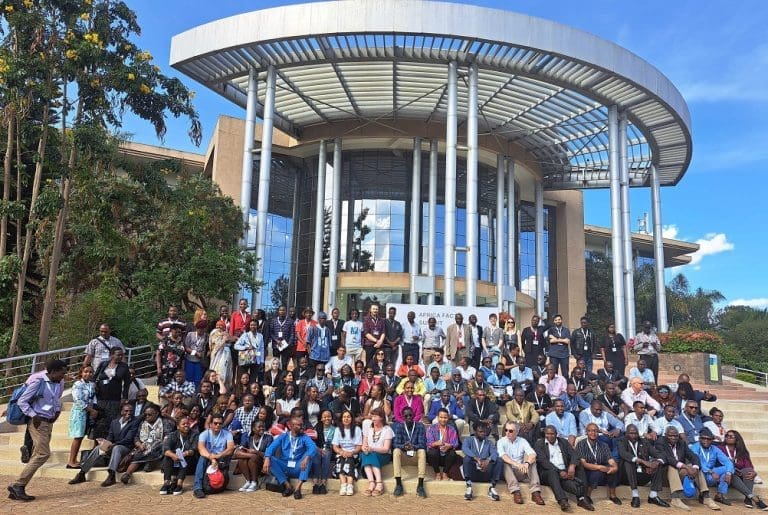
The Vice-Chancellor of the Federal University, Kashere, Umaru Pate, a professor, made the call on Tuesday in a keynote address at the Nigerian Fact-Checkers Coalition event in Abuja with the theme: ‘Nigeria’s 2023 Election: Curbing Information Disorder’.
Pate urged media houses and media professionals to adhere strictly to professional and ethical codes in discharging their duties.
“The media should be more confident in investigating the conduct of politicians, fulfillment of promises by incumbents, behaviour of institutions like the police, INEC and specific allegations and other such negative acts,” he said.
He further advised media professionals to ensure simplicity in their publications and notify the public of any error in their reportage immediately.
In the same vein, Prof. Pate stressed the need for media professionals to uphold investigative and data-driven journalism to ensure accurate information.
The vice-chancellor also advised journalists to always verify information received from sources and collaborate with other media houses to tackle information disorder.
PANELLISTS at the Nigerian Fact-checkers Coalition Conference in Abujaon Tuesday asked social media companies, including Twitter and Facebook to take more steps in halting the spread of fake news.
They expressed concern that fake new is being spread without much restrictions by owners of the social media platforms.
The panellists urged platforms like Twitter and Facebook to be more proactive in combating misinformation.
Speaking during a panel session with the theme, ‘Media in elections: Tackling misinformation and disinformation in the 2023 election’, the Managing Editor of The ICIR, Ajibola Amzat, urged fact-checkers to put Twitter and Facebook on their toes to stop the spread of fake news.
“Fake news travel faster. This is why the newsroom is key in halting misinformation. Fact-checkers must put social media site owners on their toes in curbing wide and fast spread of fake news,” Amzat said.
He also called for mainstreaming fact-checking in newsrooms to ensure proper gatekeeping of published contents.
Similarly, Amzat advocated continuous training of journalists on basic fact-checking skills to enhance their work.
In his comment, the Programmes Director, Daily Trust Foundation, Dr. Theophilus Abbah, said bigger media platforms should collaborate in sharing fact-checked contents and debunking fake news.
“We need more newsroom collaboration by traditional media outlets taking out few minutes of their time to debunk fake news. It gives more credence to our efforts in curbing the spread of misinformation,” he noted.
Another panellist, Kayla Megwa of Channels Television said journalists must not fail in the job of fact-checking.
“The world has changed; validation is key to curb the spread of inaccurate information. Journalists must fact-check every day,” Megwa said.
She stressed that including fact-checking in the newsroom is key in halting misinformation.