Home Blog Page 137

Doctored image of P-Square wearing Biafra outfits circulates online

0

AN IMAGE showing Nigerian artistes Peter and Paul Okoye, popularly called P-Square, dressed in sweatshirts with colours of the Biafran flag has been shared multiple times on social media alongside a claim that the artistes wore the outfits in support of a Biafran movement.

The image was posted on a Facebook page, Biafra Today News, on January 29, 2022 (as archived here) with a caption: “The restoration of Biafra is non-negotiable. We keep moving!” 

The image was also posted on another Facebook page, Marlians TV, alongside a caption calling for the artistes to be arrested, as archived here.

READ: Biafra: How IPOB uses disinformation to push secession agenda


“Nigerian government supposed to Lock this guy’s up the same way Kalu is been locked up… They are distracting the peace of this country by promoting a terrorist organization call Biafra (sic),”  the caption reads in part.

A Twitter user with the username: @adaelowhite1 also tweeted the image, as archived here.

CLAIM

The image shows Peter and Paul Okoye wearing outfits with Biafran colours.

THE FINDINGS

Findings by the FactCheckHub show that the image has been manipulated.

A Google Reverse Image Search of the photo shows the original image which was posted on the official Facebook page of the duo on the 27th of November, 2021.

The image shows the duo wearing plain light grey sweatshirts and blue jeans trousers and not in Biafran colours as depicted in the doctored image.

The colours of the Biafran flag, used by the Biafran Republic during The Nigerian Civil War of 1967- 1970, consists of a horizontal tricolour of red, black, and green, charged with a golden rising sun over a golden bar.

A metadata analysis of the doctored image using Fotoforensic — a digital tool used in analysing images — shows that the image has been altered using the Photoshop application.

Similarly, an Error Level Analysis (ELA) of the photo shows colour incoherence on the doctored portion of the image as shown here.

The FactCheckHub reports that this is not the first time the Facebook page, Biafra Today News, is publishing doctored images of celebrities and other notable individuals, especially of Southeast Nigeria origin to promote the Biafran cause.

Earlier on January 10, 2022, a doctored image of Michael Collins Ajereh, a Nigerian music producer popularly called Don Jazzy, in Biafra-coloured outfit was posted on the same page, as archived here.

The Africa Check had earlier in December 2021 also fact-checked a similar image of Chinedu Okoli, popularly known as Flavour, posted online by another Biafran movement.

A graphics design expert, Ali Geidam, also confirmed to the FactCheckHub that the image of P-Square was manipulated using a photo editing tool.

READ ALSO: Did late COAS say over his dead body would there be Biafran and Oduduwa nations?

“There are 10 ways to achieve such manipulation using various software. There are designers with specialities in photo editing/manipulation for good reasons. They do it for promotions, movies etc.

“But nowadays, some do it with negative intentions. Technical step-by-step on how to create such manipulation is a long and tricky process in order to achieve a realistic result. To explain these technicalities can be difficult especially if you don’t do it every day, ” he said.


THE VERDICT

The image of P-Square wearing outfits with Biafran colours is manipulated; thus making the claim FALSE.

Election: Do PVCs have expiry date?

0

A chieftain of the All Progressives Congress (APC), Bola Tinubu, in a viral video, claimed that the current Permanent Voter Cards (PVCs) issued by the Independent National Electoral Commission (INEC) has expired.

The APC chieftain made the claim while addressing the women leaders of the party who paid him a visit in Abuja.

He urged them to obtain new PVCs.

“In case they do not announce to you on time, the PVC you have has expired.

“Take one family member, two family members, knock on all doors and make sure that the new registration… Because they may not announce to you on time. The PVCs you have, has expired. Yes!” he said.

What is PVC?

A Permanent Voters Card (PVC) is a smart electronic card that stores information such as biometric data (physical attributes and thumbprint) and is needed for voting during elections in Nigeria.

The PVCs are electronically programmed and can only be read or assessed with a card reader.

According to the Independent National Electoral Commission (INEC), the PVC enables registered voters to exercise their civic right to vote in the General Elections.

A Temporary Voter’s Card is given to people upon registration. This, the registrant will present to collect the PVC.

A  look at the PVC shows that it has no expiry date. It instead contains information of a voter like; polling unit, voters identification number, passport, local government area, gender, date of birth, occupation and address of the voter.

PVC doesn’t expire ―INEC

In reaction to the claim, the Chief Technical Adviser to the Chairman of INEC, Prof Bolade Eyinla, stated that PVCs previously registered remain valid.

“This information is not correct. The PVC issued to all previously registered voters remains valid. This kind of statement will certainly push eligible voters to register more than once, thereby creating the problem of double and multiple registrations.”

Eyinla urged those who already have PVCs not to bother about registering for another one.

The INEC Spokesperson Festus Okoye also faulted the claim, saying the PVCs issued to Nigerians by the commission were still valid.

Tinubu admits claim is misleading

Meanwhile, Tinubu’s media team has admitted that his claim was misleading.

The team, in a statement, stated that the APC chieftain mistakenly used the word ‘expire’ instead of saying that the PVCs may have to be updated.

“On Tuesday night in Abuja, Asiwaju Bola Tinubu granted audience to a delegation of women from Lagos and across the country attending the All Progressives Congress Women Conference. While charging the women to check the status of their voting cards and mobilise supporters to vote, he mistakenly used the word ‘expire’ instead of stating that the cards may have to be updated.

“Immediately upon being apprised of this, Asiwaju apologised for the incorrect statement and felt sorry for any confusion it may have caused. Asiwaju Tinubu also stressed that he appreciates the patriotic and necessary work of INEC and its personnel in assuring a free and fair electoral process for all Nigerians in all political parties,” the statement read in part.

Fake 2022 NYSC mobilisation memo circulates online

0

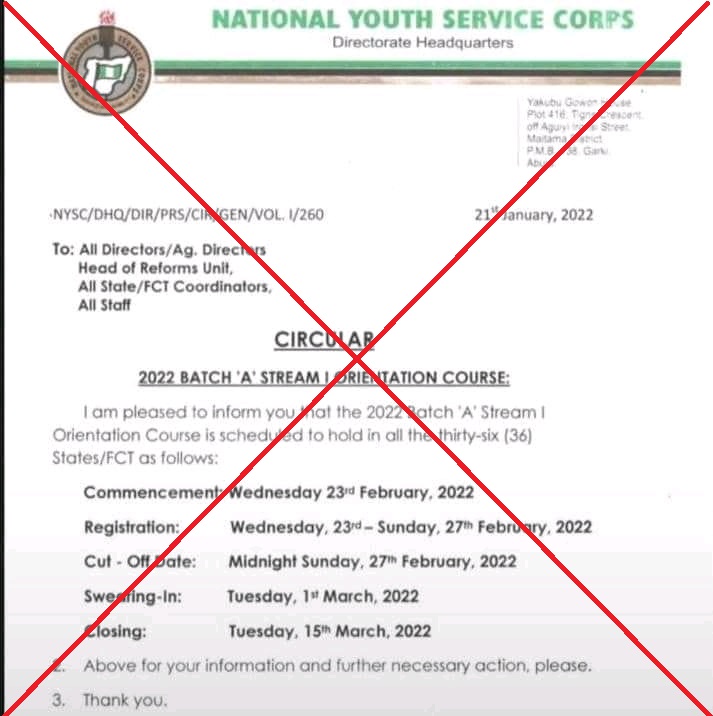
A circular alleged to be from the National Youth Service Corps (NYSC) has been shared multiple times online, claiming it is the timetable for mobilising graduates for the 2022 Batch A orientation course. 

The NYSC is a compulsory one-year programme set up by the Nigerian government to involve graduates in nation-building and development. New graduates are mobilised in batches and posted to different states for their primary assignment. The programme starts with a few weeks of orientation course in designated camps spread across the nation.

The viral circular titled ‘2022 Batch A stream 1 orientation course’ contains dates for the commencement of registration, swearing-in and closing of camp for the said Batch.

The circular was circulated on several Facebook pages and WhatsApp groups as archived here and here.

THE CLAIM

The circular shows the 2022 schedule for mobilising Batch A stream I of the National Youth Service Corps.


The circular shared in a WhatsApp group and on Facebook.
The circular shared on Facebook.

THE FINDINGS

Checks by the FactCheckHub show that the memorandum is fake as it did not emanate from the NYSC.

The circular was not found on any of the NYSC social media handles that they employ in information dissemination. 

“This is not from NYSC. Disregard it,” the agency replied to an enquiry concerning the memo via the comment section of the official Facebook page.

  1. NYSC responds to enquiry, says the circular should be disregarded.

This is not the first time a false circular was circulated online. In November 2021, the NYSC had to debunk a fake memo in circulation that was announcing mobilisation.

THE VERDICT

The circular in circulation did not emanate from the NYSC. Therefore, it is FALSE.

Viral photo of rice pyramid built with wood not recent

0

A photo of filled bags stacked as pyramids supported by a wooden scaffold has been shared multiple times online, claiming it is the rice pyramid unveiled in Abuja in January 2022.

The image surfaced online a few days ahead of the Rice Farmers Association of Nigeria (RIFAN) and other stakeholders to showcase a pyramid made up of stacked bags of rice paddy reminiscent of the groundnut pyramid found in  Northern Nigeria in the past.

The pyramid was reported to have been built with 1 million bags of rice paddy planted and harvested from states across the country under the Anchor Borrowers’ Programme (ABP).

The report generated reactions with many insinuations of foul play, as can be seen in these archived posts here and here.

THE CLAIM

The image shows a rice pyramid unveiled in Abuja in January 2022.

A screenshot of the image of the pyramid circulated online,

THE FINDINGS

Findings by The FactCheckHub show that the claim is false.

A reverse image search conducted by The FactCheckHub shows that the image has been online as far back as 2018.

The image trended in 2018  during the launch of a local rice brand in Ogun state tagged “Mission to Rebuild Ogun State” (MITROS).


Read also:


THE VERDICT

The claim that the image shows recent a rice pyramid unveiled in Abuja in 2022 is FALSE.

The image has been online since 2018.

YouTube and combatting misinformation, disinformation

0

TO curb the spread of misinformation on the internet, YouTube has joined other platforms such as Google and Facebook to collaborate with fact-checkers using information panels.

These panels, launched in Brazil and India in 2019, inform the public if claims related to searches are true, false, or  “partly true,” according to the publisher’s fact-check verdict.

Although information panels are only available in a limited number of countries and languages, YouTube says it is working to it to more countries.

A few years after it launched the information panel, a consortium of fact-checkers worldwide has come out to demand more effective action against misinformation from the video hosting platform.

In an Open letter, the fact-checkers noted that conspiracy groups are thriving and collaborating across borders, including an international movement that started in Germany, jumped to Spain and spread through Latin America, all on YouTube.

They also pointed out how the platform has been used to amplify hate speech against vulnerable groups, reaching tens of thousands of users. This is in addition to it being a fertile ground for election disinformation.

The Fact-checkers proposed solutions which include: a commitment to meaningful transparency about disinformation on the platform;  providing context and offering debunks, clearly superimposed on videos or as additional video content; Acting against repeat offenders that produce content that is constantly flagged as disinformation and misinformation, Extending current and future efforts against disinformation and misinformation in languages different from English and so on.

How the Information panel work

Authoritative publishers and publishers who are verified signatories of the International Fact-Checking Network’s Code of Principles are eligible to have their fact-checks published by YouTube.

The fact-checks will be displayed on the information panel marked as an “independent fact-check” with:

  • The name of the publisher doing the fact-check
  • The claim being fact-checked
  • A snippet of the publisher’s fact-check finding
  • A link to the publisher’s article to learn more
  • Info about the publication date of the fact check article

Fact checks shown in information panels will not be endorsed or created by YouTube.

However, YouTube allows the public to send feedback on fact check that violates its community guidelines.

Is this photo of Kenyan pastor beaten up by church members?

0

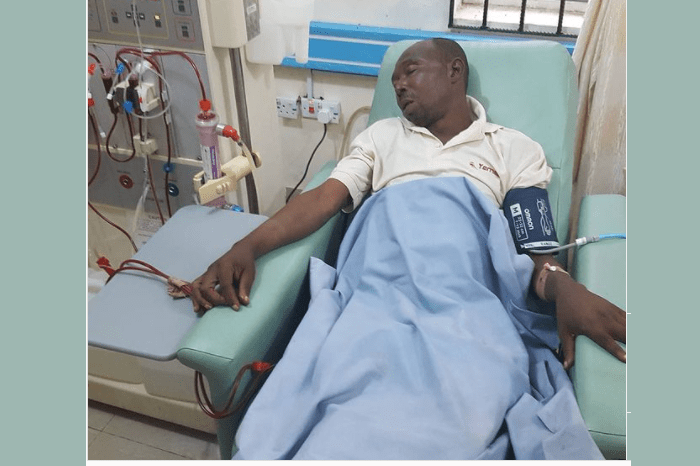
Several social media users and blogs have circulated a photo of a man on a hospital bed claiming he is a pastor who was beaten up by his congregation for asking for money to unlock the 2022 New Year’s blessing. 

Blogs claim the photo shows a Kenyan pastor, James Mungo hospitalised after asking for Ksh4200 (N16,000) from members to unlock their 2022 blessings.

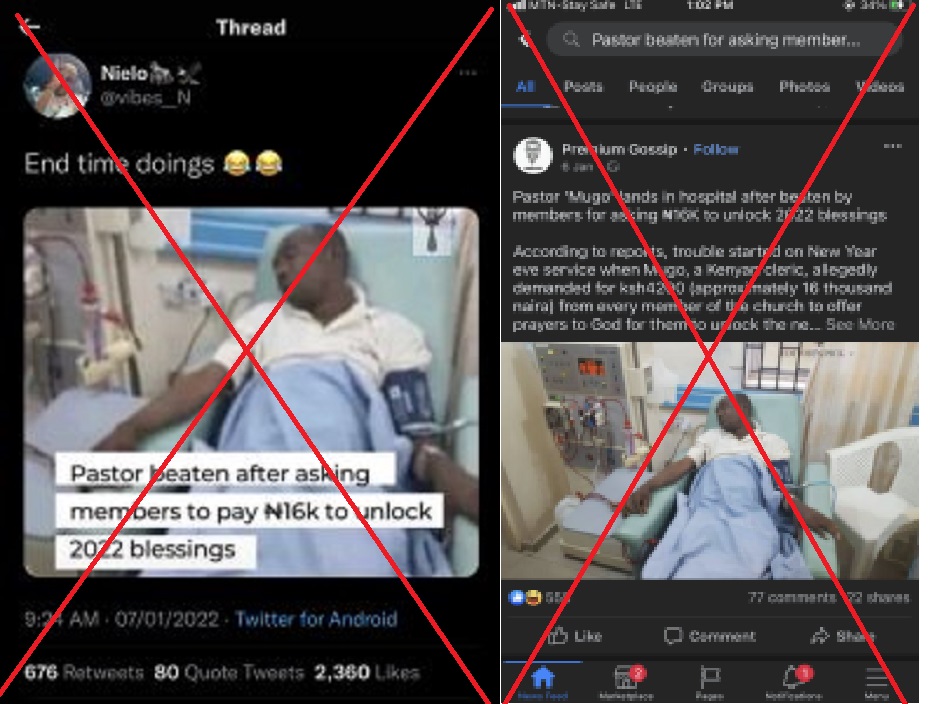
Similar posts with the image were shared here on Twitter and here on Facebook and some Nigerian blogs, as can be seen here.

THE CLAIM:

The photo shows a pastor who demanded money to unlock 2022 blessings hospitalised due to being beaten by church members.

Screenshots of some of the posts on social media.

THE FINDINGS:

Findings by The FactCheckHub show that the claim is false.

The photo is an old photo that has been on the internet since 2017.

A Google reverse image check showed that the image is of a  now-deceased Nollywood actor, Adeshina Adesanya, known as Pastor Ajidara, who was reported to have died in 2017.


Read also:


A colleague of the deceased, Adebayo Amusan,  known as Mr Latin, shared the image on his Instagram handle in May 2017, as seen here after his death.

THE VERDICT:

The claim that the photo shows a pastor who demanded money to unlock 2022 blessings hospitalised due to being beaten by church members is FALSE.

The photo is unrelated to the incident. The image has been online since 2017. Therefore it could not have been from an incident touted to have taken place on the eve of 2022.

How to get verified on Twitter as a journalist

0

JOURNALISTS fall into one of the seven categories eligible for Twitter’s verification.

“The blue verified badge on Twitter lets people know that an account of public interest is authentic. To receive the blue badge, your account must be authentic, notable, and active,” says Twitter.

The verification badge is not necessarily earned by follower count. Journalists with less than 200 followers (as seen in the profile archived here) have been verified by Twitter.

This is not to say accounts don’t get verified due to follower or mention count.

“If your account is detected to be in the top .05 per cent follower or mention count for your geographic location, it may count towards notability evidence for certain categories,” says Twitter.


Read also:


For journalists who have at least three stories published by verified news media within the past six months, all you need to do is prove your identity to Twitter by carefully following the steps below.

You will need:

  • An active account that directly reference your employer’s official URL or handle in your bio. Your employer should have a verified account.
  • In addition, links to three articles with your byline published by a verified medium within the past six months and a valid government-issued ID.
  • Official websites or news articles published by verified organisations referencing your Twitter handle or registered email address to use to authenticate your account.

The steps I followed to get my account verified:

1.

Have an active Twitter account that adheres to Twitter rules: You must have a profile name, a recognizable profile image, and your account must have a confirmed email address or phone number. You must have logged into the account in the last six months.

2.

Link your verified Muck Rack profile to your Twitter:  This helps to show articles published under your name. It is, however, not mandated.

3.

Log into your Twitter account, click “Settings and privacy” under your profile.

Screenshot from Twitter

3.

Under Settings, click “Your account”.

4.

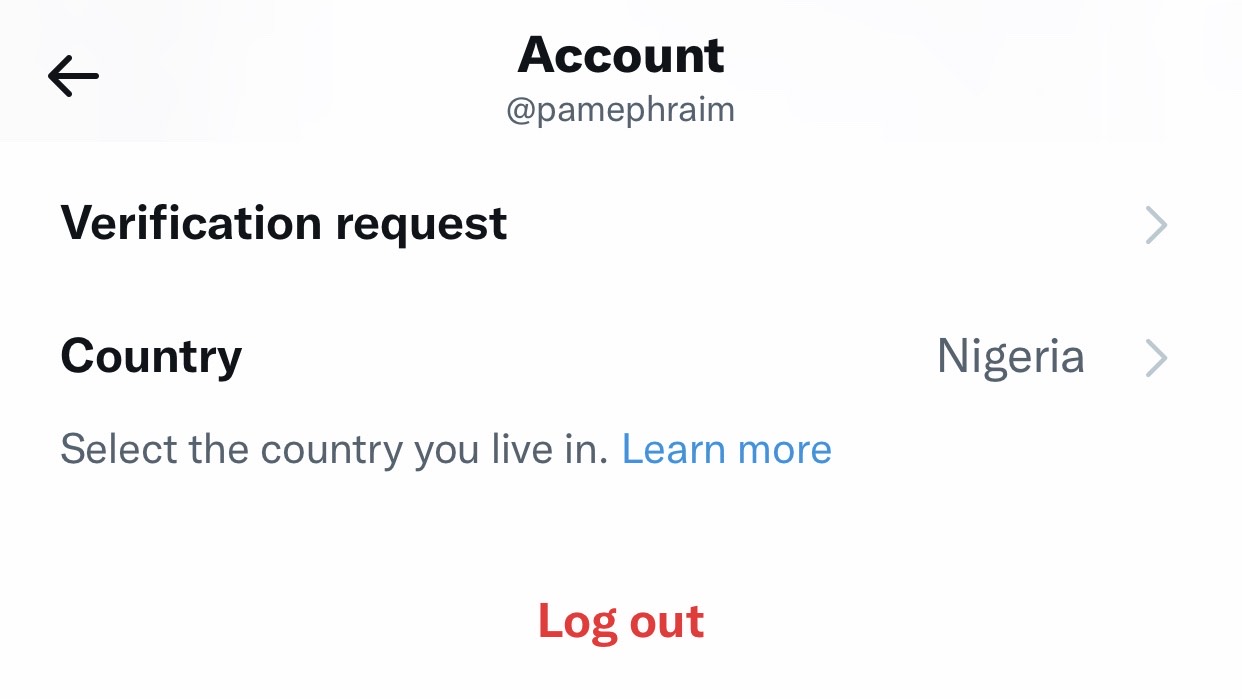
Under your account, click “Account Information“.

5.

When your account information is displayed, click “Verification request“. It will take you to a prompt page with “Start Verification”.

7.

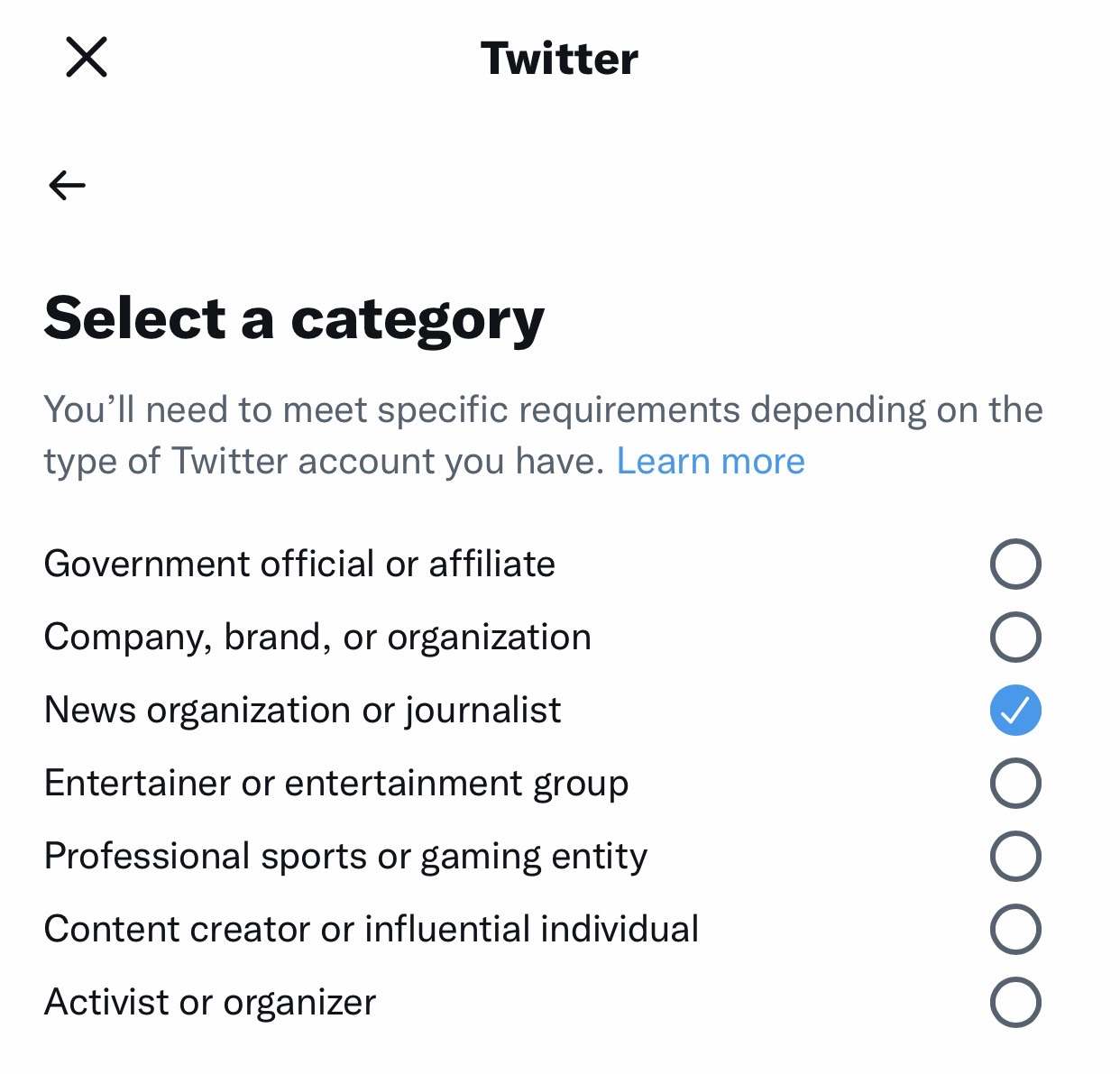
Select the “News organisation or journalist” category.

Screenshot from Twitter

8.

Select the account type that best suits you as a journalist.

Screenshot from Twitter.

9.

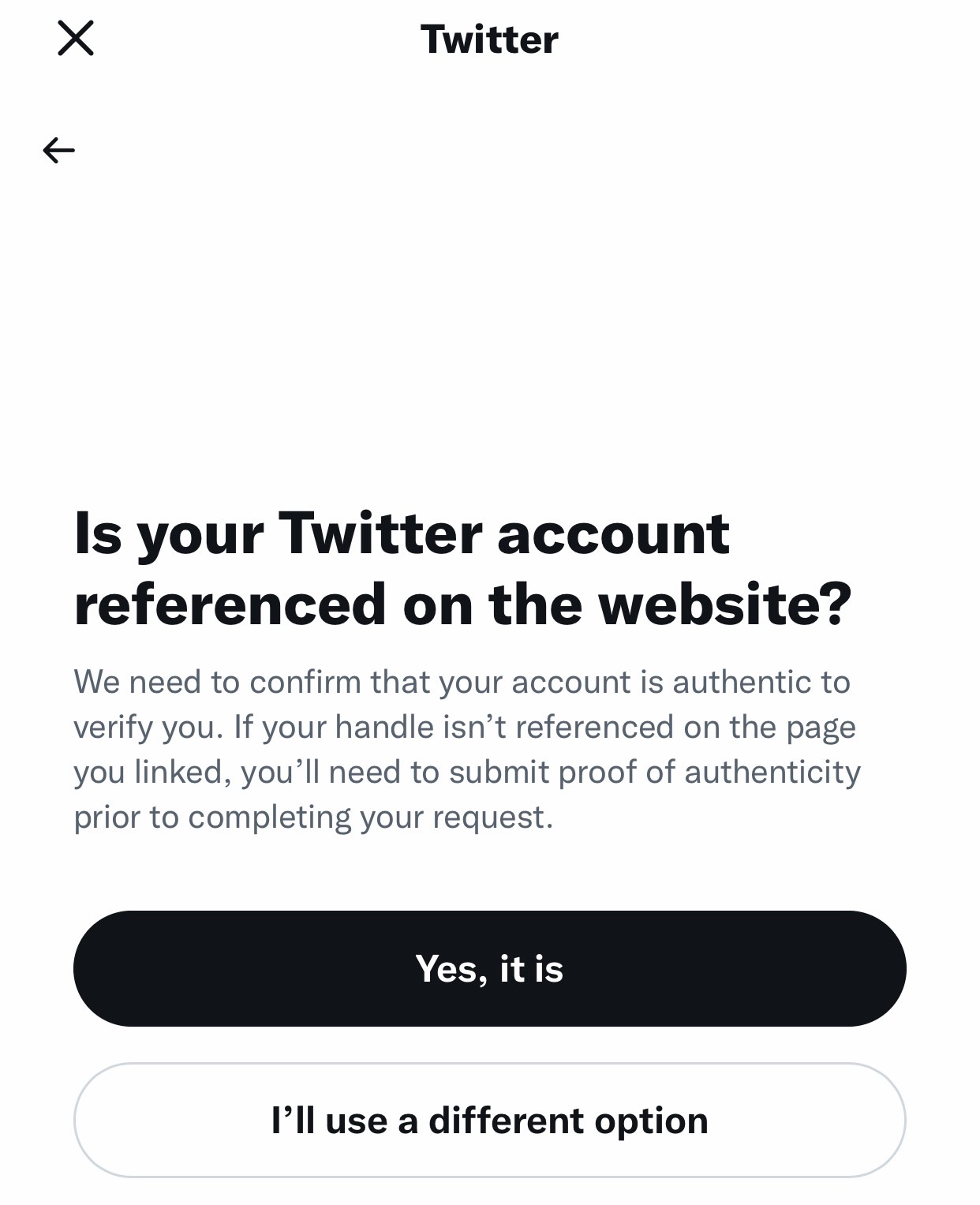
Confirm the eligibility of your news organisation by entering the Twitter handle.

10.

Click “Yes, it’s complete” if your profile meets the criteria for a journalist (make sure your Twitter bio references the verified organisation you work for).

11.

Add reference of employment: Provide a link that references you as a journalist. The reference must come from the official site of a verified news organisation and also add a link to your author page with a bio that references you as a journalist and has a photo of you and it should also have your Twitter handle too.


Screenshot from Twitter.

12.

Review and Submit: Carefully review the provided information, as errors may impact the verification outcome.

13.

You will be VERIFIED within 24 hours if you meet all the requirements.

Fact-checkers write YouTube, demand effective action against disinformation

0

FACT-CHECKERS across the globe under the auspices of the International Fact-Checking Network (IFCN) has written to the management of the video-sharing platform, YouTube, demanding effective action against the spread of misinformation and disinformation on the platform.

The IFCN in a letter written to the YouTube CEO, Susan Wojcicki, frowned at the rate at which the video-sharing platform has consistently been used for the propagation of different forms of false information.

The letter which urged YouTube to collaborate with fact-checkers also proffered multiple solutions.

See the letter below:

An open letter to YouTube’s CEO from the world’s fact-checkers

January 12th, 2022

Ms. Susan Wojcicki,

It’s been almost two years since the COVID-19 pandemic started. The world has seen time and time again how destructive disinformation and misinformation can be for social harmony, democracy, and public health; too many lives and livelihoods have been ruined, and far too many people have lost loved ones to disinformation. As an international network of fact-checking organizations, we monitor how lies spread online — and everyday, we see that YouTube is one of the major conduits of online disinformation and misinformation worldwide. This is a significant concern among our global fact-checking community.

What we do not see is much effort by YouTube to implement policies that address the problem. On the contrary, YouTube is allowing its platform to be weaponized by unscrupulous actors to manipulate and exploit others, and to organize and fundraise themselves. Current measures are proving insufficient. That is why we urge you to take effective action against disinformation and misinformation, and to elaborate a roadmap of policy and product interventions to improve the information ecosystem – and to do so with the world’s independent, non-partisan fact-checking organizations.

In the last year we have seen conspiracy groups thriving and collaborating across borders, including an international movement that started in Germany, jumped to Spain and spread through Latin America, all on YouTube. Meanwhile, millions of other users were watching videos in Greek and Arabic that encouraged them to boycott vaccinations or treat their COVID-19 infections with bogus cures. Beyond COVID-19, YouTube videos have been promoting false cures for cancer for years.

In Brazil, the platform has been used to amplify hate speech against vulnerable groups, reaching tens of thousands of users. Elections are not safe either. In the Philippines, false content with over 2 million views denying human rights abuses and corruption during the Martial law years are being used to burnish the reputation of the late dictator’s son, one of the candidates in the 2022 elections.  In Taiwan, the last election was marred by unsubstantiated accusations of fraud. The whole world witnessed the consequences of disinformation when a violent mob assaulted the U.S. Capitol last year. From the eve of the U.S. presidential election to the day after, YouTube videos supporting the “fraud” narrative were watched more than 33 million times.

The examples are too many to count. Many of those videos and channels remain online today, and they all went under the radar of YouTube’s policies, especially in non-English speaking countries and the Global South. We are glad that the company has made some moves to try to address this problem lately, but based on what we see daily on the platform, we think these efforts are not working – nor has YouTube produced any quality data to prove their effectiveness.

Your company platform has so far framed discussions about disinformation as a false dichotomy of deleting or not deleting content. By doing this, YouTube is avoiding the possibility of doing what has been proven to work: our experience as fact-checkers together with academic evidence tells us that surfacing fact-checked information is more effective than deleting content. It also preserves freedom of expression while acknowledging the need for additional information to mitigate the risks of harm to life, health, safety and democratic processes. And given that a large proportion of views on YouTube come from its own recommendation algorithm, YouTube should also make sure it does not actively promote disinformation to its users or recommend content coming from unreliable channels.

With all this in mind, we propose some solutions that would make a great deal of difference in reducing the dissemination of disinformation and misinformation on YouTube.

  1. A commitment to meaningful transparency about disinformation on the platform: YouTube should support independent research about the origins of the different misinformation campaigns, their reach and impact, and the most effective ways to debunk false information. It should also publish its full moderation policy regarding disinformation and misinformation, including the use of artificial intelligence and which data powers it.
  2. Beyond removing content for legal compliance, YouTube’s focus should be on providing context and offering debunks, clearly superimposed on videos or as additional video content. That only can come from entering into a meaningful and structured collaboration taking the responsibility and systematically investing in independent fact-checking efforts around the world that are working to solve these issues.
  3. Acting against repeat offenders that produce content that is constantly flagged as disinformation and misinformation, particularly those monetizing that content on and outside the platform, notably by preventing its recommendation algorithms from promoting content from such sources of misinformation.
  4. Extend current and future efforts against disinformation and misinformation in languages different from English, and providing country- and language-specific data, as well as transcription services that work in any language.

We hope you will consider implementing these ideas for the public good and to make YouTube a platform that truly does its best to prevent disinformation and misinformation being weaponized against its users and society at large. We are ready and able to help YouTube. We wish to meet with you to discuss these matters and find ways forward on a collaboration and look forward to your response to this offer.

Are hand sanitisers flammable?

0

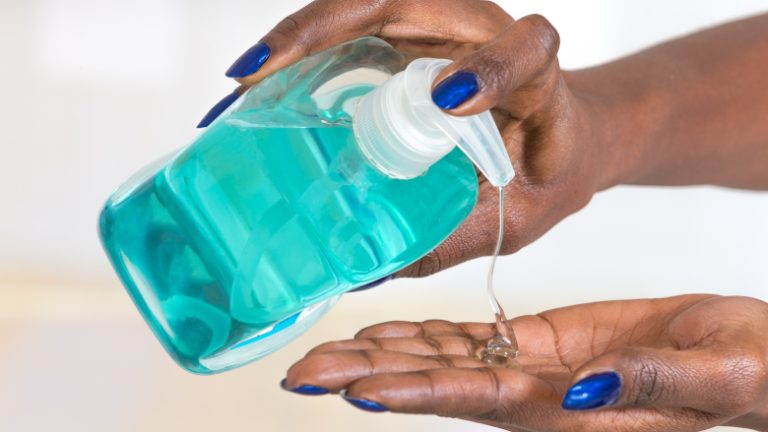
A surveillance footage shows a man who had drenched his hair and bare body with hand sanitisers bursting into flames seconds after being tased by the Police.

This was reported by the New York Post.

The report generated reactions, part of which are hand sanitisers flammable?

READ: How true is that claim that washing wounds from dog bite with soap and water is effective against rabies?

The emergence of coronavirus brought hand sanitiser to the fore as part of the preventive methods to reduce transmission.

There are two broad categories of the product; non-alcohol-based hand sanitisers (NABHS) and alcohol-based hand sanitisers (ABHS).

The US Center for Disease Control says alcohol-based hand sanitisers contain ethyl alcohol that readily evaporates at room temperature into an ignitable vapour is considered a flammable liquid.

ALSO READ: Does water obtained from soaking unripe plantain cure ulcer?

These alcohol-based hand sanitisers predominate in health care settings given their low cost and efficacy of reducing infectious transmission, a report published on the National Center for Biotechnology Information notes.

A fact-check notes that, even though alcohol-based hand sanitisers are flammable, they do not self combust “the flammable ingredients in hand sanitiser would need to be at much higher temperatures, over 350°C, to combust without a spark”.

Is the world populated with more women than men?

0

A post circulating online in Nigeria puts forward that the population of women on earth is three times that of men.

The post, retrieved from a WhatsApp group, gave its source as the 2019 United Nations Demography Report.  It noted that there are 5.6 billion women to 2.2 billion men.

CLAIM

There are 5.6 billion women and 2.2 billion men on earth as of 2019.

Screenshot of claim circulated on Whatsapp

READ: How accurate is Atiku’s claim on population of social media users in Northern Nigeria?

THE FINDINGS

Findings by The FactCheckHub show that the claim is false.

The 2019 United Nations report on demography shows that the men to women population are almost at a 1:1 ratio. They are both at an estimated 3.8 billion each.

The 2019 demography puts the women population at 3,824,434 billion while men at 3,889,035 billion which is higher by 64.6 million.

From the data, some countries have a higher ratio of females to males. Nigeria is not one of them.

There are 101 million men to 99 million women in Nigeria [i.e 101,832 million and 99,132 million, respectively].

ALSO READ: Claim that National Population Commission is still recruiting is FALSE!

Consequently, the 2020 data also showed that the male population at 3.92 billion (3,929,974,000)   is higher than women at 3.86 billion (3,864,825,000).

THE VERDICT

The claim that the women population is thrice the number of the male population in 2019  is FALSE.


Update: 

21/01/22: The second paragraph under ‘The Findings’ was changed from “…are almost at a 50-50 ratio” to “…are almost at a 1:1 ratio”.