Please note that the FactCheckHub has not obtained any right from the authors or copyright owners of all third-party contents from embedded links and shall incur no liability in this regard.
Please note that the FactCheckHub has not obtained any right from the authors or copyright owners of all third-party contents from embedded links and shall incur no liability in this regard.
Please note that the FactCheckHub has not obtained any right from the authors or copyright owners of all third-party contents from embedded links and shall incur no liability in this regard.
Please note that the FactCheckHub has not obtained any right from the authors or copyright owners of all third-party contents from embedded links and shall incur no liability in this regard.
WHEN Russia invaded Ukraine last week, several disinformations were in circulation which prompted the International Fact-Checking Network (IFCN) to swing into action.
The IFCN is a body that brings together about 120 fact-checking organisations and advocates of factual information from across the world in the fight against misinformation and disinformation.
Over the past few days, fact-checkers around the globe have fact-checked over 400 misinformation/disinformation contents that centred on the Russia-Ukraine crisis. They range from images, videos and text which are not only fake but out-of-place, Poynter reports.
Jiménez Cruz, co-founder and CEO of Maldita.es, a Spanish nonprofit news organization aimed at combating disinformation through fact-checking and data journalism said the spate of disinformation occasioned by the crisis made his team and other fact-checkers get to work.
“We saw that there was a lot of work to be done, and this disinformation was not only being debunked by fact-checkers in Spain but also in other countries,” she said.
The Maldita team sent a message to a listserv belonging to Poynter’s International Fact-Checking Network. With a spreadsheet, they invited other fact-checkers to enter disinformation they’ve debunked.
“We know that when fact-checkers collaborate among themselves, the work is much more effective and we can also gather better information about which kind of disinformation is circulating,” she added.
The outcome birthed Ukrainefacts.org, a database of fact-checks on the Ukraine-Russia mis/disinformation created by Maldita.
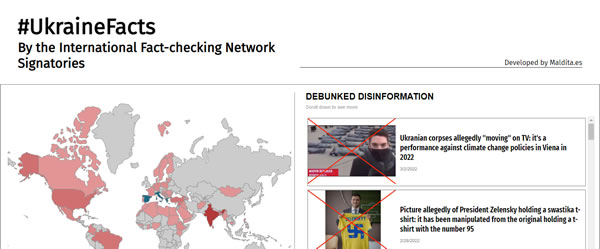
Also called #UkraineFacts, the collaborative effort of verified signatories of IFCN’s Code of Principles is now available to the public for browsing. There’s also a map of the world that users can click on to read about debunked disinformation in different countries.
The IFCN’s director, Baybars Örsek, said dozens of fact-checking organizations contributed to the spreadsheet with their content in the hours after the project was introduced.
“It’s a great reminder that the community is so active, and they were already monitoring a lot of misinformation and disinformation at the beginning of the military operation.”
Orsek added that fact-checking organisations are much better equipped now to handle disinformation around the Ukraine crisis, having gained a great deal of experience in this same kind of work around the coronavirus pandemic.
“The public opinion on this is also very clear … who is the right party in this. But with COVID, it was very challenging — especially at the beginning of the pandemic. Nobody knew what was happening,” Örsek said. “But this time, it was clearly an act of unjust aggression by Russia, so that’s not a big question.”
The misinformation and disinformation around Ukraine include out-of-context images, photos and videos from previous protests or conflicts that are circulating online as if they are happening in the Eastern European country.
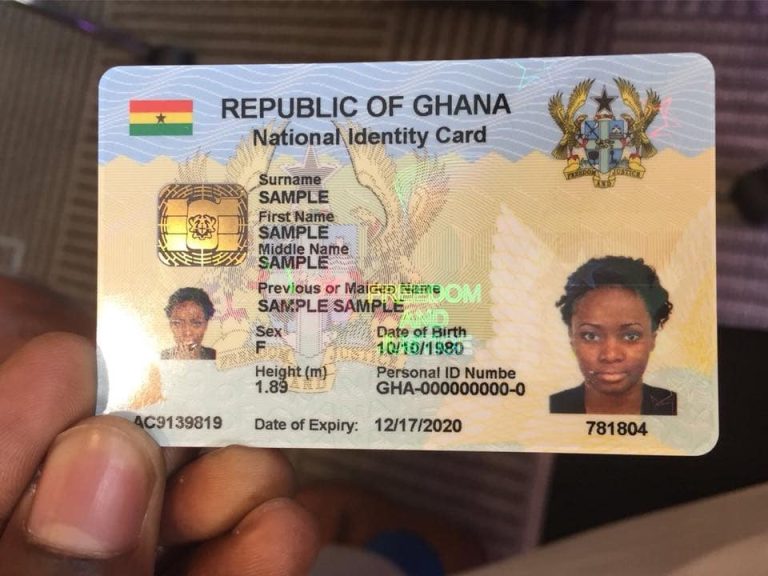
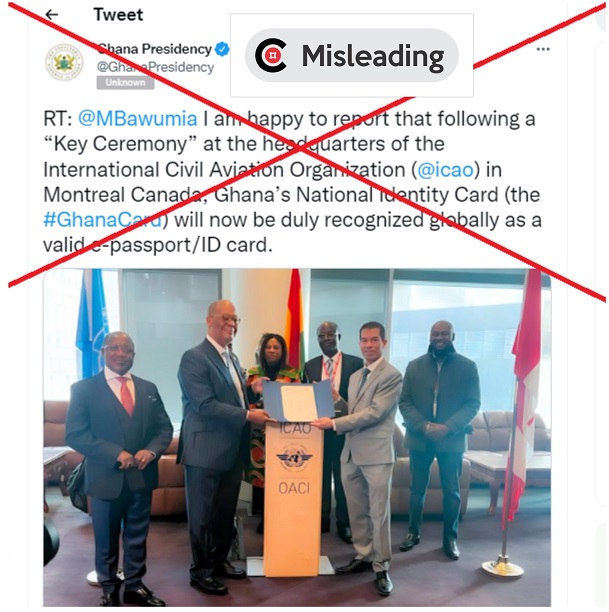
ON FEBRUARY 10, 2022, the Ghanaian presidency tweeted that Ghana’s national identity card would be recognised globally as a valid e-passport/ID card.
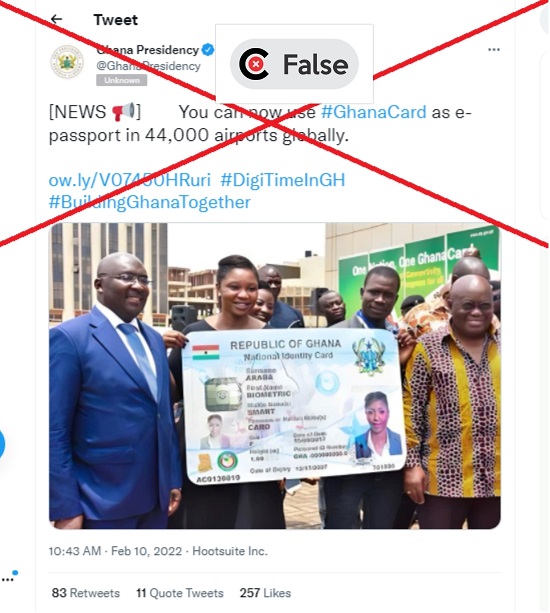
The Office of the President in a follow-up tweet archived here said [Ghanaians] “can now use #GhanaCard as e-passport in 44,000 airports globally”.
Spokesperson to the Ghanaian Vice President, Dr Gideon Boako in a media chat, confirmed that Ghana has gone through the process of having its national ID card certified as an e-passport.
By this announcement, information has circulated on social media that Ghanaians no longer need passports and visas to travel through 97 borders and 44,000 airports across the world.
Some credible news websites have also published the claim.
But Nigerians who follow this news have been wondering if the claim is true.
“Where are my Ghanaian peeps? Is this true? Naija how far?? Hmm,” a popular Nigerian actress, Kate Henshaw recently asked on Twitter.
Her tweet has garnered over 3,500 likes and 876 retweets as of Friday, February 25, 2022. While some debunked the news, others confirmed it.
Some have gone ahead to take a swipe at the Nigerian government for being unable to provide an identity card of equal status to her citizens.
The FactCheckHub has investigated the claim and found it to be MISLEADING.
The International Civil Aviation Authority (ICAO), an organisation responsible for the development of international air transport, has denied certifying the use of Ghana identity cards for international travel in place of a passport.
The organisation said only a sovereign state can determine the acceptability of alternative travel identity documents, adding that it has no power to do such.
“Any decision to accept such alternative travel identity document is made by the receiving state itself,” ICAO clarified.
The ICAO said its previous statements at the ceremony where the Ghana card was launched were misrepresented by the media.
Gideon Boako also later corrected himself saying the holder of a Ghana card would only be allowed to board a flight to Ghana (receiving country) from any airport, just as with the normal biometric passport, without the need for a visa. But this is not applicable to Ghanaians travelling to other countries.
He added that the diasporic Ghanaians who hold the Ghana card would not require a visa to travel to Ghana or within the ECOWAS states.
Travelling outside ECOWAS, however, will require that Ghanaians use the normal biometric passport which will contain visas.
He expressed hope that the Ghana Card will be admissible as a travelling document by other countries in the future.
“In the not-too-distant future, we expect that electronic visas will be issued under ICAO 2.0 protocols. When this starts, electronic visas could be issued on the Ghana card under bilateral arrangements with other countries,” Boako said.
However, there are a total of41,820 airports in the world, according to the CIA World Fact Book, and not 44,000 as claimed by the Ghanaian authorities.
All facts considered, the claim that Ghanaians can travel with the National ID card to 97 countries is FALSE.
CLAIM
VERDICT
EXPLAINER
1. Ghana’s national identity card will now be duly recognised globally as a valid e-passport.
MISLEADING
The holder of a Ghana card would only be allowed to board a flight to Ghana (receiving country) from any airport, just as with the normal biometric passport. But this is not applicable to Ghanaians travelling to other countries, says Dr Gideon Boako, spokesperson to the Ghanaian Vice President.
2. There are 44,000 airports globally that accept the Ghana card as e-passport.
FALSE
There are a total of 41,820 airports in the world, according to the CIA World Fact Book.
3. Ghanaians can travel with the National ID card to 97 countries
FALSE
The ICAO said only a sovereign state can determine the acceptability of alternative travel identity documents, adding that it has no power to do such.
* This fact-check was produced by The FactCheckHub in partnership with Code for Africa’s PesaCheck.
*Update: After publication, Ghana Immigration Service published a press release to debunk the claim that the e-card will be recognised globally as a valid passport.
A TWITTER user, Katelynsade, with the user ID: @Dagreatdey4youon Wednesday, February 16, 2022, while canvassing support for the presidential ambition of former Imo State governor Rochas Okorocha, claimed that Imo State has the highest number of universities in Nigeria.
Her tweet, now deleted, which was archived here reads: “Today, Imo State is unarguably one if not the only State in Nigeria with the most number of university, Rochas passion for education cannot be overemphasized #RochasOkorocha2023.”
Imo State has the most number of universities in Nigeria.
THE FINDINGS
Checks by The FactCheckHub show that the claim is FALSE.
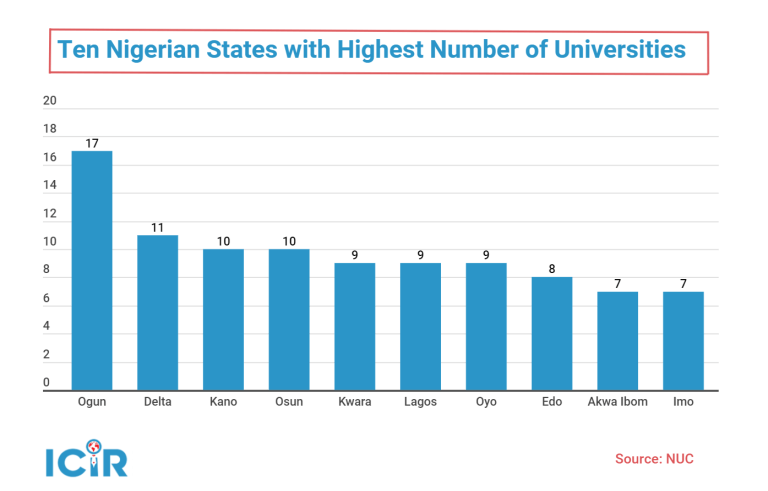
Data obtained from the website of the National Universities Commission (NUC) revealed that Ogun State and not Imo State has the highest number of universities in the country.
Findings show that Ogun State has 17 universities, followed by Delta State with 11, while Imo State has only 7 universities.
The NUC is a parastatal under the Federal Ministry of Education (FME) with a mandate to grant approval for all academic programmes run in Nigerian universities. It also has the mandate to grant approval for the establishment of all higher educational institutions offering degree programmes in Nigerian universities, among others.
THE VERDICT
The claim that Imo State has the highest number of universities in Nigeria is FALSE; as findings show that Ogun State has 17 universities while Imo State has only 7 universities.
IN a bid to curb the spread of misinformation on its platform, YouTube has proposed three new steps.
This development is coming a few weeks after the video-sharing and social media platform announced its intention to collaborate with fact-checkers, using information panels.
YouTube, in a statement released by its Chief Product Officer Neal Mohan, said the three steps are the next efforts to take in the fight against misinformation that is bedevilling the world.
“As misinformation narratives emerge faster and spread more widely than ever, our approach needs to evolve to keep pace. Here are the next three challenges our teams are looking to tackle,” he stated.
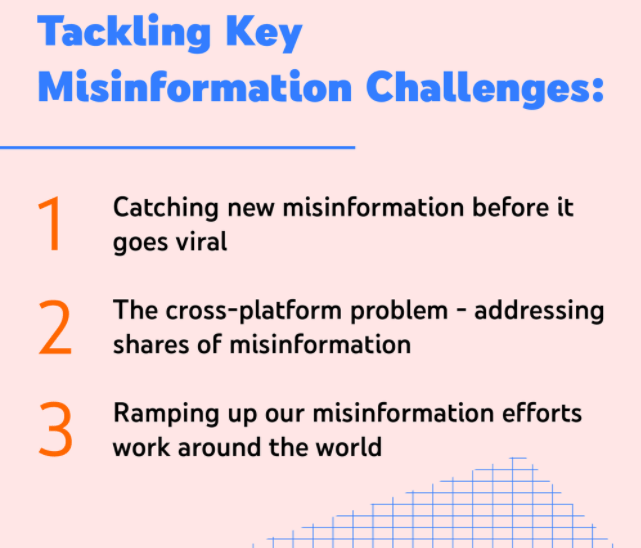
Mohan said the first step, which is about catching new misinformation before it goes viral, is a process whereby the YouTube system would be trained to identify misinformation before it starts circulating.
“We’re looking to leverage an even more targeted mix of classifiers, keywords in additional languages, and information from regional analysts to identify narratives our main classifier doesn’t catch.
“Over time, this will make us faster and more accurate at catching these viral misinfo narratives,” he said.
In addition to that, Mohan said the YouTube systems would be connecting viewers to authoritative videos in search results and in recommendations.
“For major news events, like a natural disaster, we surface developing news panels to point viewers to text articles for major news events.
“For niche topics that media outlets might not cover, we provide viewers with fact-check boxes,” he added.
He noted that the second step, which is tagged: “The cross-platform problem: addressing shares of misinformation,” will be done by overhauling the platform’s recommendation systems to lower consumption of borderline content that comes from recommendations that are significantly below 1 per cent.
“One possible way to address this is to disable the share button or break the link on videos that we’re already limiting in recommendations.
“That effectively means you couldn’t embed or link to a borderline video on another site,” he said.
He added that the platform needs to be careful to balance limiting the spread of potentially harmful misinformation while allowing space for discussion of and education about sensitive and controversial topics.
Mohan said the last step is about ramping up misinformation efforts work around the world by exploring further investments in partnerships with experts and non-governmental organisations around the world.
“Our work to curb misinformation has yielded real results, but complexities remain as we work to bring it to the 100+ countries and dozens of languages in which we operate.
“Similar to our approach with new viral topics, we’re working on ways to update models more often in order to catch hyperlocal misinformation, with the capability to support local languages,” he stated.
Mohan, however, pledges the platform’s commitment to continue to build on its work to reduce harmful misinformation across all its products and policies while allowing a diverse range of voices to thrive.
“We recognize that we may not have all the answers, but we think it’s important to share the questions and issues we’re thinking through.
“There has never been a more urgent time to advance our work for the safety and wellbeing of our community, and I look forward to keeping you all informed along the way,” he said succinctly.
A VIDEO of a naked woman covered with black coal, curled with her face on the ground and showing three persons taking turns to urinate on her, has been shared multiple times on social media with the claim that they are French citizens humiliating a Malian woman.
In the 140 seconds footage, the woman covered with black coal was seen curled with her face on the ground. A few minutes later, two men came out from the onlooking crowd, one after the other, unzipped their pants and urinated on her body. Thereafter, another woman came out and planted her legs on either side of the woman’s body, squatted and also urinated on her back. The audience was seen filming the scene with their cameras.
Some social media users claimed (as archived here and here) that the video shows some French citizens humiliating a Malian woman. Whereas others claimed it shows how Malian women suffered abuse and humiliation when they were being colonized by France.
Media reports show that the military junta in Mali overthrew the Malian government in August 2020 after forcing its elected leader, Ibrahim Boubacar Keita to resign.
As a result, the diplomatic war between Mali and France, its former colonial master worsened in January 2022 when the Malian military government reneged on an agreement to hold elections by the end of January as demanded by the West African regional bloc, ECOWAS, and other international partners, according to the reports.
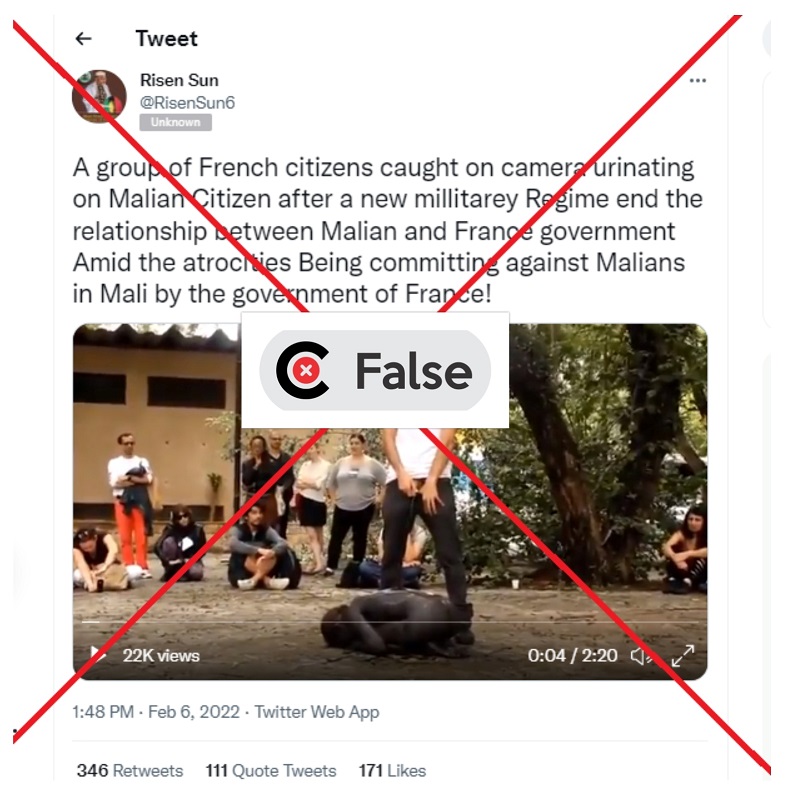
A Twitter user, @RisenSun6 tweeted the video on Sunday, February 6, 2022 with a caption: “A group of French citizens caught on camera urinating on Malian Citizen after a new military Regime end the relationship between Malian and France government Amid the atrocities Being committing against Malians in Mali by the government of France!.” The video has had over 22,000 views and more than 300 retweets as of February 22, 2022.
Similarly, another Twitter user, @brightersonic had earlier tweeted the video with the caption: “This is the sort of humiliation the French citizens meted out on a female Malian citizen in public. @FRANCE24 @WestCameroons @Africa_Archives @AfricanArchives Africans, They See You The Same Way Their Ancestors Do (as a slave). #Mali #BiafraFreedom.”
THE CLAIM
The video shows French citizens humiliating a Malian woman in public.
A screenshot of the tweeted video.
THE FINDINGS
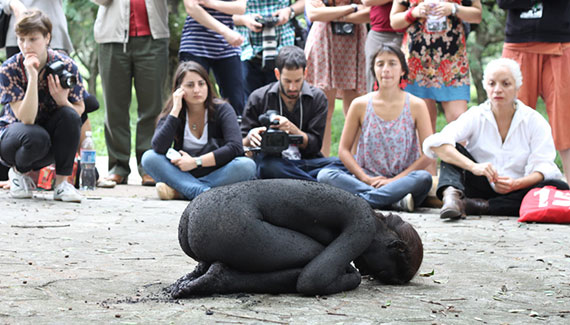
Checks by The FactCheckHub show that the footage is an art performance by Regina José Galindo and not of French citizens humiliating a Malian woman in public.
Regina José Galindo is a Guatemalan performance artist who specializes in body art.
The performance titled Piedra, a Spanish word that means stone, was used to show the tragic stories of poor indigenous women in Central and Latin America in the hands of heinous men and women in society.
It was also illustrated that it shows that women and Piedra (Stone) share the ability to endure the abuses of their environment and still survive.
The performance took place at the Hemispheric Institute’s 8th Annual meeting held at the Universidade de São Paulo, São Paulo, Brazil, on January 17, 2013.
The footage was also found here on Vimeo, posted on December 6, 2016.
THE VERDICT
The video neither has anything to do with French citizens nor a Malian woman being humiliated in public. It was an art performance by Regina José Galindo. Thus, the claim is FALSE.
A TWITTER user, Health is wealth, with the user ID @AdenikeAwe1 on Monday, January 10, 2022 claimed that Nigeria’s State House, otherwise known as the Villa budgeted N1.7 billion to be spent on refreshment in 2022.
The tweet which has generated engagements reads: “N1.7B [billion] to be spent by the Villa on refreshments in 2022’s budget. In this same Nigeria? How much is for Education, health and agriculture in this same budget. Hey God. It’s like these people don’t live amongst us. Buhari and Oshinbajo’s government always falling hand.”
The sum of N1.7 billion was budgeted for Nigeria’s State House refreshment in 2022.
A screenshot of the tweet.
THE FINDINGS
Checks by The FactCheckHub show that the claim is FALSE.
When The FactCheckHub reached out to the lady who made the claim to confirm her definition of Villa, she didn’t respond.
Nigeria’s Aso Villa has been described as State House, The Rock,The Villa, and officially The Aso Rock Presidential Villa; but most times, it has often been regarded as the State House.
From the document obtained from the Budget Office of Nigeria, The State House consists of 17 departments.
The State House website, however, stated that the Villa consists of the Main Presidential Villa (Office and Residence of the President, and Offices of the Vice President and Wife of the President), the State House Conference Center, State House Annexe, and the Akinola Aguda House.
The FactCheckHub checked the 2022 budget approved by the nation’s National Assembly for refreshment for the 17 departments that made up the State House.
From the findings, the total sum of N411 million (N411,073,317) was approved for refreshments and meals in the 2022 budget for the departments. See data in Table 1 below:
TABLE 1
S/N
State House Departments
Amount approved for refreshment and meals
1
STATE HOUSE – HQTRS
135,668,651
2
STATE HOUSE OPERATIONS – PRESIDENT
30,652,500
3
STATE HOUSE OPERATIONS – VICE PRESIDENT
20,264,397
4
OFFICE OF THE CHIEF OF STAFF TO THE PRESIDENT
17,650,458
5
OFFICE OF THE CHIEF SECURITY OFFICER TO THE PRESIDENT
OFFICE OF THE CHIEF ECONOMIC ADVISER TO THE PRESIDENT
3,100,000
16
NATIONAL AGRICULTURAL LAND DEVELOPMENT AUTHORITY (NALDA)
6,000,000
17
NATIONAL AGENCY FOR SCIENCE AND ENGINEERING INFRASTRUCTURE (NASENI)
TOTAL
411,073,317
The approved budget did not contain figures for four out of the 17 departments. They include the State House Medical Centre; NIPSS Kuru; Nigeria Atomic Energy Commission & its centres and the National Agency for Science and Engineering Infrastructure (NASENI).
The FactCheckHub also checked the money approved for refreshment in the four departments specified as the Villa on the State House website.
The four are part of the 17 departments stated in the 2022 budget approved by the Nigerian lawmakers as shown in Table 1.
Although there is no allocation for the Wife of the President’s office, the amount budgeted for refreshment in the departments mentioned on the State House website is stated in Table 2.
TABLE 2
S/N
State House Departments
Amount approved for refreshment and meals
1
STATE HOUSE – HQTRS
135,668,651
2
STATE HOUSE OPERATIONS –
PRESIDENT
30,652,500
3
STATE HOUSE OPERATIONS – VICE PRESIDENT
20,264,397
4
STATE HOUSE LAGOS LIAISON OFFICE
2,020,236
TOTAL
188,605,784
THE VERDICT
The claim that Nigeria’s State House set out N1.7 billion for refreshment in the 2022 budget is FALSE; as findings show that the amount is N411 million looking at the 17 departments that made up the State House. And it is N188.6 million if restricted to the four departments mentioned on the State House website.
The Nigerian Government has charged radio stations in the country to abstain from fake news and to ensure that only credible and factual information is aired through their mediums.
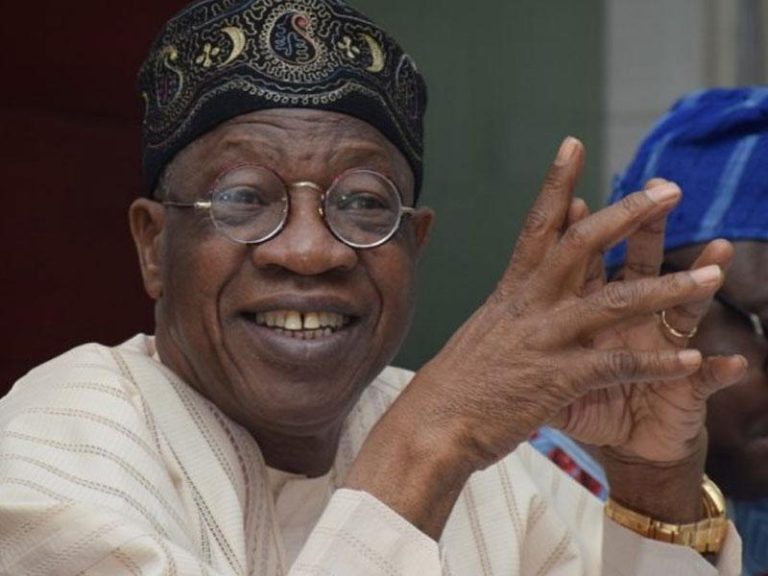
Nigeria’s Minister of Information and Culture, Lai Mohammed, gave the charge in a statement issued in Abuja on Monday and signed by his media aide, Segun Adeyemi to commemorate the 2022 World Radio Day.
Mohammed said, in spite of the widespread use of social media and other mass communication platforms, radio remains one of the most trusted and accessible media in the world.
Speaking on the theme of the day: ‘Radio and Trust’, the Minister urged radio stations in the country to continue to work hard to maintain the trust of their listeners as they have unparalleled connections with the grassroots.
Mohammed noted that the theme is apt and timely as the nation moves closer to another general election.
He urged all radio broadcasters to leverage the trust the listeners have in their mediums to educate and sensitize the citizenry on their roles and responsibilities in electing the right persons to serve at various levels of government.
”I am excited to note that some of the concepts to be discussed as sub-themes centre around the need to keep the medium credible, engaging and receptive to new broadcast ideas while creating better opportunities for income generation and profit,” he said.
He assured that the federal government will continue to pursue the right policies, give the required support as well as provide enabling environment for the growth and successful operation of radio stations in Nigeria.
A NIGERIAN broadcast journalist, Oseni Rufai, on Sunday, January 30, 2022 claimed that there are over 136 refineries in the United States of America, adding that none is owned by the government.
Rufai made this claim while advocating for the need to privatise or rehabilitate the refineries in Nigeria.
He claimed further that Texas, a state in the South Central region of the United States alone has 47 refineries.
“47 refineries in Texas over 136 refineries in America the government owns none. Let’s have a conversation on our refineries to privatize or rehabilitate,” his tweet reads.
From the tweet, the following claims were established:
CLAIM 1: ‘Over 136 refineries are in the U.S and none is owned by the government”
Findings by The FactCheckHub show that the claim is HALF TRUE.
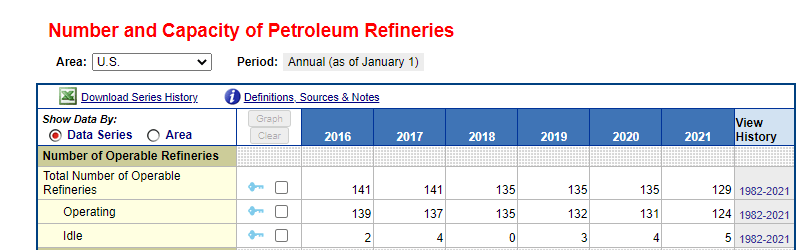
Data from the U.S. Energy Information Administration (EIA) reveal that the country has 129 refineries, as of January 1, 2022.
The EIA is a body that collects, analyses, and disseminates independent and impartial energy information in the United States.
It stated further that 124 refineries are currently operating in the US, while 5 are idle.
The EIA also revealed the ownership of the refineries, which shows that they are all owned by private industries.
THE VERDICT
The claim is HALF TRUE. While none of the refineries in the United States is owned by the government, available data revealed that the country currently has 129 refineries and not 136.
CLAIM 2: ‘47 refineries are in Texas’
Findings by The FactCheckHub show that the claim is FALSE.
Data from the U.S. Energy Information Administration (EIA) show that there are 31 refineries in Texas, as of January 1, 2022.
The EIA data show that 30 refineries are currently operating in Texas while one is idle.
AHEAD of the All Progressives Congress (APC) convention slated for February 26, 2022, a photo of a truck that fell and spilt the brooms it was conveying on the road has circulated online.
According to the caption on the photo which was retrieved on WhatsApp on Monday, February 7, 2022, the truck was said to be conveying brooms meant for the forthcoming APC convention.
“A truck carrying Broom to Abuja ahead of APC National Convention got accident. Pray for APC,” the caption reads.
The post was also shared widely by a Facebook user Diran Onifade, as archived here.
Another online user on Wednesday also posted the same image on a popular Nigerian blog, Nairaland, as archived here.
THE CLAIM
A truck carrying brooms to Abuja ahead of the APC National Convention had an accident.
THE FINDINGS
Checks by The FactCheckHub show that the image has been on the internet since 2018.
A Google Reverse Image Search on the image shows that the image first appeared on the internet on November 17, 2018, when it was posted on a Facebook page, Hope for Nigeria, as archived here.
According to the caption then, the image was said to be of a trailer carrying brooms meant for APC political campaign, which had an accident along the Lokoja-Abuja expressway.
It was also posted on Nairaland on November 18, 2018, as archived here.
THE VERDICT
The claim that a truck carrying brooms to Abuja ahead of the APC National Convention had an accident is FALSE; the photo has been on the internet since 2018 and is not recent.
THE NIGERIAN Senate lied in its claim that it was not aware of a petition against the nomination of an alleged card-carrying member of the All Progressives Congress (APC) as a national commissioner of the Independent National Electoral Commission (INEC), checks by The ICIR have revealed.
Rhoda Gumus, who President Muhammadu Buhari nominated as INEC national commissioner (South-South), was confirmed by the Senate on February 2, 2022 despite protests by Nigerians over reports that she is a card-carrying APC member.
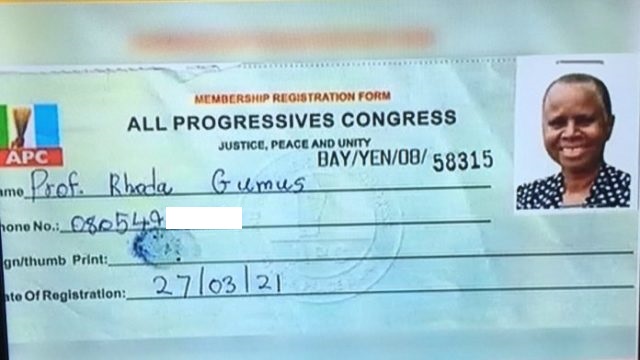
Gumus is alleged to be a member of the APC in Bayelsa State with APC Registration Form No: BAY/YEN/08/58315.
She, reportedly, was number 27 in her APC Ward Register.
Rhoda Gumus alleged APC card.
A civil society organisation, the Human Rights Writers Association of Nigeria (HURIWA), filed a petition against Gumus’ confirmation as INEC national commissioner.
The petition was titled ‘Petition against the confirmation of Prof. Rhoda H. Gumus’ nomination as national electoral commissioner for the Independent National Electoral Commission (INEC) on the basis of political membership.’
The petition was dated January 26, 2022, and addressed to Senate President Ahmed Lawan.
An acknowledgement copy of the petition was received by the Senate President’s office on January 26, 2022.
Copies of the petition were also addressed to Deputy Senate President Ovie Omo-Agege and Speaker of the House of Representatives Femi Gbajabiamila.
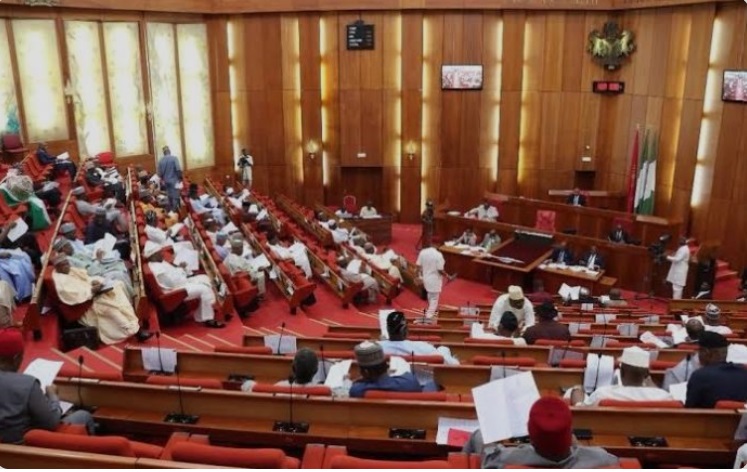
The Senate said it was not aware of the petition against the confirmation of Gumus’ nomination when the upper legislative chamber confirmed her on February 2.
The Chairman of the Senate Committee on INEC Kabir Gaya said a petition was only received against another nominee – A. B. Alkali, from Taraba State.
Gaya claimed that after the committee had already submitted its report, it started hearing about Gumus’ links to the APC ‘through the media.’
The Findings
But, contrary to the explanation, checks by The ICIR revealed that the Senate actually received HURIWA’s petition against the confirmation of Gumus’ nomination.
An acknowledgement copy of the petition was received by the Deputy Senate President’s office on January 26, 2022.
Acknowledgement copies seen by The ICIR show that the Senate received the petition on January 26, 2022.
On one of the copies, the stamp of the Office of the Senate President indicating ‘RECEIVED’ was signed by an official, and dated January 26, 2022, in acknowledgement of the receipt of the petition on the date.
The copies addressed to the Deputy Senate President and the Speaker of the House of Representatives were also stamped and signed to acknowledge receipt of the petition by the two offices on the same day – January 26, 2022.
An acknowledgement copy of the petition was received by the Speaker’s office on January 26, 2022.
The acknowledgement of the receipt of the petition suggests that the Senate deliberately ignored the petition against Gumus’ nomination as INEC national commissioner.
In the petition signed by National Coordinator Emmanuel Omwubiko, HURIWA informed the Senate that it had uncovered material evidence revealing that Gumus was an alleged card-carrying member of the APC.
The said material evidence was attached.
Urging the Senate not to confirm Gumus, the petition said her confirmation would amount to a violation of the Constitution of the Federal Republic of Nigeria, particularly provisions of Section 14(2a) of the Third Schedule, which states that “a member of the Commission shall be non-partisan and a person of unquestionable integrity.”
“Confirming the nomination of Rhoda Gumus as a national electoral commissioner for the Independent National Electoral Commission would constitute a direct violence against the relevant laws of the Federal Republic of Nigeria and the independence of INEC, the Senate is hereby called upon to reject this nomination.”
But the Senate ignored the petition and went ahead to confirm Gumus’ nomination as INEC national commissioner.
APC whistleblower leaked Gumus’ party membership details
Speaking with The ICIR on February 8, Onwubiko disclosed that an APC member leaked the information concerning Gumus’ membership of the party.
The APC member wished to remain anonymous, Onwubiko explained when asked the whistleblower’s identity.
“The party member was not happy that the electoral process is being undermined with the nomination of a card-carrying member of a political party as a national commissioner of INEC. That was how the information came out; otherwise, Nigerians would have been in the dark.”
Buhari’s earlier attempt to appoint his aide Lauretta Onochie as an INEC national commissioner failed after it was discovered that she was a card-carrying member of the APC.
Sustained pressure and protests from Nigerians forced Buhari to withdraw Onochie’s nomination.
PDP asks Buhari to reverse Gumus’ appointment as INEC national commissioner
The opposition party, the People’s Democratic Party (PDP), has kicked against Gumus’ confirmation by the Senate, describing the development as a coup against democracy.
The PDP alleged that Gumus’ nomination by Buhari and subsequent confirmation by the APC-led Senate was designed to corrupt and compromise INEC and pave the way for the APC to rig the 2023 general elections.
“Prof. Gumus must not be allowed to be used to pollute INEC. Her mission is already exposed, and our party is ready to mobilise our members and all patriotic Nigerians across the country by taking legitimate actions to protect the integrity of the electoral body,” PDP said in a statement released by its spokesman Debo Ologunagba on February 7.
PDP warned Gumus to steer clear of INEC “as there is no way she can function in that office as a card-carrying member of the APC.”
The PDP observed that Gumus’ position as an INEC national commissioner would raise questions over the integrity of the electoral process.
“Her entry and continuing stay in INEC will be toxic and taint the Commission with bias and manipulations ahead of the 2023 elections since her appointment and confirmation is unconstitutional.”
The party asked Buhari to withdraw Gumus’ appointment as an INEC national commissioner.
The opposition party said that the reversal of Gumus’ appointment would assure Nigerians that Buhari was indeed committed to free, fair, transparent and credible elections in 2023.