Please note that the FactCheckHub has not obtained any right from the authors or copyright owners of all third-party contents from embedded links and shall incur no liability in this regard.
Please note that the FactCheckHub has not obtained any right from the authors or copyright owners of all third-party contents from embedded links and shall incur no liability in this regard.
Please note that the FactCheckHub has not obtained any right from the authors or copyright owners of all third-party contents from embedded links and shall incur no liability in this regard.
Please note that the FactCheckHub has not obtained any right from the authors or copyright owners of all third-party contents from embedded links and shall incur no liability in this regard.
A FORMER Nigerian Senate President Bukola Saraki on Tuesday, March 22, 2022 claimed that the gesture of the young professionals who raised money for his political party’s presidential nomination forms is “a first of its kind in the history of Nigeria.”
Following Saraki’s official declaration to contest for the position of president in Nigeria’s 2023 general election, a group of young professionals led by Abubakar Danmusa had on Monday, March 21, 2022 paid N40 million to obtain the expression of interest and nomination forms for him to contest the Peoples Democratic Party’s (PDP) presidential primary election.
Saraki, who reacted to the development in a social media post, published on his verified Facebook and Twitter handles, as archived here and here, described the gesture as “a first of its kind in the history of our nation.”
Recall that, on the 17th of March 2022, the PDP commenced the sale of expression of interest and nomination forms for members of the political party wishing to contest in the 2023 general election. The presidential expression of interest form was pegged at N5 million while the nomination form goes for N35 million; thus making it a total of N40 million.
Saraki receiving the form from a representative in the group | PHOTO CREDITS: Saraki’s Facebook Page
“This symbolic gesture, a first of its kind in the history of our nation, is also a challenge to me. Now, I promise to work twice as hard as I originally intended. I promise to meet the yearning and aspirations of all our young people to run a modern government that can achieve sustainable development,” Saraki said in the post.
THE CLAIM
First time in Nigeria a group of people crowd-funded to buy the expression of interest and nomination forms for a politician.
THE FINDINGS
Findings by the FactCheckHub show that before Saraki, there have been many groups who reportedly raised funds to purchase nomination and expression of interest forms for Nigerian politicians to contest elective positions.
Here are a few instances of politicians who received the same gesture to contest for a presidential seat:
(1) Atiku Abubakar: On the 18th of March, 2022 – a few days before Saraki’s announcement, a business forum named North East Business Forum purchased the 2023 Presidential Nomination and Expression of Interest forms for the former Vice President, Atiku Abubakar.
The group, who later presented the forms to Atiku, a presidential hopeful at his Abuja residence, said the gesture was in fulfilment of their promise in 2021 to purchase the forms for him.
The former president reportedly received the same gesture in 2018.
(2) Muhammadu Buhari:The FactCheckHub recalled that in 2018, the incumbent Nigerian president, Muhammadu Buhari, also received the same gesture from a group called the National Consolidation Ambassadors Network (NCAN).
The group paid a sum of N45 million for his nomination and expression of interest forms in 2018 to contest under the aegis of All Progressives Congress (APC).
(3) Aminu Waziri Tambuwal: In 2014, some friends and political associates of the governor of Sokoto State, Aminu Waziri Tambuwal also bought him a nomination form to contest in the 2015 presidential election under the platform of the All Progressives Congress (APC).
There are also several instances of Nigerian politicians who received free nomination forms from support groups to contest for other elective positions as can be seen here and here.
THE VERDICT
Saraki’s claim that the group’s gesture (of buying him presidential nomination forms) is the first of its kind in Nigeria is MISLEADING because it has happened multiple times before.
A VIRAL photo showing a man in uniform while holding a catapult with his two hands has surfaced on social media alongside a claim that it shows a new Ugandan police spokesman shooting a catapult at a journalist for asking an ‘irrelevant’ question.
In the photo, the man who wore a cornsilk brown-coloured uniform with a black cap sat down with microphones and other gadgets placed on his table. He was seen pulling back the elastic band of the catapult while targeting a certain direction.
A Twitter user, Fully Vaxxed G!, with the handle @_Sir_CharlesR tweeted the photo with a caption: “Newly appointed Uganda police spokesman hits News reporter with a caterpult for asking irrelevant question (sic).” The tweet was shared more than 9,000 times on Twitter as of 11PM on Wednesday, March 16, 2022.
The tweet was also shared on other social media platforms, including Facebook and blogs in Nigeria, among other countries as archived here and here.
CLAIM
“Newly appointed Uganda police spokesman hits news reporter with a catapult for asking irrelevant question.”
THE FINDINGS
A Google Reverse Image Search of the photo by The FactCheckHub revealed that the image was from a press release published on the website of the Uganda Police Force on April 12, 2021.
According to the release, the catapults were confiscated during a military operation by the country’s Directorate of Crime Intelligence, noting that they were capable of firing metallic projectiles or bearings.
Video footage seen by The FactCheckHub on YouTube shows that the official spokesperson for the Uganda Police Force, Fred Enanga, was demonstrating how to use a catapult while addressing a press conference, saying it poses serious danger to the safety and security of Ugandans.
This is contrary to the viral claim on social media that he shot a journalist for asking irrelevant questions.
While demonstrating how dangerous the catapult might be, the spokesman was partly heard saying “It is very dangerous, you do like this and target somebody. So, you can see how dangerous this thing is;” he said as he fired the catapult to show how it works.
The Ugandan Police also debunked the claim under another post of the image tweeted by one Twitter user, Ahmednasir Abdullahi SC with the handle @Ahmednasirlaw on March 12, 2022. The tweet which has now been deleted was archived here.
Similarly, the claim has also been debunked by another fact-checking platform, AFP Fact Check as seen here.
THE VERDICT
The claim that the Ugandan police spokesman hits a news reporter with a catapult for asking irrelevant questions is FALSE.
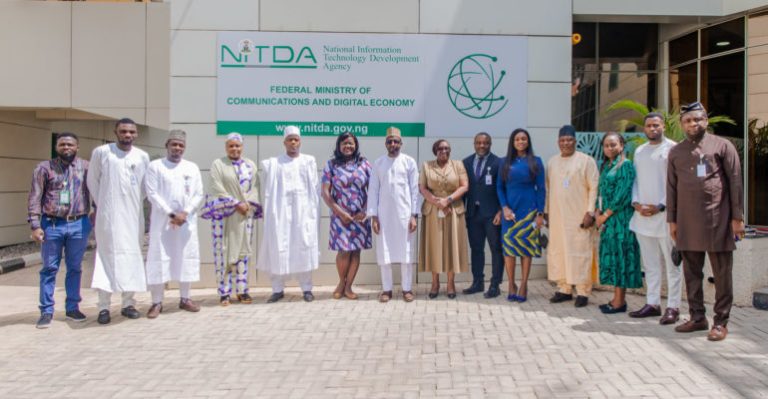
THE AMERICAN multinational technology conglomerate Meta Platforms Inc., formerly known as Facebook, Inc., has visited the head office of the National Information Technology Development Agency (NITDA) in Abuja to pledge its support in a bid to strengthen the fight against misinformation in Nigeria.
The Head of Public Policy (West Africa) Meta, Adaora Ikenze, during the meeting led by the NITDA Director-General and Chief Executive Officer, Kashifu Inuwa, described the agency as its principal regulator in Nigeria.
“We recognised the importance of this Agency, and as the catalyst for the sector and economic development in Nigeria, we equally recognised the importance of the vital regulatory role you are providing in this space,” she said.
Ikenze added that Meta’s visit to the agency is the beginning of a more cooperative and collaborative relationship.
“We are fortunate enough to be one of the most supportive platforms in the country; we understand the importance and value that our platforms and products bring to the country; by that, we would like to have a more open collaborative relationship with our regulators,” she added.
Inuwa described the collaborative effort between NITDA and Meta as apt, given the continued circulation of fake news and misinformation on social media, which he said poses threat to the nation’s stability.
Inuwa applauded Facebook/Meta for being a leading partner in the fight against fake news, adding that the platform must ensure it checkmates the excesses of the perpetrators known to the public.
“How can we make it better to make sure that the menace of fake news is reduced to the barest minimum? Many people do not read their messages talk more of verifying their authenticity. Therefore, adopting a Simpler Verification Mechanism will reduce the spread of unsubstantiated news,” Inuwa said.
He also urged the platform to consider bringing its investment to Africa
“We know Metaverse is coming and is coming big, and you are investing in Europe; what are you doing for Africa?” he enquired.
“We need to look at the laws in our country, what can we do to make sure whatever you are doing is following the rules and carrying our people along in building the Metaverse in the same way you are talking to the Europeans,” he added.
On Nigeria’s journey to the realisation of Digital Literacy by 2030, the NITDA boss said the target remains sacrosanct, adding that it is critical to President Muhammadu Buhari-led’s administration.
Inuwa, however, appealed for collaborative support from Meta.
“We cannot do it alone; we have an ambitious target where we need partners like you to achieve that. It would help if you equally had people that will consume your services, and they need to be digitally literate before they can access your services,” he noted.
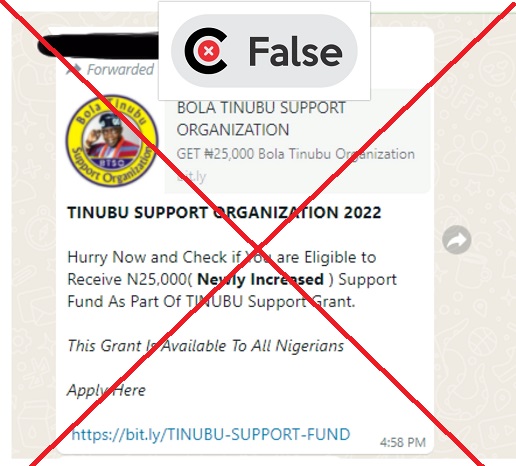
A WHATSAPP post in circulation says Bola Tinubu Support Organisation (BTSO) is giving out N25,000 to every Nigerian citizen.
The post, retrieved from a WhatsApp group, claimed that the newly increased fund is part of the Tinubu Support Grant, adding that it is available for all Nigerians who click the link and fill out the form.
The claim reads:
TINUBU SUPPORT ORGANIZATION 2022
Hurry Now and Check if You are Eligible to Receive N25,000( Newly Increased ) Support Fund As Part Of TINUBU Support Grant.
This Grant Is Available To All Nigerians
Apply Here
A national leader of the All Progressives Congress (APC), Bola Tinubu, had on January 10, 2022, declared his intention to contest the presidential poll in Nigeria’s 2023 general election, Premium Times reported.
Earlier in March 2021, the Bola Tinubu Support Organisation (BTSO) was inaugurated in Abuja, The Nation newspaper had reported.
The BTSO claimed on its website that it is “a Non-Governmental Organization (NGO) with the aim galvanizing support round the country for the actualization of 2023 Presidential Candidature of His Excellency, Sen. Bola Ahmed Tinubu, The Asiwaju of Lagos and The Jagaban of Borgu Kingdom.”
THE CLAIM
Tinubu [Bola Tinubu Support Organisation] is inviting Nigerian citizens to apply for the Bola Tinubu Support Organization Funds.
A screenshot of the phishing website.
THE FINDINGS
Findings by The FactCheckHub show that the claim is FALSE.
A click on the link, archived here, directs users to a website with an image of Bola Tinubu and some texts about BTSO alongside an instruction: “Get Your Own ₦25,000 Which Was Previously ₦19,800 By Filling The Form Below”.
It directs users to fill in their names, mobile number, home address and email address. Once those details are filled and submitted, it directs users to a totally different website archived here.
When the redirected website was subjected to verification on Whois lookup – a platform for researching domain ownership, it revealed that the website was registered by one Shadrack Ebimodeinghan Ebisco.
A look at the website the claim directs users to has similar features with the websites The FactCheckHub has verified and found to be false here, here, here, and here.
Similarly, Comrade Abubakar Kuso, the National Coordinator of BTSO had earlier in a post on its official website debunked the claim.
“This is to inform the general public that at no time did Bola Tinubu Support Organization (BTSO) gives out any N25,000 or any amount as grant to Nigerians. The link circulating on social media is FAKE and NOT TRUE.
Please kindly disregard the link and don’t provide your details by applying for any grant,” he wrote.
When The FactCheckHub reached out to Ebisco via his mobile number retrieved from the database of Whois, he denied creating the phishing website.
“I’m not the person that created it. Someone just used my name to create it. I don’t know anything about it. I registered my website on namecheap and not whogohost,” he told The FactCheckHub via phone.
Avoid falling victim to phishing scams
Over time, The FactCheckHub has debunked several of such claims hiding under the guise of recruitment, support fund, empowerment programme, a government activity or free internet data.
These claims usually follow a similar modus operandi by targeting areas that would be of interest to a lot of persons.
They are often shared via the WhatsApp platform. Oftentimes, they impersonate a group, person or organisation and they all have a link they ask people to click.
The claim that Tinubu [Bola Tinubu Support Organisation] is inviting Nigerian citizens to apply for the Bola Tinubu Support Organization Funds is FALSE.
ON September 7, 2021, the PODE published what it called ‘a compendium of President Buhari’s ongoing and completed infrastructure projects in South-East Nigeria.’
The list was released two days before Buhari’s visit to Imo State, one of the five states of South-East Nigeria.
You can read the first part of this fact-check here.
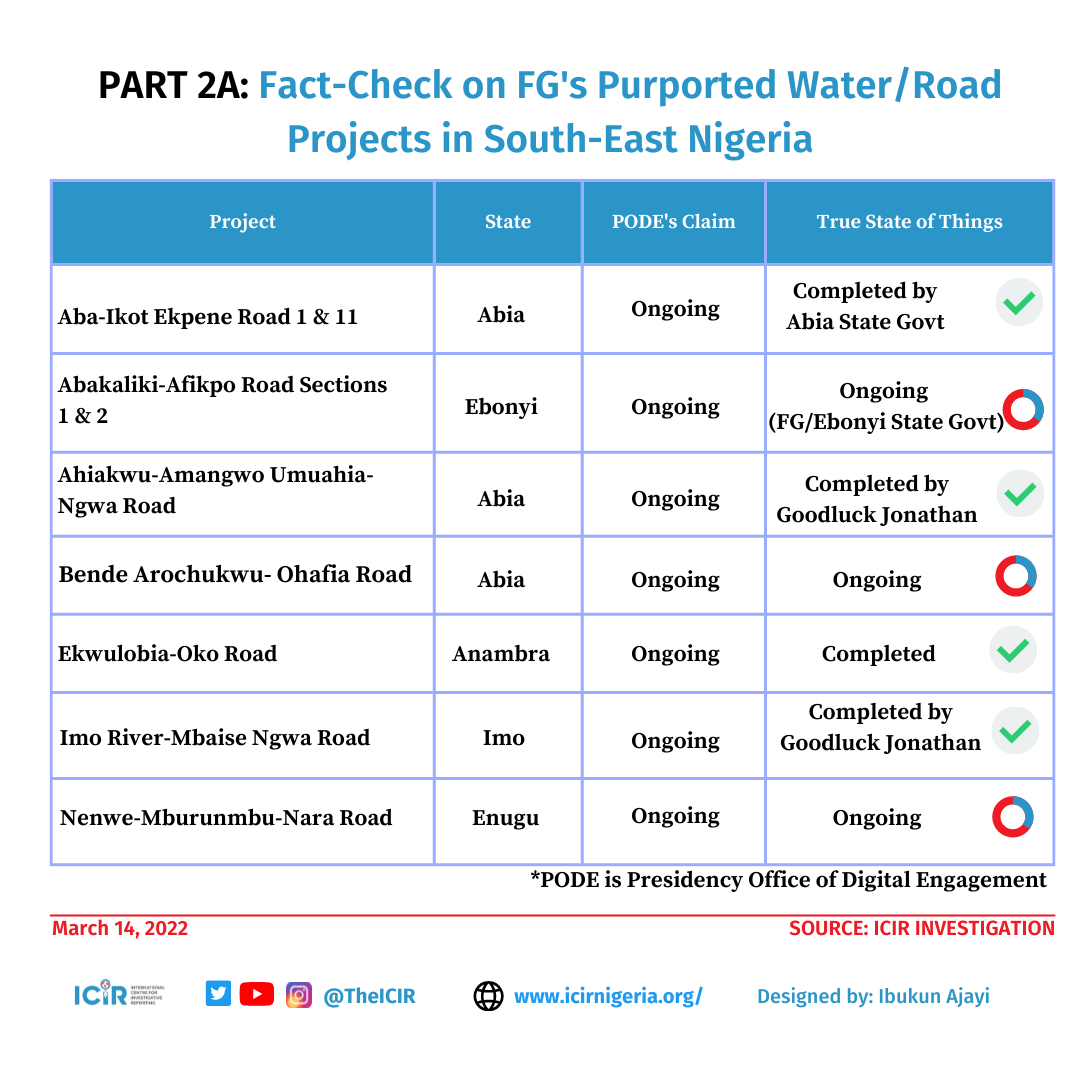
The PODE claimed that the Buhari administration was rehabilitating sections 1 and 2 of Abakiliki-Afikpo Road. The FactCheckHub reporter travelled through this road and confirmed that the work was ongoing.
Onueke, along Abakiliki-Afikpo Road, Ebonyi State.
According to information obtained from the website of the Ministry of Works and from online sources, the work is handled by several contractors, including Uniglobe, Builettine, CCEC, and Kemmasphere Realty Company.
Findings showed that work was going on at Abomegga, Abakiliki, Amuzu and Igboruma axes when The FactCheckHub visited the site, but it was found that Afikpo and Amasiobi areas were wearing off.
However, the Ebonyi State government lays claim on the project. In 2017, President Buhari flew into Ebonyi State and commissioned a 14.5 Kilometer Abakaliki-Afikpo Road, which is exactly the project the Federal Government claims to be rehabilitating. In Nigeria, federal roads are handled by the Federal Government while state roads are repaired or built by the state or subnational governments.
It, therefore, means that neither can claim projects done by the other.
The FactCheckHub sent the Freedom of Information (FOI) letter to the Federal Minister of Works and Housing Babatunde Fashola on January 25, 2022, regarding the status of this project and why it was so. Still, he did not reply to questions posed by this organisation more than one month after.
One of the workers on-site, nevertheless, told The FactCheckHub that the project embarked upon by the state government was a smaller part of the contract being executed by the Federal Government.
Mbaise axis of Owerri-Umuahia Road.
The PODE also named the rehabilitation of sections 1, 2 and 3 of Owerri-Umuahia Road among the projects executed by the Muhammadu Buhari’s administration in the South-East region. This road connects Umuahia, the capital of Abia State, to Owerri, the Imo State capital, through Ahiazu Mbaise Local Government Area.
According to information on the Federal Ministry of Works’ website, the project is handled by Zerock Construction Nigeria Limited.
The reporter did not see any contractor on-site when he travelled through this road in December 2021. The Umuahia section of the road was tarred, but Ubowo to Ahiara in Ahiazu Mbaise Local Government did not look rehabilitated.
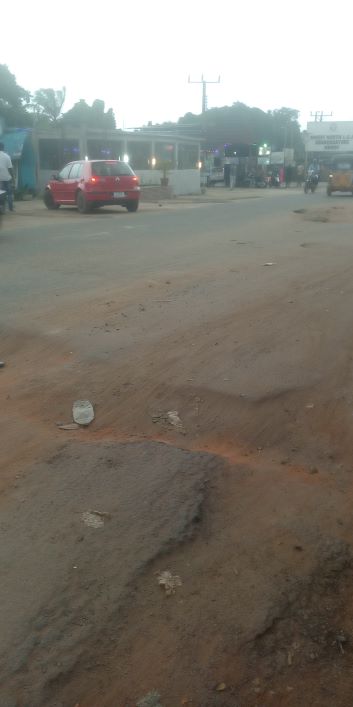
Residents said they saw contractors in 2019 working at Nguru, Aboh Mbaize Local Government Area, but one of them concluded that the company did a shoddy job. The reporter saw several potholes along the Mbaise axis.
“Well, you can see the state of the road now. We need to start taking infrastructure projects seriously in Nigeria if we want to change the poor state of our nation,” Ugo Amanze, a secondary school teacher from Mbaise, said.
The PODE also listed the rehabilitation of Oba-Nnewi-Okigwe Road as one of the activities of the Buhari administration in the region. The road links Okigwe in Imo State from Traffic Light in Nnewi, Anambra State.
The reporter travelled through this road but did not see any contractor or road rehabilitation equipment. Residents, however, testified that a contractor rehabilitated the Nnewi part of the road in 2020.
The rehabilitated part of Nnewi-Okigwe Road.
But there was no evidence that the road was rehabilitated in any way, as potholes dotted the Nnewi North Local Government axis and several other parts of the road.
“It was a poorly executed project,” a resident of Nnewi, Daniel, said.
The Ozubulu portion of this road wore a bad look, and two residents dismissed the question when the reporter asked them whether work was done on that axis by a Federal Government contractor or not.
“You journalists are the problems of this country,” retorted one of them, Anyanwu Josephine, a native of Ozubulu.
“Does it look like a project was done on this road?” she asked, scurrying away.
The PODE cited ‘more than 60 federal road and bridge projects’ being executed in South-East by the Buhari administration. Simple checks showed that the presidential office repeated exactly the claims made by Lai Mohammed in 2018, which were fact-checked here.All the roads listed by PODE in the new claims had earlier been named in Mohammed’s claims.
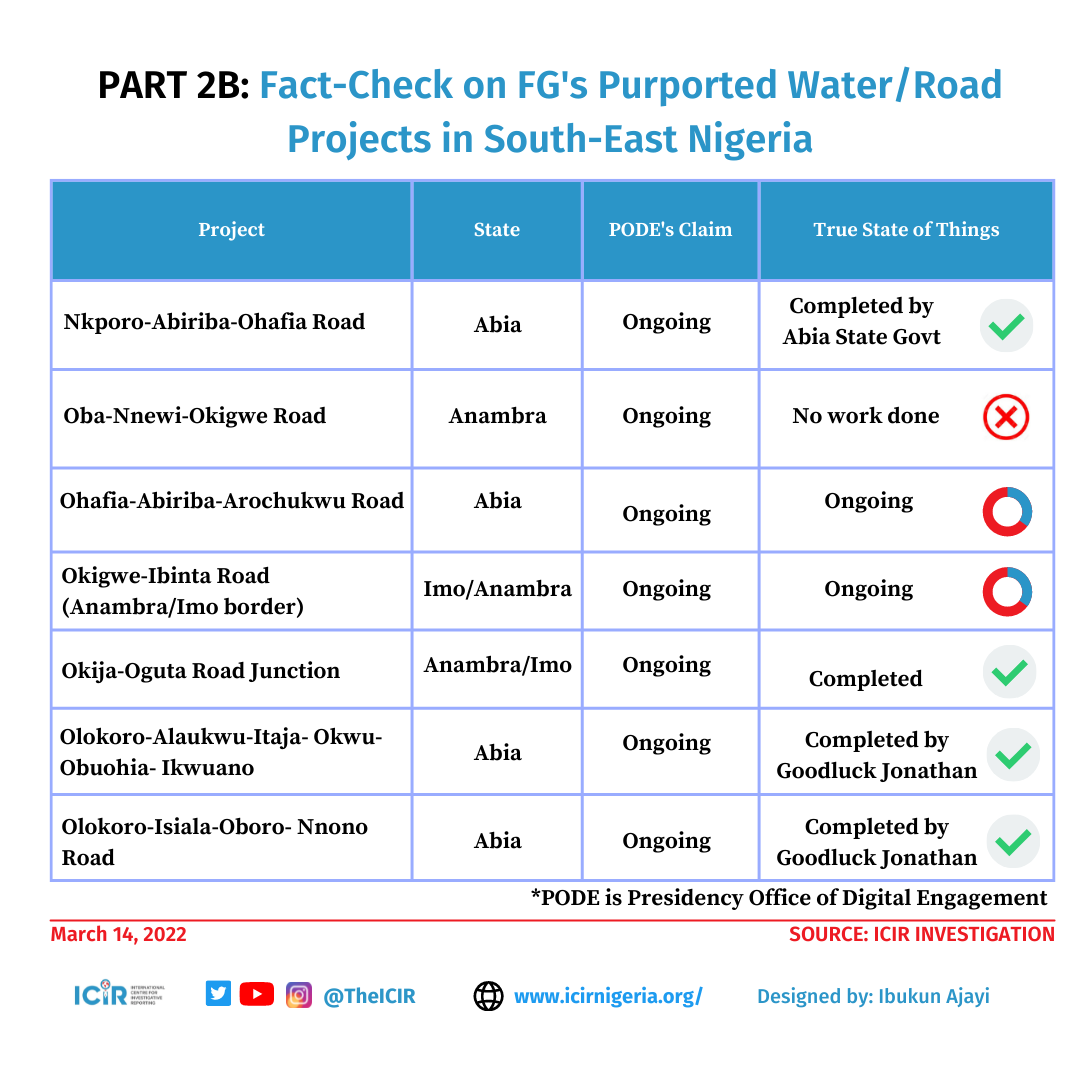
The FactCheckHub travelled through all of those roads again to ascertain whether they had been rehabilitated. One of such roads was Olokoro-Alaukwu-Itaja-Okwu-Obuohia-Ikwuano Road, contracted to Abia Rhas in 2010. The contract was awarded at N990.673 million, according to information on the Federal Ministry of Works website.
Umuahia-Ahiakwu Road.
Findings showed that this project was started and completed by the immediate past government of Goodluck Jonathan. It was not ongoing and was not done by the Buhari government, which makes the claim MISLEADING.
Next was the Olokoro-Isiala-Oboro-Nnono Road Junction Road. This road was awarded to Abia Bok Company at N515.315 million by the immediate past government of Goodluck Jonathan. Residents said it was completed in 2013, meaning that the Buhari administration neither awarded it nor was it ongoing when the reporter visited it. Also, Umuahia-Ahiakwu-Amangwo Road was started and completed by Jonathan, and not Buhari.
“This road was done by the last administration. It was completed around 2014. It has nothing to do with Buhari,” 71-year-old Thadeaus Ohima, who is a native of Umuahia, told The FactCheckHub.
Next is the Umuna-Ndiagu-Agba Umuna-Ebenebe-Amasi Awka Express Road with Spur from Umuna – Ndiagu. The Amansea section of this road was supposed to be constructed by Conduc Nigeria Limited, the contractor listed by the Federal Ministry of Works, but this was not the case.
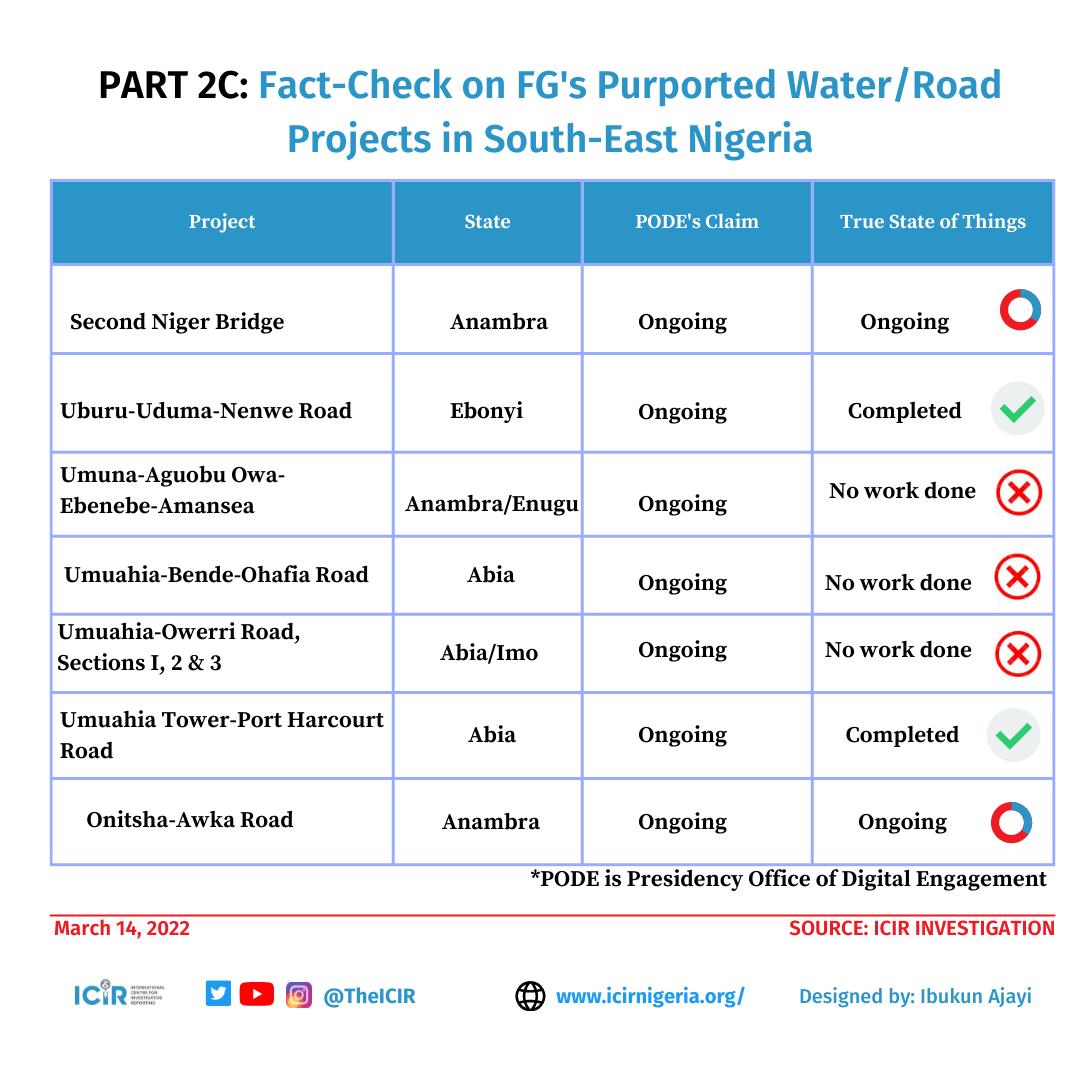
Part of the Ebenebe town was rehabilitated, but work stopped mid-way. The road from Ebenebe to Umuna was abandoned, so it was not ongoing as claimed by PODE.
“We have suffered on this road, but it gets worse during the rainy season. People can tell you anything they want, but the truth is that this road has been abandoned for many years – even before 2015 when Buhari came to power,” Sunday Ede, who hails from Amansea, told The FactCheckHub.
Ebenebe axis of Umuna-Ndiagu-Agba Umuna-Ebenebe-Amasi Awka Expressway.
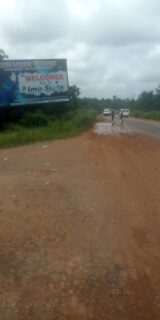
The PODE also referred to Mbaise-Ngwa Road, which connects the Imo River. The reporter saw no contractor when he visited, though the project was listed on the website of the Federal Ministry of Works as being executed by Mangrovetech Nigeria Limited. The FactCheckHub was told by residents that it was completed by the immediate past government of Jonathan.
“It was completed before 2015. Anybody who tells you otherwise is deceiving you,” a passer-by, Okechukwu, who hails from Ngwa, said.
Ngwa-Imo River.
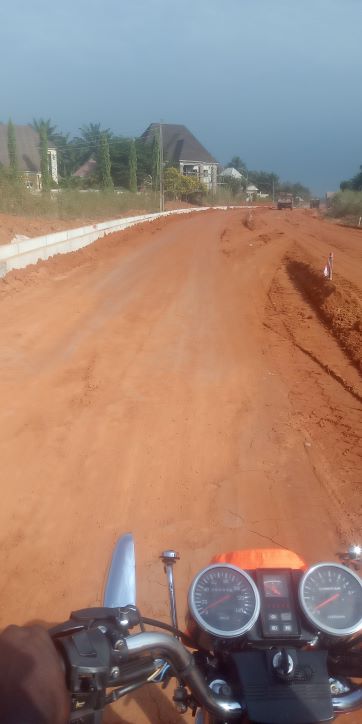
The PODE equally claimed that the Buhari government was rehabilitating the Bende-Arochukwu-Ohafia Road. The FactCheckHub reporter found that work was going on at the site from Ohafia. However, this road is divided into various sections. Contrary to PODE claims that all were being rehabilitated, the Nkporo-Abiriba-Ohafia Road was found to have been executed by Abia State government with evidence hyperlinked here.
Ohafia axis of the Bende-Arochukwu-Ohafia Road being constructed.
The Umuahia-Bende axis, as claimed in PODE’s list, was not ongoing.
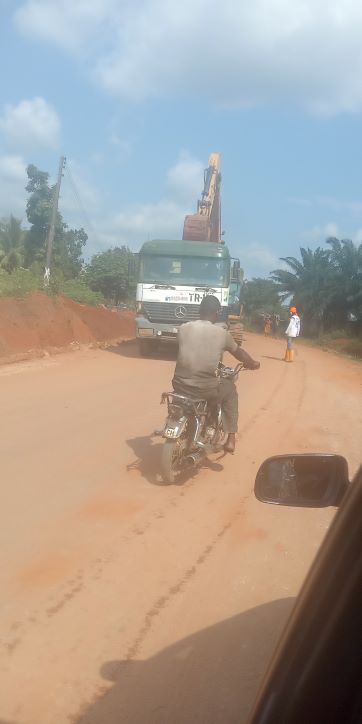
In line with PODE’s claim, the Ibinta-Okigwe axis was being constructed when the reporter visited. The only challenge was the quality of the road, residents said. Of equal importance is the Nenwe-Mburumbu-Nara Road, which Arab contractors handle. The reporter found that work was going on as claimed by PODE. However, residents said it had been a ‘start-stop project,’ meaning that construction has been irregular.
“They stopped for two years and started again two weeks ago,” a commercial motorcyclist, Chima Anozie, who is from Nara, told The FactCheckHub.
Another resident, Adaku Nnaji, said she was happy that work had re-started on the site.
She urged the contractor to complete the project before the rainy season of 2022.
The Onitsha-Awka Expressway is also one of the projects claimed to be executed by the Buhari administration. The FactCheckHub found that work was ongoing in December 2021. However, this work had been on for close to 15 years now, meaning that two or three previous governments had been involved in its rehabilitation yet could not complete it.
“I remember it was President Musa Yar’Aadua that awarded it in 2008/2009, but it was not completed until he died,” a resident of Awka, who uses the road, Chinwe, said. She regretted that the road had been used to woo voters from the South-East region during general elections.
Ongoing construction of Nenwe-Nara-Nome Road.
“Once election comes, they (politicians) will promise to complete it, but they forget their promise after the votes are cast,” she further said.
The reporter found that only one part of the road was done. Work stopped in 2019 after Arroma Junction in Awka, Anambra State capital. No work was done after the Government House in Awka, resulting in a series of accidents, residents said. The reporter found that the Amansea section of the road had been abandoned, eliciting angry reactions from residents.
“This place has been like this for over 10 years now, no work, nothing,” said Adanna Ihuoma, a native of Amansea, who used a stream of expletives on the Federal Government for ‘abandoning the road.’
She berated the reporter for “not telling the government the truth” even though she was told that the journalist was on a fact-finding mission.
Similarly, PODE claimed that the Second Niger Bridge was ongoing. The claim was found to be TRUE.
More so, Aba-Ikot Ekpene Road claimed to be rehabilitated by Buhari has the signature of the Abia State government. Due to its deplorable state, the Abia State government, in October 2021, “directed the immediate fixing of the deplorable state of the Umuahia- Ikot Ekpene federal road, which has become a death trap.” This was one month after PODE’s claims.
Completed projects
Some of the projects listed by PODE were discovered to have been initiated and completed by Buhari’s government.
Completed Umuahia Tower-Port Harcourt Road.
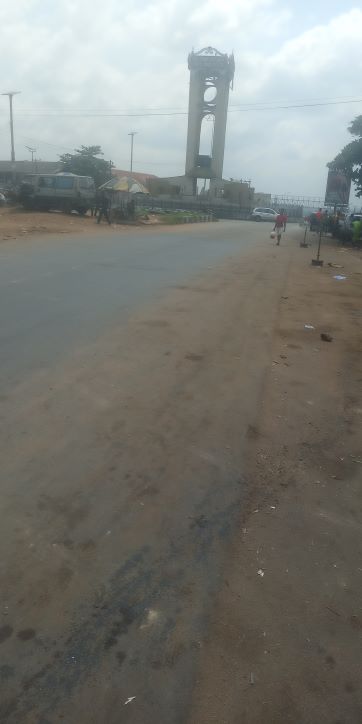
One is the Umuahia Tower-Port Harcourt Road. This project, handled by Setraco Nigeria Limited, had been completed when the reporter visited. The same result was also found at the Old Enugu-Port Harcourt Road. The PODE claimed it was ongoing, but it was discovered to have been completed.
Similarly, Onitsha-Owerri Road has been rehabilitated as claimed by PODE, including the Okija-Oguta section. This is also the same for Ekwulobia-Oko Road in Anambra State and Uburu Nenwe Road in Ebonyi State.
Also, Enugu-Port Harcourt Road has been rehabilitated.
Conclusion
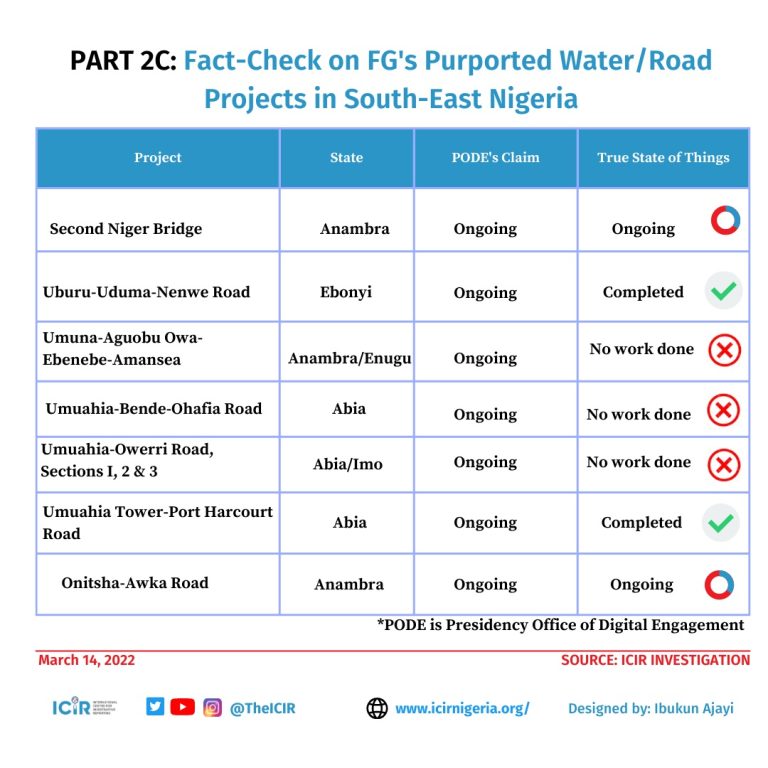
The PODE claimed that the projects were either ongoing or completed. But out of the 27 projects investigated, only five were completed by President Buhari. Six were ongoing, while two were done by the Abia State government. Three were partially done. No work was recorded on six projects. However, four projects were completed by Goodluck Jonathan, and one was suspended. This means that only 15 out of the 27 projects recorded some form of execution by the Federal Government.
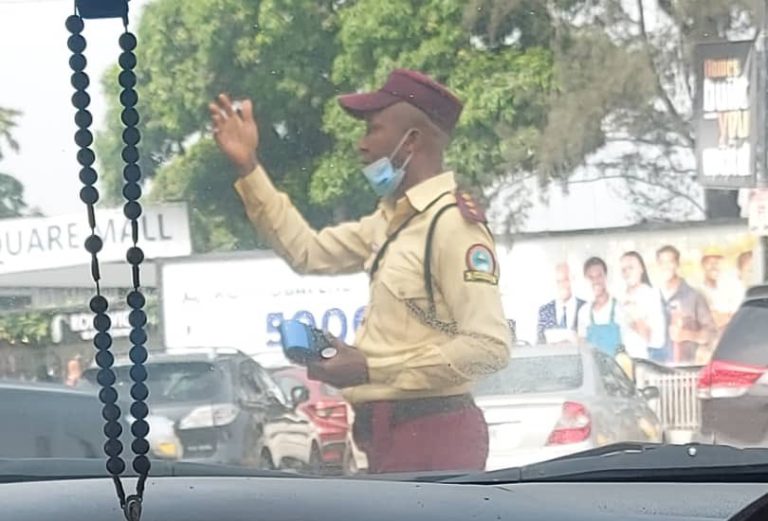
A TWITTER user, #LagosTrafficReports with the user ID @TrafficChiefNG, on Wednesday, March 9, 2022 claimed that an official of the Lagos State Traffic Management Authority (LASTMA) was caught with a Point of Sale (PoS) machine.
The user, in a now-deleted tweet, questioned if PoS machine is now a gadget used for traffic control.
Alongside the tweet was a picture of the said LASTMA official with a gadget in his hand.
“[4:16PM] @LAtunwa: @followlastma Today 9th March, 2022 this LASTMA official was captured right at Falomo roundabout with POS in his hand. When has POS machine added to the gadgets to control traffic? #TrafficChief,” the tweet read.
Another Twitter user, Traffic Updates + Useful Info with the user ID @trafficbutter, also repost the same tweet now archived here. However, this user, who is yet to delete the tweet, has over 356,000 followers on Twitter.
CLAIM
LASTMA official caught with PoS machine in Lagos.
FINDINGS
Checks by the FactCheckHub show that the claim is FALSE.
Findings revealed that the LASTMA officer was holding a Traffic Management Solution (TMS) device and not a PoS machine.
The Lagos State Government had in June 2021 launched the TMS device, which looks like a PoS machine.
TMS, a handheld device, would allow for real-time capture of picture and video evidence of road traffic and vehicle compliance violations as they occur, Premium Times reported.
Similarly, the Senior Special Assistant (SSA) to the Governor of Lagos State on New Media Jubril Gawat clarified that it was a TMS device and not a PoS.
“That’s NOT a PoS Machine; it’s a Traffic Management Device that captures traffic offender information instead of chasing them around. It captures your plate number, you get an SMS sent to you at home with evidence of your offence, This device is for LASTMA for now,” he said in a tweet via his Twitter handle @Mr_JAGs.
VERDICT
The claim that a LASTMA official was caught with a PoS machine in Lagos is FALSE; findings show he was holding a TMS device.
EMPHASIS has again been placed on the need to empower the citizens with basic verification skills in order to fight against political misinformation and disinformation that could mar Nigeria’s 2023 general elections.
This call was made by experts on Friday during an interactive Twitter Spaces hosted by The FactCheckHub.
In her words, Bamas Victoria, the Editor of The ICIR stated that one of the ways to fight misinformation is to teach the citizens how to interact with any information they come across, particular by indulging in the basic verification process.
“One way we can help as fact-checkers and journalists is to engage the public and teach them media literacy and critical thinking,” she said.
Also speaking, Kemi Busari, the Editor of Dubawa decried how political parties and actors usually contribute to the spread of misinformation during the electioneering period. He said it is important to put some sanctions in place to curb such attitudes from undermining the country’s electoral process.
“There needs to be a sort of deterrence, particularly from the in-house workings of the political parties. A sort of self-regulation has to be in place by these parties to curb misinformation,” he noted.
He also reiterated the need for journalists to go beyond collecting press releases from politicians without subjecting them to proper scrutiny.
“The general public should also be armed to differentiate between genuine information and misinformation,” Busari added.
Speaking on the need to stop disinformation from posing threat to national security, especially in an election year, Dr Akintunde Akanni, the acting Head of Journalism Department, Lagos State University, said that it is important for journalists to always ethically report only what is true to avoid throwing the country into chaos.
“An average journalist who has undergone training must have been told early in the course of his training that ethically, you must learn to report only what it is true because of the impact it might have on national security,” he opined.
Similarly, Hannah Ajakaiye, the International Centre for Journalists (ICFJ) Knight Fellow (Nigeria) said there is a need to acknowledge the fact that a whole lot of Nigerians rely on social media to get their news due to the fact that the trust they have in the traditional media has diminished.
“This is why it is important to invest in media literacy. We need to sensitize social media users to be able to distinguish what is real and what is fake and the need for them to trust credible media platforms, rather than blogs or social media influencers,” she explained.
Speaking on the need for fact-checkers to be non-partisan, David Ajikobi, the Nigeria Editor of the Africa Check stated that fact-checkers need to realise that their job is to make sure that the quality of the information in the media space is accurate to enable people to make an informed decision at the poll.
He also reiterated the need for people to always check the news they are consuming to ensure they are not falling for parody accounts.
“If people can do a simple verification process on their own, it will save them from falling for all forms of misinformation,” he reiterated.
In his submission, Ajibola Amzat, the Managing Editor of The ICIR said it is almost impossible to stop people from sharing misinformation, adding that “misinformation is, in fact, getting its way into the mainstream media.”
“Journalists, perhaps out of ignorance or poor fact-checking process also share misinformation,” he said.
Amzat added that since it is not possible to stop misinformation, which he said has been in existence from time immemorial, there is a need to improve the quality of information that is being churned out.
“Our goal should be to always counter misinformation with quality and adequate information as fast as possible,” he noted.
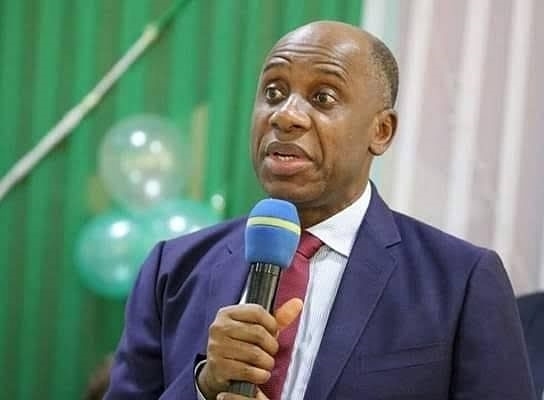
ON DECEMBER 26, 2021, Nigeria’s Minister of Transportation, Rotimi Amaechi said the money left behind by former President Goodluck Jonathan’s administration could not sustain the country for three weeks.
He made the claim on a Channels Television’s programme titled, ‘Hard Copy’, The Punch reported.
The claim was reported on multiple news platforms; the reports were also shared widely across various social media platforms.
Figure 1: The Punch newspaper, which published the report, is one of the national newspapers in Nigeria.
Figure 2: Sahara Reporters is one of the online newspapers in Nigeria which published the report.
Figure 3: The Cable, another online newspaper, also published the report.
THE CLAIM
The money left behind by former President Goodluck Jonathan could not sustain Nigeria for three weeks.
THE FINDINGS
Checks by The FactCheckHub show that the claim is FALSE.
Data from the Central Bank of Nigeria (CBN) show that Nigeria had $28.6 billion inits foreignreserve when former President Jonathan left office in May 2015.
Further findings show that Jonathan’s successor, President Muhammadu Buhari’s first Appropriation Act in office (2016 budget) was N6.06trillion. This was Nigeria’s annual budget for the year.
Nigeria’s Naira exchanged for the US Dollar at a maximum official rate of N305.21 as of October 2016.
Dividing the 2016 budget of N6.06 trillion (N6,060,677,358,227) by the then prevailing exchange rate of N305.21 gives $19,857,400,996.78. This is much less than the $28.6 billion left in the country’s treasury, according to the CBN data.
Figure 4: Nigeria’s Naira exchanged at a maximum official rate of N305.21 as of October 2016.
If the country’s 2016 budget had been financed totally from its foreign reserve, Nigeria will still have about $10 billion left in its reserve.
From the findings above, Nigeria’s foreign reserve, as of when former President Jonathan left office in May 2015, is much more than what the President Buhari-led government budgeted as its expenditure in its first year in office.
THE VERDICT
The claim by Amaechi that money left behind by former President Jonathan could not sustain Nigeria for three weeks is FALSE; as reports indicate that the country’s foreign reserve had $28.6 billion as at when his successor took over.
This fact-check was produced by The FactCheckHub in partnership with the Code for Africa’s PesaCheck.
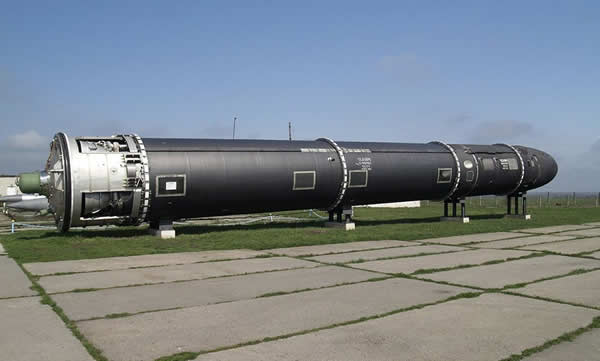
AMID the ongoing Russia – Ukraine crisis, a viral post shared on Facebook on Monday, February 28, 2022, claimed that Russia has a nuclear missile called ‘Satan 2’ capable of destroying the whole world.
The post which contains some texts and an image purported to be the missile was published by a Facebook Page named Robert Mugabe Hilarious Quotes. It added that the weapon is only owned by Russia.
“#RussiaUkraine: Satan 2 Liquid Fueled Nuclear Missile
“This weapon is only owned by Russia and it’s capable of destroying the whole world.
“A media user said ‘If Putin gets angry enough to deploy this thing, even Angel Michael in heaven will run to take cover first till it has finished exploding before he will blow his own trumpet.’ #Musbizu,” The post reads.
The page that shared the claim had 938,825 followers as of Wednesday, March 2, 2022, when the post was retrieved.
The post itself has over 4,600 likes, 3,100 comments and 812 shares as of 12 noon on March 2, 2022.
THE CLAIM
Russia-owned Satan 2 nuclear missile capable of destroying the whole world
THE FINDINGS
Checks by The FactCheckHub show that the claim is FALSE.
A Google Reverse Image Search of the image revealed that the photo is that of Russia’s nuclear missile, RS-28 Sarmat otherwise known as Satan 2. However, the claim that it can destroy the whole world is FALSE.
According to Missile Threat, a website that brings together authoritative and up-to-date open-source information and analysis about ballistic and cruise missiles around the globe, RS-28 Sarmat development began sometime in the 2000s.
Russia completed its first prototype of the missile in late 2015.
“Satan 2” was unveiled in 2016. It is capable of destroying an area the size of Texas or France, according to a May 2016 news report by Sputnik, a state-backed Russian news agency. It was also reported by CNN.
The Russian government, in another news report by the Express, said Satan-2 can evade the United States’ defence shield and is capable of destroying an area the size of England and Wales — or Texas.
“The new Satan 2 has largely the same capabilities as the Satan: Both missiles can reach the east and west coasts of the US, both can travel miles in a single second, many times the speed of sound, and both can carry multiple independently targetable warheads,” says media report by the Business Insider.
Similarly, a 2016 report by the NBC news says “Known colloquially as ‘Satan 2,’ the missile will replace the RS-36M — which was dubbed ‘Satan’ by NATO after entering service in the 1970s.”
Robert Kelley, a former nuclear weapons expert at the U.S. Department of Energy, said the new missile was likely an upgrade of electronics — rather than explosive power or range.
“The range of the missiles will be about the same, the explosive destructive power will be about the same [but] the reliability, flexibility and confidence [in the warheads’ ability to hit their targets] will go way up,” says Kelley, who is currently a distinguished associate fellow at the Stockholm International Peace Research Institute.
THE VERDICT
Russia-owned ‘Satan 2’ nuclear missile is not capable of destroying the whole world, multiple reports confirmed, thus making the claim FALSE.
ON September 7, 2021, the Presidency Office of Digital Engagement (PODE) published what it called ‘a compendium of President Buhari’s ongoing and completed infrastructure projects in South-East Nigeria.’
The list was released two days before President Muhammadu Buhari’s visit to Imo State, one of the five states of South-East Nigeria.
It was a strategy targeted at convincing the people of the region that the current government of Buhari, which they had accused severally of marginalising them, was committing humongous public resources to building and rehabilitating their decrepit infrastructures.
On-the-ground checks, however, showed that PODE lied on the status of some of the projects and told half-truths on a few others.
It rehashed some of the lies and half-truths told by Minister of Information Lai Mohammed in 2018 that were debunked here and here, making reference to “more than 60 ongoing federal road and bridge projects across the five states of the region…” already fact-checked by the reporter.
The presidential office listed some of the projects as “the Enugu-Port Harcourt Expressway, Construction of Ihiala-Orlu Road in Isseke Town-Amafuo-Ulli with Spur (Ihiala-Orlu-Umuduru Section) in Anambra State, Rehabilitation of Oba-Nnewi-Okigwe Road Route Section II: Anambra/Imo States Border-Ibinta-Okigwe Road; and Construction of Oseakwa Bridge in Anambra State.”
Other projects listed by PODE were: “Rehabilitation of Old Enugu – Port Harcourt Road (Agbogugu-Abia Border Spur to Mmaku); Rehabilitation of Nsukka-Obollo-Ikem-Ehamufu-Nkalagu Road in Enugu State; Rehabilitation of Owerri-Umuahia Road Sections I, II & III Imo/Abia States; Rehabilitation of Oba-Nnewi-Okigwe Road Section II: Anambra/Imo States Border-Ibinta-Okigwe Road; Rehabilitation of Bende – Arochukwu – Ohafia Road Section I in Abia State; Rehabilitation of Abakaliki-Afikpo Road Sections I and II in Ebonyi State, among others.”
The source of the projects listed by PODE was traced to this link. The list came from the Ministry of Information and Culture but was also placed on the website of the Federal Ministry of Works and Housing.
Difference between Mohammed’s and PODE’s claims
Mohammed’s claims in 2018 did not include water projects. PODE added some water and dam projects it claimed were completed in the South-East region by the current government. It also listed some power and MSME projects, which were not part of Mohammed’s claims three years ago.
Commencement of the investigation
The reporter picked 27 projects at random – out of over 70 projects listed by PODE – for investigation. Many of the projects investigated were previously listed by Mohammed and rehashed by PODE as either ongoing or completed.
The reporter visited all the water projects, except one. The 27 projects investigated cut across the five states of the South-East region, which are Imo, Enugu, Ebonyi, Abia and Anambra states. The investigation was done in December 2021 – three months after the claims were made.
The uncompleted water projects
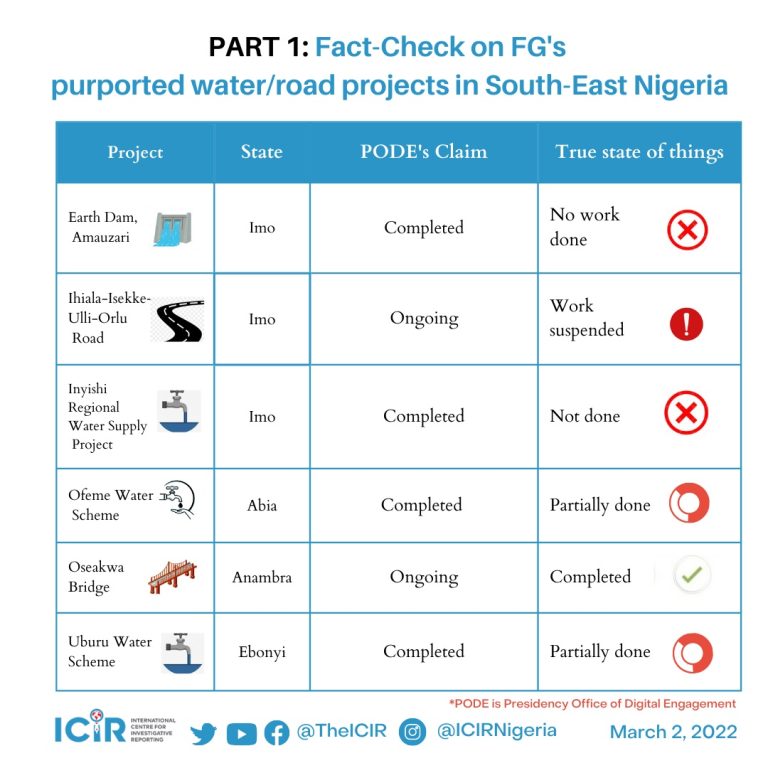
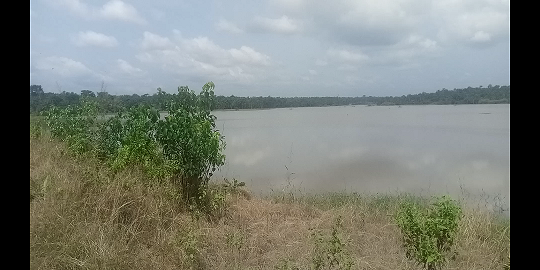
The first project visited by the reporter was Inyishi Regional Water Supply Project, situated in Imo State. PODE claimed that this project had been completed, but there was no sign that any work had ever been done on it when the reporter visited. It was still, stagnant water, making it unsafe for drinking or household use.
Normally, a scheme like Inyishi Regional Water Supply Project should provide a source of water for the community, but villagers said it was only good for washing cars and motorcycles. There was no signpost signalling commencement or completion of the project, nor was there any piece of equipment found there.
The water is surrounded by thick green grass, creating the foreboding that it could be a habitation for scorpions and cobras.
Inyishi Regional Water Supply: Photo by: The FactCheckHub|Odinaka Anudu
A woman who lived close to the water project, Anna, told The FactCheckHub that she only saw some government officials five to six years ago while inspecting it.
Another villager, Joy Okereke, said it was only useful for cyclists who always came to wash their motorcycles.
Apart from Inyishi Regional Water Supply, PODE also listed Ofeme Water Scheme as one of President Buhari’s completed projects.
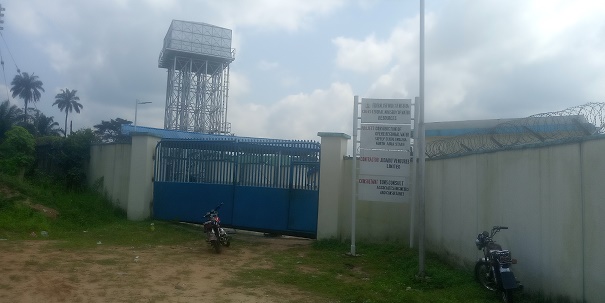
The water scheme, which is located nearly 20 kilometres from Umuahia, Abia State capital, was handled by Jidadu Ventures Limited, as seen on the signpost mounted in front of the project site.
Ofeme Water Scheme. Photo: The FactCheckHub | Odinaka Anudu.
The FactCheckHub journalist was not allowed into the project’s premises by a security guard when he identified himself. Outside of the gate, it would seem that the project had been completed: The water storage tank had been erected and the finishing touches had been made.
President-General of Ofeme community Chibueze Onyemata, a lawyer, told The FactCheckHub that the project had been completed and was functional, benefitting the three villages in the town. He explained that it had three sources of power: solar, hydro (public electricity) and generator. He praised President Buhari and Governor Hope Uzodimma of Imo State for putting the project in place.
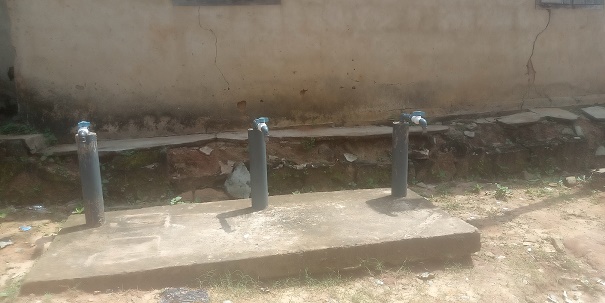
However, the reporter found that the water project was not serving its purpose. Taps only ran at Umu-Nkpu, where the project was sited but did not function in other nearby communities. None of the taps seen by the reporter at Udo-Ofeme, fewer than five kilometres from the project site, was producing water. Even at Umu-Nkpu , the reporter was told that the taps were not producing water regularly.
A row of non-functional water taps at Udo- Ofeme
“We do not get water from the taps. Only those at Umu-Nkpu enjoy it,” a villager at Udo Ofeme, Sunday, who lived fewer than five kilometres from the water project, told this reporter.
An engineer Peter Oyigbo told The FactCheckHub that a project could only be described as completed when it began to serve the purpose for which it was constructed.
“So, if a water project has dry taps or does not provide water, it is simply not a completed project,” Oyigbo, a Lagos-based structural engineer, said.
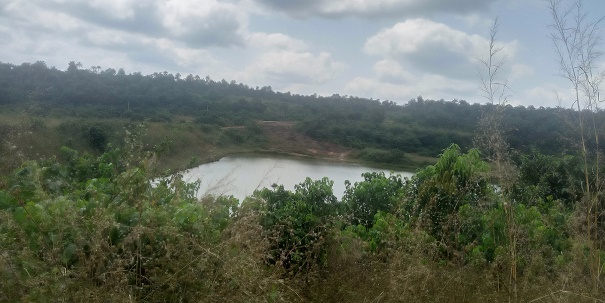
Next is the Earth Dam situated at Amauzari in Imo State. PODE claimed that the project was completed, but villagers said they did not witness when it was even started.
When the reporter got to the actual location of the project at a village known as Okwosu, there was no evidence to show that work had been done there. There was neither the contractor’s signpost nor was there equipment nearby.
Earth Dam at Amauzari, Isiala Mbano LGA. Photo: The FactCheckHub | Odinaka Anudu.
The water was not overflowing its bank, but that was because of the heaps of sand and withered grass that were able to withhold it.
The adjoining road at the Earth Dam in Amauzari. The FactCheckHub | Odinaka Anudu.
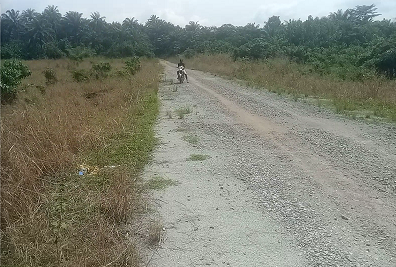
An adjoining road to the water project was untarred, and it rarely had visitors, villagers said. The reporter interviewed four villagers, including the motorcyclist who brought him to the site, but none of them admitted seeing any work done on the project in the last three years. “Nobody came here to do that water scheme,” an Amauzari villager, Tochukwu, said when asked about the project.
Johnson Ude, the motorcycle rider who brought the reporter to the site, who is also from the village, said he had never seen contractors on the site.
Uburu water supply scheme
Last but not least is Uburu water supply scheme, which was handled by a contractor known as Yubar Consultants Limited, as seen on the signpost erected one kilometre from the project. PODE claimed that this project, located in Ebonyi State, had been completed. On-the-ground investigation showed that PODE was correct to an extent. In terms of structure, the project had been constructed and completed.
A set of three taps at Uburu, Ebonyi State. The FactCheckHub | Odinaka Anudu.
“The taps run twice every week,” said a villager, Uduma Nwankwo. However, interactions with other villagers showed that it was not supplying water to those living far away from the project.
The reporter did not witness water flowing from the taps on the day of his visit and one Amaka Oluchi said the project, being an Uburu village water scheme, was not serving the majority of the town. Hence this project can be classified as partially done, going by Engineer Oyigbo’s explanation of a completed project.
Minister of Water Resources refused to disclose details
The FactCheckHub, through its parent company, The ICIR, sent a Freedom of Information (FOI) letter to the Minister of Water Resources Suleiman Hussein Adamu on January 25, 2022, requesting details of these projects, including how much was allocated to them, names of contractors, contract periods, the status of the projects and amount released so far.
The National Assembly passed the FOI Act on May 24, 2011, and signed by former President Goodluck Jonathan on May 28, 2011.
The Freedom of Information Act (FOIA) mandates public and private sectors to make information of public interest available on request.
A Ministry of Water Resources’ staff member contacted The ICIR via telephone on January 31, stating that the information was available.
In line with the FOI Act, the minister was given seven days to provide official responses to the questions, but he failed to do so.
Another seven days was given to the minister to allow him time to provide the needed information, but he still did not respond. More than two weeks after the 14-day period, the minister is yet to provide the requested information, which is of public interest.
Bridge and an important road in Anambra State
PODE claimed that Oseakwa Bridge located in Ihiala, Anambra State, one of the five states of the South-East region, had been completed. Findings showed that the presidential office was correct. According to information obtained from the 2018 contract details released by Mohammed, the contract for this project was handled by Horizon Construction Co. Ltd.
New-look Oseakwa Bridge
The bridge wore a new look when the reporter visited in December 2021.
Oseakwa Bridge in 2018
This was totally different from how it was in 2018 when the reporter investigated Mohammed’s claims. In 2018, there was neither a bridge nor a road that could be regarded as Oseakwa, but that has changed.
Furthermore, PODE also claimed that the current government had constructed the Ihiala-Isekke-Orlu Road (Ihiala-Orlu Road in Isseke Town-Amafuo-Ulli with Spur (Ihiala-Orlu-Umuduru Section) in Anambra State.
PODE simply listed the project as ‘construction,’ which is ambiguous.
The reporter found that the project started at a town known as Ihiala and ended at Isekke, both in Ihiala Local Government Area of Anambra State. The project did not stretch to Awo-Idemili, a town bordering Anambra and Imo states.
The route leading from the palace of the traditional ruler of Awo-Idemili, L.I. Okoligwe, to Orlu in Imo State, both in the South-East region, was untarred.
Ihiala-Orlu Road (from palace of traditional ruler of Awo-Idemili, Eze L.I. Okoligwe
Pinnatech Nigeria Limited, the contractor handling the project as seen on the signpost mounted in front of the site, had tarred the road from Ihiala to Isekke, but was yet to start work from Awo-Idemili to Orlu.
Quantity surveyor for the project Anthony Okafor blamed it on poor weather conditions. Foreman Samuel Kalu told the reporter that work would start ‘soon’ since the rains had subsided.
A native of Isekke Ifeoma Joshua said the contract from Ihiala to Isekke was ‘solid,’ but wondered why the project had stalled.
“This road is closer to Orlu, but because of its state at the moment, vehicle drivers take longer and more expensive routes,” she said. Construction was not going on as in December when the reporter visited the site, though the contractor was seen, sparking fears that the contractor might be owed by the Ministry of Works and Housing. A resident of Awo-Idemili, Charles, told the reporter that work stopped on the site in 2020.
Project
Contractor
PODE’s claim
True state of things
Earth Dam, Amauzari
Not provided
Completed
No work done
Ihiala-Isekke-Ulli-Orlu Road
Pinnatech Nigeria Limited
Ongoing
Work suspended
Inyishi Regional Water Supply Project
Not provided
Completed
No work done
Ofeme Water Scheme
Jidadu Ventures Limited
Completed
Partially done
Oseakwa Bridge
Horizon Construction Co. Ltd
Ongoing
Completed.
Uburu Water Scheme
Yubar Consultants Limited
Completed
Partially done
Source: The FactCheckHub Investigation
Residents of Ihiala, Awo-Idemili and Isekke told The FactCheckHub that the road had become an escape route for criminals, kidnappers and armed robbers. The reporter witnessed first-hand, three young men on bikes wielding AK-47 rifles along that axis.
“Every day here, soldiers engage them in gun battles. We are tired, and that is because of the fact that this road here is not yet fully constructed,” a resident, who pleaded anonymity for fear of being attacked, said.
Like the Minister of Water Resources, the Minister of Works and Housing Babatunde Fashola did not respond to an FOI request made by The FactCheckHub on January 25, 2022. He, therefore, did not provide details of the contract, which residents say is slow.