Please note that the FactCheckHub has not obtained any right from the authors or copyright owners of all third-party contents from embedded links and shall incur no liability in this regard.
FEW DAYS after a Nigerian socialite and businessman, Obinna Iyiegwu, popularly known as Obi Cubana laid his mother to rest in Oba, Anambra State, a post circulated on social media claimed he is giving out money to people via a website.
The post, which The FactCheckHub retrieved from a WhatsApp group on July 26 2021, claimed he is giving out N25,750 to people as part of celebration of his mother’s funeral. Attached to the post is a web link people are asked to visit to the get the money.
The post read: “Obi Cubana giveaway. N25,750 giveaway as part of Obi Cubana Mother’s burial. This giveaway is available to all. Get now.” followed by a web link [archived here]
THE CLAIM
Obi Cubana is celebrating his mother’s funeral by giving out N25,750 which can be accessed via the attached link.
A screenshot of the post from a WhatsApp group.
THE FINDINGS
Checks by The FactCheckHub show that the claim is FALSE.
The FactCheckHub observed that the website attached to the claim has similar characteristics of phishing websites attached to claims previously debunked here, here and here.
For instance, the landing page of the website obigiveaway.blogspot.com asked people to input email address to apply for the money.
A screenshot of the landing page
The successive page asked people to answer three questions after which they are asked to share the invitation with 15 friends or five groups on WhatsApp.
A screenshot of the page on the website asking people to share around.Avast verdict.
Similarly, Avast antivirus flagged the website and tagged it as infected with scam.
You can learn how to identify phishing websites here.
THE VERDICT
The claim that the Nigerian socialite and businessman, Obinna Iyiegwu, popularly known as Obi Cubana is celebrating his mother’s funeral with free money gift is FALSE, the website attached to the claim is a scam or phishing website.
A video circulating on social media claims some Ghanaian youths rejected bags of rice donated by one of the country’s politicians and asked for jobs instead.
The post was screenshot by The FactCheckHub on Tuesday 20 July, 2021 via WhatsApp.
In the widely shared WhatsApp post, it states that the youths demanded jobs, improved standard of living instead of rice.
“Can Nigerian youths ever emulate them and reject N5,000 given to them by politicians during elections?” the quote reads.
It was also shared by a former Nigerian lawmaker, Dino Melaye, on his Instagram.
Meanwhile, the claim was also shared on Facebook and other online news platforms.
THE CLAIM
Ghanaian youth reject free bags of rice from politician, demand for jobs
A screenshot of the post from WhatsApp.
THE FINDINGS
A search through Ghanaian media organisations revealed the incident occurred in a location known as Busunu in West Gonja Municipality.
The municipal is under the Savannah district and its capital is Damongo. The incident was reported on 20 July 2021. Youths from the community rejected bags of rice sent to them by the federal lawmaker representing Damongo Constituency, Samuel ABU Jinapor.
The youths were led by a teacher identified as Gbelo, the report on My Joy online stated.
The media platform is one of the multiple media organisations owned by The Multimedia Group, established in 1995.
“The era of promise and fail by politicians and political parties in Busunu is over. We didn’t ask you to give us rice, you promised us jobs and not rice and we have gone beyond the rice,” the youth chanted.
Reports say the food gift was for the Eid-el-Adha celebration among Muslims in his constituent in Ghana.
Independent findings show that the lawmaker is a lawyer and also a member of the New Patriotic Party (NPP). The lawmaker had earlier promised the youth jobs during the election period which brought him to office.
THE VERDICT
Based on multiple verifiable evidence, the claim that some Ghanaian youths rejected bags of rice from their lawmaker is TRUE.
A report published in June 2021 states that the National Institute for Pharmaceutical Research and Development (NIPRD) has developed Niprimune for COVID-19 treatment.
The report by Pharma News Online which has been viewed almost a thousand times was attributed to the NIPRD Director-General, a medical doctor, Obi Adigwe.
The headline of the report reads: “We Have Developed NIPRIMUNE for COVID-19 Treatment – NIPRD DG”
THE CLAIM
The NIPRD has developed Niprimune for the treatment of COVID-19.
THE FINDINGS
NIPRIMUNE is a herbal drug developed by NIPRD to serve as an immune booster.
In January 2021, the National Agency for Food and Drug Administration and Control (NAFDAC) approved the drug for public use.
The FactCheckHub interviewed Adigwe to verify the assertion of the drug’s capacity to treat COVID-19 but the DG dismissed the claim.
He said it can be used legally to boost the human’s immune system but it is not yet a cure against the COVID-19 virus.
The drug, he said, was on the verge of undergoing clinical trials.
He said it was developed from a plant identified as Andrographis paniculata. Other studies on the plant could be found here where it is described as having anti-microbial, anti-inflammatory capabilities but there was no point where it is said to be capable of curing the COVID-19.
Adigwe during the interview said: “Nigerians can legally buy our product [Niprimune] and use it as either preventive or adjunct to whatever treatment you are taking because it has empirical evidence that it boosts the immune system but we cannot legally say this product [Niprimune] cures COVID-19. That, we cannot legally do until we finish the clinical tests.”
The COVID-19 pandemic has claimed several lives in Nigeria. As of 19th of July 2021, the Nigeria Centre for Disease Control recorded 2,128 deaths due to the pandemic, and 169,678 confirmed cases. But 164,710 has so far been discharged.
Globally, data from the World Health Organisation (WHO) as of 19th of July 2021, pegged the total COVID-19 induced mortalities at over 4 million deaths.
However, the Nigerian government has so far relied on a foreign vaccine – the Oxford AstraZeneca. No local vaccine or drug has been approved as a COVID-19 cure or for its treatment.
THE VERDICT
The report that NIPRD has developed Niprimune for the treatment of COVID-19 is MISLEADING as the drug -Niprimune – is yet to undergo clinical trials to test its efficacy for COVID-19 treatment. As it stands, Niprimune is an immune booster and not a cure or treatment for COVID-19.
IN JULY, Nigeria’s basketball team, otherwise known as D’Tigers was in the news after back to back victories over the USA and Argentina teams.
However, many Nigerian blogs claimed that the team has been ranked 4th best team in the world by the International Basketball Federation (FIBA).
The news, which was published on Vanguard newspaper [archived here and BSN sport [archived here] claimed that the team has moved from 22nd position to 4th on the global (FIBA) ranking.
“The latest ranking released Friday afternoon see the Nigerian side moved from 22nd to 4th in the world,” the news read on Vanguard.
Similarly, a Twitter user, Mohammed Jammal with the username @whitenigerian also tweeted the claim on his verified Twitter page on July 17.
However, Jammal came back after he was corrected by his followers that his claim was faulty.
“Correction: We were ranked 4th out of 12 Olympic teams. Not 4th in the world,” he tweeted, quoting his previous tweet.
THE CLAIM
D’Tigers now 4th on FIBA ranking
THE FINDINGS
Findings by The FactCheckHub show that the claim is MISLEADING.
According to the latest ranking by the FIBA world ranking, Nigeria’s men basketball team, D’Tigers occupies the 22nd position in the world.
The ranking was last updated in March, after the February 2021 window of the FIBA Continental Cup qualifiers.
However, FIBA has adjudged D’Tigers as the fourth-best team out of the 12 countries that will compete in basketball at the Tokyo Olympics starting July 23. This ranking is a power ranking which covers only teams participating in the Olympic.
In this ranking released on FIBA’s website on July 16, Nigeria ranked above Argentina, and the trio of Australia, Spain, and the US.
The power ranking, which places Nigeria on the 4th position, is different from the FIBA World Ranking.
The power ranking is based on the teams’ recent form. It is determined by dividing the sum of all the winning points, tie points, schedule points, and bonus points by the number of games played.
D’Tigers ranked 4th of the teams participating in Tokyo Olympics because of their recent victories over US and Argentina teams in the Olympics tune-up held in Las Vegas.
THE VERDICT
The claim that D’Tigers now rank 4th on FIBA ranking is MISLEADING. The team ranks fourth-best team out of the 12 countries that will compete in basketball at the Tokyo Olympics but still maintains 22nd position in the world
UPDATE:
July 28, 2021: The FactCheckHub, however, reached out to the Vanguard Newspaper Online editor, who noted that the claim in the news was erroneously published and the report was eventually corrected.
THE scene in a video shared multiple times online, showing a boy being tortured with an electric current, was alleged to have taken place in Nigeria.
The video circulated on social media in June 2021, showing a boy tied to a makeshift metal cross by a man who held an exposed electric wire.
The man in the video used the electric wire on the metal the boy was tied to, leading to convulsion as electricity passed through the metal.
The viral video has been shared multiple times on Facebook, Instagram, Twitter and reported on Linda Ikeji Blog.
The video was shared by a Nigerian Twitter user, Tosin Opeoluwa @CoachTosin, on June 17, 2021, and has had more than 27000 views, with 667 retweets, 167 quoted tweets and 301 likes.
Multiple comments under the post alleged the torture incident might have happened in Nigeria.
THE FINDINGS
The claim that the location in the video is Nigeria is false.
The ICIR found out that the incident happened in Mali.
Before the video began to trend in Nigeria, The ICIR had also found that a Kenyan, Nelson Mimi Mung’asia, based in Doha, the capital of Qatar, shared the the video on June 10, 2021, on his Facebook account.
The ICIR subjected the video to verification by using the Invid video verifier, which directed its reporter to Facebook pages, Mali.
Focus and Mali-Sadio TV, which published a post in French on the incident on June 8, 2021, using a screengrab of the tortured video from a TikTok account, benskshy.
Post translated by Facebook from French to English. Screengrab from Mali – Sadio TV Facebook account
The Post on Mali-Saido TV has been shared 42 times, with 66 comments. It has attracted more than 305 likes and on Mali Focus shared 10 times, with 27 comments and 124 likes.
The ICIR used Google Translate to interpret the post in English (It was originally in French).
The incident, according to the Facebook post, happened in Mali.
The post had said that Attorney Idrissa Toure ordered the perpetrator’s arrest after a complaint was lodged.
According to the post, Toure was the Attorney of the Court of the Municipality IV.
The post also disclosed that the arrest took place on June 7, 2021.
It also said three witnesses to the torture had been identified, arrested and taken to custody.
The post further disclosed that the boy was tortured after it was discovered that he had stolen a mobile phone belonging to a client that came to the metal workshop.
A Malian Twitter user Bakary Coulibaly, based in Washington, confirmed to The ICIR that the language from the video was Bambara/Dioula, the national language of Mali and also spoken in some parts of Burkina Faso and Cote d’Ivoire.
Efforts by The ICIR to get a reaction from government officials in Mali proved abortive as an email sent to the Malian government requesting a response on the incident since on June 23, 2021, was not responded to.
Also, an inquiry mail sent to an official email linked to the National Police of Mali, obtained from a Facebook page that was last used in 2017 and linked to the National Police of Mali, has also not been answered.
The ICIR also contacted Fatima Maiga, a Media – Mediator, Policy Analyst and former Chief of Staff at the Ministry of Reconciliation and the Ministry of Women in Mali, according to her profile on Peace and Pluralism, a non-profit network that builds the capacities of women.
In response to The ICIR email inquiry sent in French on June 22, 2021, Maiga confirmed in French that the video came from Mali and further said the perpetrator of the torture had been arrested.
Her mail read (Google Translate):
Good evening Shehu,
I received your message and inquired about it from a journalist friend. After checking it gave me the following return:”
I inquired about the young man’s torture. It turned out that the authors of the act were placed under arrest warrant by the prosecutor of commune IV of Bamako. “
I hope this will help you. Yours truly. Fatima.
Fatima Maiga email response
THE VERIDICT
The claim that a trending video that captured a boy’s torture with an electric wire happened in Nigeria is FALSE. The ICIR found out that the incident happened in Bamako, Mali.
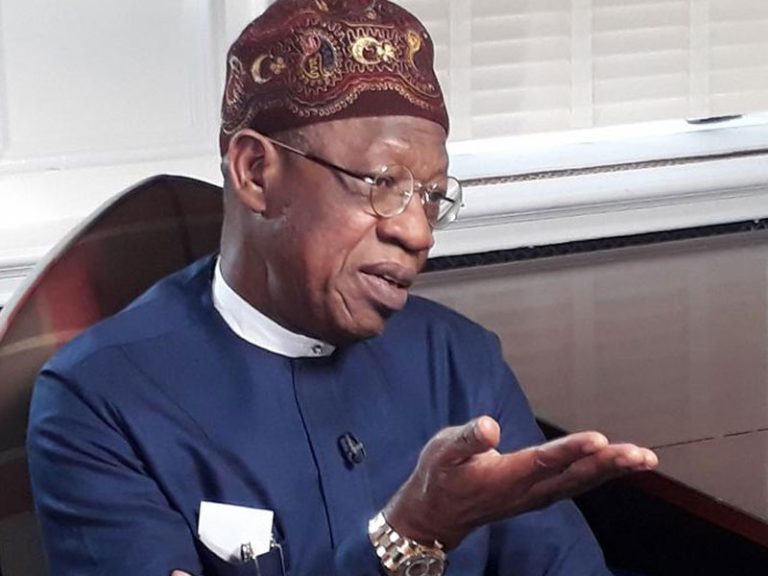
THE Minister of Information and Culture, Lai Mohammed on July 6, 2021 said the Federal Government spends N60 billion yearly to repair vandalised pipelines.
Mohammed made this statement during a Town Hall Meeting on Protecting Oil and Gas held in Abuja.
“I do not intend to take the wind out of the sail of the experts who will speak on this issue, but with an average of 200,000 barrels per day lost to the wanton damage to pipelines and a huge amount of N60 billion yearly to repair and maintain the vandalised points, one can only imagine the impact on the economy,” he stated.
Mohammed did not give a reference point, however The FactCheckHub checked the cost for pervious year.
THE FINDINGS
Nigeria is part of the Organisation of Petroleum Exporting Countries (OPEC). Petroleum product (crude oil) contributes largely to its revenue generation.
It is regarded as the largest oil producer in Africa, and 13th globally.
Revenue from Nigeria’s oil exports, according to OPEC accounts for about 86 per cent of the country’s export proceeds.
The performance data comprises of NNPC Audited Financial Statements, NNPC Monthly FAAC Reports, National Crude Oil & Natural Gas Production, Lifting and Utilization, Refinery Operations, Petroleum Product Supply & Distribution, Budget Performance Report and Federation Crude Oil & Gas Revenue.
However, the monthly FAAC (Federation Account Allocation Committee) reports were the focus.
Pipeline Repair and Management Cost for June 2020. Source NNPC FAAC Report
The FactCheckHub looked at the reports for the year 2020. The report of activities and transactions for each month is due the following month, which means the details of the activities done in December 2019 would be in January 2020 report. Hence, the reporter checked through deductions for pipeline repairs and maintenance from February 2020 to January 2021 reports.
In each month, the amount stated under the subhead ‘pipeline repairs and maintenance cost’ were added and they summed up to N53.36bn.
The breakdown: January N5.48bn, February N6.74bn, March N7.69bn, April N7.84bn, May N7.99bn, June N6.24bn, July N1.8bn, August N1.49bn, September recorded no expense, October N4.41bn, November N3.68bn and December also recorded no expense.
Meanwhile, for 2019, the Vanguard Newspaper reported the cost to be N127 billion
While 2017 and 2018 were N129.87bn and 137.44bn according to The Cable.
Daily Trust Newspaper reported that N112bn and N103bn were the costs in 2016 and 2015 respectively.
THE Independent National Electoral Commission (INEC) in June commenced Continuous Voter Registration exercise to register those who have attained the legal age and also attend to other related issues like transfer of Permanent Voter’s Cards (PVC), replacement of lost cards and so on.
The electoral body made provisions for some part of the process to be done online, however a message is circulated on WhatsApp with an entirely different link.
This link which is different from that of INEC directs people to a website (archived here) masquerading as that of the INEC.
A screenshot of the message in circulation as shared by YVoteNaija on Twitter.
The FactCheckHub observed that the website attached to the claim has similar characteristics of phishing websites similar to claims previously debunked here and here.
The official INEC website specified for the continuous voters registration is https://cvr.inecnigeria.org/ which is totally different from the fake website archived here.
Multiple claims around COVID-19 vaccinations have emerged since the World Health Organisation (WHO) approved some vaccines for it prevention, one of such claims circulating in Nigeria is that the vaccine comprises of electromagnetic elements that could make metallic objects stick to the arm – vaccination spot on the body.
The FactCheckHub observed that two of such videos – done in English and Hausa Language – it received for verification were largely circulating on the WhatsApp messaging platform.
THE CLAIM
The COVID-19 vaccine contains electromagnetic implants, components, chips that makes the body become magnetic.
A screenshot from one of the videos.
THE FINDINGS
Findings by The FactCheckHub show that the claims are false.
The first, a footage with a June 27 timestamp, showed a spoon stuck to a woman’s arm.
“This thing is true,” a female narrator said in the video. “My friend took the COVID-19 vaccine and we just experiment[ed] right now to see if what people are saying is true. Look, this is a spoon and it stuck.”
In the 30 seconds clip, the narrator urged people not to take the vaccine.
A similar scenario was replicated in the second clip. However this time around the narrator, speaking in Hausa language who was shown in the video was male and the purported experiment was conducted with a key.
He said they had heard via social media that after getting the COVID-19 vaccine, the recipient’s body becomes magnetic – attracts metal, but they were doubtful until a friend of theirs took the injection. He claimed they heard on social media the vaccine is a magnetic chip implant.
This almost two-minute video alongside the the first have been in circulation at least from June.
A screenshot from one of the videos.
Government debunks the claims
The Nigeria’s National Primary Health Care Development Agency (NPHCDA), an establishment under the Federal Ministry of Health has been responsible for vaccination in the country. Prior to the pandemic, the agency has been at the forefront of distributing oral polio vaccines, and several others usually in partnership with the state ministry of health.
As of June 26, more than 2.2 million Nigerians were vaccinated with first dose of the AstraZeneca vaccine. From the figure, 1.1 million Nigerians who took the first dose had taken their second dose. The agency has not reported any case of recipients arm becoming magnetic after getting COVID-19 vaccination.
In addition, the agency explicitly debunked the viral claims describing them as fake news.
The NPHCDA Director-General Faisal Shuaib said it’s a COVID-19 conspiracy that should be discarded.
Shuaib told the press that “The anti-vaccination elements have come up with magnetic conspiracy, in which they claim, and are deceiving people with a video that COVID-19 vaccine creates a magnetic field around vaccination site and can cause the body to light up an electric bulb.
As ridiculous as this and other conspiracy theories are, vulnerable people, believe them and are, therefore, continuing to take the risk of avoiding COVID-19 vaccination”.
He added that “Although the people who are manufacturing conspiracy theories about COVID-19 are in the minority, the virulence of the social media increases their reach.”
The doctor explained that wet, moist, strong friction or sticky skin can make objects stuck to the skin especially in smooth areas.
Shuaib added that the typical dose was not large enough to contain a magnet, and that a magnet that could fit in a needle would not be powerful enough to attract anything.
“There are no ingredients in the AstraZeneca vaccines or any other COVID-19 vaccines that make people exhibit magnetic properties after being vaccinated for COVID-19.
“Scientifically, the claim does not make sense,” he explained
The composition of the AstraZeneca vaccine use in Nigeria can be seen here.
Other sources fault the claims
A Public Health Expert with over a decade of experience Felix Obi also faulted the claim. He said there are no empirical studies to validate the claim and the assertion also betrays normal logic based on simple physics.
He added that he has not “seen any study or scholarly paper that identified that [electromagnetic effect] as a possibility”.
Nonso Umeh, another public health expert dismissed the claim. He shared a similar opinion with Obi saying the claim lacks empirical backing.
“So far, it does not work that way. There is no scientific evidence to support it. At least I have taken the two vaccine [doses] and I did not experience anything of such.”
As for him, those pockets of assertions should be discarded.
In May 2021, Reuters debunked a similar claim. The report noted that physics and medical experts have said vaccines for COVID-19 do not contain ingredients that could produce an electromagnetic field at the site of injection.
THE VERDICT
The clam that the COVID-19 vaccine contains electromagnetic implants, components, chips that makes the body become magnetic is FALSE. There is no empirical evidence that the vaccine contains electromagnetic components.
A study around COVID-19 misinformation says fake stories can change people’s behaviour which can have bigger effects on health.
The online study which was conducted by Ciara Greene, an associate professor of psychology at the University College, Dublin and Gillian Murphy was done in 2020 and was published in 2021. They had recruited 4,500 participants via an online call.
The participants were told that the study seek to “investigate reactions to a range of public health messages and news stories relating to the novel coronavirus outbreak,” Greene wrote in a report.
She said “It’s assumed that fake news has a negative effect on people’s behavior. For example, it has been claimed that fake news might affect people’s willingness to wear a mask, get a vaccine or comply with other public health guidelines. Yet, surprisingly, virtually no research has directly tested this assumption, so my colleagues and I took on the challenge of measuring what effect fake news actually has on people’s behaviour.”
Greene explained that each participant were exposed to six stories – four real, two fake – about the pandemic.
The fake stories which were designed to look like the the stories in circulation were “drinking coffee might protect against the coronavirus; eating chilli peppers might reduce COVID-19 symptoms; pharmaceutical companies were hiding harmful side-effects of a vaccine then in development; and that the forthcoming contact-tracing app to be released by Ireland’s public health service had been developed by people with ties to Cambridge Analytica.”
In the course of several months, the participants were asked to indicate how likely they were to act on the information.
Greene said they found that fake stories “seem to change people’s behaviour, but not dramatically so.”
She added that the secondary aim of the study was to look at the effects of general warnings about misinformation, such as those shared by governments and media organisations.
“We observed small but measurable effects on some behavioural intentions but not others—for example, participants who read a story about problems with a forthcoming contact-tracing app reported a 5% reduction in willingness to download the app. These data suggest that one-off fake news exposure may have behavioural consequences, though the effects are not large”, states the abstract of the report.
“We also found no effects of providing a general warning about the dangers of online misinformation on response to the fake stories, regardless of the framing of the warning in positive or negative terms.
“This suggests that generic warnings about online misinformation, such as those used by governments and social media companies, are unlikely to be effective.
“We conclude with a call for more empirical research on the real-world consequences of fake news,” it stated.
The spread of misinformation – in the form of unsubstantiated rumour and intentionally deceitful propaganda – is nothing new. Even in antiquity, Antony and Cleopatra were cast as villains through fake news shared by Octavian.
However, the global proliferation of social media, the 24-hour news cycle and consumers’ ravenous desire for news – immediately and in bite-size chunks – means that today, misinformation is more abundant and accessible than ever.
But our new study shows fake news doesn’t affect everyone equally. People with greater emotional intelligence are better at spotting it.
Unreliable news
What do fake news providers gain from the spread of damaging misinformation? Broadly, they could be trying to legitimise an extreme view, political or otherwise. But at the base level, the answer is often money.
Fake news providers seek to capture a user’s attention with wild claims in the hope they’ll click on it and go to the source website or share it. The provider can then raise revenue through advertising on their website. The more outlandish the claims, the more likely people are to click or share it. The more site traffic the provider receives, the more advertising revenue they can raise.
Over the past few years, research in psychological science and political science has started to assess who falls for fake news and how we can help people to detect and discard it.
In 2019 Gordon Pennycook, a psychology researcher at the University of Regina in Canada, and his colleagues assessed a variety of factors which may influence which individuals are more or less susceptible to fake news, using participants and news items related to the polarised political climate in the US. They found that being able to think analytically was one of the main drivers in successful fake news detection.
Spotting it
Our new research was a collaboration between us, two experts in government and public policy – Mark Shephard and Narisong Huhe – and Stephanie Preston, the student who led the study. We sought to build upon and complement Pennycook’s work, by assessing fake news detection in a sample of UK participants across a range of news topics including health, crime, immigration, education and climate change.
Participants were asked a number of different questions about the veracity of each news item. Their responses generated an overall fake news detection score. While distinguishing the real from fake news content was challenging, on average, participants were more likely to make the correct decision than not.
Looking within the group performance, we wanted to assess whether there was a link between people who had greater levels of emotional intelligence – the awareness of and ability to regulate your emotions and understand the emotions of others – and those who were able to detect fake news.
We wondered whether it might be the case that those with greater levels of emotional intelligence would be better at discarding the often overly emotional and hyperbolic content that is often part of fake news, allowing greater focus on the veracity of the content itself.
We tested the emotional intelligence of participants using a questionnaire. Sure enough, those with greater emotional intelligence were better at detecting the fake news content.
The good news is that existing research has shown that emotional intelligence is something that can be improved in people. We are now working on developing a way to train people in emotional intelligence, as a way to improve their ability to detect fake news.
In doing so, based on our findings, this should help individuals discern with a greater degree of accuracy which news is safe and shareable, and which is misinformed and misleading.