Please note that the FactCheckHub has not obtained any right from the authors or copyright owners of all third-party contents from embedded links and shall incur no liability in this regard.
Please note that the FactCheckHub has not obtained any right from the authors or copyright owners of all third-party contents from embedded links and shall incur no liability in this regard.
Please note that the FactCheckHub has not obtained any right from the authors or copyright owners of all third-party contents from embedded links and shall incur no liability in this regard.
Please note that the FactCheckHub has not obtained any right from the authors or copyright owners of all third-party contents from embedded links and shall incur no liability in this regard.
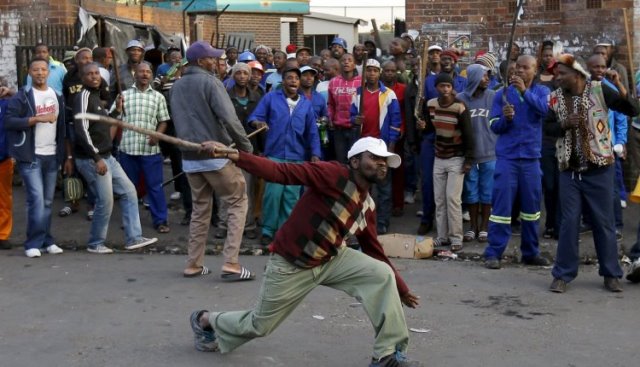
PICTURES from the general elections conducted four years ago and 2015 xenophobic attacks in South Africa have been recently shared in support of claims about violence in Kogi and Bayelsa gubernatorial elections, The ICIR has observed.
A report by The Nigerian News, a “citizen’s online publishing and broadcasting platform”, shared on Tuesday made use of a suspicious picture to illustrate alleged thug attacks in Kogi State. (Archived here.)
“Ahead of Kogi November 16th election, the governorship candidate of the Social Democratic Party (SDP), Natasha Akpoti, and his campaign team have been allegedly beaten up by a suspected team of thugs,” the platform wrote.
“In a yet to be confirmed report, the campaign organisation was attacked at the venue of the INEC Nigeria Stakeholders meeting ahead of the poll.”
However, combining the TinEye reverse image search tool and Google search engine, The ICIR traced the photo back to April 2015 in South Africa, when xenophobic attacks led to the death and displacement of foreigners.
Newsweek, in its caption, explained that the pictures show a man gesturing “with a stick outside a hostel during anti-immigrant violence in Johannesburg, South Africa, on April 17, 2015”. This is according to a news report published the same day.
The picture was taken by Johannesburg-based Reuters photographer, Siphiwe Sibeko.
Screenshot of a report by The Nigerian News.
The Centre for Democracy and Development (CDD), a not-for-profit research and advocacy organisation, has also pointed out the resurfacing of pictures originally from the 2015 general elections.
A Facebook user, Adams Sirprosper, had written that a group of thugs “invited by APC [All Progressives Congress]” and headed for the Kogi West senatorial district were arrested. But closer scrutiny of the picture attached to this claim shows that it is from a totally different context dating back to April 2015.
As reported by various news blogs, days after the general elections, the pictured “political thugs” had been arrested by security operatives in Nsit Ubiom Local Government Area of Akwa Ibom State.
“The hoodlums were caught with dangerous weapons such as dane guns, cutlasses, cans of fuel, lighters and charms as they attributed their actions to the work of the devil,” one report stated.
The CDD, with observers in various local governments in both Kogi and Bayelsa, has also noted as false a claim that Adoni and Ogoni militants, hired by Jonathan Obuebite (the Bayelsa state commissioner for information and orientation) and Tom Ateke (ex-leader of the Niger Delta Vigilante), attacked members of the APC in Nembe Local Government Area.
“CDD fact-checkers investigated and found out that nothing of such happened,” the non-profit reported.
“There are no citings [sic] of militant groups at Nembe River, as the river is guarded by security personnel. There have been relative peace at Nembe at the time of this fact check. The peddler of this news report, put it out to cause unnecessary tension in Nembe LGA.”
CDD fact-checkers have similarlyestablished that, contrary to the claims, no shooting or snatching of voting materials took place in Nembe Local Government.
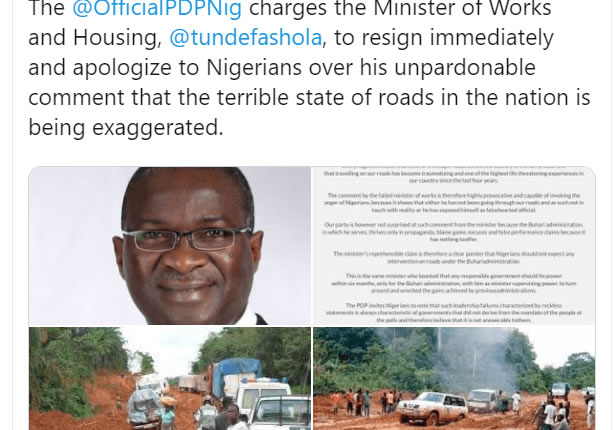
THE pictures shared by the People’s Democratic Party (PDP) alongside its press release on the state of bad roads in Nigeria are not of Nigeria. Those pictures are from Liberia, a Fact Check by The ICIR has shown.
The PDP, in a post of November 8, shared on its official Twitter handle, @OfficialPDPNig showed two pictures of supposed bad roads in Nigeria, and advised the Minister of Works and Housing, Babatunde Fashola to resign and apologise to Nigerians after his statement that Nigerian roads are not as bad as often portrayed.
As at the time of this report, the tweet has generated 351 retweets and 931 likes.
Many Nigerians have criticised Mr. Fashola over the statement, including a non-governmental organisation, Leadership and Accountability Initiative, that wrote to the minister, inviting him over on an all-expense-paid tour of Nigerian roads to see how bad Nigerians roads were.
Checks by The ICIR revealed that the images of bad roads in the tweet post are not the bad roads in Nigeria. Rather, they are pictures of bad roads in Liberia.
A reverse image search of one of the pictures revealed that the picture surfaced online for the first time in 2016. A Liberian local newspaper Daily Observerhad reported how the road condition in south-eastern Liberia was causing serious havoc for motorists, passengers and students who no longer use the road network because of its deplorable condition.
Another reverse image search on the second picture showed that the picture was first used online in February 2017. The same Daily Observer newspaper had used it to report that five South-eastern counties’ road work was underway. Again, in September 2017, the Daily Observer used the picture to also report how the deplorable condition in one of the counties had delayed people from travelling and even travelled at high costs to reach their destination.
In an editorial dated March 21, 2018, Globe Afrique, also a Liberian based newspaper had published an editorial titled “Weah’s Vision for a road network excellent, but why is the IMF concern” using one of the pictures as its featured image.
Also, the number plate on one of the vehicles in the pictures is different from the number plate issued in Nigeria.
In conclusion, pictures in the PDP’s tweet are not of the bad roads in Nigeria, but bad roads in Liberia.
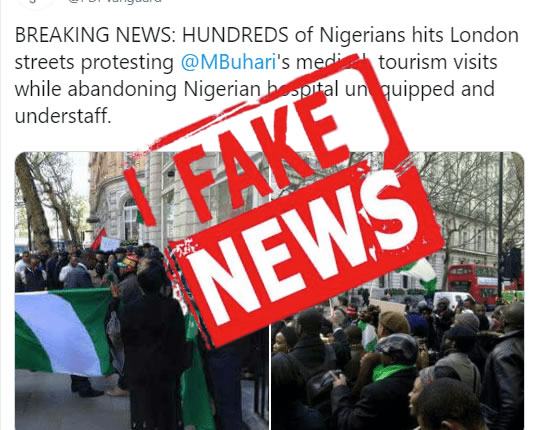
PICTURES showing Nigerians protesting President Muhammadu Buhari’s claimed medical tourism in London are not true, a Fact Check by The ICIR has shown.
The pictures, two in number are being circulated by one twitter handle, @PDPVanguard, with the caption: “BREAKING NEWS: HUNDREDS of Nigerians hits London streets protesting @MBuhari’s medical tourism visits while abandoning Nigeria hospital unequipped and understaff”.
This tweet post has generated 1,261 retweets and 2,100 likes.
Buhari departed Saudi Arabia for a two-week private visit to the United Kingdom last Saturday. Though, the reason for his private visit was not officially announced to the public.
Checks by The ICIR revealed that the images claimed to be pictures of Nigerians protesting in the UK is not a recent one. In fact, the picture aged four years.
The two pictures show Nigerians with National flags gathered in front of a building which turned out to be Nigeria High Commission on Northumberland Avenue in London when Google Map Satellite image was used to verify the location.
A reverse image search of the pictures showed the picture surfaced online for the first time in November 2015. One of the pictures was used by a blog called TheNews-Chronicle when it reported Nigerians protesting the unchecked corruption, fraud, illegal arrest, and criminal torture of Nigerians in the UK.
The pictures have since been used by different blogs and websites to tell different stories. For instance, these pictures were used by one blog, Gistmania to tell the story of how Nigerians in the UK stormed the Nigeria High Commission, demanding to see President Buhari who was in the country on a medical vacation in 2017.
A 20-year-old hoax suggesting that staring at female breasts has the effect of promoting longevity in men has been circulated by the News Agency of Nigeria, NAN, the government-controlled news wire service.
The study is said to have been conducted over a five year period by “a German scientist, Karen Weatherby, and published in the New England Journal of Medicine”. The year it was published was not stated. After the scientist instructed 250 men to stare at breasts lustfully at least 10 minutes in a day and another group of 250 men to abstain from this, the report said, he concluded that the health of the first group of men improved significantly.
The study said men should stare at breasts for 10 minutes a day to improve the wellness of their hearts and to live longer.
“Sexual excitement gets the heart pumping and improves blood circulation. Gazing at breasts makes men healthier and engaging in this activity a few minutes daily cuts the risk of stroke and heart attack by half,” Weatherby was quoted to have said.
“We believe that by doing so consistently, the average man can extend his life for four to five years.”
However, the report has been debunked as far back as in May 2000, by Snope, a prominent fact-checking website launched in 1994.
“This has to be one of the ultimate male fantasies, second only to the notion that drinking beer and watching football makes one more intelligent. (Or maybe second only to the thought of being instructed by doctors to look at buxom women for five years straight, all in the name of science.),” the website wrote sarcastically.
“Watching busty females may indeed be good for a man’s health and add years to his life (by giving him something to look forward to, if nothing else), but men who want to make the case for engaging in this behaviour to their wives or girlfriends will have to do so without relying on the imprimatur of the medical community.”
Snopes further established that the study was never printed in the New England Journal of Medicine “or any other major medical journal” as claimed. It is, rather, a rephrased version of an article that has appeared at least twice (May 13, 1997, and March 21, 2000) on the Weekly World News, a popular tabloid that broke mostly fictional news in the United States between 1979 and 2007.
According to the Washington Post, “The Weekly World News was not one of those sleazy tabloids that cover tawdry celebrity scandals. It was a sleazy tabloid that covered events that seemed to occur in a parallel universe, a fevered dream world where pop culture mixed with urban legends, conspiracy theories and hallucinations. Maybe WWN played fast and loose with the facts, but somehow it captured the spirit of the age — and did it in headlines as perfect as haiku: ‘DEAD ROCKSTARS RETURN ON GHOST PLANE!’ ‘BLIND MAN REGAINS SIGHT AND DUMPS UGLY WIFE!’”
“The most creative newspaper in American history, the Weekly World News broke the story that Elvis faked his death and was living in Kalamazoo, Mich,” Peter Carlson, the Post’s staff writer, added.
“It also broke the story that the lost continent of Atlantis was found near Buffalo. And the story that Hillary Clinton was having a love affair with P’lod, an alien with a foot-long tongue. And countless other incredible scoops.”
Picture of the report has published by the Weekly World News. Credit: Snopes.
Snopes said though the tabloid “occasionally slips up and prints a true story”, it suspects the report on the positive effects of breast-staring belongs in the category of similar articles titled “‘HOW TO TELL IF YOUR DOG WORSHIPS SATAN!’ and ‘NEW REMOTE-CONTROL DEVICE GIVES WOMEN ORGASMS — AT UP TO 80 YARDS AWAY!’”
Another fact-check of the claim published in 2009 (and updated in May 2019) by LiveAbout described it as an “email hoax circulating since March/April 2000” and concluded that it is false.
“No such study was ever published in the New England Journal of Medicine,” wrote David Emery, an internet folklore expert and debunker of urban legends, hoaxes, and popular misconceptions.
“A search of the thousands of peer-reviewed articles contained in the National Institutes of Health medical journal database turns up zero items documenting the health benefits of staring at women’s breasts, and, for that matter, zero items authored by ‘Dr. Karen Weatherby’ (who does not exist, so far as I can tell).”
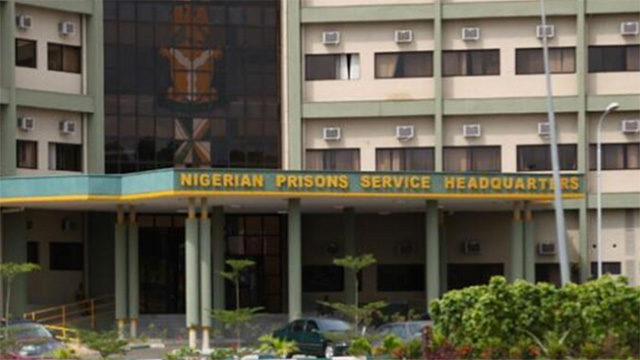
LESS than a day after The ICIR reported its failure to update information on its website, the Nigerian Correctional Service has corrected places where it wrongly referred to itself as the Prisons Service.
In a report published on Monday, The ICIRobserved that two months after President Muhammadu Buhari signed the Nigerian Correctional Service Act which repealed the old law and gave the institution a new name, this change had not been effected on its site.
However, another visit to the platform on Wednesday revealed that name has been updated in the various sections. The old logo has also been removed and replaced with text.
A screenshot of the Nigerian Correctional Services’ home page before the update.A screenshot of the Nigerian Correctional Services’ home page after the update.
It remains unclear if this update will be extended to the offices of the Service alongside other materials, as there is no provision in the 2020 federal budget for this purpose.
IN his speech delivered on Tuesday to mark Nigeria’s 59th Independence Anniversary celebration, President Muhammadu Buhari cited an outdated figure of the allocation federal government has released for capital projects in the 2018 budget year.
“We are significantly increasing investments in critical infrastructure. Last year, capital releases only commenced with the approval of the Budget in June 2018. However, as at 20th June this year, up to N1.74 trillion had been released for capital projects in the 2018 fiscal year,” he said, before promising to accelerate the implementation of the 2019 capital project.
The president’s claim has, however, been found to conflict with updated figures provided by the Office of the Accountant-General of the Federation (OAGF) in its 2018 Capital Performance for MDAs report.
OAGF’s figures were obtained by The ICIR in July through a Freedom of Information (FOI) request, and reflect capital releases as at June 30.
The document from the Accountant-General’s office states that the grand total of capital releases for the previous fiscal year was N2.06 trillion, including funding from Sukuk proceeds. This is 73.6 per cent of the total approved capital budget of N2.8 trillion.
Out of the N2.06 trillion, only N63.8 billion was not utilised by some of the MDAs.
The difference between Buhari’s and the Accountant-General’ figures is N320 billion.
Buhari also said in his speech that his administration “inherited a skewed economy, where the oil sector comprised only 8 per cent of Gross Domestic Product”.
However, reports from the National Bureau of Statistics (NBS) show a slightly different figure. The oil sector represented 10.45 per cent of Nigeria’s total real GDP at the end of the first quarter in 2015.
At the second quarter during which Buhari was first sworn-in as president, the NBS states that the “oil sector represented 9.80 per cent of total real GDP”.
The figure did not drop to 8.06 per cent until the fourth quarter.
Buhari’s Democracy Day speech delivered in June was similarly found by The ICIR to contain an unsubstantiated projected growth rate figure.
“We now have witnessed eight quarters of positive growth in the economy and our GDP is expected to grow by 2.7 per cent this year,” he had said.
But the figure contradicted similar projections from the Central Bank of Nigeria, Budget Office, African Development Bank, and the International Monetary Fund.
THE Rural Electrification Agency, REA, has reacted to fact-check published by The ICIR on Monday, which debunked the claim that it has commissioned Africa’s “largest off-grid solar hybrid power plant” in Bayero University Kano (BUK).
The claim was made earlier in September by REA’s Managing Director, Damilola Ogunbiyi, and has been repeated by others, including Minister of Power Saleh Mamman.
The ICIRfound a solar plant in Burkina Faso, also hybrid and off-grid, that has a capacity much larger than that of the recently unveiled project in BUK.
Fabien Cadaut, the Africa Energy Business Area Marketing Manager of Wärtsilä, the company that built the hybrid plant in Burkina Faso, confirmed that the project “is to date the world’s largest solar hybrid project and therefore larger than the one delivered in Nigeria”.
But reacting to the report on Tuesday, Ayang Ogbe, REA’s Director of Promotions (Information and Outreach), insisted that REA’s claim is correct and that the fact-check is presenting a “wrong impression”.
“You cannot say that apple is similar to orange,” the REA said during a phone conversation. “What I’m saying is they have different components. If you go to do any search about solar hybrid plants, you’ll see a thousand and one of them. But what we have in BUK is unique.”
In an email later sent to The ICIR by Ogbe, he said the plant in Burkina Faso does not qualify as a solar hybrid power plant but a “hybrid fuel/solar plant” because solar energy is not the dominant energy source.
“The Burkina Faso Project in question is synched to a 55 MW heavy oil fuel plant which makes it a hybrid fuel/solar plant (according to PV magazine) because heavy oil is the dominant source of energy,” he said.
“It is important to note that in the newest technology for solar hybrid powerplants, the PV component should be higher than any other component, which is provided in the Energizing Education BUK project. We maintain that the 7.1MW BUK project is the largest solar hybrid project with Battery storage in Africa.”
He concluded: “In view of these findings, the report published and twitted [sic.] by ICIR is INCORRECT.”
An email sent on Wednesday to METKA, the company commissioned to build the powerplant, asking if it holds the same view as REA is yet to be replied.
Hybrid solar plant or not?
According to Dr. Thomas Hillig Energy Consulting, experts on hybrid power systems and renewable energy solutions, “Hybrid power plants combine at least two different energy types [and] rather common is the combination of diesel-gensets and renewable energy systems with or without storage.”
“The actual configuration is very site and company-specific,” it added.
The World Journal of Mechanics, in 2019, also stated that “the hybrid renewable power generation is a system aimed at the production and utilisation of the electrical energy stemming from more than one source, provided that at least one of them is renewable.”
We checked PV magazine reports cited by the REA to substantiate its position. PV magazine is a publication that independently reports solar PV news and was launched in 2008 by the international photovoltaics (PV) community.
In its first report about the plant in Burkina Faso published in March 2017, the magazine described the project first as a “15 MW hybrid PV plant”. PV (photovoltaic) essentially refers to electricity derived from solar energy, and so a hybrid PV plant is the same as a hybrid solar plant.
It used the same description in its 2018 report but added that the project, synchronised with a 55 MW oil-driven power plant, “is one of the largest hybrid fuel/solar plants in the world”.
The ICIR has, however, found no evidence to suggest that the extent of solar energy composition in a hybrid plant affects its description.
Larry Edeh, country director of the Nigeria Alternative Energy Expo and director of the Sustainable Energy Practitioners Association of Nigeria (SEPAN), confirmed this during a phone interview on Thursday.
“A solar hybrid power plant”, he explained, is one where solar energy is augmented with other sources of energy, such as backup batteries or generators; and a powerplant can be called that even if the solar component is lesser in capacity compared to the energy source complementing it.
“These hybrid solutions enable fossil fuel generators to operate at lower loads, thereby significantly reducing the costs related to fuel usage, operation and maintenance,” explained Steven Murdoch, sales director at Global Mining. “They generate solar power but once the capacity drops or becomes intermittent, the generators power on to take up the load.”
Comparing composition: Wärtsilä vs BUK plant
On March 16, 2018, Wärtsilä Energy Solutions launched a solar plant with a 15 megawatt (MW) capacity installed for an off-grid gold mine belonging to Iamgold Essakane SA and located in north-eastern Burkina Faso. The mine produces about 400,000 ounces of gold every year.
The plant is hybridised with an existing 55 MW diesel power plant, thus totally a capacity of 70 MW.
According to the company, “The engine power plant provides backup, while the solar farm produces energy during the day. The solar PV plant and the engine power plant are controlled and operated in synchronisation, making it the largest engine-solar PV hybrid power plant in Africa.”
Essakane Solar SAS is composed of inverters and switchgear, a control system, and “approximately 130,000 photovoltaic panels”.
“It is estimated that this will reduce fuel consumption by some 6 million litres per year, while reducing the plant’s annual CO2 emissions by as much as 18,500 tons. This project has generated more than 200 employments during the construction phase and is expected to create 75 permanent jobs during the operation phase,” Wärtsilä announced.
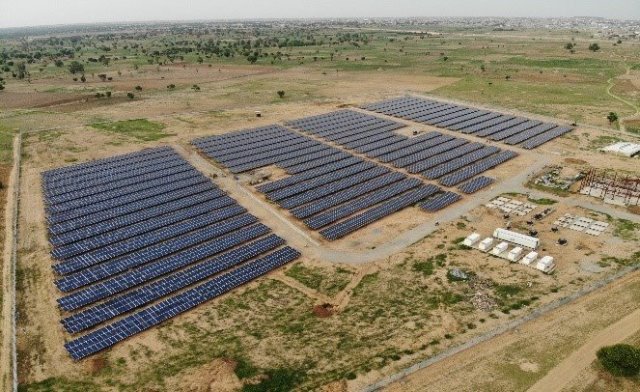
On the other hand, the BUK plant, built as part of REA’s Energising Education Programme (EEP), is said to have a 7.1 MW capacity and is expected to supply electricity to 55,815 students and 3,077 workers of the university.
Information released after the launch at BUK states that the total capacity of the solar panels is 3.5 MW, as against Burkina Faso’s 15 MW. It also says the total installed capacity of the plant is 7.1 MW as against the other plant’s 70 MW.
Infographic released by REA says the solar panels are hybridised with backup generators having a capacity of 2.4MW. The project is made possible with the installation of 10,680 solar panels, and also, when fully operational, is to save 49,384 tons of annual carbon dioxide emissions and end the use of 16.5MW petrol and diesel generators.
Also, it is noted that the plant’s construction and installation have created up to 182 jobs, the bulk going to labourers and bricklayers.
Verdict unchanged
REA’s Energising Education Project is no doubt unique, particularly in how it also provides street lighting to schools and establishes training centres for students on renewable energy. Available evidence nevertheless contradicts the claim that the off-grid solar hybrid plants introduced under the project are the largest on the continent.
SINCE Tuesday, a video shared on Twitter by special assistant to the president on digital and media, Tolu Ogunlesi, has triggered negative reactions, with many accusing President Muhammadu Buhari of not really answering a question asked or even doubting the clip’s authenticity. But checks by The ICIR have shown these allegations to be misleading.
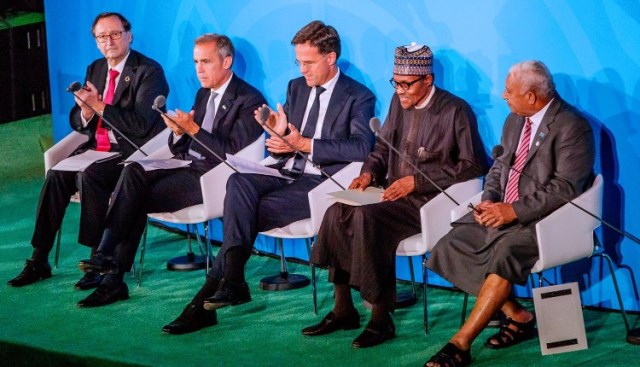
The four-minute-long video shows Buhari’s speech, following a prompt from the moderator, during a panel of world leaders at the United Nations Climate Action Summit held in New York on Monday.
“President Buhari, Nigeria has a very young population. Perhaps you might highlight what a pathway for a resilient future looks like,” the moderator said.
And in his prepared response, Buhari started by saying: “Your excellencies, ladies and gentlemen. I share the sentiment expressed by the Secretary-General that the world is on the verge of climate catastrophe. Undeniably, Climate Change is a human-induced phenomenon.
“It is now imperative that we must step-up our collective climate actions in line with the request of the Secretary-General. It is in this regard that I wish to reiterate Nigeria’s commitment to its obligation under the Paris Agreement, the aspirations enshrined in our Nationally Determined Contribution (NDC) and ensure a resilient future that mainstreams climate risks in our decision making.”
He then announced Nigeria’s various plans to tackle climate change, promote afforestation, ensure the availability of potable water, and improve waste management.
Reacting to the clip, a number of Twitter users criticised Buhari for not answering the question logically and rather reading a written speech.
Rights activist and co-convener of the Bring Back Our Girls Movement, Aisha Yesufu, teased Buhari and his supporters in several tweets.
“The WhatsApp meeting has been concluded and BMC has given Buharists their narrative. They are using RESILIENT from the question. They never fail to disappoint just like the incompetent clueless and inept Muhammadu Buhari they defend,” she wrote on Wednesday.
“At the end someone will tell Muhammadu Buhari that he did well and poor man will be feeling cool! Our enemies are usually the people with us who don’t tell us the truth,” she also tweeted. “No need engaging Buharists on their RESILIENT narrative. Let them have fun. It must be a herculean task defending the incompetence, ineptitude and cluelessness of Muhammadu Buhari.”
Saint Xavier (@SaintXavier2) also wrote in response to Ogunlesi’s tweet: “He was asked the place of the Nigerian youth in Nigeria’s future, but he read a readily prepared script that’s on climate change. Down this thread, all I see is people praising him for at least being able to read. That’s how hypocrisy numbs the brain and create mediocrity. Akpor!” His response has been retweeted 106 times and liked by 561 users.
“No connection between the question and the answer or did I miss anything?” Anene Chukwuemeka (@EmexOD) observed briefly.
Another Nigerian user, Richard Isedu (@Sterrich) in fact said he doesn’t think the video is real, adding later that his remark was sarcastic.
No, it is not doctored
Checks by The ICIR revealed that the footage is not inaccurate and represents what truly transpired at the UN summit on Monday.
This is evident from a four-hour-long video of the morning session uploaded by the United Nations on YouTube. This version does not have the subtitle and transition included in the video released by the Presidency Office of Digital Engagement (PODE).
Other panellists read prepared remarks as well
The panel where Buhari presented Nigeria’s environment-friendly plans also had in attendance Josaia Voreqe Bainimarama, Prime Minister of Fiji; Mark Rutte, Prime Minister of the Netherlands; Mark Carney, Governor of the Bank of England; and John Haley, CEO of Willis Towers Watson.
Three minutes was allotted to each speaker for their contribution.
An assessment by The ICIR showed that the moderator’s remarks were not direct questions but simply prompts to introduce the panellists’ presentations as well as their country or organisation’s backgrounds.
In introducing Prime Minister Rutte for example, she had said: “The Netherlands is doing a lot on adaptation and resilience at home and abroad. Prime Minister Rutte, you have the floor.”
And she simply told Willis Towers Watson’s CEO, “Mr Haley, the Secretary-General is delighted that you are here today to launch a private sector-led initiative to strengthen the market for resilient investment. You have the floor.”
Just like Buhari, the Prime Ministers of Fiji and the Netherlands read entirely from pre-written speeches addressing similar questions of what their countries are doing to tackle climate change.
Carney and Haley appeared to briefly introduce their presentations extemporaneously before moving to read from their written remarks.
Comments ‘horribly wrong’, replies Ogunlesi
In an article published on Wednesday, Ogunlesi accused the Twitter users of “getting things horribly wrong and/or focusing on the wrong things, while completely missing the real/meaningful/actual message”.
The summit, he explained, was convened by UN Secretary-General Antonio Guterres as an opportunity for world leaders to “come to New York on 23 September with concrete, realistic plans to enhance their nationally determined contributions by 2020, in line with reducing greenhouse gas emissions by 45 per cent over the next decade”.
The theme of the panel where Buhari was featured was “Towards a Resilient Future” and the rider was, “Announcement of plans to mainstream climate risk in decision making.”
“In other words, panellists were billed to deliver remarks announcing their country/organisation plans to build a resilient, climate-sensitive, future,” the special assistant noted. “President Buhari chose to deliver prepared remarks.
“And the moderator’s question, was, in keeping with the theme: ‘President Buhari, Nigeria has a very young population; perhaps you might highlight what a pathway for a resilient future looks like?’
“The President did exactly that, in his prepared remarks, over the next few minutes, highlighting what a ‘resilient future’ will look like in Nigeria — by focusing on the administration’s policies (the ones already being implemented, like the Green Bonds, and the ones set for implementation, like the new tree-planting campaign, and the energy mix target).
“His prepared remarks were wholly in alignment with the theme of the Panel event, and the question he was asked.”
Ogunlesi argued that it was up to Buhari to choose whether to respond extemporaneously or “to go the prepared remarks way”.
“He chose the prepared remarks way. And most importantly, he touched on the issues re: mainstreaming climate action for the future and for the young people of Nigeria,” he added.
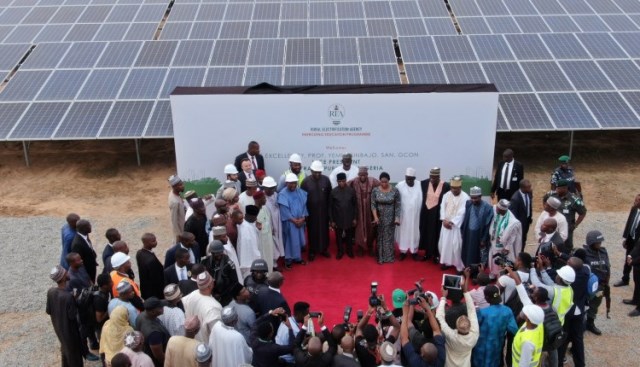
THE Federal Government on Tuesday, September 3 commissioned what it claimed to be the largest off-grid hybrid solar power plant at the Bayero University, Kano. The plant was commissioned by the Vice President, Yemi Osinbajo.
The claim
“The Federal Government, under the Rural Electricity Agency, will commission the largest off-grid solar hybrid power plant in Africa at Bayero University, Kano (BUK) under the Energizing Education Programme (EEP) today. The project will provide 55,815 students and 3,077 staff with constant electricity supply from the university’s 7.1MW solar hybrid power plant.”
The Managing Director of the Rural Electrification Agency (REA), Damilola Ogunbiyi, stated that “This is the largest off-grid solar hybrid power plant in Africa; We, as Nigerians, should be very proud of, thanks to the commitment of the Federal Government towards sustainable energy and education.
The Minister of Power, Saleh Mamman, in a tweet on Tuesday also shared from his handle that he would accompany the Vice President to commission the largest off-grid solar hybrid power plant. The post has been retweeted about 189 times and liked by 442 people as at the time of filing this report.
The same claim was shared on the official Twitter handle of the Federal Government of Nigeria, @NigeriaGov.
The tweet reads: “The @NigeriaGov (federal government), under the @realREANigeria (REA) will commission the largest off-grid solar hybrid power plant in Africa at Bayero University, Kano (BUK) under the Energizing Education Programme (EEP) today.”
What is a hybrid solar power plant?
A hybrid power plant is one that generates power by using two or more sources of energy. It also refers to a combination of solar and energy storage. The plant combines solar power from a power system designed to supply usable solar power by means of converting light into electricity.
Verification
To verify this claim, The ICIR did a search of the largest off-grid solar hybrid power plant in Africa on the internet and also visited websites of contractors who have constructed solar hybrid power plants. The findings revealed that the commissioned power plant at the Bayero University, Kano is not the largest on the continent.
The largest hybrid solar power plant is in Burkina Faso. In March 2018, Wartsila, a power engineering firm completed the world’s largest solar hybrid power plant.
The power plant has a capacity of 15MWp (megawatt peak), doubling that of the BUK plant, and was awarded by the global renewable energy independent power producer, Total Eren, and African Energy Management Platform (AEMP).
As part of the verification process for the claim, Etore Thomas, the Deputy Director, Press and Public Relations at the Ministry of Power, could not respond to calls and messages sent when The ICIR contacted her even as she read the message sent to her via WhatsApp.
The ICIR contacted Ayang Ogbe, Director of Promotion (Information and Outreach) at the Rural Electrification Agency ( REA). Ogbe referred The ICIR to the website of the REA where numbers of who to talk to can be gotten. However, calls placed to the numbers could not be reached.
We also contacted Wartsila, the engineering firm responsible for the construction of the largest solar hybrid power plant. Wartsila confirmed that the project in Burkina Faso is currently the largest solar hybrid power plant.
“I confirm that the project delivered by Wärtsilä in Essakane, Burkina Faso is to date the world’s largest solar hybrid project and therefore larger than the one delivered in Nigeria,” wrote Fabien Cadaut, Area Marketing Manager of Wärtsilä’s Africa Energy Business.
Wartsila’s response
Conclusion
It is certain that Nigeria is not home to the largest off-grid solar hybrid power plant in Africa. Rather, Burkina Faso, another country in west Africa is.
The claim that the BUK off-grid solar hybrid power plant is the largest in Africa is, therefore, INCORRECT.
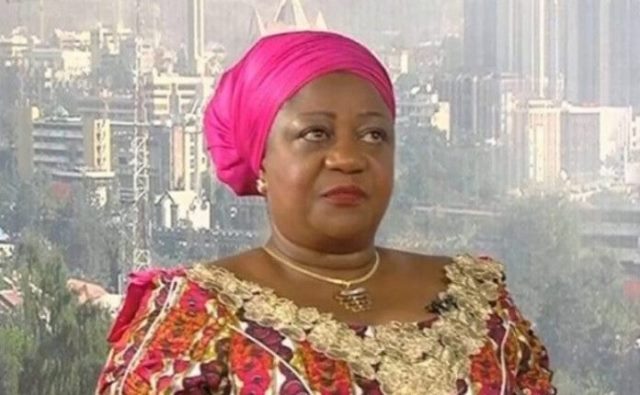
Pictures can mislead in several ways: when they contain false information, are doctored to misinform or are employed in a false context. As part of a series scrutinising online posts by prominent social media users, The ICIR used publicly available tools to verify pictures shared on Twitter by Lauretta Onochie, Personal Assistant on Social Media to the Nigerian president.
DURING the first term of President Muhammadu Buhari, a good number of his aides restricted their social media posts to official releases and photographs. But some shared a lot more - including outright misinformation.
And, in the days, weeks and months leading to the last general elections in Nigeria, social media became, for presidential aides, as for many others, a tool for merely selling their principal. Social media platforms became a battleground, a turf for peddling propaganda and misinformation and a weapon to discredit and shoot down opponents’ reputations.
President Buhari’s Personal Assistant on Social Media, Lauretta Onochie, in September 2018, tweeted a picture of an asphalt road being constructed. She captioned it “Nasarawa-Jos Road”, giving the impression that it was a road constructed by the government, but it is actually a stock photo uploaded to Getty Images in November 2015.
The inaccuracy triggered a wave of sarcastic tweets under the hashtag #TweetLikeLaurettaOnochie. She then pulled down the tweet and apologised for the “big mistake” saying “it won’t happen again”.
Onochie’s tweet wrongly crediting the federal govt. for a foreign road project
But, it has happened again and again as many of Onochie’s other tweets since then havealsoincluded misinformation, such as one in December 2018 showing foodpacks bundled with N500 notes. She claimed Atiku Abubakar, PDP presidential candidate in the 2019 election, had shared the money with voters.
It turned out that the picture was not taken at an Atiku campaign rally but had actually been put out in February 2017 by a Lagos – based charity organisation during an outreach.
Though the President mentioned “fake news” as a security challenge in August 2019, he reappointed Onochie along with several other media aides shortly thereafter. Together the aides command a Twitter following of over 1.7 million, providing a considerable platform to any misleading information they might share.
How we conducted our research
Using Twitter Media Downloader, a Google Chrome extension that downloads images in bulk from particular users, The ICIR studied 1,058 images uploaded by Onochie between August 1, 2018, and July 31, 2019.
In at least 12 cases, she had used inaccurate pictures. This was determined mainly by scouring the internet for instances where the pictures had been used before in an attempt to locate the original source. (Note: Learn how to conduct a reverse image search here.)
After the search, the findings were brought to Onochie’s attention through a phone interview, but she declined to comment on them, choosing rather to insult the reporter.
“You must be very stupid,” the presidential aide replied curtly, before ending the call.
“I think you need to take your 419 [fraud] somewhere else; the FBI will soon be on your case,” she added minutes later during a second conversation.
Misleading pictures
Mishmash of housing photos
Four pictures appeared on Onochie’s timeline in September 2018 showing what was suggested as low-cost housing projects in the Federal Capital Territory, FCT, funded by the Federal Government.
But one picture was first uploaded in April 2014 by the Lagos State Home Ownership Mortgage Scheme. The houses were built as part of the state government’s Rent-to-Own Programme that supports first-time buyer residents. (Note: Here is another picture of thestructures under construction.)
Another picture is actually of a bungalow at the Sir Michael Otedola Housing Estate in Odoragushin, Lagos. Former Lagos State governor Akinwunmi Ambode wasphotographed inspecting the estate in November 2016.
A third picture dates back to at least 2016 and has been used in articles about housing projects in Malaysia, Guyana and Kenya. The ICIR traced the last picture, to affordable housing that was planned for Revelstoke in British Columbia, Canada.
None of the four pictures, therefore, show housing projects in the Federal Capital Territory, Abuja.
Borno solar panel manufacturing plant or…
In April 2019, Onochie shared a picture with her followers in which she praised then Borno State governor Kashim Shettima for launching “Africa’s biggest Automated Solar Panel manufacturing plant”.
The tweet was liked 1,309 times and shared by 587 users of the social media platform.
Checks, however, show the picture that is credited to senior airman Larry E. Reid Jr (staff sergeant at the US Air Force), is over 11 years old and depicts a solar power plant in Las Vegas in the US.
‘Clashes’ actually fuel subsidy removal protest
Misleading picture purportedly of communal clashes in Cross River
In July 2019, Onochie uploaded a picture with a caption lamenting the loss of lives to inter-communal clashes in Cross River State.
However, the picture was taken in January 2012 by Reuters photographer Akintunde Akinleye. It shows protesters chanting slogans “as they march through Ikorodu road during a protest against a fuel subsidy removal in Lagos”.
Doctored image
Two days before the presidential election in February 2019, Onochie shared a picture on Twitter which seemed to show three soldiers dressed in heavy camouflage guarding a ballot box.
“Self-explanatory,” said her caption, “God bless Nigeria.”
The tweet came after Buhari had instructed the security agencies to deal with anyone who attempted to disrupt the election and said whoever tried snatching ballot boxes did so “at the expense of his life”.
Scrutinising the picture reveals that it is a combination of two photos.
The photo of the soldiers in ghillie suits dates back to April 2018 when it was taken by AFP freelance photographer Stefan Heunis at a military demonstration held in Abuja. It was joined to a picture of a ballot box used at St. David’s Anglican Primary School, Afao, during the 2018 gubernatorial elections in Ekiti. This was uploaded by TheCable in July 2018 to its liveblog of the collation process.
The misleading combination went viral, with a number of blogs sharing it as though it were genuine.
Obasanjo misattributions
Onochie twice shared quotes supposedly from My Watch, the three-volume memoir of former president Olusegun Obasanjo that was published in 2014.
In December 2018, she shared an image of Obasanjo with a quote credited to him: “The money Atiku stole when he was my vice is enough to feed 300 million for 400 years.” (Note: Though the source of the quote was not mentioned, severalotherpostsclaimed it is from pages 31 to 32 of My Watch, Volume 2.)
Again, in February 2019, she uploaded a Facebook status screenshot that said “‘Atiku becoming president is like hearing that a former armed robber is now your bank manager’ – OBJ (My Watch, page 49)”.
The ICIR reviewed the pages cited, which didn’t contain anything close to the quotes tweeted. Pages 31 and 32 narrate how Obasanjo settled on Abubakar as his running mate and the regrets he later had. It contains some unpleasant remarks about Abubakar -mentioning a “somewhat shadowy” parental background, propensity to corruption and poor judgment – but does not indict him for large-scale stealing during his time in power.
Pages 49 of all three volumes make no mention of Abubakar or his likeness to an armed robber.
Other excerpts published from the book about Abubakar also do not contain the two quotes shared by Onochie. The quotes are, thus, misattributed.