Home Blog Page 167

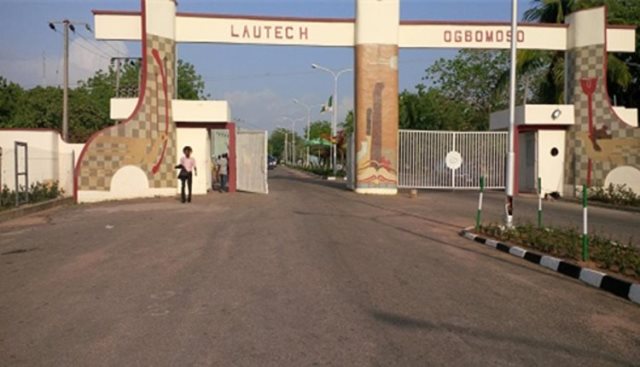
FACT CHECK: Has Seyi Makinde reduced LAUTECH tuition fee? No

0

THE claim about the reduction in tuition fee of the Ladoke Akintola University of Technology (LAUTECH) has been made by two popular social media users, both on Facebook and Twitter.

A Facebook group called PDP Social Media Observer Group posted on September 10 that Seyi Makinde, Governor of Oyo State governor, reduced the tuition fee of LAUTECH to 65,000.

The group wrote: “Gov Seyi Makinde of Oyo State has reduced the tuition fee of LAUTECH from N250,000 to N65,000.

It described that as what “a governor should be”.

The group which itself has 62, 379 followers, at the time of writing, made the post more prominent as not less than 1,500 people shared it, while it received more than 1,200 likes.

Most of the comments on the group show that quite a number of people have believed in the information as some people commended the governor for the job done.

Earlier on September 6, a similar claim was made on Twitter.

Oladele Dada who posted the information was funded by United Nations Education Scientific and Cultural Organization (UNESCO) to study Media and Information Literacy and Intercultural Dialogue course at the Athabasca University, Canada which he completed in 2015.

He had a total follower of 6,369 people as at the time of writing this report.

https://twitter.com/realoladele/status/1169874972321316864?s=20


But checks by The ICIR revealed that the tuition fee of the University was not reduced to N65, 000. In fact, the institution fee has not been reviewed in 2019.

It is not from us — Media Aide to Governor Makinde

Chief Press Secretary to Makinde, Taiwo Adisa, told The ICIR that the Oyo State Government has no capacity to unilaterally reduce the tuition fee of the institution.

“The school belongs to two states. How can one of them now announce that it has cut the school fees when there are two owners,”  he said.

“It is not from us,” Adisa disassociated the state government from the post.

LAUTECH is jointly owned by Oyo  and Osun states.

Makinde had only recently said on September 5 that Oyo  State Government was ready to pay the Osun State’s share of the salary for the university staff.

“We’ve signed for workers’ payments but since it’s owned by both Osun and Oyo states, unfortunately, Osun State has not paid. This can not continue.

“Oyo State will have to pay the salary of LAUTECH (Osun’s share) because I don’t want the students to suffer,” Makinde had said.

No directive to review the tuition fees- LAUTECH spokesperson

Fadeyi Lekan, spokesperson of the institution, said the school has not received any directive to the effect of reviewing of the tuition fees in 2019. He added that the last time it was reviewed was 2018.

“We have not received such a directive,” said Lekan.

According to Agboola Sodeeq, a 200 level student in the Department of Electronic and Electrical Engineering in LAUTECH, the tuition fee of the school ranges from N90,000 to N170,000.

He said the school has not made any statement regarding any reduction of the tuition fees. Sodeeq said the last time the fee was reviewed was in 2018.

He noted that the tuition fee for the indigenes of both Osun and Oyo states is different from the one non-indigenes pay.

“The indigenes pay N140,000, N120,000 and N90,000 in their 100, 200 and 300-500 levels respectively.

“Non-indigenes pay N170,000, N150,000 and N100,000 in their 100, 200, and 300-500 levels in that order,” he said.

Verdict

Thus, the claim that the governor of Oyo State has reduced the tuition fee of Ladoke Akintola University of Technology (LAUTECH) is false.

FACT CHECK: Solar panel factory in Borno State not Africa’s ‘biggest’ for production capacity

0

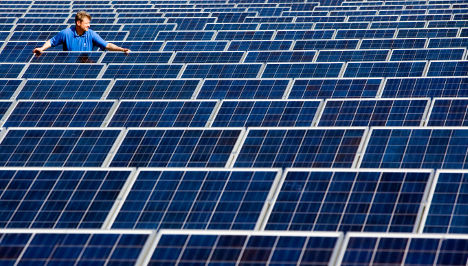
POPULAR Twitter account Africa Facts Zone repeated a widespread claim in August 2019 that Nigeria’s Borno State has the “biggest” solar panel factory in Africa.

In April 2019, the state’s former governor, Kashim Shettima, unveiled an automated solar panel manufacturing plant in the state. Shettima left office in May 2019.

“It is Africa’s biggest and is fully automated,” Ibrahim Ali, the official in charge of executing Shettima’s industrialisation policy, reportedly told newspaper Daily Trust at the time. “Each year, we would have an aggregate of 40 megawatts.”

The claim by Ali, a former minister for petroleum, was then repeated on other major news platforms, including Nigeria’s Guardian, Legit NG, and PM News. It was also shared on Twitter by the federal ministry of environment and the personal assistant to the president on social media, Lauretta Onochie, among others.

Two plants able to produce more

Africa Check asked special assistant to the state governor on new media, AbdulRahman Ahmed Bundi, to clarify what Ali meant by “biggest”, but the email address Bundi gave bounced.

Spokesperson for the South African Photovoltaic Industry Association, Vuyo Ntoi, told Africa Check there are different metrics by which to judge the size of a solar panel factory.

“It could be about revenue, the number of employees, floor space or the size of the machines,” Ntoi said, adding that the capacity of solar panels sold – in kilowatt or megawatt – is most commonly used. “There are probably lots of places on the continent that make photovoltaic panels but those that do at industrial levels are few and far between.”

Ntoi referred us to South African factory ARTsolar that was set up in 2010 in Durban. Zubair Ali, a project engineer at ARTsolar, told Africa Check the factory is able to produce up to 300 megawatts per year.

Sunprism Energy Technology, a solar panel manufacturer in Cairo, Egypt, says on its website it has a “production capacity of 50 megawatts per annum”. The company’s financial manager, Amr Abu Ali, confirmed this figure to Africa Check.

Both these African factories therefore have a larger production capacity per year than Borno State’s new plant is reported to have.


This fact-check was produced as part of an Africa Check fellowship completed by ‘Kunle Adebajo, a journalist at Nigeria’s International Centre for Investigative Reporting.

FACT CHECK: Trending video of South African Police Deputy Minister is from 2017

0

ON September 2, Signal, an online newspaper designed to produce exclusive reports on politics, policy, governance among others posted a claim that projected Bongani Mkongi, former South African Deputy Minister of Police, as a current cabinet member of Cyril Ramaphosa, President of the former apartheid country.

The claim which came with a two-minute-and-a-half-long video showed Mkongi condemning the influx of foreigners into South Africa.

In the video, Mkongi also expressed his worries about the influx, warning that in a matter of years foreigners might eventually emerge as South African President.

The footage came up on social media following the xenophobic incidents against Nigerians and other foreigners in the country.

“We are surrendering our land and it is not xenophobia. To talk true, we fought for this land from the white minority. We cannot surrender it to foreign nationals. As a matter of principles, we fought for this country, not only for us but for the generations of South Africans,” he stated.

“The arms that are being used here are arms of war, which are not licensed. The high-jacking of buildings here is a sign of taking overpower. The question of dominance of foreign nationals in illegal trading and businesses here in Hillbrow is economic sabotage taking place against our people that ought to be running those businesses…”

Within two days, the tweet had generated a lot of retweets, over 4, 600 Retweets and 5,000 likes.

Aside from the reportage, the claim also generated a lot of reactions from social media users beyond South Africa and Nigeria.

Moreover, former Aviation Minister, Femi Fani Kayode, also shared the tweet with a link to his personal and verified Facebook Account. He further made comment on the tweet which had also generated 910 Likes and 379 Retweets with comments.

Findings

The ICIR visited the official website of the South African parliament and discovered that the portfolio for the ministry was assigned to Bhekokwakhe Cele as the main Minister and supported by Cassel Charlie Mathale as Deputy Minister.

There are other documents that showed Mkongi is no longer a serving cabinet member.

Verdict

Based on the available evidence, the caption accompanying the video tweeted by the online newspaper is FALSE.

Also, having been put out after the recent attacks, the video was obviously situated in the context of the most recent acts of violence and that is also dubious. It was discovered that the video was filmed on July 14, 2017 as shared by Eye Witness News, a South Africa news organisation.

FACT CHECK: Are Shoprite supermarkets in Nigeria franchise outlets?

0

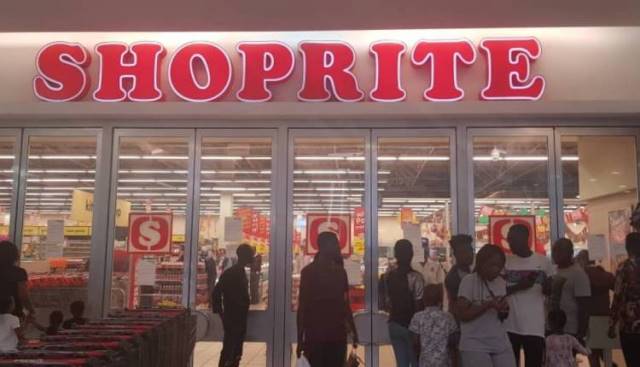
FOLLOWING recent xenophobic attacks and violent reactions in Nigeria that have seen properties of companies believed to be owned by South Africans being damaged in protest, some have claimed that Shoprite, one of the affected companies, is a franchise brand and local stores are owned and managed by Nigerians.

“Shoprite in Nigeria is not owned by a South African,” one Twitter user, @HustlerVibez, with 23,900 followers wrote.

“Nigerians own it!! It’s a fucking franchise. Y’all are hurting your own people. You Nigerians should read more cause some of y’all are just plain stupid.”

The tweet has been liked over 3,600 times and shared by over 2,300 users. Several other users of the social media platform have made similar statements. But checks by The ICIR show that the claim is incorrect.

Our findings

The Shoprite Group has repeatedly referred to its stores in Nigeria and other countries as corporate stores. It did so in its 2017 integrated report, where it stated that it has 2,301 corporate stores across Africa, with 23 of them located in Nigeria. It  also did the same thing in its integrated report of 2018 when the number increased to 2,425 across Africa and 24 in Nigeria.

At the end of June 2019, Shoprite operated a total of 2,934 outlets in 15 countries: including 2,319 corporate stores, 25 of which are in Nigeria (24 Shoprite stores and one Usave store).

Source: Shoprite Holdings 2018 Integrated Report, p. 43

Corporate stores are different from franchise stores. According to Stefon Walters, author of Finessin’ Finances, in the case of retail franchising, a company “licenses its intellectual property, business procedures, business model and brand to a franchisee who then owns and operates the store”. He explains that the franchisee pays an upfront cost and then subsequently pays royalty fees to the brand owner. He must also uphold the corporate policies agreed upon.

On the other hand, in the case of corporate stores, “the parent company is solely responsible for all stores’ business-related activities. From picking retail locations to hiring employees to operations to tax planning, they handle it all”. This is also the explanation of Encyclopedia Britannica and US-based franchise consulting firm Accurate Franchising.

Shoprite, however, also has up to 418 franchise outlets, but these are not in Nigeria. Its OK Franchise Division, existing in South Africa, Namibia and Swaziland, franchises “five different types of retail formats (OK Foods, OK Grocer, OK MiniMark, OK Express & Sentra), a liquor outlet (OK Liquor) and a wholesale outlet (Megasave)”.

Source: Shoprite Holdings 2018 Integrated Report, p. 43

1.5 per cent of Shoprite staff in Nigeria

While Shoprite generally employs 147,478, over 2,000 of these are staff in Nigeria. The local subsidiary states that 99 per cent of its workers are Nigerian citizens and it has built a relationship with “over 300 leading Nigerian suppliers, small businesses, and farmers”.

Indirect subsidiary

Retail Supermarkets Nigeria Ltd is listed as an indirect subsidiary of Shoprite Holdings Limited in its financial statements of 2018, unlike some of its companies in South Africa and Mauritius. This was registered in Nigeria, according to the Corporate Affairs Commission, in 2004, and is based in Victoria Island, Lagos.

Parent companies do not have complete control over indirect subsidiaries and do not have enough interests to entirely affect their operations. An instance of this is a joint venture where one of the founding companies has more than 50 per cent interest. Indirect subsidiaries may be formed in order to raise capital or attract skilled partners.

Verdict

While it is incorrect to say Shoprite stores in Nigeria are owned and run by Nigerians, they are managed by an indirect subsidiary of the parent company. This means other individuals or corporate bodies have financial stakes in the venture.

It is also the case that Shoprite employs over 2000 people in the country, mostly Nigerians, and sells products from Nigerian farmers and local businesses.

Two recently shared pictures, video are not from fresh xenophobic attacks

0

XENOPHOBIC attacks in South Africa have become more prominent, particularly in the past one week, with many foreign nationals killed, threatened, and their shops looted or set ablaze. 

Citizens of Nigeria and other African countries have been the major victims of this trend, which has been connected to concerns over job security for South Africans.

Series of recent mob attacks that took place between Sunday and Monday led to the death of three people and the burning of about 50 businesses owned by foreign nationals, thereafter spurring protest from Nigerians on social media.

Several videos and photos have been shared online purportedly showing burnt bodies and shops as a result of the latest attacks.

Checks by The ICIR, however, revealed that some of the pictures and videos are not linked to any xenophobic attacks or are from events that took place in other countries, while others are from old incidents dated back to 2008 in South Africa.

Victims of Tanzanian tank explosion, not xenophobia

On Tuesday, a Twitter user identified as @Shwinie shared a picture of burnt bodies, numbering more than 20, scattered on the floor.

However, a reverse image search indicates that the photo is not in any way related to the xenophobic attacks.

It appeared in a report of a fuel tanker explosion that occurred in Morogoro city of Tanzania on August 8, 2019. The explosion, according to the report, had resulted in the death of 68 people trying to collect spilled fuel.

Jungle justice in Johannesburg

Also, a video was shared by many social media users on different platforms including, Youtube and Twitter which displayed a man being burnt alive. The Youtube video shared by See n Talk had gotten 3,750 views. A similar tweet by IU Wakili had received 90,700 views and was shared 895 times at the time of writing this report.

But, the same video appeared in a report of an alleged robber set ablaze in Johannesburg, South Africa, in January 2019.

The report published by a popular South African paper, Times Live, on January 15 noted that the man in the video was assaulted by a mob after allegedly robbing a woman of her handbag in Hillbrow of Johannesburg. This clearly shows the video as not a xenophobic attack.

Eleven-year-old attack

Similarly, in a popular tweet shared over 1,200 times and liked by more than 2,300 users at the time of writing, two pictures were shared showing a man who had caught fire and the second of a burning warehouse.

A Twitter user with the name, Zero Chills who shared the two pictures wrote: “We are all trying to make a dollar $$ to feed our families and take our children to school, STOP KILLING US and torching our business.”

https://twitter.com/nyaikae/status/1168762236543938560?s=20

Though the first photo of the burnt man was related to a xenophobic attack, it is actually an eleven-year-old incident as it first appeared in a report published in June 2008. The photo was included in the report of the U.S-based Boston Globe Media.

The photo’s caption as indicated in the 2008 report read thus: “South African policemen attend to Mozambican immigrant Ernesto Alfabeto Nhamuave who was set on fire in Reiger Park during xenophobic clashes that shook the whole of Johannesburg on May 18, 2008. Nhamuave, a 35-year-old father of three, later died of his injuries, his body returned to Mozambique to be buried”.

G7 2019 summit: Why Nigeria was not invited

THE G7 2019 summit held in France between August 24 and  26 had come and gone. 

The G7 annual meeting is attended only by the heads of government from the seven permanent member states and two leaders of the European Union (presidents of the Commission and the Council). The G7 member states comprise France, Italy, Canada, Japan, Germany, the US, and the UK.

This year, France and current G7 President, Emmanuel Macron extended an invitation to non-G7 countries like India, South Africa, Australia, Chile, Egypt, Rwanda, Burkina Faso, Senegal, and Spain to participate.

The exclusion of Nigeria from the list of invited countries has caused a buzz on social media with speculations that  “misrule” of Buhari administration may have been the reason for the exclusion.

A popular tweet by Reno Omokri, a former presidential aide, claims that Nigerian President Muhammadu Buhari was not invited to the G7 summit due Buhari’s “misrule”.

However, a reverse image search of the picture in the tweet revealed that the picture was taken by Getty Images in 2017 at the G7 summit in Italy, thereby bringing the tweet and picture as misleading and not a recent picture. A FactCheck by the Guardian newspaper also debunked Omokri’s claim.

Nigeria was invited to the 2017 edition of the summit. Vice President, Yemi Osinbajo, then Acting President represented President Buhari who was on medical vacation in London. But Buhari attended the 2015 edition hosted by Germany between June 7 and 8, 2015.

Yemi Osinbajo, second from right with President Trump and other African Leaders that were invited to the 2017 summit
President Trump and Akinwunmi Adesina, President, AFDB at the G7 summit in 2017


The reason why non-G7 countries were invited

Inviting other non-G7 countries and its leaders to attend the annual summit has been a tradition over the past few years. These invitations are extended by the immediate G7 president and reflect the strategic interests of the host country.

According to the “a renewed format for the G7” published on Elysee of the French president’s office stating reasons for inviting partners for this year’s summit.

In times of massive “digital transformation and climate change”, France was keen to include more like-minded and democratic partners at this year’s G7. With this idea in view, four democracies — India, South Africa, Chile, and Australia — were invited to attend the G7 this year.

“With these four major democracies, we will work to strengthen the protection of fundamental freedoms at a time when digital technology and artificial intelligence are developing. We will propose tangible measures to protect the planet, focusing on the protection of biodiversity, the climate, and the oceans. Chile, which will be hosting COP25 in December 2019, will be a key ally in this context,” the statement in the format reads.

Another key aspect of Macron’s G7 presidency was his “African outreach” programme. According to the statement, African countries play a central role in the global fight against inequality.

In view of this, four African countries were invited to attend this year’s G7 summit — Burkina Faso, Egypt, Senegal, and Rwanda. In addition, the president of the African Union, Moussa Faki was also invited to this year’s summit. Faki is the former prime minister of Chad.

The other African country to be invited is South Africa. It has been invited both for its democratic credentials and its role in the African Union.

The leaders of the invited African countries hold key positions in the regional organisations in Africa.

Burkina Faso’s President Roch Marc Christian Kabore is chairing the 2019 Sahel G5 summit. Egypt’s President Abdel Fattah al-Sisi is currently chairing the African Union. Senegal’s President Macky Sall is chairing the state or government orientation committee of the New Partnership for Africa’s Development (African Union development agency NEPAD). And Rwanda’s President Paul Kagame chaired the African Union in 2018.

“Together, we want to find effective tools to ensure sustainable economic development in Africa, fostering the creation of jobs for young people and women’s entrepreneurship,” Elysee statement read.

FACT CHECK: Photos of burnt animals in popular tweet aren’t from fires in Amazon

0

IN August 2019 many news outlets reported that the world’s largest rainforest, the Amazon, was burning at an alarming rate.

The National Institute for Space Research (INPE) in Brazil, the country home to more than two-thirds of the forest, recorded over 70,000 fires across the region in 2019.

Many people have shared images of the fires and of animals killed in them on social media channels. But not all the burnt wild animals in the photos in circulation died in the Amazon.

In one popular tweet, shared over 3,700 times and liked by more than 4,200 users at the time of writing, a US woman shared four pictures of charred bodies of animals. She wrote that the photos showed “only few of that [sic] animals that have been affected by the fire. We must protect our wildlife #AmazonFire #PrayForTheAmazon”.

Reverse image search shows photos old

But all four photos in the post are from fires not in the Amazon rainforest, reverse image searches revealed.

The first photo appeared in reports on forest fires in the Aysén region of Chile in February 2019.

The second seems to show a crocodile burnt in Guanacaste National Park in Costa Rica during a forest fire in April 2016. 

The third photo appeared in a report of a fire near Mendoza, a city in Argentina, in January 2018.

And in February 2019, Social Media Hoax Slayer reported that the fourth picture shows a lizard that died in a forest fire in Guatemala. The site linked to a May 2016 report by Prensa Comunitaria, a local news agency in the country, which credited the image to Telenoticias de Petén.

While the Amazon rainforest really is on fire, the four photos in this widely shared tweet are from much earlier time and elsewhere.


This fact-check was produced as part of an Africa Check fellowship completed by ‘Kunle Adebajo, a journalist at Nigeria’s International Centre for Investigative Reporting.

Has Nigeria really achieved food security?

0

ON Tuesday 13th August, President Muhammadu Buhari disclosed that Nigeria has achieved food security, thus directed the Governor of Central Bank of Nigeria (CBN) to stop Forex to food importers.

“We have achieved food security,” Buhari said proudly.

Buhari made this disclosure while hosting the All Progressives Congress (APC) Governors during Eid-el-Kabir celebration in Daura, Katsina State, stressing that the foreign reserve of the country would be spent solely to diversify the economy.

But this claim has been a subject of debate among  Nigerians at home and abroad.

Buhari’s agriculture development policy

The Federal Government in 2016 unveiled the Agriculture Promotion Policy (APP) otherwise known as the Green Alternative. It was an integration of the past government’s agricultural policy – Agricultural Transformation Agenda (ATA). The policy was targeted to achieve ‘food security’, import substitution, job creation and diversify the economy.

It specifically prioritised crop productions as a way of achieving the food security plan, and boost export for increased foreign revenue.

“Focusing policy on achieving improved domestic food security and boosting export earnings requires a measure of prioritisation. Therefore, for domestic crops, the initial focus in 2016 – 2018 will be expanding the production of rice, wheat, maize, soya beans and tomatoes,” the policy states without a specific benchmark.

Going by the policy document, Nigeria is expected to have significantly improved food production beyond local demand, particularly farm commodities such as rice, wheat, maize, soya beans and tomatoes by end of the president’s first tenure in office.

Other crops targeted for increased local production and exports within the same period include cocoa, cassava, oil palm, sesame and gum Arabic.

But what is food security?

The term food security has an implied or explicit meaning, but there are major variables such as access to food, food availability and affordability in terms of prices. The continuous change in the operational definition of the concept has led to more inclusion of other parameters such as food safety and nutritional values for a balanced diet for a healthy living.

As defined by the United Nations’ Committee on World Food Security, and adopted by the International Food Policy and Research Institute (IFPRI), food security “means that all people, at all times, have physical, social, and economic access to sufficient, safe and nutritious food that meets their food preferences and dietary needs for an active healthy life”.

The World Food Programme (WFP) also notes that people are considered, “food secured when there are availability and adequate access at all times to sufficient, safe, nutritious food to maintain a healthy and better living”.

Also, 2019 Global State of Food Security and Nutrition report analysed food security from two indicators – Prevalence of Undernourishment (Hunger) which estimates the number of people that lacks access to dietary energy, secondly, those who lack access to nutritious and sufficient food due to lack of money or other resources. Does this apply to food reality in Nigeria?

In relation to the food situation in Nigeria, this means beyond food production, do we have enough nutritious food to maintain a healthy living of over 190 million Nigerians. Are these foods safe? Are they accessible and sufficient at all time?

The Global Food Security Index (GFSI), while measuring Nigeria’s food security ‘fete’ ranks the country 96 from the 113 index countries. Nigeria was surpassed by most African countries such as Angola, Rwanda, Togo, Kenya, Cameroun and Benin Republic in the food security index. Nations that are currently battling with crises, such as Myanmar where killings as a result of religious clashes, and forced migration still got higher ranks than Nigeria.

Nigeria which ranks 96 leads Sudan by only three steps, ranking 99 from the 113 nations surveyed.

The ICIR takes a further look into Nigeria’s volume of local food production as detailed by the FAO in alignment with the APP, it showed an unstable increase in production except for rice and maize but does not translate to food security. The agricultural policy has also not been fully realised.

For instance, Nigeria produced Soybeans to the tune of 588,523 MT in 2015. In 2016 it increased to 614,632 MT and 730, 000 in 2017 while local demand is currently 750, 000 MT.

For wheat, 60, 000 MT was produced in 2015 and 2016 while 66, 576 metric tons was realised in 2017. No available data on 2018 production while local demand is 4.7 million MT.

In 2015, Nigeria produced 6.2 million Metric Tons (MT) of rice paddy, in 2016 it increased to 11.3 million MT, while 9.86 million MT of rice paddy was realised in 2017. No clear data on 2018 harvest but local demand for rice stands at between 6.3 and 7 million MT.

In 2015, 10.5 million MT of maize was produced. In 2016, it increased to 11.5 million MT while 10.4 million metric tons of the commodity was realised in 2017. No available data on 2018 production. However, while the APP puts the demand figure at 7.5 million MT, the Maize Farmers Association of Nigeria placed the current production figure at 20 million MT.

As for tomato, about 4.22 million MT of the commodity, major perishable farm produce was produced in the country in 2015. Its production declined to 4.12 million MT in 2016 and in 2017, it further went down to 4.10 million MT while local demand stood at 2.2 million MT.

World Poverty Clock

One of the globally accepted platforms to measure attainment of the UN Sustainable Development Goals (Goal 2), especially on extreme poverty is the World Poverty Clock. It says 94.17 million Nigerians are currently living in extreme poverty. According to the clock, as of January 2016, 78.04 million Nigerians were extremely poor. Meanwhile, the SDG goal two which connotes end hunger; achieve food security as well as nutrition should be achieved by 2030.

However, these imply that between 2016 and August 2019, 16.13 million Nigerians have been plunged into extreme poverty. But if the claim by the federal government is true that 5 million people were rescued from poverty in the first four years of Buhari’s administration, it means, there would still be over 11 million extremely poor Nigerians. The clock further predicted a likely increase in the percentage of people living in extreme poverty to 46 per cent by 2030.

Malnutrition still on the increase

In addition, the FAO in its report on the State of Food Security and Nutrition in the World (2018) largely linked access to a healthy diet and safe nutrition to food security. It maintains that food insecurity could cause child stunting, micronutrient deficiencies and obesity. As a result, the United Nations Children Fund (UNICEF) in the latest 2019 state of food security and nutrition report, however, says an estimated 2 million children are suffering from severe acute malnutrition in Nigeria.

“The alarming signs of increasing food insecurity and high levels of different forms of malnutrition are a clear warning that there is considerable work to be done to make sure we leave no one behind on the road towards achieving the SDG goals on food security and improved nutrition,” the State of Food Security and Nutrition Report 2018 and 2019 states, affirming the link between food security and malnutrition.

The reports were signed by Jose Graziano da Silva, FAO Director-General, David Beasley, WFP Executive Director, Gilbert Houngbo, President of the International Fund for Agricultural Development (IFAD), Henrietta Fore, UNICEF and Tedros Ghebreyesus, WHO Director-General.

But specifically, the report affirmed that 46.1 million Nigerians were severely food insecure between 2015 and 2017. It shows further that 21.5 million Nigerians were as well under-nourished between the same period as against 1.7 million persons in Senegal and 1.9 persons in Sierra Leone. It also listed Nigeria among low-income food-deficit countries.

2018 version of the same report, released this year shows the prevalence of stunted children rose to 43.6 per cent from 13.9 per cent in 2017. The number of severely malnourished people also rose to 25.6 million people.

In conclusion, the FAO further identified food security as a multi-dimensional phenomenon rather than a single indicator to measuring attainment of food security as disclosed by the president.

Verdict

Based on these pieces of verifiable pieces of evidence, the president’s claim of achieving food security cannot be substantiated, thus MISLEADING and at worse FALSE. This is because food security goes beyond food production. Rather it also comprises access, affordability, nutrition and safety. Aside from the available evidence, Nigeria has currently ranked among the nations with second-highest burden on stunted children globally with 32 per cent national prevalent rate.

FACT CHECK: Does solar tech contribute up to 20% of world’s power production?

0

IBRAHIM Ali, a one-time Nigerian minister of state for petroleum resources and former managing director of the Federal Housing Authority (FHA), said that “20 per cent of power generated globally is from solar”.

“Germany’s 20 per cent electricity is solar generated even when they are not as endowed as we are, sun wise. It is all about believing in yourself and your ability to identify your shortcomings and needs and which best is the way to go about solving them,” he added.

Ali, who was an honorary special adviser to former Borno State governor Kashim Shettima and in charge of executing his industrialisation policy, made the claim during an interview granted to Daily Trust in April.

Speaking primarily on the state’s recently unveiled solar panel manufacturing plant, he described the factory as “world-class”, “best and biggest in Africa”. But a fact-check by The ICIR established there are at least two others on the continent with larger production capacities.

Solar energy actual contribution is much lower

Checks revealed that the contribution of solar power to the global energy output is not up to 20 per cent. Indeed, it hovers a little above 2 per cent.

According to the International Energy Agency’s 2018 statistical overview on renewable energy, as of 2016, solar, wind, geothermal, and tide energy all constituted 1.6 per cent of the world’s total primary energy supply (This increases to 5.5 per cent if the data is restricted to electricity production). In fact, all renewable energy sources,  including hydro-power and bio-fuels, contributed only 13.7 per cent.

Solar photovoltaic (PV) energy has, however, grown annually since 1990 at an average rate of 37.3 per cent, and solar thermal at 11.5 per cent.

The same agency, in its report on Solar PV, last updated in May, says with its estimated growth in 2018 “the solar PV share in global electricity generation exceeded 2 per cent for the first time”.

The IEA’s figures are corroborated by the BP Statistical Review of World Energy, which states that the overall contribution of solar energy to global power generation remains low at 2.2 percent.

Also, according to the Fraunhofer Institute for Solar Energy Systems, Europe’s largest solar research institute, solar energy has contributed 10.7 per cent of Germany’s net electricity generation in 2019, growing from 7 per cent in 2017.

World Population Day 2019: How many people really live in Nigeria?

0

DIRECTOR-GENERAL of the National Population Commission (NPC), Ghaji Bello, on Wednesday, said the estimation of Nigeria’s population presently stands at about 198 million.

The NPC was set up by the federal government to collect and publish data on population, so it is the topmost authority on the subject.

“We arrived at the estimated 198 million after elimination of all the variables like mortality rates,” Bello told the News Agency of Nigeria, ahead of the World Population Day marked globally today.

But the agency gave the same figure well over a year ago.

Eze Duruiheoma, a Senior Advocate of Nigeria (SAN) and NPC’s immediate past chairman, made the disclosure in April 2018 while delivering a talk at the 51st session of the Commission on Population and Development in New York.

“Nigeria remains the most populous in Africa, the seventh globally with an estimated population of over 198 million,” he said.

Whereas, in 2017, the commission’s Director-General had given the country’s population as 182 million. That estimate, he had explained, was based on “the population of 140 million recorded in the last census a decade ago, using an annual growth rate of 3.5 per cent weighed against other variables such as rising life expectancy and a declining infant mortality rate”.

So, is it that Nigeria’s population has remained the same since 2018 or has the NPC simply failed to update its data to reflect the country’s growth rate?

What is Nigeria’s true population estimate?

The website of NPC has been inaccessible for a while and the data reports and publications previously uploaded could not be extracted.

However, data from the commission first published as a gazette in 2009 and titled “Population Figures and Growth Rate Based on 2006 Population and Housing Census” has been made public by the National Bureau of Statistics.

The document shows population estimates between 2006 and 2016 based on the last census conducted by the commission. An analysis of the data shows that the progression over the years since 2006 are all based on the assumption that there’s a constant growth rate of 3.25 per cent.

The NPC projected that Nigeria’s population as of 2016 would be an estimated 193.4 million. Using the same growth rate figure, then the country’s population in 2019 should be 212.9 million. But international organisations have formed a different assessment.

The United Nations’ Economic and Social Affairs, in its 2019 World Population Prospects Data Booklet, has stated that Nigeria’s mid-year population is 200.9 million in 2019, will be 263 million in 2030, and 401 million come 2050. The growth rate adopted by the agency, for 2019, is also a modest 2.6 per cent.

So, is the NPC wrong to have maintained that Nigeria’s estimated population is 198 million even since April 2018? Bola Lukman Solanke, a senior lecturer at the Obafemi Awolowo University with a Ph.D. in Demography and Social Statistics, does not think so.

“We should understand that all population projections all over the world are based on assumption. The way we do it technically is we have low variant, medium variant, and high variant,” he explained to The ICIR.

“That 198 million he is talking about is the medium variant. He is not talking about the high variant. He is just being realistic. It is an average person that will say because it is a new year, we expect the population to increase.

“But when you are talking in terms of the aggregate, the increase or the reduction are not that obvious. So you want to play safe by holding on to the 198 million which they reported last year. Aggregating population to determine increase or decrease is not done per month or per quarter; we do it yearly … I believe that’s why the NPC director is not going beyond that.”

Solanke also said the accurate estimate of Nigeria’s population depends on who is making the estimate and what assumptions they rely on to make projections, based on 2006 census figures.

“Roughly now, what we adopt, we are talking in terms of about 198 to 200 million, based on the growth rate obtained from the 2006 census,” he said.

Awaiting an overdue census exercise

One fundamental reason for the conflicting reports about Nigeria’s population estimates is that no population count has been conducted since 2006. The United Nations Population Fund has recommended that a national census is conducted every 10 years.

“Though it is a very laborious and costly operation, it is a vital one. Only a census can provide the fine-grained and accurate data needed by analysts and policymakers to make informed, evidence-based development policies,” it states.

“A series of censuses allow experts to assess the past, describe the present and estimate for the future.”

Nigeria’s constitution does not state how frequently censuses are to be taken in the country, but only empowers the NPC to undertake “periodical enumeration” of the population using surveys and censuses. This is however not the case in some other countries. For instance, the constitution of the United States mandates that a census be done every 10 years.

The NPC had said the census proposed to be held in 2018 and projected to gulp N222 billion could not go as plan due to poor funding, but it assured last weekend that one will be done before the end of President Buhari’s second term.

Solanke blames what he calls “political pressures” for the delay of census-taking and inflation of figures in Nigeria.

“Ordinarily, it’s supposed to be a routine statistical exercise, but in Nigeria, it is politicised. I understand that there are aspects of the constitution that provide that states of the federation, they receive money from the federation account based on the population,” he noted.

“And then the Independent National Electoral Commission also delineates constituencies based on population, so every politician wants to struggle to make sure that his area or his constituency has an inflated figure. That has been the problem we have, but we are supposed to take the census only as a statistical exercise without political involvements.

He added that Nigeria is already behind schedule and needs to have another census soon, whether emphasis is placed on politics or technicality.

“We need this information to update our national database for administration. A lot of new things are emerging. If we really want to administer this country efficiently, we need this accurate population census.”