Please note that the FactCheckHub has not obtained any right from the authors or copyright owners of all third-party contents from embedded links and shall incur no liability in this regard.
Please note that the FactCheckHub has not obtained any right from the authors or copyright owners of all third-party contents from embedded links and shall incur no liability in this regard.
Please note that the FactCheckHub has not obtained any right from the authors or copyright owners of all third-party contents from embedded links and shall incur no liability in this regard.
Please note that the FactCheckHub has not obtained any right from the authors or copyright owners of all third-party contents from embedded links and shall incur no liability in this regard.
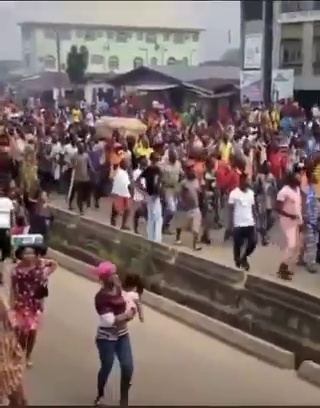
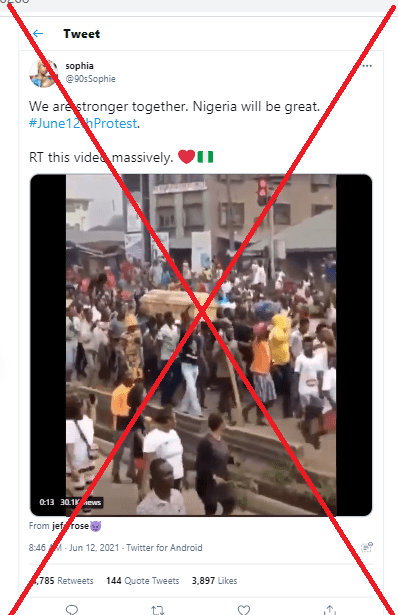
JUST as Nigerians on Saturday, June 12, took to the streets to hold protest against bad governance, corruption, insecurity and other forms of maladministration, an old video of a similar protest, the EndSars protest against police brutality, which held in October 2020, has resurfaced online.
In the video, the protesters were seen marching while a few of them were carrying a coffin and chanting “Buhari must go.”
A Twitter user, Sophia, with the username @90sSophie claimed that the video emanated from the June 12 protest held in 2021.
“We are stronger together. Nigeria will be great. #June12thProtest. RT this video massively,” her tweet read.
THE CLAIM
The video of protesters with a coffin chanting “Buhari must go” is from June 12 protest.
A screenshot of the tweet.
THE FINDINGS
Checks by The FactCheckHub show that the video emanated from the EndSARS protest of October 2020.
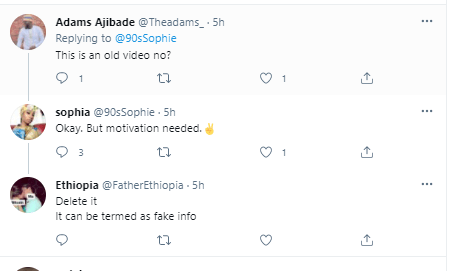
Multiple handle in the comment section noted that the video was old and from a different protest and she should take it down.
A_Real_One [@chi_bu_zee] wrote: Take this video down. You’re just causing more harm. I hope you’re not intentionally sabotaging our efforts just because of clout. #June12thProtest”
Duke Of The Streets [@CallmeUyi] wrote: “We are legit outside risking our lives. This is not the time for false narratives and sharing old online videos. We can’t be our own problems, please.”
Dogefatherbsc [@Rubyking7000] wrote: “Please take down this video, it makes the post fake, we don’t need anything that will make the protest look fake”.
DealSiderz [@Dealsiderz] wrote: “Stop posting old videos there is no motivation here”
Sophia responded with “Okay, but motivation needed”.
Sophia notified that the video is not from the June 12 protest.
The FactCheckHub subjected the video to verification by using the Invid video verifier which showed that video has been online since 2020.
The exact video and others from the same event taken from different angles appeared here, here, here and here on Twitter on October 19.
The video of protesters with coffin chanting “Buhari must go” is from October, 2020, EndSARS protest, therefore the tweet is inaccurate and MISLEADING.
On Saturday June 12, 2021, Many Nigerians across multiple locations took to the street in protest to show and air their grievance and dissatisfaction with the government.
This contributed to the continuing trending of the hashtag #June12thProtest.
Among those using the hashtags are some individuals who alleged that Twitter, or its CEO Jack Dorsey has changed the like and retweet button to green or the Nigerian flag in solidarity with the protest.
A search conducted by the FactCheckHub on Twitter using the phrase “Like button changed” showed results [archived here] of multiple tweets making the claims.
THE CLAIM
Twitter or its CEO Jack Dorsey changed the like and retweet button in solidarity with June 12 protest.
THE FINDINGS
Checks by the FactCheckHub show that the claims are false.
A Twitter user with the username @ChibuzorUkwu tweeted that the retweet button was changed from blue to green.
“Twitter has changed the retweet button colour from blue to green in solidarity with Nigerians on #June12thProtest’ Let’s light the candles of hope and unity that they thought was put out during #EndSARS. Jack is blessed,” his tweet read.
The Twitter retweet icon colour prior to June 12 was green and it is still green.
Findings revealed a noticeable change was made to the retweet option colour in 2016 and it has since been returned to its default green colour.
A Twitter user with the username @urPapaDeyCraze tweeted that the like button changed.
“The like button of any tweet carrying #June12thProtest just changed!!! jack is behind us! RT aggressively,” his tweet read.
The user attached screengrabs of a tweet showing the like button has been replaced by the Nigerian flag. One of the attached image has no flag to represent before S/he retweeted and the other has a flag to represent how after S/he retweeted.
Screenshots attached to the tweet.
The FactcheckHub traced the original Tweet and found that the claim is false. The tweet had showed the default red heart when liked.
The tweet shows red heart when liked and not a flag.
Furthermore, the FactCheckhub fact-checkers liked multiple tweets with the hashtag #KeepItOn and #June12thProtest and it did not change to a flag.
The Factcheckhub observed that the same person or a group of persons are behind this misinformation.
For instance the screenshot of tweets with flags as like icon in circulation has Provii [@provii8], @urpapapadeycraze, and David of FCT [@Dhavidote] as the alleged accounts.
A red flag that the images were manipulated is the the tweets have the same posting time of 8:29am, June 12, they have the same number of likes, quote tweets and content.
This led to further scrutiny and the Factcheckhub observed that these accounts which are existing are interacting with one another.
For instance @UrPapaDeyCraze, tweeted that the like icon changes to flag using a screenshot of Provii’s tweet. Provii came under the tweet to to ask for followers.
The fourth comment on UrPapaDeyCraze tweet shows Provii’s comment confirmation comment ” Wow it’s True guys”.
Dhavidote tweeted manipulated screenshot of his tweet and that of @UrPapadeyCraze
This pattern was noticed on the two other accounts too.
The people behind the misinformation are using it to get traction and engagement.
THE VERDICT
The claims that Twitter retweet and like icon changed in support of the June 12 protest in Nigeria is FALSE. Malicious actors are deliberately misinforming the public for their personal gain.
Troubling misinformation around COVID-19 and its vaccines hits Nigeria. The country also has to bother about cyber insecurity riding on the coattails of the pandemic.
In March 2021, an alum posted on her alumni WhatsApp group, “Hurry up and get N30,000 survival fund” along with a URL obscured by a link shortener.
Nigeria was at the start of lockdown brought on by the COVID-19 pandemic.
A month later, another woman posted in the same WhatsApp group, “Apply for the COVID-19 relief fund provided by the Federal Government”.
Both women had simply forwarded the message as received, without verification.
The messages shared in a school alumni group
The first forwarded it after she heard some people got credited with money from the government’s COVID-19 relief fund.
“It was forwarded to me, so I had to forward it too. One of the persons I forwarded it to said it was a scam,” she narrated.
She never returned to tell her recipients it was a scam; they continued to share the message.
To mitigate the effect of the lockdown, the Nigerian government set up some relief programmes [here & here]. They are the programmes malicious actors rode on to carry out their nefarious activities.
This report tracked down 15 such posts in circulation between March 2020 when the lockdown went to effect to March 2021. Three of them are not directly related to COVID-19 but operate in the same format. 13 operate by directing people to websites, two to mobile numbers.
Spike in reports
The Central Bank of Nigeria, the country’s financial regulatory institution, noted that the Economic and Financial Crimes Commission (EFCC) and the Nigerian Police are to be reached in the case of fraudulent activities.
In April 2020, the commission which is empowered to investigate, prosecute and penalise economic and financial crimes in the country reported a spike in complaints for online scams as a result of the lockdown.
According to the commission’s boss, many of the fraudulent online messages require recipients to click and fill out an online survey and forward same to ten (10) Whatsapp users.
“The messages are embedded with malwares and other malicious codes which when clicked, trigger a program that steals and compromises mails, banking logins passwords, credit- related information and other critical data contained on the recipient’s devices,” the statement reads.
How it works
A message is circulated posing as one of the government interventions, and asking people to apply for the intervention via a link.
The link is often masked by using a URL shortener like bitly. This allows the link preview to be customised to have the key words. For instance, this is the customised link ‘https://bit.ly/fg-10500-weekly’ but the actual site it redirects to is ‘naijarealityview.com’.
The website is masked using link shortener
Sometimes a url will mimic the legitimate website by changing some characters. For instance, the humanitarian and social development website ‘npower.fmhds.gov.ng’ was replicated by changing the dots to dash ‘npower-fmhds-gov-ng’.
One or two character in the url is changed, in this instance dots are changed to dash
The link directs to a website that would have some attributes of a government website like logo, name, and colour.
Then a form asking for age, mobile number, location, email, name and so on.
After filling the form, you are asked to share the link to people in your network at least 10 times. The generated link is to be shared on WhatsApp.
One similarity cuts across these sites: a call to action to invite your friend until the bar is full. The invite button only redirects to WhatsApp.
A call to action button ask for the link to be shared multiple times on WhatsApp before you can access the purported benefit.
A fact-checker and investigations editor at HumAngle ‘Kúnlé Adébàjò, who has spent time debunking such claims since the pandemic, has insight why WhatsApp is preferred platform.
“These kinds of information are best shared on WhatsApp because of the instant messaging app’s end-to-end encryption feature that makes it difficult to track the source of a piece of information, unlike what we have with Twitter, Facebook, and so on,” he says.
The websites have a testimonial section designed to look like a comment made on a Facebook plugin. It is false and a dummy, a manipulated image, and not clickable.
The sites have dummy comment section.
A common feature: they don’t have a contact number, email and social media accounts. Any accounts on the site do not redirect to any social media handle.
Who is, a query and response web tool that stores information regarding websites, shows all 13 sites were new, only registered between 2020 and 2021— after the coronavirus outbreak morphed into a pandemic.
“It looks like the sort of web platforms they create are also temporary such that it’ll be hard to unravel who registered them,” Adébàjò says. “All this is deliberate.”
Adébàjò is not far off the mark. Scam bunkers, a webtool that rates the legitimacy of websites, also noted that “most scam websites use domain names that are less than 6 months old”.
A collage of the date of registration of some sites, showing they were registered after COVID-19 became a pandemic.
A pattern was observed that websites were tailored and registered immediately after an intervention is announced. In October, the government rolled an intervention for small businesses to register with (Corporate Affairs Commission) CAC for free. By January, linked sites were registered and phishing claims were in circulation, throwing a free trip to the UK into the pot.
A civil servant, Model Chris, shared one such tailored message on a WhatsApp chat: that a mobile network was giving out free internet data for people who had completed registration for their National Identity Number (NIN). Ten minutes later, she sent a follow up: “Please disregard this information.”
The government had earlier mandated mobile number registrations be linked to NINs.
The message from Chris.
Chris decided the site was a scam because after filling the form and sharing to multiple persons as prompted, she was not given the data promised.
She was asked whether she felt safe sharing her information with the site. “I did not share my information with them,” she replied.
Really? Didn’t she? A look at the site shows that you must provide, name, mobile number, email address and country/location before you get to the stage where you are prompted to share. Chris, like four other people interviewed, did not feel the information shared exposed them to risk.
But “It’s phishing,” says Igbanam Ogbuluijah, a software development engineer with Amazon.
It’s “basically gathering enough information to initiate an attack. You gather information, you gain trust, then you attack based on trust.”
A pattern is noticeable on such posts: first, the links are obscure; second, they change the characters in the domain name of the site they are masquerading as.
“The one I saw for a bank, the character ‘A’ was not Ascii 65 for the standard English alphabets which the bank uses but an extended character [A with an accent, grave circumflex Diaeresis or tilde] that looks like it. But it is not the same.”
The essence of this is because “Their job as a malicious actor is to create something that your cognitive window will not catch,” Ogbuluijah notes.
This makes it easy for distribution, as people tend to forward the messages without verifying it.
“Eventually someone will share it to someone who will share it to someone’s grandmother who doesn’t know and then she would click the link. When the malicious actors have an in, in a network they can then infiltrate,” says Ogbuluijah.
That was the case for Umar Hamza, who comes from a large family that operates a WhatsApp group comprising people of all ages and educational background living in different locations.
The elderly in the family tend to engage more with such posts, and it might be because “they are more trusting of things shared on the internet,” says Hamza.
He said, It is common for an account on the group to be compromised—whereby a person’s account is taken over by malicious actors after they click on scam links.
The number changes and the WhatsApp group is spammed with numerous suspicious messages.
A senior partner at the IT firm e86 Limited, Olugbenga Odeyemi, says WhatsApp is preferred because “these kinds of messages are targeted towards the older generation who generally believe that whatever is on ‘Whatsup’, as they call it, is authentic. If you put that kind of message on Twitter, it would not fly as we have a lot of young people there who can fact-check it and they will come to the comment to tell you this is fraudulent.”
Running these websites through scam bunkers for legitimacy shows their trust score rating as very bad, with most scoring zero percent.
The sites after subjected to tests on Scam bunkers had low trust scores with some getting zero.
How is WhatsApp tackling the spread of misinformation?
The end-to-end encryption of WhatsApp makes it difficult to trace the origin of a message. Recently, WhatsApp took steps to curb misinformation by implementing icons tagging posts as “forwarded multiple times” and limiting the number of persons that “highly forwarded messages” can be sent to. It was to help notification and slow down the spread of messages. After being forwarded five times, messages tagged can only be forwarded to one person or group at a time.
Currently, fact-checking anything on WhatsApp is extremely labour intensive. Newsrooms with fact-checking arms and fact-checking organisations like the FactCheckhub have set up ways for the public to send in what they suspect to be misinformation. Fact-Checkers then check the claim manually. This helps but it is not a practical solution.
What else…?
Adébàjò has laboriously debunked such claims and still gets new ones. That people are still sharing the messages suggests a change in “orientation” may be the way forward.
“The government needs to improve its communication mechanism so that people know exactly where to visit and whom to call for accurate information about new programmes and government-approved opportunities,” says Adébàjò.
He added that there is a need to work towards improving media literacy.
“The truth is: the red flags are there,” he says. “The general populace should be taught how to easily recognise and call them out or at least refuse to share them to others.”
The strategy of Nigerian banks—repeatedly warning their customers not to reveal their PINs or debit card details to strangers—can be adopted, Adébàjò adds.
A number circulating in one of the claims has been reported multiple times as spam.
Phishing through direct calls
Banks in Nigeria have persistently pushed for banking literacy, to stop customers sharing their account details.
Some customers get calls from people claiming to be “customer care” asking for card details. This tactic features in the claims under review.
Ezeogu Uchechukwu encountered that in April 2020. He got a call from a number claiming to be his bank’s “customer care”. A search of the number on Tru Caller—a smartphone application for identifying phone numbers—showed “Eunice Floxy” even though the caller’s voice was male. The caller told Ezeogu he was one of the beneficiaries of government palliatives of N45,000 but he would need to provid his bank card details.
It is not an isolated incident. In other cases, a number is circulated for users to dial. One of the circulated phishing posts claimed the Nigeria Centre for Disease Control (NCDC) was doling out palliatives to mitigate the impact of the lockdown and provided “07042835643” as contact number.
When put through Tru Caller, the number showed “Access bank Scammer” and had been reported 36 times as scam. The use of “Access bank” suggests the user might have impersonated the bank to defraud or attempt to defraud people.
This time around the message came with a mobile number instead of website links.
For those phishing websites that do not directly ask for your banking details, what is their motivation?
Aside generating advertising revenue – some of the websites had adverts – they redirect you to a totally different site.
Chris experienced it. That was also the case after filling the form for small business name registration.
Olugbenga, a senior partner at IT firm e86, said in the case of the COVID-19 messages, the motivation is to harvest names, phone numbers, email addresses and age range. These could be used for different things.
“They can sell this information to those who do broadcast emails and bulk SMS,” Olugbenga says. “These things are targeted, for the most part, as they already know your locations, name age and so on. So, they know the kind of things that will interest you.”
Innocuous enough, but it can also be harmful
“In this era of using the same email and phone numbers for multiple registrations. It can become a foundation to profiling a person -an average person has one email address that they use for all registrations including banking and school; this also applies to phone numbers,” says the expert.
“With this information and working with compromised persons in the bank they can easily defraud you.
“They can also call you and impersonate an organisation; you will never know where they got your number and they may come across as credible because they have your details”, Olugbenga explains.
Scam rate, a tool that rates legitimacy of sites, says treat with suspicion domain names that end with “.top, .club, .online, .co, .cc.”
In reference to shopping platforms, Scam rate notes to beware when a website sells all products with high discounts (e.g. 70% or 90%; the “Contacts” page should show also an email address or telephone number and not just a form; trust seals like McAfee SECURE or Verisign must be clickable; and a legit shopping site should have a Facebook or Instagram profile.
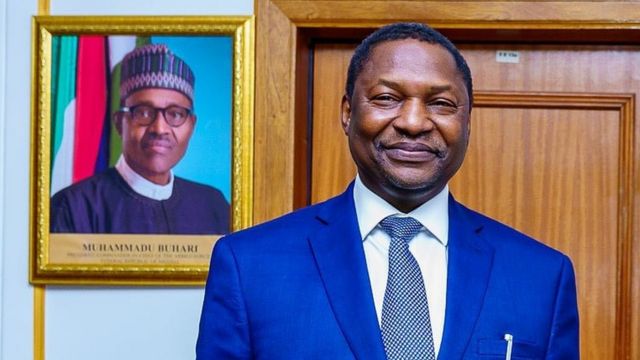
Did the Nigeria Attorney General of Federation (AGF) Abubakar Malami flout Twitter ban? a question posed to the FactCheckHub for verification.
The Federal Government of Nigeria had ordered the suspension of Twitter in Nigeria.
This was followed by blocking access to the microblogging platform in the country, although this has been described as unconstitutional in some quarters.
Twitter’s suspension by the Government came two days after a post by the President, Muhammadu Buhari was taken down by the platform. He had threatened to crack down on insurrection while making reference to the civil war.
However, many Nigerians bypassed the restriction to continue accessing Twitter using Virtual Person Network [VPN].
In reaction, Malami ordered for the prosecution of anyone who violates the ban.
“Attorney-General of the Federation, Abubakar Malami, has ordered the prosecution of offenders of the federal government ban on Twitter operations in Nigeria,” a statement from his office read.
The wife of the President Aisha Buhari deactivated her account few hours after the announcement, this was not the case for the President, Malami and other top government functionaries who as of June 6, still had ‘live’ account the ICIR report.
In a turn of events, on June 8, Malami on his verified Facebook page – archived here – announced that he has deactivated his account, he accompanied it with a screenshot.
A screenshot of Malami’s post on Facebook.
Lifting of the ban, traveling out of the country or by VPN are some of the ways to access Twitter.
The ban has not been lifted and Malami did not announce that he was outside Nigeria when he accessed his account. This leaves the VPN option.
A VPN icon can be seen at the top right of the screenshot he posted.
Screenshot shared by Malami shows VPN icon.
Available information suggest that it is TRUE Malami flouted the Twitter ban to access his account. Whether he will be prosecuted, remains to be seen.
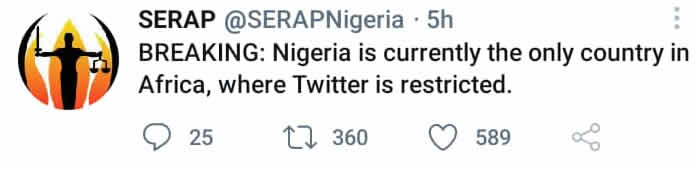
THE Socio-Economic Rights and Accountability Project (SERAP) on June 5, 2021 claimed that Nigeria is the only African country where Twitter is restricted.
SERAP made the claim on its official Twitter page amidst the ban placed on Twitter in Nigeria by the country’s President Muhammadu Buhari.
““BREAKING: Nigeria is currently the only country in Africa, where Twitter is restricted,” the tweet read.
The tweet already garnered 1,279 retweets and 2,172 likes as of 2pm on June 7, 2021.
The FactCheckHub noticed a similar claim was made by a Twitter page tagged “Africa Facts Zone” with the username @AfricaFactsZone which was also retweeted by SERAP.
THE CLAIM
Nigeria is currently the only country in Africa where Twitter is restricted.
Screenshot of the claim made by SERAP
THE FINDINGS
The Nigerian government on Friday, June 5, suspended the operations of the US-based social media platform, Twitter in Nigeria.
The government said the platform was persistently used for activities that could undermine the corporate existence of Nigeria, hence the need for the suspension.
Prior to the claim, SERAP had earlier criticised the decision of the government to suspend the operation of Twitter, just as it threatened to sue the government for the move.
Data from Access Now, an organisation that tracks internet shutdown and social media censorship across the globe show that Nigeria is the only African country where Twitter is currently restricted.
According to Access Now, Algeria, Burundi, Ethiopia, Guinea, Mali, Togo and Uganda had at one point restricted the use of social media or shutdown the internet in their respective countries. Ethiopia currently has internet shutdown in it’s Tigray region and Uganda has some form of Facebook restriction.
THE VERDICT
The claim that Nigeria is currently the only African country where Twitter is restricted is TRUE.
A photo of a tweet stating that Twitter has promised to respect the laws and sovereignty of Nigeria circulated on social media was alleged to have originated from the verified public policy account of the micro blogging platform.
This image was circulated amidst a ban placed on Twitter in Nigeria by its president, Muhammadu Buhari.
Findings by the FactCheckHub showed that the photo is a manipulated image and therefore false.
The photo shared on WhatsApp was also posted on Twitter by a user with name and handle Fulani son, @NigeriaFirst11 respectively.
A reverse image search done by the FactCheckHub also showed that the image was posted on Nairaland forum, however multiple users on the platform have commented that it is a ‘fake’.
The claim shared on Twitter by user Fulani son.
THE CLAIM
That Twitter through its public policy account made this statement:
“We’re committed to peace, progress and freedom of speech of the Nigerian people. We have reviewed our actions and are in communication with the Nigerian Government and promise to respect the laws and sovereignty of Nigeria #KeepItOn”.
THE FINDINGS
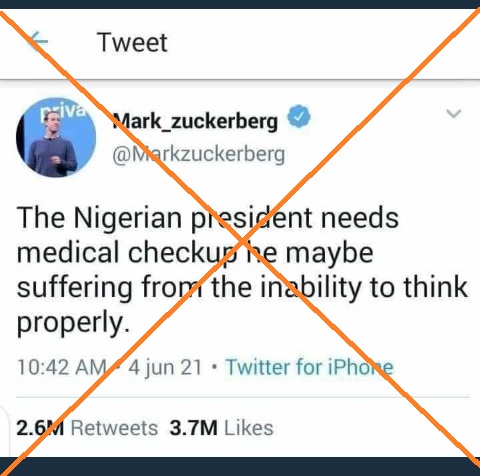
The Factcheckhub recently debunked a claim where a manipulated image was used to falsely say Facebook CEO Mark Zuckerberg tweeted that the Nigeria president Buhari cannot think properly and may need medical attention.
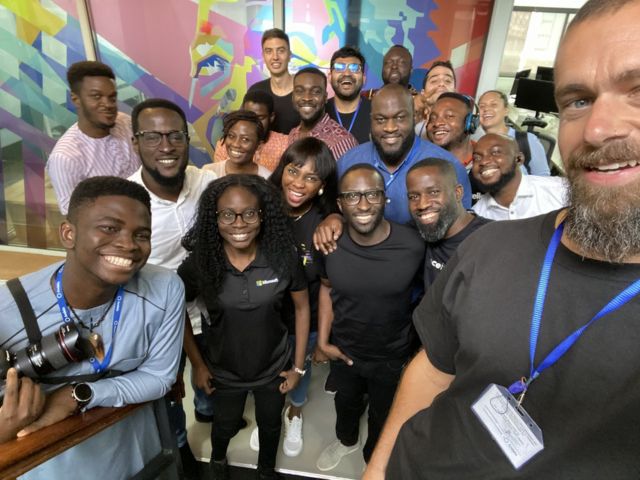
Twitter CEO Jack Dorsey at a tech hub in Lagos when he visited Nigeria in 2019. Photo: Jack Dorsey.
The image under verification is presented to look like a screenshot of a tweet from Twitter public policy account.
A scrutiny shows that the image has been manipulated. The “@” sign which should have preceded the handle “Policy” – which is the account for Twitter public policy – is missing.
Secondly, the icon that comes up whenever the hashtag #KeepItOn is used is also missing.
As at 1:15pm of June 7, the FactCheckHub checked and the icon has not been deactivated by Twitter, which means it is still functional.
L-R: The fake tweet showing the inconsistencies and a tweet grabbed from Twitter Policy account.
In addition, the tweet in question is not on the policy handle.
The last post with regards to Nigeria Twitter ban was made on June 5, 2021 which stated they were concerned by the blocking of Twitter in Nigeria and access to Open internet is essential human right in a modern society.
Even though signs like the removing of #EndSARS logo, deleting of some of the separatist leader Nnamdi Kanu tweet and a press release from government which had a milder tone indicate that the Nigerian Government and Twitter maybe having conversation, the above tweet is not from Twitter as purported.
THE VERDICT
The tweet in question is not from Twitter Public Policy as purported, it is a manipulated image, therefore it is FALSE.
A photo of a tweet stating that the president of Nigeria is suffering from the ‘inability to think properly’ which has gone viral on social media was alleged to have originated from the verified Twitter account of Facebook CEO Mark Zuckerberg.
This image was circulated amidst a ban placed on Twitter in Nigeria by its president, Muhammadu Buhari.
Findings by the FactCheckHub show that the image is manipulated and therefore false.
The manipulated image circulating on social media.
THE CLAIM
That Facebook CEO Mark Zuckerberg tweeted that President of Nigeria Muhammadu Buhari is suffering from the inability to think properly and may need medical check-up.
The image under verification is presented to look like a screenshot of a tweet. It has the photo of Facebook founder Mark Zuckerberg, it was alleged to have been posted on June 4, 21 at 10:42am and has been retweeted 2.6 million times with 3.7 million likes. The account is @MarkZuckerberg and it has the blue verification badge.
The tweet purported reads “The Nigerian President needs medical check-up; he may be suffering from the inability to think”.
Findings by the Factcheckhub show that the account @MarkZuckerberg is suspended for violating twitter rules, the when and why could not be ascertained.
The suspended account.
However, that is not Zuckerberg, the Facebook CEO’s handle. He is on Twitter as @Finkd.
Even though the account has been in existence since 2009, it is almost dormant. The last tweet was in 2012.
Secondly, he is not verified.
To determine that it is the authentic account of Zuckerberg the FactCheckHub conducted a google search on Zuckerberg twitter and multiple reports here, here and here made reference to @Finkd as his account.
One of the reports which talked about Twitter CEO Jack Dorsey [@jack] unfollowing Zuckerberg cited this handle.
In addition, Big Tech Alert an account that keeps track of the activities of tech CEO’s and top executives also has @Finkd on its list.
When Jack unfollowed the @finkd, Twitter public relations account, replied the Big Tech Alert update with a goat emoji.
Goat icon in social media speak, is also use to represent the abbreviation for Greatest Of All Time [GOAT]. It is meant to refer to or describe the person who has performed better than anyone else ever in their field.
Twitter communication reacts to the update with a goat emoji.
Furthermore, from the FactCheckHub audit of the followers of @Finkd, Facebook is following the account along with silicon valley bigwigs like Youtube’s Chief Business officer, Robert Kyncl; Lyft co-founder, Gagan Biyani; Microsoft President, Brad Smith; Google and Alphabet CEO, Sundar Pichai among others.
Facebook and tech bigwigs follow @Finkd on Twitter.
The lack of verification of the account may or may not be unconnected with the silent rift between the two tech bosses who over time have had difference of opinion on multiple fronts; from how to run their platforms, polices on political advertisements, tackling of fake news and so on.
Jack reportedly said he does not use any Facebook product while Zuckerberg reportedly attempted to buy Twitter in 2008.
Background to the misinformation
On June 1, 2021, Buhari made a twitter thread after receiving briefing from the Chairman of the Independent National Electoral Commission (INEC), Mahmood Yakubu.
Yakubu had updated him on series of attacks on electoral facilities across the country, particularly the south East region.
Some groups in the region largely made up of Igbos are agitating for secession, this has led to series of conflicts which sometimes results to loss of lives and destruction of properties.
In 1967, the same region had attempted to secede by forming Biafra Nation, this led to 30 month-long civil war which Buhari a retired military general had fought in.
The war led to death and displacement of millions of persons.
In his response to the INEC boss, which was tweeted, Buhari referred to the civil war while talking of how insurrection will be dealt with, this sparked outrage, the tweet was reported by multiple accounts and it was taken down by Twitter for violating it policies.
This led to the unfolding of several events, one of which is the ban on Twitter in the country which have been described by those opposing it as not constitutional. Another is the avalanche of misinformation circulating on social media.
THE VERDICT
The claim that Facebook CEO Mark Zuckerberg tweeted that President of Nigeria Muhammadu Buhari is suffering from the inability to think properly and may need medical check-up is FALSE. The image was manipulated and the account cited does not belong to Zuckerberg.
FEBRUARY 15, 2021. Ajani Olaide, a resident of Shasha community narrated how his uncle was killed during the ethnic crisis that ensued between Hausa traders and the Yoruba ethnic group, in Oyo State. It was hard to believe that the end had come for the deceased.
He had attempted settling a dispute between a pregnant Yoruba woman and a male trader of Hausa extraction, whose farm produce spilled to the entrance of the said woman’s outlet. But, suddenly the deceased was hit from behind by another northerner, and he died a peacemaker.
The incident began on 11th February, 2021 in Akinyele Local Government Area of Oyo State, South-West Nigeria. It later became an issue of national interest.
“He tried to resolve a misunderstanding between a Hausa trader and a pregnant Yoruba woman when he was hit from behind by another Hausaman. And he died,” Olaide stated on the verified Facebook handle of the Television Continental.
It was a time the country was grappling with COVID-19 pandemic. The Nigerian Centre for Disease Control (NCDC) had issued public health advisory to alert the public against the implication of non-adherence to the rolled out preventive measures.
But amidst the pandemic, inter-communal crisis between the Fulani livestock pastoralists and the Yoruba crop farmers intensified.
The crisis in Oyo State led to complete disregard for the public safety guidelines prescribed by the NCDC. Thus, the number of confirmed cases in Nigeria kept rising, despite inadequate health infrastructures.
Between December 2020 and 10th January, 2021, NCDC had recorded 1,000 confirmed cases milestone.
As of January, 2021, 1,358 deaths were already captured by the Centre with 100,087 confirmed cases.
Still, the anxiety for the COVID-19 cure exacerbated the spread of disinformation. Some health experts described this as ‘infodemic’. The social media became major tool for the spread of misinformation about the pandemic.
Twitter users precisely amplified false information on the Oyo crisis during the pandemic, a situation capable of creating division in the country.
When the crisis intensified, the public were more interested in personal safety than compliance with the COVID-19 public safety guide – an issue made worse by the spread of false information.
Non-compliance to the public safety guideline, according to the Centre, was worsening the public health response efforts targeted to limiting the continued spread of the disease.
As such, the ethnic crisis made compliance more problematic, implying that a civil war or communal unrest, could cause a wider spread of COVID-19.
Dr. Laz Ude, public health practitioner and development expert, shared similar position during an interview with The FactCheck Hub.
In his opinion, it was natural for humans to seek protection in whatever forms necessary during unrest, thus, compliance to the guidelines could be difficult.
“During a period of crisis or war, the human natural instinct is safety and survival, protection from being killed. So observing covid-19 protocols is not a realistic expectation,” he stated.
Twitter ignites misinformation, spiking ethnic crisis during COVID-19
The social media platform placed the ethnic groups at the cliff. Northern Nigerians took to social media to condemn the attacks, and even threatened to retaliate by attacking Southerners resident in the north. Findings later showed part of the video shared during the incident was false.
For instance, in the heat of the occurrence, on February 12, a video surfaced on Twitter showing an alleged gruesome killing of northerners. The gory video shows footage of the northerners being set ablaze. It was shared by @AM_Saleeem on February 13.
The 45-second video shows that few of the victims were still alive before they were subsequently lynched. The video, as of the time of filing this article, has garnered over 46, 000 views, shared by almost 3, 000 persons.
The same footage was also shared by @El_abdool and @SirTafawaBalewa. It has been viewed over 46,000 and shared 1,000 times via social media accounts. Still, it was an old video, not related to the Oyo crisis but meant to incite a violent clash in the country during the pandemic.
Contrary to the false claim, the incident occurred in Edo State, on February 8, a different state, some 189.02 kilometres away from Oyo state.
“The incident happened in Ogheghe Community, Ovia South-West, Edo State. Four persons were involved and they were alleged to have been caught with firearms which they could not give reasons why they bore arms. They were not with any government recognised security organisation,” Chidi Nwabuzor, the Police spokesperson told this reporter.
Meanwhile, analysis of the Twitter accounts showed the three handles which conveyed the misleading information have organic followers.
Google Earth Photograph shows the distance apart (189.02 km) from where the old footage was used by Twitter users to Amplify Oyo inter-ethnic crisis in the pandemic. Photo: Olugbenga Adanikin, The ICIR
How it started
Sunday Adeyemo, otherwise called Sunday Igboho, a Yoruba activist has been at the centre of the crisis. On 23rd January, 2021, he was applauded by the Yoruba local farmers for intervening in the ethnic clashes that had claimed lives in the recent past. At the public outing, he was repeatedly captured on national television not complying with the pandemic safety guideline.
“The Fulani kidnappers cannot seize our lands from us. Our land rightly belongs to us…..,” Igboho, stated while addressing a massive crowd in Igangan, Ibarapa North Local Government Area (LGA), of the state.
Analysis of the video showed non-compliance with the safety protocols. The gathering defied the recommended two-metre social distancing, as well as other measures including the use of face masks to prevent community spread of the virus. The video has been viewed 73,330 as of May 28, 2021.
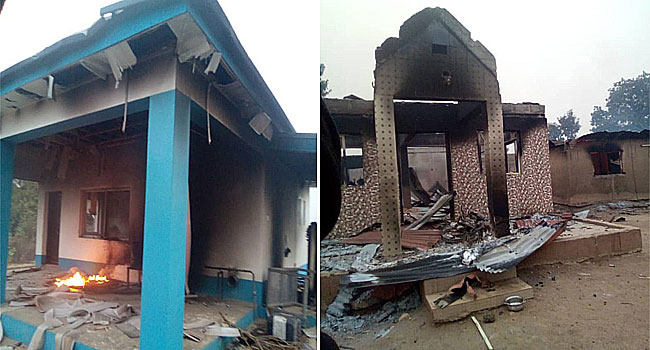
The activist warned the Fulani herders accused of kidnappings and asked them to vacate Igangan community in seven days. The notice did not exclude the Fulani clan head, also known as Seriki Salihu Abdulkadir. Shortly after, the clan head was attacked, his home, cars, and other properties set ablaze, allegedly at the instance of the activist.
As of date, there is no publicly verifiable evidence to establish that the activist was responsible for the attack. However, there was reprisal. Abdulakadir also left the abode forcefully.
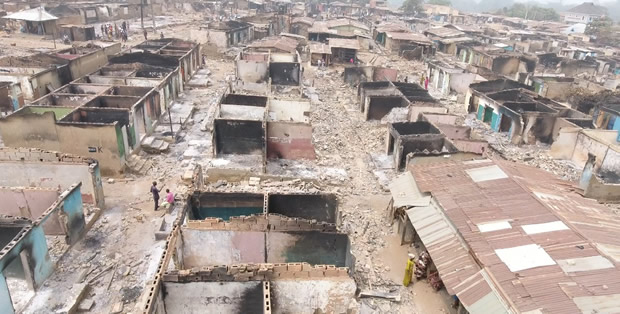
Seriki Fulani, Salihu Abdulkadir’s House Set Ablaze in Igangan, Oyo State, South West Nigeria. Photo Credit: Readerslogue
Igboho fake Twitter account becomes misinformation tool to aggravate ethnic crisis during COVID-19
Similarly, findings showed that social media platforms – Twitter, Facebook and YouTube became the vehicles to amplify voice of the Yoruba activist. They also served as channels to indirectly achieve a predetermined objective of ethnic division.
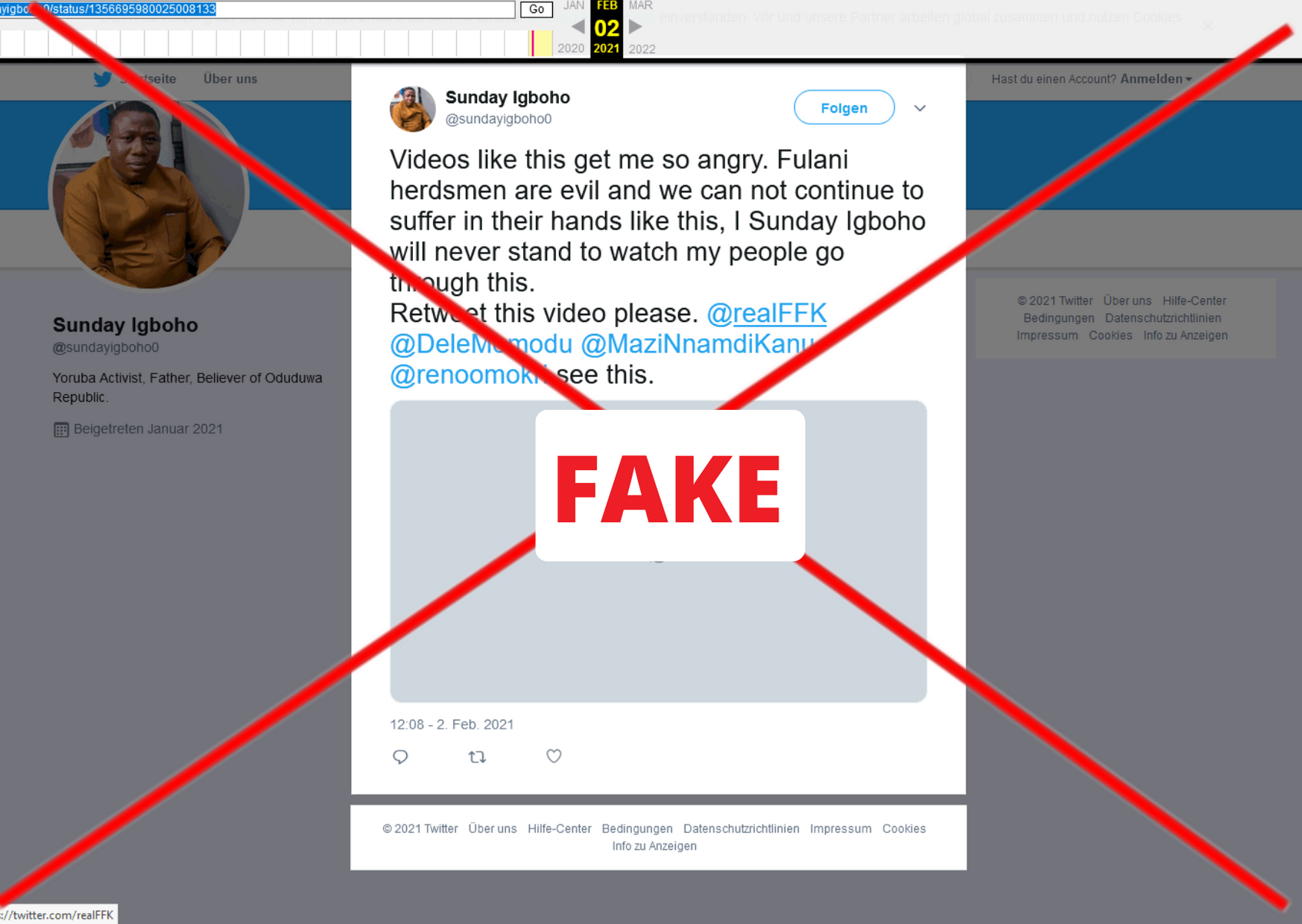
For instance, a major Twitter handle, now suspended @SundayIgboho0 was created in the name of Igboho. For about a month, the handle reeled out information as if it directly came from the activist. Besides unverified handles, the most popular of them posted photographs of reprisal attacks such as when the activist’s home was set ablaze and other misleading information.
A section of the media fell for the source as a reliable one until it was deleted following public disclaimer by the activist.
As of the period, the major handle was archived by this reporter having realised the danger it was capable of. The Yoruba activist later denied the Twitter handle when it became a cause for worry before it was eventually suspended.
Sunday Adeyemo’s (Sunday Igboho) Fake Twitter Account before it was suspended by Twitter
Meanwhile, while tweets were made via the handle, hashtags such as #Stopthekillings, #StopkillingNortherners #SundayIgboho were trending with some misleading videos and photographs shared to spike ethnic tension. The heat of the initial occurrence indirectly led to another communal clash in Shasha, Akinyele LGA of the state.
Igbo secessionist latch on crisis to promote secession
On January 27, NnamdiKanu, leader of the South Eastern secessionist group, Indigenous People of Biafra (IPOB) latched on the ethnic tension in a video posted on YouTube. It was to further promote his pending agenda of seeing the southeast region secede from Nigeria to create a new nation known as Biafra.
“Do you want, let’s say Ogbomoso to be renamed a Fulani name? Do you want Onitsha to also be renamed Fulani name? Forget all the nonsense about unity of Nigeria,” an 18- minute footage dominated by Nnamdi Kanu showed in part. “All they (Fulani) are uniting against is your common interest.”
“Unless you prefer epileptic power supply, or you chose to live your life without running water, abject poverty or deprivation, your only alternative is a revolution.”
Somehow, this message was posted five days after the Yoruba activist issued warning to the Fulani group, resident in the South West state to vacate the area.
Conclusively, Dr. Eze, submitted that the pandemic would potentially lead to further spread of the disease, and other communicable ailments, except the crisis is nipped in the bud.
This publication was produced as part of IWPR’s Africa Resilience Network (ARN) programme, administered in partnership with the Centre for Information Resilience (CIR), the International Centre for Investigative Reporting (ICIR), and Africa Uncensored. For more information on ARN, please visit the ARN site.
A Special Assistant on New Media to Nigeria’s Senate President Abubakar Usman on June 2, 2021 claimed that First Bank of Nigeria has closed all its “81” branches in the South East region of the country.
The findings by the FactCheckHub show that the claim is MISLEADING.
Usman with the username @MrAbuSidiq made the now-deleted post on his verified account at 9:41 AM on Wednesday.
He said “First Bank temporarily closes 81 of their branches in the south east.”
Usman alluded that the crisis in the region is responsible. He said “When you host a party in your living room, you have to be ready to clean up when those who came to enjoy have gone.”
Usman was not alone. Multiple accounts also tweeted similar contents. Like Twitter user Buhari Prodigal Daughter with the user name @johnnysleek posted “First Bank has taken the decision to close all 65 branches in South East, they can now have their Biafra.
For several hours on June 2, “First Bank” trended in Nigeria with some comments drawing parallels with the North East region of the country, that despite the decade-long Boko Haram insurgency, banks did not close.
As at 3:27pm, it was trending at number 14 on Twitter.
First Bank trended in Nigeria after misinformation circulates online.
Usman, Johnny were alluding that the closure is due to the current spate of unrest in the region.
In recent times, the region have been plagued with incessant clashes and attacks which have led to the death of security officials, civilians, and destruction of government infrastructure.
What prompted the misinformation on the closure?
The First Bank of Nigeria at the dawn of May 31, 2021 announced the temporary shutdown of its branches in the South East region of the country.
In a now unavailable tweet, archived here the bank noted that the closure will be for “today” while listing the affected branches. Today here, being May 31 when the tweet was made.
The FactCheckHub observed the shutting down of the First Bank branches in the region could be connected to the sit-at-home order made by the proscribed Indigenous People of Biafra (IPOB).
The bank was not alone, as multiple shops were closed and residents stockpiled foodstuff as a precautionary measure.
First Bank tweet announcing the branch closure in South East region.
The sit-at-home order was meant as a remembrance day for the people who fought on the Biafran side during the Nigerian civil war.
On May 30, 1967, a Lt Colonel Chukwuemeka Odumegwu Ojukwu announced the separation of Biafra from Nigeria. The announcement signified the commencement of the civil war which lasted till 1970.
Overtime, May 30 has come to be an unofficial Biafra Remembrance Day by the people in the region.
Earlier on, the outlawed group, IPOB had on Tuesday, May 4, announced this year’s sit-at-home will hold on Monday, May 31 and not Sunday, May 30 as it earlier announced.
This change could be due to May 30 which falls on a Sunday and the predominantly Christian region would have been at home and the impact of the subtle powerplay would have been contentious.
Various news media platforms reported how activities were paralysed as a result of the sit-at-home order.
However, even though the tweet by the bank stated “today”, the graphics cards attached to the tweet with the lists of closed banks have “List of closed branches till further notice” as their headlines.
The use of the phrase which is contradictory with the tweet caption indicates that the situation will not change until another announcement is made. This may have given credence to the misinformation that permeated the social media space and is also a plausible reason why the tweet from the bank is no longer available.
Meanwhile, the First Bank in a statement signed by its Media and Relations Officer, Modupe Orunmuyi and made available to the FactCheckHub stated that South East branches of the bank are fully opened.
“This is to inform the public that our South East branches are fully open for business. Please disregard any news making the rounds that is contrary to this,” her statement read.
Similarly, Charles Nwogu, a resident of Aba in Abia State, which is one of the affected states in the region told the FactCheckHub that although the First Bank in his area closed on May 31 but it is currently opened for business activities.
The FactCheckHub reached out to Usman and Johnny to find out why they posted a 48-hours old information as new; they are yet to respond.
THE VERDICT
The claim that owning to the recent spate of crisis, the First Bank has closed it branches in South East region of Nigeria is MISLEADING. This is because the bank closure was for a single day May 31, 2021 and they have already re-opened for business before individuals started sharing it as a new event. It was two days stale.
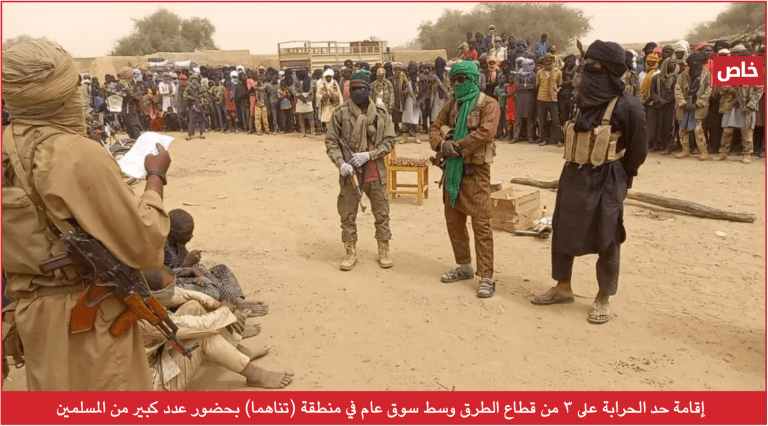
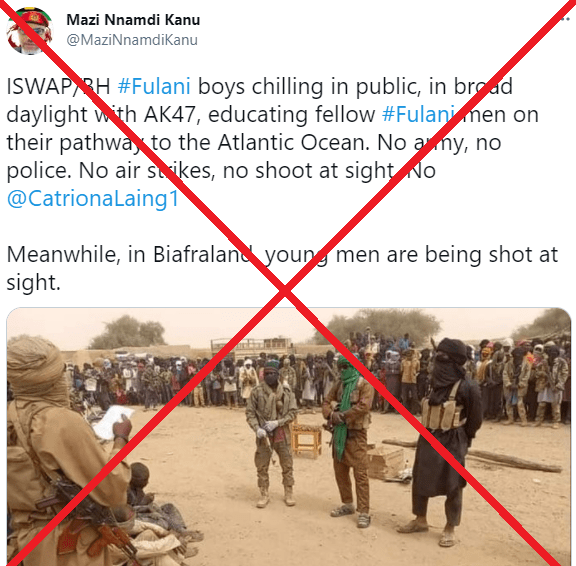
A TWITTER post shared on May 24, by Nnamdi Kanu, leader of a separatist group in Nigeria known as the Indigenous People of Biafra (IPOB) claimed that “ISWAP, Boko Haram and Fulani boys” go around in public with AK47 guns without hiding.
Kanu attached a picture of some men wearing turban carrying rifles in an open field surrounded by onlookers to the tweet which had gathered 6,256 retweets and 5,979 likes as of 4pm of May 27.
“ISWAP/BH #Fulani boys chilling in public, in broad daylight with AK47, educating fellow #Fulani men on their pathway to the Atlantic Ocean. No army, no police. No air strikes, no shoot at sight. No @CatrionaLaing1
Meanwhile, in Biafraland, young men are being shot at sight,” the tweet read.
THE CLAIM
The photo shows ISWAP, Boko Haram, Fulani boys going about with guns in Nigeria.
THE FINDINGS
Checks by the FactCheckhub show that the claim is MISLEADING.
Nnamdi Kanu is notorious for sharing fake and misleading contents on his social media pages. The FactCheckHub had earlier fact-checked some of his claims here and here which were inaccurate.
A Google reverse image search conducted by the FactCheckHub shows the image was on the internet before Nnamdi Kanu tweeted it on his page.
Further findings show that the picture emanated from Mali, when a jihadist group known as the Islamic State in the Greater Sahara (ISGS) were implementing Sharia law by punishing three alleged thieves in a part of Mali.
A report by Long War Journal noted that the Islamic State released the photos within its weekly Al-Naba newsletter purporting to show its men enacting hudud punishments [or punishments mandated within Sharia law].
Similarly, a local source in Tin-Hama in Mali disclosed to Agence France-Presse (AFP) that the said armed men drummed up a crowd on May 2, a market day, and cut the limbs of three men they paraded as thieves.
The paper reported that UN peacekeepers in Mali have offered to help bring to justice the jihadists behind the amputation.
The photo of some men on turban carrying rifles in an open field surrounded by onlookers shared by Nnamdi Kanu is from Mali and not Nigeria; thus making the claim MISLEADING.













 It was a time the country was grappling with COVID-19 pandemic. The Nigerian Centre for Disease Control (NCDC) had issued public health advisory to alert the public against the implication of non-adherence to the rolled out preventive measures.