Home Blog Page 139

Is China taking over Uganda’s airport?

0

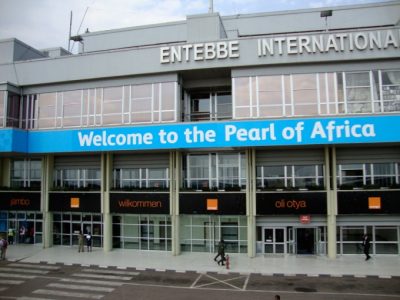
IN late November 2021, multiple reports claimed that the Chinese government is ready to take over the only Ugandan international airport – Entebbe International Airport.

The report was published on various news platforms archived here, here, here, here and here.

Some of the reports state the Chinese government was set to take over the airport, others reported it has already taken over due to default in loan repayment which they cited as “$207 million”.

“Chinese lenders, the Export-Import Bank of China, also known as Exim Bank, has taken over the Ugandan Entebbe International Airport and other assets in the country over the failure of the Ugandan government to repay a loan,” Sahara Reporters reported.

The loan from China

In 2015, the Ugandan government got a loan from China through the Exim Bank in order to finance the expansion and upgrade of Entebbe International Airport.

Available documents show that the government borrowed $325 million,  reports the Monitor, a Ugandan news media.

The report also noted that the Exim Bank agreed and released $200m for the first phase of the upgrade and was later to provide an additional $125 million for the second phase.

The loan was borrowed at 2 per cent interest with a maturity period of 20 years, including a seven-year grace period.

The grace period ends next year – 2022.

The projection is for the airport, built in 1972, to move from 1.9 million passengers annually to approximately 6.1 million passengers and 172,000 tonnes of cargo per year by 2033.

Uganda, China react to airport take over news

Meanwhile, the Chinese government have debunked the claim on taking over the airport.

The Chinese Embassy in Uganda said, “No project in Africa has ever been ‘seized’ by China because it could not repay its loan. On the contrary, China firmly supports and is willing to continue to make efforts to improve Africa’s capacity for independent development”.

This is not the first time news of China taking over an airport in Africa is being circulated. In 2018 the Zambian government refuted claims that China is set to take over Kenneth Kaunda International Airport for defaulting on loan repayment.

In another statement, Vianney Luggya, the Uganda Civil Aviation Authority (UCAA) spokesperson, also refuted the claim, describing the news circulating as false.

“I wish to make it categorically clear that the allegation that Entebbe Airport has been given away for cash is false. The government of Uganda can’t give away such a national asset. We have said it before and repeat that it has not happened. There isn’t an ounce of truth in it,” he said.

Furthermore, the country’s Attorney General, Kiryowa Kiwanuka has said Uganda can meet the China loan terms and keep the airport.

Kiwanuka said the “Contracts in our view are bad when you put out obligations which are impossible of performance.”

“The obligation in this contract is all capable of performance,” Bloomberg reports.

Matters arising 

A probe by the parliament inidcated that some of the clauses imposed on the loan were not favourable and could lead to a potential forfeiture of the airport in case of default.

“I apologise that we shouldn’t have accepted some of the clauses,” The Minister of Finance of Uganda Matia Kasaija told committee members in response to questions asked by the legislators.

The Uganda Civil Aviation Authority (UCAA) officials flagged up to 13 clauses in the loan agreement with China as “unfair and (being able to) erode the sovereignty of Uganda.”

According to reports, the Ugandan government had sent a delegation to China to renegotiate the loan terms; this turned out to be unsuccessful as China authorities refused to alter the terms.

Read Also: Did China close its borders ‘to the whole world’ for 20 to 40 years?

The revelation that the Uganda government signed an agreement with onerous conditions has raised questions about the scrutiny and due diligence that bureaucrats conduct before committing the country internationally. The legislators who led the probe were also accused of approving the loan request that contained toxic clauses, reports the Monitor.

It further stated that Exim Bank once froze cash flow to the contractor, citing violation of the loan agreement after UCAA failed to implement some of the clauses, which were not favourable to Uganda.

Information management central to tackling misinformation – Gbajabiamila

0

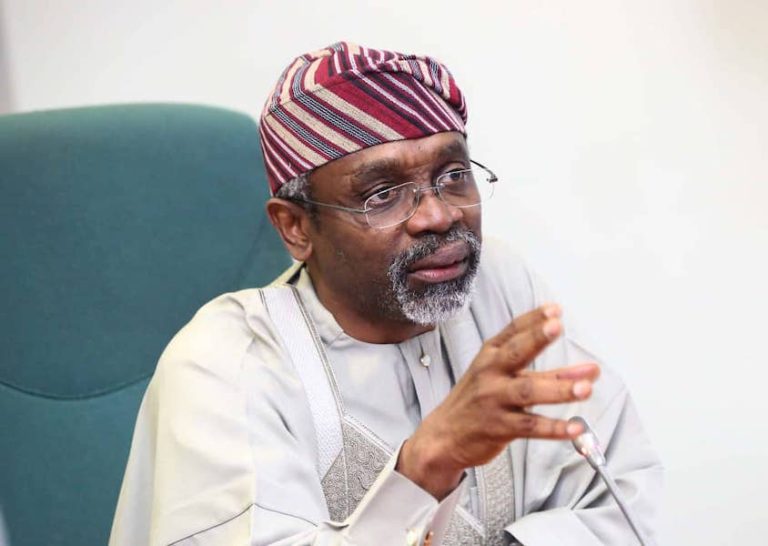
THE SPEAKER of Nigeria’s House of Representatives, Femi Gbajabiamila, has stated that bad actors are banking on emerging technology and new media to manipulate people and spread misinformation.

Gbajabiamila made this statement in Abuja during a two-day national conference on information tagged “Information as a Strategic Tool for National Development”, organised by the House Committee on Information, National Orientation, Ethics and Values.

He acknowledged that technology and new media have democratised public debate to benefit citizens and nations, adding that only the purveyors of narrow interests, who seek to subvert the collective will of the society through misinformation, should be held responsible.

The speaker said deliberate measures under the law should be taken to mitigate the effects of misinformation that is bedevilling the nation from achieving a perfect union of the diverse cultures and religious bodies making up the country.

“Triumph over these challenges requires overcoming our differences in politics and religion, tribe and ethnicity, and building a national alliance against the forces that threaten us.

“Information management is central to success in this regard. We have to do better at making sure that citizens understand the nature of the problems we face and are kept informed of our wins and losses and the sacrifices made by those who do battle on our behalf.

Gbajabiamila also warned against taking action that would suppress free expression and robust public debate on social issues.

“Let us be aware that in trying to prevent the worst consequences of misinformation and hate speech, there is a danger of going too far in ways that smother the marketplace of ideas and deprive citizens of their free speech rights.

“That would be most unfortunate, and as leaders and government policymakers, we must avoid that outcome by all means.

Read Also:UNESCO confab to boost war against fake news, misinformation – Lai Mohammed

He, however, stated that while fighting misinformation, there is a need to focus on building legal systems and protocols that support free expression and robust public debate.

“While doing that, we will hold to account those who in service of their narrow interests will seek to subvert our societies and harm our country using choreographed and mischievously curated misinformation.”

Avoiding false and misleading information

0

The advancement in technology and access to the internet over time has aided in amplifying misinformation. The tools and means for disseminating information are no longer in the exclusive preserve of the traditional media; as such, an individual is bound to come across all sorts of information.

Here are some steps towards avoiding, consuming and or spreading misinformation:

The Source 

Once you get a forwarded message, it is essential to question the source. How credible is the individual that shared the information? Has the person shared a misleading statement in the time past? Answering these first-layer questions could help make informed decisions on a viral post received through social media.

If it’s on a website, check the ‘about us’ section, this should give you information on the leanings of the platform.

Date

Sometimes, old news is shared as new to mislead the public deliberately. Checking the date on an article or post on social media could make a significant difference before hitting the forward /share button.

Context

An image, quote or event that happened elsewhere can be said to be of something else. Such misleading posts like the case of a concrete column in Asia shared as a crack on third mainland bridge in Nigeria are not uncommon.

Being aware that a piece of factual information can be placed in a wrong context will aid in consuming information with a bit of scepticism.

Internet search

If you are sceptical about the authenticity of an article or claim, one of the steps to take is to subject the report to an internet search. Copy the headline or parts of the information and paste it on a search engine such as Google.

If the information appears on credible media platforms and or government websites and social media, the chances are higher that it is authentic.

On the contrary, if such claims are found only on blogs and soft sell magazines, the chances that it is false is higher.

Note that searches can also be conducted on video hosting platforms like YouTube.

Who is the Author?

In this era of the internet or digital age, a lot of people have a digital footprint. In other words, people can easily be contacted either through their social media handles or personal websites, which often contain their contact details.

So, to verify the authenticity of an article shared on social media, you could reach out to the author, if necessary, to seek clarifications. And this could be done through the author’s social media handle (s).

Ask experts

This could be by talking to professionals in the area, or it could simply be going to the website and or social media of the individuals or government agency to verify.

Some organisations have a Frequently Asked Questions (FAQs) section that provides answers. Some websites have a search box where you search using keywords.

For instance, in the area of herbal cure for COVID-19, experts such as virologists, public health professionals, and often, the World Health Organisation (WHO) online resources hosted on its website could be found handy to invalidate misinformation about the pandemic and other diseases.

Visit websites of professional bodies, international organisations of repute to verify the information.

Also, speaking to friends, relatives who are experts in the field can help provide better insights.

Satire

In its literary meaning, satires are used to expose wrongdoings, usually in a hilarious or exaggerated manner. It comprises two important variables – “It makes fun of a person, idea or institution, and secondly, its purpose is not just to entertain, but also to inform or make people think.” A good instance is punocracy, a blog that publishes the government’s inadequacies in a humourous manner.

However, satire websites have also been a source of misinformation.  The FactCheckHub has verified multiple pieces of information that were found to have originated from satire websites that were being circulated as factual.

An example was when a satire post from Babylon bee went viral in Nigeria that iPhone 13 requires COVID-19 vaccination before it can be used. Most satire websites are labelled as such. This can often be found in the ‘about us’ section.

Read beyond the headline

Some blogs and media platforms use sensational or clickbait to attract readership. As such, it is essential to always read beyond the headline.

A 2016 study detailed how six in 10 persons would easily share a story without reading it just because of the headline.

Reading beyond the headline will not only give you the whole story but also stop you from spreading misinformation.

Reach out to Fact-Checking platforms

You can also reach out to fact-checking websites like the FactCheckHub to authenticate a piece of information. This you can do via the ‘Submit a claim’ form or its WhatsApp channel.

Search Fact-Checking websites

Platforms like the FactCheckHub has verified multiple claims. Using keywords, you can search the database to see if the claim in question has been verified already.  You can limit your search to get results only from the FactCheckHub via here, or you can search multiple fact-checking platforms via here.

Global Fact-Checking mentorship program open 2022 Application

0

The International  Fact-Checking Network (IFCN) at the Poynter Institute is accepting applications for a global mentorship program that will run from March 21, 2022, to August 15, 2022.

The mentorship program aims to leverage the expertise of member organisations in the peer-to-peer exchange of information.

Up to $450,000 will be awarded, with both mentors and mentees receiving compensation.

Mentorship topics include detecting misinformation on social media, communicating fact-checks with innovative formats, industry collaboration, media literacy, training and operations, health and science misinformation and more.

An independent panel of judges will evaluate and select applicants and organisations who are experienced in fact-checking, journalism and media literacy, and education and training.

Read Also: Fake News: Lai Mohammed seeks partnership with Nigerians in Diaspora

Selected mentors will receive $50,000, while mentees will receive $5,000 upon completion of the training.

Eligible mentors can be IFCN signatories, fact-checking organisations, and ecosystem partners that have demonstrated success or expertise in a given area. Mentors will be required to provide educational materials to support other fact-checkers & journalists.

Interested applicants can apply here.

#EndSARS: Again, Lai makes false claim on Lekki shooting

0

ON MONDAY, November 15, The Lagos State Judicial Panel on Restitution for Victims of Special Anti-Robbery Squad (SARS) Related Abuses and other matters submitted its report to governor Babajide Sanwo-Olu.

According to the report, the panel noted that nine protesters were confirmed dead while four others were presumed dead.

The report also listed 48 names as casualties of the Lekki shooting incident of October 20, 2020.

However, eight days after the panel submitted the report, the Nigerian Minister of Information and Culture, Lai Mohammed held a press conference where he claimed that family members of those killed at Lekki toll gate are not speaking as they have not shown up.

THE CLAIM

Family members of those who died from the Lekki shooting have not shown up to date.

THE FINDINGS

During his speech on Tuesday, November 20, the minister stated that the family members of those the panel reportedly said were killed at the Lekki toll gate are not speaking up.

He added that the identities of these families are unknown.

He said, “The panel was silent on the family members of those reportedly killed, merely insinuating they were afraid to testify. Even goats have owners who will look for them if they do not return home, not to talk of human beings. Where are the family members of those who were reportedly killed at Lekki toll gate? If the panel is recommending compensation for the families, what are their identities and addresses? Who will receive the compensations when no family members have shown up to date?

Findings show that some people who lost their families at the Lekki toll gate have spoken up. Some have at different times granted interviews to both local and international media organisations.

For Instance, Nigerian Tribune reported that video interviews of two mothers who said their sons were killed at the Lekki toll gate were played at the panel.

One of the mothers was Ndifreke Sunday, who said his son, who bears Victor Sunday, was killed at the Lekki Toll Gate shooting.

Another mother, whose video interview was played at the panel, said she picked up her son’s corpse at the shanty near the Lekki tollgate.

Similarly, in another  report Victoria Nicholas stated that her adopted son died at the Lekki toll gate, however his name was not in the list released by the panel.

In a one year after report by the BBC, Nathaniel Abouta was seen talking about his brother who he said died from the Lekki Shooting.

Similarly, investigative journalist Fisayo Soyombo in a three-part series, interviewed families and friends of some of the people killed from the incident one of whom is the mother of Olaleken ‘Biggie’ Abideen.

Also, a woman, who lost her son to the shooting  spoke to CNN.

The Minister of information has earlier made claims found to be false. He said there was no blood neither did military shoot at protesters.

THE VERDICT

The claim is FALSE. Multiple reports show that families of those killed at Lekki shooting have been speaking up.

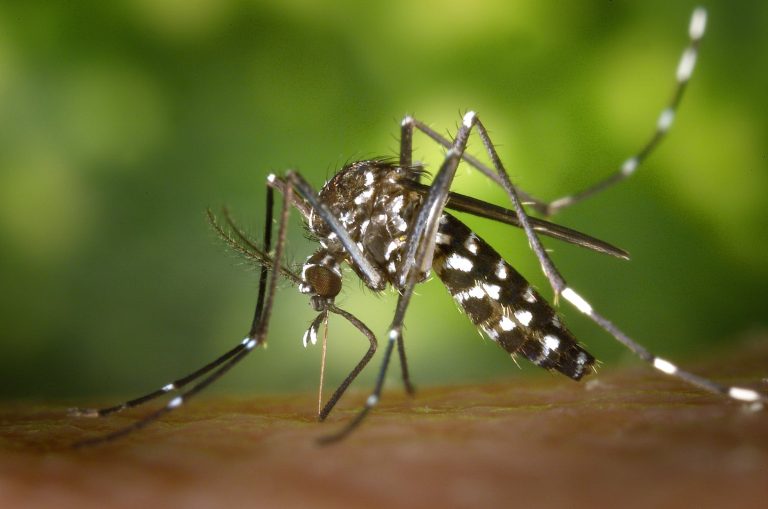
FACTSHEET: Malaria and mosquito nets distribution in Nigeria

0

FACTSHEET: Malaria and mosquito nets distribution in Nigeria

In the last week of October 2021, the media reported that the Nigerian government proposed to secure a loan of $200 million to procure mosquito nets to prevent Malaria in 13 of the 36 states and the Federal Capital Territory (FCT).

The loan, which was to be secured under the Federal Ministry of Health malaria programme, was kicked against by lawmakers.

The Permanent Secretary in the  Federal Ministry of Health, Mahmuda Mamman, who justified the proposal before the panel, said, “The loan if approved by the National Assembly and accessed, will be used to medically fight malaria in the 13 orphan states which cover 208 local government Councils and 3, 536 primary health care centres”.

Furthermore, the report generated a conversation on social media which raised multiple questions.

What percentage of Nigerians are affected by Malaria?

The 2020 World Malaria Report show that Nigeria had the highest number of global malaria cases at 27 per cent in 2019.

In the same year, it accounted for the highest number of deaths worldwide at 23 per cent.

In 2021, the Commissioner for Health in Ogun State Tomi Coker noted that “In Nigeria, malaria is responsible for approximately 60 per cent of out-patient visits and 30 per cent  of hospital admission.”

He added that an estimated 110 million cases are clinically diagnosed annually.

Strategic plans on Malaria

The National Malaria Strategic Plan (2014 – 2020) was developed to transition from malaria control to malaria elimination in Nigeria. As such, the programme was changed from ‘National Malaria Control Programme’ to ‘National Malaria Elimination Programme (NMEP)’.

This plan replaced the previous one, which spanned 2009 to 2013.

Governor of Taraba State Darius Ishaku distributing nets to the citizenry in August 2019. Photo: WHO.

Mosquito nets distribution

The then Minister of Health, Onyebuchi Chukwu, in his forward on the 2014 – 2020 strategic plan document, noted Nigeria distributed 58 million long-lasting insecticidal nets (LLIN) in the five years prior.

Furthermore, data from Statista put’s forward that in 2018,  61 per cent of households had Insecticide-treated nets (ITN). This was a 7 per cent drop from 2015, which recorded 69 per cent.

The ITN and LLIN are nets treated with insecticide that kills mosquitoes. The significant difference is in the duration it lasts and how the insecticide is applied.


Video of mining site collapse NOT from Zamfara but Niger Republic

0

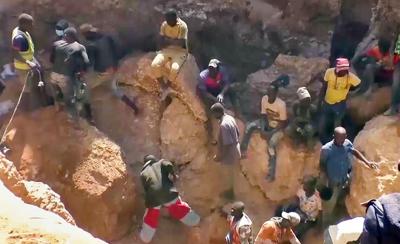
A TWITTER handle, Eons Intelligence with the user ID @eonsintelligenc on Tuesday, November 9, shared a video of a collapsed mining site with the caption the incident happened in Zamfara state. 

“Just In: Over 100 miners are suspected to have been buried under the rubble in Zamfara gold mine collapse. Rescue efforts in progress,” the caption of the video which has over 11,000 views read.

THE CLAIM:

The video shows a collapsed mine site in Zamfara State, with miners buried under the rubble.

A screenshot of the tweet.

THE FINDINGS:

Checks by The FactCheckHub show that the video emanated from an artisanal gold mine collapse in Niger Republic and not Zamfara State.

A Google reverse image search on the video showed if surfaced online on Monday, November 8, this was a day before it was shared by Eons Intelligence.

Similarly, the news of the gold mine collapse, killing several persons in Southern Niger was reported in  multiple media like Reuters, Aljazeera. 

Also, the image in the report by Washington Post is from the same scene as the video.

THE VERDICT

Video of a mining site where some people were believed to have been trapped is not from Zamfara but the Niger Republic thereby making the claim FALSE.

Viral photo of cracked Lagos Third Mainland Bridge is FALSE!

0

In November 2021, multiple posts circulated on social media that a part of the Third Mainland Bridge in Lagos state “has opened up, and the bridge is shaking”.

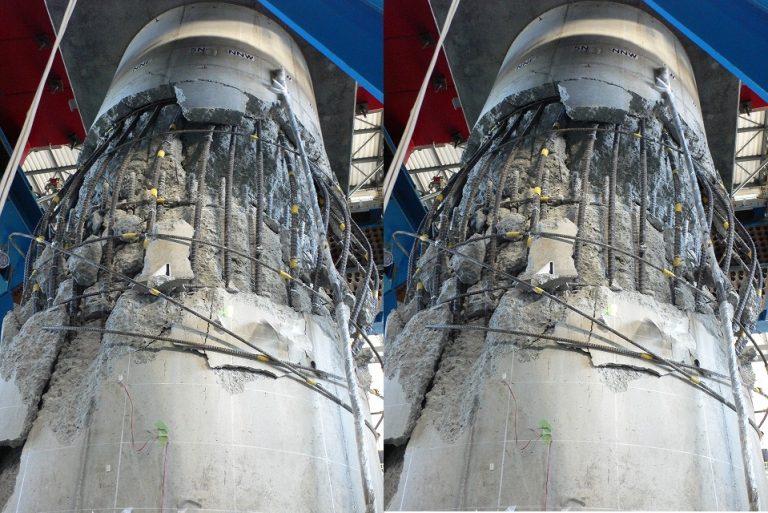
This post which is a variation of “We have just been informed that part of the 3rd mainland bridge has opened up and the bridge is shaking,” was often accompanied by a photograph.

One of such posts by a Facebook user named Prince Eniola Ojajuni drew 127 comments and almost 3 000 shares.

THE CLAIM:

The photograph shows a defective part of the Third Mainland Bridge.

A screenshot of the claim.

THE FINDINGS:

Findings by The FactCheckHub show the viral image is not from the Third Mainland Bridge.

The FactCheckHub traced the image to a post made in 2017 on the Facebook page of ‘Civil Engineering Daily‘ used to illustrate a ‘buckling’ column failure.  The post has over 6500 engagements.

Furthermore, in 2018 the image was also used to illustrate types of structural failure in civil engineering.

The photo, which may have originated from a shake table experiment of a full-scale bridge pier conducted in 2008, has been re-shared, resized, and used across different platforms.

Meanwhile, it resurfaced in Nigeria amidst the collapse of a 22-storey building in Lagos that led to the death of 44 people.

In addition, in a press statement on its website, the Federal Ministry of Works and Housing debunked the claim making round.

The director of press Boade Akinola said that the Controller drove on the bridge and did not notice any opening or experience any shaking.

Similarly, the Federal Controller of Works in Lagos, Olukayode Popoola, told the press that this has been a recurring rumour.

He said, “I want to put the record straight, this is not the first time such rumours would be going around, it started about five years ago that somebody would just wake up and post this same video on social media, and then people begin passing it and then cause panic to road users.

“I want to assure all residents of Lagos and road users that there is no problem with Third Mainland Bridge; it is safe and still comfortable.”.

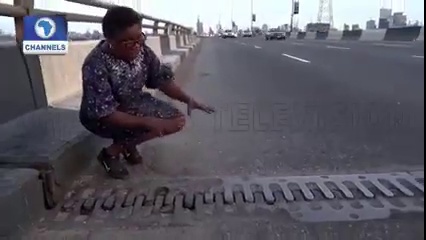
The video in circulation was traced to a  report in 2019, where an expansion joint on the bridge was shown shaking.

A scene from a 2019 report on Third mainland bridge bad expansion joint that has resurfaced online.

THE VERDICT

The image does not show a defective part of the Third Mainland Bridge as claimed based on the findings. Therefore, it is FALSE.

Why Federal University Dutse SUG president has ‘security detail’ in viral photos

0

MULTIPLE photos of some student union leaders of the Federal University Dutse (FUD) with ‘security detail’ have been widely circulated online in Nigeria.

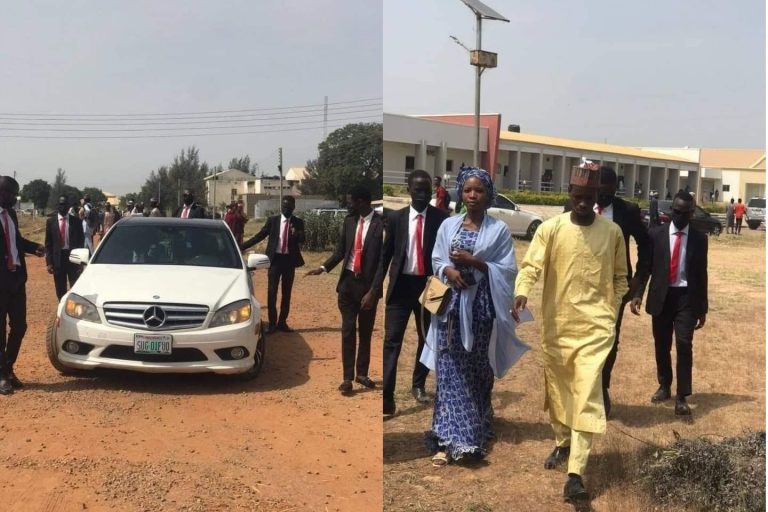
The images which trended on Twitter and Facebook show the Students Union Government (SUG) president and vice president being escorted by other students dressed in black suits.

The FUD is located in Jigawa state.

A Twitter user Maazi Ogbonnaya Okoro with the user ID, @maazi-ogbonnaya tweeted the pictures with the caption that the president is on his way to class. He also alluded that this was possible because it happened in a part of the country.

He said “Imagine if it’s south east, EFCC will arrest oke na ngwere”.  The Igbo language ‘Oke na ngwere” here means, literally everyone will be arrested.

A  human rights lawyer in Nigeria Inibehe Effiong, also shared the pictures on his Facebook and Twitter page.

What is the story?

The FactCheckHub  findings show that the photos were from  Federal University Dutse.

The SUG’s Public Relations Officer (PRO) Mohammed Nazif, in a telephone conversation with The FactCheckHub said, the man and a woman seen in some of the pictures are the SUG president, Muhammad Mukhtar and the SUG vice president, Zainab Ibrahim.

The SUG VP and President of Federal University Dutse.

He also added that, the pictures were taken on November 2, 2021 when the university had its matriculation ceremony for new students.

Separate findings by The FactCheckHub confirmed the institution had its matriculation on November 2.

Nazif added that “The day also coincides with the day the students of Criminology and Security Studies (CSS) Department had their week.”

Some higher institutions in Nigeria usually pick a time to celebrate departmental week. This week is marked by series of events which could be academic-oriented, sports, entertainments and so on.


Read  fact-checks here


Nazif said the men in black accompanying the SUG  president’s car in one of the pictures and also seen in other pictures are students of the CSS department who in celebration of their week  and in line with their course acted as security for SUG officials for the day.

He clarified that “the car in one of the pictures and one other bus belongs to the SUG and not to the president.”

Furthermore, the university’s Chief Information Officer Abdullahi Yahaya Bello, also said, the SUG president doesn’t attend lectures in convoy with security in tow.

“The students of the CSS department as part of their study’s requirement usually act as security personnel for lecturers and SUG officials on few occasions and that’s what happened on the day the picture was taken,” Bello said.


Edit:  The headline was changed from “Why Federal University Dutse SUG president was in a convoy”  to “Why Federal University Dutse SUG president has ‘security detail’ in viral photos”.

Claim that APC candidate leads in seven LGAs is FALSE

0

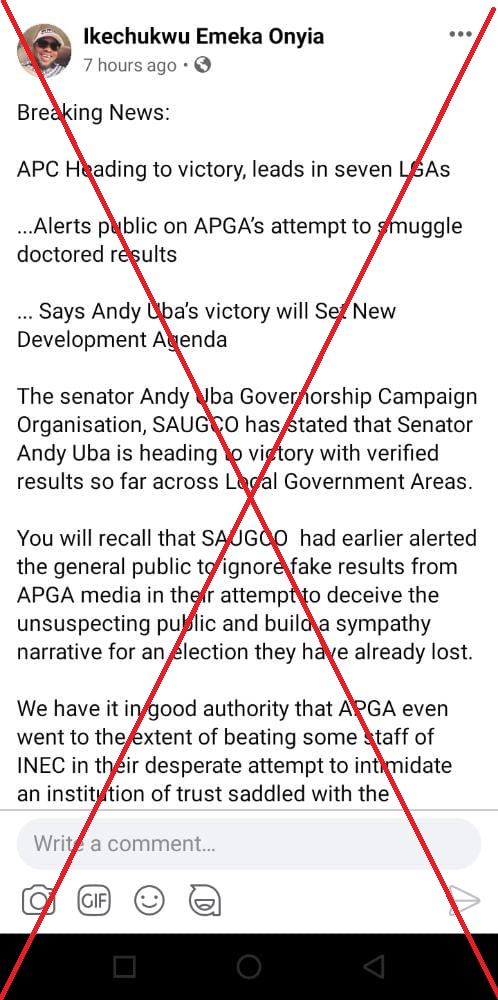
AS THE Anambra state governorship election result trickles in,  a Facebook user Ikechukwu Emeka Onyia, on Sunday  claimed the candidate of the All Progressives Congress Andy Ubah, is leading in seven Local Government Areas (LGAs) of the state.

Onyia in a post made on his Facebook page asserted that Ubah is currently coasting home to victory and as well, leading in seven LGAs.

Onyia who said he is the Deputy Director, Media and Publicity for the Senator Andy Uba Governorship Campaign Organisation (SAUGCO) wrote “Breaking News: APC Heading to victory, leads in seven LGAs  …Alerts public on APGA’s attempt to smuggle doctored results … Says Andy Uba’s victory will Set New Development Agenda.The senator Andy Uba Governorship Campaign Organisation, SAUGCO has stated that Senator Andy Uba is heading to victory with verified results so far across Local Government Areas”.

His post was also published as news by some blogs archived here and here.

THE CLAIM:

APC candidate leads in seven LGAs.

THE FINDINGS:

Findings by The FactCheckHub show that the claim is false, as the official result revealed that the APC candidate is yet to win a single LGA.

As at 3pm, November 7, Media reports show that  Chukwuma Charles Soludo, candidate of the All Progressives Grand Alliance (APGA) has cleared  10 of the 11 LGAs results that have been announced so far by the Independent National Electoral Commission (INEC).

The collation of results is ongoing.

THE VERDICT:

The claim that the APC candidate leads in seven LGAs is FALSE.