

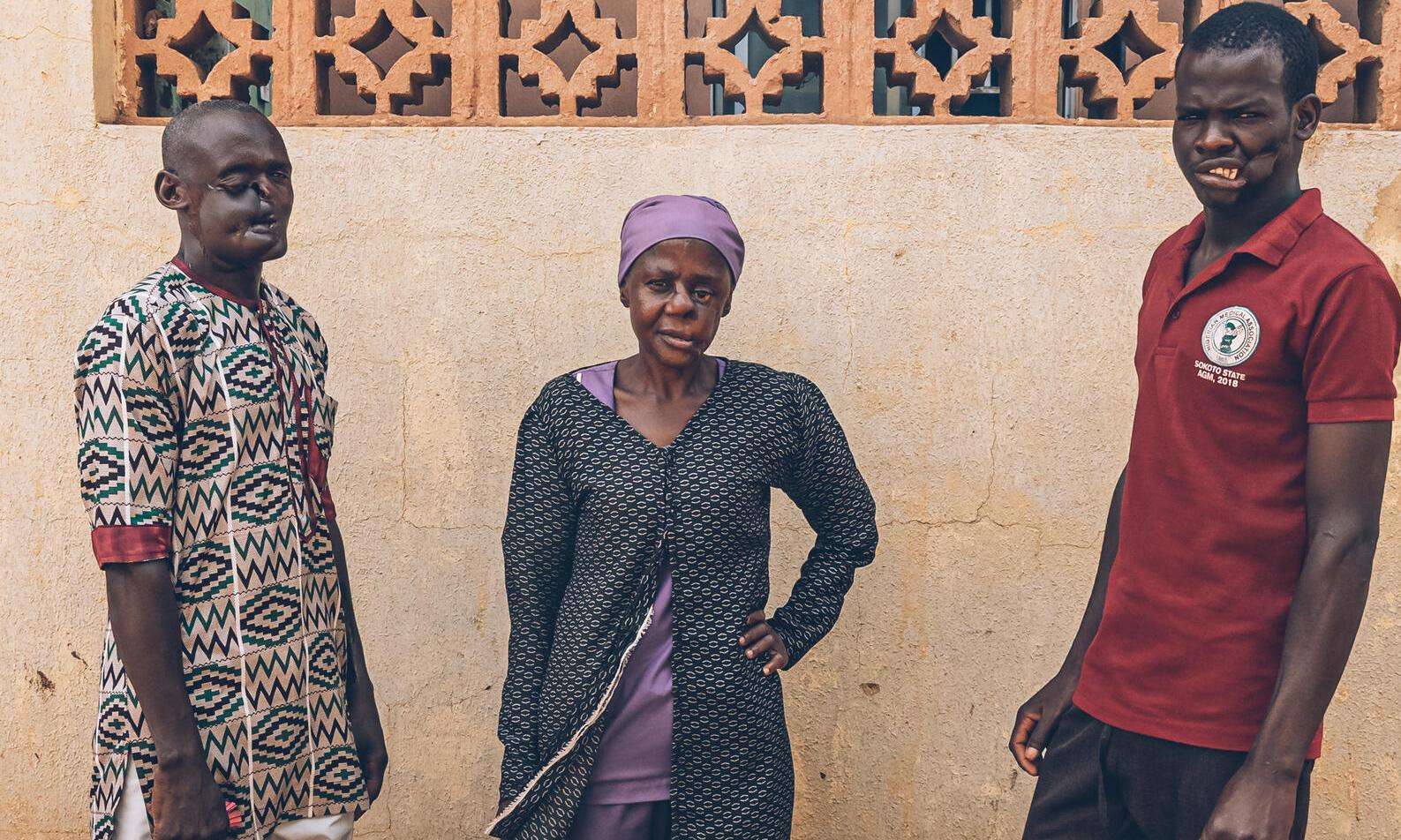
NEW research has mapped noma hotspots across northern Nigeria, estimating more than 50,000 cases over 25 years and identifying 64 high-risk local government areas.
A new study has shed light on the hidden burden of noma in northern Nigeria, estimating 50,782 new cases between 1999 and 2024 across 296 local government areas (LGAs) in 12 states.
Published in The Lancet Global Health on 8 May 2026, the study identified 64 LGAs with significantly higher estimated incidence risks, with the largest cluster along the Sokoto-Kebbi-Zamfara axis.
The figure is a modelled estimate, not a direct count of confirmed cases. Researchers based the estimate on records from 911 patients treated at Noma Children’s Hospital in Sokoto State, combined with population and geographical data to project the disease’s incidence.
So, what exactly is noma? Who is most at risk? Why does it continue to affect Nigeria? And what can be done to prevent it?
Here’s what you need to know.
What is noma?
Noma, also known as cancrum oris, is a severe and rapidly progressing disease that attacks the mouth and face.
It can start with gum inflammation and, if untreated, rapidly destroy soft tissue, bones and facial skin. Advanced cases can leave survivors with severe facial disfigurement and difficulties eating, speaking and breathing. The World Health Organisation (WHO) recognises noma as a neglected tropical disease.
Dr Rotimi Adesanya, director of medical services at the Federal College of Education (Technical), told The FactCheckHub that noma can begin with gum ulcers and spread rapidly to the jaw, cheeks and other parts of the face.
Noma is not considered contagious, and there is no evidence that it is transmitted directly between people. Prompt diagnosis is essential, as treatment is most effective in the early stages of the disease, before significant tissue damage occurs.
Why is noma called the ‘face of poverty’?
Noma is closely associated with extreme poverty and poor living conditions, as well as factors such as malnutrition, poor oral health and limited access to healthcare.
Although the disease was once reported in several parts of the world, improvements in living conditions, nutrition and healthcare contributed to its decline in many regions. Today, it predominantly affects young children in disadvantaged communities, particularly in sub-Saharan Africa.
The WHO says children aged two to six years are mainly affected, although older children and adults with weakened immune systems can also develop the disease.
Where does noma occur?
Noma is most prevalent in the so-called noma belt, which stretches across sub-Saharan Africa from Mauritania in the west to Ethiopia in the east.
However, the disease is not confined to Africa. Cases have also been reported in Asia, the Americas and other parts of the world.
Nigeria is among the countries most affected and lies within the disease’s endemic belt. In December 2023, the WHO officially added noma to its list of neglected tropical diseases after Nigeria and other countries advocated for its inclusion.
What does the latest Nigerian study reveal?
The 2026 Lancet Global Health study provides a detailed picture of where noma appears to be concentrated in northern Nigeria.
Researchers reviewed records of 911 patients with acute noma treated at Noma Children’s Hospital in Sokoto between September 1999 and October 2024. They then used statistical modelling to estimate incidence risks across 296 LGAs in 12 northern states.
The model estimated 50,782 incident cases during the 25-year period. Of the 296 LGAs studied, 64 had significantly higher estimated incidence risks than the regional average. At least one high-risk LGA was identified in each of the 12 states.
The strongest concentration was in north-western Nigeria, particularly along the Sokoto-Kebbi-Zamfara axis.
In Sokoto, 20 of 23 LGAs had significantly elevated estimated risks. The same was true for 12 of 14 LGAs in Zamfara and 13 of 21 in Kebbi.
Children under 10 were particularly affected, with elevated risk identified in 74 LGAs.
Does 50,782 mean there were 50,782 confirmed cases?
No.The figure is a statistical estimate, not the number of patients directly diagnosed with noma at the Sokoto hospital.
Researchers used hospital records together with population and geographical data to model the likely incidence across the study area. The study is significant because it maps noma risk at the LGA level, helping identify specific communities that may need targeted interventions.
What causes noma?
The exact cause of noma remains unclear.
The WHO describes noma as an opportunistic disease associated with non-specific polymicrobial organisms, rather than a single confirmed pathogen. Risk factors include severe malnutrition, weakened immunity, underlying infections, poor oral health and extreme poverty.
Research published in March 2026 identified a previously undescribed Treponema bacterium, provisionally named Treponema A, in samples from Nigerian children with noma.
However, researchers have not established that the bacterium causes noma. More research is needed to determine whether it contributes to the disease or simply thrives in noma wounds.
Who is most at risk?
Noma mainly affects young children living in communities where poverty, malnutrition and limited access to healthcare are widespread.
Associated risk factors include:
-
severe malnutrition;
-
weakened immunity;
-
underlying infections;
-
poor oral health;
-
extreme poverty; and
-
other conditions that weaken the body’s defences.
A 2024 systematic review of studies involving Nigerian children also identified malnutrition, measles and malaria as major associated factors.
Is noma contagious?
No.Noma is considered non-contagious, and there is no documented evidence that it spreads directly from person to person. The WHO classifies noma as a non-contagious disease.
How is noma treated?
Early diagnosis can significantly improve the outcome.
Treatment generally includes antibiotics, oral hygiene measures, disinfectant mouthwash and nutritional support. Advanced cases may require wound care and reconstructiv-e surgery.
Once the disease reaches an advanced stage, survivors can be left with severe facial disfigurement, difficulty eating and speaking, social stigma and the need for reconstructive surgery.
Can noma be prevented?
Noma can be prevented by giving children enough nutritious food, access to quality healthcare, including routine vaccinations and by promoting breastfeeding and proper oral hygiene.
Noma is a disease which affects malnourished children living in poor rural communities, and is common in Northern Nigeria, presumably because malnutrition is common among children in this region, Prof. David Mabey, a physician specialising in infectious and tropical diseases, told The FactCheckHub.
Meanwhile, in an earlier interview, Bakano Otto at the WHO Regional Office for Africa, said the Nigerian government was making efforts to address and prevent noma.
“In Nigeria, the presence of these high‑risk factors likely contributes to the high number of noma cases reported in the country. At the same time, under the leadership of the Federal Ministry of Health, Nigeria has undertaken significant efforts to address noma, including its leadership role in advocating for the integration of noma into the WHO list of neglected tropical diseases,” Otto said.
“Various stakeholders—including civil society organisations—have implemented programmes dedicated to noma prevention, treatment, and case finding. Nigeria is also home to two noma‑specific hospitals, which enhance clinical detection, management and referral. As a result, these coordinated government and non‑government efforts may contribute to higher levels of case identification, reporting and research compared with neighbouring countries where such structures are less developed.”
How is Nigeria tackling a disease that should never exist?
In October 2025, Nigeria’s Coordinating Minister of Health and Social Welfare, Professor Muhammad Ali Pate, urged Nigerians to monitor spending at local clinics after the federal government released N32.9 billion to primary healthcare facilities nationwide, as part of efforts to curb corruption and improve transparency.
Pate said the government is working to integrate oral health into Nigeria’s primary healthcare system, with primary health centres expected to provide education, treatment and referrals to help combat noma.
The minister also announced upgrades to dental facilities, the recruitment of more dental professionals and training for healthcare workers to identify and refer cases of oral diseases, including noma, cleft lip and cleft palate.
He highlighted specialised facilities such as the Noma Centre in Abuja and Noma Children’s Hospital in Sokoto, which provide free treatment. He also called for a broader response to the conditions that fuel noma, including poor nutrition, sanitation, housing, immunisation, and maternal and child health, stressing that “Noma is not just a medical failure, but a societal inadequacy.”

Seasoned writer and literary curator, Zainab Abdulrasaq is a factchecker for The FactCheckHub in an effort to combat information disorder. She can be reached on IG @blackbookishgirl or zabdulrasaq@icirnigeria.org

