
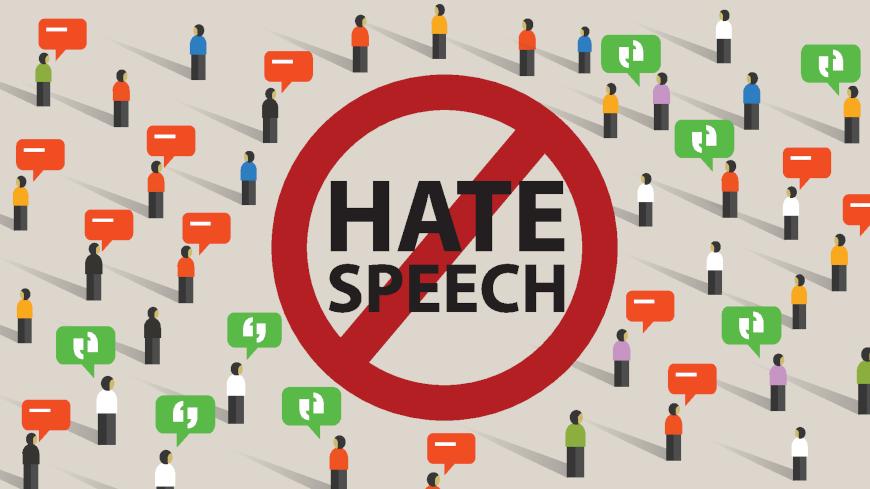
THE growth of digital platforms has aided how people connect in Nigeria, but it has also increased the spread of ethno-religious hate speech across the country, driven by political interests, financial incentives and cultural extremism. To address this problem globally, the United Nations observes the fifth International Day for Countering Hate Speech.
Established by the United Nations General Assembly in 2021, the day is marked annually on 18 June, matching the anniversary of the 2019 UN Strategy and Plan of Action on Hate Speech. The day tackles how hate speech fuels violence, discrimination and division in society, and how it has become a tool of division targeting specific groups – including women, migrants, refugees, LGBTQIA+ people, persons with disabilities and other minorities – often for political gain.
The theme for the year by the UN is; “The power of partnerships in countering speech”. The theme highlights the necessity of coalition-building and a whole-of-society approach to address toxic narratives and promote global inclusion. The UN framework states that individual sectors cannot dismantle coordinated hate campaigns alone.
In Nigeria, building working solutions requires active collaboration among specific groups, including the government, civil society, media organisations, and tech companies. Governments need to enforce laws that punish incitement to violence while protecting free speech, while civil society groups and fact-checkers must track, verify, and expose malicious actors who exploit ethnic differences for political gain.
READ: How false claims, recycled videos clouded Oyo school abduction
Because of the rapid rise in digital misinformation, United Nations Educational, Scientific and Cultural Organization (UNESCO’s) webinar on the occasion of the International Day for Countering Hate Speech 2026 is; “Countering hate speech in the digital age: Promoting information integrity and resilient societies”. It will highlight preventive and educational approaches that promote information integrity, resilience, and meaningful digital engagement, while fostering discussion on the respective roles of governments, educators, media actors, civil society, and technology companies.
Generative AI has made it cheaper and faster to create misleading content, which directly impacts the Nigerian information space. Individuals utilise deepfakes, audio cloning, and computer-generated graphics to target specific groups, often worsening existing cases.
Furthermore, the introduction of monetisation features on major social media platforms has significantly enhanced how hate speech thrives online. Because creators are financially rewarded based on engagement metrics, there is a growing incentive to post content or videos designed to generate controversial opinions and heavy traffic. The act of seeking attention turns toxic rhetoric into a profitable venture.
At the same time, social media platforms often fail to deploy adequate resources or local-language moderation teams to swiftly flag hate speech written in Hausa, Igbo, or Yoruba during highly sensitive periods like national elections. Because their automated systems do not fully understand the local context or language mixing, algorithms frequently promote controversial or angry posts to keep users engaged, giving hate speech wider reach.
Case studies in ethno-religious targeting
Harry Da Diegot, a social media commentator known for repeatedly posting anti-Yoruba content, has made several inflammatory remarks targeting the ethnic group. In one post, he wrote that “whatever treatment South Africans are getting from the rest of Africa, the Yoruba tribe of Nigeria should get it too,” before describing Yorubas as “the most foolish things to come out of Africa.”
Similarly, the account known as Dr. Yoruba, which has built a reputation for anti-Igbo commentaries, has repeatedly shared content targeting the Igbo ethnic group. In one post directed at comedian Michael Sani Amnesia, popularly known as MC Lively, the account insulted him for defending the use of ‘Igbo’ rather than ‘Ibo,’. It also accused him of siding with Igbos against Yorubas and suggested he should relocate to the South-East if he loved the Igbos so much. The post also referred to prominent Igbo figures using derogatory language.
The FactCheckHub reported how these actors are many on social media and how they deliberately use disinformation and information manipulation to inflame the ember of tribal hostilities and sow discord between Igbo and Yoruba in Nigeria.
Similarly, during the 2023 elections, politically motivated tribal disinformation spread like wildfire across social media. Peter Obi, the Labour Party candidate at the time, was accused of being sympathetic to the Indigenous People of Biafra (IPOB), the southeastern secessionist group. Meanwhile, Bola Tinubu, now Nigerian president, faced opposition in the South for not selecting an Igbo or Christian running mate.
Politicians weaponised ethnic divisions for political gain, fueling pre-existing tensions. The elections witnessed a peak in tribal hostility, particularly between the Igbo and Yoruba communities.
Throughout the election period, there was a constant tribal battle online and offline. People engaged in heated debates to defend their candidates and ethnic backgrounds. Hate speech, misinformation, and false accusations were widely circulated to discredit opposing groups.
For instance, political actors fueled conspiracy theories that Igbos were attempting to “take over” the state after Peter Obi won Lagos State in 2023 presidential election. In the days leading up to the gubernatorial election, social media platforms were flooded with messages warning that the Labour Party’s gubernatorial candidate in the state, Gbadebo Rhodes-Vivour, intended to empower IPOB if elected.
READ ALSO: Video from Mali used to depict attack on Oyo community
What expert says
Rejoice Taddy, a Disinformation Research Expert, notes that detecting and debunking hate speech comes with significant operational hurdles. She added that with the advancement of AI, it has even become more difficult.
“I would say one major challenge is the realistic nature of AI-generated content, which sometimes requires constant trials and testing of different tools before it can be properly verified,” Taddy said.
“Speed presents another major barrier, particularly during critical security crises such as bandit attacks in Nigeria. In these situations, bad actors quickly deploy AI-generated audio, video, and imagery to spread hate speech or false claims. By the time a fact-checker runs verification processes and issues a debunk, the false narrative has already reached a massive audience.”
Taddy explained that the viral speed limits the reach and impact of any claim that has been debunked, as opposed to the false narrative that was shared earlier.
“Open-source intelligence (OSINT) experience also reveals that automated AI moderation tools cannot function as standalone solutions for verifying digital content. While these automated systems are effective at recognising repetitive patterns and tracking known narratives, they lack accuracy when analysing authenticity.”
“At the end of the day, there is still a strong need for human judgement to properly interrogate what these tools are flagging,” Taddy stated.
Consequently, digital verification relies on a layered methodology, combining different tools, technological signals, and human intuition. Human verification remains entirely irreplaceable for evaluating context, assessing intent, identifying coordinated malicious behaviour, and applying ethical judgement.
“Human verification is what brings in context, helps assess intent, identifies coordinated behaviour, and applies ethical judgement that machines cannot fully replicate, especially in high-risk situations,” she stressed.

Seasoned writer and literary curator, Zainab Abdulrasaq is a factchecker for The FactCheckHub in an effort to combat information disorder. She can be reached on IG @blackbookishgirl or zabdulrasaq@icirnigeria.org

