Home Blog Page 42

Viral image of Mahmuda terrorists arrested by Nigerian military is MISLEADING

0

A claim that some members of a new terrorist group, Mahmuda, have been apprehended between the borders of Kwara and Niger States by the Nigerian military has surfaced online.

The claim which originated from a post by an X user, @asafaabdulwasi2, alleged that the Nigerian military apprehended the Mahmuda terrorists in Baruten and Kaiama Local Government Areas of Kwara State.

READ THIS: False claim circulates that nobody was arrested, prosecuted for terrorist attacks in Northern Nigeria

The post was accompanied by an image showing some individuals lying half-naked on bare ground, with soldiers visible in the background — purportedly depicting the arrest of the alleged terrorists.

The post read:

These are some of the members of arrested ‘Mahmuda’ terror group operating in Ilesha Baruba, Kemaanji in Baruten and Kaiama local government areas of Kwara State respectively and around Kainji Lake Forest in Niger state. Scores of terrorist who engaged the gallant Nigerian military were neutralized, many escaped with gunshots woundsand multiple were arrested.
The success of the military operation Kwara were built on close collaboration with the affected communities members who assist the military with valuable information on the movement and activities of the terrorist, eliminating conspiratory silence as done in some sections of the country.
Since the inception of the claim on May 11, 2025, it has garnered over 230,000 views alongside over 2,000 likes and more than 700 reposts as of May 13, 2025.

CLAIM

Photo shows arrested Mahmuda terrorists in Kwara State, Nigeria.


THE FINDINGS

Findings by The FactCheckHub show that the claim is MISLEADING, as the image depicts some villagers arrested in the Tillabéri region of Niger Republic, not in Kwara State.

When the image was examined by our fact-checker using Google Lens, it showed that the photo has been previously used as a featured image in a Zagazola report, a news platform known for its security analysis and conflict reporting in Africa’s Sahel region.

Screenshot of the claim on X: Insert MISLEADING Verdict
Screenshot of the claim retrieved from X. Insert: MISLEADING verdict.

Published in March 2025, the report detailed a disturbing wave of fear sweeping through the Tillabéri region of Niger Republic after graphic videos and images surfaced online. It alleged that these visuals showed Nigerien security forces parading groups of unarmed civilians in public spaces and branding them as terrorists.

Many of those depicted appear to be ordinary villagers, prompting concerns over the legitimacy of the accusations and the potential abuse of power by the Nigerien military.

This came during a period of heightened insecurity in Tillabéri. Prior to that, the region witnessed multiple violence, including a notorious attack on a market convoy that left some people dead.

The broader context underscores ongoing instability in Africa’s Sahel region, where civilians are often caught between extremist violence and heavy-handedness of security operatives.

ALSO READ: Video of ‘Boko Haram terrorists getting arms supply by air’ resurfaces online

Further checks revealed that the Nigerian Army had on May 10, 2025 arrested 12 individuals linked to acts of terrorism allegedly carried out by a breakaway faction of Boko Haram known as Mahmuda, Daily Trust reported. Previous killings by the terror group was also reported by Punch newspaper. The 12 terrorists arrested by the Nigerian military were unrelated to the image in circulation on the X platform.


THE VERDICT

The claim that the photo shows arrested Mahmuda terrorists in Kwara State, Nigeria is MISLEADING; the image depicts some villagers arrested in the Tillabéri region of Niger Republic, and unconnected to the Nigerian arrest.

Have Nigerian universities completed two uninterrupted academic calendars since 2023?

A claim that Nigerian universities have completed two academic sessions without embarking on strike action has circulated online.

The post was shared by an X user, @fattylincorn_01 with a claim that the feat was only possible under President Bola Ahmed Tinubu-led Nigerian government.

READ THIS: No, ASUU strike has not been called off!

The post read:

“For the first time in history, Universities completed 2 academic sessions without a single strike.

Thanks to PBAT Administration”

It has generated more than 88,000 views, over 1,800 likes, and over 300 reposts as of May 12, 2025.


CLAIM

Nigerian universities have completed two academic sessions without strike action since May 2023.


THE FINDINGS

Findings by The FactCheckHub show that the claim is TRUE, as media reports confirmed.

screenshot of the post retrieved inserted TRUE Verdict
Screenshot of the post retrieved from X. Insert: TRUE verdict.

Bola Ahmed Tinubu was inaugurated as Nigeria’s president on May 29, 2023, after winning the nation’s 2023 presidential election. His administration quickly introduced bold economic reforms, including the removal of fuel subsidy and naira devaluation, aimed at stabilizing the economy. These reforms, though praised by some economists, triggered inflation, fuel price hikes, and hardship protests. The education sector, already strained, continued to face challenges amid the reforms.

Before Tinubu’s administration, the Academic Staff Union of Universities (ASUU) had embarked on an eight-month strike in 2022 under the then President Muhammadu Buhari, protesting unmet agreements on funding, salaries, and the rejection of UTAS by the Nigerian government. Since May 2023 when Tinubu’s tenure kicked off, there has not been any nationwide strike action so far from federal universities workers. Although, the Senior Staff Association of Nigerian Universities (SSANU) and the Non-Academic Staff Union (NASU) declared a 7-day warning strike – (beginning from March 18, 2024)  to demand the payment of four months of their members’ withheld salaries after the 2022 nationwide strike, the strike never hold. This was averted following concerted efforts between the Nigerian government and both university workers’ unions.

In October 2023, Tinubu approved the payment of four months’ withheld salaries to ASUU members following a partial waiver of the “No Work, No Pay” policy. Also in April 2025, the Federal Government of Nigeria disbursed N50 billion to settle outstanding earned allowances owed to academic and non-academic staff in federal universities, Nairametrics.com reported. The union still demands full implementation of prior agreements, leaving the potential for future unrest.

To verify the claim, we reviewed the history of industrial strike actions by academic unions from 1999 to date. Using keyword searches, we compiled a timeline from credible reports documenting the occurrence of strikes. A Pulse.ng report provided a detailed account of timelines of academic strike actions from 1999 till 2018. This timeline was further expanded till 2020 by another news platform, African Explained. The timelines can also be found in an ICIR report after ASUU marked one years of uninterrupted academic calendar in 2024.

ALSO READ: FG and ASUU reps did not engage in a brawl

Our fact-checker also examined the claim that universities have completed two academic calendars without strike interruption. On average, one academic calendar spans nine months. Since President Tinubu’s inauguration on May 29, 2023, there has been no strike action in any federal universities more than 22 months after. This duration is enough to accommodate uninterrupted two academic calendar years.


THE VERDICT

The claim that Nigerian universities have completed two academic sessions without strike action since May 2023 is TRUE. Multiple reports confirmed that there was no strike action between May 2023 and April 2025.

Photo does not depict police barrack in Nigeria

A social media influencer, Rinu Oduala, has posted a photo showing rows of dilapidated housing structures alongside a claim that it depicts the current living conditions of Nigerian police officers.

She posted on her X handle, @savvyrinu, on May 6, 2025 thus:

“Self-contained Apartments of police officers killing peaceful protesters demonstrating against bad governance.”

READ THIS: Old video of Nigerian policemen protesting resurfaces online

Although she did not directly referenced Nigeria in her post, her previous posts and reactions in the comment section alluded that she is criticizing the state of police welfare in Nigeria despite their crackdown on protesters in series of demonstration across the country, including last year’s August protests tagged #EndBadGovernance protests.

The post has since gained over 100,000 views, alongside more than 1,800 reposts, and over 4,300 likes as of May 10, 2025.


CLAIM

Image shows state of police residential in Nigeria.


THE FINDINGS 

Checks by The FactCheckHub show that the image is not recent and does not originate from Nigeria.

In recent years, Nigeria has witnessed a series of crackdowns on peaceful protesters by security forces, particularly the police. Demonstrations against bad governance, corruption, and police brutality such as the 2020 #EndSARS protests, End Bad Governance protests in August 2024 have often been met with excessive force, including use of tear gas, live ammunitions, arbitrary arrests, and intimidation.

DON’T MISS THIS: Doctored image of Tinubu barracks circulates online

Human rights organisations such as Amnesty International have repeatedly documented cases of unlawful killings and abuse of protesters by the Nigerian police and military, raising serious concerns about the shrinking civic space in the country.

Screenshot of the X post by Rinu Oduala. INSERT: MISLEADING verdict.

This is despite the fact that many police officers themselves are victims of the same systemic failures. Poor salaries, lack of adequate housing, delayed promotions, and harsh working conditions have long plagued the Nigeria Police Force (NPF).

Numerous reports have highlighted the dilapidated state of police barracks, inadequate welfare packages, and insufficient resources for officers, all of which contribute to low morale and inefficiency within the force.

However, a Google Reverse Image Search shows that the photo was shared on Facebook in 2017 by Uganda Youth Freedom Fighters against Violence, a human rights advocacy group based in Uganda.

ALSO READ: From economic protests to coup agitation: How Nigeria’s hunger march took a radical turn

Like Nigeria, police officers also face poor welfare conditions in Uganda, including inadequate housing and insufficient work resources, as documented in multiple government and media reports as seen here, here, here, here and here.

The image was also reshared in 2020 by another Ugandan media platform, www.edge.ug. It was also used here as featured image in a 2012 news report.


THE VERDICT

The claim that the image shows state of police residential in Nigeria is MISLEADING. The image has been online since 2012 and shows a police barrack in Uganda, not Nigeria.

Video does not show snow in Jos

0

A viral video showing a woman gathering ice from ground and surrounded by what looks like a snowfall following a heavy rain has been circulating on social media.

A Facebook user, Aare Almaroof tv2, posted the video which was allegedly recorded in Jos, the capital of Plateau State, Nigeria.

In the video, the woman excitedly referred to the scene as a winter experience while scooping what appears to be snow. Several onlookers, including passing motorists, can be seen around the area as witnesses.

READ THIS: Watch out for these disinformation trends in 2025!

In the 59-second video, the woman could be heard saying:

See winter, tis is ice, see ice, this is ice the rain that fall here today, did you guys see look at this, do you see, see, it is coll,(Cold) so coll (Cold) look at ice, my goodness (sic).

The post was also accompanied with a caption that read:

Plateau, Jos Nigeria just experienced her first snow downfall for the year Oyinbo people can’t make yanga to us about winter. We too have snow, not in December, but in April.

The post has garnered over 2,000 views as of May 9, 2025. The claim was also found here and here on Instagram.

CLAIM

Video shows snow in Jos, Plateau State.


THE FINDINGS

Findings by The FactCheckHub show that the claim is MISLEADING, as the incident happened in Cameroon and not Jos.

Screenshot of an appearance of the claim on Facebook ; Insert : MISLEADING verdict
Screenshot of the claim retrieved from Facebook. Insert: MISLEADING verdict.

Snow forms when water vapor turns to ice and makes crystals that form familiar six-sided snowflakes. On the other hand, hail develops when updrafts send ice pellets up into cold air aloft.

“Initially there’s a small ice pellet,” said Jeff Lorber, a meteorologist with the National Weather Service’s Bay Area office in California, U.S. “Strong updrafts cause this ball of ice to expand as more supercooled water freezes onto it.”

DON’T MISS THIS: Claim about snow in Lagos is FALSE

When few keyframes from the video were subjected to a Google Reverse Image search, the results showed that the footage had previously appeared on Facebook. It was uploaded two weeks earlier by NexDim Empire, a Facebook user.

The video was accompanied with a caption that read:

All we need for fall bush for Babanki Tungoh, North West region 🇨🇲 Some say na hailstones while others say na snow . This lady say na ice.

The FactCheckHub observed that the Facebook user posts content related to Cameroonian entertainment, and has amassed over 234,000 followers on Facebook.

In the comments section on his post, most users were worried about the damage it would do to crops.

Multiple similar videos were also posted by some other Cameroonian accounts on social media as seen here and here.

A Google search of Babanki Tungoh shows that it is a community located in the North-West region of Cameroon. Also known as Kedjom Ketinguh, the village is situated in a breathtaking volcanic landscape, surrounded by three prominent rock outcrops.

Further checks by The FactCheckHub show that snowfall is not a typical meteorological incident in Cameroon. Although the country lies near the equator, occasional snowfall can occur at the summit of Mount Cameroon, but such events are rare.

ALSO READ: Does it cost just N500,000 to become doctor in Nigeria?

In most parts of the country, snow is not a normal occurrence. For instance, reports of snow in Bana, located in Cameroon’s Western region in 2021 were later confirmed to be hail, not actual snow.

Also, recent weather reports from the Nigerian Metrological Agency (NIMET) show that there has not been any thunderstorms in Plateau State recently for there to be snow or hailstones as the weather is currently humid; also there would have been prior warnings from the weather agency.


THE VERDICT

The claim that the video shows snow in Jos is MISLEADING, as the video is likely from Babanki Tungoh in the North-Western region of Cameroon.

Timeline of Ponzi schemes in Nigeria: A decade of financial fraud, deception

THOUSANDS of Nigerians had watched helplessly as MMM, the infamous Russian-born mutual aid scheme, crumbled overnight in 2016.

Despite its accompanying shockwaves, MMM was far from the last Ponzi scheme in Nigeria. This report traces the rise and fall of some Ponzi schemes in Nigeria over the past ten years.

READ THIS:How to protect yourself from online scams – Study

Nearly a decade later, the cycle continued with different names, some flashier, hiding behind corporate branding or charismatic influencers. Others still use religious language and promise of “community upliftment.”


2015 – 2017

The modern wave of Ponzi schemes in Nigeria began with MMM Nigeria, launched in 2015. Framed as a mutual aid community, MMM promised a 30 per cent return on funds donated to fellow members. It quickly gained traction via WhatsApp groups, Church testimonies, and social media influencers.

By December 2016, the scheme collapsed spectacularly, leaving many in financial ruin and cementing MMM as the benchmark for future frauds.

Following closely behind was Ultimate Cycler, a multilevel pyramid scheme where members paid ₦12,500 with the expectation of receiving ₦50,000. Despite brief popularity, its servers crashed within months.


2018 – 2020

Loom Nigeria emerged in 2019 as a WhatsApp-based gifting circle, luring participants with the promise of eightfold returns. Invest ₦1,000 and get ₦13,000 in return by recruiting others into the scheme, was its popular slogan. It quickly gained popularity among students and low-income earners but collapsed within weeks. The Securities and Exchange Commission (SEC) had issued a warning at the time, classifying it as a Ponzi scheme.

Around the same period, Pennywise Wealth Management blended the rising digital savings culture with investment opportunities. Backed by a strong Instagram presence and influencer marketing, it earned public trust. However, the platform vanished shortly after, citing “internal audits” as the reason for its sudden disappearance.


2021 – 2023

As Nigerians grew more skeptical of obvious scams, Ponzi schemes began adopting corporate and even religious facades to gain credibility.

One of the most prominent, MBA Forex, promised 15 per cent monthly returns through forex trading. The scheme attracted many Nigerians before collapsing in 2021 amid investigations by the Economic and Financial Crimes Commission (EFCC). Though it operated as a registered business, this formality only served to mask its fraudulent nature.

That same year, The ICIR reported growing concerns among investors about Racksterli, a platform that guised as an online affiliate marketing company. Under its “Standard” package, subscribers were encouraged to invest ₦14,000 with promises of earning about ₦722 daily amounting to ₦21,600 in 30 days, or over 154 per cent profit in just a month. Despite the red flags, Racksterli gained traction partly due to endorsements by celebrities such as Afrobeats star Davido and actress Nancy Isime, who featured the company as a sponsor on the first season of The Nancy Isime Show.

Meanwhile, Chinmark Group merged real estate, hospitality, and spiritual rhetoric to appeal to Christian investors. Another high-profile scheme, the Ovaioza Farm Produce Storage Business, tapped into Nigeria’s agri-tech boom. Its founder leveraged personal charisma, livestreaming supposed financial updates and fabricated impact stories to maintain investor confidence.

2024 – 2025

By 2024, fraudsters had begun integrating buzzwords like AI, crypto, DAO, and NFTs into their schemes. QZ Asset Management stood out with flashy dashboards and TikTok videos promoting “automated daily returns.” Similarly, a wave of NFT staking platforms and fake blockchain communities emerged, promising passive income with no clear business model.

In December 2024, a massive crypto-romance scam operating out of Lagos was busted by the EFCC. The scam, which used love traps and fake crypto platforms to defraud foreigners, led to the arrest of 792 suspects, including Chinese and Filipino nationals one of the largest anti-fraud crackdowns in Nigerian history.

DON’T MISS THIS:Five financial scams to be wary of in 2024

In March, the EFCC released a list of 58 illegal investment firms, including Farm4Me, Wales Kingdom Capital, Chinmark Homes, and Crowdyvest. This marked a rare instance of proactive public disclosure from a regulatory body.

The most recent in this trend is CBEX, which collapsed in the early weeks of April. Report by The ICIR revealed that the scheme’s operators have been arrested by the EFCC, with investigations currently ongoing. In previous reports, The ICIR also outlined how to identify Ponzi schemes and examined why many Nigerians continue to fall for them despite growing awareness.

* This report was originally published on The ICIR website. You may also read the report there.

Entries open for 2025 African Fact-Checking Awards

\The 2025 African Fact-Checking Awards, the continent’s longest-running celebration of fact-checking journalism, is now open to journalists, student journalists, and professional fact-checkers.

Now in its 12th year, the awards honour those who promote accuracy and fight misinformation. “Their work is vital for transparency and trust,” said Hlalani Gumpo, Africa Check’s head of outreach.

READ THIS: ICIR’s Chikezie Omeje wins Africa Check’s fact check award

In 2024, the awards received 241 entries from 29 countries. Organisers expect even more this year.

Categories include:

  • Fact-Check of the Year by a Working Journalist
  • Fact-Check of the Year by a Professional Fact-Checker
  • Fact-Check of the Year by a Student Journalist

Winners receive up to $3,000; entries must be published between 1st May, 2024 and 7th June, 2025. Deadline: 7th June, 2025 (midnight GMT).

Recall that fact-checkers from the BBC global disinformation team in Nigeria and Faso Check from Burkina Faso emerged winners at the 2024 African Fact-checking Awards held in October 2024, in Accra, Ghana.

ALSO READ: BBC, Faso-check win big at 2024 Africa Facts summit

In the professional fact-checkers category, Adnan Salif Sidibe from Faso Check, emerged winner with his fact-check of a claim that was made at the opening ceremony of COP28 in 2023.

In the student journalist category, Rita Enemuru, a student at the University of Uyo, in Akwa Ibom, Nigeria took home the prize.

Interested applicants for this year’s African Fact-checking Awards can apply here.

X user shares old images of new buses in Burkina Faso as recent

An X user, @africanhub_, has shared images of buses alongside a claim that the Ibrahim Traoré-led military government of Burkina Faso recently purchased a new set of 115 buses.

Three out of the four images show parked buses in green colour, while others were branded in yellow colour.

READ THIS: Serbian protest video falsely associated with pro-Traoré rally in Burkina Faso

The texts of the claim read thus:

“A total of 115 brand-new buses have just landed in Burkina Faso, following a directive by President Ibrahim Traoré to upgrade urban transportation nationwide.

This move is part of a broader strategy to nationalize public transit- aiming to reduce commuting costs, improve safety with professionally trained drivers, and generate sustainable employment for the people.

So far, 200 drivers have been hired, with more job openings expected soon.”

The post has garnered significant traction online with over 800,000 views, more than 24,000 likes, and over 4,800 reposts as of May 7, 2025.

Similarly, a Malawi-based blog also published a recent report on the claim. It was also found here and here on Facebook.


CLAIM

Images show new buses acquired by Ibrahim Traore-led military government in Burkina Faso.


THE FINDINGS

Checks by The FactCheckHub show that the claim is MISLEADING, as the images have been online since 2018.

Screenshot of the post retrieved from X. Insert: MISLEADING verdict.

When our fact-checker subjected the three images showing the new buses to a reverse image search using Google Lens, the results show media report from 2018 which revealed that the then Burkinabe government purchased 115 buses to ease mobility difficulty being experienced in the nation’s urban cities and among students.

The report noted that the over 115 buses were handed over to the beneficiaries by the then Burkinabe government at a ceremony held on February 2, 2018 at the headquarters of Sotraco company located in Ouagadougou.

ALSO READ: Old video shows residents fleeing Burkina Faso village, NOT Nigerian communities

Also, our fact-checker sighted a video from the Youtube channel of Sotraco, showing the new buses and which dated back to over six years ago. One of the images was also seen here.

Further checks for media reports from credible platforms on the new buses yielded no result.


THE VERDICT 

The claim that the images show new buses acquired by Ibrahim Traore-led military government in Burkina Faso is MISLEADING; the images have been online since 2018.

MovieFact: How faithful is ‘Conclave’ about the process of picking a new pope?

0

By Loreben Tuquero


The secretive process to elect a new Roman Catholic pope begins May 7, two weeks after Pope Francis’ death at age 88.

Fans of the Oscar-nominated movie “Conclave,” which is about a papal election, might think they have a head start on what’s to come. But how faithful is the movie to the real thing?

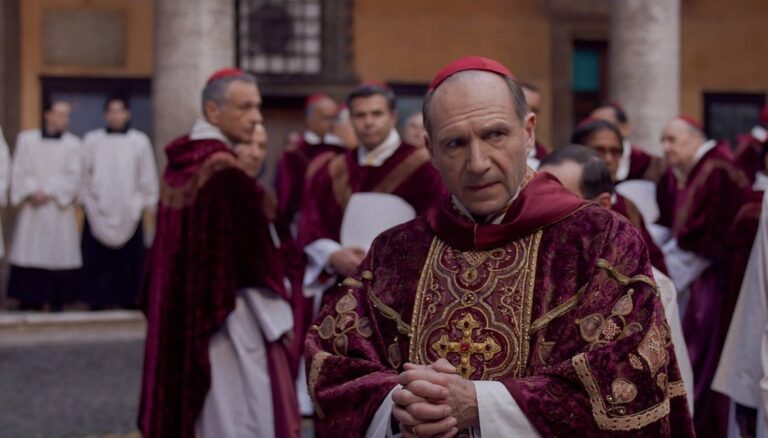
“Conclave” tells the story of Cardinal Thomas Lawrence, dean of the College of Cardinals, played by actor Ralph Fiennes. Lawrence is tasked with leading a papal election or conclave after the pope dies. As the conclave continues, secrets and scandals emerge involving cardinals in the running to be pope.

PolitiFact’s occasional MovieFact feature reports on the accuracy of nonfiction films, typically comparing their details with historical events. “Conclave” is fictional, but we decided to examine what the movie gets right and wrong about the real process for choosing the next pope.

READ THIS: Armour for the digital age: Three easy tools to help you verify information in 2025

“Conclave” sticks close to the logistics of a real papal election, but takes more liberties with how its characters participate in one. As dean, Cardinal Lawrence makes decisions that would not be permissible in a real-life conclave.

The movie “does a fair job” of depicting conclave procedures, said B. Kevin Brown, Gonzaga University religious studies lecturer. But Brown had some notes. Referring to the sets and costumes, Brown said some cardinals wore Roman collars that “are not entirely correct,” and the Mass held before the conclave appeared to have no altar, a raised structure used for ceremonies. Some of its storylines have no public precedent in the Catholic Church’s history.

PolitiFact compared movie scenes with conclaves and cardinals’ real-life controversies. Here’s your last chance to avoid spoiler alerts.


‘Conclave’ is mostly right on balloting, smoke colours, typical conclave lengths

After a pope dies, the College of Cardinals assumes governance of the Catholic Church. These cardinals, chosen by popes, serve countries around the world. Only cardinals under the age of 80 can be electors.

The conclave that begins May 7 will have 133 electors from 71 countries. (Two more electors are eligible but will not participate for health reasons.)

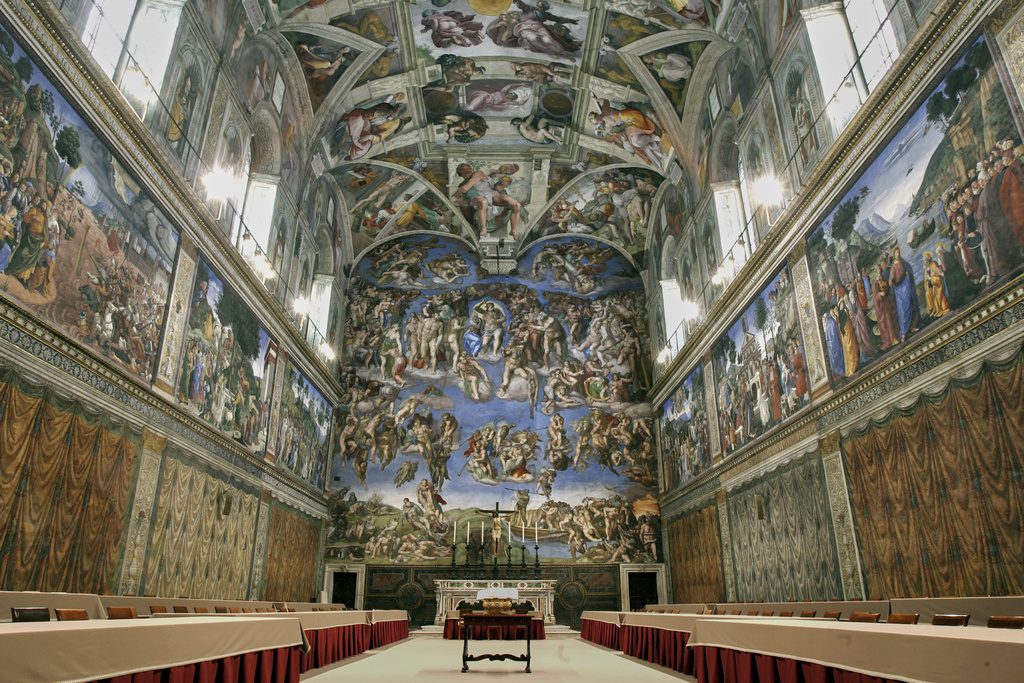
Before the conclave, cardinals gather for meetings called “general congregations” where they discuss the Catholic Church’s priorities. The conclave takes place at the Sistine Chapel in Vatican City, as the film showed.

Tables and chairs line the Sistine Chapel at the Vatican in preparation for the conclave on April 16, 2005. (AP)

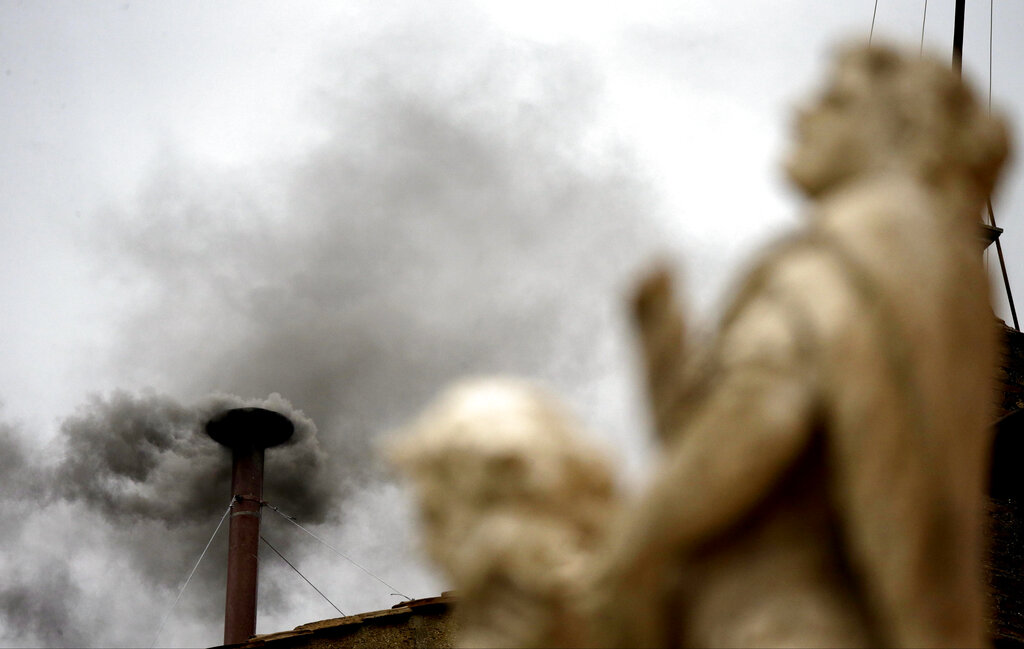
The balloting shown in the film is largely accurate, based on the process outlined by the United States Conference of Catholic Bishops: Electors vote by secret ballot, walk up to a chalice — which is a large goblet — say a prayer and drop their ballots in the chalice. They conduct four rounds of balloting per day until a candidate receives a two-thirds majority. Ballots are burned after each round with chemicals that produce coloured smoke to signify whether a pope has been chosen — black smoke means no one has been elected, and white smoke means the Church has a new pope.

ALSO READ: Will the future of fact-checking flourish or founder? 2025 marks a new turning point

In the movie, it takes the cardinal electors three days to elect a pope. That’s consistent with recent history; Brown said conclaves in the last 100 years have lasted three to four days. According to a History.com article, “no conclave has lasted longer than a week” since 1831.


In the movie, Cardinal Lawrence routinely violates conclave rules by receiving outside information

The movie shows Cardinal Lawrence communicating with Monsignor Raymond O’Malley (played by Brían F. O’Byrne), asking him to check into things such as the pope’s final meeting with Cardinal Joseph Tremblay (John Lithgow), and medical history of Cardinal Vincent Benitez (Carlos Diehz). After the cardinals feel tremors in the Sistine Chapel, O’Malley later tells Lawrence there has been an explosion in the Piazza Barberini, a large plaza in Rome.

Brown said getting information about events happening outside the conclave “would violate the rules of the conclave.”

Black smoke billows from the chimney of the Sistine Chapel, meaning Roman Catholic cardinals have not elected a pope in their second or third rounds of balloting, at the Vatican on March 13, 2013. (AP)

Cardinal electors are sequestered throughout a conclave, and have no access to phones, television or other ways to be in contact with the public.


A cardinal named “in pectore,” or in secret, would not be allowed to join the conclave

In the movie, Benitez, described as the archbishop of Kabul, Afghanistan, makes a surprise entrance. He was selected as a cardinal “in pectore,” or in secret, by the pope who died. Senior cardinals debate whether Benitez should be allowed to join the conclave, and Cardinal Lawrence ultimately decides he is “legally a cardinal,” and “has a right to take part in the election.”

In a real conclave, it would be impossible for a cardinal whose identity was not revealed before the death of the pope who appointed him to join the conclave.

Canon law, the Catholic Church’s system of laws and regulations, says a pope can select a person to be a cardinal and keep that person’s identity secret. As long as the cardinal’s identity is not revealed, the cardinal in pectore is not bound to carry out cardinal duties but also does not possess cardinal rights, such as participating in a conclave.

“This may be done, as the movie suggests, for safety reasons in situations where the cardinal’s appointment may put him at risk due to the political situation where he resides,” Brown said.

If a cardinal in pectore did not have his appointment made public before the death of a pope, Brown said, the cardinal’s status would expire and “he is no longer considered a cardinal, even if the name of the cardinal is discovered in the will of the pope or some other writing after his death.”

This happened in real life: Pope John Paul II selected four cardinals in pectore, revealing only three, from China, Ukraine and Latvia, before he died. The other cardinal’s appointment expired when John Paul II died in 2005.


Cardinals would try to learn about scandals before the conclave, but rumours happen

In the movie, Cardinal Joshua Adeyemi (played by Lucian Msamati) and Tremblay emerge as front-runners to become pope during the balloting, but their ambitions are quashed as Lawrence brings findings about their past to light. Adeyemi had a secret relationship and possibly fathered a child, and Tremblay was accused of simony, or what Brown said involves the “sale of an office.”

DON’T MISS THIS: Did Bishop Kukah praise separatist leader, Kanu, as man of truth?

In practice, cardinals try to snuff out controversies and scandals before the election.

“There is certainly politicking that takes place and the cardinals will do their best to be sure that no cardinal associated with scandal is elected,” Brown said. “However, it is likely that the cardinals would do their best to identify any scent of scandal before the conclave begins.”

For example, in real life, Cardinal Angelo Becciu resigned his cardinal rights and privileges in 2020 and was convicted of financial crimes in 2023; he claimed he could still vote in the 2025 conclave because Francis did not bar him from participating. Cardinal Pietro Parolin, the Roman Curia’s secretary of state, revealed two letters from Francis saying that Cardinal Becciu could not take part in the conclave, according to reports in Italian media.

This happened during general congregation, Brown said, when cardinals are not sequestered.

It is “not unheard of for cardinals to try to raise doubts about a candidate who they oppose,” he said.

It happened to Francis — then known as Cardinal Jorge Mario Bergoglio.

As Francis gained momentum during the 2013 conclave, “rumors began to circulate that he had only one lung,” Brown said. Francis recounted the episode in an interview for a book published in 2024. When a cardinal asked Francis if the rumor was true, he said he had part of his lung removed after a respiratory infection more than 50 years before.


EDITOR’S NOTE:

* This moviefact was originally published by the PolitiFact on May 1, 2025. You can view the report on their website.

———————————————————————————————-

Sources for this moviefact include:

Email interview, B. Kevin Brown, Gonzaga University religious studies lecturer, April 29, 2025.United States Conference of Catholic Bishops, How Is a New Pope Chosen?, accessed April 30, 2025.Holy See Press Office, Composition of Cardinals according to geographical region, accessed April 30, 2025.

EWTN, Cardinals hold sixth general congregation, confirm 2 electors will not be at conclave, April 30, 2025.

History, 8 Facts About the Papal Conclave, April 28, 2025.

USA Today, What to expect from the conclave that will choose Pope Francis’ successor, April 27, 2025.

Florida International University, The Cardinals of the Holy Roman Church, accessed May 1, 2025.

The Holy See, The Roman Curia, accessed May 1, 2025.

Code of Canon Law, accessed May 1, 2025.

Los Angeles Times, Mystery Cardinal Will Never Be Able to Join Peers, April 7, 2005.

The New York Times, Powerful Cardinal, a Fixture of Vatican Intrigue, Resigns Suddenly, Sept. 24, 2020.

The Associated Press, Pope exposes confidential details of past conclaves and settles scores with Pope Benedict XVI’s aide, April 2, 2024.

The New York Times, Powerful Cardinal, a Fixture of Vatican Intrigue, Resigns Suddenly, Sept. 24, 2020.

CNN, Vatican’s ‘trial of the century’ sees cardinal given five-and-a-half-year jail sentence, Dec. 18, 2023.

L’Unione Sarda, The Conclave begins on May 7. The cardinals are preparing, but there is a risk of division over Becciu, April 28, 2025.

Catholic Herald, Becciu backs down: fallen Cardinal bows to Pope Francis’s final will, April 29, 2025.

Serbian protest video falsely associated with pro-Traoré rally in Burkina Faso

A video showing a huge crowd protesting on streets has surfaced online with a claim that it depicts residents of Burkina Faso expressing support for the country’s military leader, Ibrahim Traoré.

An X account, @Yamiakajones, posted the video with a caption thus Traoré: 

“Not even in a history of humans the world rallied behind one person like this……long live Ibrahim Traore.”

The post has garnered over 850,000 views with more than 10,000 reposts and over 41,000 likes as of May 4, 2025. 

READ THIS: Old video shows residents fleeing Burkina Faso village, NOT Nigerian communities

A TikTok account, @mypaddy.tv, also posted the same video with a caption that read:

Protesters across Africa demand end to foreign influence in Burkina Faso.


CLAIM

Video shows Burkinabè expressing support for Burkina Faso military leader, Ibrahim Traore.


THE FINDINGS 

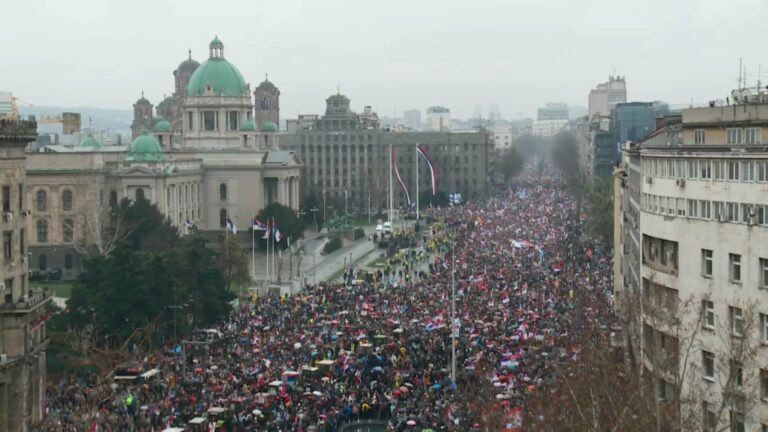
Findings by The FactCheckHub revealed that the posts are MISLEADING, as the video shows a protest in Serbia, not Burkina Faso.

Ibrahim Traoré, the military leader of Burkina Faso came into power following a coup in September 2022 amid growing anti-French sentiments in the Sahel region.

Since then, a wave of social media content has attempted to portray Traore as a fearless nationalist who defied Western powers. For example, false claim had circulated that he rejected an invitation to former U.S. President Donald Trump’s inauguration in January 2025. Another false claim also noted that significant gold deposits were recently discovered under his leadership.

Screenshot of the viral post retrieved from X.

Our fact-checkers conducted a Google Reverse Image Search on some keyframes in the video. One of the footages led us to a post by an X user, @fafothefirst, in March 2025 who stated that the video showed an anti-government protest in Belgrade, Serbia.

Another post by a Serbian user on Facebook indicated that the video was taken on March 15, 2025. Comments under the posts also indicated that the video was taken in Serbia. The video can also be seen here with a caption indicating that the protest happened in Serbia.

More than 100,000 people took to the streets of Belgrade in a massive anti-corruption protest, arriving from across Serbia by car, motorbike, bicycle, and on foot to voice their outrage at the government and demand accountability for the Novi Sad train station collapse in November 2024.

The Novi Sad train station collapse was one of the deadliest infrastructure disasters in Serbia’s recent history. A section of the station’s newly constructed canopy gave way during peak hours, killing 15 people and injuring dozens more.

DON’T MISS THIS: IFCN condemns Serbian police raid on CRTA

Waving flags, blowing whistles and airhorns, and chanting the movement’s slogan “Pump it!”, the demonstrators marched through the city and gathered between the National Assembly and Slavija Square, where they held a 15-minute silence in honour of the 15 lives lost in the tragedy — a disaster widely seen as a consequence of government corruption and negligence.

All the surrounding streets were packed with protesters, and mobile phone lines and the internet were seriously disrupted. The Serbian Interior Ministry estimated the numbers attending the student-led protest at 107,000 people, making the protest one of the largest demonstrations ever seen in the city. A video of the protest was also captured here by CBS NEWS Chicago and published on YouTube on March 16, 2025. A Reddit user, @vuxeee, also shared photos from the protest here.

Our fact-checkers also identified landmarks in the video, such as St. Mark’s Church (Crkva Svetog Marka) in Belgrade, a prominent Serbian Orthodox church in Belgrade and the National Assembly of Serbia building with its distinctive green dome, also located in central Belgrade.

Using these key details, our fact-checker was able to identify the coordinates of the location on Google Map, further confirming that the video shows a protest in Serbia and not Burkina Faso.

Further checks show that thousands of people rallied in Burkina Faso’s capital Ouagadougou on April 30, 2025 in support of the nation’s military government following an alleged coup attempt.

“Crowds of protesters gathered at the Place de la Revolution in Ouagadougou on Wednesday, chanting “Long live Captain Traore!” with some holding banners showing a photo of Gen. Langley with the word “slave” written on his head with red marker. Others waved Burkina Faso and Russia’s flag, a close ally of the West African country,” the Associated Press (AP) reported.

ALSO READ: Manipulated video used to push false narrative that Traoré scrapped taxes in Burkina Faso

To corroborate the media report, Traoré also posted photos on his X handle, @CapitaineIb226, alongside a caption thanking demonstrators for supporting “our commitment and our vision for a new Burkina Faso and a new Africa, free from imperialism and neo-colonialism.”

One of the photos show a crowd of protesters holding the national flags of the West African nation, while some landmarks observed therein were different from the video claim in circulation.


THE VERDICT 

The claim that the video shows Burkinabè expressing support for Burkina Faso military leader, Ibrahim Traoré is MISLEADING; the video shows an anti-government protest held in Belgrade, Serbia in March 2025 and not the Burkinabé pro-Traoré rally of April 30, 2025.

Claim that there is no solar infrastructure in some Nigerian teaching hospitals is FALSE

0

A claim has been circulating on social media, particularly on X, alleging that some major teaching hospitals in Nigeria lack solar infrastructure.

The hospitals mentioned in the X (formerly Twitter) post include the National Hospital Abuja, Lagos University Teaching Hospital (LUTH), University College Hospital (UCH) Ibadan (Oyo State), and Ahmadu Bello University Teaching Hospital, Shika (Kaduna State).

READ THIS: Does solar tech contribute up to 20% of world’s power production?

The post also criticized the Nigerian government for allocating ₦10billion in the approved 2025 budget for the installation of a solar mini-grid at the State House, Aso Villa in Abuja. This sparked widespread backlash online, with many users viewing it as a sign of the government’s misplaced priorities and lack of commitment to solving Nigeria’s perennial electricity challenges and the persistent instability of the national power grid.

The claim read:

National Hospital Abuja- No Solar panel. LUTH Lagos No Solar Panel. UCH Ibadan No Solar Panel. ABUTH No Solar Panel. Aso Rock 10 Billion Naira Solar Panel. The parents of those of you calling him a master deserve REFUND! MASTER STRAGIST IN CRIMINALITY!

Since the inception of the claim on April 24, 2025, it has garnered an impression of over 170,000 views alongside more than 6,000 likes and over 3,000 reposts as of May 4, 2025.

The claim was also spotted on multiple social media platforms as seen here, here and here.


CLAIM

There are no solar panels in LUTH, UCH Ibadan, ABUTH and National Hospital Abuja.


THE FINDINGS

Findings by The FactCheckHub show that the claim is FALSE!

Reports indicate that in 2019, Nigeria’s Rural Electrification Agency (REA), in collaboration with the World Bank, commissioned solar hybrid systems in federal health institutions under the Nigeria Electrification Project (NEP).

DON’T MISS THIS: Do 150 million Nigerians have access to electricity?

The NEP is a joint initiative between the REA, the World Bank, and the Federal Government of Nigeria, designed to expand electricity access in underserved areas. Its components include the deployment of solar hybrid mini-grids, standalone solar home systems, and dedicated power solutions for universities and teaching hospitals.

National Hospital Abuja was among the beneficiaries of this initiative, receiving a solar mini-grid installation to support its power needs.

Screenshot of an appearance of the claim on X; Insert FALSE verdict

At the Lagos University Teaching Hospital (LUTH), the Nigerian Government launched a solar-powered oxygen delivery system during the COVID-19 pandemic to bolster critical care infrastructure. LUTH has other solar installations under various donor-supported programmes.

In April 2025, one notable donation came from the Moses Adekoyejo Majekodunmi Foundation (MAMF), which donated and installed a 12.5kVA/20kW solar power system at Ward A2, significantly enhancing the hospital’s energy infrastructure.

According to a report published by The Nation in May 2024, LUTH had been under severe financial strain, spending an estimated ₦150 million monthly on electricity while receiving only ₦14 million in government subsidies. Rising gas prices also undermined its gas-powered hybrid system. In response, the hospital piloted a solar energy solution at Ward A, achieving an impressive 91.7% power supply from solar, with only 8.3% reliance on the national power grid.

Similarly in August 2023, BusinessDay reported that SAO Energy, in partnership with the Rotimi Akeredolu Foundation, installed a hybrid solar system at University College Hospital (UCH), Ibadan. The solar project, designed to power critical areas such as the hemodialysis centre, staff quarters, and nearby communities, features a 36,000Wp PV array solar system with battery storage, generating up to 80kWh to ensure uninterrupted power for essential medical services.

While debunking allegations in response to viral social media claims that families of patients were bringing personal generators and inverters to power equipment at the UCH, Ibadan, the hospital’s spokesperson, Funmi Adetuyibi, stated that UCH had adopted a phased energy transition, beginning with critical units like the Accident and Emergency Unit, Labour Ward, Theatres, and Wards, which are already benefiting from solar inverters and diesel-powered generators.

ALSO READ: REA says fact-check on BUK hybrid solar plant is ‘incorrect’—so we took a closer look

Additionally, in June 2024, the Chief Medical Director of Ahmadu Bello University Teaching Hospital (ABUTH), Shika (Kaduna State), Professor Ahmed Hamidu, announced the hospital’s long-term plan to fully transition to renewable energy, citing an unsustainable ₦75 million monthly electricity bill. He affirmed that each department and unit block would progressively migrate to solar power solutions to reduce operational costs and enhance service delivery in the hospital.


THE VERDICT

The claim that there are no solar panels in LUTH, UCH Ibadan, ABUTH and National Hospital Abuja is FALSE; multiple media reports show that these facilities have solar infrastructure including solar panels.