Please note that the FactCheckHub has not obtained any right from the authors or copyright owners of all third-party contents from embedded links and shall incur no liability in this regard.
Please note that the FactCheckHub has not obtained any right from the authors or copyright owners of all third-party contents from embedded links and shall incur no liability in this regard.
Please note that the FactCheckHub has not obtained any right from the authors or copyright owners of all third-party contents from embedded links and shall incur no liability in this regard.
Please note that the FactCheckHub has not obtained any right from the authors or copyright owners of all third-party contents from embedded links and shall incur no liability in this regard.
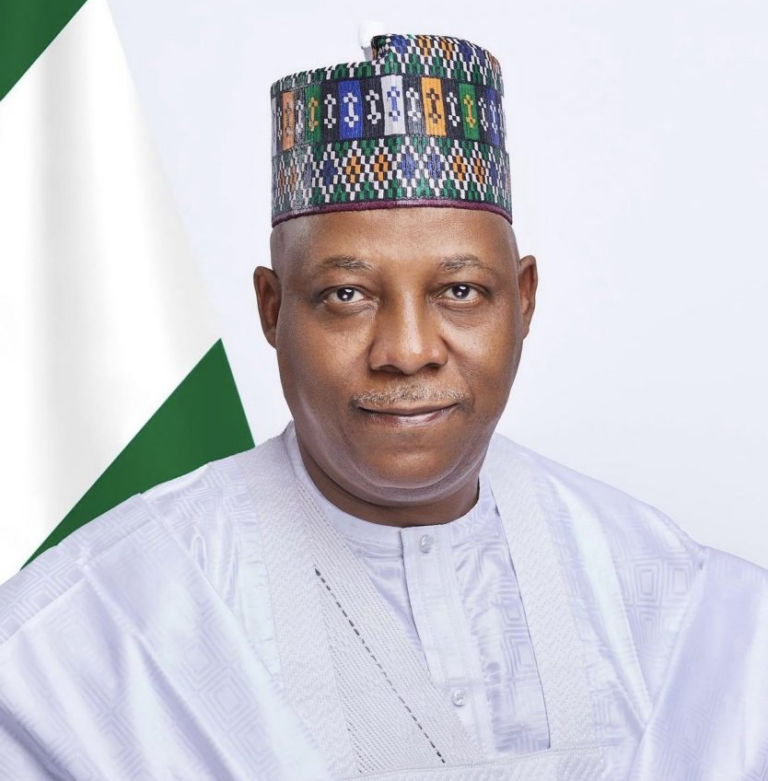
A claim has circulated online that Nigeria’s Vice President, Kashim Shettima, has moved out of his official residence to his private residence after allegedly discovering that Closed Circuit Television(CCTV) was secretly installed there.
The claim appeared in a viral video featuring the Shettima’s photo, alongside an onscreen caption that reads:
“Vice President moved to his own residence after finding out CCTV is installed without his knowledge in the vice presidential residence.”
An X account, @Biafra_Daily, posted the video with a caption thus: “They are betraying themselves.”
The post has generated over 190,000 views with more than 700 reposts and over 1,700 likes as of June 20, 2025.
The post also surfaced here and here with a similar caption.
CLAIM
Nigeria’s Vice President, Kashim Shettima, has moved out of his official residence to a private home after discovering that CCTV cameras were secretly installed in his official residence without his knowledge.
THE FINDINGS
Findings by The FactCheckHub show that the claim is FALSE.
For many years, Nigeria’s vice presidents (VP) have occupied Akinola Aguda House located in the Presidential Complex, within the Three Arms Zone of the Federal Capital Territory (FCT), Abuja as their official residence – apart from the period between 1999 and 2007 when the Vice Presidents lived in a residence that has since been transferred to the Judiciary as Official Quarters for the Chief Justice of Nigeria.
But in 2010, the Nigerian government began construction of a new, more befitting Vice Presidential residence in the Three Arms Zone. However, the project suffered over a decade of delays, as it was abandoned at various stages, and faced scrutiny for its ballooning cost, which rose from ₦7 billion to between ₦15 billion and ₦21 billion.
The new VP residence was eventually completed and commissioned in June 2024, under President Bola Ahmed Tinubu’s administration. It was expected that Shettima being his Vice President would move into the new residence shortly afterwards. However, months later, the building remained vacant, raising fresh public questions and paving the way for speculative claims online.
Screenshot of the X post. Insert: FALSE verdict.
Available evidence shows that Vice President Shettima has not yet moved into the newly commissioned official residence, according to an FIJ report. As of February 2025, the building remains unoccupied, with only minimal security presence and no sign of active residence.
The delay in occupation is not due to unauthorised CCTV installations, as suggested in the viral posts, but rather due to security concerns and the isolated nature of the location, Daily Trust also reported in February 2025.
When The FactCheckHub visited the new VP official residence at the Three Arms Zone on June 20, 2025, only few security operatives were sighted in the premises from a distance, as no activities or human presence was observed there.
Contrary to the claim, Vice President Shettima is still residing at the Akinola Aguda House, which remains the official and active residence for Nigerian Vice Presidents until further notice.
Keywords search on multiple search engines reveal no credible or official report indicating that the Vice President discovered any unauthorised surveillance equipment or moved to a personal home in protest.
When the FactCheckHub contacted the spokesperson of the Vice President, Stanley Nkwocha, he debunked the claim of purported CCTV’s discovery.
He further confirmed that Vice President Shettima still resides in his official residence at the Akinola Aguda House within the Presidential Complex.
“That is not true. He lives and continues to live in his official residence. No truth whatsoever,” Nkwocha told The FactCheckHub.
THE VERDICT
The claim that Nigeria’s Vice President, Kashim Shettima, has moved out of his official residence over secret CCTV installation is FALSE. Findings show that he is yet to move into the new official residence, which remains unoccupied due to security concerns, and not because of covert surveillance.
AN X user, @naija_pr, has shared a claim that Nigeria’s vice president, Kashim Shettima, earns a total sum of N12 million naira annually including salary and allowances.
The claim posted earlier on April 27, 2025 and shared alongside a collaged image of Shettima and N1000 notes, read: “Nigerian Vice President earns ₦12,126,290 annually, including allowances — FG.”
It has garnered over 1 million views on X (formerly Twitter) with over 10,000 likes, more than 1,400 comments and over 1,200 likes as of June 19, 2025.
Even though the X user attributed the source of information to the Federal Government of Nigeria, many users in the comment sections expressed significant doubt about its accuracy citing the nation’s current economic realities including inflation, among other factors.
Recall that the claim was earlier debunked on April 28, 2025 by the Foundation for Investigative Journalism (FIJ), saying it was misleading. Our penchant to ensure accurate reportage of information in public space forced The FactCheckHub to seek the truth behind the VP’s annual earnings from government coffer.
CLAIM
Nigeria’s Vice President earns 12 million naira annually including salary and allowances.
The document obtained from RMAFC showing the annual remuneration of Nigeria’s vice president, following an FoI request. SOURCE: RMAFC.
Before we sent a Freedom of Information (FoI) request, The FactCheckHub reviewed the records of the RMAFC which is constitutionally responsible for determining the remuneration packages for political, public, and judicial office holders in Nigeria, including the President, Vice President, governors, and state and federal lawmakers.
As such, we looked at the timeline of salary reviews which have been influenced by various economic and political factors. We found that there have been reviews from the year 2000 till 2023.
For instance in 2000, RMAFC recommended a remuneration package, which was enacted as the Certain Political, Public and Judicial Office Holders (Salaries and Allowances) Act, 2002. Similarly, a subsequent review in 2007led to the Amendment Act of 2008, which remains the prevailing legal framework for official salaries till date.
But in 2009 and 2015, multiple attempts were made to review the remuneration packages for political and public officer holders. In 2009, a downward review was proposed due to declining national earnings, but it was not passed into law. Similarly, the 2015 review was not endorsed by the Nigerian presidency or National Assembly.
In June 2023, RMAFC announced a proposed114% salary increase for the President, Vice President, governors, lawmakers, and judicial officers. The commission stated that the new salaries would be effective from January 1, 2023, pending legislative approval. Till date, it has not been officially approved.
This necessitated our FoI request to RMAFC, the government agency in charge of remuneration packages for political and public officer holders, to ascertain the current salary package of Nigeria’s Vice President as of April/May 2025.
The FOI request was then filed at the Office of the Accountant General of the Federation (AGF) and the RMAFC. After few weeks of following up the letters, the AGF responded and redirected our request to the RMAFC. Weeks after, the RMAFC responded with a letter and the official gazette showing the current earnings of the nation’s vice president. This tally with the X user’s assertion.
Additionally, we tried narrowing down the original source of the claim attributed to the Federal Government. When our researcher conducted an advanced keyword search on Google, it led a to a report published by LegitNG on April 27, 2025 and titled “Salary and Allowance of Nigerian Vice President as Approved by FG. The report referenced a RMAFC publication dated 2007-2009.
In conclusion, although there were few upward reviews of salary package for political and public officer holders after the Amendment Act of 2008, none was finally approved or acted upon by the government.
THE VERDICT
The claim that Nigeria’s Vice President earns ₦12 million annually is TRUE; records exclusively obtained by The FactCheckHub from the RMAFC confirmed the amount.
AN X user, @omoelerinjare, has posted a video claiming that the Speaker of Lagos State House of Assembly, Mudashiru Obasa, said Lagosians have to vote for any nominated candidate of the All Progressives Congress(APC) even if the person is a criminal or not.
The video was published with a caption that read:
“Any candidate that APC presents, either the person is a CRIMINAL or not, once APC has chosen to present the person as candidate, you have no choice unless you are ready to leave the party” – Mudashiru Obasa Lagos State House of Assembly Speaker.
The claim has generated over 120,000 views with more than 400 reposts and over 300 likes as of June 17, 2025.
CLAIM
Obasa said Lagosians must vote for APC candidate even if the person is a criminal or not.
THE FINDINGS
Findings by The FactCheckHub show that the claim is MISLEADING.
The FactCheckHub traced the source of the video to a TikTok user, BodeOlabisi on TikTok. The user posted the video on June 13 with a caption thus: “Tinubu 2027: Obasa unveils Orisun House, Alimosho campaign office donated by Ejigbadero.”
Abiodun Jimoh Ejigbadero is an APC chieftain vying for a local government position in Lagos State.
Screenshot of the viral post retrieved from X. Insert: MISLEADING verdict.
Ejigbadero is contesting for the Chairmanship position of Agbado/Oke‑Odo Council Local Council Development Area (LCDA) in Lagos State, in the upcoming July 12, 2025 local government election .
However, his candidacy has generated significant internal party disputes. APC women leaders and stakeholders from Agbado/Oke‑Odo LCDA have protested, alleging a secretive or imposed selection process held on May 10, 2025, the Nigerian Tribune reported.
They are demanding cancellation or a rerun of the primary, with some claiming Ejigbadero isn’t even a registered local party member .
Findings by The FactCheckHub show that the social media post misinterpreted the exact words of Obasa which were said in Yoruba.
In the video, Obasa was referring to people who are against the election of Ejigbadero as the flag bearer of the party in the Lagos local councils’ elections.
The correct translation of his words is “The party chose someone you said he or she is not good, do you want to change it? Or you want to go to another party? Whether good or bad, when the party has chosen someone, he or she has been deemed good by the party.”
Obasa did not say whether the person “is a criminal or not” as wrongly stated by the X user.
The Lagos State Independent Electoral Commission (LASIEC) officially announced that the 2025 Local Government elections will be held on Saturday, July 12, 2025, with a potential re‑run scheduled for July 19.
This election will cover all 20 Local Government Areas (LGAs) and the 37 Local Council Development Areas (LCDAs), contesting for 57 chairmanship and 376 councillorship seats in the state.
THE VERDICT
The claim that Obasa said in the video that anybody chosen by the All Progressives Congress (APC), even if he’s a criminal, should be voted for is MISLEADING; Obasa’s statement was taken out of context.
AN image showing a French footballer, Ngolo Kante and a woman holding a child has surfaced online with a claim that it shows Kante with his wife and child.
A Facebook user, Gas Man Gabriel, posted the image with a caption thus:
“Ngolo Kante , his wife & new born babies will ñëvër gêt åñy lïkës.”
The post generated over 130,000 likes alongside over 250 shares and more than 2,000 comments as of June 12, 2025.
CLAIM
Image shows Kante with his wife and child.
THE FINDINGS
Findings by The FactCheckHub show that the claim is MISLEADING.
N’Golo Kanté is a professional footballer from France known for his tireless work ethic, humility, and unmatched defensive midfield prowess. Born on March 29, 1991, in Paris to Malian parents, Kanté rose from humble beginnings to global stardom.
FILE PHOTO: Jude Littler.
He rose to prominence with Leicester City, playing a crucial role in their 2015–16 Premier League title win, before joining Chelsea, where he won multiple trophies including another Premier League title, the UEFA Champions League, Europa League, and FA Cup.
A key player for France, Kanté was instrumental to their 2018 FIFA World Cup victory and he currently plays for Al-Ittihad in the Saudi Pro League, following his transfer from Chelsea.
Screenshot of the viral image retrieved from the Facebook post. Insert: MISLEADING verdict.
Beyond football, Kanté is admired for his humility and grounded personality. Despite his fame, he is often seen avoiding the spotlight, riding modest cars, and shunning luxury lifestyles. His attitude has endeared him to fans, teammates and opponents alike.
When our fact-checker subjected the image to a Google reverse image search, the result shows Kante took the photo when he visited his family in Mali, his father’s birth country earlier in March, 2025.
Kante with another mother of twins during the visit to Mali/social media
During the visit, Kanté toured several households in the village, where he was warmly received by relatives and community members. The image in question shows him carrying one of the twin babies born to a relative. Another photo taken at the same event shows the woman in the viral photo standing next to who appears to be her husband, confirming that she is not Kanté’s wife.
She’s not the only one pictured with Kante during the visit. He was also captured with another woman who also has twins in the village. They were all described as members of Kante’s family.
THE VERDICT
The claim that the image shows French footballer, Ngolo Kante, with his wife and children is MISLEADING; the image showed Kante with his relatives when he visited Mali in March 2025.
Editor’s Note: This report was edited to remove a paragraph about N’Golo Kanté’s relationship with Jude Littler, pending further verification of the personal details mentioned.
AN X user, @fonyokapondoka, has claimed that Blackberry has made a comeback with a new phone model.
He posted an image that shows a gray smartphone with a distinctive logo of Blackberry, a brand which was once a leader in the smartphone market, indicating it’s likely a concept or prototype of a new device from the brand.
The post was also accompanied with a caption that read: “Blackberry has made a huge comeback.”
As of June 12, 2025, the claim has garnered over 1 million views, plus more than 14,000 likes and over 1,500 reposts. The claim was also spotted here and here.
CLAIM
BlackBerry has launched a new phone model.
THE FINDINGS
Findings by The FactCheckHub show that the claim is FALSE.
Screenshot of the claim as retrieved from X. Insert: FALSE verdict.
When a Google lens search was conducted on the image, it lead our researcher to numerous results, some of which were other appearances of the claim.
Other search results mostly showed images of iPhone products, particularly the iPhone 16, including a phone case branded with the BlackBerry logo.
A closer look at the image reveals inconsistencies typical of manipulated visuals. The phone’s design, particularly the dual-camera layout and overall finish, closely mimics Apple’s iPhone series.
Image of an iphone 16 PC; XtremeSkins
Additionally, the Blackberry logo appears artificially placed, suggesting that the image is either digitally altered or depicts an unofficial product. The packaging also displays irregularities that raise questions about its authenticity.
Further checks show that the last smartphone developed by BlackBerry was the BlackBerry Key2 LE. In August 2020, BlackBerry signed a licensing deal with OnwardMobility, a US-based startup, to produce a new device, but the project was abandoned after the company shut down in 2022.
BlackBerry also discontinued its proprietary mobile software services, on January 4, 2022, a development widely reported by both local and international media. The company has since shifted its focus to secured communication services including cybersecurity as seen on its official website.
THE VERDICT
The claim that BlackBerry has launched a new phone model is FALSE; the image is digitally manipulated and the company now focuses on providing secure communication solutions for businesses, governments, and automobile industry.
AN image showing a Russian submarine alongside a photo of President Vladimir Putin has circulated online with a claim that it was recently spotted near London, United Kingdom.
An X user, @rkmtimes, posted the image on June 8, 2025. It read:
“BREAKING : First time Russian NUCLEAR submarine spotted near London, UK.”
The post has attracted over 450,000 views with more than 2,000 reposts, and 14,000 likes as of June 11, 2025.
CLAIM
Photo shows a recent sighting of a Russian nuclear submarine near London, UK.
THE FINDINGS
Checks by The FactCheckHub show that the claim is MISLEADING.
A Google reverse image search by our fact-checker traced the submarine photo to media reports published four years ago as can be seen here and here. The image depicts the Russian nuclear-powered submarine, Kazan, which was spotted off the coast of Scotland, not London in June, 2024.
Screenshot of the viral X post. Insert: MISLEADING verdict.
According to The Sun UK, the vessel was tracked by the RAF Poseidon P-8 surveillance aircraft near the Faslane Naval Base, which hosts the UK’s nuclear submarine fleet. It was confirmed that the submarine did not enter British territorial waters, the BBC also reported.
Following the sighting, then-UK Prime Minister, Rishi Sunak, reportedly held a closed-door meeting with the Defence Secretary, Grant Shapps, over the potential security threat, according to the BBC. NATO leaders also expressed concern that the vessel may have been mapping vulnerabilities along NATO coastlines.
Subsequent reports by the Daily Express indicated that the submarine later travelled to Havana, Cuba, for a five-day visit — a move perceived as a geopolitical message.
THE VERDICT
The claim that the image shows a recent sighting of a Russian nuclear submarine near London is MISLEADING. The image has been online since 2020, while it was sighted near Scotland in June 2024.
MORE than a third of journalists identified disinformation and misinformation as the most serious issues affecting journalism today, according to Muck Rack’s newly released State of Journalism report.
The survey, which gathered insights from over 1,500 journalists worldwide, also pointed to growing concerns about public trust in journalism, political polarisation, lack of funding, and government interference in the media etc.
The report indicates that artificial intelligence is rapidly gaining traction in newsrooms, with 77% of journalists now utilising AI tools in their daily work. ChatGPT emerged as the most widely used, followed by transcription tools (40%) and Grammarly (35%).
Gregory Galant, cofounder and CEO of Muck Rack, noted that “the definition of a newsroom, and journalism itself, is changing. Journalists are no longer tied to legacy organisations. They’re publishing independently, building audiences and, in many cases, monetising that work.”
He added that while challenges persist, the shift is fundamentally reshaping not just journalism, but how public relations professionals interact with the media.
Social media use among journalists is also evolving. Facebook has overtaken X (formerly Twitter) as the most valuable platform, with 27% of journalists naming it their top tool, compared to 21% for X. LinkedIn has gained momentum, with more journalists spending time there over the past year, followed by Instagram (39%) and Bluesky (38%).
Despite the shifting landscape, 45% of journalists say social media remains important for promoting their work. However, concerns about online safety persist. 58% reported worries about harassment, reputational risks, or personal safety on these platforms. Notably, half of the respondents said they quit at least one social media platform last year.
Public relations continues to play a relevant role in journalism. Eighty-four per cent of journalists said at least some of their stories are influenced by PR pitches. Still, relevance remains crucial as 86% admitted to ignoring pitches that don’t align with their beat. While most journalists receive more than five pitches per day, only 3% said those pitches consistently match their reporting needs.
Despite the pressures, many journalists say they feel equipped for their roles. Sixty per cent reported having the tools and training they need, and over half expressed cautious optimism about the future of their careers.
Still, workloads are expanding as 62% said they’ve taken on more responsibilities in the past year. While many feel they can still meet their standards, the emotional toll is evident: 67% described their work as meaningful, but nearly half (47%) also called it exhausting. More than a third of journalists now self-publish outside of traditional newsrooms, and 61% of those report earning income from their independent content.
The State of Journalism 2025 report is based on responses from 1,890 journalists surveyed between April 4 and April 30, 2025. After filtering out spam, duplicates, and low-quality responses, the final dataset included 1,515 verified participants, primarily based in the United States, with additional input from journalists in the UK, Canada, and India. The estimated margin of error is ±2.5%.
The claim originated from a TikTok post by a user identified as @hopestarstvtalkshow. The post – a screenshot with music background – alleged that the governor had banned the EFCC from operating or arresting any youth in the state.
Abia state Governor Alex Otti bans EFCC from operating in the state or arresting any abia youth.He declared Abia free from fraud urging the commission to focus on arresting Fulani Herdsmen and bandits instead.
It was also accompanied with a caption that read thus: “We want this in Edo state.”
As of June 10, 2025, the TikTok post had garnered over 37,000 likes, with more than 3,000 shares, over 2,000 comments and over 1,400 bookmarks.
Due to the sketchy nature of the claim, The FactCheckHub decided to verify its accuracy.
CLAIM
Alex Otti bans EFCC from operating in Abia State.
THE FINDINGS
Findings by The FactCheckHub show that the claim is FALSE.
When we conducted a keyword search on the post, it did not return any substantial or credible reports concerning the issue as issue of such magnitude would be widely reported by local media outlets.
Further checks show that a governor cannot legally ban the EFCC from operating in any Nigerian state.
Screenshot of the claim retrieved from TikTok. Insert: FALSE verdict.
The EFCC was established by an Act of the National Assembly (EFCC Act, 2004) and is empowered to investigate and prosecute economic and financial crimes across all the 36 states of Nigeria and the Federal Capital Territory (FCT), Abuja. Since it is a creation of federal law, it operates under the Exclusive List of the Federal Government in Nigeria under the Nigerian Constitution, meaning only the Federal Government has authority over its functions.
Under the Nigerian Constitution (1999, as amended), federal agencies are not subject to the control of the state governments. Just like governors cannot stop the police, DSS, or NDLEA from operating in their states, they cannot legally bar the EFCC either.
Nigerian courts have consistently upheld that federal agencies like the EFCC have the right to operate across Nigeria. Even where state governments try to use state laws or courts to restrain EFCC operations, federal courts usually overrule such attempts.
Speaking with The FactCheckHub,Abduljelil Egbewole, a Nigerian lawyer, noted that a state governor cannot ban EFCC from operating in any Nigerian state; however, their efforts can be frustrated.
“In practice, some governors attempt to frustrate EFCC operations by denying them access to state facilities like involving state police to block or delay arrests and getting state courts to issue temporary orders against EFCC activities. But such moves are temporary and political, they do not hold legal weight in the long term and are often overturned in federal courts,” Egbewole, who is currently pursuing a Masters degree in Law at the University of Bradford, noted.
THE VERDICT
The claim that Alex Otti has banned the EFCC from operating in Abia State is FALSE; as federal agencies are not subject to the control of the state governments.
A video showing some people scampering for safety has surfaced online with a claim that it shows an Islamic group’s invasion of a Nigerian community where residents were killed and used as sacrifice on the day of Eid-el Kabir.
An X account, @realmaloof posted the video with a caption that read:
“TERRIFYING: Christians are being hunted like animals in Nigeria.
An Islamist group invaded a Christian village and started shooting everyone in sight.
They are killing Christians on Eid and offering them as human sacrifices.
The post has generated over 6.7 millions views, with over 103,000 likes, more than 45,000 reposts, over 13,000 bookmarks and over 4,000 comments as of June 8, 2025.
The video also surfaced here with a similar caption.
CLAIM
Video shows Christians attacked by an Islamist group on Sallah Day in Nigeria.
THE FINDINGS
Findings by The FactCheckHub show that the claim is MISLEADING.
The FactCheckHub subjected the keyframes in the video to a Google Reverse Image Search, and the results show that the incident occurred before the Eid-el-Kabir celebration in Nigeria.
The earliest version of the video was traced to Wednesday, June 4, 2025, while Eid-el-Kabir (Sallah) was celebrated in Nigeria on Friday, June 6, 2025.
Screenshot of the viral X post. Insert: MISLEADING verdict.
Further findings reveal that the video was originally shared on Facebook by the Irigwe Youth Movement. The Irigwe are an indigenous ethnic group located in the Bassa Local Government Area of Plateau State.
According to the group, the distressing video was recorded on June 4, 2025, in Kwall District of Bassa LGA, following the killing of three residents allegedly by armed herders a day earlier (June 3).
Punchreported that the deceased were identified as Sunday Ishaya (37), Joshua Mishi (51), and Range Kpeh (32).
Kwall, situated about an hour’s drive from Jos, the Plateau State capital, is home to the Nigerian College of Accountancy, managed by the Association of National Accountants of Nigeria.
The community has been plagued by a wave of violent incidents this year. Many residents have been killed in separate attacks, some while working on their farms, others ambushed on roads.
For instance, in April 2025, HumAngle reported that gunmen stormed the local government area, killing 40 people in a single attack. In March, three people were ambushed and killed in the Local Government.
In Wednesday’s protest by Irigwe youths that followed Tuesday’s killing by armed herders, the community alleged that Nigerian military personnel opened fire on unarmed demonstrators, who had gathered to express their grief and frustration over ongoing violence, despite military presence in the area.
While groups like Boko Haram and the Islamic State West Africa Province (ISWAP) —classified as Islamist groups — have been blamed for numerous attacks in Nigeria, the Kwall community attributes the violence in their area to armed herders, who they accuse of attempting to displace indigenous populations to seize fertile farmland.
Plateau State, home to nearly 40 ethnic groups, has long been a flashpoint for violent conflict. Clashes, often labelled as ethno-religious, particularly between Muslim Fulani herders and Christian farming communities, have deeper roots in climate change, land scarcity, and resource competition, according to analysts.
The Fulani, traditionally nomadic pastoralists from northern Nigeria, have increasingly migrated southward in search of better grazing land. Some have settled permanently in host communities, but growing urbanisation and pastoral land shortages have driven others to encroach on farmlands, including national parks and protected forests.
This encroachment leads to crop destruction, fueling tensions and retaliatory violence. Farmers often respond by attacking herders and their livestock, creating a cycle of violence that has become common in Plateau and other North Central states in the country.
As Human Rights Watch noted, one of the major challenges in addressing the violence in Plateau State is the difficulty in identifying perpetrators. Unlike the bandit groups in the Northwest or Boko Haram in the Northeast, no group has consistently claimed responsibility for the killings in the state.
This lack of a major terrorist group that can be held responsible has opened the door to speculation, false narratives, and conspiracy theories about the identities of the attackers.
Misinformation, often driven by ethno-religious sentiments, continues to obscure the facts and fuel tensions. This has contributed significantly to the escalation and persistence of violence in Plateau State over the years.
Previously, The FactCheckHubreported how foreign-linked actors helped amplify false claims regarding the Christmas Eve 2023 attacks, further complicating the security situation and deepening public mistrust in Africa’s most populous nation.
THE VERDICT
The claim that the video shows an Islamist group killing Christians on Eid-el-Kabir is MISLEADING. The incident occurred on June 4, 2025 — two days before the Sallah celebration. It was linked to a protest in Kwall, Plateau State, following the killing of three residents allegedly by armed herders a day earlier (June 3).
In recent years, Facebook, owned by Meta Platforms Inc, has evolved into a powerful advertising platform, allowing businesses and individuals to reach millions of users worldwide. But, while legitimate businesses thrive, malicious actors have also exploited Facebook’s ads system to promote phishing scams—fraudulent schemes designed to steal users’ personal information, financial data, and social media credentials.
Despite Meta’s claims of investing heavily in artificial intelligence and human reviewers to combat malicious content, evidence suggests that phishing scams continue to slip through the cracks, posing serious threats to user security.
A recent investigation conducted by The FactCheckHub revealed multiple active phishing campaigns on Facebook, with some ads running for weeks before removal. This raises questions about the effectiveness of Meta’s moderation system and whether its profit-driven ad model incentivizes leniency toward potentially harmful content.
The mechanics of Facebook phishing Ads
Phishing scams on Facebook typically masquerade as legitimate businesses, popular brands, or urgent notifications. These deceptive ads often promise enticing offers such as free giveaways, job opportunities, or security alerts to lure users into clicking. Once a user engages with the ad, they are redirected to a fake website that mimics a trusted platform, where they are prompted to input sensitive information.
An illustration showing how scammers steal your personal data.
Our researcher observed that some of the phishing campaigns involve multiple posts impersonating popular brands and individuals.
Impersonation of popular brands and personalities
Fraudsters create fake ads pretending to be reputable companies, offering too-good-to-be-true deals. The FactCheckHub has debunked claims about MTN offering free airtime data for subscribers across Africa, a claim growing fast-paced on the platform, which sometimes can maliciously extort data of the users that submit their information.
Beyond that, he monitored multiple Facebook ads which promoted phishing scams branded with images of notable personalities including the current Nigerian vice president, Kashim Shettima; the Sultan of Sokoto, Muhammad Sa’ad Abubakar III; Niger State governor, Muhammed Bago, and the Emir of Kano, Sanusi Lamido Sanusi etc.
He observed that the scammers exploit moments like the festive periods and also the current economic hardship in Nigeria to create scams paraded as grants or palliatives but which are aimed at stealing people’s information with the intent to harm or swindle victims.
For instance, our researcher discovered two different posts on the Facebook Ads model that advertised a grant application allegedly from Vice President Shettima and asked applicants to submit their bank details. One of the posts had over 9,000 likes with over 10,800 comments and more than 100 shares as seen below.
The sponsored Facebook ads offering grants to Nigerians as retrieved by our researcher. Insert: FALSE verdict.
Similarly, another sponsored Facebook post in the guise of offering grants, asks applicants to apply for N88,900 grant linked to the Nigerian government with the image of Shettima. The Ads had significant traction too with over 7,100 likes, over 7,200 comments and more than 50 shares.
The screenshot of a phishing scam that advertises Nigerian government grant. Insert: FALSE verdict.
Our researcher also observed another sponsored Facebook post in Hausa, one of the major Nigerian languages. When translated into English, it means “Stand a chance to be among those who benefit from this palliative.” It invited applications for a N200,000 grant citing fintech companies like Kuda, Opay, and Moniepoint as mediums of disbursement. The post, which has generated traction online with over 3,500 likes and more than 1,600 comments, also used the image of Kano emir, Sanusi Lamido Sanusi, as the brand’s ambassador.
Screenshot of the sponsored Facebook post impersonating the Emir of Kano. Insert: FALSE verdict.
How phishing Ads bypass Facebook’s detection system
Meta’s ads review process, which combines automated systems with human oversight, has notable vulnerabilities that scammers exploit.Tactics such as dynamic URL switching, where the destination URL of an ad is changed post-approval to redirect users to malicious sites, and cloaking techniques, which present benign content to reviewers while displaying harmful material to users, are commonly employed.
FILE PHOTO: An illustration about Facebook ads.
Similarly, geotargeting is used to restrict scam visibility to specific regions, making detection more challenging.These methods allow malicious ads to bypass Meta’s advertising review mechanisms and reach unsuspecting users.Reports indicate that scammers can create new pages and run deceptive ads within minutes, often reusing content from legitimate businesses to appear credible.
The human cost of phishing scams
The consequences of falling for a phishing scam are severe. Victims often report unauthorized bank transactions, identity theft, and loss of access to social media accounts. Small businesses have also been targeted, with fraudulent ads leading to compromised accounts and reputational damage.
In Nigeria where digital literacy varies widely, these scams pose serious threat to online users. The rapid rise of online transactions combined with limited consumer protection leaves many users vulnerable.
What Meta says—and what critics argue
Meta asserts that it actively removes harmful content and has enhanced its ad review processes. In 2024, the company reported significant efforts to combat deceptive advertisements, including the removal of over 8,000 fraudulent “celeb bait” ads in collaboration with Australian banks. This initiative was part of broader measures to tighten ad regulations, especially for financial services, requiring advertisers to verify their credentials before running ads.
However, critics argue that Meta’s approach remains largely reactive and lacks sufficient transparency. Digital rights advocates have called for stronger pre-approval mechanisms and independent audits of Facebook’s ad ecosystem to ensure accountability. Concerns have been raised about the effectiveness of Meta’s content moderation policies, especially after the company replaced third-party fact-checkers with a community-based system in the United States and announced plans to implement this globally, leading to unease among advertisers regarding brand safety.
Experts offer counsels to address rising spread of phishing scams
In a Guardian article, the Director of Consumer Investments at the UK’s Financial Conduct Authority (FCA), Lucy Castledine, criticized Meta for being the slowest among social media platforms to remove financial scam content, sometimes taking up to six weeks to act on takedown requests. She emphasised that such delays undermine efforts to combat online financial fraud and called for proactive use of algorithms to detect scam content, rather than relying solely on reactive measures.
Similarly, a cybersecurity expert, Darren Guccione, highlighted the rise of AI-enhanced scams, noting that scammers use sophisticated techniques like deepfakes to impersonate trusted individuals, thereby increasing the likelihood of deceiving victims. He warned that these scams can lead to significant financial losses, as they exploit the trust users place in familiar faces and voices.
Also commenting, Philip Anjorin, a fact-checker at Dubawa, said phishing scams sponsored through Facebook ads are especially dangerous because of the platform’s dominant user demographic, especially individuals aged over 40 who often lack strong media and digital literacy. He explained that this group is more susceptible to misleading sponsored ads, which Facebook does not regulate strictly enough.
Compared to platforms like TikTok and Twitter, where users are typically more digitally native, Facebook’s environment poses greater risks, Anjorin stated. He noted that the issue is even more concerning in countries like Nigeria, where Meta has come under criticism for poor data privacy practices, referencing recent issues with the Federal Competition & Consumer Protection Commission (FCCPC) as a cause for alarm.
To combat this growing threat, Anjorin recommends the creation of targeted media literacy initiatives aimed at educating older users on how to identify and avoid phishing scams.
He also urges Meta to improve its ads regulation systems, particularly for vulnerable user segments. Lastly, he suggests that governments especially in regions like Nigeria should engage in active partnerships with Meta to enforce stronger safety protocols and data protection standards. These steps, he emphasized, are necessary to reduce users’ exposure to digital harm and build a more secure online space for netizens.