Home Blog Page 163

Has FG implemented 14 of 15-point demand by JOHESU? No

Isaac Adewole, the Minister of Health, has claimed that the Federal Government has implemented 14 of the 15-point demand that prompted the strike by the Joint Health Workers Unions (JOHESU).

The minister claimed that the strike JOHESU embarked upon since April 17 has not been called off because the union is asking for equal pay with doctors.

“But what JOHESU is asking for is parity with medical doctors which is not practicable nor acceptable to the Federal Government,” Adewole claimed.

The minister added that: “a cursory look at the salary tables in the health sector before and after independence till date have always reflected relativity. The 2014 salary adjustment for medical doctors was to correct the anomaly of 2009 and restore relativity.”

The ICIR fact-checked these claims and found that 14 of the 15-point demand of JOHESU have not been implemented as claimed by the minister.

JOHESU comprises Medical and Health Workers Union of Nigeria (MHWUN), National Association of Nigeria Nurses and Midwives (NANNM), Senior Staff Association of Universities, Teaching Hospitals, Research Institutes and Associated Institutions (SSAUTHRIAI), Nigeria Union of Allied Health Professionals (NUAHP) and Association of Medical Laboratory Scientists of Nigeria.

JOHESU 15-POINT DEMAND

Here are the demands by JOHESU that the Federal Government agreed to implement.

  1. Internship: Immediate release of the harmonized scheme of service and circular on internship for nurses and midwives.
  2. CONHESS salary review: Government agreed to the request of JOHESU to adjust CONHESS salary structure upward. The need for recomputed cost implications of the salary adjustment was taken into consideration.
  3. Skipping of CONHESS 10: Immediate and full payment of arrears of salaries of CONHESS 10 skipping outstanding.
  4. Payment of promotion arrears: Both parties agreed that payment of promotion arrears should be carried out.
  5. Same scale promotion/redesignation: FMOH was directed to write a circular to all institutions to abolish further promoting people without advancement.
  6. Employment: It was agreed that government should prioritize employment in the critical professional areas. Since government regularly employed resident doctors, other core professionals should be employed to boost human resources development for health.
  7. Enhanced entry point: This was initially requested for radiographers and medical lab scientists based on enabling circular from the head of service. The agreement is that this should be done holistically to accommodate all other graduates of other health care professionals.
  8. Appointment of CMD/MD: It was agreed that the Federal government will henceforth do advertisements in the appointments of head of health institutions in accordance with the law that establishes the health institutions without prejudice to any particular profession.
  9. Heads of department: It was decided that universities of teaching hospitals cannot be separated from their teaching hospitals. The FMOH was directed to always accommodate the necessity of change in policy and guidelines as no policy should be seen as sacrosanct.
  10. Specialist Allowance: The FMoH is to enlarge the three-man committee that is considering the eligibility for specialist allowance to accommodate two members of JOHESU.
  11. Board appointment to Institutions: The final approval is being awaited from the President while HMoH should put more pressure to ensure board appointment.
  12. PPP: If Public Private Partnership is inevitable it must not be any measure to impoverish Nigerians and send workers out of the job. All stakeholders must be mobilized and involved in planning and execution of the program.
  13. Anti-corruption struggle at FMC Owerri: Those that are being punished as a result of strike action at FMC Owerri to be promoted to level up with their counterparts. The FMoH and Labour agreed to take up the issue of withheld salary to be discussed and settled internally.
  14. Retirement age from 60-65: It was agreed that retirement should be adjusted as done for their counterpart in the Education Sector
  15. Additional Demands: Need to urgently set up a collective bargaining agreement committee to look at the following allowances for JOHESU members, such as  headship allowance, administrative allowance, professional allowance, excess work load allowance, health and safety site allowance.

JOHESU DEMANDS NOT IMPLEMENTED

JOHESU claimed that the previous administration of Goodluck Jonathan agreed to implement these demands in 2015.

However, the Minister of Health insisted that there was no agreement between the Federal Government and JOHESU prior to the administration of President Muhammadu Buhari.

He said what JOHESU brandished as 2014 agreement were minutes of meetings they had with the organs of Federal Government.

The implication of when the agreement was reached is that JOHESU wants government to pay arrears from 2014, and not September 2017 which the Buhari administration agreed to. This is one of the demands the minister brandish as implemented.

Furthermore,  the adjustment in the salaries of doctors have been implemented since 2014 and JOHESU is also demanding that the same measures should be applied to its members from 2014, rather than 2017 when Buhari’s administration agreed to review the salaries of JOHESU.

Despite the disagreement on when the implementation should start, some of the 15-point demand by JOHESU has not been implemented, contrary to claims by the Minister of Health.   For example, the government has not increased the retirement age of JOHESU members from 60 to 65 years.

Also the skipping of Consolidated Health Salary Scale (CONHESS 10) arrears has not been paid as well as the implementation of the scale to scale promotion, especially on CONHESS 14 to 15.

Other demands that have not been implemented include employment of health workers to address the shortage of manpower in critical professional areas.

CONCLUSION: The statement by the Minister of Health that all the 14 of the 15 demands of JOHESU have been met by government is false.
COVID-19: Nigeria ranks second out of 10 countries with highest confirmed cases in Africa

0

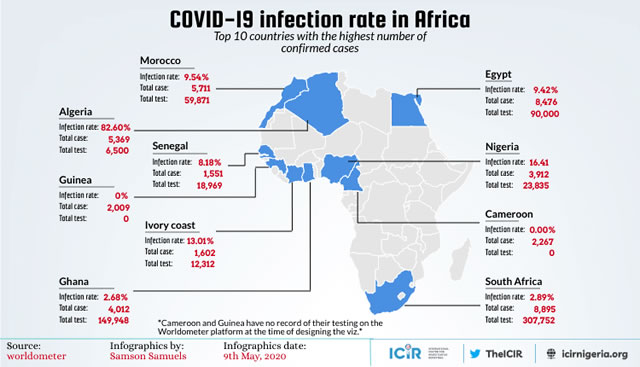
NIGERIA, with a 16.4 percent infection rate is the second most infected country of the Coronavirus disease (COVID-19) out of the 10 countries with the highest number of confirmed cases in Africa, analysis by The ICIR reveals.

The infection rate of COVID-19 is calculated as the percentage of the number of confirmed cases as against the number of tests carried out by each country.

As at 8am, May 9, COVID-19 data from Worldometer reveals that Algeria sits first on the ladder with 82.60 percent infection rate after carrying out 6,500 tests with 5,369 confirmed cases. Nigeria, coming second had carried out 23,835 tests with 3,912 confirmed cases reported.

Other countries include Ivory Coast with an infection rate of 13.01 percent, Morocco- 9.54 percent, Egypt-9.42 percent, Senegal- 8.18 percent; South Africa 2.89, Ghana- 2.68 percent, and. Cameroon and Guinea have no record of their testing on the Worldometer platform at the time of writing this report.

The current rate of COVID-19 may be far from reality. This is because testing for the virus is yet to be comprehensive. The Nigeria Centre for Disease Control (NCDC) has increased testing by activating more molecular laboratory for testing.

However, Nigeria has dipped to the 34th position in Africa from 31st about a week ago in the area of tests per million.

The infection rate in Nigeria may continue to rise because the NCDC is scaling up testing across the country to detect cases that may arise from recent ease of the lockdown.

The epicentre of COVID-19 in Nigeria, Lagos state, may record between 90,000 and 120,000 cases between July and August.

Akin Abayomi, Lagos State commissioner for health made the prediction during a media briefing on the update of the virus on Friday in Lagos.

The number of confirmed cases in Nigeria keeps increasing by the day. As of 8th April, 276 confirmed cases were reported. Exactly one month later, May 8, the conformed cases in Nigeria has increased to 3,912, representing an increase of about 1,317 per cent in the last one month.

Nigerian Embassy debunks claim that US is set to give 5,000 Nigerians work visas for 2 years

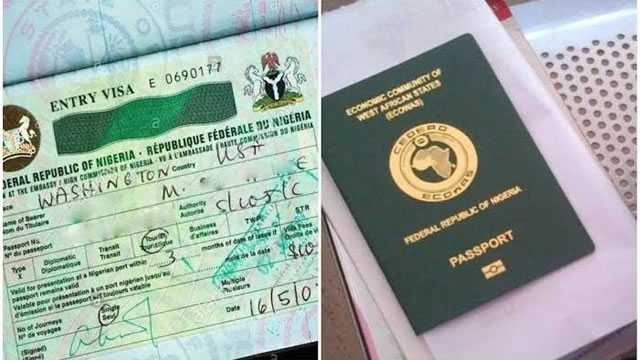
A FACEBOOK post has been circulating on social media stating that the United States, US, government had made an announcement to grant 5,000 Nigerian passport holders free work visas for two years.

The claim is however false as the Nigerian embassy in the US has dissociated itself from the post.

The Facebook account impersonating the Nigerian embassy with the name “Embassy of the Federal Republic of Nigeria, America,” and  with 2,748 followers had on April 25, posted on its Facebook wall that the US was granting 5,000 American work visas to Nigerians for two years.

The phone number displayed on the Facebook page is +1 202-516-4277, as Nigerians who had been denied a visa in the past were urged to participate and abide by the guidelines by sending their passport biodata page for verification.

“You must not write any notes or attach any other credentials while sending your passport biodata page. No introduction is required. Therefore, only your passport must be submitted via our official email info@nigeriaembassyusa.org and not through any other medium,” a section of the message reads.

Checks by The ICIR showed that the Nigerian embassy on April 27, had released a signed statement debunking the claim and also clarifying that the embassy does not carry out engagements on Facebook.

“It has become imperative to set the record straight and inform the general public that the Embassy does not operate a Facebook account page. Thus, the Embassy could not have been mandated to collect any passports from Nigerian citizens on behalf of the US government. This is a fallacy,” the statement reads.

The Nigerian Embassy in Washington D.C also described the post as a “fabricated Facebook announcement” stating that there was no receipt of correspondence between the United States Presidential Task Force Briefing on COVID – 19 and Economic Reform and the Nigerian Embassy.

Also in another development, President Donald Trump of the US on April 22, in a Twitter post said he will sign an executive order to temporarily suspend all immigration to the US because of the coronavirus.

In March, the US suspended almost all visa processing, including for immigrants, because of the pandemic.

While emergency powers have been used to expel thousands of undocumented migrants from the US citing reasons associated with the pandemic. The public health measure allows officials to override immigration laws and expediting removal processes.

Therefore, the claim that America would issue e -visas to 5,000 Nigerians is false as the US government is not keen on receiving immigrants into the country anytime soon.

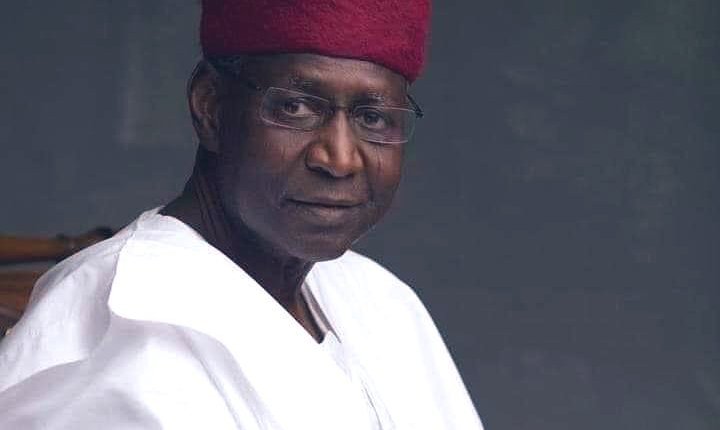
Was Abba Kyari flown to UK for treatment and cremated?

0

By ‘Kunle Adebajo


On Sunday, April 19, two days after the death of Nigeria’s former Chief of Staff Abba Kyari was announced, a Twitter user claimed, among other things, that prior to his death, Kyari was flown to the United Kingdom for medical treatment and his body was later cremated. Checks by The ICIR have, however, found this to be false.

The anonymous account, 99% OPPRESSED (@Truthfully83), wrote in a thread titled ‘The Mystery Behind His Death, And The Conspiracy Theories Ahead’ that a reliable source informed him that Kyari was flown to the UK, rather than Lagos as officially stated, for treatment.

“I got reliable information that the CoS was too sick, his condition was so critical, he was flown on an air ambulance abroad to London. And was admitted in the ICU of Wellington Hospital, St. John’s Wood, London,” the account tweeted.

The Twitter user continued: “Based on his medical history from Wellington Hospital, he was battling severe asthma, diabetes, and high blood pressure. His condition became complicated, and he died in the early hours of Thursday, 2nd of April 2020, at the Wellington hospital in London.

“Based on NHS standard policy in the UK over covid-19 bodies, his body was retrieved and cremated. After a series of failed diplomatic agreements, on returning his body to Nigeria for burial, Aso Rock cabals found themselves in between the devil, and the deep blue sea.”

The thread had been shared over 9,100 times and liked by over 6,700 Twitter users at the time of filing this report.

But when we reached out to the account owner for proof that Kyari was flown abroad and cremated, no response was given.

Wellington Hospital does not treat COVID patients

Wellington is the largest private hospital in the UK and part of the HCA International hospital group. According to the claim, Kyari was taken to the hospital likely between March 30 and April 1, was treated for COVID-19, and then passed away on Thursday, April 2.

Information on the healthcare provider’s website, however, makes it clear that it neither tests nor treats people who are suspected to have contracted the coronavirus.

“Please do not attend an HCA UK facility for any reason if you have a high temperature (more than 37.8 degrees) or have a new continuous cough or streaming nose or flu-like symptoms. If you do have these symptoms or anyone in your household does, please follow Public Health England guidance,” the company warns.

“We are not accepting direct admissions of patients that have coronavirus. If you believe you have coronavirus symptoms, please follow guidance from the NHS [National Health Service].”

It also states that it is unable to “offer testing for coronavirus to the public at any” of its sites. What it does, however, is to support the NHS by providing care to “patients whose care and clinical needs are considered time-critical”.

Emmanuel Adesuyi, a Nigerian staff nurse who works in England told The ICIR he does not think the UK “would have jeopardised all its rules and guidelines to take” a foreigner for treatment.

COVID fatalities not cremated against their wish

The Twitter user’s claim stated that standard policy in the UK is for COVID-19 victims who pass away to be cremated. He added that the UK insisted on doing this despite diplomatic pleas from the Nigerian government. But what does the “standard policy” actually say?

According to its Guidance for Care of the Deceased with Suspected or Confirmed Coronavirus (COVID-19), there is a little residual hazard in handling the bodies of deceased persons except during post-mortem examination or from droplets produced during artificial air movements during initial care.

It says that body bags are not deemed necessary except for other practical reasons but masks or other clothing may be placed over the deceased’s mouth.

About, cremation the UK government says it is “permitted where the deceased does not have a medical device that requires removal”. “Since there is a small but real risk of transmission from the body of the deceased, we strongly advise that mourners should not take part in any rituals or practices that bring them into close contact with the body of an individual who has died from, or with symptoms of, coronavirus (COVID-19) for the duration of the pandemic,” it says.

This means COVID-19 fatalities cannot be cremated against their wish and may be buried normally. The regulation accords with that of the European Centre for Disease Prevention and Control (ECDC) which states that “decedents [deceased persons] with confirmed or suspected COVID-19 can be buried or cremated as usual.”

The World Health Organisation (WHO) has gone further to say that cremation is a matter of cultural choice as well as available resources. “It is a common myth that persons who have died of a communicable disease should be cremated, but this is not true,” it stressed in its interim guidance of March 24.

WHO also particularly advised in 2017 with respect to the Ebola crisis that “deceased Muslims should not be cremated or placed in the body bag naked.”

A medical practitioner based in the UK informed The ICIR that most COVID-related deaths are currently in the mortuaries, and added that citizens, even before the pandemic, usually preferred to be cremated after death.

According to a poll conducted in 2016, up to 58 percent of Britons preferred cremation when they die compared to 17 percent who would rather be buried. So if victims of COVID-19 are cremated, it is because it has always been common practice, not because of scientific or legal reasons.

Conclusion

Abba Kyari could not have been treated at Wellington Hospital and cremated because the healthcare facility does not currently treat coronavirus victims and laws of the UK, contrary to what was claimed, do not mandate the cremation of deceased persons. The claims are therefore false and cannot be substantiated using available evidence.

Viral video on rice distribution shared by Dino Melaye was shot in 2019

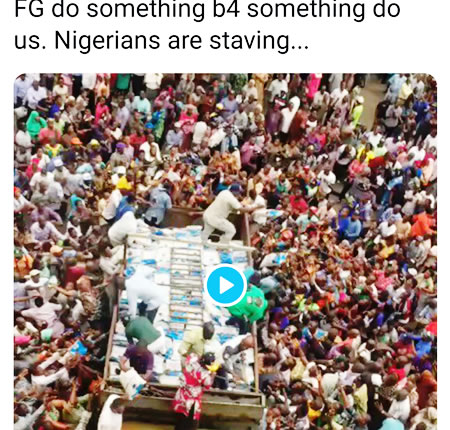
ON Thursday 16 April, Dino Melaye, a former senator shared a 30-second video on rice distribution to a large crowd in Nigeria, which has gone viral.

The video was passed off as a representation of how food is distributed to Nigerians  during Covid-19.

The video has garnered almost 81,000 views within a short time and generated more than 1,314 retweets and 3,277 likes.

Melaye, a member of the Peoples Democratic Party (PDP) tasked the President Muhammadu Buhari administration to rescue his citizens from hunger as they observe the compulsory lockdown, mainly in Abuja, Lagos and Ogun States.

“FG do something before something do us. Nigerians are starving,” Melaye stated in a caption to the video.

The President had initially ordered a 14-day lockdown three weeks ago in an effort to curb the spread of COVID-19 disease in the country. The directive was also extended by an extra 14 days on Monday, 13 April, in a national broadcast.

Meanwhile, the same video was uploaded on YouTube by a news platform known as MyNigeria and within 24 hours, it had over 10,000 views.

Findings

The video shared by the former lawmaker was shot in 2019 during the campaign of Babajide Sanwoolu, as governor of Lagos State under the aegis of the All Progressive Congress (APC) political party.

The earliest date the video came up on the social media was 1 March, 2019.


The ICIR found out that the same video was shared by Olika reporters on Saturday 2 March, 2019. On 8 March, 2019, the exact footage was also shared by Naijagist.

Beyond the two gossip media outlets, a different online news organisation identified as Naija Daily also published the video on 1 March, 2019 through their respective Facebook page.

Contrary to Melaye’s claim, the President ordered the release of 70,000 Metric Tons of food from the National Grains Reserve. The Federal Ministry of Agriculture and Rural Development (FMARD), hence released the grains to the National Emergency Management Agency (NEMA) from the silos spread across the country.

Therefore, the manner in which food was  distributed  in the video does not represent the federal government’s distribution palliative materials.

Bashir Ahmad, Personal Assistant to the President on New Media also faulted the claim attributed to the old video.

He described the viral footage as fake news meant to, “create more fears among Nigerians at a time of national emergency.”

However, Melaye had since deleted the video but the misleading footage is still trending on YouTube.

The former lawmaker has gradually gained some popularity for sharing false information.

In 2018, Melaye provided false information to the Police regarding a false claim of an assassination attempt by Edward David, former Chief of Staff to the Kogi State governor.

The claim eventually led to a lawsuit filed by the Office of the Attorney-General of the Federation against the lawmaker.

During 2019 election, Melaye was among notable social media influencers that shared false news. He tweeted a picture of a dead man covered in his blood, allegedly killed in Kano state due to electoral violence but the picture was of a 2017 incident that occured in Nairobi, Kenya.

Beyond these claims, Melaye had made other previous allegations believed to be untrue.

When he was being prosecuted at the Federal High Court, Abuja for the false information, he shared another false information that Ibrahim Idris, former Inspector General of Police wanted him dead.

He has also come under attack for his recent claim in the video about rice distribution which has turned out to be misleading.


Verdict

Based on the available findings, the video footage shared by Melaye is not a representation  of how food is distributed during Covid-19 in Nigeria.

It was shot far before the outbreak of the pandemic in Nigeria.

Ayade was wrong saying social distancing not effective control against Covid-19

0

BEN Ayade, Governor of Cross River State and also a professor of Microbiology stirred controversy recently when he said the practice of social distancing might be ineffective to control the spread of coronavirus.  

“Social distancing presupposes that things are so equal, that you stay in an isolated room, it is completely wrong because in natural circumstances, in our own cultural habit people are used to interacting, we are not electric poles, we are not trees, we are interacting by nature,” Ayade said in a video that went viral on the social media.

“Social distancing gives a false impression of security because I know that if you and I stand together and I sneeze, that two metres distance, the factors that govern the transmissivity are things that are beyond your own control. Variables like humidity, wind speed, wind direction, how do you control those factors?” he questioned.

He said science has backed the use of nose masks as an option;  that social distancing is not as effective as some people have argued.

Consequently, the governor whose state is yet to record any case of Covid-19, directed all civil servants from grade level 10 and above in the state should wear a face mask and resume work on Tuesday, April 14.

The governor’s position has generated controversy, but not many of his critics have invalidated his position with evidence. But is the governor right in his estimation?

Social distancing according to WHO

The World Health Organisation (WHO) recently reeled out some public health guidelines for public safety. In an article titled, “Basic protective measures against the new coronavirus,” the world health body listed frequent washing of hands and maintaining social distancing among others as preventive measures.

According to the WHO, everyone who has not contracted the virus should maintain at least 1 metre (3 feet) distance between anyone who is coughing or sneezing.

The guideline explains that when someone coughs or sneezes they spray small liquid droplets from their nose or mouth which may contain virus.

If you are too close, you can breathe in the droplets, including the Covid-19 virus if the person coughing has the disease, it said.

What Centre for Disease Control says about social distancing

The Centre for Disease Control and Prevention (CDD) says social distancing which is also called “physical distancing,” means keeping space between yourself and other people outside of your home.

To practice social or physical distancing, the Centre says someone must stay at least 6 feet (2 meters) from other people, and people should not gather in groups as well as stay out of crowded places and avoid mass gatherings.

It emphasised that in addition to everyday steps to prevent COVID-19, “keeping space between you and others is one of the best tools we have to avoid being exposed to this virus and slowing its spread locally and across the country and world.”

“When COVID-19 is spreading in your area, everyone should limit close contact with individuals outside your household in indoor and outdoor spaces,”CDD advises.

“Since people can spread the virus before they know they are sick, it is important to stay away from others when possible, even if you have no symptoms. Social distancing is especially important for people who are at higher risk of getting very sick.”

Why practice social distancing?

The Centre explained that Covid-19 spreads mainly among people who are in close contact (within about 6 feet) for a prolonged period.

It said spread happens when an infected person coughs, sneezes, or talks, and droplets from their mouth or nose are launched into the air and land in the mouths or noses of people nearby.

“The droplets can also be inhaled into the lungs. Recent studies indicate that people who are infected but do not have symptoms likely also play a role in the spread of COVID-19,” it explained.

The CDD added that it may be possible that a person can get COVID-19 by touching a surface or object that has the virus on it and then touching their own mouth, nose, or eyes.

However, this is not the only way the virus spreads. Covid-19 can live for hours or days on a surface, depending on factors such as sunlight and humidity.

It emphasised that social distancing helps limit contact with infected people and contaminated surfaces.


Scientific basis for social-distancing interventions against COVID-19

Joseph A. Lewnard and Nathan C. Lo in an article published in Lancet Journals on March 23 gave both a scientific and ethical basis for social distancing against Covid-19. The Lancet is an independent, international general medical journal founded in 1823 by Thomas Wakley.

Lewnard is is an Assistant Professor of Epidemiology at the School of Public Health, University of California who uses mathematical and statistical modeling to study infectious diseases, Nathan C Lo is a Resident physician and public health scientist, at the School of Medicine, University of California.

In the article, they both agreed that, by all scientifically meaningful criteria, the world is undergoing a Covid-19 pandemic.

Writing on the ways to prevent the spread of the virus which has no cure at the moment, they said: “In the absence of any pharmaceutical intervention, the only strategy against COVID-19 is to reduce mixing of susceptible and infectious people through early ascertainment of cases or reduction of contact.

Under the Lancet Infectious Diseases, Joel Koo and colleagues assessed the potential effect of such social distancing interventions on SARS-CoV-2 spread and COVID-19 burden in Singapore.

They concluded that the effectiveness and societal impact of quarantine and social distancing will depend on the credibility of public health authorities, political leaders, and institutions. It is important that policymakers maintain the public’s trust through the use of evidence-based interventions and fully transparent, fact-based communication.

In another article titled “The effect of control strategies to reduce social mixing on outcomes of the COVID-19 epidemic in Wuhan, China: a modelling study” published on March 25 in Lancent Journals, researchers concluded Restrictions on activities in Wuhan, if maintained until April, would probably help to delay the epidemic peak.

According to them, the research was aimed to estimate the effects of physical distancing measures on the progression of the Covid-19 epidemic, hoping to provide some insights for the rest of the world.

At the end of the exercise they summarised their findings: “Our projections show that physical distancing measures were most effective if the staggered return to work was at the beginning of April; this reduced the median number of infections by more than 92% (IQR 66–97) and 24% (13–90) in mid-2020 and end-2020, respectively.

“There are benefits to sustaining these measures until April in terms of delaying and reducing the height of the peak, median epidemic size at end-2020, and affording health-care systems more time to expand and respond. However, the modelled effects of physical distancing measures vary by the duration of infectiousness and the role school children have in the epidemic.”

While interpreting their findings, they said: “Restrictions on activities in Wuhan, if maintained until April, would probably help to delay the epidemic peak. Our projections suggest that premature and sudden lifting of interventions could lead to an earlier secondary peak, which could be flattened by relaxing the interventions gradually. However, there are limitations to our analysis, including large uncertainties around estimates of R0 and the duration of infectiousness.”

Verdict

It is safe therefore to say that Ben Ayade, Governor of Cross River was not right about his dismissal of the social distancing as an effective measure against the spread of Covid-19. He has also not provided empirical evidence to support his claim.

Has ex-Police Inspector Olalekan Ogunyemi charged with killing Kolade Johnson been released?

0

A RECENT post shared on Twitter by a lady identified as ije12002, claiming that ex-Police Inspector Olalekan Ogunyemi charged with killing Kolade Johnson has been released, is raising dust in the Twittersphere, as many commentators question the value of justice in Nigeria.

In the post, the Twitter user announced that Ogunyemi has been released from prison and currently marked his 50th birthday in style.

“Late Kolade Johnson’s Killer Olalekan Ogunyemi aka Omo Eko Regains Freedom, Marks 50th Birthday, while the families of late Kolade Johnson are still mourning. Here are some of the outfits he rocked on his 50th birthday few days ago,” the post read.

The post has garnered over 2,000 retweets and over 800 likes. But the claim is false

The ICIR reached out to ije12002 but all messages sent to via Twitter direct message was left unanswered.

At the time of filing this report, messages sent to the Head of Nigeria Police Force Complaint Response Unit, Markus Ishaku Basiran, were yet to be responded to.

But, according to Citizen Gavel, a civic tech organization aimed at improving the pace of justice delivery, that has been monitoring the case, Ogunyemi has been in prison since the case was last heard and adjourned on March 19.

It was gathered that the court is to reseat on April 16, to determine the fate of Ogunyemi, who remains in Ikoyi prison and has not been given a bail option.

45-year-old Ogunyemi served in the Anti-Cultism Unit of the Lagos State Police Command before he was discharged from his duties.

He was remanded in prison after being charged for the murder of 36-year-old Kolade Johnson at Onipetesi Estate, Idi-Mangoro, Lagos, on March 31 2019.

During a court sitting in April 2019, the prosecutor, Kehinde Olatunde, told the court that Ogunyemi used his AK-47 rifle to shoot dead Johnson, while the deceased was watching a football match.

FACT CHECK: Does 5G pose a health risk to the human body?

0

THE media space in Nigeria has been inundated with claims that the 5G technology which is a fifth-generation mobile network is dangerous to the human body and to plants close to where a 5G mast is installed.

Shared both online and off-line, some conspiracy theories also claimed that it was the cause of the novel coronavirus pandemic.

Pastor Chris Oyakhilome and former Senator Dino Melaye are among those  who propagate this view loudly.

Pastor Oyakhilome is the founder and president of LoveWorld Incorporated, also known as Christ Embassy, based in Lagos, while Dino Melaye is the immediate past Senator representing Kogi West Senatorial district.

Oyakhilome claimed that the 5G technology was dangerous to human cells and Dino also echoed the same sentiment in a video he shared on his Twitter handle.

Melaye said the 5G technology is evil, a killer that is being used to mobilise flu that has come in the form of coronavirus and also helping to kill the human body’s immune system and those with underlying health conditions.

Both made the claims without providing verifiable evidence.

What is the 5G network?

Launched in late 2018, 5G is a fifth-generation mobile network that is an upgrade of 4G LTE mobile network that relies on signals carried by radio waves – part of the electromagnetic spectrum – transmitted between an antenna or mast and your phone.

It is expected to deliver greater technological benefits to human beings.

A great leap from the 4G network, that will deliver data rates that are 10 to 100 times faster than current 4G networks.

Consumers with a 5G network are expected to see speed on all activities unlike what was obtainable with 3G and 4G, a gigabits per second (Gb/s), much greater than the tens of megabits per second (Mb/s) speeds of 4G.

It uses higher frequency waves than earlier mobile networks, allowing more devices to have access to the internet at the same time and at faster speeds.

All mobile phones use radiowaves which are part of the electromagnetic spectrum, but those released by phones are non-ionising.

Though we have ionising radiation, but the radiation emission limits set by the International Commission for Non-ionizing Radiation Protection (ICNIRP) are below which the radiation is considered safe for humans.

Mobile phones communicate by transmitting radio waves through a network of fixed antennas called base stations. Radiofrequency waves are electromagnetic fields, and unlike ionizing radiation such as X-rays or gamma rays, can neither break chemical bonds nor cause ionization in the human body.

The World Health Organisation (WHO) in a study published in 2014 titled “electromagnetic fields and public health: mobile”, to look at the effect radiation has on the human body, said no adverse health effects have been established as being caused by mobile phone use.

It said, “Mobile phones are low-powered radiofrequency transmitters, operating at frequencies between 450 and 2700 MHz with peak powers in the range of 0.1 to 2 watts.

The handset only transmits power when it is turned on. The power (and hence the radiofrequency exposure to a user) falls off rapidly with increasing distance from the handset. A person using a mobile phone 30–40 cm away from their body – for example when text messaging, accessing the Internet, or using a “hands free” device – will therefore have a much lower exposure to radiofrequency fields than someone holding the handset against their head.”

While Dino and Pastor Chris talked about 5G affecting the human body, evidence points to the fact the radiation released can’t penetrate skin, or allow a virus to penetrate skin.

The Nigeria Communication Commission (NCC) in replying to the claims made by the former senator and pastor said all the radiowaves are well below the set limits and have been regularly conducting measurements of radiation emissions from base stations across the country.

It said there is no correlation between 5G Technology and COVID-19.

5G is an advancement on today’s 4G technology, designed to transform the world positively and said the 5G is a fifth generation of mobile technology which is an improvement on today’s 4G technology with enhanced capabilities.

No 5G network in Nigeria

Senator Melaye and Pastor Oyakhilome also claimed that the 5G technology has been deployed in Nigeria, but statements released in reaction from the Federal Government and the NCC disputed their claims.

The FG through the Minister of Communications and Digital Economy Isa Pantami said the government has not deliberated on or released any bulk frequency spectrum for the deployment of 5G; No license has been issued for the deployment of 5G in the country.”

He also said the Fifth Generation Mobile Networks demonstration trials conducted in the country by MTN Nigeria in November 2019 which Senator Dino alluded to were carried out with 4G spectrum as 5G was not available in Nigeria.

Also, the NCC said it has not issued any licence for 5G in Nigeria.

“NCC is technology neutral as such we don’t license technology but assigns spectrum to operators for deployment of any service when allocated by National Frequency Management Council (NFMC).”

It also disclosed that Nigeria has a spectrum (millimetre wave spectrum from 24GHz and above are available) for 5G which has not been auctioned.

On why there has been scene of some operators rolling out fibre during the lockdown period, the NCC said as a result of the lockdown, the amount of voice and data usage has increased by huge amounts and there was need to expand the network to provide optimum quality of service to users sitting at home. Telecom is also critical for information dissemination during the lockdown.

Verdict: It is most certainly inaccurate and untrue that the fifth-generation mobile network has anything to do with the spread of the coronavirus.

While evidence shows that mobile phones release some percentage of radiowaves, there is no evidence to show that it has an effect on the human body, plants or causes coronavirus.

Okonjo Iweala posts 2019 photo to justify sharing of COVID 19 relief materials in Rwanda

0

A PHOTOGRAPH shared on Wednesday afternoon by former Nigerian Minister of Finance Ngozi Okonjo – Iweala to portray how the Rwandan government under President Paul Kagame shares food items to low-income households in the country amidst the coronavirus disease has been found to be an old one from 2019.

Okojo – Iweala, an influential personality in global economic and finance circles, took to her verified Twitter handle and Facebook page to share the photo with the caption: “Responsible food distribution with social distancing to assist lower-income households in the #COVID19 era! A great example from #Rwanda where community workers also distribute food and other necessities door-to-door.”

Read also: FACT-CHECK: No social media bill before NASS and three other recent lies from Lai Mohammed

The former minister’s post was seen as a subtle criticism of the distribution of food and money by governments in Nigeria, which many believe negates the social distancing advice recommended by medical experts to help halt the spread of the coronavirus.

In fact, legit.ng, an online newspaper in Nigeria, picked up her post in a news story titled “Coronavirus: Emulate Rwanda’s example in food distribution – Okonjo – Iweala advises FG.”

“Nigeria’s former minister of finance and coordinating minister of economy, Ngozi Okonjo – Iweala, has urged the governments at all levels to emulate Rwanda’s example in the food distribution with social distancing to assist lower-income households as the effect of coronavirus lockdown bites harder,” the story reads.

The online newspaper said Okonjo – Iweala made the plea “in a Facebook post on Wednesday, April 8, adding that community workers distribute food and other necessities door-to-door in Rwanda during the COVID-19 era.”

However, a lead from a comment on her post and through a Rwandan showed that the photo is that of a Gambian Islamic leader who shared food items to the faithful Muslims in his area in 2019.

The photograph was shared by a Facebook page named Brother’s Consulting on May 16, 2019. The post was captioned in French but translated by Facebook to English as “Cheick Elhadj Ibrahim Dinding sylla, a generous donor offers food to the faithful Muslims in his area”.

Same photo shared by Facebook page Brother’s Consulting on May 16, 2019.

Brother’s Consulting posted the same pictures that the former Nigerian minister shared on Wednesday along with the photograph of the Gambian Islamic leader.

From the 2019 post alone, it is safe to say that Okonjo – Iweala was sharing a photograph that is nearly a year old to justify what she purports to be the distribution of food items in Rwanda, a process she says is worthy of emulation.

Okonjo – Iweala was Nigeria’s finance minister (later Foreign Affairs Minister) between 2003 – 2006 under President Olusegun Obasanjo and between 2011 – 2015 under President Goodluck Jonathan.

A respected economist, before she joined the government, she had worked with the World Bank, where she rose to the position of Managing Director.

Following her first term as minister, she returned to her job at the World Bank in December 2007 before returning in 2011 as Coordinating Minister for the Economy.

She was recently appointed by the President of South Africa, Cyril Ramaphosa, as a member of the country’s Presidential Economic Advisory Council (PEAC).

Okonjo – Iweala, who has 1.1 million followers on Twitter shared the photograph on Wednesday afternoon and within four hours, the post had garnered 3,251 likes, 1,538 retweets, and 357 comments.

The former Co-ordinating Minister for the Economy in Nigeria also shared the same post and photograph on his Facebook page, where she has over 360,000 followers. It had gotten 965 shares and 1,800 likes as at the time of filing this report

The ICIR could not reach the former minister as the newspaper could not get her contact phone numbers.

However, in a phone chat with her spokesperson, Paul Nwabuikwu,  he said the post must have been an honest mistake on the part of former Minister.

“…Oh! from Gambia, it must be an honest mistake on her part,” Nwabuikwu said. He then asked our reporter to send the post to him so he could share with Okonjo – Iweala.

FACT CHECK: Has Nigeria failed to acquire arms since 1982, as claimed by Dan-Ali?

President Muhammadu Buhari’s approval of $1 billion from the Excess Crude Account (ECA) for the purchase of arms for the Nigerian Armed Forces has been a source of huge controversy, as many Nigerians say there is more to it than meets the eye.

But Mansur Dan-Ali, Minister of Defence, explained that the approval is quite timely, as it would enable security agencies better tackle the numerous security challenges confronting the country at the moment.

In his explanation, however, Dan-Ali made a comment that many find both startling and incredulous.

“We have not been able to acquire arms since 1982. All we have been doing is replacements,” Dan-Ali said during a military Passing out Parade (PoP) in Kaduna on Thursday.

“But now, we are going for massive purchase of arms and ammunition because the current security is in emergency situation. It has to be addressed squarely by having the right equipment and that is why the amount was approved.”

FACT

Security issues are usually highly classified and are treated with great secrecy, but in recent times, there were announcements of acquisition of arms and ammunition for the three major components that make up the Nigerian Armed forces: the army, the navy and the air force.

January 6, 2017: Sadique Abubakar, Chief of Air Staff, said the Nigerian Airforce had acquired two Mi-35M attack helicopters from Russia to fight terrorists and criminal gangs.

“The aircraft have already been delivered awaiting official induction after which they will be launched for operations,” Abubakar said at the time.

March 1, 2017: Dan-Ali said the Federal Government had acquired new modern equipment to boost the counter-insurgency campaign in the North East.

Dan-Ali said the newly-acquired warfare equipment included mine-resistance ambush patrol vehicles, 20mm mortars and ammunition.

Also, he said patrol boats had been ordered by the Nigerian Navy for its outpost at Lake Chad Basin while a contract for helicopters from Russia for the Nigerian Air Force had been awarded.

In addition, 20 more unmanned aerial vehicles were procured by the Nigerian Air Force from the United Arab Emirates, to support the operations.

February 5, 2018: Dan-Ali again revealed that the Federal Government had completed payment of $496 million for the procurement of 12 Super Tucano fighter jets to be used by the Air Force in the fight against Boko Haram.

Dan-Ali said with the payment of the money, the US government would deliver the jets as soon as possible.

“Gone are the days when our soldiers dropped their rifles and started running from the war front. Our gallant troops have successfully degraded the Boko Haram insurgents,” he said.

In the Naval sector, Nigeria took delivery of its latest war ship named NNS Unity on November 4, 2016. According to Christian Ezekobe, spokesman of the Nigerian Navy, the ship was constructed by the China Ship Building and Offshore International Limited (CSOIL).

CONCLUSION

Until the Defence Minister offers a clearer explanation of the difference between ‘arms acquisition’ and ‘arms replacement’, his claims that Nigeria has not been able to acquire arms “since 1982” can best be described as FALSE.