Please note that the FactCheckHub has not obtained any right from the authors or copyright owners of all third-party contents from embedded links and shall incur no liability in this regard.
Please note that the FactCheckHub has not obtained any right from the authors or copyright owners of all third-party contents from embedded links and shall incur no liability in this regard.
Please note that the FactCheckHub has not obtained any right from the authors or copyright owners of all third-party contents from embedded links and shall incur no liability in this regard.
Please note that the FactCheckHub has not obtained any right from the authors or copyright owners of all third-party contents from embedded links and shall incur no liability in this regard.
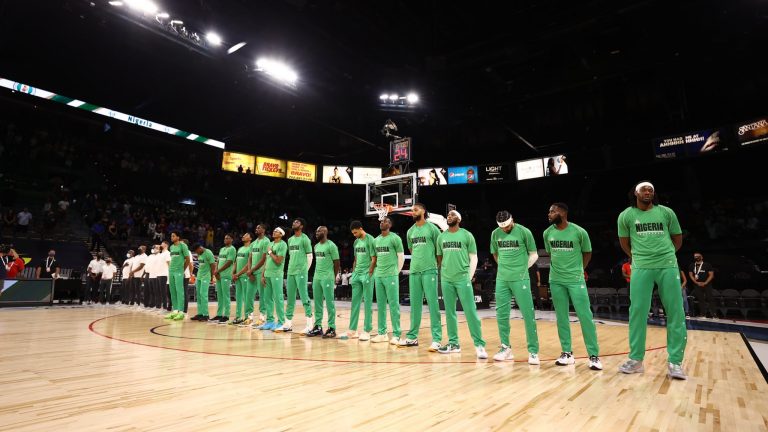
IN JULY, Nigeria’s basketball team, otherwise known as D’Tigers was in the news after back to back victories over the USA and Argentina teams.
However, many Nigerian blogs claimed that the team has been ranked 4th best team in the world by the International Basketball Federation (FIBA).
The news, which was published on Vanguard newspaper [archived here and BSN sport [archived here] claimed that the team has moved from 22nd position to 4th on the global (FIBA) ranking.
“The latest ranking released Friday afternoon see the Nigerian side moved from 22nd to 4th in the world,” the news read on Vanguard.
Similarly, a Twitter user, Mohammed Jammal with the username @whitenigerian also tweeted the claim on his verified Twitter page on July 17.
However, Jammal came back after he was corrected by his followers that his claim was faulty.
“Correction: We were ranked 4th out of 12 Olympic teams. Not 4th in the world,” he tweeted, quoting his previous tweet.
THE CLAIM
D’Tigers now 4th on FIBA ranking
THE FINDINGS
Findings by The FactCheckHub show that the claim is MISLEADING.
According to the latest ranking by the FIBA world ranking, Nigeria’s men basketball team, D’Tigers occupies the 22nd position in the world.
The ranking was last updated in March, after the February 2021 window of the FIBA Continental Cup qualifiers.
However, FIBA has adjudged D’Tigers as the fourth-best team out of the 12 countries that will compete in basketball at the Tokyo Olympics starting July 23. This ranking is a power ranking which covers only teams participating in the Olympic.
In this ranking released on FIBA’s website on July 16, Nigeria ranked above Argentina, and the trio of Australia, Spain, and the US.
The power ranking, which places Nigeria on the 4th position, is different from the FIBA World Ranking.
The power ranking is based on the teams’ recent form. It is determined by dividing the sum of all the winning points, tie points, schedule points, and bonus points by the number of games played.
D’Tigers ranked 4th of the teams participating in Tokyo Olympics because of their recent victories over US and Argentina teams in the Olympics tune-up held in Las Vegas.
THE VERDICT
The claim that D’Tigers now rank 4th on FIBA ranking is MISLEADING. The team ranks fourth-best team out of the 12 countries that will compete in basketball at the Tokyo Olympics but still maintains 22nd position in the world
UPDATE:
July 28, 2021: The FactCheckHub, however, reached out to the Vanguard Newspaper Online editor, who noted that the claim in the news was erroneously published and the report was eventually corrected.
THE scene in a video shared multiple times online, showing a boy being tortured with an electric current, was alleged to have taken place in Nigeria.
The video circulated on social media in June 2021, showing a boy tied to a makeshift metal cross by a man who held an exposed electric wire.
The man in the video used the electric wire on the metal the boy was tied to, leading to convulsion as electricity passed through the metal.
The viral video has been shared multiple times on Facebook, Instagram, Twitter and reported on Linda Ikeji Blog.
The video was shared by a Nigerian Twitter user, Tosin Opeoluwa @CoachTosin, on June 17, 2021, and has had more than 27000 views, with 667 retweets, 167 quoted tweets and 301 likes.
Multiple comments under the post alleged the torture incident might have happened in Nigeria.
THE FINDINGS
The claim that the location in the video is Nigeria is false.
The ICIR found out that the incident happened in Mali.
Before the video began to trend in Nigeria, The ICIR had also found that a Kenyan, Nelson Mimi Mung’asia, based in Doha, the capital of Qatar, shared the the video on June 10, 2021, on his Facebook account.
The ICIR subjected the video to verification by using the Invid video verifier, which directed its reporter to Facebook pages, Mali.
Focus and Mali-Sadio TV, which published a post in French on the incident on June 8, 2021, using a screengrab of the tortured video from a TikTok account, benskshy.
Post translated by Facebook from French to English. Screengrab from Mali – Sadio TV Facebook account
The Post on Mali-Saido TV has been shared 42 times, with 66 comments. It has attracted more than 305 likes and on Mali Focus shared 10 times, with 27 comments and 124 likes.
The ICIR used Google Translate to interpret the post in English (It was originally in French).
The incident, according to the Facebook post, happened in Mali.
The post had said that Attorney Idrissa Toure ordered the perpetrator’s arrest after a complaint was lodged.
According to the post, Toure was the Attorney of the Court of the Municipality IV.
The post also disclosed that the arrest took place on June 7, 2021.
It also said three witnesses to the torture had been identified, arrested and taken to custody.
The post further disclosed that the boy was tortured after it was discovered that he had stolen a mobile phone belonging to a client that came to the metal workshop.
A Malian Twitter user Bakary Coulibaly, based in Washington, confirmed to The ICIR that the language from the video was Bambara/Dioula, the national language of Mali and also spoken in some parts of Burkina Faso and Cote d’Ivoire.
Efforts by The ICIR to get a reaction from government officials in Mali proved abortive as an email sent to the Malian government requesting a response on the incident since on June 23, 2021, was not responded to.
Also, an inquiry mail sent to an official email linked to the National Police of Mali, obtained from a Facebook page that was last used in 2017 and linked to the National Police of Mali, has also not been answered.
The ICIR also contacted Fatima Maiga, a Media – Mediator, Policy Analyst and former Chief of Staff at the Ministry of Reconciliation and the Ministry of Women in Mali, according to her profile on Peace and Pluralism, a non-profit network that builds the capacities of women.
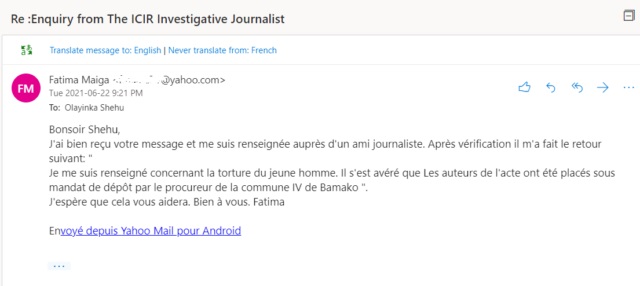
In response to The ICIR email inquiry sent in French on June 22, 2021, Maiga confirmed in French that the video came from Mali and further said the perpetrator of the torture had been arrested.
Her mail read (Google Translate):
Good evening Shehu,
I received your message and inquired about it from a journalist friend. After checking it gave me the following return:”
I inquired about the young man’s torture. It turned out that the authors of the act were placed under arrest warrant by the prosecutor of commune IV of Bamako. “
I hope this will help you. Yours truly. Fatima.
Fatima Maiga email response
THE VERIDICT
The claim that a trending video that captured a boy’s torture with an electric wire happened in Nigeria is FALSE. The ICIR found out that the incident happened in Bamako, Mali.
THE Minister of Information and Culture, Lai Mohammed on July 6, 2021 said the Federal Government spends N60 billion yearly to repair vandalised pipelines.
Mohammed made this statement during a Town Hall Meeting on Protecting Oil and Gas held in Abuja.
“I do not intend to take the wind out of the sail of the experts who will speak on this issue, but with an average of 200,000 barrels per day lost to the wanton damage to pipelines and a huge amount of N60 billion yearly to repair and maintain the vandalised points, one can only imagine the impact on the economy,” he stated.
Mohammed did not give a reference point, however The FactCheckHub checked the cost for pervious year.
THE FINDINGS
Nigeria is part of the Organisation of Petroleum Exporting Countries (OPEC). Petroleum product (crude oil) contributes largely to its revenue generation.
It is regarded as the largest oil producer in Africa, and 13th globally.
Revenue from Nigeria’s oil exports, according to OPEC accounts for about 86 per cent of the country’s export proceeds.
The performance data comprises of NNPC Audited Financial Statements, NNPC Monthly FAAC Reports, National Crude Oil & Natural Gas Production, Lifting and Utilization, Refinery Operations, Petroleum Product Supply & Distribution, Budget Performance Report and Federation Crude Oil & Gas Revenue.
However, the monthly FAAC (Federation Account Allocation Committee) reports were the focus.
Pipeline Repair and Management Cost for June 2020. Source NNPC FAAC Report
The FactCheckHub looked at the reports for the year 2020. The report of activities and transactions for each month is due the following month, which means the details of the activities done in December 2019 would be in January 2020 report. Hence, the reporter checked through deductions for pipeline repairs and maintenance from February 2020 to January 2021 reports.
In each month, the amount stated under the subhead ‘pipeline repairs and maintenance cost’ were added and they summed up to N53.36bn.
The breakdown: January N5.48bn, February N6.74bn, March N7.69bn, April N7.84bn, May N7.99bn, June N6.24bn, July N1.8bn, August N1.49bn, September recorded no expense, October N4.41bn, November N3.68bn and December also recorded no expense.
Meanwhile, for 2019, the Vanguard Newspaper reported the cost to be N127 billion
While 2017 and 2018 were N129.87bn and 137.44bn according to The Cable.
Daily Trust Newspaper reported that N112bn and N103bn were the costs in 2016 and 2015 respectively.
THE Independent National Electoral Commission (INEC) in June commenced Continuous Voter Registration exercise to register those who have attained the legal age and also attend to other related issues like transfer of Permanent Voter’s Cards (PVC), replacement of lost cards and so on.
The electoral body made provisions for some part of the process to be done online, however a message is circulated on WhatsApp with an entirely different link.
This link which is different from that of INEC directs people to a website (archived here) masquerading as that of the INEC.
A screenshot of the message in circulation as shared by YVoteNaija on Twitter.
The FactCheckHub observed that the website attached to the claim has similar characteristics of phishing websites similar to claims previously debunked here and here.
The official INEC website specified for the continuous voters registration is https://cvr.inecnigeria.org/ which is totally different from the fake website archived here.
Multiple claims around COVID-19 vaccinations have emerged since the World Health Organisation (WHO) approved some vaccines for it prevention, one of such claims circulating in Nigeria is that the vaccine comprises of electromagnetic elements that could make metallic objects stick to the arm – vaccination spot on the body.
The FactCheckHub observed that two of such videos – done in English and Hausa Language – it received for verification were largely circulating on the WhatsApp messaging platform.
THE CLAIM
The COVID-19 vaccine contains electromagnetic implants, components, chips that makes the body become magnetic.
A screenshot from one of the videos.
THE FINDINGS
Findings by The FactCheckHub show that the claims are false.
The first, a footage with a June 27 timestamp, showed a spoon stuck to a woman’s arm.
“This thing is true,” a female narrator said in the video. “My friend took the COVID-19 vaccine and we just experiment[ed] right now to see if what people are saying is true. Look, this is a spoon and it stuck.”
In the 30 seconds clip, the narrator urged people not to take the vaccine.
A similar scenario was replicated in the second clip. However this time around the narrator, speaking in Hausa language who was shown in the video was male and the purported experiment was conducted with a key.
He said they had heard via social media that after getting the COVID-19 vaccine, the recipient’s body becomes magnetic – attracts metal, but they were doubtful until a friend of theirs took the injection. He claimed they heard on social media the vaccine is a magnetic chip implant.
This almost two-minute video alongside the the first have been in circulation at least from June.
A screenshot from one of the videos.
Government debunks the claims
The Nigeria’s National Primary Health Care Development Agency (NPHCDA), an establishment under the Federal Ministry of Health has been responsible for vaccination in the country. Prior to the pandemic, the agency has been at the forefront of distributing oral polio vaccines, and several others usually in partnership with the state ministry of health.
As of June 26, more than 2.2 million Nigerians were vaccinated with first dose of the AstraZeneca vaccine. From the figure, 1.1 million Nigerians who took the first dose had taken their second dose. The agency has not reported any case of recipients arm becoming magnetic after getting COVID-19 vaccination.
In addition, the agency explicitly debunked the viral claims describing them as fake news.
The NPHCDA Director-General Faisal Shuaib said it’s a COVID-19 conspiracy that should be discarded.
Shuaib told the press that “The anti-vaccination elements have come up with magnetic conspiracy, in which they claim, and are deceiving people with a video that COVID-19 vaccine creates a magnetic field around vaccination site and can cause the body to light up an electric bulb.
As ridiculous as this and other conspiracy theories are, vulnerable people, believe them and are, therefore, continuing to take the risk of avoiding COVID-19 vaccination”.
He added that “Although the people who are manufacturing conspiracy theories about COVID-19 are in the minority, the virulence of the social media increases their reach.”
The doctor explained that wet, moist, strong friction or sticky skin can make objects stuck to the skin especially in smooth areas.
Shuaib added that the typical dose was not large enough to contain a magnet, and that a magnet that could fit in a needle would not be powerful enough to attract anything.
“There are no ingredients in the AstraZeneca vaccines or any other COVID-19 vaccines that make people exhibit magnetic properties after being vaccinated for COVID-19.
“Scientifically, the claim does not make sense,” he explained
The composition of the AstraZeneca vaccine use in Nigeria can be seen here.
Other sources fault the claims
A Public Health Expert with over a decade of experience Felix Obi also faulted the claim. He said there are no empirical studies to validate the claim and the assertion also betrays normal logic based on simple physics.
He added that he has not “seen any study or scholarly paper that identified that [electromagnetic effect] as a possibility”.
Nonso Umeh, another public health expert dismissed the claim. He shared a similar opinion with Obi saying the claim lacks empirical backing.
“So far, it does not work that way. There is no scientific evidence to support it. At least I have taken the two vaccine [doses] and I did not experience anything of such.”
As for him, those pockets of assertions should be discarded.
In May 2021, Reuters debunked a similar claim. The report noted that physics and medical experts have said vaccines for COVID-19 do not contain ingredients that could produce an electromagnetic field at the site of injection.
THE VERDICT
The clam that the COVID-19 vaccine contains electromagnetic implants, components, chips that makes the body become magnetic is FALSE. There is no empirical evidence that the vaccine contains electromagnetic components.
A study around COVID-19 misinformation says fake stories can change people’s behaviour which can have bigger effects on health.
The online study which was conducted by Ciara Greene, an associate professor of psychology at the University College, Dublin and Gillian Murphy was done in 2020 and was published in 2021. They had recruited 4,500 participants via an online call.
The participants were told that the study seek to “investigate reactions to a range of public health messages and news stories relating to the novel coronavirus outbreak,” Greene wrote in a report.
She said “It’s assumed that fake news has a negative effect on people’s behavior. For example, it has been claimed that fake news might affect people’s willingness to wear a mask, get a vaccine or comply with other public health guidelines. Yet, surprisingly, virtually no research has directly tested this assumption, so my colleagues and I took on the challenge of measuring what effect fake news actually has on people’s behaviour.”
Greene explained that each participant were exposed to six stories – four real, two fake – about the pandemic.
The fake stories which were designed to look like the the stories in circulation were “drinking coffee might protect against the coronavirus; eating chilli peppers might reduce COVID-19 symptoms; pharmaceutical companies were hiding harmful side-effects of a vaccine then in development; and that the forthcoming contact-tracing app to be released by Ireland’s public health service had been developed by people with ties to Cambridge Analytica.”
In the course of several months, the participants were asked to indicate how likely they were to act on the information.
Greene said they found that fake stories “seem to change people’s behaviour, but not dramatically so.”
She added that the secondary aim of the study was to look at the effects of general warnings about misinformation, such as those shared by governments and media organisations.
“We observed small but measurable effects on some behavioural intentions but not others—for example, participants who read a story about problems with a forthcoming contact-tracing app reported a 5% reduction in willingness to download the app. These data suggest that one-off fake news exposure may have behavioural consequences, though the effects are not large”, states the abstract of the report.
“We also found no effects of providing a general warning about the dangers of online misinformation on response to the fake stories, regardless of the framing of the warning in positive or negative terms.
“This suggests that generic warnings about online misinformation, such as those used by governments and social media companies, are unlikely to be effective.
“We conclude with a call for more empirical research on the real-world consequences of fake news,” it stated.
The spread of misinformation – in the form of unsubstantiated rumour and intentionally deceitful propaganda – is nothing new. Even in antiquity, Antony and Cleopatra were cast as villains through fake news shared by Octavian.
However, the global proliferation of social media, the 24-hour news cycle and consumers’ ravenous desire for news – immediately and in bite-size chunks – means that today, misinformation is more abundant and accessible than ever.
But our new study shows fake news doesn’t affect everyone equally. People with greater emotional intelligence are better at spotting it.
Unreliable news
What do fake news providers gain from the spread of damaging misinformation? Broadly, they could be trying to legitimise an extreme view, political or otherwise. But at the base level, the answer is often money.
Fake news providers seek to capture a user’s attention with wild claims in the hope they’ll click on it and go to the source website or share it. The provider can then raise revenue through advertising on their website. The more outlandish the claims, the more likely people are to click or share it. The more site traffic the provider receives, the more advertising revenue they can raise.
Over the past few years, research in psychological science and political science has started to assess who falls for fake news and how we can help people to detect and discard it.
In 2019 Gordon Pennycook, a psychology researcher at the University of Regina in Canada, and his colleagues assessed a variety of factors which may influence which individuals are more or less susceptible to fake news, using participants and news items related to the polarised political climate in the US. They found that being able to think analytically was one of the main drivers in successful fake news detection.
Spotting it
Our new research was a collaboration between us, two experts in government and public policy – Mark Shephard and Narisong Huhe – and Stephanie Preston, the student who led the study. We sought to build upon and complement Pennycook’s work, by assessing fake news detection in a sample of UK participants across a range of news topics including health, crime, immigration, education and climate change.
Participants were asked a number of different questions about the veracity of each news item. Their responses generated an overall fake news detection score. While distinguishing the real from fake news content was challenging, on average, participants were more likely to make the correct decision than not.
Looking within the group performance, we wanted to assess whether there was a link between people who had greater levels of emotional intelligence – the awareness of and ability to regulate your emotions and understand the emotions of others – and those who were able to detect fake news.
We wondered whether it might be the case that those with greater levels of emotional intelligence would be better at discarding the often overly emotional and hyperbolic content that is often part of fake news, allowing greater focus on the veracity of the content itself.
We tested the emotional intelligence of participants using a questionnaire. Sure enough, those with greater emotional intelligence were better at detecting the fake news content.
The good news is that existing research has shown that emotional intelligence is something that can be improved in people. We are now working on developing a way to train people in emotional intelligence, as a way to improve their ability to detect fake news.
In doing so, based on our findings, this should help individuals discern with a greater degree of accuracy which news is safe and shareable, and which is misinformed and misleading.
TWO videos tweeted by one of the first-class traditional rulers in Nigeria claimed that a combination of African herbs, roots and leaves was the ‘solution’ to the novel coronavirus (COVID-19) that has baffled the world for over 18 months.
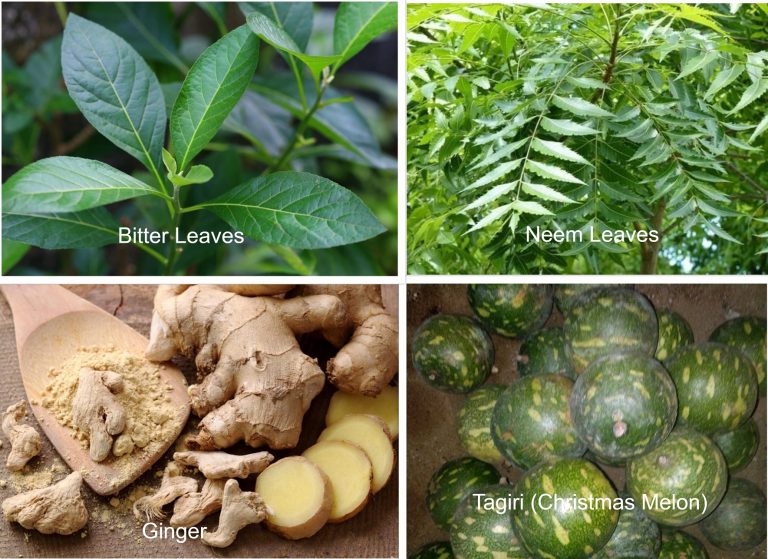
Neem leaves (Azadiractha Indica), bitter leaves (Vernonia Amygdalina), ‘Aidan’ fruits (Tetrapleura Tetraptera), Ethiopian pepper (Xylopia Aethipica) and onions (Allium Cepa) were among the combinations listed in the videos’ narration.
Screenshot of one of the tweeted videos by the @OoniAdimulaIfe.
The videos titled: ‘Corona virus solution – Potent Yoruba herbs to help,’ with a combined playback of three minutes, 53 seconds, were posted on social media on March 30, 2020 by a Twitter user, @OoniAdimulaIfe.
When this reporter checked the profile of the user, it revealed that it was the official Twitter handle of ‘His Majesty Alayeluwa Arole Oodua Olofin Adimula, Ọ̀ọni Adeyẹ́yẹ̀ Ẹnitan Bàbátunde Ògúnwusi Ọjàjà II, Ooni of Ife.’
Ooni Ogunwusi Enitan Adeyeye, Ojaja II.
The Ọọ̀ni of Ife, according to a BBC report, is one of the most influential among the Yoruba people, Nigeria’s second-biggest ethnic group, estimated at about 35 million people in West Africa. He’s also the co-chairman of the National Council of Traditional Rulers of Nigeria (NCTRN).
His Twitter account, as of noon of June 30, 2021, had over 48,000 followers. The tweeted videos had garnered a combined 30,800 views as of noon on Wednesday, June 30, 2021. They also had a combined 1,076 retweets and 1,582 likes, among dozens of comments on the tweet thread.
The same video was also posted on the traditional ruler’s Facebook community page on April 14, 2020. It has garnered over 10,000 views, 363 likes and 48 comments. Also, his page is followed by over 72,000 users.
A screenshot of the Facebook page belonging to the Ooni of Ife, showing the video claim.
The neem (Dogoyaro) leaves, bitter leaves claim by the Ooni of Ife
Part of the video narration read: “These five materials are pounded together and spread into the air (in an open place) for it to dry off to make an incense known as Turari in Yoruba.
“Prepare ‘hot’ coal in a bowl and put the grounded ingredients inside it and use the smoke to cleanse the environment and the air; to chase away the bad energy and the viruses from the air.
“The second use of that incense is that you can put the incense into hot water; with the help of blanket in an enclosed environment to heat the (human) body and inhale the steam from the water to enter into your body system.
“The fourth one is Ewe Ewuro in Yoruba popularly known as Bitter Leaves…pound it and take the powder with warm water once a day.
“The fifth one is mix Ewe Akoko in Yoruba popularly known as Boundary Tree with EweDogoyaro and its fruit in Yoruba popularly known as Neem Leaves and its fruits. Then pound the two together and mix with any bathing soap and use them to bathe early in the morning. May Olodumare (The Creator) help us to eradicate and get rid of the COVID-19…Amen!”
The viral ginger, Tagiri claims
Similarly, there have been various local news reports and posts online, especially on YouTube and Twitter, peddling claims that ginger prevents or cures COVID-19.
A COVID-19 survivor, Ayowande Adalemo, narrating how he got cured of the infection after using ginger, among others.
In a Channels TV news report, posted on its YouTube channel on July 20, 2020, Ayowande Adalemo, a techpreneur and COVID-19 survivor, claimed he got cured of the infection after using ‘herbs, fruits and vegetables’ which included ginger.
In the interview, he listed neem, avocado leaves, lime, turmeric, ginger, garlic, beetroot, pineapple and oranges among the items he used to treat the infection.
Also, in a Vanguard news report published on April 24, 2020, a former Governor of Anambra State Chief Chukwuemeka Ezeife advocated using an herbal cure for COVID-19.
“Typically: Lemon (two or three cuts), ground Ginger (one teaspoon), ground Turmeric (one teaspoon), ground black pepper (half teaspoon), ground Garlic (half teaspoon) are mixed in hot water and taken (drank). This works both as a preventive and as a cure. Herbal medicines, like the above, are most effective when used early – at the inception stages of the infection.
“Everybody at the risk of being infected, including the medical personnel should be required to take the herbal medicine. The aggressive use of herbal treatment can end COVID-19 Pandemic,” he stated.
A screenshot of the Vanguard news report showing Ezeife’s claim.
In addition, some YouTubers have claimed on several videos that Christmas Melon, locally called Tagiri in the Yoruba-speaking part of Nigeria, could prevent all forms of sickness, including COVID-19.
This reporter visited a herbs seller in the heart of Ibadan, Oyo State capital, who claimed she had the antidote to the COVID-19 infection.
In a brief interview with the ICIR, Mrs Balogun said: “I have the herbal remedies to COVID-19, like ‘Dogoyaro’ leaves, ‘Yayi’ tree barks, cocoa tree barks, ‘Ile-Pupa’ pepper and ‘Iyere’ (black pepper), among others. Once cooked together and drink regularly by any COVID-19 patient, it will cure the infection gradually.”
“People are not covering nose again because they’re now buying herbs for COVID-19 and keeping ‘Tagiri’ at home allegedly to prevent COVID-19 infection, as most people claimed that it’s working for them,” she added.
Screenshot of the claim by a Twitter user, @QeenK_myheart, that Tagiri gives protection.
While the use of Tagiri for the prevention of diseases, including COVID-19, is a popularly held opinion among some Nigerians in the south-western part of the nation, their northern counterparts believe that ginger and Dogoyaro leaves can prevent or cure COVID-19 infection, this reporter observed.
For the purpose of this investigation, this reporter will focus on the neem leaves, bitter leaves, ginger and Tagiri , given that some of the other herbs and fruits like onions, garlic, among others, have been fact-checked here and here.
Who are the purveyors of the claims?
To ascertain who the purveyors of these claims are on the internet, this reporter utilised the Open Source Intelligence (OSINT) tools to unravel the spread of this information and authenticate the networks where the claims might have been shared.
Using keywords such as Tagiri, ginger, bitter and neem leaves with COVID-19 at different times, this reporter used Hoaxy® to visualise the spread of the information on Twitter. It revealed several individuals on Twitter handles disseminating the information to other groups of users.
Network analysis of tweets with the keywords: ginger and COVID-19, using Hoaxy – an OSINT tool.
In the Hoaxy® dashboard, each circular node represents a Twitter account. The larger the circle, the more popular the account. Colours indicate the likelihood that the account is a bot.
The blue and lemon colours show normal accounts operated likely by humans. The yellow shows that an account is most likely neutral, while the orange and red colours indicate accounts that are most likely bots.
In addition, the edges that connect the nodes represent tweets that connect accounts through retweets or mentions. The direction of the arrow indicates the flow of information. The colour of the edge indicates whether the tweet contains a link to a claim or a link to a fact-checking article.
Network analysis of tweets with the keyword: neem leaves, using Hoaxy.
For the neem leaves, data showed that more than half of the tweet interactions visualised were most likely from human accounts. The same goes for the ginger.
The most visible Twitter account disseminating information on neem leaves is @TribalArmy, a verified account that shows normal activity on Twitter, according to BotSentinel – another OSINT tool deployed.
Network analysis of tweets with the keyword: Tagiri, using Hoaxy.
BotSentinel is a free platform developed to classify and track inauthentic accounts and toxic trolls using machine learning and artificial intelligence.
For ginger, it’s @444deezy -0 another account that exhibits satisfactory activity on Twitter.
But for the bitter leaves, it’s @vraman16, an account that exhibits normal activity on Twitter, whereas for the Tagiri, it’s @sn_20200122 which could not be evaluated as the Twitter account was locked or protected, except for its approved followers.
Network analysis of tweets with the keywords: Bitter leaves and COVID-19, using Hoaxy.
Also, when a Google Reverse Image Search – one of the OSINT tools – was carried out on a screenshot of the tweeted video by the Ooni of Ife, this reporter traced the clip to the Facebook page of the traditional ruler named: ‘Ooni of Ife Leadership Colloquium.’
Further findings revealed that the video originated from the Ooni’s palace as it contained the official logo of the monarch, which was also seen on another image here.
The Google Reverse Image Search carried out on the screenshot image in the tweeted video by the Ooni of Ife.
Can neem leaves, bitter leaves, ginger, and Tagiri knock out COVID-19?
From Nigeria, Ghana to Madagascar and Tanzania, among other African nations, herbal remedies have been touted as antidotes to the COVID-19 infection, but none has been scientifically tested and successfully approved for human consumption.
Research by the trio of Xin Yi Lim, Bee Ping Teh, and Terence Yew Chin Tan, and published on March 24, 2021, in a pharmacology journal on behalf of Malaysia’s Herbal Medicine Research Centre (HMRC) COVID-19 Rapid Review Team, discovered that the neem leaves reported “positive antiviral evidence specific to the severe acute respiratory syndrome coronavirus 2 (SARS-CoV-2) based on preliminary in silico data.”
Analysis of the Twitter accounts investigated using BotSentinel, another OSINT tool.
The Malaysian researchers, however, concluded that the neem leaves and bitter leaves, alongside two other medicinal plants tested collectively, exhibited pleiotropic effects which could potentially provide a multimodal approach via antiviral, anti-inflammatory, and immunomodulatory effects in COVID-19 management.
“At present, it is evidently challenging to pool data from published studies due to variation in extracts selection and a lack of well-reported standardisation data of the investigated formulations. Still, it is quite clear that there is insufficient evidence of direct antiviral effects specific to the SARS-CoV-2.
“Further investigations on differential anti-inflammatory and immunomodulatory effects, as well as quality and safety of herbal medicines, are required to ascertain their role in COVID-19 management.”
Analysis of the Twitter accounts investigated using BotSentinel.
Earlier, fact-checks by the BBC News Pidgin and the AFP had debunked claims that the neem leaves could knock out the COVID-19 infection from the human body.
Similarly, the National Academies of Sciences, Engineering, and Medicine on its website emphatically stated that consuming ginger would not prevent or cure COVID-19.
“Consuming ginger—whether by eating the ginger root, drinking ginger tea, taking ginger capsules, or sniffing or adding the ginger powder to your food—will not prevent or fight a coronavirus infection,” it stated.
According to the World Health Organisation (WHO), there is no scientific evidence that covering yourself with a quilt during high fever and drinking ginger soup would prevent COVID-19.
In addition, “there is no scientific evidence that black pepper, honey and ginger protect from COVID-19 infection. In general, however, some spices are considered to have properties that may be beneficial for health.”
However, WHO recommends the consumption of adequate fruits and vegetables as a part of a healthy diet.
An Infectious Disease Physician at the University of Jos Teaching Hospital Nathan Shehu told the Voice of America, “It is a fact that herbal remedies are available and could be effective in the management of COVID-19, but it is important that before they’re deployed for such purposes, they should undergo elaborate trials to validate whether they are functional or not because you’re dealing with human lives.”
Is Nigeria ready to approve the use of herbal medicines for COVID-19 prevention or cure?
The Nigeria Centre for Disease Control (NCDC) said it was working assiduously with other government agencies in the quest to end the COVID-19 pandemic in Nigeria.
“The development of therapeutics is a long and strenuous process that requires great attention to detail and huge investments. It is very difficult to start this from the scratch during a pandemic.
“We are fully committed to supporting local initiatives that meet safety and other related requirements. This has been emphasised by the Directors-General of NAFDAC and the Nigerian Institute of Pharmaceutical Research and Development (NIPRD), whose agencies have the mandate for drug development.
“We will continue to support validated scientific outputs led on and carried out by Nigerians,” NCDC’s Head of Response Division Aderinola Olaolu, a doctor, told The ICIR.
Conclusion
The claims that neem leaves, bitter leaves, ginger and Tagiri can prevent or cure COVID-19 are FALSE! There is no credible scientific evidence to support such claims currently.
FEW days after the Anambra state All Progressives Congress (APC) held its primary election, news circulated online claiming Nigeria’s electoral regulator, the Independent National Electoral Commission (INEC) has nullified it.
The reports which were backed by a press release allegedly from INEC where published on blogs trixxng.com, IgbereTv and also on the Nairaland Forum.
“The All Progressives Congress, APC, governorship primary elections which held on June 26, 2021, has been nullified by the Independent National Electoral Commission,” the news read on IgbereTV.
THE CLAIM
INEC nullifies Anambra APC primaries
THE FINDINGS
Findings show that the claim is FALSE.
The Anambra APC had on Saturday, June 26, held its primary election, in which a former Senator who represented Anambra South Senatorial District, Andy Ubah, was declared the winner.
However, the claim that the INEC has nullified the election could neither be seen on INEC official website nor its Facebook page, where it publishes such announcements.
Similarly, the FactCheckHub reached out to Rotimi Oyekanmi, the Media Adviser/Chief Press Secretary to the Independent National Electoral Commission (INEC) Chairman, who said he news is FALSE.
“INEC has not nullified any primary election in Anambra,” Oyekanmi told The FactCheckHub.
He also added that the press release in circulation did not emanate from INEC.
“We did not issue any such press release” he noted.
THE VERDICT
The reports that INEC has nullified Anambra APC primaries are FALSE.
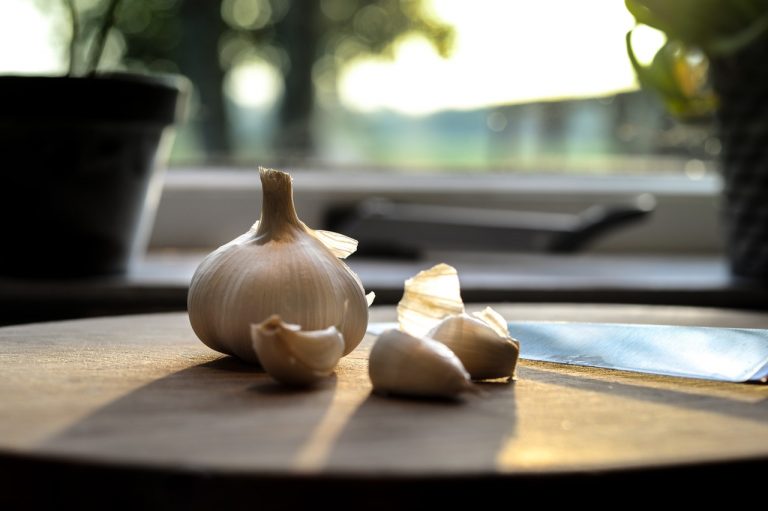
A viral video shared on multiple social media platforms, including WhatsApp groups in Nigeria, claimed that the consumption of raw onions and garlic was capable of treating coronavirus (COVID-19).
Based on the unproven claim, the virus would die once the vegetables – onions and garlic- were consumed as smoothies.
The other interesting part of the claim was the advice to the Nigerian public to slice the onions or garlic and place them at the corners of individuals’ homes.
Interestingly, these were some of the several unproven claims shared a few months after the outbreak of COVID-19 out of desperation for a cure, yet they did not have any scientific backing or validation. Most Nigerians at home and abroad were bombarded with similar claims. Thus, sharing the claims especially on WhatsApp became new normal.
WhatsApp claim that Onion prevents COVID-19 when placed in rooms
Prominent people such as the traditional ruler Ooni of Ife, Adeyeye Enitan Ogunwusi, further made public statements on herbal alternatives that could supposedly fortify the people against COVID-19.
Apart from the first-class traditional ruler, a former Chairman of Nigeria’s Independent Electoral Commission (INEC) Maurice Iwu, a professor, also announced his herbal discovery against the disease. Besides, one other Ben Amodu, a doctor, claimed his herbs could cure throat cancer. He claimed that his herbal medicine could prevent the coronavirus disease. He is among a list of several others. Some of the claims have been removed by social media firms.
The Federal Government of Nigeria, a few months the outbreak of the virus, considered meeting practitioners of traditional (herbal) medicines, since there was no cure at that period. This was because different local concoctions against COVID-19 were being championed by various individuals and groups.
Director-General of the National Agency for Food, Drugs and Administration (NAFDAC) Mojisola Adeyeye, a professor, finally told the public of plans to consider some of the herbs for studies. That was in May, 2020. By September, the Nigerian government had inaugurated a Ministerial Committee on COVID-19 Herbal Remedies to provide a possible home-grown cure.
Meanwhile, since the disease outbreak in Wuhan, China, almost four milliion persons have died globally due to the pandemic. As of June 24, 2021, the World Health Organisation (WHO) said there were close to 180 million confirmed cases. Yet, the number has continued to rise amidst vaccine hesitancy.
This reporter reached out to NAFDAC to verify if any home-grown solution had eventually been developed and certified as a possible alternative, but no response was provided by the government agency.
The Deputy Director for Media and Public Relations at the National Institute for Pharmaceutical Research and Development (NIPRD) Ekwui Ubah could also not provide a response. Director-General of the institute Obi Adigwe asked this reporter to send a text message but as of the time of filing this report, no response was provided after repeated calls.
Claim verification through OSINT
The ICIR was able to track how the WhatsApp message went viral on Twitter. Using Tweetdeck, which helps in real-time Twitter tracking, several persons who got a similar message on Twitter attributed the source to WhatsApp.
“Please all fathers and mothers, go get your garlic and onions,” the original claim read in part.
“It is good and it kills the virus. It is good for protection,” the claim source said in a blend of Yoruba, a local language spoken typically by the Yoruba ethnic group, mostly resident in South-West Nigeria.
“Use a knife to cut it and put it in your room. If you have 10 rooms, put them in your 10 rooms. Put it in your living rooms, toilets, kitchen at the corners my brethren.
“Go and get your onions as many as possible. Get it and use it raw any day, anytime and any hour. Blend and use the water for protection,” the claimant stressed as she dramatically appealed to the public with strong self-conviction.”
False claim shared on Twitter says Onion could prevent COVID-19.
By March 23, 2020, the claim had found its way to Twitter users in the United Kingdom from Nigeria. Temmyturner @t3mmyturn3rr shared the information, saying her mother put an onion in the corner of every room in the house. She attributed her mother’s action to WhatsApp, emphasising that platform advised the mother to do so.
“This is the peak of the WhatsApp mother’s cult…” The Twitter user tweeted pictures of the sliced onions to validate her statement. The tweet garnered over 227, 000 reactions with several other comments such as “WhatsApp must be stopped.” This came from a verified Twitter user @Cesar Vargas.
MissEllss @elishanicole86 added to the thread that onion was often used during plagues to prevent disease spread. Yaw Sedi @Dat_Hoodguy also shared his experience of how he heard two women say COVID-19 could be “sucked out of the atmosphere when airborne by placing onions in each room of the house.”
Using Hoaxy, an Open Source Investigation Tool (OSINT) , this reporter was able to analyse the flow of misinformation on Twitter regarding the use of garlic and onions for COVID-19 cure.
Based on the findings, the tweet originated from a Twitter user identified as Kim @NanaLuvsShoes. The handle joined the social media platform in January 2010 and has grown followers’ base to about 25,000 while following almost 24, 000 persons.
From the tweets and retweets, the user seemed to be a supporter of former President of the United States Donald Trump. Trump is a Republican, and the former president was among those who shared false information on the pandemic.
American CNBC, in October 2020, reported how Trump initially described COVID-19 spread in the US as fake news that was hyped by media conspiracy.
A study by new Cornell University also named Trump as the biggest source of COVID-19 misinformation.
How WhatsApp is pushing misinformation
Since the virus broke out in Wuhan China, in December 2019, social media, especially WhatsApp, has remained a major conveyance of misinformation. With a button, users of the platform could easily share unverified information considered important. While some of the information is deliberately fabricated for financial gain (disinformation) such as phishing, scams, others are shared ignorantly by users of the social media platform (misinformation).
For instance, at the peak of the disease spread in Nigeria, special messages were sent via the platform to lure the public. Few of those included claims that telecommunication networks were sharing free data as palliatives to support their subscribers.
In related cases, social media users were enticed by supposed grants from prominent Nigerian businessmen and the Federal Government. Still, most of the viral claims were found to be false.
WHO’s position on the consumption of garlic to prevent COVID-19
Among the WHO’s myth busters, the global health organisation disproved the claim. While garlic was described “as healthy food that contains anti-microbial properties,” there is no evidence from the current outbreak that garlic has protected people from the new coronavirus.
Director of Department of Global Infectious Hazard Preparedness and a doctor at the WHO Sylvie Briand, in a video interview with Vismita Gypta-Smith of the WHO Communications Department, further dispelled the garlic claim among other unproven assertions on the pandemic.
She particularly warned against excess intake of garlic.
“Some studies are studying it (consumption of garlic as COVID-19 cure) but again, we need to really cross-check the different studies before making any recommendation about garlic.”
Medical experts’ opinion
A Public Health Expert Nonso Umeh recognised the efficacy of the vegetables in immune-boosting against ailment such as flu but said they lacked scientific evidence as COVID-19 cure.
Umeh, who works with a partner organisation with Nigeria’s Federal Ministry of Health – Africa Resource Centre for Excellence in Supply Chain Management -affirmed the vaccines were developed to protect against a specific disease, stressing that conspiracy theories against vaccine dated back to ages.
“It does not cure COVID-19 but only boosts the immune system,” said Umeh. “If people believe that, it means every other similar vegetable such as ginger and ‘ugu’ can cure the disease.”
He expressed hope in change of public attitude once the public began to see benefits of the vaccine. He cited the Oral Polio Vaccine and Yellow Fever Vaccine as notable examples of shots initially rejected but later accepted.
An Assistant Research Professor at Arizona State University’s Biodesign Centre for Immunotherapy, Vaccines and Virotherapy, Jeffrey Langland believed that herbs that appeared to have worked against other infections must undergo testing if they could fight COVID-19. “This one is a little bit more of a dangerous virus,” he told Healthline, a website managed by a group of medical professionals in the United States.
But Professor of Virology Bola Oyefolu, in his opinion, said there were several herbs with potential to cure different ailments, apart from the use of vaccines. He said once people used certain herbs and it worked for them, it should be subjected to further scientific studies.
Though he said it would be too early to make an authoritative conclusion on potency of the fruit plant, he described garlic and onion as anti-microbial.
“I’m a virologist, and you know virology is under microbiology. So, the issue is there are several things you could use against viruses which we call ‘antiviral.’ There are lots of herbs and other things aside from vaccine.
“Long before now, our local people used different medications, combinations of different herbs to cure any kind of disease. Some of them, we may not have tried in the laboratory.”
Besides, he cited a plant known scientifically as Adenopus breviflorus (Christmas Melon), which he realised could be capable of preventing measles among infants. The plant is known as ‘Ogbenwa’ in Igbo, ‘Tagiri’ in Yoruba and ‘Tagiri Shuka’ in Hausa. He decided to share his personal experience to say local herbs were potential cures for certain ailments.
Growing up as a kid, he recalled that his aged father often picked the fruit plants and placed them at corners of the room to prevent measles infection. Having grown to become a virologist, he decided to subject the plants to test and got a substantial outcome through preliminary research.
“One day, I was working on a study on measles disease, and I remembered what the plant my dad normally used to prevent the disease spread. In preliminary research, I took the Itagiri to the laboratory to see if it would help. The majority of these herbs are not proven scientifically as I said but what I have done is what I am sharing.”
Narrating his experience, he said he cut the fruit into two, scooped off the seeds, separated them into three layers. “I matched the seeds, the little thin layer and the outermost layer separately. And tested it against the measles virus, and I found out that the outermost layer with green patches had a very high potency effect against measles virus in the laboratory.”
“I did some other chemical analysis to see further results. So, if I want to name it, I will call it Tagirin, but until then, the preliminary study showed that when placed in a room, the essential oil in the Itagiri caused inhibition of the measles virus to attach into the nostril.
“So because I worked on that, I can only explain the details of that, but for those who use garlic and onions, I can only speculate because I have not worked on it. There is a tendency in it but the potency may be exaggerated.”
Here and here are similar studies on the fruit plant. But, he concluded that for any medical study to gain meaningful recognition, it must have been published in high-impact journals.
However, as he admitted, based on the multiple findings in this report, there is no scientific evidence to validate that garlic and onion could prevent or cure COVID-19.
This publication was produced as part of IWPR’s Africa Resilience Network (ARN) programme in partnership with the International Centre for Investigative Reporting (ICIR) and the Centre for Information Resilience (CIR), and Africa Uncensored.