Please note that the FactCheckHub has not obtained any right from the authors or copyright owners of all third-party contents from embedded links and shall incur no liability in this regard.
Please note that the FactCheckHub has not obtained any right from the authors or copyright owners of all third-party contents from embedded links and shall incur no liability in this regard.
Please note that the FactCheckHub has not obtained any right from the authors or copyright owners of all third-party contents from embedded links and shall incur no liability in this regard.
Please note that the FactCheckHub has not obtained any right from the authors or copyright owners of all third-party contents from embedded links and shall incur no liability in this regard.
IMO State Governor, Hope Uzodimma, has claimed that the South East region has not produced any service chief in the last ten years until President Bola Ahmed Tinubu came to power after winning Nigeria’s 2023 presidential election.
Uzodimma made this claim during an interview on Channels TV’s prime programme, Politics Today on Sunday, January 28, 2024.
“We talk of inclusiveness. I come from the Southeastern part of the country. I can tell you this, for the last ten years, we are having one of the service chiefs who come from the South East: the Chief of Naval staff. That has given a sense of belonging to the people of South East (sic),” Uzodimma said during the programme.
Emmanuel Ogala is the current Nigeria’s Chief of Naval Staff (CNS). He is from Ezike Igbo Eze North Local Government Area of Enugu State and was appointed by President Tinubu in June 2023.
CLAIM
In Nigeria, there is no service chief from the Southeast region in the last 10 years.
THE FINDINGS
Findings by The FactCheckHub show that the claim is TRUE.
Two presidents have ruled Nigeria in the last 10 years before Tinubu was sworn-in as the nation’s president in May 2023. They are former President Goodluck Jonathan and recently, former President Muhammadu Buhari.
The FactCheckHub reviewed the appointments of these previous presidents within the period and found out that none of the appointees is from the South East region as claimed by Governor Uzodimma.
The service chiefs appointed by Jonathan within the period (2014 precisely) are Chief of Defence Staff, Alex Badeh (Adamawa); Chief of Army Staff, Kenneth Minimah (Rivers); Chief of Naval Staff, Usman O. Jibrin (Kogi); and Chief of Air Staff, Adesola Nunayon Amosu (Lagos). None of them is from the Southeast region.
The social media platform X has lifted the ban on searches for Taylor Swift after blocking users from searching for her following the widespread of fake sexually explicit images of the pop singer on the app.
The decision to reactivate searches for Swift was announced on January 29, 2024 by Joe Benarroch, Head of Business Operations at X, who affirmed the company’s commitment to vigilant monitoring.
According to him, the search has been reactivated and the social media platform will continue to be vigilant for any attempt to spread this content and will remove it if they find any.
The FactCheckHub had earlier reported how attempts to search for Taylor Swift on the platform led to varying error messages such as “Something went wrong”, and “Try reloading” on the app.
The enforcement of the temporary ban followed the circulation of explicit AI-generated images of Swift, prompting swift action from the firm.
This development garnered significant attention, even drawing remarks from the U.S. White House, which labelled the spread of fake imagery as “alarming” and emphasized the responsibility of social media companies to combat misinformation.
The FactCheckHubreported that White House press secretary, Karine Jean-Pierre, stated on January 26, 2024, that the circulation of the obscene photographs were extremely worrying and that every effort will be made to address the matter.
“So, while social media companies make their own independent decisions about content management, we believe they have an important role to play in enforcing their own rules to prevent the spread of misinformation, and non-consensual, intimate imagery of real people,” she stated.
In an earlier report, The FactCheckHub examined new patterns in which deepfakes and AI-generated content might play out in 2024 including cyber bullying.
MINUTES after Maryam Awwal heard a resounding explosion while seated at her residence located in Ikolaba Estate along New Bodija area in Ibadan, Oyo State on January 16, 2024, she decided to go through her social media accounts.
While going through her multiple social media apps, she discovered that she wasn’t the only one who had heard the explosion.
“I was going through X, and it was then I discovered that people and places had been affected by the explosion as I was indoors and people were seeking emergency medical help,” she said.
Awwal added that she didn’t know what had caused the explosion as there were different versions of what had happened that day online.
“Some people posted that it was a bomb blast and terrorists were about to attack Ibadan; others had claimed it was a rapture, and there was no clarity on what had happened, which made the situation worse,” Awwal added.
Aerial view of scene of the Ibadan explosion. PHOTO CREDITS: Channels TV.
An explosion rocked Ibadan on Tuesday, January 16, 2024 at about 7:30 pm, which killed five persons, as many were injured and a lot of properties were damaged. The cause of the explosion had been sketchy that night, leaving people vulnerable to misinformation and disinformation.
An example was the affected locations of the incident as the explosion had happened at Dejo Oyelese Street in Bodija area and affected houses within its environs. But most X users had claimed that it affected two malls in the city, namely Ace mall and Ventura mall, which were already in ruins.
However, an X user @theayoadams had posted images of the malls in two different posts, claiming that one of the malls was not affected while the other had taken a little hit. Some users in the comments section had purported that the user was lying as he was circulating old pictures.
This prompted The FactCheckHub to do further checks on the viral claim that the malls posted by the user were affected.
When asked, Awwal confirmed what the X user (@theayoadams) had posted.
“Ventura is another 15/20 minute journey from Ace Mall or the affected area. So it was fine, Ace Mall took a little hit with the ceiling and roofs, but that was it. Nothing too major,” she stated.
Further findings by The FactCheckHub showed that Ventura Mall is located on Sango-Ojoo Road while Ace Mall is located at Awolowo Avenue, beside Bodija Estate.
BEFORE and AFTER aerial view of the area where the Ibadan explosion occurred. PHOTO CREDITS: The Cable newspaper.
According to Google Maps, the time distance between both locations is 5 minutes if you are commuting by car and 17 minutes if trekking.
In an article published in September 2022, Constella Intelligence cited confusion and divide in the time of crisis as one of the many dangers of misinformation and disinformation.
“Misinformation is another tool in this arsenal. The spread of misinformation can be used to sway public opinion, make a governing body appear incompetent, and divide citizens based on ideological lines,” part of the report read.
This instance is not only peculiar to war. Most times, misinformation can also confound the populace in a state of emergence, like we have seen recently in the Plateauattacks and the Maitama explosion.
“In the context of crises and disasters, false or misleading claims, malicious disinformation, rumours, or pranks may put individuals at increased risk and/or hamper the normal operation of emergency management institutions,” a study by Science Direct stated.
“Because of the rapidity of information flow on social media and the lack of possibilities to verify information in emergency situations, social media has become a perfect platform for false information,” the report added.
Dr. Gbemisola Animasawun. CREDITS: LinkedIn.com Profile.
Speaking with The FactCheckHub, Gbemisola Animasawun, an associate Professor at the Center for Peace and Strategic Studies, University of Ilorin stated that due to the technological advancement, there is a consequential relationship between information disorder and public communication during emergencies citing Ebola, COVID-19 and the recent Nigerian elections.
He said: “A case in point was the infodemic that was rife during recent public health emergencies (Ebola and COVID-19). A similar pattern was also seen during the 2023 elections in Nigeria when all forms of information disorder were weaponized to demonize and mislead unsuspecting members of the public.
“Information disorder has also become a threat to global peace, public safety, and national security in conflict-affected and insurgency-affected communities as parties in conflict and outlaws have realized the potency of information disorder (fake-news, misinformation, and disinformation) as a weapon of conflict otherwise referred to as information warfare.
“So, in as much as wars and emergencies/chaotic situations call to question the capacity of the government to protect, outlaws and anti-social elements would always deploy information disorder.”
Is Nigeria prepared for information disorder in crisis time?
In order to curb this growing menace, the foremost rules of fact-checking, “Think before you share” and “Verify before you share” are essential. The importance cannot be overemphasized, especially in a situation of civil unrest, as it can escalate the situation and cause more panic amongst residents in that area.
Another thing that cannot be overemphasized is the role government plays in handling misinformation and disinformation during crisis situation or a state of emergency. Most times, the debunks and communication come in late or never.
In this report by The FactCheckHub, Fact-checkers noted that the budget allocated to combat information disorder in 2024 showed a lack of readiness by the Nigerian government to sanitize the information ecosystem.
“That figure sounds like a comic relief — a joke. It’s like going for a battle and when the people see the quality of the material you have as your arsenal, they can tell if you’re ready for the battle or not. If you are going for a battle and you’re coming with a catapult while your opposition are with something bigger, it’s clear that you’re there for a joke,” Lanre Olagunju, Fact-check Editor at TheCable stated.
The Nigerian government had earmarked a budget of N24.5 million to the ministry of Information and National Orientation to tackle fake news out of the N27.5 trillion for the 2024 fiscal year.
“The implications are numerous. The implication can also tell purveyors that they now have a free day; so it can even encourage them which may undermine the efforts of fact-checkers,” he added further.
Similarly, Silas Jonathan, a fact-checker and researcher with Dubawa said the allocation is insufficient given the profound impacts of misinformation and disinformation in the country.
A survey done by Science Direct on the emergency management approaches to dealing with false information using eight countries in Europe showed that responding to misinformation is relatively loosely in six countries and strict in two countries.
Responding to information disorder during crisis or state of emergency is not just a Nigerian problem but a global problem.
Experts speak
Eze Emelogu, a research fellow at the Institute for Peace and Conflict Resolution (IPCR), Abuja said that communication is key for the government to effectively manage information coordination during crisis. He added that the media and government can mitigate tensions and likely confusions that occur during crisis situation, by becoming reliable and credible sources of factual information for the public.
“The intersection point between information disorder and crisis management is an accurate source of information. A central source of information that is trusted, that would take over the public narrative,” Emelogu stated.
He urged government or local communities involved at each crisis period to “release accurate information regularly,” while weighing it “against the sensitivity of the situation” at hand.
He said: “Also create a constant chain of communication. Make sure there is no break in communication because during crisis, there is a need for regular communication.”
On practices that can be imbibed both online and offline by the public to manage information consumption during crisis, Dr. Animasawun noted that there is need for fact-checking and verification to be mainstreamed into all forms of emergency responses.
The importance of knowing how to interpret the media resides in an individual’s ability to educate themselves and decipher necessary actions to take. CREDITS: thefeather.com
“This is best done by taking the inoculation approach, that is, training all desk-officers and all relevant officials in fact-checking and verification periodically so that they are well prepared to respond during emergencies. So that immediately emergencies occur, there would be an immediate setting up of fact-checking and verification desks to prevent all forms of information disorder.
“Also, Executives like Presidents, Governors and social media influencers should be periodically educated on the need for restraint and evidence during emergencies or crisis situations no matter the pressure. They should be made aware of the consequences of uninformed assertions during crisis not based on scientific investigations for public peace and security during emergencies,” Animasawun added.
He further stated that fact-checking platforms should collaborate with government’s Ministries, Departments and Agencies (MDAs), State Governments and social media influencers for regular training and capacity building in fact-checking and verification before, during and even after emergencies. He urged journalists to prioritize experts opinions for wider dissemination than mere speculations during crisis/emergency situations.
In conclusion, both government and the media including fact-checkers play significant roles in minimizing harms, dousing tension and ensuring that members of the public have access to factual information during crisis situation.
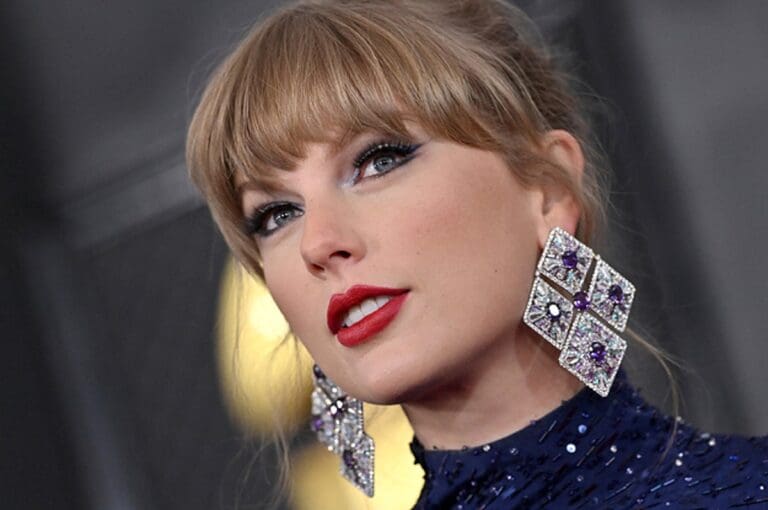
THE social media platform X has restricted users’ ability to search for Taylor Swift due to the virality of explicit AI photos of the singer this week.
As part of an effort to stop the photographs from becoming more viral, X (formerly Twitter) temporarily stopped accepting searches for “Taylor Swift” on Saturday, 27 January 2024.
Taylor Swift is an American singer-songwriter who has majorly influenced the music industry and popular (pop) culture with her singing and songwriting.
The search query ‘Taylor Swift AI’ or ‘Taylor Swift deepfake’ has been trending since the explicit AI images emerged earlier this week. The microblogging platform had previously come under fire for being too slow to regulate the explicit images.
X’s @Safety had on Friday, January 26, 2024 warned users of its zero-tolerance policy and that they were actively removing non-consensual nudity images, but it did not refer to the Pop singer’s situation.
In the post, X stated: “Posting Non-Consensual Nudity (NCN) images is strictly prohibited on X and we have a zero-tolerance policy towards such content.
“Our teams are actively removing all identified images and taking appropriate actions against the accounts responsible for posting them.
“We’re closely monitoring the situation to ensure that any further violations are immediately addressed, and the content is removed. We’re committed to maintaining a safe and respectful environment for all users.”
The viral Taylor Swift photos have gotten the attention of multiplemembers of the US government, as well as the White House.
White House press secretary, Karine Jean-Pierre, stated on January 26, 2024 that the circulating obscene photographs were extremely worrying and that every effort will be made to address the matter.
“So, while social media companies make their own independent decisions about content management, we believe they have an important role to play in enforcing their own rules to prevent the spread of misinformation, and non consensual, intimate imagery of real people,” she stated.
The FactCheckHub had earlier published a report on new patterns in which deepfakes and AI generated contents might play out in 2024 including cyber bullying.
The initiative aimed at stepping up actions against misinformation and false claims in Cyprus and Greece, bringing together experts dedicated to studying and debunking fake news.
According to Cyprus Mail, the primary objectives of the initiative are to deconstruct false news circulating in the region, and enhance public awareness regarding combating misinformation and promoting media literacy.
The launch followed the signing of an agreement on November 16, 2023, with Marinos Koutsomichalis representing Tepak and Loukia Taxitari from the Fact-Check Cyprus team.
The agreement signing took place after the “Misinformation & Anti-misinformation and migration” event held at Cyprus University of Technology.
The initiative is set to play a pivotal role in addressing the challenges posed by disinformation, providing a reliable resource for the public and reinforcing the importance of media literacy in today’s information landscape.
In a landmark victory for journalistic integrity and freedom of speech, Ellinika Hoaxes has been totally exonerated following five years of legal battle with the Greece’s most established physics society, the Association of Greek Physicists (AGP).
The AGP is a non-profit scientific association established in 1930 in Greece.
The disagreement started in 2019 when Ellinika Hoaxes – a Greece-based fact-checking organization – published investigative pieces that exposed erroneous claims made by the AGP. These claims included the endorsement of a so-called “free energy” device and the propagation of pseudo-scientific notions regarding Greek DNA.
The articles provoked outrage in the scientific community, resulting in multiple resignations from the Association of Greek Physicists board and public criticism from other research groups.
The ‘infinite’ energy generator that operates with water
On January 8, 2019, Ellinika Hoaxes published an article entitled “Petros Zografos and the fraud of the production of electricity from water” where it analyzed and documented the claims of the “inventor” Petros Zografos who asserted to have built a machine – a water electrolysis reactor with high frequency combination – which is allegedly able to generate large amounts of electricity using water. Despite making appearances on television shows and participating in so-called scientific conferences, Mr. Zografos, backed by the Association of Greek Physicists, failed to provide conclusive evidence in a controlled environment proving the functionality of his generator.
Cases where a renowned scientific association stood by pseudoscientific mysticism
Both the president and vice president of the board of directors endorsed activities and educational sessions that lack a scientific basis, instead being rooted in concepts such as chakra and quantum healing.
Five years of legal battles
The Association of Greek Physicists responded by filing a $700,000 lawsuit against Ellinika Hoaxes, over allegations of defamation, moral damage, and unauthorized processing of personal data.
Despite enduring immense pressure, Ellinika Hoaxes remained resolute. They used the Media Legal Defence Initiative’s legal aid to defend their journalistic practices and the critical role fact-checking plays in countering disinformation.
After a lengthy legal battle, the lawsuit was dismissed by the Athens First Instance Court in 2020, and The Greek Physicists Association filed an appeal against the judgement.
Finally, in July 2023, the Court of Appeals of Athens issued a final verdict, affirming the lower court’s decision and totally exonerating Ellinika Hoaxes. The court specifically recognized their right to free expression and respect for ethical journalistic norms, stating that the Association of Greek Physicists’ arguments were unfounded and intended to suppress genuine criticism.
“We believe that this conclusive judicial ruling stands as a crucial safeguard for press freedom, promoting purposeful criticism irrespective of the status or qualities of individuals or entities involved, and also serves to protect the impactful and challenging work carried out by fact-checkers,” said Ellinika Hoaxes in a statement released on January 26, 2024.
OLD footage of a news broadcast with the claim that a Ugandan international airport has been sold to China has resurfaced online, particularly on TikTok.
The video, alongside multiple media reports, initially went viral over two years ago. The report was published on various news platforms then archived here, here, here,here and here.
The resurfaced claim was contained in a 115-seconds news footage posted recently by a TikTok user: @beliverug on January 16, 2024.
The video contains a news broadcast by WION, an Indian-English language news channel and it had the inscription that read thus: “Uganda airport sold CC: WION. greed corruption.“
In the footage, a news anchor could be seen reading the news before the footage switched from him to a moving airplane in an airport.
The texts translation of the news footage read in part:
“…Meanwhile, Uganda has lost its only international airport that it had to China after it failed to repay it’s loan. Uganda is the latest African nation to fall into China’s debt trap and has had to give up one of it’s key national asset to China because it was not able to repay the installments of the loan.
“In 2015 China’s export import bank had lent Uganda a sum of 207 million dollars . The loan had maturity billing of about 20 years including a seven year grace period but African media outlets had reported that the loan had repayment conditions which allowed the Chinese lender to take possesion of the EntebBe International airport. The Only international airport in Uganda…”
The post has since gone viral with over 13,500 likes, more than 2,700 comments and over 4,000 shares as of January 27, 2024.
The claim has also appeared online here, here and here respectively, including on YouTube earlier as seen here.
CLAIM
Ugandan international airport has been sold to China.
THE FINDINGS
Findings by The FactCheckHub show that the claim is FALSE!
Screenshot of the news footage. INSERT: False verdict.
For instance, a couple of Nigerian newspapers such as SaharaReporters, The Guardian and the Peoples Gazette had, in 2021, reported the Chinese government’s take over of the Ugandan airport. The Punch also published an opinion piece in December 2021 citing Uganda’s loss of the airport to China.
The reports, which were taken out of context, had generated misinformation about the airport after a Ugandan newspaper, Daily Monitor, published a report stating that the country could lose the Entebbe International Airport to China in an arbitration case with the China EXIM Bank, which is financing the $207 million expansion of the facility.
However, Reuters had, in 2021, reported that China had rejected the allegations of planning to take over the facility if the country defaults on its loan. The report stated that the loan agreement was not made public.
Aerial view of Entebbe International Airport and environs.
A Ugandan lawmaker, Joel Ssenyonyi, who chairs the committee that conducted the parliamentary probe, said then that it gives China Exim Bank approval powers over the airport’s annual budgets and that the loan terms allow China to “grab” the airport in case of default.
Ssenyonyi also noted in the report that Uganda is locked out entirely as the contract is one-sided. He also noted that an attempt by Uganda to renegotiate the loan terms had been rebuffed by the China Exim Bank citing disclosures to the committee by the finance minister, Matia Kasaija.
Nigeria’s The Cable newspaper had also on November 29, 2021 published a news report which stated that the Chinese embassy in Uganda and the Ugandan government denied the reported take over of the Entebbe International Airport.
It would be recalled that The FactCheckHub had earlier in December 2021 published an explainer on the issue when it went viral then, spurring misinformation about Chinese loans and projects in Africa.
The claim that the Ugandan international airport has been sold to China is FALSE; the Uganda Civil Aviation Authority (UCAA), the country’s aviation regulatory agency, currently runs the Entebbe International Airport.
DIGITAL forensic experts in Germany have uncovered a vast, pro-Russia disinformation campaign against the government using thousands of fake accounts on X.
The revelations come amid growing concern about the impact increasingly sophisticated disinformation campaigns could have on elections globally.
The analysts from the German Foreign Ministry examined a massive amount of data on the X(formerly Twitter) platform between December 20, 2023 and January 20, 2024.
Der Spiegel, which had access to the findings, stated that the analysts found over 50,000 fake X user accounts that do not belong to real people and are involved in coordinated German-language information campaigns that support the Russian narrative about the invasion of Ukraine.
The overwhelming tone of the messages was the suggestion that the Olaf Scholz-led German government was neglecting the needs of Germans as a result of its support for Ukraine, both in terms of weapons and aid, as well as by taking in more than a million refugees.
The X accounts also often linked to fake news stories on websites designed to resemble those of genuine media outlets, led analysts to connect it to the Russia-linked “Doppelganger” campaign already known to authorities.
The analysts said they were convinced the source of the campaign was in Russia, making a connection to the Russian-led Doppelgänger campaign that first emerged in 2022, affecting the UK, France and Italy. Among the faked posts then were mock-up versions of reports from UK’s The Guardian and Daily Mail, among other publications.
The analysis showed that the operators of the message-sending system appeared to take breaks at the weekends and on Russian holidays, when the number of posts noticeably reduced.
THE Nigerian Senate Majority Chief Whip, Ali Ndume, has claimed that Nigeria has only 200,000 armed forces personnel across the country.
Ndume stated this on January 23, 2024 while speaking on the country’s security situation during an interview on Channels TV’s programme, Politics Today.
Senator Ndume lamented the deficit manpower in the Nigerian security forces and called on the Nigerian government to recruit more personnel especially into the Nigerian Army and the Nigeria Police Force (NPF).
He said: “We don’t have the number. We only have two hundred thousand Nigerian armed forces. We only have I think less than four hundred thousand police. Put together, we don’t have up to a million of them.”
The Nigerian Armed Forces is the military force of Nigeria, responsible for safeguarding the country’s sovereignty and maintaining internal and external security. It encompasses the Nigerian Army, Nigerian Navy, and Nigerian Air Force.
Established in 1960, they play a crucial role in national defence, peacekeeping operations, and disaster response within the nation.
CLAIM
Nigeria has only 200,000 armed forces personnel.
THE FINDINGS
Checks by The FactCheckHub show that the claim is FALSE.
Data obtained from the Global Fire Power (GFP) website which was last updated on January 9, 2024, show that Nigeria has an estimated total military personnel of 280,000 while the number of active military personnel stood at 230,000. These are higher than the figure quoted by Senator Ndume.
The Global Fire Power (GFP) is an organisation which ranks every country’s military capacities annually based on factors such as the number of serving military members – the naval, and air force and fuel availability for military operations, the number of jet fighters, the defence budget, and logistic flexibility.
According to the GFP, the ranking is based on each nation’s potential war-making capability across land, sea and air fought by conventional means.
The results incorporate values related to manpower, equipment, natural resources, finances and geography, with more than 60 individual factors used to calculate the final ranking.
THE VERDICT
The claim that Nigeria has only 200,000 armed forces personnel is FALSE; the latest data by Global Fire Power show that the Armed Forces of Nigeria has an estimated 280,000 personnel with 230,000 of them in active service.
PimEyes is an AI-powered face recognition search engine and reverse image search tool that allows users to search for online images of a person by uploading their photo.
The online tool performs reverse image searches and enables them to discover the sources where the images have appeared on the internet.
Users can upload their faces via the camera icon or upload the image they want to find. The facial recognition search technology examines the face, identifies where it appears and obtains entry to all websites where the matched image is found.
This tool can be handy for fact-checkers and journalists while conducting investigations. It is also good for personal use as it helps you to find out whether one’s image has appeared in a wrong context and when finding a missing person or a long lost old friend or acquaintances.
How to use PimEyes
To use PimEyes face recognition, you need to follow the below-mentioned steps:
Save the picture: Save the picture you want to verify either on your mobile device or laptop or you can also use a camera icon after logging in into the website to snap the image you want to research.
Click on the “Upload a Photo” option to upload an image of any person or click on the “Camera” icon to take a fresh photo.
Once the uploaded image is processed, you can add more photos for better results and choose a search time from the drop-down menu.
You can also enable the safe search option to avoid any inappropriate or harmful images.
Now, Click on “Start Search”
Wait a few seconds or minute and the platform (PimEyes) will generate your results.
Note that users can only access three free search result sections on PimEyes without any registration for about ten times. However, once your free searches have been exhausted, you must subscribe to a premium (paid) plan; this enables users to access other special features or services provided by the platform.