
Home Blog Page 153

FACT CHECK: Does 5G pose a health risk to the human body?

0

THE media space in Nigeria has been inundated with claims that the 5G technology which is a fifth-generation mobile network is dangerous to the human body and to plants close to where a 5G mast is installed.

Shared both online and off-line, some conspiracy theories also claimed that it was the cause of the novel coronavirus pandemic.

Pastor Chris Oyakhilome and former Senator Dino Melaye are among those  who propagate this view loudly.

Pastor Oyakhilome is the founder and president of LoveWorld Incorporated, also known as Christ Embassy, based in Lagos, while Dino Melaye is the immediate past Senator representing Kogi West Senatorial district.

Oyakhilome claimed that the 5G technology was dangerous to human cells and Dino also echoed the same sentiment in a video he shared on his Twitter handle.

Melaye said the 5G technology is evil, a killer that is being used to mobilise flu that has come in the form of coronavirus and also helping to kill the human body’s immune system and those with underlying health conditions.

Both made the claims without providing verifiable evidence.

What is the 5G network?

Launched in late 2018, 5G is a fifth-generation mobile network that is an upgrade of 4G LTE mobile network that relies on signals carried by radio waves – part of the electromagnetic spectrum – transmitted between an antenna or mast and your phone.

It is expected to deliver greater technological benefits to human beings.

great leap from the 4G network, that will deliver data rates that are 10 to 100 times faster than current 4G networks.

Consumers with a 5G network are expected to see speed on all activities unlike what was obtainable with 3G and 4G, a gigabits per second (Gb/s), much greater than the tens of megabits per second (Mb/s) speeds of 4G.

It uses higher frequency waves than earlier mobile networks, allowing more devices to have access to the internet at the same time and at faster speeds.

All mobile phones use radiowaves which are part of the electromagnetic spectrum, but those released by phones are non-ionising.

Though we have ionising radiation, but the radiation emission limits set by the International Commission for Non-ionizing Radiation Protection (ICNIRP) are below which the radiation is considered safe for humans.

Mobile phones communicate by transmitting radio waves through a network of fixed antennas called base stations. Radiofrequency waves are electromagnetic fields, and unlike ionizing radiation such as X-rays or gamma rays, can neither break chemical bonds nor cause ionization in the human body.

The World Health Organisation (WHO) in a study published in 2014 titled “electromagnetic fields and public health: mobile”, to look at the effect radiation has on the human body, said no adverse health effects have been established as being caused by mobile phone use.

It said, “Mobile phones are low-powered radiofrequency transmitters, operating at frequencies between 450 and 2700 MHz with peak powers in the range of 0.1 to 2 watts.

The handset only transmits power when it is turned on. The power (and hence the radiofrequency exposure to a user) falls off rapidly with increasing distance from the handset. A person using a mobile phone 30–40 cm away from their body – for example when text messaging, accessing the Internet, or using a “hands free” device – will therefore have a much lower exposure to radiofrequency fields than someone holding the handset against their head.”

While Dino and Pastor Chris talked about 5G affecting the human body, evidence points to the fact the radiation released can’t penetrate skin, or allow a virus to penetrate skin.

The Nigeria Communication Commission (NCC) in replying to the claims made by the former senator and pastor said all the radiowaves are well below the set limits and have been regularly conducting measurements of radiation emissions from base stations across the country.

It said there is no correlation between 5G Technology and COVID-19.

5G is an advancement on today’s 4G technology, designed to transform the world positively and said the 5G is a fifth generation of mobile technology which is an improvement on today’s 4G technology with enhanced capabilities.

No 5G network in Nigeria

Senator Melaye and Pastor Oyakhilome also claimed that the 5G technology has been deployed in Nigeria, but statements released in reaction from the Federal Government and the NCC disputed their claims.

The FG through the Minister of Communications and Digital Economy Isa Pantami said the government has not deliberated on or released any bulk frequency spectrum for the deployment of 5G; No license has been issued for the deployment of 5G in the country.”

He also said the Fifth Generation Mobile Networks demonstration trials conducted in the country by MTN Nigeria in November 2019 which Senator Dino alluded to were carried out with 4G spectrum as 5G was not available in Nigeria.

Also, the NCC said it has not issued any licence for 5G in Nigeria.

“NCC is technology neutral as such we don’t license technology but assigns spectrum to operators for deployment of any service when allocated by National Frequency Management Council (NFMC).”

It also disclosed that Nigeria has a spectrum (millimetre wave spectrum from 24GHz and above are available) for 5G which has not been auctioned.

On why there has been scene of some operators rolling out fibre during the lockdown period, the NCC said as a result of the lockdown, the amount of voice and data usage has increased by huge amounts and there was need to expand the network to provide optimum quality of service to users sitting at home. Telecom is also critical for information dissemination during the lockdown.

Verdict: It is most certainly inaccurate and untrue that the fifth-generation mobile network has anything to do with the spread of the coronavirus.

While evidence shows that mobile phones release some percentage of radiowaves, there is no evidence to show that it has an effect on the human body, plants or causes coronavirus.

Okonjo Iweala posts 2019 photo to justify sharing of COVID 19 relief materials in Rwanda

0

A PHOTOGRAPH shared on Wednesday afternoon by former Nigerian Minister of Finance Ngozi Okonjo – Iweala to portray how the Rwandan government under President Paul Kagame shares food items to low-income households in the country amidst the coronavirus disease has been found to be an old one from 2019.

Okojo – Iweala, an influential personality in global economic and finance circles, took to her verified Twitter handle and Facebook page to share the photo with the caption: “Responsible food distribution with social distancing to assist lower-income households in the #COVID19 era! A great example from #Rwanda where community workers also distribute food and other necessities door-to-door.”

Read also: FACT-CHECK: No social media bill before NASS and three other recent lies from Lai Mohammed

The former minister’s post was seen as a subtle criticism of the distribution of food and money by governments in Nigeria, which many believe negates the social distancing advice recommended by medical experts to help halt the spread of the coronavirus.

In fact, legit.ng, an online newspaper in Nigeria, picked up her post in a news story titled “Coronavirus: Emulate Rwanda’s example in food distribution – Okonjo – Iweala advises FG.”

“Nigeria’s former minister of finance and coordinating minister of economy, Ngozi Okonjo – Iweala, has urged the governments at all levels to emulate Rwanda’s example in the food distribution with social distancing to assist lower-income households as the effect of coronavirus lockdown bites harder,” the story reads.

The online newspaper said Okonjo – Iweala made the plea “in a Facebook post on Wednesday, April 8, adding that community workers distribute food and other necessities door-to-door in Rwanda during the COVID-19 era.”

However, a lead from a comment on her post and through a Rwandan showed that the photo is that of a Gambian Islamic leader who shared food items to the faithful Muslims in his area in 2019.

The photograph was shared by a Facebook page named Brother’s Consulting on May 16, 2019. The post was captioned in French but translated by Facebook to English as “Cheick Elhadj Ibrahim Dinding sylla, a generous donor offers food to the faithful Muslims in his area”.

Same photo shared by Facebook page Brother’s Consulting on May 16, 2019.

Brother’s Consulting posted the same pictures that the former Nigerian minister shared on Wednesday along with the photograph of the Gambian Islamic leader.

From the 2019 post alone, it is safe to say that Okonjo – Iweala was sharing a photograph that is nearly a year old to justify what she purports to be the distribution of food items in Rwanda, a process she says is worthy of emulation.

Okonjo – Iweala was Nigeria’s finance minister (later Foreign Affairs Minister) between 2003 – 2006 under President Olusegun Obasanjo and between 2011 – 2015 under President Goodluck Jonathan.

A respected economist, before she joined the government, she had worked with the World Bank, where she rose to the position of Managing Director.

Following her first term as minister, she returned to her job at the World Bank in December 2007 before returning in 2011 as Coordinating Minister for the Economy.

She was recently appointed by the President of South Africa, Cyril Ramaphosa, as a member of the country’s Presidential Economic Advisory Council (PEAC).

Okonjo – Iweala, who has 1.1 million followers on Twitter shared the photograph on Wednesday afternoon and within four hours, the post had garnered 3,251 likes, 1,538 retweets, and 357 comments.

The former Co-ordinating Minister for the Economy in Nigeria also shared the same post and photograph on his Facebook page, where she has over 360,000 followers. It had gotten 965 shares and 1,800 likes as at the time of filing this report

The ICIR could not reach the former minister as the newspaper could not get her contact phone numbers.

However, in a phone chat with her spokesperson, Paul Nwabuikwu,  he said the post must have been an honest mistake on the part of former Minister.

“…Oh! from Gambia, it must be an honest mistake on her part,” Nwabuikwu said. He then asked our reporter to send the post to him so he could share with Okonjo – Iweala.

FACT CHECK: Has Nigeria failed to acquire arms since 1982, as claimed by Dan-Ali?

President Muhammadu Buhari’s approval of $1 billion from the Excess Crude Account (ECA) for the purchase of arms for the Nigerian Armed Forces has been a source of huge controversy, as many Nigerians say there is more to it than meets the eye.

But Mansur Dan-Ali, Minister of Defence, explained that the approval is quite timely, as it would enable security agencies better tackle the numerous security challenges confronting the country at the moment.

In his explanation, however, Dan-Ali made a comment that many find both startling and incredulous.

“We have not been able to acquire arms since 1982. All we have been doing is replacements,” Dan-Ali said during a military Passing out Parade (PoP) in Kaduna on Thursday.

“But now, we are going for massive purchase of arms and ammunition because the current security is in emergency situation. It has to be addressed squarely by having the right equipment and that is why the amount was approved.”

FACT

Security issues are usually highly classified and are treated with great secrecy, but in recent times, there were announcements of acquisition of arms and ammunition for the three major components that make up the Nigerian Armed forces: the army, the navy and the air force.

January 6, 2017: Sadique Abubakar, Chief of Air Staff, said the Nigerian Airforce had acquired two Mi-35M attack helicopters from Russia to fight terrorists and criminal gangs.

“The aircraft have already been delivered awaiting official induction after which they will be launched for operations,” Abubakar said at the time.

March 1, 2017: Dan-Ali said the Federal Government had acquired new modern equipment to boost the counter-insurgency campaign in the North East.

Dan-Ali said the newly-acquired warfare equipment included mine-resistance ambush patrol vehicles, 20mm mortars and ammunition.

Also, he said patrol boats had been ordered by the Nigerian Navy for its outpost at Lake Chad Basin while a contract for helicopters from Russia for the Nigerian Air Force had been awarded.

In addition, 20 more unmanned aerial vehicles were procured by the Nigerian Air Force from the United Arab Emirates, to support the operations.

February 5, 2018: Dan-Ali again revealed that the Federal Government had completed payment of $496 million for the procurement of 12 Super Tucano fighter jets to be used by the Air Force in the fight against Boko Haram.

Dan-Ali said with the payment of the money, the US government would deliver the jets as soon as possible.

“Gone are the days when our soldiers dropped their rifles and started running from the war front. Our gallant troops have successfully degraded the Boko Haram insurgents,” he said.

In the Naval sector, Nigeria took delivery of its latest war ship named NNS Unity on November 4, 2016. According to Christian Ezekobe, spokesman of the Nigerian Navy, the ship was constructed by the China Ship Building and Offshore International Limited (CSOIL).

CONCLUSION

Until the Defence Minister offers a clearer explanation of the difference between ‘arms acquisition’ and ‘arms replacement’, his claims that Nigeria has not been able to acquire arms “since 1982” can best be described as FALSE.

Fact-check: Is Covid-19 Airborne?

0

Since the outbreak of the deadly coronavirus across the world, there have been lot of misconceptions and misinformation about the Virus. Famous among the argument is whether Covid-19 is airborne or not. TheICIR chronicles the available facts and evidence about the novel Coronavirus.


ACCORDING to the International Journal of Infectious Diseases (IJID), Coronaviruses (CoVs), a large family of single-stranded RNA viruses, can infect animals and also humans, causing respiratory, gastrointestinal, hepatic, and neurologic diseases, CoVs are further divided into four genera: alpha-coronavirus, beta- coronavirus, gamma-coronavirus and delta-coronavirus.

To date, there are six human coronaviruses (HCoVs) being identified, including the alpha-CoVs HCoVs-NL63 and HCoVs-229E and the beta-CoVs HCoVs-OC43, HCoVs-HKU1, severe acute respiratory syndrome-CoV (SARS-CoV), and Middle East respiratory syndrome-CoV (MERS-CoV).

New coronaviruses appear to emerge periodically in humans, mainly due to the high prevalence and wide distribution of coronaviruses, the large genetic diversity and frequent recombination of their genomes, and the increasing of the human-animal interface activities. The Covid-19 is the currently ravaging disease with over one million cases world-wide.


Keywords: Severe Acute Respiratory Syndrome (SARS), Coronavirus (CoV), Middle East respiratory syndrome (MERS), Personal Protective Equipment (PPE)


History of Covid-19

In late December 2019, a number of local health authorities reported clusters of patients with pneumonia of unknown cause, which were epidemiologically linked to a seafood market in Wuhan, Hubei Province, China.

The pathogen, a novel coronavirus (SARS-CoV-2), was identified by local hospitals using a surveillance mechanism for “pneumonia of unknown etiology” that was established in the wake of the 2003 SARS outbreak with the aim of allowing timely identification of novel pathogens.

Since December 2019, multiple cases occurring un-explainable pneumonia were successively reported in some hospitals in Wuhan city with a history of exposure to a large seafood market in Wuhan city, Hubei province, China. It has been confirmed to be an acute respiratory infection caused by a novel coronavirus. So far, this disease has rapidly spread from Wuhan to China’s other areas, and 66 countries. And then, clustered cases and confirmed cases without a history of travel to Wuhan emerged as the s disease started to advance.

To help create awareness and tackle its spread, the World Health Organization (WHO) on 12 January 2020 named the virus, it was given the name-tag, ‘Covid-19’.

In the following month, the 2019-nCoV  was reorted to have quickly spread inside and outside of Hubei Province and even other countries. Another issue that rocked the global community, was the sharp increase of the case number  which caused widespread panic among the people.

On 30 January 2020, the World Health Organization (WHO) declared that CoVID-19 is a “public-health emergency of international concern” . The pandemic is escalating rapidly. TheICIR searched the associated literature in CoVID-19 to summarize the epidemiology, clinical characteristics, diagnosis and treatments and preventions of the infection of SARS-CoV-2.

As the time of filing this report, no specific approved cure for the pandemic have globally agreed upon as over 65 thousand deaths have been recorded world wide. According to TheICIR Covid-19 dash board, as at press time, recorded over 222 thousand persons with more than 1 million cases globally.

The argument

According to Neeltje van Doremalen, Dylan H. Morris, et al’s conclusion published in New England Journal of Medicine tiltled “Aerosol and Surface Stability of SARS-CoV-2 as Compared with SARS-CoV-1″ published in the midst of the pandemic, on March 17th, 2020, the scientists who analysed the aerosol and surface stability of SARS-CoV-2, compared it with SARS-CoV-1 and postulated that the longest viability of both viruses was on stainless steel and plastic as the estimated median half-life of SARS-CoV-2 was approximately 5.6 hours on stainless steel and 6.8 hours on plastic. This was reached  after an intensive evaluation of the stability of SARS-CoV-2 and SARS-CoV-1 in aerosols and on various surfaces and  their decay rates were also estimated using a Bayesian regression model.

The data for the experiment was performed on 10 experimental conditions involving two viruses (SARS-CoV-2 and SARS-CoV-1) in five environmental conditions (aerosols, plastic, stainless steel, copper, and cardboard). All experimental measurements are reported as means across three replicates.

At the end of the experiment, the scientists concluded that Covid-19 is not an airborne virus. But it can be contracted through contact with infected surfaces of plastic and stainless steel.

On the covid-19 contracting mechanism, another contradictory argument postulated that Covid-19 can be transmitted through air (airborne).

According to the National Academy of Sciences (NAS) in a letter written to the Kelvin Droegemeier, head of the White House Office of Science and Technology Policy, posited that that the novel coronavirus can spread through the air as not just via the large droplets emitted in a cough or sneeze.

Despite the inconclusiveness of current studies “the results of available studies are consistent with aerosolization of virus from normal breathing,” Harvey Fineberg, who heads a standing committee on Emerging Infectious Diseases and 21st Century Health Threats, wrote.

The NAS panel raised concerns that personal protective equipment (PPE) could itself be a source of airborne contamination.

“A study of SARS-CoV-2 raises concerns about transmission via aerosols generated from droplet contaminated surfaces. Liu, et. al. collected 35 aerosol samples in two hospitals and public areas in Wuhan. From samples collected in patient care areas the highest concentration of virus was found in toilet facilities (19 copies m-3), and in medical staff areas the highest concentrations were identified in personal protective equipment (PPE) removal rooms (18-42 copies m-3). By comparison, in all but two crowded sites, the concentrations of virus found in public areas was below 3 copies m-3. The authors
conclude that a direct source of SARS-CoV-2 may be a virus-laden aerosol resuspended by the doffing of PPE, the cleaning of floors, or the movement of staff. It may be difficult to re-suspend particles of a respirable size.

However, fomites could be transmitted to hands, mouth, nose or eyes without requiring direct respiration into the lungs”.

This stance by Harvey Fineberg can be associated with the result of the researchers at Wuhan University in China led by Yuan Liu found that the novel coronavirus can be re-suspended in the air when healthcare workers remove their personal protective equipment (PPE), clean the floors, and move through infected areas.

Before these report, the U.S. Centers for Disease Control (CDC) and Prevention and other health agencies have insisted the primary route of transmission for severe acute respiratory syndrome coronavirus 2 (SARS-CoV-2) is through the larger respiratory droplets, up to 1 millimeter across, that people expel when they cough and sneeze. Gravity grounds these droplets within 1 or 2 meters, although they deposit the virus on surfaces, from which people can pick it up and infect themselves by touching their mouth, nose, or eyes. But if the coronavirus can be suspended in the ultrafine mist that we produce when we exhale, protection becomes more difficult, strengthening the argument that all people should wear masks in public to reduce unwitting transmission of the virus from asymptomatic carriers.

With the contrasting stances, the transmission of SARS-CoV-2 (Covid-19) through human respiratory droplets and contact with infected persons is clear, the aerosol transmission (airborne) of SARS-CoV-2 has been studied.

CONCLUSION

While efforts continue to ascertain the globally agreed nature of the Coronavirus and a cure for it, the checks and findings by The ICIR has revealed that two positions are clear, the Covid-19 is a respiratory disease, the Covid-19 can also be contracted through surface droppings and contact with infected persons. So, the Covid-19 can be said to be airborne under special conditions.

Findings also show that against the misconception that Covid-19 can be contracted by merely breathing in an infected area, such as not been established as a verifiable or globally accepted claim. The best we have is close metres to an infected person but not by generally breathing in air.

Fact Check: Are Nigerian passport holders no longer eligible to 3 months UAE Tourist Visa?

0

ON Wednesday, an influential Nigerian Twitter user based in the United Kingdom, Kayode Ogundamisi (@ogundamisi) tweeted that Nigerian passport holders are no longer eligible for three-month UAE visa.

“No more 3 months UAE Visa? See what @Buhari did to us in Dubai? Abi is it not Buhari’s fault, how did he think he could get away with robbing a UAE Bureau de Change?

“On a serious note, how can UAE punish law-abiding Nigerians for the actions of a few rogues?”

Ogundamisi was reacting to a travel notice published by Africholiday Travel, a travelling agency based in Lagos.

“Nigerian passport holders are now restricted to 1 month, 96 hours and 48 hours UAE Tourist visa till further notice,” Africholiday stated.

As at the time of this factcheck, Ogundamisi has 417, 000 followers and  144, 000 tweets. The claim has however gotten over 1, 000 re-tweets and more than 1,000 likes on the social media.

Kayode Ogundamisi’s tweet on visa restriction to Nigerians travelling to Dubai

The tweet was sequel to the arrest of five Nigerians identified as Chimuanya Emmanuel Ozoh, Benjamin Nwachukwu Ajah, Kingsley Ikenna Ngoka, Tochukwu Leonard Alisi and Chile Micah Ndunagu  on Sunday, at the United Arab Emirate (UAE) for stealing Dh2.3 million at a bureau de change in Sharjah.

According to reports, the robbers who entered Dubai via a tourist visa on March 18, barged into the bureau de change and smashed the glass barrier, fixed between the customers and staff of the bureau. A viral video footage further showed how they stole the money, which was reported to be in several currencies and fled.

The Sharjah Police authorities noted that it received a theft report and immediately moved to the crime scene before the culprits were eventually arrested.

Reacting to the unfortunate incident, the Senior Special Assistant to the President, Abike Dabiri-Erewa condemned the act describing it as shameful.

In a statement she issued through her Special Assistant on Media, Abdur-rahman Balogun, Dabiri-Erewa urged Nigerians living abroad to imbibe good character while advising embassies in the country to do a thorough screening of applicants before being issued a visa.

Ogundamisi, who shared the breaking news on Twitter, reported that the government of UAE has decided to limit the stay of Nigerians in the middle east country to 1 month and a few hours.

The ICIR found that the claim was sourced from the official Instagram page of Africholidays. The organisation which has over 16, 700 followers with 3, 802 posts shared the claim an hour before Ogundamisi tweeted it.

Hours after, the information started trending on social media while some online media organisations have also reported the news.

How true is this claim?

The official website of the UAE does not contain such information as at the time of this fact check. In fact, the latest news on the embassy’s website was posted on 4th March. A global immigration consulting firm, B.A.L recognised for assisting with visa issues also has no such information.

Both VFS and Emirates also recognised by the UAE on visa issuance still has 90 days validation for tourist visas to Nigerians.

Though the context in which the claim was made may have warranted decision of the UAE to issue a new directive in line with the claim, yet no public evidence supports the claim.

Emails sent to the embassy to verify the authenticity of the claim is yet to be replied. Several phone calls were not also responded. The ICIR further sent short message service (SMS) to the three contact numbers on the official website of the embassy but got no feedback.

However, findings revealed that the last time the UAE amended its requirements on visa issuance to Nigerians was in October 2016. It demanded additional documentation from Nigerians to ensure that UAE employers meet up with their tax obligations regarding Nigerian employees in Dubai.

Ogundamisi and Africholidays were both contacted to disclose their information source but only the travel agency responded.

“Direct source as of today. Most people don’t stay for 3 months anyway BUT still.” The Instagram account handler stated.

Conclusion

It cannot be substantiated that the UAE has trimmed its tourist visa to Nigerians from 90 days to one month as claimed by Ogundamisi. No credible media organisations have reported the claim. Also,  based on the available evidence on the official website of the UAE, Emirate and official handle of the country no such decision has been made.

Fact-check: Is Governor El-Rufai out of COVID-19 self-isolation as claimed in a video? No

0

A video purportedly claiming that the Governor of Kaduna State, Mallam Nasir El-Rufai has gone out of the Coronavirus isolation and is enforcing restriction of movement imposed by the state government is misleading and FALSE.

El-Rufai last Saturday tested positive for coronavirus and had since gone into self-isolation in compliance with the Nigeria Centre for Disease Control (NCDC) guidelines.

The purported video which was earlier shared by one Mark Amaza on his verified Twitter handle has been deleted after an aide of the Governor reacted to it.

His tweet reads: “Covid-19 positive El-rufai defies isolation, patrols Kaduna to enforce lockdown kaftan post.com/covid-19-posit…|This doesn’t make sense to me. He’s positive & should be in isolation. Why is he putting the ppl at risk? He can’t delegate the enforcement of the lockdown?” The article was published on a website called Kaftan Post.

Tweet Post by @amasonic before it was deleted


Responding to a text message sent by The ICIR, Muyiwa Adekeye, Special Adviser to the Governor on media and communication confirmed to The ICIR that the Governor is still in self-isolation and he is not personally monitoring the curfew imposed by the state government or enforcing restriction of movement.

“The Governor is in isolation,” he stated in his response.

The Kaduna state government has also debunked the claim in a tweet response.

It was stated that the video showing him enforcing the restriction of movement was shot on Friday, March 27.

Therefore, the claim by the Twitter user that El-Rufai was found on the highway controlling traffic when he is supposed to be in self-isolation is FALSE.

FACT-CHECK: Nnamdi Kanu claimed Nigeria has only 3 testing centres for COVID-19 but he was wrong

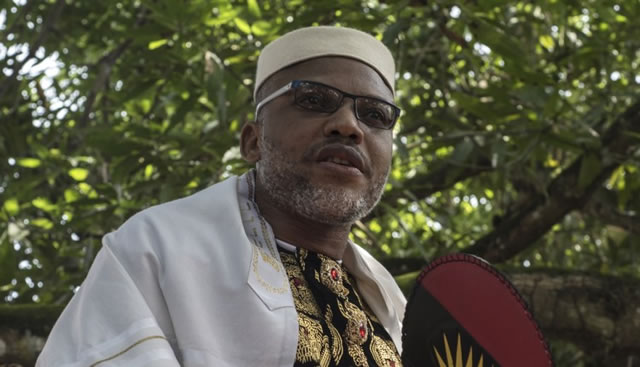
ON Saturday, 28 March, Mazi Nnamdi Kanu, Leader of the Indigenous People of Biafra (IPOB) claimed that Nigeria current battles the COVID-19 pandemic with only three testing centres located in Abuja, the Federal Capital Territory (FCT), Lagos and Edo States, despite its estimated population of about 200 million people.

COVID-19 is a strain of coronavirus that has spread across the globe since the outbreak in Wuhan, China, infecting over 512,700 people and leading to more than 23, 494 deaths globally.

In Nigeria, 97 cases have so far been confirmed by the Nigeria Centre for Disease Control (NCDC), as of Friday, 27 March, 2020. Only one death has been recorded while three persons have recovered from the disease and have been discharged.

Further, break down of the cases show 59 cases in Lagos, 16 in FCT, three (3) in Ogun, seven (7) in Oyo, Two (2) in Enugu, two (2) in Edo, two (2) in Bauchi, One (1) in Ekiti, One (1) in Osun, One (1) in Rivers, One (1) in Kaduna and One (1) in Benue state.

But Kanu questioned why only three centres would be serving such a huge population, attributing such failure to his assertion that Nigeria should not be recognised as a federation.

He insists that Biafra, the nation he wants carved out of Nigeria,  would have done better.

“COVID19 has confirmed that Nigeria is not a federation. It’s instead a very sick unitary state that should die, Kanu stated in his tweet.

“How can a ‘nation’ of 200M fight this VIRUS with ONLY 3 testing centres in Abuja, Lagos & Edo? Answer me, #JubrilAlSudani. #Biafra would’ve done much better.”

Infographics

Findings

Kanu currently has more than 73,000 followers on Twitter.

He is influential within the country and also recognised in few nations abroad. He also runs a radio station known as radiobiafra for the actualisation of the IPOB’s dream. As a result, he has scores of followers.

Within eight hours of the tweet, it had garnered over 2,700 likes on Twitter, 1,200 retweets and more than 309 comments.

But contrary to his claim, Nigeria actually has six testing centres for the COVID-19 disease.

The COVID-19 laboratories in Nigeria are as follows: two in Lagos – the Nigerian Institute of Medical Research, Lagos University Teaching Hospital (LUTH); the one in Osun State at the Redeemers University, Ede; one in FCT at the NCDC, another in Irrua Specialist Hospital, Irrua, Edo State and the last at the Virology Laboratory, University College Hospital, Ibadan, Oyo State.

Map showing distribution of the testing centres Illustration Credit: NCDC

The Oyo State lab was only established days ago and the NCDC also revealed plans to setup an additional laboratory in Abakaliki, Ebonyi State.

The Minister of Health, Dr. Osagie Ehanire also listed the centres during one of his briefings on the COVID-19 virus in Abuja, at the ministry’s’ headquarters.

“The WHO was quick to help us with training immediately we acquired the first reagents, and testing at that time was done in Abuja, Gaduwa, the reference laboratory. Since then, we have been able to do the testing in five laboratories,” Ehanire said at the briefing held 20 March, 2020.

“….And we have an offer of a Polymerase Chain Reaction (PCR) machine by one of the middle-east countries that promised us one which we will be placed in Kano where there is a gap. The five machines at the moment that can do this test are two in Lagos (Nigerian Institute of Medical Research, Lagos University Teaching Hospital).

“In Abuja, there is in Gaduwa the NCDC. Then there are two research centres, one is in Ede, Osun state the other one is in Iruwa in Edo State.”

Aside, the Minister stressed plans by the ministry to extend additional testing centres to Abakaliki, Kano and Maiduguri if the government is able to secure more reagents and then train more officials.

“We shall train more persons to do this test in Abakaliki because the machine is there but we don’t have the reagents, and I think Kano and Maiduguri, once we are able to get more reagents.

Verdict

Though, the current six testing centres are obviously inadequate, considering the nation’s estimated population of about 200 million, based on the available verifiable evidence, the Nigerian government actually has more than three testing centres, contrary to Kalu’s claim.

Therefore, Kalu’s claim is false and misleading.

FACT-CHECK: Consumption of raw onions, garlics doesn’t cure COVID-19

CLAIM: Raw onions, garlics cure coronavirus

THE video showing a woman who claimed that ingesting raw onions and garlics is capable of curing the deadly coronavirus in Nigeria has again gone viral on social media.

The video has been spreading mainly on Whatsapp mobile messaging application and Twitter.

As of 24 March, 375,498 persons have contracted  the Coronavirus globally, while 16,362 deaths recorded in 196 countries, with no cure.

The anonymous woman claimed that once the onion or garlic is consumed or sliced and placed at room corners, people infected of COVID-19 will be cured.

She said the vegetables also could be blended into smoothes and ingested.

“I’m here to introduce another prevention for coronavirus across the globe. Please and please all the fathers and mothers, go and get your garlic and onions. It is good and it kills the virus. It is good for protection,” she said.

“Use it as many as possible; eat the raw one anytime, any day. It works. Please share and save someone.”

E ran enikan lowo,” she said in local Yoruba language meaning help somebody.

“Use a knife to cut it and put it in your room. If you have 10 rooms, put it in your 10 rooms. Put it in your living rooms, toilets, kitchen at the corners my brethren.”

“Go and get your onions as many as possible. Get it and use it raw any day, anytime and any hour. Blend and use the water for protection,” she dramatically appealed to the public with strong self-conviction.


Findings

As at the time of this fact-check, COVID-19 disease has gotten no cure.

The World Health Organisation (WHO) is still working with scientists to get a cure via a model described as solidarity clinical trial.

The absence of a reliable cure for the coronavirus  also has been stated repeatedly by government authorities such as the Federal Ministry of Health and the Nigeria Centre for Disease Control (NCDC).

Though several reports, for instance, the Times of India has reported that swallowing onions, garlic could help fight lung infections and reduce cholesterol level in the body, the report has no scientific backing.

Moreover, there are no verifiable or scientific proofs to affirm the claim that onions could stop people from contracting the COVID-19 virus.

Sanja Jelic, a Medical Doctor and expert in pulmonary diseases in a medically reviewed report also maintained that onion cannot stop flu or cold as claimed.

“There is nothing special about an onion that would kill these pathogens.”

But David Cooley, Raw Food Lifestyle and Wellness Consultant argued that consumption of some local foods could help better respiration. Ginger intake, he stated in his article titled foods that help the respiratory system, detoxifies the lungs, garlic is capable of cleaning the lungs while onions could safeguard the lungs linings.

“Onions — loaded with flavonoids (antioxidant), which help fight inflammation from asthma by strengthening the capillary walls. They also can protect the lining of lungs and bronchial tubes from damage caused by pollution,” says Cooley but never said their intake could cure the deadly disease. He did not also make reference to any particular study.


Verdict  

There are no proven and scientifically-backed evidence to show that consuming onions and garlic can cure a victim of COVID-19.

There are also no proofs that the two identified vegetables could protect people from contracting the deadly disease, let alone placing sliced onions by the room corners as a preventive measure.

Therefore, the claims are false as they lack credible evidence.

FACT-CHECK: Will survivors of COVID-19 permanently suffer almost 50 per cent lungs damage? Placed on lifetime medication?

AS of Monday 23rd March, over 2,182 deaths have been recorded in Spain due to the coronavirus pandemic.

Globally,  World Health Organisation (WHO) put the casualty figure at over 9,000 deaths, and 210,000 cases.

Nigeria has just recorded one death and 36 cases.

CLAIMS

But, the claim recently flying across the social media, as a result of the increasing number of cases is that the survivors of  COVID-19 would suffer almost 50 per cent lungs damage.

The claim which allegedly came from an unidentified consultant at the Infectious Disease Unit of  Lagos State University Teaching Hospital (LUTH) stated that the survivors would be placed on medication for the rest of their life.

“…those who recover from COVID-19 suffers close to 50 per cent of lungs damage, permanently, which means they will be on medication forever or they may die from complications in a few years after recovery from COVID-19,” the unidentified source stated, attributing the claims to an unknown medical practitioner.

“Covid-19 will almost certainly be fatal to anyone who has respiratory illness, kidney or liver disease before infection because the organs are usually its target.”


Findings

Medical experts since the COVID-19 outbreak have expressed concerns on likely adverse effects on survivors  of the virus infection. They are worried about the strength of the lungs and its functionality aftet victim’s recovery.

But a forensic pathologist, Dr. Michael Baden in a recent report says it would be too early to determine the future impact of the COVID-19 infection on the survived cases.

Though, he was worried there could be wounds on the lungs of the lucky survivors, there are no clear proofs from the WHO to affirm the permanent damage to the respiratory organ.

“Those who will die will largely die from lung infection,” Baden said as reported by FOX News.

“We don’t know how many people will have scarring from the lungs that will be present five, 10, 15 years from now, and cause shortness of breath and illness then.

“We only have about a month of experience here.”

A different report, detailing how experts in the United Kingdom Faculty of Intensive Care Medicine (FICM) maintained an almost similar position that victims of the COVID-19 virus would develop Acute Respiratory Distress Syndrome (ARDS).

As a result, it might take up to 15 years for the lungs of COVID-19 survivor to heal.

The syndrome, the report revealed, prevents the victim’s lungs from providing sufficient oxygen to other vital organs in their body system.

“Like many other viral conditions, the effects of coronavirus are not just limited to the lungs. The heart can also be affected, ranging from inflammation (myocarditis) to heart failure,” FICM stressed.

Also, findings based on a study of 12 patients who recovered from the COVID-19 virus in Hong Kong revealed that about three persons had reduced lung function.

But, there are concerns it could be too early to conclude on the long-term implication.

“In some patients, lung function could decline by 20 to 30 per cent after recovery,” Tsang ak-yin, Medical Director, Infectious Diseases Centre at Princess Margaret Hospital, Hong Kong said.

This finding also aligns with the outcome of a study held in Wuhan, where Zhongnam Hospital Wuhan University reportedly analysed 140 lung scans of COVID-19 patients and discovered ‘ground-glass opacity in both lungs of each patient.’

But, it is expected that with further investigations on the recovered COVID-19 patients, it would establish whether the victims have developed scars in the lungs, otherwise known as pulmonary fibrosis or otherwise.

“Over time, the scar tissue can destroy the normal lung and make it hard for oxygen to get into the blood. Low oxygen levels (and the stiff scar tissue itself) can cause shortness of breath, particularly during physical exertion,” the study showed.


Verdict

While there are several scientific claims that health conditions of COVID-19 survivors might get worse especially, if there are wounds on the lungs due to the infection, studies also revealed the lungs could get healed over time.

In Nigeria, there is no public evidence from the Federal Ministry of Health and the Nigeria Centre for Disease Control (NCDC), that the two discharged cases would be placed on medications for the rest of their lifetime.

There is also no such information from the WHO, except advice that the victims should eat nutritious foods to strengthen their immune system, limit alcohol consumption, smoking and avoid sugary drinks.

“This will not only help you in the long-term, it will also help you fight COVID-19 if you get it,” WHO DG said in its latest briefing held 20 March, 2020.

None of these institutions has made a public statement affirming the claim that survived victims of COVID-19 would have their lungs almost permanently damaged.

Therefore, the claim that survivors of  COVID-19 would suffer a permanent but  partial lung damage is exagerated and misleading.

FACT-CHECK: Claims that FG will conduct aerial disinfection due to COVID-19 is False

SINCE the World Health Organisation (WHO) declared the deadly COVID-19 disease pandemic, and prior to the declaration, several unproven claims have been made across the social platforms in Nigeria.

Some of these claims are exaggerated , others misleading.

Most recent among these assertions, however, include claims that the use of chloroquine is capable of curing COVID-19 disease.

The second claim says the Federal Government would conduct an aerial containment of the virus.

These two claims have been shared on whatsapp platform and other social media groups.

“Breaking News: Warning, Warning, Warning. Please nobody should be outside by midnight today, lock up your door and window.

“Don’t leave your clothes or shoes outside. Federal Government have announce the plan to spray chemicals on air tonight with private jet to protect the country because of coronavirus.”

Findings

First, since outbreak of the coronavirus, up till date, the WHO is yet to recommend any particular anti-virus as cure for the pandemic.

Most of the recommendations suggested as precautionary measures includes maintaining proper hygiene, covering of mouth especially when coughing, the use of face mask and maintaining social distance particularly when in public space.

Though, Scientists in the United States and China have shown interests in the use of chloroquine tablet, but it remains questionable, as the US Food and Drug Administration agency was reluctant to accept the drug shortly after President Donald Trump made a declaration adopting the drug.

On Friday, the Minister of Health, Dr. Osagie Ehanire was also indifferent recognising chloroquine as a reliable cure.

Ehanire aligned the position of the Nigerian government with that of the WHO, including the anticipated outcome from the UN agency.

Prof. Akin Abayomi, Lagos State Commissioner for Health also dispelled the use of chloroquine as an effective preventive cure.

He questioned efficiency of the drug with much expectation on more proven scientific results.

The commissioner also warned against the drug usage without medical supervision considering its severe side-effects,stressing that the state government would conduct its clinical trial on the drug’s effectiveness for either prevention or management.

“Use of chloroquine in COVID-19 infection by Lagos State. We do not have any hard evidence that chloroquine is effective in preventing or managing the coronavirus.

“We are watching the global research space to clearly define its efficiency in COVID-19,” Abayomi stated.

In its pinned tweet, the Nigeria Centre for Disease Control (NCDC) also advised Nigerians against the use of chloroquine, as wrong usage could lead to death.

“WHO has not approved the use of chloroquine for COVID-19 virus,” NCDC tweeted on Friday.

“Scientists are working hard to confirm the safety of several drugs for this disease. Please do not engage in self medication. This will cause arm and can lead to death.”

Meanwhile, regarding the aerial containment through the use of helicopters in Nigeria to spray disinfectants, there is also no available record as part of Nigeria’s COVID-19 preparedness plan.

The Health Minister, during his briefing also did not mention the adoption of helicopter in containing the virus.

Moreover, the assertion is marred with typographical errors and grammatical mistakes.

Although, few nations have developed public measures to sanitise the public space by openly disinfecting streets and other public spaces, no such action has been carried out by the federal government.

The only similar activity is to subject airport passengers to test through handheld temperature measuring devices, mostly during arrivals. They are also encouraged to make use of hand sanitisers.

Verdict

Based on the available piece of evidences, the claim that chloroquine usage could cure the deadly COVID-19 virus is questionable, and by extension could be described as false.

No global authority such as the United Nations WHO has approved use of chloroquine. The FDA and National Agency for Food and Drug Administration and Control (NAFDAC) has only accepted the drug as clinical trial.

On the second claim, there is no available public evidence to proof the use of helicopter in sanitising public space over night in Nigeria.