Please note that the FactCheckHub has not obtained any right from the authors or copyright owners of all third-party contents from embedded links and shall incur no liability in this regard.
Please note that the FactCheckHub has not obtained any right from the authors or copyright owners of all third-party contents from embedded links and shall incur no liability in this regard.
Please note that the FactCheckHub has not obtained any right from the authors or copyright owners of all third-party contents from embedded links and shall incur no liability in this regard.
Please note that the FactCheckHub has not obtained any right from the authors or copyright owners of all third-party contents from embedded links and shall incur no liability in this regard.
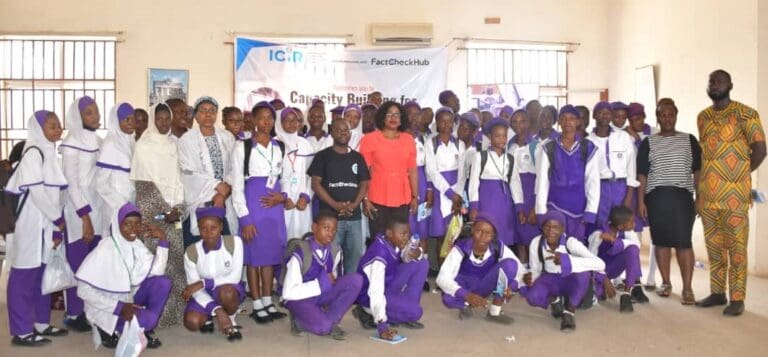
The International Centre for Investigative Reporting (ICIR) in collaboration with the FactCheckHub on Tuesday, February 14, 2023 trained some teachers and students of Government Secondary School, Wuse Zone 3 in Abuja, Nigeria’s capital territory on fact-checking.
The capacity building session on fact-checking which targets staff and students of secondary schools in the Federal Capital Territory (FCT) is part of the organisations’ aim at countering the spread of misinformation and disinformation in the country.
“We want our students and teachers to know that fake news spreads faster than good news and to understand how to identify them especially on social media,” says Mrs. Mary Ajibola, an Assistant Director at the FCT Secondary Education Board (FCT SEB), who represented the board’s director at the event.
During the sessions, teachers and students from the school were taking through step by step guide on how to identify fake news and phishing websites, digital archival system, image and video verification as well as online security.
The editor and Team Lead at the FactCheckHub, Opeyemi Kehinde, who led the facilitators, explained that fact-checking is the process of verifying information and ensuring that “what you’re reading is accurate.” He listed what can be fact-checked thus: misinformation, disinformation and malformation.
Other facilitators at the event include Shehu Olayinka, a Fact-checker and head of ICIR’s social media unit; Olugbenga Adanikin, a fact-checker and ICIR’s head of Investigation, and Nurudeen Akewushola, a fact-checker with the FactCheckHub.
The training emphasized the need for students and teachers to develop and deploy their critical thinking skills when consuming information from online platforms and how to verify the accuracy of such information.
Some teachers and students at the event expressed gratitude to the organisers as they revealed that the sessions enlightened them and thus will enable them to be more responsible with sharing information, especially on social media.
“I like the methodology that you are using. It is very interactive and very good. It is an outstanding programme,” says Suleiman Isah, a teacher at the school.
Some of the students who spoke also noted that the seminar has taught them how not to be purveyors of fake news and the need to always check sources of information they see, read or watch on social media platforms.
In her brief remark, the school’s Principal, Mrs. Funmilayo Kayode, thanked the organisers for putting up the training programme. She advised students to take advantage of the opportunity to develop more skills that are essential for survival in this information age.
Also speaking, Alfred Akerele, the Programmes Officer at The ICIR in his closing remarks, thanked the FCT Secondary Education Board and management of the school for making their teachers and students available for the training.
He noted that this is the pilot phase of the project, as more teachers and students across secondary schools in the FCT would be empowered through trainings to grow the fact-checking culture and encourage responsible online civic space in the country.
As part of their strategy to undermine Nigeria’s 2023 general elections, fake news merchants are now attributing unfounded statements to public figures to dissuade the Nigerian electorate, findings by The FactCheckHub have revealed.
As the elections approach, The FactCheckHub observed an increase in fabricated statements attributed to key public and influential figures in Nigeria. This has the tendency of distorting voters’ perspectives and ability to make informed decisions at the polls.
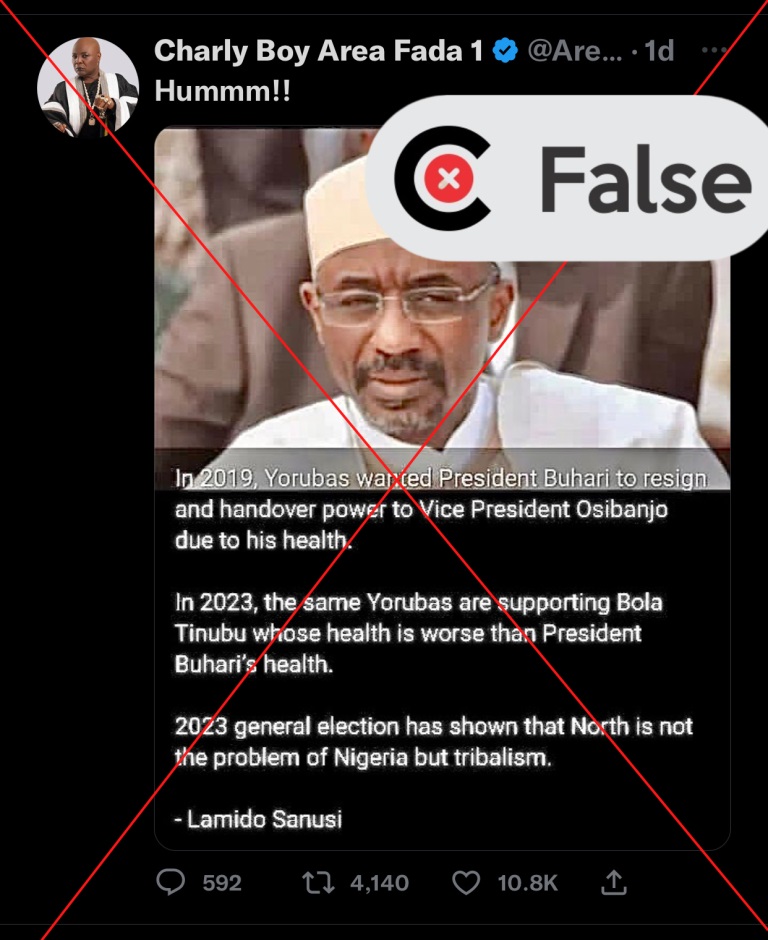
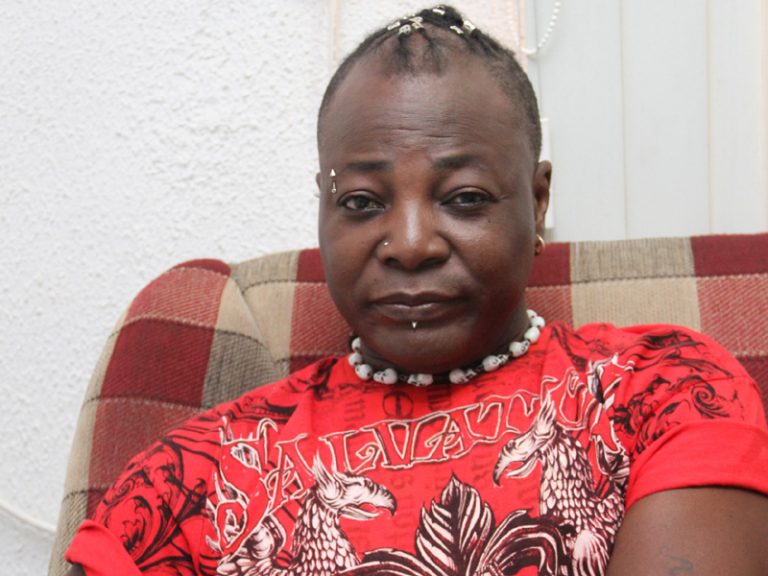
For instance, Nigerian music artiste, Charles Chukwuemeka Oputa, popularly called Charly Boy, tweeted a quote falsely attributed to the former Emir of Kano, Sanusi Lamido Sanusi, saying tribalism is the problem of Nigeria.
The quote read:
“In 2019, Yorubas wanted President Buhari to resign and handover power to Vice President Osibanjo due to his health.In 2023, the same Yorubas are supporting Bola Tinubu whose health is worse than President Buhari’s health. 2023 general election has shown that North is not the problem of Nigeria but tribalism.”
When The FactCheckHub examined the claim, findings show that the quote was fabricated and didn’t emanate from Sanusi.
Screenshot of Charly Boy’s tweeted false attribution.
The FactCheckHub had earlier debunked a quote attributed to Sanusi, where he was purportedly analyzing the uniqueness of at least three presidential candidates contesting Nigeria’s 2023 election.
Sanusi is not the only one that suffers from the menace of identity theft in the hands of fake news merchants. Several false claims have also been attributed to the Nigerian Nobel Laureate, Wole Soyinka, in the past despite the fact that he has always reiterated that he does not use social media, but expresses his views on national issues through the print media.
In 2021, a quote was falsely attributed to Soyinka where he purportedly said he would involve himself in politics and campaign for Bola Tinubu, the presidential candidate of the All Progressives Congress (APC) in the February 25, 2023 election.
The viral statement, which was also found to be false, read:
“I have never involve myself in politics or campaign for any politician, but in 2023 I will involve in politics and campaign for longtime friend in 1993 Nadeco struggle. Nobel Laurel Professor oluwole soyinka.”
Recently, in his article titled “From Pope Benedict XVI to Jacinda Ardern: The Challenge of Poor Health versus National Leadership” published on Thisday newspaper on January 22, 2023, a reputable Nigerian professor, Bola Akinterinwa, fell for this misleading attribution and mistakenly quoted a fake statement attributed to Soyinka where purportedly said Northerners would continue to rule Nigeria. The claim was later debunked by the Nobel Laureate, in a rebuttal.
The trend of fake endorsements
With the 2023 general election few weeks away, The FactCheckHub has also observed an increase in false endorsements attributed to key public figures in the society.
In August 2022, a viral post falsely claimed that Soyinka endorsed Rabiu Musa Kwankwaso, the presidential candidate of the New Nigeria People’s Party (NNPP) for the Nigerian presidency.
Just recently, a false claim that the Sultan of Sokoto, Muhammadu Sa’ad Abubakar III (CFR) endorsed the presidential bid of the Labour Party’s candidate, Peter Obi also went viral online.
The false quote read:
“The problem of the North is from the north, not Peter Obi or an Igbo man, it will be worst and more deadly for the North if Tinubu wins, if they tell you an Igbo man is the problem of Nigeria, tell them Igbo man never rule Nigeria before and north is world poverty capital.”
Meanwhile, in a disclaimer by Bashir Adefaka, an aide to Sultan, he clarified that Sultan did not endorse Obi’s presidential bid.
In the same vein, a claim that Kanu Nwankwo, a former captain of the country’s national football team, Super Eagles, endorsed Tinubu also went viral online. Few days after the claim went viral, Kanu made a video on 27 January 2023 to debunk it.
In the video, Kanu says: “I am not a politician, I am a footballer” and asks people “spreading fake news” in his name to stop. He said he has not told anybody who to vote for in the election.”
A viral post also claimed that a former Nigeria’s Chief of Army Staff and elder statesman, Theophilus Danjuma, endorsed Peter Obi.
Similarly, on October 26, 2022, the Atiku Presidential Campaign Organisation released a statement claiming that the influential London-based Economist magazine endorse the candidacy of Atiku Abubakar. The claim was also found to be false.
Cambridge Dictionary defines misattribution as the act of wrongly saying or thinking that someone or something has a particular quality or feature as a result of someone or something else.
In other words, giving the wrong person credit for doing something.
The best way to identify a false attribution is to question the source. Most false attributions don’t contain the source of information. Putting it in a context, a credible news should be able to answer the 5Ws (where, when, who, why and what) and 1H(how) questions. An attribution that doesn’t carry such information demands a sober scrutiny.
For instance, none of the social media users who posted the false attributions above disclosed their source(s) publicly and neither the information could be seen on any credible media platform.
As Nigerians go to their various polling units on February 25, 2023 to choose the nation’s next president, experts have posited that rising misinformation has the potential to undermine the election.
Lanre Olagunju, the fact-check editor at TheCable noted that there would be an increase in fake attributions as election approaches.
He stressed the need to understand the styles and medium in which the public figures disseminate information and air their views on topical issues.
“One thing that would help to clarify on such is to understand the styles. For instance, you would know how Wole Soyinka talks. I don’t even think he has a social media account in the first place. Obasanjo has no social media handle. Ibrahim Babangida is not on social media. So, when you begin to see quotes attributed to them online, you need to ask when did these people talked. What’s their style? ” he said.
Olagunju said purveyors of misinformation would be leveraging the credibility and wide influence of public figures to misinform people, especially in an election season.
On his part, Oluwatobi Odeyinka, a fact-checker with Ripples Nigeria explained that false attributions is a deliberate and well coordinated attempt by fake news merchants to tarnish the image of certain presidential candidates, or to sell certain candidates.
“As a fact-checker, the basic rule is to go back to the primary source of the public figure that the claim is attributed to, and check if the person made the claim; the context and things like that.
“Fact-checkers should be careful and look out for falsely attributed claims,” he added.
He urged the citizens to read from credible sources often to avoid falling victim to misinformation online.
“They should look more to credible and reputable media for news, and less to social media. When they see any news item on social media, they should try to cross check with credible news media,” he said succinctly.
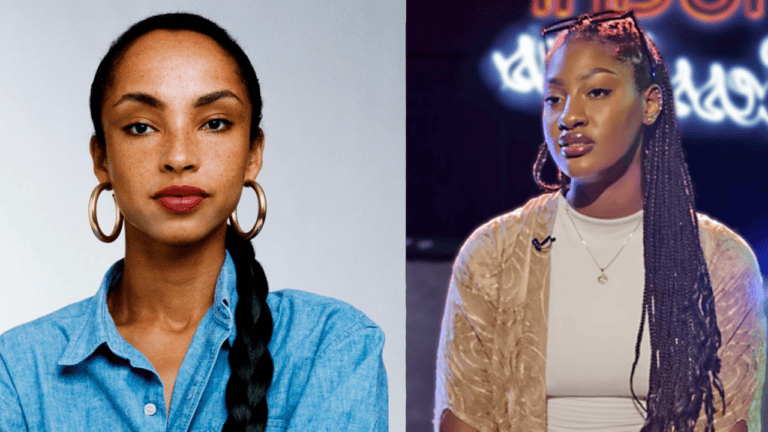
A claim has circulated online that Tems is the first Nigerian female singer to win the Grammy Awards.
The claim, as published by an online newspaper, has also gone viral on social media platforms including Twitter.
It will be recalled that the Nigerian artist, Temilade Openiyi, professionally known as Tems, recently bagged the highly coveted Grammy Awards simply known as the Grammys.
She rose to prominence after she teamed up with another top Nigerian artist Wizkid on his song ‘Essence’ in October 2020.
Tems won the ‘Best Melodic Rap Performance’ category on February 5, 2023, for her role in ‘Wait for U’, the 2022 hit song by Future which also featured Canadian rapper and singer, Drake.
Damini Ogulu, popularly known as Burna Boy, was among the nominees for the 65th annual Grammy awards where he received a nomination for the song ‘Last Last’ in the Best Global Music Performance category.
Also, Yemi Alade a female Nigerian singer was recognized as she featured in the “Mother Nature Album” by Angelique Kidjo, which won Grammys in 2022.
CLAIM
Tems is the first Nigerian female singer to win Grammy awards.
THE FINDINGS
Findings by The FactCheckHub show that the claim is FALSE.
Checks reveal that Helen Folashade Adu, simply known as Sade Adu or Sade is the first female singer of Nigerian origin to win the Grammys.
The four-time Grammy-award winner also had 8 nominations for the prestigious award.
She won the ‘Best New Act’ in 1985; ‘The best R&B Performance by a Duo or Group with vocal’ category in 1993; the ‘Best Pop Vocal Album’ category with “Lovers Rock” in 2001, and the ‘Best R&B Performance by a Duo or Group with Vocals’ category with the song “Soldier of Love” in 2010.
Born in Ibadan, Nigeria, to a Nigerian father, Adebisi Adu, and an English mother Anne Adu, on January 16, 1959, Sade is a singer and songwriter.
She had also won American Music Awards in 2002, Brit Awards in 1985, and Porin Awards in 2011.
THE VERDICT
The claim that Tems is the first Nigerian female singer to win Grammy awards is FALSE; Sade Adu won her first Grammys in 1985.
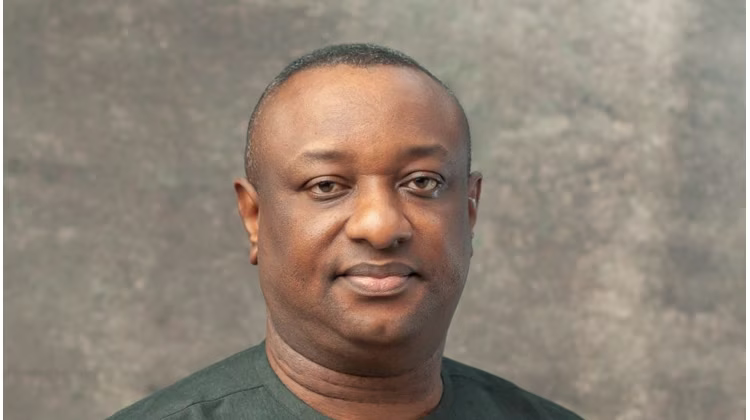
THE spokesperson of the All Progressives Congress (APC) Presidential Campaign Council, Festus Keyamo, has shared a photo that shows an aerial image of crowd that reportedly attended the campaign of Bola Ahmed Tinubu, the party’s flagbearer in Nigeria’s 2023 presidential election, in Sokoto state.
Keyamo, a lawyer and serving Federal Minister of State for Labour and Employment in the current APC-led Nigerian government, tweeted the image alongside three other photos taken at the event with a caption that read:
“More pictures from the mother of all rallies in Sokoto! The signs are all there for all to see! But they are playing! Make dem dey play!! In about a forth-night, the jungle will mature!!”
The tweet has garnered over 1 million views, more than 600 retweets and over 3,000 likes as of February 12, 2023.
Tinubu and his campaign team had on Thursday, February 9, 2023 held a rally in Sokoto state. The rally featured Nigeria’s President Muhammadu Buhari and other APC stalwarts.
CLAIM
Photo shows crowd at APC campaign rally in Sokoto.
THE FINDINGS
Findings by The FactCheckHub show that the claim is MISLEADING.
Screenshot of the tweet by Keyamo showing the misleading image.
The FactCheckHubfound out that a Nigerian news platform, PM News, also published the same image in its media report of the rally with a caption that read: Gargantuan crowd at APC’s presidential rally in Sokoto.
But a Google Reverse Image search of the photo shows that the aerial image was taken by Colin Hinkle, with the twitter username: @hinklecolin, an aerial photographer on July 31, 2021 at a 4-Day music festival in Chicago, United States popularly known as Lollapalooza.
In an interview with Business Insider Africa also published by Yahoo News on August 3, 2021, the photographer, Colin Hinkle said the image shows a large crowd who converged at the event in Chicago without wearing masks.
Hinkle said he is an aerial photographer who uses drones or helicopters to gather video or photos from aerial view.
THE VERDICT
The claim that the photo shows crowd at the APC rally in Sokoto is MISLEADING; the photo was taken at Chicago, USA in 2021.
EDITOR’S NOTE:
‘Misleading’ has been added to the headline to reflect our verdict.
NIGERIAN music artiste, Charles Chukwuemeka Oputa also known as Charly Boy, is fond of using manipulated videos and photos to promote the presidential bid of the Labour Party’s candidate, Peter Obi, a close monitoring of his social media accounts by the FactCheckHub has shown.
Checks by The FactCheckHub show that Charly Boy has over 197,000 followers on Twitter, more than 183,000 followers on Instagram and over 23,000 followers on TikTok.
He is one of the social media influencers popularly known for supporting the presidential candidacy of Peter Obi.
However, he has been caught several times sharing manipulated images and videos to deliberately misinform the public and has consistently failed to heed when his attention is drawn to such.
In November 2022, the celebrity shared a doctored video with a claim that it shows some American and Hollywood actors campaigning for Peter Obi.
The tweet read:
“Impressive. Peter Obi’s campaign has taken a global look with leading American TV and Hollywood actors driving the campaign.”
Screenshot of the tweet showing the doctored video.
When tweeps cautioned Charly Boy, another Twitter user, @NATIVITY backed him, saying that sharing manipulated videos and photos is part of the game.
“You all shouting it’s edited are really not ready for this politics. Other candidates forge birthday certificate, do drugs and post fake exercise video for proof of life, and all you do here is to say is fake, edited blah blah blah, who win politics with such hulalah?” he argued.
Meanwhile, findings by TheFactCheckHub show that the video has been online since 5 years ago.
An investigation by The FactCheckHub shows that the original version of the video was uploaded by WIRED on YouTube.
In the video, Mathew McCoughaney and Idris Elba were providing answers to what was described as “the web’s most searched questions” written on a placard.
However, the texts in the video were manipulated to read: “Yes, it makes sense to vote for Peter Obi in 2023” with a Nigerian map included.
Charly Boy: A serial merchant of disinformation
This is not the first time Charly Boy is using misleading videos and photos to misinform the public. Most times he uses this to put the Labour Party and Peter Obi in the limelight.
On October 28, 2022, he tweeted a photo showing the presidential candidate of the All Progressives Congress (APC), Bola Ahmed Tinubu, watching Peter Obi, on a television screen.
Screenshot of the tweet showing the doctored image.
Meanwhile, findings by The FactCheckHubshow that the original image shows Tinubu in an aeroplane staring at a TV screen on his way from the United Kingdom to Nigeria. However, there was nothing showing on the screen.
The FactCheckHub also reported how he shared a misleading video with a claim that it showed Peter Obi’s supporters in boats holding a campaign rally in riverine areas. When The FactCheckHub subjected the video to verification, it revealed that the claim was FALSE.
Similarly, The FactCheckHubreported how he made a false claim about the electronic transmission of election results by the Independent National Electoral Commission (INEC).
He was also found tweeting a fake quote social card, attributing the quotes to the former Emir of Kano, Sanusi Lamido Sanusi.
Celebrities, Information Disorder and Election: Why Nigerians should be worried
Celebrities and other influential figures in the society, including religious and community leaders have a wider reach when it comes to information sharing. This makes it more difficult to correct if they spread or post false information via their platforms.
Recently, the Centre for Democracy and Development (CDD) warned that the proliferation of electoral disinformation, misinformation and weaponisation of fake news, pose threat to the legitimacy of Nigeria’s 2023 general election.
The Centre noted that some people disseminate false information to discredit political opponents or to influence voters and the voting process.
It maintained that the spread and impact of disinformation is a global concern and a threat to the sustainability of democracy globally.
“Apparently, celebrities wield a huge lot influence when it comes to politics. That’s obvious with the Osun State elections and how Davido was super influential in his uncle’s victory. A lot of people are waiting for what the celebrities would say and even if it’s difficult to measure, you can easily guess that they do influence people’s decisions,” said Kunle Adebajo, a senior fact-checker and head of investigations at Humangle.
“This goes beyond because people are fond of them. It’s because they have a lot of followers, especially on social media. So, whatever they say goes a long way in shaping people’s opinions,” he added.
Adebajo urged entertainers and other social media influencers to be mindful of their posts and not create, share, or promote misinformation online.
“They need to be more responsible and understand the power that they wield and show accountability to people’s intelligence and the integrity of the electoral process by making sure that people are well informed and not disinformed.”
He further pointed out the need for social media platforms to limit the influence of influencers found wanting for sharing misinformation and stem the reach of their posts.
He posited: “The social media platforms also need to have more people looking into petitions about posts that may fall into the category of misinformation and also take more proactive actions in ensuring that such posts do not go viral or do not reach the timeline of thousands of millions of people thereby wreaking havoc before anything can be done.”
Adebajo further urged the association of musicians and other entertainers to incorporate social media use policy as part of their policy and gazette a sanction for members who breach it.
He added that electoral laws should demand transparency in political deals and should let people know if they are being sponsored for a certain post.
“Just the same way lobbyists in the US working for foreign organisations have to file details of the transactions, for example. So when you as a media organisation or an influencer with a number of followers receive money to do PR for a politician, there has to be full disclosure. People should be able to verify that you are getting paid for certain posts and know your likely motivations.”
“It might be difficult to implement, but I’m sure the regulators will find a way if they stay on the challenge,” he concluded.
On his part, Lanre Olagunju, the fact-check Editor at TheCable explained that celebrities are key stakeholders whom people look up to for genuine information citing this as a reason why they need to abstain from sharing false information.
“They are now the point of reference when it comes to information sharing and content management. It’s like those days when you ask people where they get information and they would say from NTA or Punch newspaper. That shows the credibility that people attach to such platforms.
“But these days when people see something on the handles of influencers, whether it’s true or not, they go for it and won’t even bother to check. Their pages are like pages of newspapers or Bible or religious books. Many people see things there they just take it like that, believing it has to be true. It’s quite unfortunate that some of them are now misleading people.”
He stressed that misinformation from influencers goes more viral due to their wide audience reach making it more difficult for fact-checkers to stop its virality.
“If an influencer shares misinformation with ten million people. Are you so sure that when you are fact-checking, your own fact-check would get 10 million views? That’s the challenge!” he pointed out.
He emphasized the need for fact-checkers to collaborate with social media influencers because information disorder has real-life consequences for the people that consume it.
He urged the citizens to always verify any information before sharing, regardless of their sources.
EDITOR’S NOTE:
The headline has been updated to include the word “candidacy”.
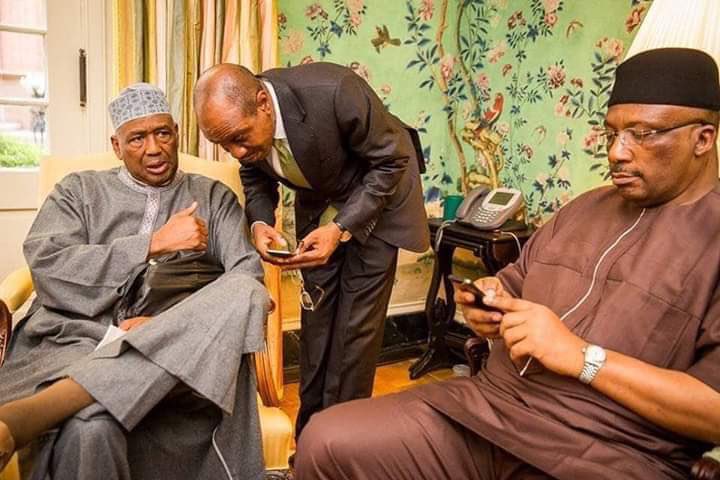
A popular columnist with The Nation newspaper, Sam Omatseye has tweeted a photo with a claim that it shows Nigeria’s President Muhammadu Buhari’s nephew, Mamman Daura, giving orders to the governor of Central Bank of Nigeria (CBN), Godwin Emefiele.
“Look at how the head of the said Cabal, Mamman Daura, is directing the Governor without a state, Emefiele, on what to do. These Aso rock folks are seriously working against BAT not to succeed Buhari. The same folks who have been using Buhari name in carrying out shady deal.”
CLAIM
Photo shows Mamman Daura giving orders to Emefiele.
THE FINDINGS
Checks by TheFactCheckHub show that the claim is FALSE.
A Google reverse image search shows that the image has been online since 2015.
A screenshot of Sam Omatseye’s tweet before it was deleted.
The photo shows Emefiele in a conversation with the late Funtua, a close associate of President Buhari and Second Republic minister, who was part of the president’s entourage during the visit.
Funtua was a Katsina-born newspaper publisher and industrialist who died in 2020. He was also a minister under the civilian administration of Shehu Shagari and a member of the 1994-1995 Constitutional Conference. He was also the Chairman of the popular construction company, Bulet International (Nigeria) Limited.
THE VERDICT
The claim by Sam Omatseye that the photo shows Mamman Daura giving orders to Godwin Emefiele is FALSE; the image shows Emefiele with the late Ismaila Funtua having a conversation.
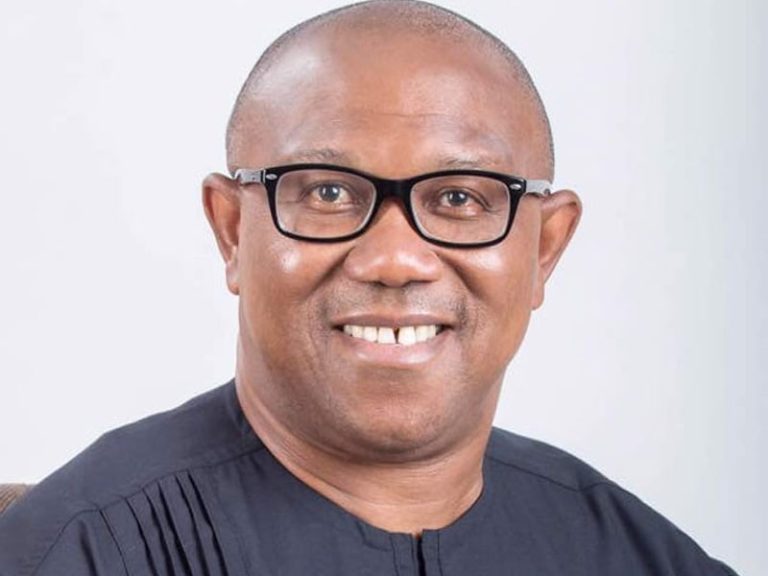
PETER Obi, Labour Party’s presidential candidate in Nigeria’s 2023 general election, has claimed that a Professor in the country receives N400,000 as monthly salary, adding that local government councillors earn more.
Obi made the claims at the University of Abuja students town hall meeting held on Thursday, 26th of January, 2023 in Abuja.
“…We have a country where professors are paid N400,000, where councillors earn more than professors…”
The claims have been circulating on various social media platforms since then.
CLAIM 1
Professors in Nigeria are paid N400,000 as monthly salary.
THE FINDINGS
Findings by The FactCheckHub show that the claim is MOSTLY TRUE.
A Professor in Nigeria, according to the Nigerian salary survey, earns between N4,580,349 to N6,020,163 per annum, Legit reported in 2018. When divided per month, the lowest monthly salary of a Nigerian university professor is between N382,000 and N502,000 before tax deductions including PAYE.
The circular stated that a professor in the country will receive between N4,580,349 to N6,020,163 per annum, depending on their grade levels and steps.
But an article on the structure of lecturers’ salaries published by Premium Times, stated that the salaries of Nigerian lecturers range from about N99,768 to N342,442 after tax deductions.
According to the report, the monthly gross for the lowest professor on CONUASS II Grade 07, Step 1 is N422,768 without tax deductions. After tax deductions, a professor on that Grade level get N342,442 as monthly salary.
The tax deductions is often 19 per cent of their gross monthly remuneration which consists of PAYE (7%), Pension (7.5%), National Housing Fund (2.5%) and Dues (2%).
The report noted that their salaries vary depending on their location which is one of the many factors that determine the amount; it also applies to both state and federal government institutions.
Similarly, a fact-check by Daily Trust also corroborated the above figures.
Breakdown of IPPIS Salary payments, published by Daily Trust.
Generally, the salary of Nigerian professors are mostly succinct with what institutions charge their students as school fees, especially for the private universities. Salary levels can vary considerably depending on a variety of factors.
THE VERDICT
The claim by Obi that a professor in Nigeria earns N400,000 as monthly salary is MOSTLY TRUE; findings revealed that some professors get much more than that while others get a little less.
CLAIM 2
Local government councillors earn more than professors in Nigeria.
THE FINDINGS
Findings by The FactCheckHub show that the claim is FALSE.
The data of the remuneration package for political, public and judicial officers issued by the Revenue mobilisation allocation & fiscal commission which was amended in 2007 show that Councillor of Local Government Council receives N3,094,200 per annum, including regular allowances. When break down into monthly value, each councillor receives N247,024:70 as monthly salary. This excludes duty tour, estacode, leave and security allowances as well as annual furniture allowance.
A fact-check published on December 2021 by Daily Trust show that the lowest professor on CONUASS II Grade 07, Step 1 receives N422,768 as monthly gross without tax deductions. After tax deductions, a professor on that Grade level get N342,442 as monthly salary.
Thus, a councillor earns less than a professor in Nigeria.
THE VERDICT
Therefore, Obi’s claim that Councillors earn more than professors in Nigeria is FALSE.
THREE gubernatorial candidates in Lagos state on Sunday, 29th of January, 2023 spoke about their plans at a debate organised by The Platform on issues ranging from insecurity, traffic gridlocks in the state, education, infrastructures and health.
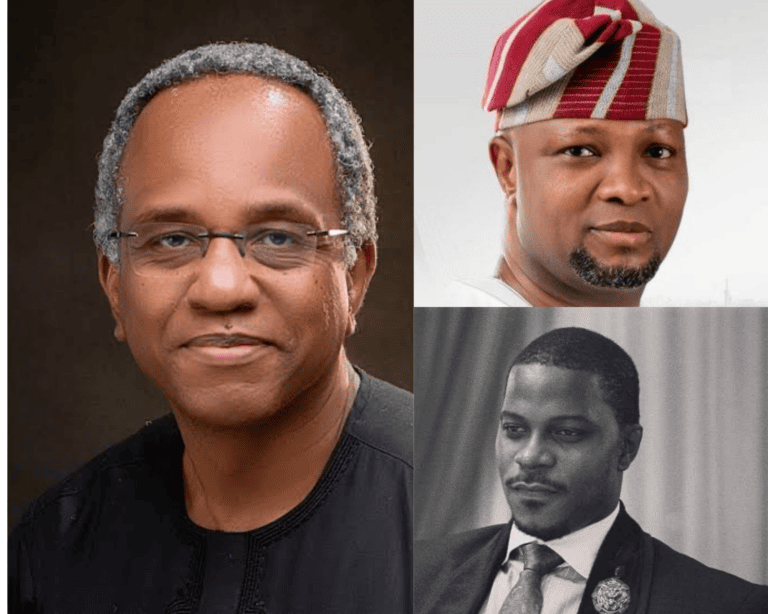
The gubernatorial candidates present were Gbadebo Rhodes-Vivour of the Labour Party (LP), Abdul-Azeez Adediran of the People’s Democratic Party (PDP) and Olufunso Doherty of the African Democratic Congress (ADC).
The debate which took place at the Marriot Hotel in Lagos was moderated by a broadcaster and communications strategist, Dr. Victor Oladokun.
The Nigerian Fact-Checkers Coalition (NFC) which includes The FactCheckHub alongside eleven others examines the veracity of some of the claims made by the candidates at the debate.
CLAIM 1
Gbadebo Rhodes-Vivour, the governorship candidate of the Labour Party in Lagos state, claimed that in 14 years, Lagos has only been able to construct 16 km of rail.
THE FINDINGS
According to several media reports, President Muhammadu Buhari visited Lagos state to commission 13 kilometres of the first phase of the Lagos Blue Rail Line on January, 24, 2023.
The Lagos light rail network was flagged off by the Bola Tinubu administration in 2003. The elevated train network stretches from Marina to Mile 2.
According to the state government, the rail line is expected to be 27km at its full development and would have the capacity to transport about 500,000 passengers daily.
THE VERDICT
The claim that Lagos constructed 16km of rail is INCORRECT as several media reports have shown.
CLAIM 2
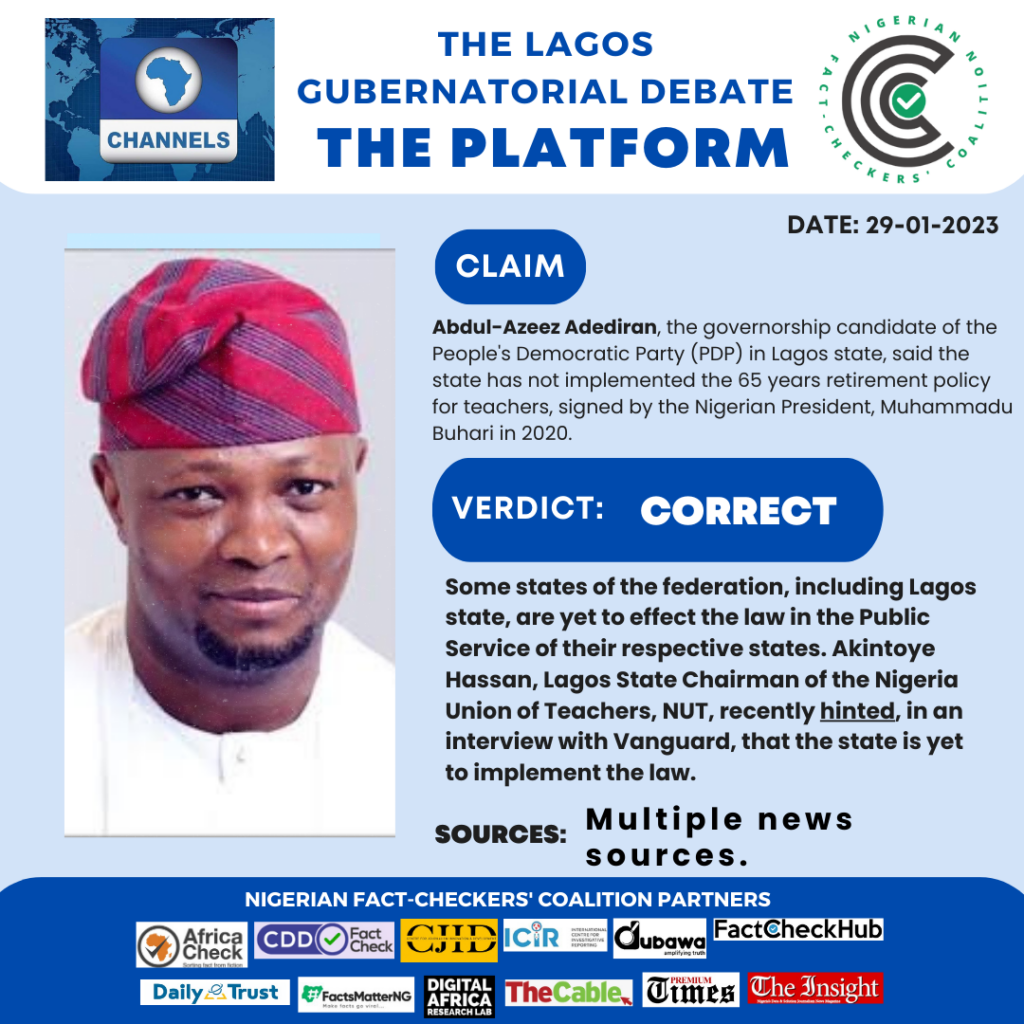
Abdul-Azeez Adediran, the governorship candidate of the People’s Democratic Party (PDP) in Lagos state, said the state has not implemented the 65 years retirement policy for teachers, signed by the Nigerian President, Muhammadu Buhari, in 2020.
THE FINDINGS
In January 2021, Nigeria’s Federal Executive Council (FEC) approved the bill to increase the retirement age and years of service for teachers to 65 years and 40 years respectively. The bill increased the retirement age of teachers from 60 to 65 years.
The legislation also extends the duration of service for teachers in the country from 35 to 40 years.
Some states of the federation, including Lagos state, are yet to effect the law in the Public Service of their respective states.
Akintoye Hassan, Lagos State Chairman of the Nigeria Union of Teachers, NUT, recently hinted, in an interview with Vanguard, that the state is yet to implement the law.
THE VERDICT
The claim that Lagos is yet to domesticate the 65 years retirement policy for teachers is CORRECT, according to the Nigeria Union of Teachers.
CLAIM 3
Abdul-Azeez Adediran, governorship candidate of the Peoples Democratic Party in Lagos state claimed that Lagos state has 5,000 private schools.
THE FINDINGS
According to a report by Premium Times in May 2021, Lagos state commissioner for education Folasade Adefisayo said a quarter of about 20,000 private schools in the state were approved by the state government in Lagos.
The commissioner said the registration of private schools in the state increased by 127 per cent, from 2019 to 2020. In 2019, 729 private schools were registered, while in 2020, 1,660 private schools were registered.
THE VERDICT
The claim that Lagos state has 5,000 private schools is most correct as confirmed in Premium Times report.
CLAIM 4
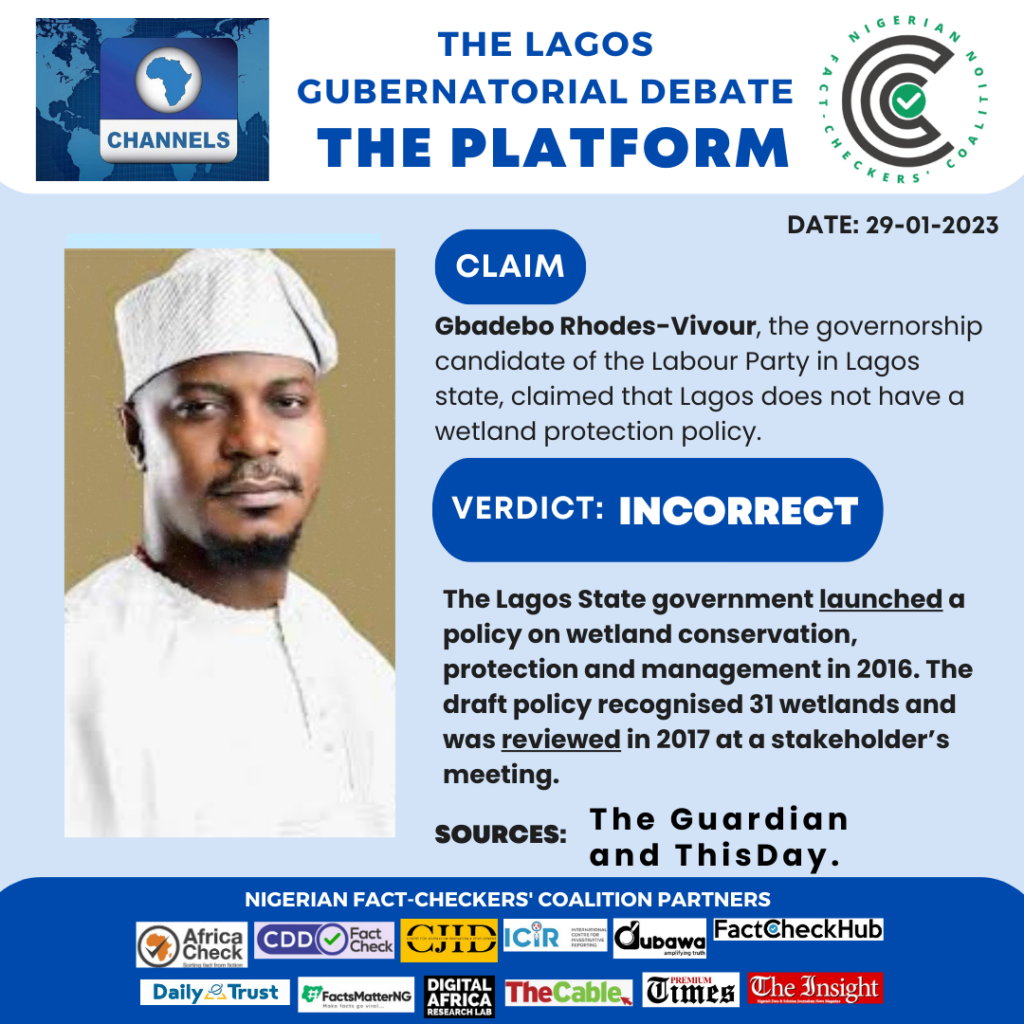
Gbadebo Rhodes-Vivour, the gubernatorial candidate of the Labour Party in Lagos state, claimed that Lagos does not have a wetland protection policy.
THE FINDINGS
The Lagos State government launched a policy on wetland conservation, protection and management in 2016. The draft policy recognised 31 wetlands and was reviewed in 2017 at a stakeholder’s meeting.
The claim that Lagos state does not have wetland policy is INCORRECT. Several media reports have shown that the policy exists in the state.
CLAIM 5
Gbadebo Rhodes-Vivour, the governorship candidate of the Labour Party in Lagos state, claimed that there are 14% of children enrolled in Public primary schools and over 25% enrolled in secondary schools.
THE FINDINGS
According to the 2018-2019 annual school census report provided by LASUBEB education data, the sum of the gross enrollment rate from 2016-2019 for public primary schools is 14%, 25% for junior secondary schools and 16.8% for senior secondary schools.
THE VERDICT
The claim that 14% of children enrolled in Public primary schools and over 25% enrolled in secondary schools in Lagos is CORRECT, according to Lagos State Universal Basic Education Board (LASUBEB).
*This live-check was researched and written by members of the Nigerian Fact-checkers’ Coalition (NFC) and edited by Kemi Busari (Dubawa Nigeria), David Ajikobi (Africa Check Nigeria), Ajibola Amzat and Opeyemi Kehinde (FactCheckHub).
FORMER Nigerian lawmaker, Senator Shehu Sani, on Thursday, January 26, 2023 tweeted an image of Yakubu Muhammad Fannami alongside some texts in honour of the late Borno student who died while preventing a suicide bomber from detonating a bomb in a Mosque.
According to the tweet, Sani said the student lost his life in 2017 when he grabbed and intercepted a suicide bomber.
“On this day in 2017,A Borno state Secondary school Student,Yakubu Muhammed Fannami grabbed and intercepted a suicide bomber. He lost his life and saved that of hundreds of others.He deserved a street named after him or a monument erected in his honour. May his soul rest in peace.”
The tweet has since garnered over 700,000 views, more than 5,700 retweets and over 24,000 likes as of Sunday, February 5, 2023.
CLAIM
On this day (January 26) in 2017, a Borno state Secondary school Student,Yakubu Muhammed Fannami grabbed and intercepted a suicide bomber.
THE FINDINGS
Findings by the FactCheckHub revealed that the claim is MISLEADING.
The former lawmaker’s tweet in remembrance of the late Fannami was posted on the micro-blogging platform on the 26th of January, 2023.
Screenshot of the tweet by Senator Shehu Sani.
However, a 2018 article published by Daily Trust described the late Fannami as an unsung hero who died on the 25th of January in 2017.
“I remember Yakubu Muhammad Fannami. He is one of our unsung heroes. He was a student of Darrusalam Science and Islamic Academy in Maiduguri, Borno State.
“On the 25th of January, 2017, the young boy died a hero when he prevented a suicide bomber from detonating a bomb in a Mosque. He wrestled with a messenger of the Boko Haram; he kissed death. He died in order that scores of other Nigerians could live,” Afi s A. Oladosu wrote in the article published on Friday, February 9, 2018.
Similarly, a report published by Herald.ng confirmed that the late student fought the female suicide bomber who was trying to enter a mosque where Muslim faithfuls were worshiping at Kalari, a town in Maiduguri, Borno state capital. It stated that the incident occurred on Wednesday, 25th of January, 2017.
THE VERDICT
The claim by Senator Shehu Sani that Yakubu Muhammad Fannami died on the 26th of January, 2017 is misleading; media reports indicated that he died a day before.
TIKTOK has announced the launch of the Nigeria Election Hub, an in-app election guide, with promises to uphold the integrity of the country’s general election, as Nigerians head to the poll on February 25, 2023.
The in-app guide is aimed at helping TikTok users keep up with important information such as the election candidates, election countdown, voting requirements and media literacy education etc.
It noted that the hub, which is part of the #SaferTogether initiative by TikTok, is aimed at making information accessible to users while also guarding against misinformation on the platform.
Commenting on the launch, Fortune Mgwili-Sibanda, the Director of Public Policy and Government Relations, TikTok Sub-Saharan Africa, said the collaboration would strengthen efforts to protect against harm and misuse on the platform.
“We are continuously engaging with diverse stakeholders in Nigeria to discuss opportunities to mitigate the misuse of online platforms such as TikTok in a fast paced digital world. Our resolve is to spread positivity in markets where we operate as we promote safety online.” he said.
As part of efforts to promote peace during the election period, the app has also launched a live series #TikTok4Peace in partnership with creators and National Orientation Agency which would feature key opinion leaders, civil society and academia, while focusing on tolerance, building bridges and active citizenship participation.
#TikTok4Peace LIVE streams will take place on the following dates :
6 February 2023 – featuring a member of the National Orientation Agency and Nollywood actor and skit-maker, Mr Macaroni
Topic: “How can stakeholders work together to drive safe and fair elections?”
8 February 2023 – featuring Africa Check and @__Iremide
Topic: “Platform curated comedy – how can content creators promote peace & harmony on the internet?”
To easily access the Elections Hub on the app, labels are being added to specific content related to the 2023 general elections. The labels would enable viewers to click through to the hub and get information about the elections.
Popular election hashtags such as #NigeriaDecides2023 would also be added to aid more visibility of relevant contents on the app.
Also commenting, Ayodele Aluko, INEC’s Director of Voter Education and Publicity said: “Part of INEC’s commitment in the Electoral process is to engage young people who constitute a larger part of the voting population.”
“This collaboration with TikTok to create an election Hub where Nigerians can access credible information will help mitigate some of the greatest threats to credible elections. We strongly believe that this initiative will assist to counter misinformation, disinformation and fake news.”
In addition, “the exponential growth of the use of online platforms has led to tremendous business opportunities for influencers, brands and organisations,” says Dr Garba Abari, the Director General of National Orientation Agency (NOA).
“However, this growth has also led to challenges like fake news, hate speech, misinformation and disinformation etc. If these challenges are left unchecked, it poses a threat to the credibility of the elections and our national security and development.
“It is, therefore, imperative that all safety measures are put in place to protect users at this crucial time in our Nation’s history,” he stated.
“By including our fact-checking reports on their platform, we are able to reach a wider audience and help ensure that Nigerian voters have access to accurate and reliable information during the election process,” David Ajikobi, Editor at Africa Check Nigeria noted.