Home Blog Page 104

Is Gbajabiamila the longest-serving House of Reps member in Nigeria?

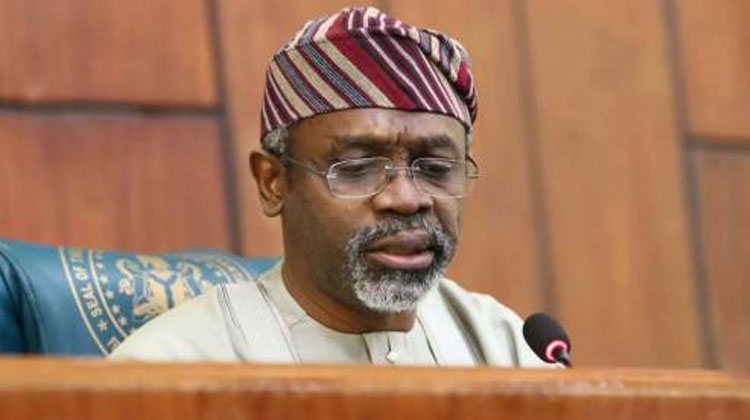
THE Speaker of the House of Representatives, Femi Gbajabiamila, has claimed that he is likely the longest-serving legislator of Nigeria’s lower legislative chamber.

Gbajabiamila made this claim amid the verbal altercation that ensued between him and his deputy, Idris Wase on Wednesday, May 24, 2023, during a plenary session.

READ : Claim that Tinubu appoints Gbajabiamila as Chief of Staff is FALSE (UPDATED)

“Mr Deputy Speaker, this is the first time in history. I have been in this house for many years, perhaps even longer than anybody here. This is the first time in history that a deputy speaker will be challenging what the speaker is saying,” Gbajabiamila said.

CLAIM

Gbajabiamila is perhaps the longest-serving legislator in the House of Representatives.


THE FINDINGS

Findings by The FactCheckHub show that the claim is MISLEADING.

Checks show that prior to Gbajabiamila’s election in 2003, Hon. Nicholas Mutu, representing Bomadi/Patani Federal Constituency in Delta State, has been a member of the House of Representatives since 1999.

Gbajabiamila, who is currently serving his fifth term, holds the position of Speaker in the House of Representatives in the 9th National Assembly and has been a member of the House representing Surulere 1 Federal Constituency in Lagos State since 2003.

READ ALSO : Fake list of Tinubu’s ministers, appointees circulates online

During the 7th National Assembly, Gbajabiamila served as the Minority Leader before becoming the Majority Leader in the 8th Assembly.


THE VERDICT 

The claim by Gbajabiamila that he’s perhaps the longest-serving legislator in the House of Representatives is MISLEADING; findings show that Nicholas Mutu is the longest-serving member of Nigeria’s lower legislative chamber.

Parody accounts surface on Twitter after Hilda Baci’s cook-a-thon for Guinness World Records feat

0

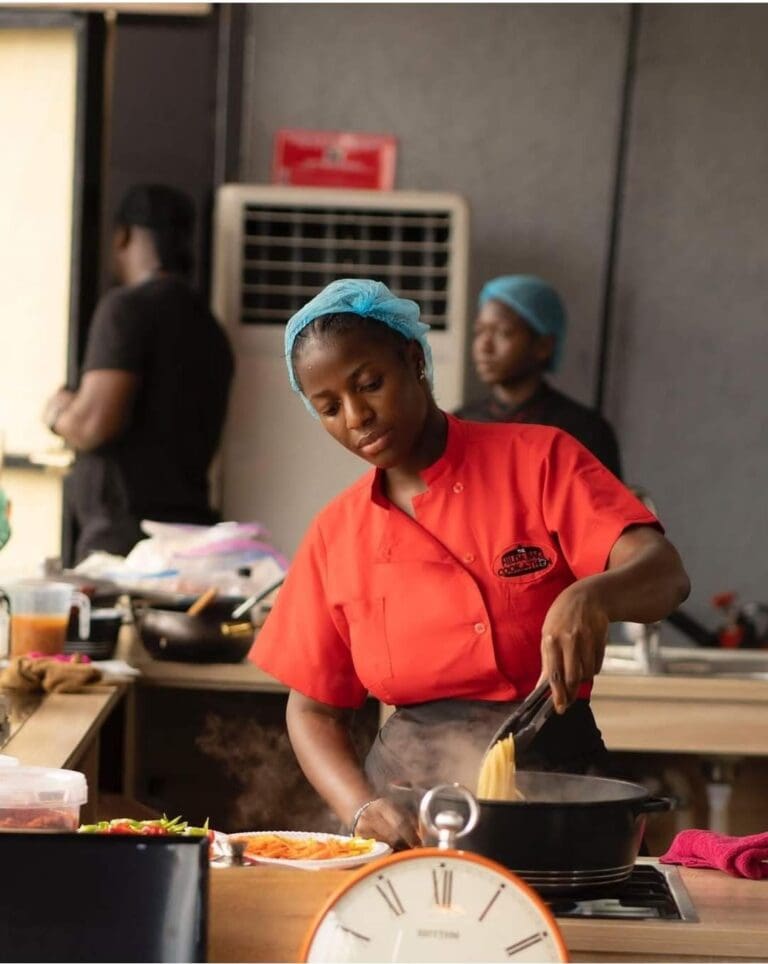
FOLLOWING the attempt by the Nigerian chef, Hilda Baci, to beat the last Guinness World Records (GWR) of cooking for the longest hours, several Twitter accounts posing as Hilda has surfaced online.

Hilda Effiong Bassey, popularly known as Hilda Baci, had cooked for 100 hours, 40 minutes, thus surpassing the time set by the former holder of the record, Indian chef, Lata Tondon.

While Nigerians await the official declaration of winner by the GWR, many parody accounts have sprung up in the name of Hilda Baci to mislead the public. Hilda Effiong Bassey popularly known as Hilda Baci,

Recently, The FactCheckHub published a fact-check which exposes a doctored image that shows Hilda Baci posing with her Guinness World Records certificate.

READ : Doctored image of Hilda Baci holding Guinness World Record certificate circulates online after cook-a-thon

These accounts continue to gain attention and traction making it difficult to distinguish a false account from the real one despite Twitter’s policies for parody accounts.


PARODY ACCOUNTS ON TWITTER

Parody accounts on Twitter are usually named after popular personalities and organizations mainly for humourous or satirical purposes.

Although Twitter rules permit the use of parody accounts, certain requirements must be met.

One of the things required, according to Twitter owner, Elon Musk, is that the account name should clearly indicate that the account is not affiliated with the subject portrayed in the profile.

Though the rules are well stated, some accounts continue to outrightly flout them with the intention to mislead or swindle people.

The FactCheckHub decided to take a look at some fake accounts that have been created following Hilda Baci’s ”cook-a-thon” feat.

A screenshot showing some social media accounts posing as Hilda Baci on Twitter.

Hilda Baci has been trending on social media since the event started and has gathered momentum as several tweets associated with her Cook-a-thon spread on the social platform, Twitter, with the hashtag #Hildabaccicookathon.

There are tens of accounts on Twitter posing as Hilda Baci. Some of the Twitter accounts can be seen here, here, and here.

One of the fake Twitter account with a doctored viral image of Hilda Baci.

While some have indicated it to be a parody or fan account, the ones highlighted above have blatantly ignored to show the status of their account hence aiding the quick spread of misinformation during the cook-a-thon and thereafter.

A report published earlier by The FactCheckHub revealed how parody accounts are increasingly becoming subtle and powerful as informed, accurate, and trusted information is being manipulated giving room to misinformation.

So, what’s Hilda Baci’s real social media accounts?

Following the increasing influx of social media accounts posing as Hilda Baci, the Nigerian chef has publicly displayed her social media handles.

According to her, her only official Twitter page is: @hildabacicooks. Hilda also tweeted a disclaimer regarding parody accounts posing as hers.

Screenshot of the disclaimer posted by Hilda Baci.

On May 25, Baci had to post another disclaimer on her Twitter page, as seen below:


As the world waits for the official confirmation of the records, Hilda Baci’s official social media handles include; ”hildabaci” on Instagram, ”hildabacicooks” on Twitter, and ”hildabacicookathon” on TikTok.


HOW TO IDENTIFY A TWITTER PARODY ACCOUNT

With more than 368 million monthly active users worldwide, the micro-blogging site remains one of the most popular social media platforms.

Out of the 31.60 million social media users in Nigeria as of January 2023, according to Data Reportal, the numbers published in Twitter’s advertising resources indicate that Twitter had 4.95 million users in Nigeria in early 2023.

READ ALSO : Parody, Stan accounts fuelling misinformation in Nigeria

To avoid falling for parody accounts fuelling misinformation on Twitter, here are some tips to help you identify Twitter parody accounts:

  1. Account bio: Looking at the display name, profile picture, and spelling of the name on the handle can help you to distinguish between a real and a parody account.
  2. Account tone: The tone of a piece of writing for most parody accounts appears unorganized with too many unrelated and funny contents.
  3. Follow ratio: Most parody accounts usually have fewer followers than the real account being imitated.

To curb the spread of misinformation, it is important to do your due diligence before believing information seen on Twitter accounts suspected to be a parody.

FactsMatterNG offers in-person workshop to combat misinformation

0

FactsMatterNG – a member of the Nigerian Fact-Checkers’ Coalition – is offering an in-person workshop to empower participants with tools and knowledge needed to build trust and combat misinformation.

The event will also enable participants to discuss the challenges and opportunities available in the information ecosystem.

Themed: ”Building Trust in an Age of Information Manipulation,” the workshop is scheduled to take place on Thursday, June 1, 2023, at the American Corner in Ikeja area of Lagos state.

A statement from the organisation on Thursday reads: “With the support of the United States Consulate General in Lagos, the workshop aims to address the growing concern about information manipulation and also equip attendees with the tools and knowledge needed to sail through modern information landscape.

“The event will also feature two workshops, a presentation, and a fireside chat designed to provide participants with actionable steps to combat misinformation and rebuild trust.”

According to Hannah Ajakaiye, a Knight fellow with the International Centre for Journalists (ICFJ), ”We live in an era where technology has amplified the ability to manipulate and spread misinformation, eroding trust and distorting our perception of reality.”

She added that the workshop will help participants have the opportunity to engage with industry-leading professionals and gain a deep understanding of the factors contributing to information manipulation, explore the impact it has on society, and learn how to critically evaluate sources of information.

The statement noted that registration is required to partake in the free workshop, adding that it is open to anyone interested in gaining a deeper understanding of the challenges posed by information manipulation and seeking solutions.

May 29: DSS warns citizens, media against fake news, false alarms

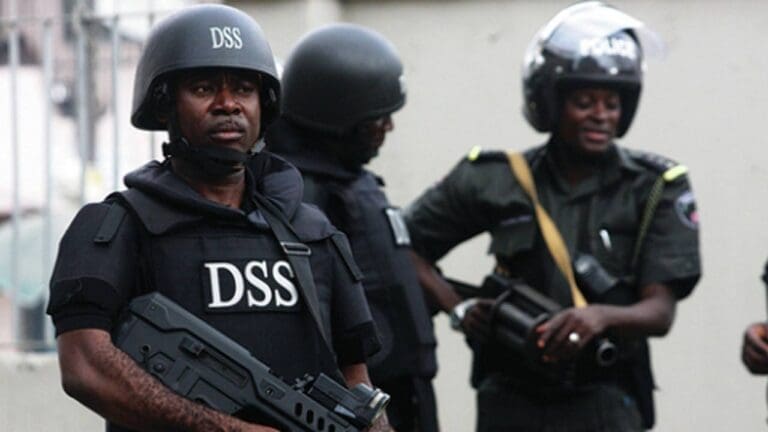
NIGERIA’s Department of State Services (DSS) has urged the citizens, media and Civil Society Organisations to shun fake news, false alarms, and sensationalism ahead of the May 29 transition.

According to a statement signed by the DSS spokesperson, Peter Afunanya, on Thursday, May 25, 2023, the call was to guard against reports that could inflame division, tension and violence prior to and after the democratic transition.

READ :  False claim circulates that minimum wage application portal is now open

Afunanya said the service was aware of plans by subversive elements to disrupt the programme in parts of the country.

“The aim is to undermine security agencies’ efforts at ensuring peaceful ceremonies and create panic and fear among members of the public,” Afunanya said.

READ ALSO : Why media houses should set up fact-checking desks to counter fake news

“Based on these, citizens, the media and Civil Society Organisations are advised to adhere strictly to security and civil protocols during the events.

“They are also urged to shun fake news, false alarms, skewed reportage/narratives and sensationalism that may likely inflame division, tension and violence prior to and after the exercises.”

He notes that the undesirable acts would serve no purpose other than destroying national unity and cohesion.

“Additionally, all unauthorised and non-accredited persons are warned to stay away from restricted and certain designated areas at the inauguration venues,” he said.

He called on the public to remain calm and law abiding, adding that the DSS would continue to sustain collaboration with sister agencies to ensure successful inauguration ceremonies nationwide.

Global experts unveil panel to address misinformation on climate change

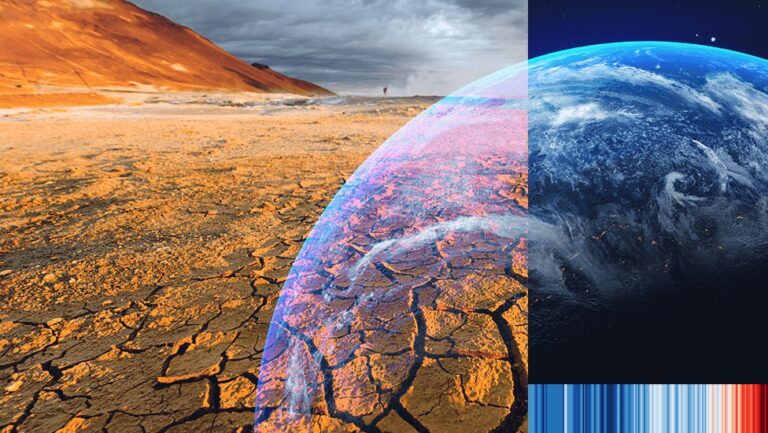
A group of experts have introduced an International Panel for the Information Environment (IPIE) to tackle misinformation and disinformation on climate change and environment.

Describing misinformation as an existential crisis, the group stated that the phenomenon is a fundamental and global problem that impedes solutions to other global challenges like climate change, rising authoritarianism, and pandemics.

READ : X ranks worst in climate change misinformation scorecard

“From spreading false information on climate change, nearly provoking military confrontations, fueling COVID-19 vaccine hesitancy, thereby causing thousands of needless deaths, and directly causing mob violence in France, Sri Lanka, Mexico, and around the globe, misinformation is poisoning our world,” it said.

According to the group, IPIE is modelled after the Intergovernmental Panel on Climate Change (IPCC), created in 1988 to determine the state of knowledge on climate change and provide regular scientific assessments on its implications and risks.

Similarly, IPIE would convene leading thinkers and scholars in the field: data scientists, misinformation experts, tech leaders, anthropologists, psychologists, sociologists, neuroscientists, journalists, and humanitarian activists,” it stated.

The group stated that the experts could review data and scientific literature to build an international consensus on the scope and impact of misinformation and begin analysing potential solutions. 

READ ALSO : YouTube profits from Ads on channels promoting climate misinformation – Report

It added that the IPIE could help establish the standards needed for a healthy information environment.

“Global disinformation experts around the world who have now officially formed the International Panel on the Information Environment, IPIE, both the founders, Sheldon Himelfarb and Dr. Phil Howard, as well as their global peers expressed interest speaking about the launch as well as the breakthrough findings the consortium will share with leaders around the world, when the Nobel Prize Summit commences in Washington D.C,” it said.

Fact-checked: A look at some of Buhari’s claims during his 8 years reign as Nigeria’s president

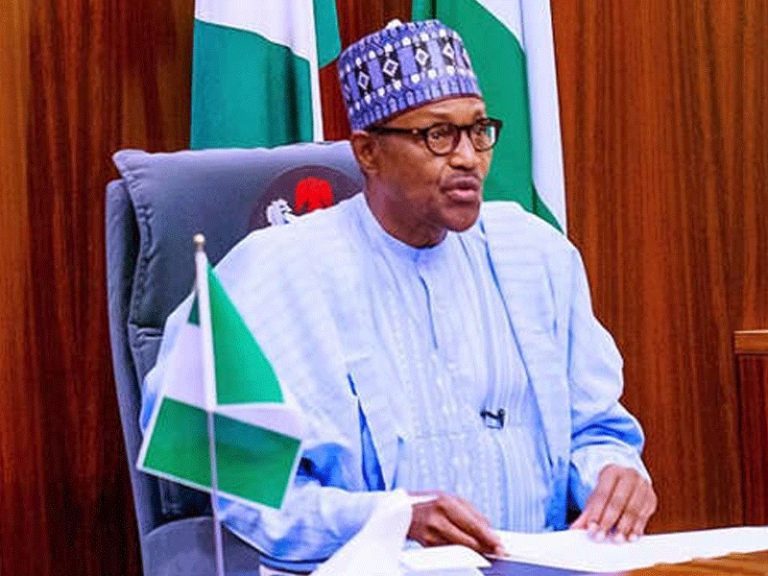
AS Muhammadu Buhari’s tenure ends on May 29, 2023, it is worth noting that during his eight years tenure as Nigeria’s president, he frequently made claims about his administration’s achievements and performance, particularly in areas like education, security, the economy, and other national issues. 

The FactCheckHub conducted fact-checks on these claims he made during his eight years in office and found some to be false and others true. In this analysis, we delve into some of the claims that we fact-checked.

READ : Did ex-Nigerian president Buhari admit that cabals hijacked his government? 

2018: Buhari’s repeated claim on oil price average

Buhari often claimed that the oil price average was $100 from 1999 to 2014. The president made the claims several times, including in his 2017 Independence speech.


READ ALSO:


However, contrary to Buhari’s claim, The FactCheckHub findings showed that the average price of crude oil per barrel from 1999 to 2015 was $61.7, and not $100, which he had repeatedly claimed since he became Nigerian president.

According to data from the Organization of Petroleum Exporting Countries (OPEC) as cited by Statista, the average yearly cost of crude oil exhibited fluctuations over the years.

In 1999, it stood at approximately $17.4 per barrel, followed by $27.6 in 2000, $23.1 in 2001, $24.3 in 2002, $28.1 in 2003, and $36.5 in 2004. Subsequently, the price increased to $50.5 per barrel in 2005, $61 in 2006, $69 in 2007, $94.1 in 2008, $60.8 in 2009, and $77.3 in 2010.

In 2011, there was a significant surge in the average annual oil price, reaching a record high of $107 per barrel. The price then decreased slightly to $109 per barrel in 2012, $105.8 in 2013, and $96.2 in 2014.

When considering the period from 1999 to 2014, the average oil price amounted to $61.7 per barrel. This figure is considerably lower than the average of $100 per barrel that Buhari claimed. Consequently, it can be concluded that his claim is FALSE.


2020: Buhari once claimed that all local councils captured by Boko Haram in Borno, Yobe, and Adamawa had been recovered

In his speech delivered on Friday, June 12, 2020, to commemorate National Democracy Day, Buhari claimed that “all the local governments that were taken over by the Boko Haram insurgents in Borno, Yobe, and Adamawa had long been recovered and are now occupied by indigenes of these areas.”

Our findings from 2020 indicated that  Buhari’s claim was FALSE, as the evidence available in the public domain invalidates it. Numerous media reports showed that certain regions in the three northeastern states in the country were still experiencing repeated Boko Haram attacks, causing many locals to flee to, and continue to live in Internally Displaced Persons (IDPs) camps hosted by their respective state governments.


2022: Buhari claimed that Nigeria is better than how he met it

Another interesting claim made by Buhari is that his administration is leaving Nigeria better than he met it.

Buhari, in his response to Bloomberg’s questions published on June 21, 2022, said that his administration would be leaving Nigeria “in a far better place” than he found it.

Buhari claimed that he had performed better than his predecessors, particularly in the areas of security, economy, and anti-corruption. However, our findings revealed that the claim is NOT TRUE. Nigeria has actually experienced more insecurity-related attacks and deaths under Buhari’s administration. The economy of the country has also worsened under his administration.


2022: Buhari claimed that primary elections conducted by political parties were peaceful 

In his nationwide broadcast on Sunday, June 12, 2022, in commemoration of the 2022 Democracy Day, Buhari said primary elections conducted by political parties in Nigeria for the 2023 general elections were peaceful and orderly.

But our findings showed that the President’s claim that primary elections of political parties at all levels were peaceful and orderly was MOSTLY FALSE.

Even though the primary elections were peacefully conducted in some parts of the country, our findings showed that the processes were marred by political thuggery, killings, stealing of ballots, and other forms of violence in many instances.


KEEP READING:

Findings from credible media reports showed that cases of violence were reported in no fewer than nine states, and at least five cases of fatality were recorded during the exercises, invalidating the president’s claim that they were peaceful.


2023: Claim on retrieved banknotes

On Thursday, February 16, 2023, Buhari addressed the nation on the redesigned naira notes amidst their scarcity. He claimed that since the commencement of this programme, about N2.1 trillion out of the bank notes previously held outside the banking system had been successfully retrieved.

Findings by The FactCheckHub as of February 19, 2023 show that the claim was FALSE.

The CBN Governor, Godwin Emefiele, said that as of October 2022, currency in circulation was ₦3.23 trillion out of which only ₦500 billion was within the banking industry and ₦2.7 trillion was held in people’s homes.

According to him, since the commencement of the naira redesign policy, ₦1.9 trillion had been collected, which translated to about 75 per cent of the ₦2.7 trillion held outside the banking system.

Typological analysis of fact-checking by the Nigerian Fact-checkers’ Coalition during Nigeria’s 2023 general election

0

Introduction

Nigeria’s 2023 general election have come and gone with sprinkles of victory, controversies, and, expectedly, the circulation of false information. The elections, which produced a new president, 28 governors, 109 senators and 358 members of the House of Representatives, were closely monitored by members of the Nigerian Fact-checkers’ Coalition (NFC). The coalition, comprising 12 fact-checking news and research organisations, produced and published fact-checks during the elections. Coalition members worked from the three situation rooms in Lagos, Abuja and UK.

Before the election, research carried out by DUBAWA, one of the coalition members, had shown a prevalence of misinformation and disinformation leading up to the elections. Such false information was found to be directly related to the candidates, political parties, regions etc., and they were propagated across different social media platforms. Indeed, these findings already pointed out what fact-checkers should expect during the elections. Therefore, this report examines the prevalence of mis/disinformation during the 2023 general elections. Such aspects of information disorders provide a basis for typological analysis of fact-checks published by the Nigerian Fact-checkers Coalition (NFC) during the Nigeria 2023  general elections.

The study was carried out on the Presidential and National Assembly (NASS) elections conducted on February 25, 2023, and Governorship and State Assembly elections conducted on March 18, 2023. The analysis identified major platforms used to spread false information during the elections, interactions on claims, and content types, among others.

READ : “We can’t do this alone”: Nigerian fact-checkers teamed up to debunk politicians’ false claims at this year’s election

Methodology

This report draws data from the total fact-checks published before, during and after the Presidential and National Assembly elections conducted on February 25, 2023, and the Governorship and State Assembly elections on March 18, 2023. The Coalition’s election day fact-checking begun a day before each election and ended five days after. Fact-checking was carried out on claims from several platforms and published on the websites and social media platforms of coalition members. However, some attempts ended up as drafts as they could not be published for various reasons ; these drafts were not included in the total number of fact-checks counted for in this report.

The report classified the pre and post-election times covering the days the coalition worked as the election period. Therefore, a total of:

  • 83 claims were fact-checked and published during the Presidential and National Assembly elections (a day before the elections, 24 February; on the day of the elections, 25 February and five days after, February 26, 27, 28; March 1, and 2.)
  • 44 claims were fact-checked during the Governorship and State Assembly elections (no claims were tracked a day before the elections, March 17. Claims tracked were from the election day, March 18 and three days after, March 19, 20, 21.)

Out of these data, patterns and insights were drawn for analysis.


About the Nigerian Fact-checkers’ Coalition (NFC)

The Nigerian Fact-Checkers’ Coalition (NFC) consists of three IFCN-certified fact-checking organisations, newsrooms, and research organisations, which agreed to work together to curb the spread of misinformation and disinformation during Nigeria’s 2023 general election. For the elections, 31 members of these organisations worked physically and virtually in the three situation rooms.

Members of the coalition include the Africa Check, FactCheckHub, DUBAWA, International Centre for Investigative Reporting (ICIR), Centre for Journalism Innovation and Development (CJID), Centre for Democracy and Development (CDD), FactsMatterNG, The Cable, Daily Trust, The Insight, Premium Times, and Digital Africa Research Lab.


Defining key terms

Misinformation: Information that is false but not created to cause harm.

Disinformation: Information that is false and deliberately created to harm a person, social group, organisation, or country.

Mis/disinformation: A juxtaposed abbreviated term for misinformation and disinformation.

Claim(s): Statements that can be verified or fact-checked.

Fact-check article/report: The published copy of verified information with a specified verdict.

The platform: This pertains to the channel or medium where a claim is made or shared.

Verdict: This describes the veracity of any claim. NFC’s verdict system can be found below:

Correct: According to the evidence publicly available, the claim is accurate and leaves out nothing significant.

Mostly correct: The claim contains elements of truth but is either not entirely accurate, according to the best evidence publicly available, or needs clarification.

Unproven: Evidence publicly available at this time neither proves nor disproves the statement. More research is needed.

Misleading: Elements of the claim are accurate but are presented misleadingly.

Exaggerated: The claim exaggerates the facts.

Understated: The claim understates the facts.

Incorrect: The claim is inaccurate according to the best evidence publicly available at the time.

Findings


Total number of claims fact-checked during Nigeria’s 2023 general election

In total, 127 claims were fact-checked during the Presidential and NASS elections and the Governorship and State Assembly elections. Over half the total number of fact-checked claims, 83, came from the Presidential and NASS elections while 44 were from the Governorship and State Assembly elections. This finding is unsurprising due to the attention the Presidential and NASS elections received and because it was the first election to be conducted.

Figure 1

Breakdown of Claims Fact-checked in the: Presidential and NASS elections

Eighty-three (83) claims were fact-checked before, during and after the Presidential and NASS elections. As expected, there were more fact-checks (22) on the actual election day (February 25) than any of the days’ claims were found. Although claims dwindled two days after the election day, the third day (February 28) saw an increase in the number of  claims fact-checked (20). This could be referenced to the delay in the announcement of results, which the Independent Electoral Commission (INEC) declared on March 1, four days after the presidential election.

Figure 2

Breakdown of Claims in the  Governorship and State Assembly elections

Unlike the Presidential and NASS elections, the NFC  did not publish any fact-check a day before the Governorship and State Assembly elections (March 17). However, on the actual election day (March 18), 22 claims were identified and verified. Subsequently, the influx of claims decreased in the following days, with only four claims fact-checked on the third day after the election. Overall, 46 claims were fact-checked during and after the elections.

Figure 3

Typology of claims by verdict: Governorship and State Assembly elections

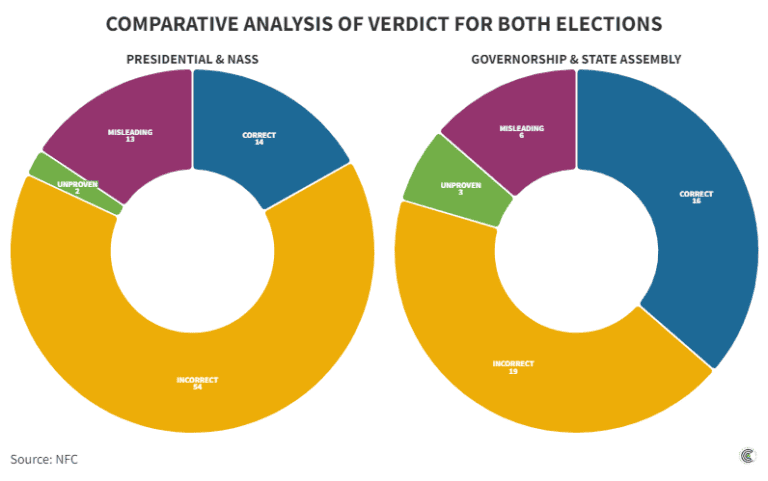
Out of the total number of claims fact-checked during the Governorship and State Assembly elections, 19 were incorrect.  The results of the findings are not unexpected, as fact-checkers are more inclined to investigate contentious claims that require validation. Nevertheless, the analysis yielded a meaningful outcome, with 16 claims authenticated as correct.

READ ALSO : 2023 Off-cycle elections: Claims fact-checked ahead of Nov. 11 governorship polls

In contrast, the Presidential and National Assembly elections saw a deluge of incorrect claims; 53 claims fact-checked were found to be incorrect, and only 13 claims were correct. This trend of prevalent misinformation and disinformation during elections is consistent with an earlier study conducted by DUBAWA, which found that most claims shared and fact-checked in the lead-up to the general elections were false (incorrect).  This result is not surprising as fact-checkers mostly pick up controversial and likely-false claims to fact-check.

Figure 4

Fact-checked claims categorised based on the content type

Across the board, the data shows that out of the 127 fact-checks carried out during both elections, more than half (69 claims) were videos, 41 were images, and only 17 were multimodal texts.

During the Presidential/NASS and Governorship/State Assembly elections, videos turned out to be the most popular content shared by claimants and fact-checked by the Coalition. This may be attributed to the ease of sharing, accessing, and manipulating such content and the likelihood of people to believe what they see/watch. Thus, of the 83 claims shared during the Presidential/NASS elections, more than half, 46, appeared in video format, while 23 videos out of 44  were shared during the Governorship/State Assembly elections.

Additionally, images were a primary content type shared during both elections, indicating that claimants understand the power of visual storytelling. In contrast, text was not a preferred content type, possibly because it requires literacy and concentration, which may attract little attention online.

Figure 5

The appearance of claims fact-checked by platform: Presidential and NASS elections

During the Presidential/NASS and National Assembly elections, most of the claims were sourced from Twitter. Fifty-two (52) of the 83 claims fact-checked during the elections were sourced from the platform. This is not surprising, given the platform’s active role in political discussions and its relatively open nature, which allows for greater user interaction and ease of monitoring for researchers. In contrast, only 16 claims were sourced from Facebook and WhatsApp, six. These findings highlight the significance of Twitter as a platform for political communication and the need for greater scrutiny of claims made on social media.

Figure 6

The appearance of claims fact-checked by platform: Governorship and State Assembly elections

The analysis conducted on the Governorship and State Assembly elections revealed that out of the 46 claims fact-checked, 37 were disseminated on Twitter. The remaining claims were shared on websites (three), WhatsApp (two), and Facebook (two). This contrasts with the Presidential elections, where claims were distributed across multiple platforms. Despite this, Twitter emerged as the primary platform for claim dissemination during the 2023 general elections in Nigeria, possibly due to previously mentioned factors (refer to Figure 5). These findings suggest a need for further investigation into the role of social media platforms in shaping public discourse during election cycles.

Figure 7


Within the scope of this study, Facebook and Twitter were identified as the primary platforms utilised to disseminate claims during both elections. Therefore, the extent of engagement elicited by each claim on these platforms was measured by aggregating the total number of interactions, including likes and comments.

Unsurprisingly, Twitter had the highest number of interactions among all the social media platforms analysed in this study. Most of the claims fact-checked were sourced from this platform (refer to figures 5 and 7). Specifically, Twitter garnered 17,243 interactions, while Facebook received 4,454 interactions across all claims during the Presidential and National Assembly elections. Meanwhile, during the Governorship and State Assembly elections, Twitter recorded 6,251 interactions, while Facebook had 3,332 interactions on claims shared. The decrease in interactions during the latter elections may be attributed to fewer claims fact-checked (44) compared to the Presidential and National Assembly elections (83), as shown in Figure 1.

Twitter’s user-friendly features that enable users to share opinions and engage in conversations with other users easily may have contributed to its high number of interactions during both elections.

Figure 8

Claims found on multiple platforms during both elections

The analysis reveals that a significant proportion of the 127 fact-checked claims during the two elections appeared on multiple platforms. Specifically, 15 claims were identified on both Facebook and Twitter, while six claims found on websites were also on both social media platforms.  , one claim shared via SMS was also featured on Facebook and Twitter.   and also demonstrates the rapid transition of claims across various social media platforms within the shortest time possible.

Figure 9

Discussion of Findings

This report is a typology analysis of the fact-checks carried out and published by the Nigerian Fact-checkers’ Coalition (NFC) throughout the election period in the 2023 general elections in Nigeria. The prevalence of mis/disinformation was the primary focus of this analysis. It was determined by analysing the total number of fact-checks conducted by the NFC during the 2023 Nigerian general elections.

The report found 127 fact-checks, 44 conducted during the Governorship and State Assembly elections and 83 during the Presidential and National Assembly elections. The findings from the analysis indicate that the majority of claims made during both elections were found to be incorrect. Specifically, out of the 83 fact-checks conducted during the Presidential/National Assembly elections, 52 were found to be incorrect while of the 44 fact-checks conducted during the Governorship/State Assembly elections, 19 were incorrect. These results suggest that certain actors

The analysis also reveals that more claims were fact-checked on the day of the actual elections than on any other day before or after the elections. Furthermore, the study indicates that Twitter and Facebook emerged as the primary platforms where most claims were sourced, and interactions occurred.  This is in line with DUBAWA’s earlier study, where most of the claims that were fact-checked ahead of the 2023 elections were found to have originated from Facebook and Twitter. However, this observation is not surprising due to the widespread use of Twitter and Facebook in Nigeria.

ALSO READ : Top 10 political claims we fact-checked in 2023

The analysis, additionally, finds that videos were the most frequently fact-checked type of content during the Presidential and National Assembly elections, with 46 out of 83 claims fact-checked being videos. Similarly, during the Governorship and State Assembly elections, 23 out of 44 claims fact-checked were also videos. Pictures were the second most common type of content shared during both elections, while text received less attention from the audience and was shared less frequently by claimants. These results suggest that videos are a particularly important type of content in the context of fact-checking during election campaigns.

Notably, there is a discernible shift/ movement in the dissemination of political claims across various platforms, particularly between Facebook and Twitter. This observation underscores the interdependence of these platforms concerning politically-related claims, as 15 claims were found to have appeared on both Facebook and Twitter.

All around, the findings of this analysis suggest that mis/disinformation was prevalent during the 2023 Nigerian election. The study’s findings also emphasise the importance of fact-checking and the need for increased awareness and education on the risks of mis/disinformation in electoral processes.


Recommendations

Based on the findings of this analysis, several recommendations can be made to improve the accuracy and integrity of information during future elections in Nigeria.

  1. Increase public awareness: The study’s findings highlight the need for increased public awareness and education on the risks of mis/disinformation in electoral processes. This can be achieved through targeted campaigns that verify information before sharing it on social media.
  2. Encourage responsible use of social media: Social media platforms such as Twitter and Facebook played a significant role in disseminating mis/disinformation during the 2023 Nigerian elections. It is recommended that these platforms encourage responsible use of their platforms, such as by implementing stricter policies on sharing false information.
  3. Enforce  on political disinformants: The study’s findings suggest that some actors misinformed and misled the public during the 2023 Nigerian election. It is recommended that regulatory bodies take a more proactive approach to enforcing laws prohibiting the spread of false information during election campaigns. For example, Facebook does not flag political claims ; even in its partnership with third-party fact-checking organisations, political claims are left out.
  4. Increase the number of fact-checkers: Given the high prevalence of mis/disinformation during the 2023 Nigerian elections, it is recommended that more fact-checkers be drafted to verify claims made by political actors, especially during elections. This will help ensure that more false claims are detected and corrected before they can spread widely. Although this was one of the pillars of the coalition, a more deliberate effort by the media house will ensure this.
  5. Prioritise fact-checking of videos: The analysis found that videos were the most frequently fact-checked type of content during the 2023 Nigerian election. It is recommended that fact-checkers master the skill and prioritise the verification of videos during future election campaigns, given their potential to spread widely and influence public opinion.
  6. Punishment for political disinformants: political disinformation poses a serious threat to democracy and should be punished accordingly. The government should take a strong stance against this behaviour and ensure that those who engage in it are held accountable for their actions. This will help protect the integrity of the election process and ensure that voters can make informed decisions based on accurate information.


References

  1. DUBAWA. (2021, March 31). A typology and distribution analysis of information disorder on the 2023 general elections in Nigeria. https://dubawa.org/a-typology-and-distribution-analysis-of-information-disorder-on-the-2023-general-elections-in-nigeria/
  2. Statista. (2021). Leading social media platforms in Nigeria as of January 2021. https://www.statista.com/statistics/1176101/leading-social-media-platforms-nigeria/


*This report was researched and written by Silas Jonathan (Dubawa); it was edited and approved for publication by Kemi Busari and Caroline Anipah (Dubawa) for the Nigerian Fact-Checkers’ Coalition (NFC).

Did Antony Blinken name Peter Obi, Wike, Keyamo, others in US visa ban announcement?

FOLLOWING the United States’ announcement of visa restrictions on Nigerians allegedly involved in undermining the democratic process during the just-concluded Nigeria’s 2023 general election, claims that names of some prominent Nigerians who made the list have surfaced online.

US Secretary of State, Antony Blinken, announced the visa restriction on May 15, 2023 via a tweet posted on his official Twitter page: @SecBlinken.

Following the announcement, multiple social media users in Nigeria have posted names of some prominent Nigerians online who are allegedly affected by the visa ban.

READ : Festus Keyamo shares misleading photo to depict APC campaign rally in Sokoto

A Twitter user, Prince Adeshina, with the username, @RealAdeshina shared the claim (now archived here) on Tuesday, May 16,  with a caption that read:

”Breaking: US Visa Restrictions, Peter Obi, Aisha Yiesufu, Fals others made the list.”

The tweet has since generated more than 230,000 views and has been liked by over 800 tweeps.

Similarly, another tweep @iamjohnreuben posted the claim using a different caption that reads:

”US has imposed Visa Restrictions on Nyesom Wike& other individuals who undermined the democratic process during Nigeria’s 2023 elections.”

A Facebook user, Victor Udoh has also posted the claim alongside a purported list of those restricted.

”You people think we are joking this time.  Mr Yakubu, Wike, Bayo Onanuga, MC Oluomo amd Festus Keyamo made the US visa ban list. America no dey disappoint, very extensive.”


CLAIM

Peter Obi, Prof. Mahmood Yakubu, Nyesom Wike, Festus Keyamo, Aisha Yesufu and others are among Nigerians on the US visa ban list.

Screenshot of one of the social media posts showing names of some Nigerians on the alleged US visa ban list.

THE FINDINGS

Findings by The FactCheckHub show that the claim is UNPROVEN.

Blinken’s statement announcing the visa restriction reads: “We have imposed visa restrictions on specific individuals who undermined the democratic process during Nigeria’s 2023 elections. We remain committed to supporting Nigerian aspirations to strengthen democracy and rule of law.”

Checks by The FactCheckHub revealed that at no time did the US Secretary of State, Antony Blinken, stated names of Nigerians included in the visa restriction.

The FactCheckHub reached out to the US embassy in Abuja via email for verification.

In response to The FactCheckHub’s inquiry, a Senior Public Affairs Specialist at the US embassy, Aisha Gambari said, “Under U.S law, individual visa records are confidential. We can not provide details on who is affected.”

READ ALSO : Keyamo DID NOT comment on Buhari’s memory loss

Similarly, in a  press statement released on the official website of the United States Government, on Monday, May 15, the US announced that steps have been taken to impose visa restrictions on specific individuals in Nigeria for undermining the democratic process during Nigeria’s 2023 elections cycle.

However, a list of names of those affected by the visa restriction was not stated on the website.

Nigeria’s 2023 general election has been widely criticized and reactions are still trailing the outcome of the election which was marred by violence and irregularities, The ICIR reported.

The US Government had, earlier in January 2023, announced that those who attempt to undermine the electoral process risk visa ban.

It will be recalled that the United States had in 2019 imposed visa restrictions on Nigerians deemed to have played nefarious roles in undermining the integrity of Nigeria’s 2019 general elections. However, the identities of those affected were not disclosed.

Further checks show that Section 222 (f) of the US Immigration and Nationality Act provides that the records of the Department of States and of diplomatic and consular offices of the United States pertaining to the issuance and refusal of visas or permits to enter the United States shall be considered confidential and such records may be made available to a court if the information is needed.


THE VERDICT

The claim that Peter Obi, Prof. Mahmood Yakubu, Nyesom Wike, Festus Keyamo, Aisha Yesufu and others are among Nigerians on the US visa ban list is UNPROVEN; findings show that the United States traditionally does not disclose names of people placed on visa restriction as the US immigration law shields them from the disclosure of their visa-related information.

False tweet circulates that Ugandan president, Museveni is dead

0

A Twitter user @joseypro tweeted a claim that the Ugandan president is dead.

The claim reads:

Breaking news!!! The president of Uganda is dead !!!

As of Sunday, May 21, 2023, the claim had garnered over a million views, more than 900 retweets and over 10,000 likes.

READ : Photo does NOT show Ugandan Police spokesman shooting catapult at journalist

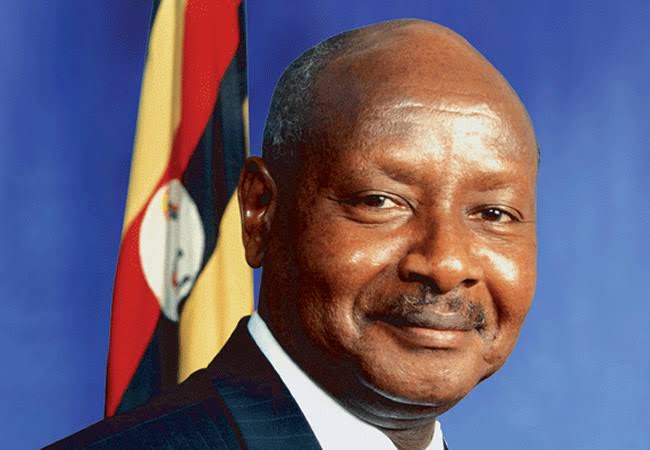
Yoweri Museveni is the current President of Uganda.

CLAIM

The President of Uganda, Yoweri Museveni, is dead.

Screenshot of the viral tweet announcing the death of the Ugandan president.

THE FINDINGS

Findings by The FactCheckHub revealed that the claim is FALSE.

Using the keywords ‘President of Uganda’, a Google search result shows that the President is still alive as he was present at  the funeral service of the Ugandan labour minister, Charles Okello Engola, same day the claim was posted online.

Yoweri Museveni is the current President of Uganda and has been in power since January 1986.

READ ALSO : Is China taking over Uganda’s airport?

No credible local or international media platform also reported the news of the death of the Ugandan president, as of Sunday, May 21, 2023.

Further checks show that this is not the first time the claim would circulate online. Credible fact-checking organisation like Pesa Check had in 2022 debunked a similar claim.


THE VERDICT

The claim that the Ugandan president, Yoweri Museveni, is dead is FALSE; findings show that Museveni is still in power.

Charly Boy shares fake chart about Nigeria’s 2023 presidential election result

ON May 17, 2023, a Nigerian music artiste, Charles Chukwuemeka Oputa, shared a chart with a claim that it shows the percentages of votes garnered by candidates of major political parties in the just concluded Nigeria’s 2023 presidential election.

According to him, the chart shows the actual percentage of votes garnered by candidates of the All Progressives Congress (APC), Peoples Democracy Party (PDP), New Nigeria Peoples Party (NNPP) and Labour Party (LP) across Nigerian states.

READ :How Charly Boy spreads disinformation to promote Peter Obi’s candidacy

“INEC how can you declare someone a winner and unable to present ur result to the court. Wetin una dey hide sef. See, Nigeria has moved from where it use to be before. Youths have finally awoken, if dem born Una well, no come court on Friday without the documents. Our Mumu Dondo.”

The tweet has garnered over 500,000 views, over 3,800 retweets and more than 7,800 likes as of May 20, 2023.


CLAIM

Chart shows the results of Nigeria’s 2023 presidential election.

Screenshot of the viral tweet posted by Charly Boy.

THE FINDINGS

Findings by The FactCheckHub show that the claim is FALSE.

A look at the analysis of the election results published by credible media platforms such as Foundation for Investigative Journalism and Civic Hive revealed that the data contained in the chart are inaccurate.

For instance, in the chart, Labour Party scored 79%, 35% and 58% in Abia, Adamawa and Akwa Ibom respectively contrary to 88%, 14% and 23% recorded in the analysis of the official result published by the civic tech organisation, Civic Hive.

READ ALSO : Charly Boy shares misleading photo of Tinubu watching Peter Obi on TV

Similarly, according to the chart, Labour Party won in 19 states, APC won in 8 states, NNPP won in 2 states and PDP won in 7 states. This also contradicts INEC’s “official record which shows that each LP, APC and PDP won in 12 states while NNPP won only in Kano,” Premium Times reported.

The FactCheckHub had earlier reported how Charly Boy repeatedly used manipulated videos and images to promote the presidential bid of the Labour Party’s candidate, Peter Obi, in the lead-up to Nigeria’s 2023 general election.


THE VERDICT

The claim that the chart shows the results of Nigeria’s 2023 presidential election is FALSE; official record from INEC shows that the data in the chart are inaccurate.