Please note that the FactCheckHub has not obtained any right from the authors or copyright owners of all third-party contents from embedded links and shall incur no liability in this regard.
Please note that the FactCheckHub has not obtained any right from the authors or copyright owners of all third-party contents from embedded links and shall incur no liability in this regard.
Please note that the FactCheckHub has not obtained any right from the authors or copyright owners of all third-party contents from embedded links and shall incur no liability in this regard.
Please note that the FactCheckHub has not obtained any right from the authors or copyright owners of all third-party contents from embedded links and shall incur no liability in this regard.
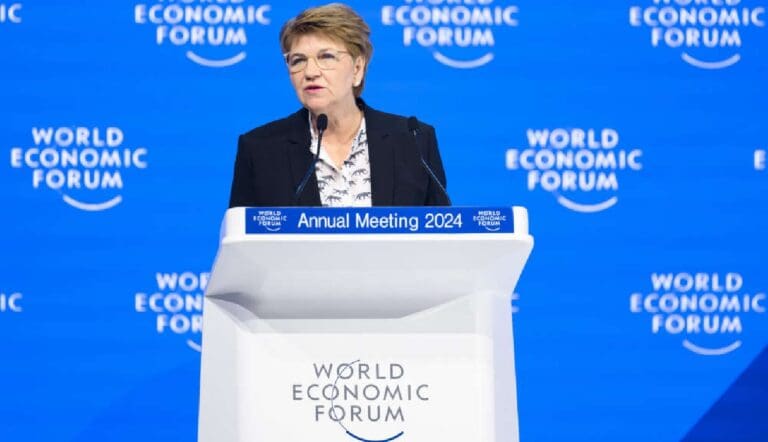
THE president of Switzerland, Viola Amherd, has expressed fears about the growing dangers of disinformation following the growth of artificial intelligence (AI).
She disclosed this on January 16, 2024 while giving her opening address at the World Economic Forum’s (WEF) Annual Meeting in Davos.
Amherd warned against creating policies based on falsehoods and stressed the necessity for global governance to solve the issues raised by artificial intelligence.
The Swiss President, whilst admitting the potential for more transparency and knowledge-sharing, said that digitization nevertheless has a negative aspect: “AI can give the appearance of credibility to misinformation and disinformation.”
She emphasized the need to restore confidence and the need for measures based on confirmed facts and scientific results.
Amherd advocated for clear and transparent communication within the multilateral system as well as between nations. In order to properly function as platforms for discourse, she called for the strengthening of the United Nations (UN) and other international and regional organizations.
“Agreements and compromises must then also be implemented, tangible implementation is important for credibility and to engender trust. This includes a renewed respect for the UN Charter, other international treaties and other globally agreed measures, some sections of the public distrust all of us gathered here, and all political and business leaders in general,” she stated.
Recognizing that rising socio-economic inequality fuels populism even in wealthy nations, the Swiss president also emphasized the importance of corporate leaders to fostering trust among the populace.
“Rebuilding trust is not just a task for states and politicians. Business leaders also have a role to play here,” Amherd said.
THE Kwara State government has revealed plans to introduce additional measures aimed at combating the spread of fake news and baseless rumours among its residents.
The state’s Commissioner for Communications, Bolanle Olukoju, disclosed this at an interactive session with press secretaries across Ministries, Departments and Agencies (MDAs) at the ministry’s headquarters in Ilorin, the state capital.
This is coming a few days after The FactCheckHubdebunked a false information shared by a resident in the state regarding a flyover project in the state.
Olukoju stressed the need to nip the menace of fake news in the bud, noting that failure to do so could have a devastating impact on societal values and progress.
“So far, the state government has taken various measures to curb fake news, part of which suspected carriers were apprehended by law enforcement agents,” she said.
She noted that press secretaries have been directed to promptly report activities of all agencies of government and provide their phone contacts for public clarification, resulting in positive feedback.
“Furthermore, they are to attach their phone contacts to their press releases, for further clarifications from members of the public. I must be quick to add that feedback from this measure has been tremendous,” she explained.
According to her, the government is compiling the official social media handles of all MDAs and plans to share them with the public to ensure that the public consumes information from verified sources.
ELECTIONS Canada has launched ‘ElectoFacts‘, a new resource aimed at helping voters spot misinformation and disinformation about the electoral process in Canada.
Elections Canada is responsible for running federal elections, by-elections and referenda. Its mission is to make sure that Canadians can exercise their democratic rights to vote and to be a candidate.
It is an independent, non-partisan agency created by the Canadian Parliament in 1920 to ensure fairness in federal elections.
According to a blog post published on the ElectoFacts website, the online resource is designed to debunk common misconceptions and provide factual information about the electoral process in Canada.
It is a step taken by the Canadian authorities to maintain the integrity of the country’s democratic system amidst the growing concern about disinformation.
“ElectoFacts is a resource that Canadian electors can use to easily check whether information they come across about Canada’s federal electoral process is true or not. ElectoFacts also offers information on how federal elections are run and the safeguards in place to protect them,” the post reads.
The agency said that it does not intend to establish Elections Canada as “the arbiter of truth” that will actively monitor the accuracy of statements and information distributed by parties and candidates.
The agency said it will instead focus on providing correct information about elections that Canadians can easily access.
Users of ElectoFacts can scroll through eight categories where disinformation may likely occur which include special ballots, way to vote, counting process, voting technology, foreign interference in elections, the administration of elections, the administration of Elections Canada and campaign finance.
Each category displays the “inaccurate information observed” with an accompanying and detailed explanation of what is accurate.
According to CBC News, the Director of the Canadian Election Misinformation Project, Aengus Bridgman said the 2016 election in the United States, which saw an aggressive and unprecedented Russian disinformation campaign, raised alarm bells in the West over the threat to democracy.
“If our election results are later shown to have been the result of a disinformation campaign that was decisive in an election, it would cause an enormous diplomatic and constitutional crisis,” he said.
Bridgman said it is important to get the right information out there, proactively, where people can access it before the election disinformation begins to spread, because once false information has spread and gained traction, it is much harder to counter.
He added that Canadians can also help to fight disinformation in their everyday lives by resisting the temptation to cut family, friends and neighbours off and push them out of their lives if they start espousing views based on disinformation.
“Keeping lines of conversation open is incredibly important,” he said, adding that “One of the things that can happen is that people can join [disinformation] communities and drive their real physical committees away, and then they become isolated and … that becomes very dangerous.”
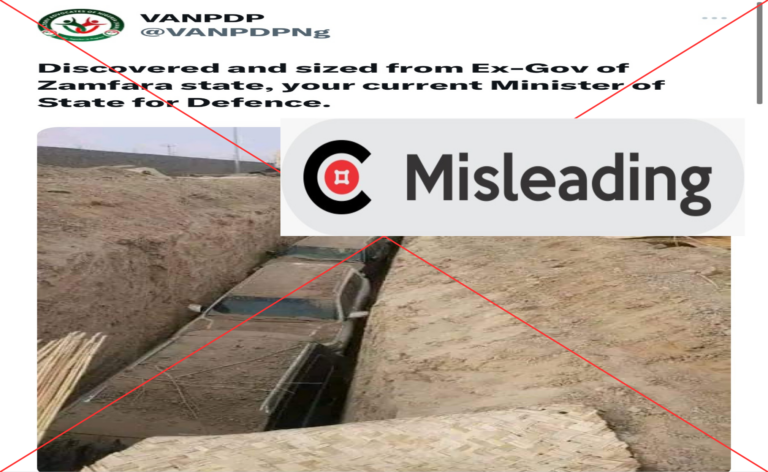
A photo showing some vehicles buried underground has surfaced online with a claim that they were seized from Bello Matawalle, a former Governor of Zamfara state.
An X user, @four_unit, posted the photo on January 5, 2024 with a caption thus:
“Breaking news: 5/1/24. Discovered & sized from Fulani Ex-Gov of Zamfara state, Tinubu’s current Minister of State for Defence. this criminal hides money in $£€ inside vehicles buried underground.”
The post has garnered about 200 reposts and more than 90 likes as of January 13, 2024.
The FactCheckHub observed that another X user, @VANPDPNg had posted the same image earlier on December 14, 2023, with a similar caption that read:
“Discovered and sized from Ex-Gov of Zamfara state, your current Minister of State for Defence.”
The post has garnered over 170,000 views, more than 400 reposts, over 500 likes and about 400 comments as of January 13, 2024.
Also, the photo has been circulating widely in multiple WhatsApp groups, our researcher observed.
Photo shows vehicles seized from former governor of Zamfara state, Bello Matawalle.
Screenshot of the viral post on X. INSERT: Misleading verdict.
THE FINDINGS
Findings by The FactCheckHub show that the claim is MISLEADING.
When the image was subjected to Google Reverse Image search, the results show that the photo was shared by a Reddit user in November 2023 with a claim that the vehicles were hidden by former corrupt Afghan politicians.
The photo appeared on the platform some weeks before it started going viral on social media in Nigeria.
The image is also one of the images shared by an X user, @Aboodysay on the same date with a caption that read:
“Look at what forces of IEA discover in Balkh Province. Brand new LCs hidden underground.”
Balkh is a village in the northern part of Afghanistan.
The FactCheckHub cannot independently confirm whether vehicles or cash were seized from Matawalle, but findings show the image is unconnected to happenings in Nigeria.
The Punch reported on January 12, 2024 that the Chairman of the Economic and Financial Crimes Commission (EFCC), Ola Olukoyede, has vowed to revisit the probe of the Minister of State for Defence, Bello Mattawalle, over alleged N70 billion money laundering while he was the Zamfara State governor. However, there was no media mention of vehicles or cash seized from him.
THE VERDICT
The claim that the photo shows vehicles seized from Bello Matawalle is MISLEADING; findings revealed that the image is unrelated to any incident in Nigeria.
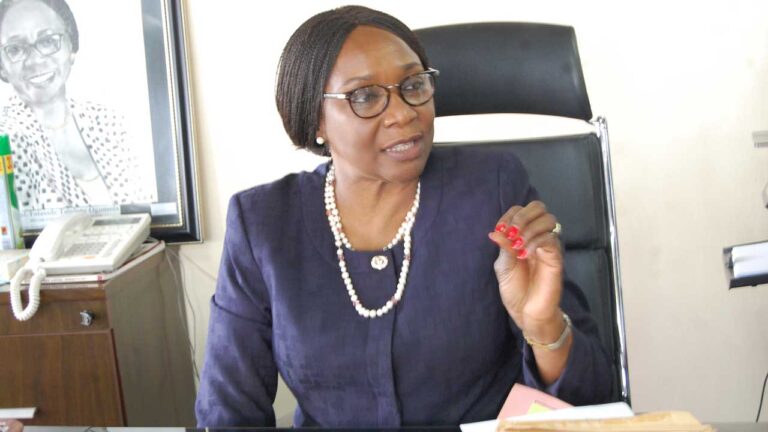
At least five Facebook accounts claim to belong to the vice-chancellor of the University of Lagos, Folasade Ogunsola, who is also a professor of medical microbiology.
This may explain why Ogunsola has been targeted by fraudsters.
After receiving reports of unusual activity from Facebook accounts in her name, Ogunsola asked Africa Check to investigate. (Disclosure: Africa Check is hosted by the University of Lagos.)
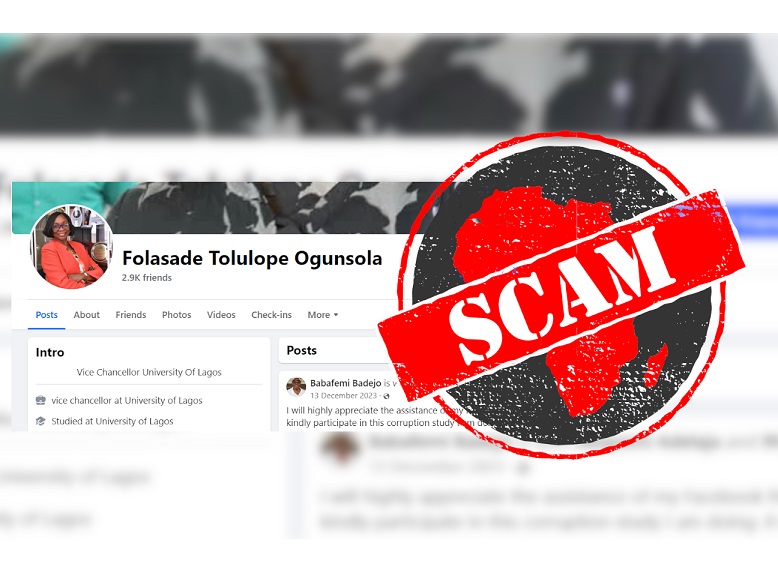
One of the fake accounts has more than 2,900 friends. The account’s URL shows that it was first registered as Onyenanchi Nweke. A URL, or uniform resource locator, is the address used to access a specific resource on the internet, such as a web page.
Both accounts have more friends than the real but unverified account of the vice chancellor, where she has 829 friends. The suspicious accounts have also not posted any significant updates about Ogunsola, apart from a few of her publicly available photos.
‘Imposters appear to be unrelenting’
We found two other accounts impersonating the vice-chancellor, here and here.
One of the multiple malicious Facebook accounts impersonating Ms. Ogunsola.
The fake accounts have Ogunsola’s name and title as vice-chancellor of the University of Lagos spelt out in full. But her real account, she told Africa Check, is called Sade Ogunsola and simply identifies her as a professor at the university.
Her authentic account shows that she joined Facebook in October 2010. None of the fake accounts posted before 2019.
Ogunsola told Africa Check that she was aware of the fake accounts and that they might have been used to defraud people, but she had been unable to have them taken down.
“Those accounts are not mine, they are all fake, except for the one that I have identified to you. When I noticed that my account was being impersonated, I put out disclaimers on the Unilag website and social media platforms in January 2023 to alert the unsuspecting public to the existence of these fake accounts.
“But the impersonators appear to be unrelenting as new fake accounts spring up every so often. In fact, a new one was created a few days ago,” she said.
Fake accounts being used to scam
We found evidence that at least one of the fake accounts is being used to try to scam people.
Ngozi Okafor, an associate professor in the department of science education at the University of Lagos, said she accepted a friend request from a Facebook account she believed was Ogunsola’s.
But she became uncomfortable when the account offered her 10 slots for jobs at the university in exchange for N3 million (about US$3,100 at current exchange rates).
Okafor said she challenged the impersonator, saying: “The VC has a lot of integrity and cannot belittle herself by asking for N300,000 to give a job slot to an applicant. The statements you are making cannot be hers. Please stop this communication or you will bear the legal consequences.”
And in January 2024, a representative of a university in the UK sent an email, which Africa Check has seen, to Ogunsola to follow up on an alleged conversation about collaboration between the two institutions.
The vice-chancellor has said she had not initiated a conversation with the British university.
We have uncovered several Facebook scams, including instances where well-known organisations and individuals are impersonated, like this one.
To avoid falling for such scams, read our guide to spot and avoid them.
* This report was written by Denzel Amobi and first published by Africa Check., a non-partisan fact-checking organisation. View the original piece on their website.
A claim circulating widely in WhatsApp groups says the Oyo State government is currently recruiting medical personnel and has asked each prospective applicant to obtain the application form for N2,500.
The WhatsApp post added that the form can be obtained from Room 4 at the Oyo State Hospital Management Board, situated within the State Secretariat at Agodi in Ibadan, the state capital.
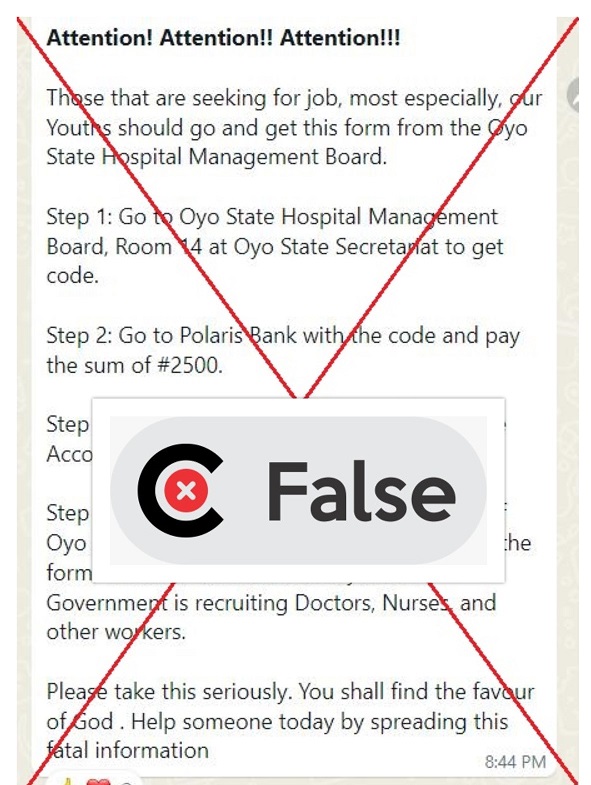
The post retrieved from a WhatsApp group on January 12, 2024 read:
Attention! Attention!! Attention!!!
Those that are seeking for job, most especially, our Youths should go and get this form from the Oyo State Hospital Management Board.
Step 1: Go to Oyo State Hospital Management Board, Room 14 at Oyo State Secretariat to get code.
Step 2: Go to Polaris Bank with the code and pay the sum of #2500.
Step 3: Take the teller to the office of Oyo State Accountant General to confirm payment.
Step 4: Take the confirmed teller to Room 14 of Oyo State Hospital Management Board to get the form, fill it and submit there. Oyo State Government is recruiting Doctors, Nurses, and other workers.
Please take this seriously. You shall find the favour of God . Help someone today by spreading this fatal information.
CLAIM
Oyo State government is recruiting medical personnel and charges N2,500 for application form per candidate.
THE FINDINGS
Checks by this reporter show that the claim is FALSE.
When this reporter reached out to the Oyo State government via one of its official X (formerly Twitter) handles: @feedbackOYSG regarding the claim, the response stated that the claim is false.
Hello, the feedback we received is that the recruitment update is false. Kindly disregard the information.
— Oyo State Government Feedback (@FeedbackOYSG) January 12, 2024
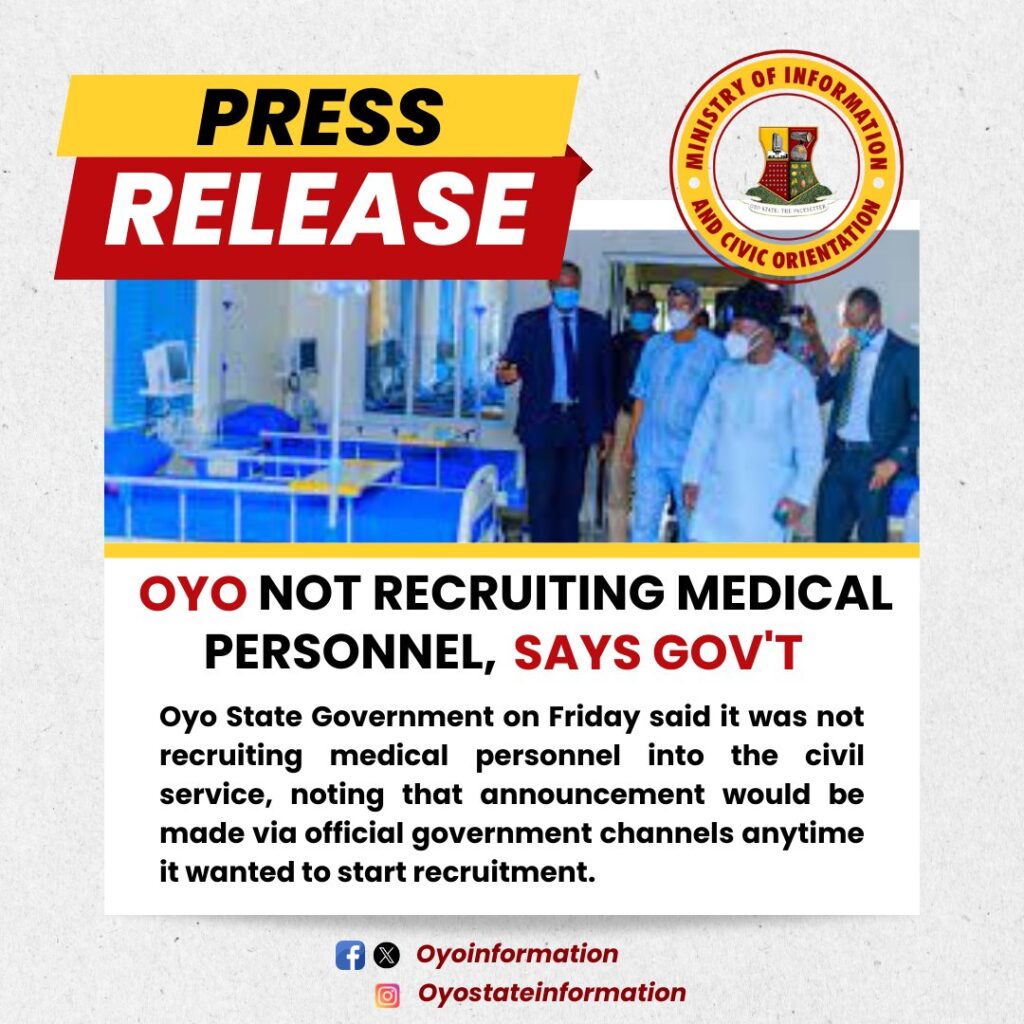
A statement released by Oyo state Ministry of Information and Civic Orientation through her official handle on X (@oyoinformation) also corroborated that the claim is false.
Disclaimer posted on X by Oyo State ministry of Information and Orientation regarding the alleged recruitment.
“The Oyo State Government on Friday said it was not recruiting medical personnel into the civil service, noting that announcement would be made via official government channels anytime it wanted to start recruitment.
“A statement by the Commissioner for Information and Orientation, Prince ‘Dotun Oyelade, described the information circulating on social media that the state was recruiting medical personnel, as false and misleading,” the statement reads in part.
THE VERDICT
The claim that the Oyo State government is recruiting medical personnel and charges N2,500 for application form per candidate is FALSE; the Information commissioner in the state debunked it via an X post.
THE World Economic Forum (WEF) has stated that the biggest immediate risk to the global economy this year is false information enhanced by advanced Artificial Intelligence (AI) that threatens to undermine democracy and polarize society.
In the report released by WEF on Wednesday, January 10, 2024, the organization’s variety of environmental concerns represent the greatest long-term threats.
The research highlighted how fast technological advancements are also causing new problems to arise or escalating pre-existing ones, listing misinformation and disinformation as the most serious concern for the next two years.
The authors warn that the growth in generative AI chatbots like ChatGPT means that developing complex synthetic content that can be used to control groups of people won’t be limited any longer to those with specialized abilities.
The report added that billions of people in several nations, including developed economies like the United States, Britain, Indonesia, India, Mexico, and Pakistan, are scheduled to cast ballots this year and next, and this presents a risk for AI-powered misinformation and disinformation.
Carolina Klint, a risk management leader at Marsh, whose parent company Marsh McLennan co-authored the report with Zurich Insurance Group, stated that AI can be leveraged to do deepfakes and to really impact large groups, which drives misinformation.
“Societies could become further polarized as people find it harder to verify facts, Fake information also could be used to fuel questions about the legitimacy of elected governments, which means that democratic processes could be eroded, and it would also drive societal polarization even further,” Klint said.
She added that the rise of AI brings a host of other risks such as empowering malicious actors by making it easier to carry out cyber attacks, such as by automating phishing attempts or creating advanced malware.
“With AI, you don’t need to be the sharpest tool in the shed to be a malicious actor. It can even poison data that is scraped off the internet to train other AI systems, which is incredibly difficult to reverse and could result in further embedding biases into AI models,” she noted.
Climate change was the second major worldwide concern raised by the risk survey participants after misinformation and disinformation.
In the long term defined as 10 years, extreme weather was classified as the No. 1 hazard, followed by four additional environmental-related risks: catastrophic change to Earth systems; biodiversity loss and ecosystem collapse; and natural resource shortages.
AN X user, @bashir_ashura, has posted an image purportedly showing a section of an uncompleted bridge with a claim that it shows the current state of the ongoing construction of Tanke bridge in Ilorin, three years after it was initiated under the administration of the Kwara State government led by Abdulrahman Abdulrazaq.
He claimed that the image shows the neglect of the project by the state government.
“57months later as Gov of Kwara. The Tanke bridge from beginning and 3years later. Effortless Maladministration(sic).”
The claim has generated over 38,000 views as of January 11, 2024.
CLAIM
Image shows the current state of the ongoing construction of Tanke Flyover Bridge in Ilorin, Kwara state.
Screenshot of the viral post on X.
THE FINDINGS
Findings by FactCheckHub show that the claim is MISLEADING.
The construction of the flyover bridge in Tanke area of Ilorin, the Kwara state capital, proposed to be named after former Nigerian military deputy Head of State, late General Tunde Idiagbon, was initially awarded to JMK Construction Company Limited by the Kwara state government in 2021 at a cost of N2.3billion. However, the contract was later terminated due to the firm’s failure to deliver a quality job within the specified time frame.
Photo of Tanke bridge as of September, 2023. PHOTO CREDITS: Kwara State Government.
Contrary to the claim that the bridge is at its early stage three years after the project was initiated, a Google Reverse Image search on the image shows that it has been online since February 2023 when the level of work done was reportedly 82 per cent.
Findings show that additional structural work has been carried out on the bridge since the image was captured, and the project is close to completion.
Even though the project is yet to be formally launched, the last update shared by the Kwara state government shows that the Council for the Regulation of Engineering in Nigeria(COREN) had certified the bridge for use.
THE VERDICT
The claim that the image shows the current state of Tanke flyover bridge in Ilorin is MISLEADING; findings show that the image has been online earlier, since February 2023 precisely.
STATE and local officials are worried that Artificial Intelligence (AI) tools and other emerging technologies may be used to spread disinformation and power phishing attacks in U.S. 2024 elections, an election security survey released by Arctic Wolf has shown.
The report, which was released on January 9, 2024 by the cybersecurity firm, shows that more than 130 state and local government leaders including officials responsible for IT systems and cybersecurity to gauge their views on election security.
The survey found that “more than half of respondents reported they are not at all prepared or somewhat prepared to detect and recover from election-targeted cyber incidents.”
A number of officials expressed particular concern that the election cyber threat landscape in 2024 will be even worse than during the 2020 election cycle, with respondents saying that resourcing and staffing limitations are exacerbated by the risks posed by AI tools.
“Adding to the feelings of unpreparedness is that election officials and administrators are expecting a significant uptick in the volume of attacks compared to what they saw in 2020, with almost half (47.1%) expecting an increase, while less than 3% (2.9%) believe they will see a decrease,” the survey said.
The study found that nearly 51 per cent of state and local government respondents named disinformation campaigns as a top election cyber concern.
Adam Marrè, chief information security officer at Arctic Wolf, said the results of the survey showed that emerging technologies pose unfamiliar challenges for election officials.
“We can point to the rise of advanced AI tools and the feeling of underpreparedness to the growing concerns of phishing attacks and the spread of disinformation.
“The novelty of these AI tools and their potential to impact elections is something many respondents may not be prepared to face,” Marrè said.
THE widespread public condemnation following the Christmas eve’s gunmen attack in Plateau state has paved way for the dissemination of false information amplified, not only by local citizens, but by foreign-linked accounts on social media, especially X (formerly Twitter). In this report, The FactCheckHub debunks some of these claims and exposes some foreign-linked accounts using their influence to amplify disinformation narratives about the incident.
__________________________________
The joyous Christmas season turned into a nightmare for some residents of Plateau State when armed groups attacked remote communities in the Nigerian north-central state and left a trail of tears and blood.
Many lives were lost. Families were devastated and communities were thrown into mourning. The onslaught affected various communities in the Bokkos and Barkin Ladi local government areas of the state, resulting in the tragic death of over 150 individuals and the displacement of more than 29,000 residents, according to media reports.
As usual, the attack prompted public outcry, condolence messages, and promises by the Nigerian authorities to arrest the situation and prevent a re-occurrence. Not only that, the attack was heavily criticized by foreign governments and citizens some of whom linked the incident to the persecution of Christians and the Israel-Hamas war, among other global conflicts.
However, findings by The FactCheckHub show that the agitation has birthed the spread of misinformation and disinformation on social media which was not only amplified by Nigerian citizens but also by people with vested interests from outside Nigeria. Experts have said this situation can escalate tensions and undermine social cohesion in the country.
Heightened interest from foreign authorities and citizens
Unlike several other insecurity incidents that occurred in recent times, the recent violent attack attracted wider attention and condemnation from citizens and influential figures from outside Nigeria.
Though herders and farmers have been locked in a decades-long conflict over access to land and water over the years in the state. The recent attack was the worst violence in the central Plateau state in more than five years.
Following the tragic incident, the President of Hungary, Katalin Novák, condemned the killings and called for an end to the massacre. Novac while appealing for aid for the affected victims also attributed the attack to the persecution of Christians making her the first president to tie the incident to religion publicly.
Her post read, “Brutal attack on #Christians at #Christmas in #Nigeria🇳🇬. According to certain news outlets, more than a hundred people were killed. My thoughts and prayers are with the families of the victims. This massacre must end. Persecuted Christians must receive help.”
Similarly, French Diplomacy in a condolence message released through the Ministry of Europe and Foreign Affairs also strongly condemned the attacks and killings. They called for the identification and prosecution of the attackers and assured the Nigerian government of its full support.
“France utterly condemns the attacks carried out over the past several days on several villages in Plateau State, located in central Nigeria, which resulted in a large number of casualties. France calls for the identification and prosecution of the perpetrators of these attacks, and assures the Nigerian authorities of its full support,” it stated.
Similarly, several foreign citizens expressed concerns over the attack on social media.
Foreign actors amplify misinformation, propaganda
Checks by FactCheckHub show that various social media accounts used unrelated images and videos to depict the attacks in a seemingly coordinated manner. Some false claims shared about the incident were amplified by accounts from outside Nigeria.
Those managing these accounts frequently link the incident either to the persecution of Christians, attribute the attacks to Islamic groups, or connect them with religious violence even when they are not related.
The administrators of these accounts are found to be from foreign countries such as United States, Israel, Australia and Italy. Let’s take a look at some examples.
1. Image of Owo attack shot in 2022
A few days after the incident, a photo collage showing the interior of a church and a floor stained with blood was circulated online to depict the attack. The photo collage was largely amplified by people who believe the attack was targeted at Christians.
When this researcher subjected the images in the collage to Google Reverse Image search, the results revealed that the photos show the inside view of St Francis Xavier Catholic Church in Owo, Ondo State which was attacked by bandits in June 2022. An earlier version of the pictures was found in these reports by Al Jazeera and AP News.
The photos were credited to the Associated Press photographer, Rahaman A Yusuf and were shot on June 5, 2022, inside the church after the gunmen attacked worshippers who gathered for weekly service.
Social media Analysis showed that many of the primary pages that shared the claim have administrators based outside Nigeria.
For instance, @RonEnglish based in the United Kingdom posted the video claiming it shows over 150 people killed recently on the eve of Christmas. He further linked the incident to Israel-Hamas war while also claiming the mainstream ignored the incident.
His post read, “Nigeria – New photos from within a church where at Christmas Christians were massacred in the name of Allah. Around 150 are confirmed dead so far, properties & farms were looted and burned. This is on par with what Hamas did, but the MSM & dancing Western Hamas fans ignore.
Similarly, Nile Gardiner; who claimed to be a foreign policy analyst based in Washington DC reposted the video alleging that the president of the United States, Joe Biden and Prime Minister, Rishi Sunak mum on the issue.
S/N
X ID
Username
Country
Followers
1.
@laralogan
Lara Logan
United States
749,700
2.
@DrEliDavid
Dr Eli David
United States
553,100
3.
@NileGardiner
Nile Gardiner
United States
47,600
4.
@nelsonepega
Nels Onepega
United States
58,400
5.
@leonskee
Leonskee
Israel
4,642
6.
@Breeadail
Bree A Dail
Italy
75, 200
7.
@nogulasagain
Steven
Australia
28,600
8.
@oliaklein
Olia
United States
15, 500
9.
@@cherylE59628
Cheryl E
Israel
5, 950
10.
@HananyaNaftali
Hananya Naftali
Israel
413, 400
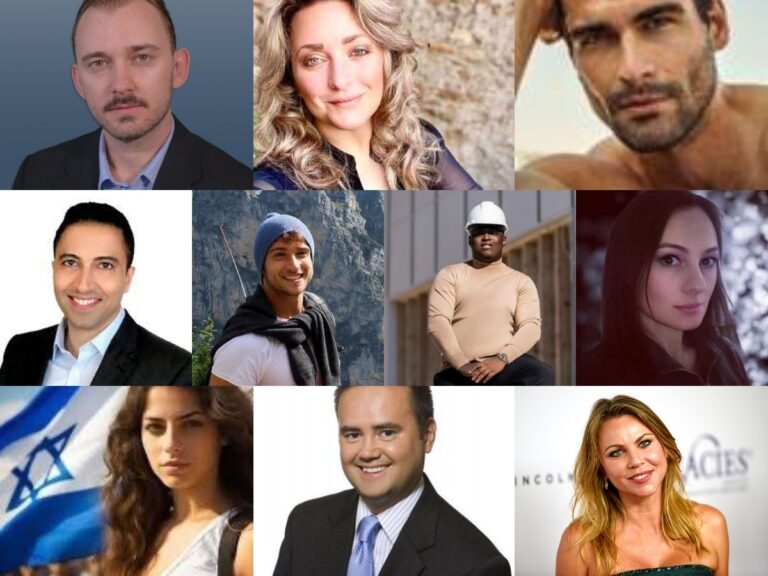
List of some influential X accounts amplifying misinformation about the Plateau attack.
Cherryl E from Israel posted the photos saying the United Nations, United Nations and Arab community are silent on the matter.
“These are photos from the aftermath of the massacre at a church in Nigeria where Islamic terrorists slaughtered 150 Christians on Christmas. This isn’t about Jews. This isn’t about land. This isn’t about occupation. This is about a psychotic cult and ideology hellbent on destroying our world.
“Not a single protest on the streets of Europe, Australia or the US. Not a single tweet by the United Nations. Not a single mention in the MSM. Not a single outcry from the UNSC. Not a single murmur from the Arab world. Just silence.”
Other foreign X accounts that shared the video include Hananya Naftali; an Israeli. A check of Naftali’s account shows that he has a keen interest in Nigeria’s security situation and often links it to religious violence. For instance, just recently, he posted about the recent attack in Kaduna state and claimed that over 41 Christians were killed. The figure he quoted roughly doubled figure reported by credible media platforms like Punch and Thisday.
2. Video of dead bodies lying on the ground
Few days after the incident, a video emerged online, supposedly depicting lifeless bodies. The footage portrays primarily women lying lifeless on the ground, with some of them carrying infants strapped to their backs. Findings show that the video is unrelated to the incident as it depicted an incident that occurred in Burkina Faso.
Meanwhile, social media analysis shows that the video was largely amplified by foreign social media accounts which include Steven; based in Australia who blamed the account on Islamic extremists.
“Another 200 Christian Nigerians massacred yesterday. There was no Oct 7 massacre from them, were no used as Human Shields and there are no protests in London or New York. Islam is the problem.” he posted.
3. Unrelated video showing coffins and people in mourning state
Similarly, another video showing people gathered around a coffin was widely circulated with a claim that it showed people who were killed in the attack. Findings show that the video has been online since February 2023. An earlier version of the video can be seen here.
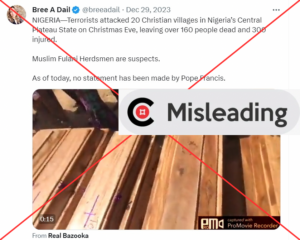
Meanwhile, the misleading video was also shared by several foreign citizens on X. For instance, an Italian journalist with Daily Wire, Bree A Dail shared the video claiming that Fulani herdsmen are the suspects.
4. Video showing people mourning over dead bodies inside a church
One of the misleading videos that went viral after the incident and was largely amplified by foreign accounts is a video showing dead bodies inside a church. The video was one of the videos that was shot after the attack on worshippers in Owo in 2022.
The video was posted by US X account, @leeonskee based in Israel who alleged that the attack was carried out by Islamic radicals. The post generated over N1 million views and was amplified by over 4000 social media accounts based in Israel and other countries. For instance, @Oliaklein, a US-based X user reposted the video linking it to the persecution of Christians in the world.
How misinformation impacted violence in Plateau
Plateau state is home to about 40 ethnic groups and has been a hotbed of conflict. The clashes, mostly between Muslim Fulani herders and Christian farmers is often painted as ethnoreligious. However, analysts have said climate change and scarcity of pastoral land are pitting the farmers and herders against each other, irrespective of faith.
The Fulani, traditionally nomadic pastoralists primarily from the northern regions, have migrated to central and southern parts of the country in pursuit of better grazing grounds for their livestock. While some Fulani herders establish permanent settlements in host communities, challenges such as pastoral land shortages exacerbated by growing urbanization have compelled herders to encroach upon farmlands and restricted areas like national parks and preserved forests over the years.
This encroachment often leads to crop destruction, escalating tensions and conflicts between herders and local farmers. In response, aggrieved farmers and members of farming communities occasionally retaliate by attacking the herders and their livestock, creating a cycle of violence in these areas.
As pointed out by Human Rights Watch, one of the major challenges with Plateau violence is difficulty in identifying the orchestrators of the attack. Unlike bandit groups in the Northwest and Boko Haram in the Northeast, no individual or organization has openly claimed responsibility for the killings in the state. This gap is fuelling speculations, false narratives and conspiracy theories about the identities of the attackers.
Misinformation, fueled by ethnoreligious sentiments, has frequently obscured the attacks in Plateau state, contributing to the prolonged and escalating violence. This is partly responsible for the escalation and persistence of the violence over the years. For instance, in 2018, a disturbing series of images and videos circulated on Facebook, alleging that Fulani Muslims were targeting Christians from the Berom ethnic minority in Plateau.
These visuals depicted burnt homes, corpses in mass graves, and children murdered in their beds. However, upon investigation, it was revealed that these images were unrelated to the incident, grossly exaggerating the situation. Shockingly, one video even portrayed an incident from Congo-Brazzaville in 2012.
The dissemination of these misleading visuals sparked a new wave of violence, as many failed to verify the context, resulting in the death of dozens of people. The images fueled animosity between groups, leading to brutal incidents which claimed lives and properties.
The then public relations officer for the Plateau State police, Tyopev Terna Matthias confirmed that the killing was a result of the misleading images seen by people on social media.
He was quoted by BBC as saying “It was the pictures, the supposed pictures that emanated from the attack [in Gashish]. Jos South was not under attack. But because of those images, they saw, the next day, roads were blocked. People died. Vehicles were burned. So many people died. Fake news on Facebook is killing people.”
Experts say misinformation may escalate crisis
While the perpetrators of the latest attack are yet to be fished out, experts in the information ecosystem like Kunle Adebajo, investigations editor at Humangle are worried about the potential repetition of history noting that the spread of misinformation regarding the incident may escalate the crisis and birth a new wave of violence.
“I understand that people are always itching to blame someone, especially for tragedies that are this big but it is always good to exercise restraint until all the facts are investigated and verified,” said Adebajo. He continued, “Otherwise, we risk escalating the crisis or even giving birth to a new round of violence.”
Adebajo explained that the crisis in Plateau state has always been worsened by the spread of misinformation and disinformation, as far back as 2000 referencing documentation by Human Rights Watch. However, the situation continues to persist.
“In 2018 as well, nearly a dozen people were killed in Jos after misleading pictures of an allegedly ethnically-motivated attack were shared on Facebook. People who are not living in these areas and have no knowledge of the nuances should especially refrain from jumping to conclusions and inflaming passions. What we post and share online have real-world impact, “ he said.
He noted that the symbolism of the attack taking place on Christmas Eve was also a significant factor responsible for the attention it attracted across the world.
“It made it easy to interpret it as a religiously motivated or jihadist massacre,” Kunle noted. “We’ve also seen many instances of religious interest groups helping to amplify campaigns that suggest that a certain group is being persecuted because of their faith, even though many of the claims and statistics are exaggerated.”
Adebajo called for a thorough investigation to unravel the motivations, cognitive biases, and possible ulterior motives for the deadly attack.
Complementing Adebajo’s view, Silas Jonathan, Head of Digital Investigations and Open Source Intelligence at DUBAWA noted that the influx of misinformation and disinformation surrounding attacks can erode people’s trust in the government and undermine confidence in the justice system.
“They have the potential to exacerbate ethnic tensions, widening existing divides in society,” he added.
Speaking on the public outcry on social media, Jonathan noted that the people have realized the power of social media as the centre of information and a channel they can use to express their grievances.
“Similar attacks in the same region, on the same people have been happening for over ten years now. Remarkably, these will be the first under the new administration, as the attention. Aside from these, the recent issues in other African countries such as Niger, Burkinaso etc., are not far-fetched. If democracy is failing in the most populated country in Africa, people will ask questions in such a time.”
Jonathan stressed the importance of adopting a strategic approach to address the harmful effects of disinformation actors, both at the local and international levels.
“While I don’t advocate for social media censorship, collaboration between the government, disinformation experts, and media professionals is crucial. Media experts need to remain vigilant, exposing these schemes and relevant government agencies also need to take action upon uncovering such misinformation. Collaborative efforts are key to combating this issue effectively,” he concluded.
He urged the media to rise to their watchdog role by countering false messages designed to exacerbate the crisis.