Please note that the FactCheckHub has not obtained any right from the authors or copyright owners of all third-party contents from embedded links and shall incur no liability in this regard.
A video circulating on social media claims to show a recent incident of police brutality involving two men dragging a firearm from a police operative.
The clip surfaced shortly after the killing of 28-year-old Mene Ogidi, an alleged suspect, by an Assistant Superintendent of Police, Nuhu Usman, in Delta State on April 26, 2026—an incident that reignited conversations about police brutality in Nigeria.
An X user, @CrownprinceCom2, posted the video with the caption:
“Nigeria Police are on this one again. This is very disappointing. IGP must see this video and something must be done.”
As of May 1, 2026, the post had generated over 7,000 reposts and more than 10,000 likes.
CLAIM
Video shows a recent incident of police brutality involving civilians attempting to disarm a police officer.
screenshot of the viral post
THE FINDINGS
Findings by The FactCheckHub show that the claim is MISLEADING.
The video resurfaced amid renewed outrage over police conduct, with many users sharing past incidents to highlight ongoing concerns about law enforcement abuses.
However, checks by The FactCheckHub show that the footage is not recent.
A keyword search traced the video to September 2022, when it was widely reported by Nigerian media outlets, including Daily Trust.
According to the report, the incident occurred after a police officer allegedly seized phones from individuals and attempted to access their private messages, which provoked a confrontation. The individuals involved then tried to overpower and disarm the officer.
At the time, the then Force Public Relations Officer, Olumuyiwa Adejobi, described the incident as an assault on a police officer and an attempt to disarm him, noting that the suspects would be charged in court.
“it is a case of assault on a police officer and an attempt to disarm him. A civilian has no right to retaliate even if a policeman slaps him or her. What the person should do is to report any action against them to the police authorities,” he said, adding “the suspects will be charged to court accordingly.”
These reports confirm that the video predates the current incident and is unrelated to recent developments.
VERDICT
The claim that the video shows a recent incident of police brutality is MISLEADING. The footage dates back to September 2022 and is being recirculated out of context following a new incident.
Nigeria’s ambassador-designate to Mexico, Reno Omokri, has claimed that Nigeria’s total public debt has significantly dropped under President Bola Ahmed Tinubu’s administration.
Omokri, who said this during an interview with the News Central at the induction course for ambassadors and high commissioners designate at the Ministry of Foreign Affairs on April 27, 2026, further asserted that while the debt stood at $113 billion in June 2023, it has now dropped to $103 billion as of April 2026.
He argued that critics like Peter Obi misled the public by calculating the debt profile in Naira rather than Dollars.
“When this administration came into being on May 29, 2023, Nigeria owed $113 billion, so if you go to DMO, the debt management office, and go to their website, which is dmo.gov.ng, on March 31, 2023, Nigeria’s total debt was $108 billion. And then, because the DMO gives those figures every quarter, the next quarter, which was June 31, 2023, our debts had ballooned to $113 billion. Right now as I speak to you, April 27, 2026, our debt is $103 billion. So you can see that our debt under President Tinubu has reduced by 10 billion dollars. What people like Peter Obi tend to do is they calculate our debt in Naira.”
As of April 28, the post has garnered over 90,000 views, 100 likes and 70 quotes, causing lots of ruckus as financial debates erupted.
Nigeria’s total public debt has been reduced by $10 billion under President Tinubu, moving from $113 billion in June 2023 to $103 billion in April 2026.
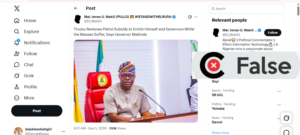
Screenshot of the viral post on x.
THE FINDINGS
Findings by The FactCheckHub show that the claim is FALSE.
To verify the claim, The FactCheckHub analysed data from the Debt Management Office (DMO).
Established on December 4, 2000, the Debt Management Office (DMO) of the Federal Government of Nigeria is responsible for managing and storing information regarding the country’s local and international debts.
Nigeria’s debt profile, also known as total public debt, is calculated by summing the total domestic and external debts of the federal government of Nigeria, the thirty-six states and the Federal Capital Territory.
Data from the DMO shows that as of June 30, 2023, the total public debt was indeed $113.42 billion.
On March 31, 2023: Two months before President Tinubu took office, the debt stood at $108.30 billion. In Naira terms, this was N49.85 trillion, calculated at an exchange rate of N460.35/$1.
On June 30, 2023: By the end of the first month of the new administration, the USD figure rose to $113.42 billion. However, the Naira value saw a jump to N87.38 trillion. This was primarily due to two factors: the unification of the foreign exchange windows (shifting the rate to N770.38/$1) and the securitisation of “Ways and Means” (Central Bank loans) which were moved into the official public debt record.
On September 30, 2025: As of September 2025, the debt indeed dropped to $103.94 billion. At this point, the exchange rate had shifted further to N1,474.83/$1, bringing the Naira debt to N153.29 trillion.
And on December 31, 2025: According to the DMO report released on April 13, 2026, the debt surged again in the final quarter of 2025, reaching $110.97 billion (N159.28 trillion), not $103bn quoted by Omokri.
December public debt portfolio. credit: DMO
Reno Omokri’s assertion of a $10 billion reduction is based on a comparison between the June 2023 figure ($113.42bn) and the September 2025 figure ($103.94bn). This data cannot be used to assess the current economy in Nigeria.
At the end of 2025, the debt had climbed back up to $110.97 billion. This means that between June 2023 and the latest reported period, the actual reduction is only $2.45 billion, not $10 billion.
While Omokri argues that the debt should be viewed in USD to avoid misleading Naira calculations, the Naira perspective is critical for domestic economic assessment.
Since June 2023, the debt in Naira terms has increased by 82.3 per cent from N87.38 trillion to N159.28 trillion.
VERDICT
The claim by Reno Omokri that Nigeria’s debt has reduced by $10 billion between June 2023 and April 2026 is FALSE. He used an outdated data point from September 2025 to frame a narrative of significant debt reduction. The latest official DMO data, released in April 2026, shows that the debt has since surged to $110.97 billion, making the actual reduction since June 2023 only $2.45 billion.
A post circulating on social media claims that Professor Anugbum Onuoha has been appointed as the new Resident Electoral Commissioner (REC) for Akwa Ibom State.
The post further stated that Onuoha is the Minister of Federal Capital Territory Nyesome Wife’s cousin.
A verified x user, @underworld_09, made the post on April 18, 2026, with the caption:
“BREAKING: INEC Chairman Amupitan Appoints Nyesom Wike’s Cousin as Resident Electoral Commissioner (REC) for Akwa Ibom State.”
As of April 28, 2026, the post has garnered over 450,000 views, 2000 likes, 2000 repost and tons of comments, as the post sparked public debate due to the family ties.
The INEC Chairman appointed Nyesom Wike’s cousin, Anugbum Onuoha, as the Resident Electoral Commissioner of Akwa Ibom State.
Screenshot of the viral post on x.
FINDINGS
Findings by The FactCheckHubconfirm that Professor Anugbum Onuoha has indeed assumed duty as the Resident Electoral Commissioner for Akwa Ibom State as of April 18, 2026.
He succeeds the former REC, Isah Shuaibu Oris, following a redeployment exercise by the commission.
Onuoha previously served as the Resident Electoral Commissioner for Edo State, a position he held during the lead-up to the 2024 gubernatorial elections. Official communications from INEC in May 2024 confirm his tenure and active role in Edo State during that period.
Onuoha earlier claimed his relationship with Wike is a matter of public record. In an interview posted on SYMFONI news on YouTube two years ago, Onuoha addressed the controversy surrounding his kinship with the Minister, stating that he was not hiding the fact that he is Wike’s cousin.
“I was posted here since last year, nobody complained that I’m a cousin to Wike. Of course Wike is my cousin, am I hiding it? So, he’s my cousin. What I’m telling you is that, Wike is my cousin does not mean I’m not a Nigerian again. Am I not qualified to hold such position? Don’t I have experience and character to do that? And one man, nobody can force me to do what is wrong, I won’t do that.” He stated.
Though he maintained that his professional conduct is guided by the law and his oath of office rather than familial affiliations.
VERDICT
The claim that Nyesom Wike’s cousin, Anugbum Onuoha, was appointed as the Akwa Ibom Resident Electoral Commissioner is TRUE. He was officially deployed to the state on April 18, 2026, after previously serving as the REC for Edo State in 2024.
ACROSS Nigeria, self-styled healers continue to promote herbal ‘cures’ for HIV, charging desperate patients hefty sums for unverified treatments. The ICIR digs into the HIV healing drugs scams promoted on social media.
Despite scientific consensus that no known cure for HIV virus exists, these individuals flood social media and messaging platforms with promises of total healing. The ICIR uncovers a troubling pattern; once payments are made, the supposed healers disappear, leaving behind stories of deception, financial loss, and renewed despair among people living with the virus.
When ad is ‘too-good-to-be-true’, welcome to ‘Ancient Herbal Secrets’
In the course of this investigation, The ICIR reporter stumbled on a sponsored Facebook advertisements claiming to cure HIV. The claim stood out, given that HIV has no known cure but can only be managed through the consistent use of antiretroviral (ARV) drugs.
Posted on a Facebook page, the advert called ‘Ancient Herbal Secrets’, featured a graphic message urging users to “ditch ARVs” in favour of a supposed herbal cure called ‘K28 Xleya’, said to be produced by a company called H & H.
The post reads: “For years, people were told HIV can only be managed by taking ARV daily. But now, Nature has given us K28 Xleya which removes HIV viruses from your body completely. It is the breakthrough solution that has helped thousands of people get totally free from HIV.”
A link attached to the post — https://curehiv.online/ (archived here) directed users to a website where the drug could be purchased.
Worrying level of engagement
Since its publication in February 2025, the post garnered over 1,700 likes, 1,900 comments, and 571 shares, a worrying level of engagement for a misleading health claim.
The comments section was filled with users asking how and where to buy the drug, reflecting both high demand and widespread misinformation about HIV treatment in Nigeria.
Screenshot of the Ad from Facebook PC: Fatimah Quadri/ The ICIR
Globally, the World Health Organization (WHO) estimates that 39.5 million people were living with HIV as of 2023, with the majority in Sub-Saharan Africa. Nigeria ranks as the country with the second-highest number of HIV patients (about 2 million), after South Africa.
Although the introduction of ARVs has significantly improved life expectancy and reduced transmission rates, fake cure claims remain persistent, exploiting social media algorithms and public health gaps. Health experts have consistently warned that no herbal mixture or alternative therapy can cure HIV. Still, the combination of desperation, misinformation, and distrust in the health system fuels demand for such unverified products.
Precious Ada, a drug store owner in Imo state, one of the Facebook users who had commented on the post, told The ICIR that she had intended to get the drug for a customer who had tested positive, but hadn’t been able to continue with the order as her patients did not have the funds.
“I never ordered the drug, so I didn’t give them any money”, Ada said.
When asked where her client had been getting her treatment previously and what prompted her to make inquiries in the comments section, she said her patient had been going to the Hospital for ARVs, and she had believed the post which claimed the drug would cure HIV.
“She had always been going to the General Hospital for treatment, but they said the drug would cure it, so I decided to try,” she added.
Other users The ICIR had reached out to who had commented on the same post were either inactive or had seen the message and chose not to respond.
Inside the fake cure scheme
With the United States president, Donald Trump, cutting off USAID funding (ARVs) to Nigeria and other African countries, claims about medicines that supposedly cure HIV have gained traction. This reporter sought to verify such claims.
She clicked on the link, which led her to the website with an advert that was emotionally charged, appealing directly to the fears and frustrations of people living with HIV.
In one of persuasive messages, it asked: “Are you tired of taking ARVs daily? Are you afraid of the stigma? Do you want to live freely again?”
The post positioned K28 Xleya as a “ground breaking solution” that could eliminate the virus from the body, a claim that contradicts all established medical knowledge.
It promised total healing within 45 days, assuring users that the drug was “tested and proven,” free from side effects, and produced by H&H Pharmaceuticals, a supposedly registered Nigerian company.
A pattern of health scams
The tone of the promotion mirrored the tactics of typical health scams, offering hope, urgency, and social reassurance. The sellers claimed that ARVs merely suppress the virus, while K28 Xleya would “cure HIV completely.”
A screenshot of the home page of the website PC: Fatimah Quadri/ The ICIR
The drug, priced at ₦160,000 per bottle, was being discounted to ₦60,000, after which customers were required to send in a video testimonial. It was marketed as the only true cure for HIV, with promises that users would test negative after the treatment.
Such claims, framed around emotional triggers like fear, shame, and the desire for acceptance, exploit the vulnerability of people living with HIV and fuel the spread of dangerous misinformation online.
Although she eventually held back, Ada admitted that if her client had been able to raise the money, she would likely have gone ahead with the purchase.
The drug’s heavily discounted price and the persuasive tone of the advertisement made the offer appear urgent and convincing, a deal that seemed too good for someone desperate for a cure.
A business front
The website also displayed screenshots of WhatsApp testimonials and included a form for interested individuals to fill out. When this reporter submitted her details, she received an automated message thanking her for ordering K28 Xleya, assuring a guaranteed cure, and promising a follow-up call within 24 to 72 hours. A customer service line — 09010888882 — was provided, creating an impression of legitimacy.
Screenshot of the message after inputting the details, PC: Fatimah Quadri/ The ICIR
After the promised time frame passed with no response, the reporter reached out to the contact on WhatsApp, following several unsuccessful calls to the line. Two days later, the number replied with only the price of the drug and did not respond to further inquiries, including whether the drug could be picked up physically from the listed business address in Abuja.
Screenshot of the chat between the reporter and the company, showing the company’s response to the inquiry. PC: Fatimah Quadri/ The ICIR
Following this, the reporter visited the address provided in the about section of the business on WhatsApp. The location, which was an estate in Abuja, turned out to be a residential apartment. The occupant said they have no knowledge of the sale of the drug. She even checked with neighbours and attempted to call the number herself, but all efforts were unsuccessful.
“This is why someone has to be careful when buying something online,” she warned.
Scattered adverts, same scam
Further findings revealed that the advertisements for K28 Xleya were not limited to the website or Facebook. Similar posts were scattered across TikTok (archived here) and Instagram (archived here), often using the same messaging, graphics, and emotional appeals to lure potential buyers.
The adverts appeared under different accounts and usernames, sometimes recycled or slightly altered, which amplified the scam’s reach and made the fraudulent claims seem more credible through repeated exposure.
This multi-account, multi-platform presence clearly shows how online scams exploit several channels and identities to target vulnerable individuals.
Screenshot of an appearance of the ad for HIV cure on YouTube. PC: Fatimah Quadri/ The ICIR
Scam sponsors
After interacting with one of the accounts, The ICIR confirmed that at least one of the adverts was sponsored. The account handler, who identified himself as a blogger, explained that he had been contracted to promote the product and was not directly involved in its sale.
“I am a blogger and only advertised for the company, but I will send the pharmacist’s number to you so you can contact him,” the user, identified as Gistworld, said.
When asked whether he had received any feedback from customers who purchased the drug, he said that while some people complained about delivery delays, others claimed it worked for them.
“A few persons complained about the delay in delivery, but some actually confirmed it worked for them. It all depends on your conversation with the pharmacist; we have individual differences. But the medication works; I got it for my kid brother, and it helped a lot,” he told The ICIR.
However, when requested to provide the contacts of those customers, he said he had not saved any of their details.
Tracing the pharmacist
Posing as an interested buyer, The ICIR reached out to the pharmacist through a contact shared by Gistworld. The conversation began with routine inquiries about the drug, its dosage, and cost.
The supposed pharmacist, identified as Joseph, explained that a single bottle of the drug cost ₦60,000 (discounted from ₦160,000) and was meant to last 45 days. He added that the main dosage required two bottles, after which a test would be conducted to confirm if the infection had been totally eradicated.
Screenshots of the chat between the reporter and the pharmacist. PC: Fatimah Quadri/The ICIRScreenshots of the chat between the reporter and the pharmacist. PC: Fatimah Quadri/The ICIR
When asked about payment, the pharmacist insisted on upfront payment, but later agreed that customers buying two bottles could pay 80 per cent upfront and the remaining 20 per cent upon delivery. He provided a First Bank account number bearing the name Korayom Joseph Terlumun for the transaction.
The pharmacist also shared details of his business locations — one in Jos, Plateau State, at Angwan Soya, Zaria Road Bypass, opposite Jankwano Bingham University Teaching Hospital, and another in Gwarimpa, Abuja. He promised doorstep delivery through logistics companies such as GIG Logistics.
Throughout the chat, he maintained a polite tone, assuring that delivery was fast and top-notch. The payment was placed, and he requested delivery details. He sent an image of a packaged envelope bearing the receiver’s name and phone number.
However, after repeated follow-ups, the buyer did not receive any call or confirmation of delivery, raising further doubts about the authenticity of the business and its claims. Several messages to him went unanswered.
Screenshot of the reporter’s payment transaction receipts to Joseph Korayom for the supposed HIV “cure.” PC: Fatimah Quadri/The ICIR (We cannot provide any information about the ICIR reporter)
A check of both addresses provided by Korayom shows that it is the Jos and Gwarimpa Abuja addresses of a transportation logistics company, GIG Logistics.
Unmasking the identity
A background check on the name Korayom Joseph Terlumn revealed a campaign poster of a man contesting for the Mata State Constituency of Oshongo LGA in Benue State come 2027 as shared on Facebook [Archived here] by Gistworldng. The same name appeared on a LinkedIn account with matching photos.
This reporter observed that the image on both platforms also appeared as the profile photo on Gistworldng’s WhatsApp account.
Photo collage showing similar images found through a name search on Facebook and LinkedIn, matching Gistworld’s profile picture on WhatsApp.
However, the WhatsApp profile picture of Joseph,” who claimed to represent the company behind the drug, was of a different person. A Google reverse image search showed that the photo belonged to Hon. Saater Tiseer, the Majority Leader of the Benue State House of Assembly and member representing Mbagwa State Constituency. The ICIRcould not independently verify if the image was being used for impersonation.
Efforts to reach the lawmaker, Saater Tiseer, proved abortive, as calls to the phone number obtained by The ICIR returned a voice message that the number was not assigned. Meanwhile, The ICIR also gathered that Tiseer is currently on a six-month suspension by the Benue State House of Assembly following allegations of gross misconduct
H&H Pharmaceuticals inactive
A search on the Corporate Affairs Commission (CAC) website showed that H&H Pharmaceuticals, the company name linked to the product, was registered in January 2021. The record also showed that its status is inactive, indicating that it is no longer in operation or has failed to file its annual returns. A legal search on CAC portal showed only the name H & H Herbal Pharmaceuticals Limited.
Benue state majority leader Saater Tiseer, image used for the WhatsApp chat. A check on both phone numbers using the True caller app also showed a link between the two individuals. PC: Fatimah Quadri/ The ICIR
When the pharmacist Joseph’s number was searched, True caller returned the name Joe Creed Links (Korayom). Running Gistworld’s contact number produced the name Joseph Korayom Terlumn. These details overlap, as Joseph Korayom Terlumn is the same name that appears on the bank account details provided by the supposed pharmacist.
At the same time, Gistworld identifies as Joe Creed on his WhatsApp profile. PC: Fatimah Quadri/ The ICIR
Truecaller identifies phone numbers by using a large, crowd-sourced database built from user-uploaded contacts and publicly available data. When a number is searched or a call comes in, the app matches it against this database and displays the associated name or label.
When health scams meet financial fraud
This pattern reflects a growing trend in which scammers combine financial and health-related fraud to target unsuspecting victims. By creating fake company profiles and using social media adverts, they exploit victims’ fear and desperation for cures to make quick financial gains.
Experts say such schemes are becoming increasingly common, with health scams now adopting the same digital marketing tactics used in advance-fee and investment frauds. Beyond the financial loss, victims also risk their health by consuming unverified or unsafe substances.
Speaking with The ICIR, Mayowa Tijani, Director of Projects at The Cable, stated that Online health scams persist because enforcement is weak and shutting them down on social media works like a whack-a-mole cycle—once one page is removed, another quickly appears.
“The people’s angle on the thing is that people look for easy alternatives to the proper. Because the healthcare system is not totally adequate, and so anything that can promise quick relief at low prices, people are often open to it and because they are also targeting certain. A media literacy for the targeted adults that can sort of reduce the depth of these kinds of scams,” he said.
Tijani added that paid adverts and cloned identities remain major challenges on social media in Nigeria, as many accounts can still be created without linking to a real name, phone number, or email, making it easy for bad actors to operate anonymously.
“New features that show an account’s location can be bypassed, as users can set up accounts in one country and appear to be elsewhere. As long as creating untraceable accounts remains simple, these scams will continue,” he noted.
He also added that enforcement is limited by technology and manpower, stating that Regulatory bodies like the Advertising Regulatory Council of Nigeria (ARCON) cannot vet the thousands of ads posted daily, and Nigeria lacks the AI tools and systems needed to monitor activity at scale.
When The ICIR contacted Joseph Korayom through the two WhatsApp numbers (Pharmacist Joe and Gist World) linked to his operations. He initially did not respond. However, when reached via a phone call on the line he uses under the name “Gist World,” he confirmed his identity.
When confronted with the findings of this investigation, he demanded to know who had accused him. After the reporter informed him that he had scammed her, he abruptly ended the call. Subsequent attempts to reach him on the number he uses as “Pharmacist Joe” were ignored, and he later blocked the reporter on WhatsApp on both lines.
The ICIR also contacted the Director of Post-Marketing Surveillance at NAFDAC, Fraden Bitrus, to verify the agency’s awareness of the claims and public complaints. He requested that the questions be sent to him but had not responded at the time of filing this report.
Tijani said journalists investigating online health scams must accept that there is always some level of risk, as there is no completely risk-free method. However, they can reduce exposure by avoiding the use of their personal accounts or digital footprints.
Instead, creating separate anonymous or “burner” accounts can help them monitor scam networks without being easily traced adding that while experienced syndicates rarely slip up, consistent tracking may reveal occasional mistakes that journalists can use to gather clues.
The K28 Xleya case exemplifies this intersection of health and financial scams. By presenting itself as a revolutionary HIV cure backed by a registered pharmaceutical company, it draws credibility from official-sounding names, fake testimonials, and sponsored social media promotions.
The elaborate setup from websites and automated messages to coordinated WhatsApp communication is designed to create an illusion of legitimacy, ultimately preying on vulnerable individuals seeking hope and healing.
This report done by FactCheckHub reporter was republished from The ICIR
Artificial intelligence has become the latest bait in a growing wave of Ponzi schemes targeting Nigerians. In this investigation, The ICIR’s Nurudeen Akewushola uncovers how fraudsters are exploiting the illusion of AI to lure unsuspecting citizens and breathe new life into old Ponzi schemes.
For a long time, Chibuzor David, 28, lived modestly on the proceeds of his small Point of Sale (POS) shop in Ikorodu, a suburb of Nigeria’s commercial city, Lagos. Then his girlfriend introduced him to an investment platform where all he needed to do was deposit money and watch ‘his money work for him’.
The Crypto Bridge Exchange (CBEX), she told him, was an Artificial Intelligence (AI)-powered trading system that promised a 100 per cent return on investment in just 30 days. Tempted, David started with ₦150,000 in February, and as his earnings grew, he kept adding the same amount every week, hoping for bigger profits.
One morning in April, the platform shut down, taking with it 1.3 trillion naira($1.2 billion) in investor funds, including David’s expected 10 million naira profit.
At first, he heard it was only a temporary glitch that would be fixed in no time. However, fixing it was taking longer, and despondency spread from one CBEX WhatsApp group to another. He and other impatient CBEX investors began asking questions, but there were no satisfying answers. Finally, it dawned that they had fallen for a classic Ponzi scheme.
“I was so sad,” he said, but quickly moved on. His girlfriend couldn’t. She had invested way more money in the scheme and was devastated by the loss.
“It was money she really worked hard for,” David explained. “When you’re investing, you think of the time, the energy, and the work you put in to make that money. Losing it like that is painful.”
The despair didn’t stop at David and his girlfriend’s doorstep. For days in April, thousands of CBEX investors took to social media to lament. Others wailed on the streets and on social media. In Ibadan, angry investors stormed the CBEX office, destroyed the premises and looted properties.
Drawn into the investment scheme for the daily earnings and impressive 10 per cent referral bonus, they had all invested their life savings, and it has now vanished.
David said he didn’t immediately believe in the scheme, but his girlfriend’s explanation was convincing.
Unlike previous schemes, CBEX had a sophisticated plan, riding on the AI wave and touting itself as using AI for smart trading that guarantees high returns for investors.
The interface of the CBEX app was easy to navigate, he explained. Twice a day – in the afternoon and at night – the platform released notifications on its app and WhatsApp groups for users to log in and participate in simple tasks that looked like games. Once David accepted the instructions, his wallet reflected the profits within 15 to 20 minutes.
“It felt easy,” he said. “You just click, wait, and see the money appear.”
When the scheme collapsed, the organisers resorted to an AI-generated video (archived here) to reassure investors that their money was safe. But it was too late — their modus operandi had already been exposed, authorities had declared it a Ponzi scheme, and a manhunt was underway.
Nigeria’s evergreen Ponzi industry
Following the collapse, a familiar conversation began across Nigerian social media forums, newspaper platforms, and breakfast shows about why Ponzi schemes continue to sweep away people’s money.
In the last few years, Nigerians have lost trillions of naira to several fraudulent investment schemes. As one collapses, another one sprouts almost in no time.
Since 2016, when the most notorious Mavrodi Mundial Movement Ponzi scheme (MMM Nigeria) collapsed with N18 billion($12 million), many more like Inksnation, Loom, Racksterli, and Twinkas have emerged and drained millions from the Nigerian masses under the guise of investment schemes.
Although they became popular in the mid-2010s, Ponzi schemes have a long history of scamming Nigerians of their money, and they have strikingly similar tactics: invest and watch your money grow. They also offer mouth-watering referral bonuses, which the schemes always depended on.
For instance, MMM and CBEX offered 10 per cent referral bonuses. To maximise these bonuses, participants often register multiple accounts for themselves using their referral links.
Picture 1 : Photo collage of Nigerians in tears after losing millions to CBEX. Photo Source: Punch
Ponzi schemes are illegal under Nigerian laws. The Investment and Securities Act (ISA) 2025, which repealed the ISA 2007, grants the Securities and Exchange Commission (SEC)oversight powers over digital assets and imposes stiffer penalties on promoters of fraudulent schemes, which include a minimum fine of ₦20 million, a 10-year prison term, or both.
Despite this, enforcement remains reactive. Regulatory agencies such as the SEC and the Economic and Financial Crimes Commission (EFCC) typically intervene only after platforms have collapsed and victims are stranded. But Ponzi operators adapt easily, each time exploiting lax regulations and loopholes in laws. Previous SEC guidelines and arrests over the years have had little deterring effect.
To combat unregistered investment operators and clamp down on Ponzi scheme activities, Director-General of the SEC, Emomotimi Agama, said the SEC plans to launch an Unstructured Supplementary Service Data (USSD) code that will enable Nigerians to verify the authenticity of capital market operators.
“The SEC is leaving no stone unturned in ensuring that Nigerians have the right information to make wise investment decisions,” he said.
Experts said the widespread financial illiteracy, lax regulation, peer pressure, economic hardship, and greed fuel Nigerians’ susceptibility to Ponzi organisations.
With more than 100 million Nigerians living in poverty, according to the National Bureau of Statistics (NBS), conventional routes of economic mobility such as stable jobs, affordable loans, or social safety nets remain out of reach for many.
Ponzi schemes combine aggressive advertising, social media hype, referral incentives, and short-term payouts to build trust before collapsing.
“Any investment in Nigeria that promises to double your money in 30 days, or offers interest rates far above inflation, is a scam,” said Mayowa Tijani, the Director of Projects at TheCable.
Tijani, who is also researches artificial intelligence, noted that this desperation makes Nigerians especially vulnerable to the lure of Ponzi schemes, which promise fast and outsized returns but inevitably end in ruin.
AI enters the ponzi game
In February, popular Nigerian social media influencer, Ola of Lagos, introduced his over 7 million followers across Facebook, Instagram and TikTok to Squared Options, a new investment platform that promises multiple returns.
“Join @squaredoptions and get VIP signals 100% FREE—but only for a limited time!,” he posted, asking interested users to follow a Telegram group. “No experience? No wahala! There’s a full guide to help you use the signals like a pro.”
Screenshot of Ola of Lagos’ post
The post quickly garnered over 194,000 likes and more than 3,000 comments on Instagram alone.
“My babe don cash out with Ai, stop playing,” Ola claimed.
Unknown to his followers, what Ola of Lagos just introduced them to is another ‘AI-powered’ Ponzi Scheme.
Since AI became a buzzword for smart systems in Nigeria, Ponzi operators have co-opted it into their operations.
In Nigeria, the attraction of “AI” itself is a psychological lever. Many view it as cutting-edge technology associated with innovation and financial opportunity. As a result, orchestrators of Ponzi schemes and their promoters exploit this buzzword, rebranding age-old Ponzi structures as “AI-driven trading,” “AI-powered crypto arbitrage,” or “machine learning wealth platforms.” This language resonates with the aspirations of a digitally curious yet economically vulnerable population.
While many have heard of AI, most do not know how it works or its capabilities. Using this naivety, Ponzi scheme operators have used the AI illusion to create faux credibility for themselves.
The scammers are not necessarily developing groundbreaking AI models; instead, they are repurposing existing generative AI tools to polish their deception, like AI-generated videos of non-existent beneficiaries and the simulation of endorsements by public figures like politicians, journalists and celebrities to lend an illusion of credibility.
In CBEX, for instance, AI-powered dashboards show faux trading simulations and live trading activities using algorithmic precision that convinces subscribers.
Inside Squared Options
Following Ola of Lagos’s Telegram link, this reporter signed up on the platform to test how the scheme operates.
The group welcomes new users with a bold promise splashed across the page: “Get Access to Our VIP AI – Follow These Steps!”
Squared Options Telegram Channel
The first requirement was to open a trading account through a referral link on another platform called IQ Option, after which users were instructed to fund it with a minimum of $20. The deposit, the scheme claimed, would unlock access to another Telegram group where “AI-forwarded trades” would be shared daily.
With $100, investors were told they would gain entry into another site called SquaredOptions.com, complete with live streaming and what the administrators described as the “full AI signal experience.”
At $500 and above, the offers became even more ambitious: SMS alerts, VIP web and Telegram access, and what they marketed as Sync AI — a supposedly automated system that traded on behalf of users. The entire sales pitch revolved around the illusion of artificial intelligence doing the work while investors simply watched their money grow.
Going by Nigerian laws, any company into trading is mandated to register with the SEC. However, SquaredOptions is not listed on the SEC’s Company Verification Portal, created to help members of the public check whether an investment company, fund manager, broker, or capital market operator is registered and licensed to operate legally in Nigeria.
Squared Options Telegram Channel
Records obtained from WHOIS, a public database of domain registration information, show that the domain name squaredoptions.com is registered with Namecheap, Inc., a U.S.-based domain registrar headquartered in Los Angeles, California. However, the details of the actual registrant have been hidden through a privacy service provided by Withheld for Privacy ehf, a company based in Reykjavik, Iceland. This layer of anonymity is usually deployed by webmasters to mask the actual individuals or organisations behind a website, in this case, Squared Options.
The records reveal that the domain was only registered on January 24, 2025, and is set to expire in January 2026. The short registration window and the deliberate concealment of ownership details are typical red flags associated with fraudulent online investment platforms.
Meanwhile, platforms like Quotex, Pocket Option and IQ Option, which have been flagged in many countries, including Nigeria, are also involved as brokers in this scheme.
Quoted, Pocket Options, IQ options being flaunted on the Squared Options website
When ‘AI-generated humans’ run a company
In June, a YouTube advertisement launched, targeting Nigerians.
“Good day, Crypto Enthusiasts,” said an AI-generated presenter.
Screenshot of QuantumAI advert on YouTube
Dressed in a shirt and an over-used false ‘African accent’, he encouraged people to join Quantum AI, another AI-powered auto trading tool that helps refine strategies and gain insights.
“This AI trading assistant is an absolute game-changer,” the video said, encouraging viewers to get started with a ₦420,000 deposit.
Quantum AI promises lightning-fast data processing, pattern recognition, and smart trading decisions across assets like cryptocurrencies, stocks, and forex.
According to its creators, Quantum AI is designed for beginners who want an easy-to-use automated trading tool, experienced traders looking for AI-driven insights to refine their strategies and investors who want exposure to multiple markets with minimal effort. Many advisors also posted a video like this one on YouTube advising Nigerians to invest.
Quantum AI website
The platform claims it can manage real-time market fluctuations with precision, allowing traders to make smarter decisions.
Despite these assurances, it has been linked to several high-profile scams. The Financial Conduct Authority has also flagged the platform. Also, videos and images falsely portraying figures such as Elon Musk have been used to promote it.
However, the biggest scandal that would turn out is that all members of the team listed on its websites are not real humans. The names, profiles and headshots plastered on the website were AI-generated. This includes the Chief Executive Officer (CEO), Liam Robertson; Chief Technical Officer (CTO), Connor Stewart; and Vice President of Engineering, Declan Murphy.
Quantum AI team members
Many investors had already expressed regret about putting money into the platform before it even reached Nigeria. For instance, a user from Switzerland posted on Reddit under the thread “Quantum AI Trading – Beware!” saying, “This is something I regret doing. Please save your money.”
There are several videos on YouTube which speak well of the platform, but some of them are AI-generated. Comments and reviews posted by real people on some of the videos confirm the suspicious nature of the platform.
On YouTube, one user wondered why the platform has failed to remove the fraudulent ads.
“Why are these scams allowed to post these fraudulent ads? They should be taken down. Shame on anyone allowing them to play these fake ads and robbing vulnerable people. Thank you for sharing this. It is a horrible thing to be scammed for everything.”
Quantum AI team membersAnalysis results of both CEO and CTO of Quantum AI investment on “Is It AI” detection tool
The Quantum AI-Modmound tango
When this reporter followed the link on the Quantum AI advertisement, it led to another AI-driven platform, Moundmound Limited.
Shortly after signing up, a man who introduced himself as Shahid Mishwani called and introduced himself as an account officer who would guide this reporter through the registration process. He said the platform works hand in hand with Quantum AI and can turn this reporter into a millionaire. With as little as $250, he said, this reporter could make over $500.
He smooth-talked the reporter, who posed as a student, that there’s no guarantee he would secure a job after graduation, offering instead Modmount as a way to financial freedom.
“Your dedicated account manager handles all trading on your behalf, making use of Premium Semi-AI Tools to help manage risk and optimise trades,” Mishwani said in an email sent to this reporter.
Email from modmount
However, both Quantum AI and Modmount are fraudulent initiatives. Authorities in Malaysia and the States of Guernsey have warned citizens against investing in the platform.
On Reddit, one victim of their fraudulent activity posted that he lost all he invested despite assurances by an account manager who guided him.
Users have also rated the platform low on Trustpilot, a review website that hosts reviews of thousands of businesses worldwide.
“This platform is proposing unrealistic plans with fake returns to lure investors into investing their hard-earned funds, write to s𝙤𝙩𝙚𝙧𝙞 g𝙪𝙖𝙧𝙙 for recuperation of stolen funds from this scam organisation,” one user, Alex Tang, posted.
On X, one Nigerian, Salaudeen Adio, raised concerns about the platform, asking people to be wary of it.
“It’s camouflaged as a trading platform but their MOD is something else,” he posted. “Don’t let anyone take your money in the name of trading. CBEX uses the same strategy.”
AI-generated adverts, false endorsements
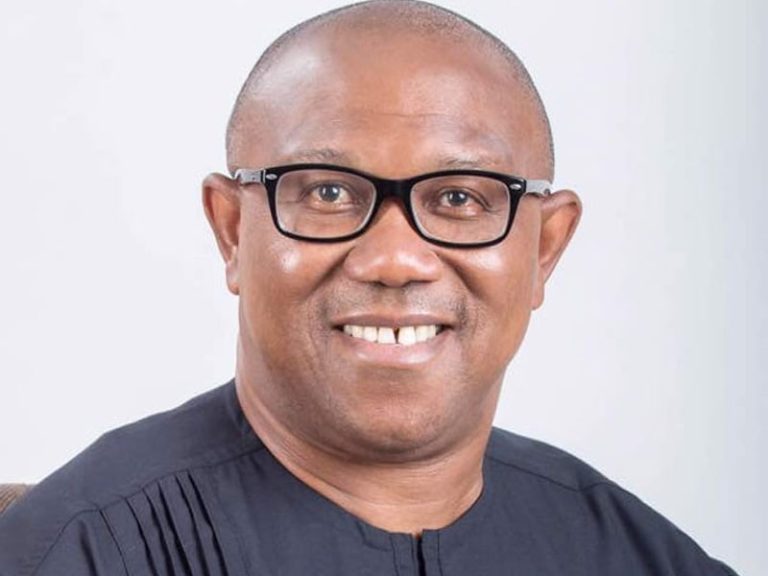
To target Nigerians, Quantum AI fabricated a post, claiming the charismatic Labour Party’s Presidential Candidate in Nigeria’s last election, Peter Obi has endorsed the platform.
“…Give me 250 dollars, and with the Quantum AI platform I’ll make a million in 12 to 15 weeks,” the platform falsely quoted Obi as saying.
In another false endorsement, Quantum AI falsely claimed that popular podcast host Chude Jideonwo endorsed the platform.
“What’s made me successful is jumping into new opportunities quickly – without any hesitation. And right now, my number one money-maker is a new cryptocurrency auto-trading program called Quantum AI,” they claimed Chude said.
The success of Ponzi schemes in Nigeria has usually been linked to their endorsement by high-profile individuals and influencers. Racksterli scammed Nigerians of billions of naira after popular Afrobeats singer, David Adeleke, also known as Davido,endorsed them. Previously, the Ponzi operators deceived such individuals, paid them or had them on board to get these endorsements.
With AI, these endorsements have become easier to obtain. Orchestrators create convincing videos, audio clips and infographics of public figures seemingly endorsing their platforms. These endorsements circulate widely on WhatsApp groups, Facebook, and TikTok, giving an aura of legitimacy.
For instance, a video surfaced on Facebook in June alleging that a lawmaker, Saliu Mustapha, a Senator representing Kwara Central, endorsed a government-backed financial investment platform during a live television interview.
In the AI-generated video, the voice of Mustapha, a popular philanthropist in Nigeria, was cloned to appear as if he had said the scheme has an AI-powered analytical function, which allows it to predict trends, and subscribers could invest N395,000 to earn N1,580,000 per week.
Saliu Mustapha’s doctored advert
Despite the video showing Senator Mustapha in what appears to be an interview on Arise TV, analysis of the video shows that it was AI-generated. There were clear signs of digital manipulation, including unnatural facial expressions and a lack of lip movement synchronisation, indicating the use of deepfake technology.
In September, a video showing Peter Obi, presidential candidate of the Labour Party (LP) in the 2023 elections, purportedly advertising an investment platform called “AfriQuantumX”, trended online.
In the video posted by a Facebook page, News24, Obi was seen purportedly telling people to invest in the platform and earn a sum of “N7 million” every month. The former LP presidential candidate reportedly stated that the investment platform was created with his backing and the support of the federal government.
Using the InVID-WeVerify tool, The ICIR extracted keyframes from the video and conducted reverse image searches and the result showed that it was actually Peter Obi’s speech at the May 2017 edition of The Platform Nigeria, a programme organised by The Covenant Nation to debate political, economic, and social issues. This confirmed that the video was doctored, while the supposed investor testimonials, including those of other public figures featured on the AfriQuantumX website, were also AI-generated.
Saliu Mustapha’s doctored advert
A quick Google search of “AfriQuantumX” revealed that GCB Bank in Ghana had already distanced itself from the platform after its logo was misused in promotional material. In a statement, the bank described the posts as fraudulent, warning the public that the adverts were not linked to GCB, and urging people not to share personal information or transfer funds.
Some weeks after the collapse of CBEX, a Facebook video adspotted by The ICIR in May (archived here) showed a TVC News anchor endorsing a trading platform, Kai Traders, whileusing the CBEX platform that had already collapsed months earlier, as an example of why people should trust Kai Traders.
The presenter’s face and voice seemed real, but a closer look revealed signs of an AI generation with unnatural eye movement, misaligned lip-syncing, and distorted transitions between frames. The audio from the video was also extracted and checked on Loccus.ai, an audio tool that looks for specific forensic traces left by voice generators.
The result showed a 99% probability the audio was generated with an AI tool.
Kai traders advert
The ICIR identified the presenter to be made to look like TVC news anchor, Olamide Odekunle.
The video, posted on May 22, garnered over 18,000 views. Comments beneath it quickly identified the video as fake and flagged it as a financial scam. Yet, as of September, the post and others mentioned above remained online, unflagged by Meta’s moderation systems.
Meta, YouTube’s failure in curtailing scams on its platforms
Adverts promoting suspicious investment platforms like SquaredOptions, Quantum AI investment, Modmount and others are numerous on YouTube despite its Spam, deceptive practices & scams policy, which forbids content that “promises viewers they’ll make money fast” or leads people off-platform to fraudulent or harmful sites. This includes videos that use misleading financial claims.
The platform did not respond when contacted for comment.
Similarly, the deceptive contents mentioned above also violate Meta’s policies, which clearly prohibit the use of manipulated media, especially when such content could mislead users into believing that a person has said or done something they never did.
The company says it removes videos generated by artificial intelligence or other digital tools if they materially deceive users in a way that could cause harm.
Its advertising rules are even stricter, banning “unacceptable business practices” such as scams, deceptive financial promotions, and false claims of guaranteed returns. In theory, this framework should protect users from AI-driven Ponzi schemes and fraudulent endorsements that have become increasingly common across its platforms.
But in practice, enforcement has proven inconsistent. While Meta introduced a global policy in May 2024 to label AI-generated content, many scam videos in Nigeria, such as deepfakes of politicians, fabricated endorsements by TV anchors, have remained live and unflagged.
Even when users identify the content as fake in the comments, moderation systems often fail to act swiftly, allowing thousands of views and engagements to accumulate.
Meta reacts, removes AI-generated fraudulent ads
When The ICIRdrew Meta’s attention to the fraudulent ads, the platform said it remains committed to combating scams and misleading advertisements.
“Scammers are relentless and continuously evolve their tactics to try to evade detection, which is why we’re constantly developing new ways to make it harder for scammers to deceive others—including using facial recognition technology,” Meta stated in an email.
After ICIR’s report, Meta confirmed that it removed and disabled all the doctored ads, accounts, and pages flagged during this investigation.
“It’s against our policies to impersonate public figures. We have removed and disabled the ads, accounts, and pages that were shared with us,” the company said.
Experts, however, warn that artificial intelligence continues to tilt the balance in favour of scammers. “AI makes scams harder for ordinary people to spot Ponzi schemes,” said Gondwe Gregory, an Assistant Professor of new media technologies at California State University-San Bernardino.
AI-generated advert promoting schemes deleted after ICIR’s report
In Nigeria, where digital literacy is already limited, Gregory noted that the ability to distinguish synthetic media from authentic content is slim. “When you add economic desperation—high unemployment and inflation—people become more likely to believe in ‘miracle’ AI investments. Fraudsters also use AI-powered WhatsApp bots to chat with victims, making their platforms look legitimate and professional,” he added.
To curb the problem, Gregory recommended tighter regulation and stronger public education. He suggested that agencies like the EFCC and SEC should vet any platform advertising AI-driven investments before approval, while public awareness campaigns through radio, schools, churches, and WhatsApp could help citizens recognise red flags such as “guaranteed profits.”
On his part, Tijani observed that scammers are increasingly drawn to AI tools because they make deception look real. “With as little as ₦20,000, fraudsters can now buy cloning apps that mimic people’s voices or appearances, even showing up on live calls as someone else. This makes scams look credible, especially to the untrained eye,” he said.
According to Tijani, the bigger challenge is that society still largely believes what it sees or hears. While early deepfakes were easy to spot, he warned that AI has now made them hyper-realistic. “Even trained eyes may miss the facts now,” he said, stressing the urgency of broad digital literacy programmes.
He urged government agencies to lead awareness efforts, particularly in schools, places of worship, and communities where older and less tech-savvy Nigerians gather.
What are Nigerian authorities doing?
The Nigerian Government said it would intensify efforts to curb the rise of Ponzi schemes following the monumental losses suffered by many Nigerians to CBEX.
“We are introducing the code system that will allow mobile phone users to verify a capital market operator using USSD codes. They do not require an internet connection to be able to do this, which means any Nigerian with a mobile phone will be able to perform this function,” Director-General of the SEC, Emomotimi Agama, said.
“If anyone comes to you claiming what they are not, all you need to do is check with the code to know the status of their registration,” he added.
Agama emphasised that the recently signed Investment and Securities Act 2025 has introduced stiffer penalties for Ponzi schemes, now referred to as “prohibited schemes.”
He added that the Commission now has the power to take legal action against social media influencers and celebrities who promote such schemes.
SEC, Meta fiddle, Scammers’ field day continues
David is now back to his POS business after losing his hard-earned money, but scammers like the ones who defrauded him are at large, already hunting for new victims.
With Meta and YouTube’s regulations failing to spot and remove false investment advertisements and the Nigerian government’s failure to act proactively, thousands of Nigerians like David are susceptible to several fraudulent investment platforms springing up almost daily.
This story done by FactCheckHub reporter was supported by the Pulitzer Centre and republished from The ICIR
THE Independent National Electoral Commission (INEC) has claimed that a viral comment linked to an X account attributed to its chairman was posted before the original pro-APC post it was responding to.
The FactCheckHub had earlier reported that an account previously known as @joashamupitan reacted to a post by former APC National Youth Leader, Dayo Israel, who was celebrating an APC victory in an Igbo-dominated community in Lagos, by posting “victory is sure.”
The account was later renamed @Sundayvibe00 on April 10, 2026, locked, and labelled a parody account.
Following the controversy, the commission released a six-page forensic report distancing its chairman from the account.
In the report, INEC stated:
“Timestamp analysis shows the alleged 2026 reply, ‘Victory is sure’, was posted 13 minutes before the original post by @dayoisreal. This is physically impossible on any digital platform.”
CLAIM
The comment linked to the X account attributed to the INEC chairman was posted before the original pro-APC post.
THE FINDINGS
Findings by The FactCheckHub show that the claim is FALSE.
Checks show that INEC’s conclusion is based on a misinterpretation of the timeline.
Screenshot of the victory is sure comment by the X account linked to INEC chairman
A review of the edit history of Dayo Israel’s post shows that the original post was made at 4:02 pm and later edited at 4:18 pm.
The timestamp on the viral reply “victory is sure” is consistently recorded as 4:05 pm across multiple screenshots and archives.
The first post by Dayo Israel
The edited post by Dayo Israel
The 13-minute gap cited by INEC corresponds to the difference between the reply (4:05 pm) and the edited version of the post (4:18 pm), not the original post (4:02 pm).
This means the reply was made after the original post, not before it, contradicting INEC’s claim that the sequence is “physically impossible.”
VERDICT
The claim that the comment was posted before the original post is FALSE. Available evidence shows that the reply was made after the initial post but before it was edited, undermining INEC’s timestamp analysis.
CLAIMS circulating on social media allege that the Chairman of the Independent National Electoral Commission (INEC), Joash Amupitan, operated an X account that posted partisan content in support of the All Progressives Congress (APC) and President Bola Tinubu during the 2023 elections.
The claim centres on an X account previously known as @joashamupitan, which at one point reacted to a post by former National Youth Leader of APC, Dayo Israel, celebrating an APC victory in an Igbo-dominated community in Lagos by posting “victory is sure.”
The account, following public outcry was later renamed @Sundayvibe00 on April 10, 2026, locked, and labelled a parody account.
Following the digital footprints…
It is not uncommon for Nigerian academics like Joash Amupitan to have their contact details publicly available. We obtained his phone number and two email addresses, including the official email he has with UNIJOS, from his CV published online by Nigerian Post.
The details are consistent with those being circulated online. We further confirmed that the phone number is linked to him using Truecaller and an Opay account associated with the number. Through True Caller, we further extracted another Gmail account, j***ho@gmail.com, linked to the phone number.
The numbers and emails below were deliberately masked by The Factcheckhub.
Information from True Caller
We then used these details to attempt account recovery on X using the account ID. Below is a comparison of the masked recovery information and his publicly available details:
This result shows a close similarity between the publicly available contact information and the masked recovery details associated with the account. One of the phone numbers closely matches his number, and two of his email addresses align with the masked emails.
Result from 2FA authentication on Yahoo mail.
Establishing ownership requires platform-level data such as login history, IP addresses, and device records, which are not publicly accessible, but the two-factor authentication shows a connection between Amupitan’s information online and the one used to open the X account.
Some users also relied on AI tools like Grok to validate the claim. In some instances, the tool suggested that the account belonged to Amupitan and referenced its username history. However, such tools rely on publicly available data and have been shown to produce inaccurate outputs. Their conclusions cannot be treated as definitive evidence.
First, when prompted by an X user, the tool confirmed that the account @joashamupitan existed on the platform and attributed it to Prof. Joash Ojo Amupitan, the INEC chairman. It provided specific details, including the account ID 1567086242164101120 and indicated that the account was created in September 2022.
The tool further stated that the account later changed its username to @Sundayvibe00, which is now protected and labelled a “Parody Account,” following the resurfacing of pro-APC posts made during the 2023 election period.
The Independent National Electoral Commission (INEC) has denied the claim, stating that Amupitan does not own or operate any X account. The commission described the account as a fabrication by impersonators and said the matter has been referred to security agencies.
“The INEC Chairman does not own or operate any personal account on X. He has at no time engaged in partisan commentary, nor has he ever associated himself with any political leaning or activity in his private or public capacity,” the statement read.
However, no publicly available forensic report has been released to independently verify this position.
A viral video circulating on social media claims that a “Renewed Hope” billboard associated with President Bola Ahmed Tinubu’s campaign is located inside an office of the Independent National Electoral Commission (INEC) in Rivers State.
The poster expressed concern that INEC, a body expected to remain neutral and unbiased, was hosting partisan campaign materials.
A verified x user, @AsakyGRN made the post on April 16, 2026. The audio in the video says:
“Inside INEC and you’re seeing renewed hope. This is INEC in River State with motors packed inside. ADC and PDP own no dey, only Tinubu own dey. What is this telling you?
As of April 16, the post has garnered over 100,000 views, 3,000 likes and 2,000 reposts with comments doubting the integrity of INEC ahead of the presidential election.
video shows a “Renewed Hope” billboard inside an INEC office in Rivers State.
Screenshot of the viral post on X.
FINDINGS
Findings by TheFactCheckHub show that the claim is FALSE.
The building featured in the video is not an INEC office. Instead, it is the Renewed Hope Ambassadors Secretariat located at 246 Aba Road, Port Harcourt.
Analysis by TheFactCheckHub of public records and media archives confirms that this building was donated by the Minister of the Federal Capital Territory, Nyesom Wike, to serve as a campaign secretariat for President Tinubu’s renewed hope movement.
Channels Television documented the official commissioning of the secretariat in Port Harcourt by Wike on Friday, January 30, 2026. Months before this claim surfaced.
VERDICT
The claim that a renewed hope billboard is inside an INEC office is FALSE. The building shown in the video is the Renewed Hope Ambassadors Secretariat in Port Harcourt, which was donated by Nyesom Wike for campaign purposes and inaugurated on January 30, 2026.
A video circulating on social media claims that a group of Nigerian men, women, and children recently attempted to cross the sea to Europe to flee their country.
The post further alleges that some individuals died before reaching the shore.
A verified X user, @PSAFLIVE shared the footage on April 12, 2026, stating:
“A group of Nigerian men, women, and children attempting to cross the sea to Europe, fleeing their country. Some died before reaching the shore, and their bodies were found there.”
As of April 13, the post has garnered over 150,000 views, 2,000 likes, and 600 reposts.
The video claims that Nigerians are currently fleeing the country by boat to Europe, with some dying during the journey.
screenshot of the viral post on x
FINDINGS
Findings by The FactCheckHub show that the claim is MISLEADING.
TheFactcheckhub conducted reverse image searches on keyframes in the video and the result reveals that the footage is not recent. The same video was previously shared by the Facebook page Africa Global News at least seven months ago.
This confirms that the video has been in existence since at least late 2025 and does not represent a current event from April 2026.
The narration accompanying the video appears to have been pushed due to the prevailing climate of insecurity in Nigeria. The ICIR has reported on insecurity in Nigeria over time, and the case of banditry and terrorism at large.
Furthermore, an analysis of the audio in the video shows that the individuals are speaking French. While Nigeria is surrounded by French-speaking neighbours, French is not the official language of Nigeria, which is English.
The use of French strongly suggests that the migrants in the video are likely from a Francophone African nation rather than being a group of Nigerians, as claimed in the post.
VERDICT
The claim that the video shows Nigerians currently fleeing to Europe is MISLEADING. The video is at least seven months old, and the individuals featured are speaking French, suggesting they are not from Nigeria.
A video circulating on social media claims to show a federal lawmaker in Zamfara State being assaulted by a mob after defecting from the Peoples Democratic Party (PDP) to the All Progressives Congress (APC).
The 56-second clip shows a crowd physically attacking a man, with some dragging and beating him.
An X account, @ADCVanguard_, shared the video with the caption:
“BREAKING: This is what happens after a PDP federal Lawmaker has recently defected to the APC and declared his total support for the reelection of President Tinubu in Zamfara, when he visits his Constituency…”
As of the time of review, the post had generated over 53,000 views and more than 1,400 engagements.
CLAIM
The video shows a federal lawmaker being assaulted in Zamfara after defecting from PDP to APC.
Screenshot of the viral post.
THE FINDINGS
Findings by The FactCheckHub show that the claim is FALSE.
The claim surfaced amid ongoing political realignments and defections ahead of the 2027 elections, a period often marked by heightened tensions and misinformation online.
A reverse image search conducted on keyframes from the video shows that the footage is not recent. It was first shared online on December 17, 2025.
Reports from that period confirm that the incident involved Kabiru Mikailu, a member of the Zamfara State House of Assembly representing Maru South Constituency, not a federal lawmaker as claimed.
The incident occurred in Dansadau, Maru Local Government Area, where Mikailu was attacked by residents during a visit to his constituency. He was reportedly slapped, dragged, and manhandled before security operatives intervened.
Residents accused the lawmaker of poor performance, alleging that he had neglected the constituency, failed to engage with constituents, and delivered no visible development projects.
Further checks show that Mikailu remains a member of the PDP and was not among the lawmakers who defected from the party.
VERDICT
The claim that a federal lawmaker was assaulted in Zamfara for defecting from PDP to APC is FALSE. The video shows a December 2025 incident involving a state lawmaker who was attacked by constituents over alleged poor performance, not defection.