Home Blog Page 153

Can a woman post bail in Nigeria?

One of the issues that comes up when discussing gender bias in Nigeria both online and offline is that “a woman cannot post bail in Nigeria.”

This statement is used to put forward that a woman cannot stand as surety or provide any security for a defendant or a suspect.

This was further crystalised in a Nigerian web TV series titled: Skinny Girl In Transit (SGIT) by Ndani TV.  SGIT is poised as a show that highlights societal issues dealing with themes of domestic violence, adoption, inter-faith and culture relationship, among others.

In the pre-credit opening scene of Season 6 Episode 7 (S6E7), a police officer stated authoritatively that a woman cannot post bail.

As of January 6, 2021, the episode which was posted on March 27, 2020 has garnered over 640,000 views.

A scene from a web tv series – Skinny Girl In Transit – where a policeman stated that a woman cannot post bail in Nigeria.

THE CLAIM

A woman cannot post bail in Nigeria.

THE FINDINGS

Findings by the FactCheckHub show that the claim is false.

‘A woman cannot post bail’ is often listed among the litany of things women cannot do in Nigeria when having gender bias discussion.

The web TV series, SGIT, in a hard to miss position – the first 40 seconds – for S6E7, also reiterated this narrative that a woman cannot post bail in Nigeria.

Here is the dialogue that ensued in the first 40 seconds of the episode.

Woman: I don’t get it. Are you telling me that he is going to sleep here tonight?

Policeman: Madam, I never knew you are such a nice person. But you see, in the constitution of the Federal Republic of Nigeria (FRN), a woman does not post bail. So, you have to come back with a man tomorrow morning and that is how it is done.

Woman: Really?

Policeman: Yes.

This puts forward that a woman cannot enter any recognisance or stand as surety or provide any security for a defendant because the woman in question attempted to get her son released on bail from detention.

Abimbola Craig who is the lead actress and a producer of SGIT says the show tries to mirror society as well as shed light on societal ills.

Responding to a question around the show opening room for discussion on a lot of societal matters in Nigeria, she said “…Every time we come up with storylines, we try to make sure we come up with stories that are addressing everyone’s life”.

For instance, she pointed out that the show seeks to highlight the ignorance around dating married men.  “[What] I really wanted people to take out was the married men situation. It has happened before, it will constantly keep happening. We need to stop being ignorant and letting girls think it’s okay.”

The FactCheckHub reached out to the Managing Partner of Spectrum Legal Services, Saidu Muhammad Lawal, Esq. He noted that the claim is false.

Lawal said “a woman can stand as a surety” in Nigeria.

He however clarified that “’to post bail’ means to pay a sum of money for bail”.

Lawal also stated that a woman can stand as surety for any accused person or defendant standing trial in Nigeria.

He said this is backed by section 42 of the 1999 constitution of the FRN.

Lawal stated that any judge or law that says a woman cannot stand as a surety would be contrary to section 42 of the Nigerian constitution and that law would be void to the extent of its inconsistency with the Constitution.

Another lawyer who is principally into litigation, Barr. John Okebe, concurred with Lawal adding that the practice of not allowing women to stand as surety does exist.

Okebe told the FactCheckHub that “It is not the law that says a woman cannot post bail in Nigeria. I must however admit that it is a fact in some parts of Nigeria that women are disallowed from guaranteeing bail.”

Okebe said culture and the stereotype that women are incapable of owning personal properties which is often a condition for guaranteeing bail are likely reasons why this might happen.

He, however, maintained that “The law itself, in this instance, the Constitution prohibits discrimination on the basis of sex as such wherever and whenever a woman is not allowed, such a woman can maintain action in fundamental rights from discrimination on the basis of sex.”

Nnenna Joy Eze, a partner at Ijenna LP, noted that the constitution is silent on who is eligible to post bail; as such the claim is false.

She said, “from the combined reading of Section 35(4) and Section 42 of the 1999 Constitution of the FRN as well as Section 30 of Administration of the Criminal Justice Act (ACJA), nothing stops a woman from posting bail.”

The sections reads:

“Section 35 (4) Any person who is arrested or detained in accordance with subsection (1) (c) of this section shall be brought before a court of law within a reasonable time, and if he is not tried within a period of –

(a) two months from the date of his arrest or detention in the case of a person who is in custody or is not entitled to bail; or

(b) three months from the date of his arrest or detention in the case of a person who has been released on bail, he shall (without prejudice to any further proceedings that may be brought against him) be released either unconditionally or upon such conditions as are reasonably necessary to ensure that he appears for trial at a later date.

Section 30 ACJA reads;  1) Where a suspect has been taken into police custody without a warrant for an offence other than an offence punishable with death, an officer in charge of a police station shall inquire into the case and release the suspect arrested on bail subject to subsection  (2) of this section, and where it will not be practicable to bring the suspect before a court having jurisdiction with respect to the offence alleged, within 24 hours after the arrest.

(2) The officer in charge of a police station shall release the suspect on bail on his entering into a recognisance with or without sureties for a reasonable amount of money to appear before the court or at the police station at the time and place named in the recognisance.

(3) Where a suspect is taken into custody and it appears to the police officer in charge of the station that the offence is of a capital nature, the arrested suspect shall be detained in custody, and the police officer may refer the matter to the Attorney- General of the Federation for legal advice and cause the suspect to be taken before a court having jurisdiction with respect to the offence within a reasonable time.

Now these two sections provide for bail and as you can see, nothing here suggests such, she noted.

Eze told the FactCheckHub that some argue that Section 122 of the Criminal Procedure Act creates such a provision:

“An accused admitted to bail may be required to produce such surety or sureties as, in the opinion of the court admitting him to bail, will be sufficient to ensure his appearance as and when required and shall with him or them enter into a recognisance accordingly.”

However, this, Eze stated, is struck off by Section 14 of the Interpretation Act which clearly states that “words importing the masculine gender include females.”

Furthermore, Eze stated that section 42 of Nigeria’s 1999 Constitution precludes any law in force in Nigeria from subjecting anyone to any form of disability or restriction on grounds, inter alia, of sex.

Eze also noted that the Administration of Criminal Justice (Repeal and Re-enactment) Law of Lagos State, 2011, which is the criminal procedural law in place within Lagos, has dispelled every doubt as to the eligibility of a woman to post bail by its provision in section 118 (3) of the law which states that “No person shall be denied or prevented or restricted from entering into any recognisance or standing as surety or providing any security on the ground that the person is a woman”.

She added that Section 167 (3) of the Administration of Criminal Justice Act 2015 that regulates criminal procedure in the FCT has a similar provision.

Furthermore, all states that have domesticated this law equally have similar provisions too, she explained.

THE VERDICT

The claim that a woman cannot post bail in Nigeria is FALSE.

This is because the constitution of the Federal Republic of Nigeria is silent on the gender of eligibility and it also does not allow for discrimination on the basis of sex.


Claim that Canada is granting e-Visa to Nigerian professionals is FALSE

0

A VIRAL post on Facebook claims that Canada is giving 10 years e-Visa to Nigerian professionals.

The claim, which was posted on a newly created Facebook page parading itself as that of the Nigerian High Commission in Ottawa, Canada listed the category of professionals the visa will cover.

The claim also stated that only 6,000 Nigerians will benefit from the e-Visa.

The page, which currently has 1,338 followers, posted the claim on December 7, attributing it to Adeyinka Asekun, the current Nigerian High Commissioner to Canada.

THE CLAIM:

That Canada is giving 10 years e-Visa to Nigerian professionals.

THE FINDINGS:

Checks show that the claim is FALSE.

Findings by the FactCheckHub revealed that the Facebook page that posted the claim was created precisely on December 5, 2020 – few days before the post was made.

The page has already gotten more than a thousand followers in less than 10 days.

The FactCheckHub also reached out to Adeyinka Asekun, the Nigerian High Commissioner to Canada to confirm the authenticity of the page.

Azu Mozia, the Minister; Political & Consular Affair, who responded on behalf of the High Commissioner stated that the claim is false in its entirety.

Mozia, in an email to the FactCheckHub, stated that claim is not only bogus but the page is also fake.

“Please be informed that this faceless group of criminals has been circulating false information about an e-Visa agreement between Prime Minister Justin Trudeau and President Muhamadu Buhari, which allegedly took place during their meeting in February 2020 in Addis Ababa, Ethiopia.

“Yes, they indeed met but on the then issue of Canada’s candidature of the UN Security Council,” the email read in part.

Mozia also stated that the general public should disregard the claim in its entirety.

He added that “The High Commission is currently seized with efforts to reduce the rate of official refusal of Study Permits to potential Nigerian students by the Canadian government and to stop planned mass deportation of Nigerian asylum seekers.”

THE VERDICT

The claim that Canada is giving 10 years e-Visa to Nigerian professionals is FALSE


Did foreign debt under Buhari rise from $11 billion in 2015 to $34 billion in 2020?

0

A post made by a social media influencer, Reno Omokri, and shared over 4,000 times on Twitter claims that Nigeria’s foreign debt has risen to $34 billion under President Muhammadu Buhari-led administration.

Omokri, who was an aide to former Nigerian president, Goodluck Jonathan, on November 16, 2020, said the foreign debts rose from $11 billion in 2015 to $34 billion in 2020.

He also added that President Buhari has increased the price of fuel three times in 2020.

He wrote “General Muhammadu Buhari has increased fuel price for the 3rd time this year. No other government before him ever did this. Yet, he has increased our foreign debt from $11 billion in 2015 to $34 billion today.”

The claims as posted on Twitter.

THE CLAIMS

Claim 1: Foreign debt rose from $11 billion in 2015 to $34 billion in 2020.

Claim 2: President Buhari has increased fuel price for the third time in 2020.


THE FINDINGS

The claim that foreign debt rose from $11 billion in 2015 to $34 billion in 2020 is MOSTLY FALSE because the 2015 figure is accurate while that of 2020 is not.

What is Nigeria’s current debt?

The Debt Management Office (DMO) is responsible for collating and coordinating debts sought by the Federal Government of Nigeria.

It works closely with the Federal Ministry of Finance, National Bureau of Statistics (NBS), and the Federal Ministry of Budget and National Planning, alongside other relevant bodies.

The agency which was a department in the Ministry of Finance became autonomous on October 4, 2000.

A check through the DMO website to ascertain the most updated figure on Nigeria’s External Debt Stock shows a total of $31, 477, 140, 000 ($31.47 billion) as Nigeria’s foreign debt.

This figure is less than the figure ($34 billion) put forward in the claim.

The debt was categorised into two groups – multilateral and bilateral.

The DMO data which is updated quarterly shows the debt as of June 30, 2020 and it was uploaded on September 9, 2020.

The World Bank also has the same figure as the DMO.

Details of foreign loans secured by the Nigerian Government as at June 2020. This is the most recent as at press time. Photo Credit: DMO

What was Nigeria’s foreign debt in 2015?

The FactCheckHub verification shows that as of December 2015, Nigeria’s foreign debt was $10,718,430,000  ($10.72 billion)  which when rounded up is $11 billion as stated in the claim.

Nigeria’s Foreign Debt as of 31st December 2015. Photo Credit: DMO

Therefore, based on the above data, the claim is Mostly False.


CLAIM 2

In recent months within 2020, the price of Premium Motor Spirit (PMS) also known as petrol has fluctuated based on changes in international crude oil prices

In Nigeria, the international crude oil price is used as a benchmark for the country’s annual budget.

Consequently, the Petroleum Products Pricing Regulatory Agency (PPPRA), an agency of the Nigerian National Petroleum Corporation (NNPC), thus regulates and fixes fuel prices in the country.

While the PPPRA regulates the fuel price, the Petroleum Products Marketing Company (PPMC) is the marketer.

The PPMC is also responsible for the supply of petroleum products to domestic markets. It has depots scattered across the country from where PMS is supplied to petrol stations.

On March 20, 2020, the PPPRA commenced the market-based pricing regime for the PMS due to the deregulation of Nigeria’s downstream sector.

This implies that the agency would only monitor market trends and advise the NNPC and the oil marketing company on the market-based prices.

As such, the PPMC as of date is solely responsible for importing refined petroleum products for further distribution across the country. This is largely attributed to non-availability of forex to private oil marketers.

However, unlike the subsidy era where the government subsidizes fuel prices and PPPRA determines fuel cost, normal market forces currently determine petrol prices as purchased by the PPMC or private fuel marketers.

But, did Buhari increase fuel price for the third time in 2020?

Findings show that fuel, which connotes PMS in Nigeria, was increased more than three times in 2020.

In January and February 2020, Abdulkadir Saidu, PPPRA Executive Secretary pegged the open market price for petrol at N175.52 per litre and N156.02 per litre respectively.

This price was reduced to N125 in March, and it was further reduced to N121.50 – N123.50 per litre in May of same year. However, this new ex-depot price was to take effect in June 2020.

The  Ex-depot price is the price at which depot owners sell the commodity to retail outlets.

In recent times, the ex-depot price per litre of petrol is normally around N15 lower than the pump price, as the marketers would add cost of transporting the commodity from the depots to their retail outlets, in addition to other costs, such as marketers’ margin, among others.

In  July 2020, the ex-depot  price was increased to a range between N140.80 and N143.80.

The following month of August, it was still increased to a range between N145.86 and N148.86.

In September, the price was further increased to  ₦151.56.

As of December 2020, Timipre Sylva, Nigeria’s Minister of State for Petroleum Resources announced that the government would no longer fix the fuel prices.

Earlier in October, President Buhari, who is also the Minister of Petroleum Resources, during his speech to commemorate the country’s 60th independence anniversary, argued that the fuel price is low in comparison to other countries, adding that as such, it is unsustainable.

“Fuel prices in Nigeria are to be adjusted. We sell now at N161 per litre,” Buhari stated.

By November, the ex-depot price was increased once again to  N155.17.

About a month after the claim by Reno, in December,  the government promised a N5 price reduction.


THE VERDICT

The claim that foreign debt rose from $11 billion in 2015 to $34 billion in 2020 is MOSTLY FALSE. The 2015 figure is accurate while that of 2020 is not.

Also, the claim that President Buhari has increased fuel price for the third time in 2020 is MOSTLY TRUE, because it was increased more than three times.


Did Oyo IGR increase by 26.4%, Is Kaduna planning to tax everyone above 18?

0

A VIRAL post on Twitter claimed that Oyo State Internally Generated Revenue (IGR) has increased by over 26 per cent.

The post added that Kaduna State is planning to tax everyone above 18 years in the state.

The claims were made by a Twitter influencer, #OurFavOnlineDoc with the handle @DrOlufunmilayo on November 16.

Dr Olufunmilayo is currently having over 301,600 followers on her Twitter account where these claims were made.

“Seyi Makinde promised his govt will never increase tax on any Oyo citizen. NBS report showed Oyo State IGR increased 26.4% DESPITE no extra taxes.

But El-Rufai plans to tax everyone >18 in his state- though he has not given everyone jobs,” the tweet read  in part.


THE CLAIMS:

From the tweet, these two claims were established:

  1. Oyo State IGR  increased by 26.4 per cent.
  2. Kaduna State Government is planning to tax everyone above 18 years in the state.

THE FINDINGS:

CLAIM 1 : Did Oyo State IGR  increase by 26.4% ?

Data show that the claim is TRUE.

The IGR – Internally Generated Revenues – are revenues generated by States within the Nigerian federation.

It is independent of their share of revenue from the federation account. States generate their IGR through fines, taxes, sales, rents, interest and other avenues.

Although the author of this claim did not specify the particular quarter of the year or period he was talking about but the FactCheckHub findings show that the Oyo State IGR has increased to 26.4% in the latest data released by the National Bureau of Statistics (NBS).

According to the data for Internally Generated Revenue at State Level for the 2020 half-year (H1) released by the NBS, Oyo State IGR had a 26.4%  increase when compared to the same period of the previous year.

The total revenue for the half-year 2020 stands at N17,773,591,538.99 against the N14,060,685,978.15 that it was in the 2019 half-year.

CLAIM 2: Is Kaduna State Government planning to tax everyone above 18 years?

Checks show that the claim is TRUE.

Findings by the FactCheckHub shows that the Kaduna State Government is planning to tax every citizen of the state that is above 18 years of age.

The Kaduna State Internal Revenue Service (KSIRS) had on November 10  announced via its Twitter page that the state will begin to charge every citizen of the state that is above 18 years a compulsory N1,000 as Development Levy.

“Payment of Development Levy is compulsory, citizens of Kaduna State from 18 years and above are entitled to pay their development Levy into Kaduna State Revenue Accounts, it’s your civic responsibility to pay your N1,000 as Development Levy. #TAX4SERVICE,” the tweet read.

Similarly, Dr Zaid Abubakar, The Executive Chairman of the Kaduna State Internal Revenue Service (KADIRS) has said at a news conference in Kaduna, that as from 2021, every adult residing in the state would be made to pay the N1,000 levy.

THE VERDICT:

The claim that Oyo State IGR has increased by 26.4% is TRUE.

The claim that Kaduna State Government is planning to tax everyone above 18 years in the state is  TRUE.

How to fact-check viral post shared via WhatsApp

0

WhatsApp is one of the most popular messaging platforms, with over 2 billion monthly active users.

Although, WhatsApp is helpful in staying connected with friends and family, but it is also being used to spread fake news and rumors.

The uniqueness of the encrypted messaging platform and groups, which are limited to 256 people really make it difficult for content to fly easily without knowing its source.

However, apart from being skeptical with anything you come across on the platform, there is need to also apply the following tactics in checking the veracity of any post you come across on WhatsApp:

Look for the ‘Forwarded’ tag

Oftentimes, fake news is always being shared as a forwarded post on WhatsApp.

Although, you cannot see the number of times a message has been forwarded, you can, however, see an arrow icon above the message together with the caption “Forwarded”.

Above is an example of a forwarded post we saw on WhatsApp that eventually turned out to be false after conducting our fact-check.

Although the ‘Forwarded’ tag does not necessarily mean that the message is false because the tag is added to all messages that are shared multiple times, but a message with the tag should raise red flags.

The following ways might help you determine the veracity of such message.

Check Websites

Whenever you come across any viral post on WhatsApp, there is need to check the social media accounts or website of the institutions and companies referenced in the forwarded message.

Several organisations often share information about their events and activities on their social media handles. In the same vein, they also debunk information that have been falsely attributed to them via same channels too.

For instance, when the above news of N-Power was in circulation, apart from the fact that we found out that the website attached to the news was entirely different from the one designed for the programme, we also realized that the information wasn’t shared on the website of the institution in charge of N-Power.

The official N-Power website is  https://npower.fmhds.gov.ng, whereas the website in the viral post was “n-power-list.bid”.

Check Social Media

Furthermore, the Federal Ministry of Humanitarian Affairs, Disaster Management and Social Development (FMHDSD) debunked the fake news on their official verified Twitter account.

The N-Power programme is under this ministry.

Search for keywords in a post

Whenever you see any suspicious WhatsApp message, there is also need for you to Google search the keywords in it.

If such a post was attributed to a government organisation or large companies, the event therein could have been subject of a news story.

Organisations often update their activities to the Press.

For instance, if the Nigerian Government wants to employ 50,000 workers as seen in a viral post, the agency involved would have informed the press about such development.

In addition, if such claim has been a subject of a fact-check, you can come across such article through the Google search.

For instance, when you come across the above news that N-Power has shortlisted applicants for its programme, you can surf Google by simply typing: “N-power 2020 list”

From the screenshot, you can see that the first three feeds are from blogs that have nothing to do with the N-Power list. When you click each of the blogs, you will eventually realize that the list is not there and they only publish the news to gain traffic.

Reach out to fact-checking and major media organisations

You can also get in touch with fact-checking organisations like us, The FactCheckHub.


View this post on Instagram


A post shared by FactCheckHub (@thefactcheckhub)

Send any suspicious messages, memes, photos, videos or voice notes you receive to a fact-checking organisation in your country.

Once they publish a fact-check. You should endeavour to share the article in the original group where the content appeared to enable those who were exposed to the information know whether it is true or false.

In the past, we have received several news content (or information) from our audience who need clarifications. You can as well send us that viral WhatsApp post that is unclear to you to us via this link.


Use mobile tools for Images

In a bid to verify any WhatsApp message you come across, especially if it is a picture or video, there is need for you to adopt the usage of mobile tools to aid the verification. You can use mobile tools like Google reverse image search, TinEye or Yandex to verify images, while you use InVid to verify video content you come across on WhatsApp.

False claim circulates online that Nigerians will now pay $15,000 bond to get US visa

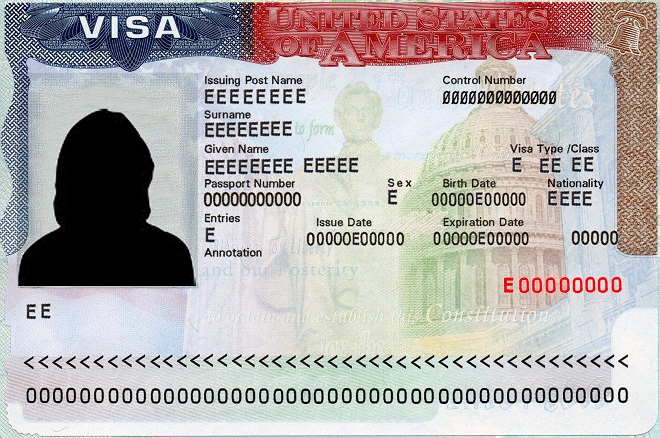
Multiple posts on social media platforms claim that Nigerians will pay fifteen thousand Dollars- bond to the U.S. government as a “new rule” to get a visa.

The claim, as seen on a Facebook post  published on November 24, 2020, reads:  “Are you a Nigerian trying to visit the U.S. soon, Before you go apply for your visiting visa; be ready to pay a $15, 000 bond to the US government.”

It says the new ‘temporary final rule’ from US State Department takes effect from December 24 through June 24, 2021.

While adding that, it is targeted at countries whose citizens have higher statistics of over staying beyond the approved visitors (B2) and business travellers (B1) visas.

THE CLAIM

Nigerians will now pay a $15,000 bond for U.S. visa.


Nigeria is not part of the US visa bond programme as falsely stated in this post.

THE FINDINGS

Checks by the FactCheckHub  reveal that the claim is FALSE.

The US Embassy in Nigeria has debunked the claim.

In a tweet, the embassy stated that “The United States Mission in Nigeria can confirm that Nigeria is not currently part of the pilot visa bond programme”.

What is the visa bond programme?

The visa bond requirement is as a result of a new rule by the outgoing President Donald Trump’s administration whereby applicants from selected countries are required to pay a bond of up to $15,000 in addition to visa fees.

The visa bond will affect countries whose nationals had an overstay rate of 10 per cent or more in 2019.

This new policy will be implemented on a temporary basis for six months – December to June – as a pilot scheme to test run it, the US Embassy in Nigeria stated.

Screenshot of reaction of the US Embassy in Nigeria on its official blog.

A  statement, it issued, says it is in response to the April 2019 Presidential Memorandum on Combating High Non-Immigrant Overstay Rates.

It added that “Among other efforts to address this challenge, the State Department is considering additional steps to address overstays, including piloting a limited visa bonds program to test, in coordination with the Department of Homeland Security (DHS), the operational feasibility of posting, processing, and discharging visa bonds as means to ensure the timely departure from the United States of certain travelers.

“Accordingly, the State Department will begin a limited six-month visa bond pilot program beginning on December 24, 2020.  We are committed to combating visa overstays and making sure travellers to the United States respect our laws”.

It noted that “Nigeria is not included in this six months pilot program.”

Findings show that the visa bond rule will permit the U.S. Consular officers to request tourist and business travellers from nations whose nationals had an overstay rate of 10 per cent and above in 2019 to pay a refundable bond of $5,000, $10,000 or $15,0000.

The affected 24 countries are: Laos, Yemen, Libya, Syria, Sudan, Sao Tome and Principe, Papua New Guinea, Mauritania, Liberia, Iran, Guinea-Bissau, Gambia, Eritrea, Djibouti, Congo, Chad, Cape Verde, Burundi, Burma, Burkina Faso, Bhutan, Angola and Afghanistan.

Although, the Trump’s administration had issued a number of immigration restrictions to Nigeria in the last two years, reports show that statistics of Nigerians travelling to the US has reduced.


THE VERDICT

The claim that Nigerians will now pay a $15,000 bond for U.S. visa is FALSE. Nigeria is not part of the U.S. visa bond programme.


Is this viral photo an attempt to launch a rocket into space in Nigeria?

0

A photo shared thousands of times on Twitter and in multiple WhatsApp groups, claiming to be an attempt to launch a rocket in Nigeria is misleading.

“Made in  US” and “Made in Nigeria”  says a November 14, 2020 tweet that shared the photo in comparison with another photo showing a US Falcon 9 rocket hoisted into vertical launch position.

The tweet has been liked more than 5800 times and retweeted more than 1400 times.

The same user also shared the photo edited to add the caption “150 billion naira was the budget for the successful launching of Nigeria rocket at the Centre for Space Transport and Propulsion…”

Similarly, the photo was shared in a WhatsApp group, this time around in comparison with  another rocket in a vertical position. The rocket is branded with the Ethiopian flag. The accompanying caption reads “Nigerian space rocket vs Ethiopian space ?. May God not shame us o…”

This photo has led to several conversation with a number of such conversations tilting towards Nigeria not being at par with other countries despite huge investment made in the sector.


A misleading comparison.

THE CLAIM: 

The photo shows a rocket ready for launch into space in Nigeria.

THE FINDINGS: 

Checks by The FactCheckHub shows that the claim is misleading.

NASRDA confirms photograph

The spokesman for the National Space Research and Development Agency (NASRDA) in Nigeria, Dr. Felix Ale, confirmed the picture to The FactCheckHub.

The NASRDA is the  Federal Government agency responsible for developing, designing and building right hardware and software in space technology.

Dr. Ale  said the officials captured in the photograph were staff of the agency trained by NASA, European Space Agency and the China National Space Administration (CNSA).

He  explained that the  activity being carried out was to test their capacities ahead of when the country will launch its satellite.

He described the picture as a ‘classified photograph’ that should not be in the public domain.

“It is part of our roadmap to have our launch site where we can launch our satellites in Nigeria. As a result of that, we have CSTP (Centre for Space Transport and Propulsion)  located at EPE. It is in preparation for our programme until when we have the capacity,” Ale told this reporter.

“That is the centre we will use the moment we are ready to launch our satellite,” Ale added referring to CSTP.

The image uploaded on CSTP website with date showing February 2020.


How did ‘classified photograph’ become public?

Through the Google image verifying tool, The FactCheckHub was able to trace the photo to an official government website – Centre for Space Transport and Propulsion (CSTP).

It however, provided no detail aside from ““Rocket Launch.”’ and “Contents coming soon.”

The CSTP was established in 2003 as one of the ‘six activity centres’ of NASRDA.

The photo shows several individuals some of whom wore safety kits with CSTP inscription.

The photograph was uploaded on February 1, 2020, with an original dimension of 1700 by 2560 and 96 dpi (Dots Per Inch) before it was altered and shared on social media.

The website link also serves as a subdomain of the NASRDA. 


The image on the right has been manipulated to include the Ethiopian flag.

Is this an Ethiopian rocket?

This photo which was shared in a WhatsApp  group with the caption “Nigerian space rocket vs Ethiopian space ?. May God not shame us o…” has been manipulated to add the Ethiopian flag.

The  photo is of Long March 5 being transported to a launch site. It was photographed by 篁竹水声 (Huáng zhú shuǐ shēng – google transcription) in 2017.

Long March 5 is a Chinese heavy-lift launch vehicle developed by the China Academy of Launch Vehicle Technology (CALT).

It belongs to the Long March rockets family operated by the China National Space Administration (CNSA).

Long March 5 Y2 transporting to launch site.


THE VERDICT:

Based on the above findings, the viral picture was shot in Nigeria but the context in which it was shared is MISLEADING.

The government officials were not launching a rocket into the space but were conducting a mock launch test.


Reports that Assistant Commissioner of Police was shot dead in Edo is FALSE

0

SEVERAL Nigerian blogs on Sunday, November 15, 2020 reported that an Assistant Commissioner of Police (ACP) was shot dead on Friday in Benin, the Edo State capital.

The reports were published by rifnote, Sahara Reporters and 24 reports.

The Nation newspaper also published the news before removing it.

The news blogs claimed that the ACP was shot during a gunfire exchange with cult members who were involved  in a supremacy battle.

The blogs further added that the ACP eventually died on Saturday at the University of Benin Teaching Hospital.

“Assistant Commissioner of Police (ACP, name withheld), who was shot on Friday in Benin, the Edo State capital, during the exchange of gunfire with cult members engaged in supremacy battle, died on Saturday at the University of Benin Teaching Hospital,” says the 24 reports


THE CLAIM:

Assistant Commissioner of Police (ACP) was shot dead in Edo State.

A screenshot of the report on a blog.

THE FINDINGS:

The FactCheckHub put a call through to Chidi Nwabuzor, the Police Public Relations Officer (PPRO) of Edo State who stated that the news making round that the ACP was shot dead is false.

Nwabuzor said the ACP was attacked and injured alongside two other policemen.

He explained that the are in stable condition and receiving treatment at the hospital.

“The news making round that an ACP was killed during a cult clash is false.

“Although the ACP sustained injury on his arm and hips, but he is in a stable condition receiving treatment together with two other policemen that were shot,” Nwabuzor  explained.

Similarly, Jack Obinyan, the senior special adviser to the Edo State Governor on New Media has also debunked the claim.

Obinyan in a tweet said, “Assistant Commissioner of @PoliceN in Edo is alive and recovering. Please discard news of his demise.”


THE VERDICT:

The claim is FALSE.  The Assistant Commissioner of Police even though he was injured is not dead as reported.


Again, FALSE claim circulates online that N-Power has shortlisted names for its 2020 programme

0

A VIRAL post on social media claimed that the Federal Ministry of Humanitarian Affairs, Disaster Management and Social Development (FMHDS) in Nigeria has shortlisted candidates for its 2020 N-Power programme.

The post which was repeatedly shared in several WhatsApp groups, directed people to follow a particular link to check their names.

“Check your name on the N-POWER Shortlisted names. Documentation will commence immediately”, the post retrieved from a WhatsApp group read.

Similarly, financialwatchngr, voiceofnigeria.org.ng, unn-edu.nfo and some other blogs had posted some click bait articles to claim people have been shortlisted for the N-power programme, but the content of the reports are not shortlist as stated in the headlines.


THE CLAIM

N-power has shortlisted names for its 2020 programme and that people can check via a particular link.


THE FINDINGS

Checks shows that the claim is false.

The N-Power is a scheme set up by the President Muhammadu Buhari of Nigeria, It is meant to address the issues of youth unemployment and social development.

It was created as a component of the National Social Investment Programme.

In a bid to verify the claim, the FactCheckHub observed that the website in the post is different from the website created for the programme by the Federal Ministry of Humanitarian Affairs, Disaster Management and Social Development (FMHDS).

The official N-Power website is  https://npower.fmhds.gov.ng .

The website in the claim  “n-power-list.bid” seeks to gain traffic by  prompting people to share.

For instance, the first page of the website asked people to click a link to check their name, while the following page asked for their mobile number. After which it directs people to another page asking them to share the post in 12 WhatsApp groups before having access to  process the documentation.


The third page of the fake website asking people to share the link in 12 whatsApp groups before proceeding.

The FactCheckHub also reached out to the FMHDS to confirm if a shortlist for the  N-Power programme is out as claimed.

Halima Oyelade, a special assistant on media to the FMHDS minister noted that the claim in circulation is false and that the ministry is yet to shortlist people for the N-power programme.

”This is not true,” she replied The FactCheckHub‘s enquiry via a text message.

The ministry also made a tweet debunking the claim labelling it as fake news.

In addition, the FactCheckHub had earlier fact-checked  and debunked a similar claim.

Such kind of  claims masquerading  as what they are not  usually target topics and areas that a lot of people are interested in, like relief fund, recruitment and  in this case  youth unemployment which affects a lot of people either directly or indirectly.

The objective is often geared towards driving traffic to a website – as it often asks for a link to be shared a certain number of times. It could also be  a survey website getting people to fill out questionnaires under false pretense. Sometimes such websites are set up to obtain people’s information for nefarious purposes.

One way to avoid falling victims to such is to try and verify the information by going to the government, institution, agency or company social media handle.  A number of such institutions that attract public interest are verified on social media. Such social media handle usually have the website included in the bio.

In this case the N-Power twitter account  is not verified , so you might be faced with several accounts passing itself as the real account. The FMHDS account is verified, this is the ministry overseeing the N-Power programme. You can check it timeline and see if it is retweeting content from any of the N-Power accounts. That way you can know which of the account is authentic.

In addition, since you have a verified FMHDS twitter handle you can go through the bio to go to the website and and look for the N-power programme – It is the parent body, it should have information about N-Power.

And in this case it does. Clicking on the N-power programme listed on the ministry’s website provides a link via which you can go to the authentic N-power website.

You can now compare this website with the one in the broadcast message if they are the same or not.

Another way is to google search the  information  using key words, government, agencies or ministries would often release a press statement about different steps or milestones of their programmes as such it is most likely going to be in the news.

Google searching can also let you know if a claim has been a subject of a fact-check.


THE VERDICT

Based on the checks above the claim that N-power has shortlisted names for its 2020 programme is FALSE.


View this post on Instagram


A post shared by FactCheckHub (@thefactcheckhub)

Will drinking hot water, tea, several times daily cure COVID-19?

1

A video which has been shared multiple times online claims that drinking hot water six times daily can help cure Coronavirus Disease (COVID-19).

The narration in the one minute thirty-one seconds video states that, drinking hot water and tea can cure COVID-19,  because  steamy water makes the COVID-19 virus die slowly.

“Do you know how they controlled the virus? It was in this manner. The Chinese drink hot water six times a day. They also drink hot milk and tea four times daily. That’s not all, they inhale the steam as many times a day as possible,” the video claims.

“When you do this for four days, the COVID-19 within you slowly dies off and you are cured on the fifth day.”

It attributed the measure as the solution adopted by the Chinese people and was largely responsible as to how the Chinese government was able to control the virus.


THE CLAIM

That drinking of hot water six times daily, drinking of tea four times daily and  inhaling steam can cure COVID-19.

A scene from the viral video claiming drinking tea can cure COVID-19.


THE FINIDNGS

The claim is found to be false as the World Health Organisation (WHO), the body managing global health responses is yet to announce a cure for the disease.

Coronavirus Disease 2019 (COVID-19) is defined as an ailment caused by a new strain of coronavirus known as the Severe Acute Respiratory Syndrome Coronavirus 2 (SARS-Cov-2). The WHO described infectious disease as a respiratory pathogen.

It was first reported to WHO on the 31st of December, 2019 in Wuhan, China.

Since the outbreak, as of  November 9, 50, 459, 886 cases have been recorded globally, 1,257,523 deaths confirmed in 219 countries.

A scene from the viral video claiming drinking hot water, tea and inhaling steam can cure COVID-19.

In Nigeria, the disease has claimed 1,158 deaths from a total of 64, 184 cases while 60, 069 have been discharged as of Monday, November 9.

Findings from the WHO, shows it spreads mainly through ‘droplets generated when an infected person coughs or sneezes, or through droplets of saliva or discharge from the nose.”

One of the best ways to keep safe as recommended by the WHO is to maintain the guideline which includes social distancing of at least 1 metres, and adherence to proper handwashing hygiene.

In its advice to the public titled myth busters, the global health organisation provided clarifications on some information considered as false. The above claim was among. It states that exposure to hot temperatures or temperatures higher than 25 Degree does not protect people from the COVID-19.

World Health Organisation (WHO) says  hot water bath does not prevent COVID-19.

“There are currently no drugs licensed for the treatment or prevention of COVId-19,” the WHO states.

Furthermore, a professor of Immunology, Dr. Ganiyu Arinola, says the assumption that drinking hot water will rid the body of the coronavirus is untrue.

In addition, “There is no evidence that hot drinks will protect against viral infections,” says Ron Eccles, an expert in respiratory diseases at Cardiff University in the UK and former director of the Common Cold Centre, BBC reports.

Several fact-checks have previously debunked various claims attributing different hot water mix  as cure of COVID-19.

SUN FM website front page showing it logo.

The logo found at the top-right edge of the viral footage is similar to that of Sun Fm 98.9/98.7. The broadcasting station is owned by the Asia Broadcasting Corporation Private Limited based in Sri Lanka.

Repeated calls to the mobile number found on the website of the media firm were not answered. An email sent to verify if the viral video emanated from them and what is the source(s) relied upon to make the claims was not replied.

The FactCheckHub has earlier found a claim presenting a cure to COVID-19 to be  misleading because the medication presented was not yet certified by the appropriate bodies.


THE VERDICT

The claim suggesting that drinking of hot water six times daily, tea four times daily and inhaling of steam would help cure COVID-19 is FALSE.

There are no publicly verifiable evidence to substantiate the assertion and the World Health Organisation (WHO) is yet to announce a cure.


View this post on Instagram


A post shared by FactCheckHub (@thefactcheckhub)