Home Blog Page 99

Claim that Wagner group arrives Mali to support Niger is misleading

0

A claim that the Russian mercenary group, Wagner Group, has just arrived Mali to provide support for the coup-led military regime in Niger is circulating online.

The claim was posted on X.com (formerly Twitter) by @Imranmuhdz on Wednesday, August 23, 2023.

This is coming about a month after soldiers in Niger seized power from Mohamed Bazoum, the democratically-elected president of the West African nation.

The claim reads:

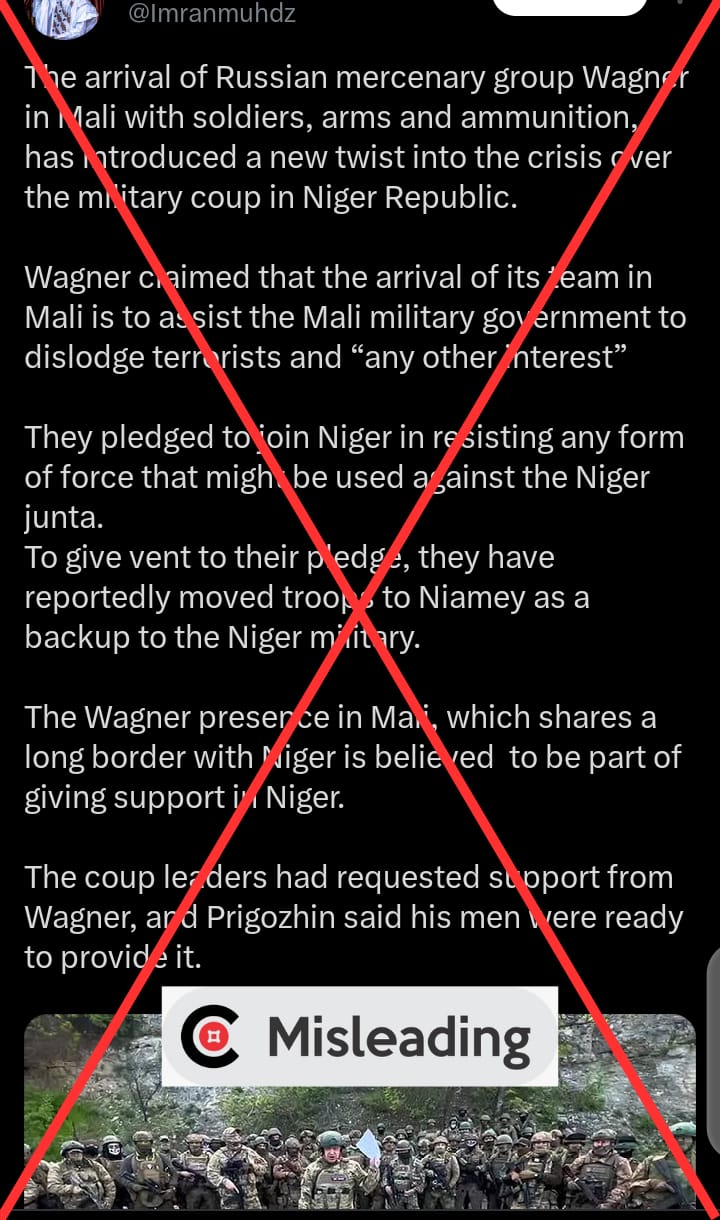
The arrival of Russian mercenary group Wagner in Mali with soldiers, arms and ammunition, has introduced a new twist into the crisis over the military coup in Niger Republic.  Wagner claimed that the arrival of its team in Mali is to assist the Mali military government to dislodge terrorists and “any other interest” They pledged to join Niger in resisting any form of force that might be used against the Niger junta.  To give vent to their pledge, they have reportedly moved troops to Niamey as a backup to the Niger military. The Wagner presence in Mali, which shares a long border with Niger is believed  to be part of giving support in Niger. The coup leaders had requested support from Wagner, and Prigozhin said his men were ready to provide it.

The post has since gained about 500,000 views, over 3,000 likes, and more than 500 reposts.

The Wagner Group is a private military organization run by Yevgeny Prigozhin, an ally of Russian leader, Vladimir Putin, with tens of thousands of fighters and it has operated in Syria and in various African countries.

CLAIM

Wagner group has arrived in Mali to provide support for the coup-led military regime in Niger.

Screenshot of the claim, Insert: misleading verdicft
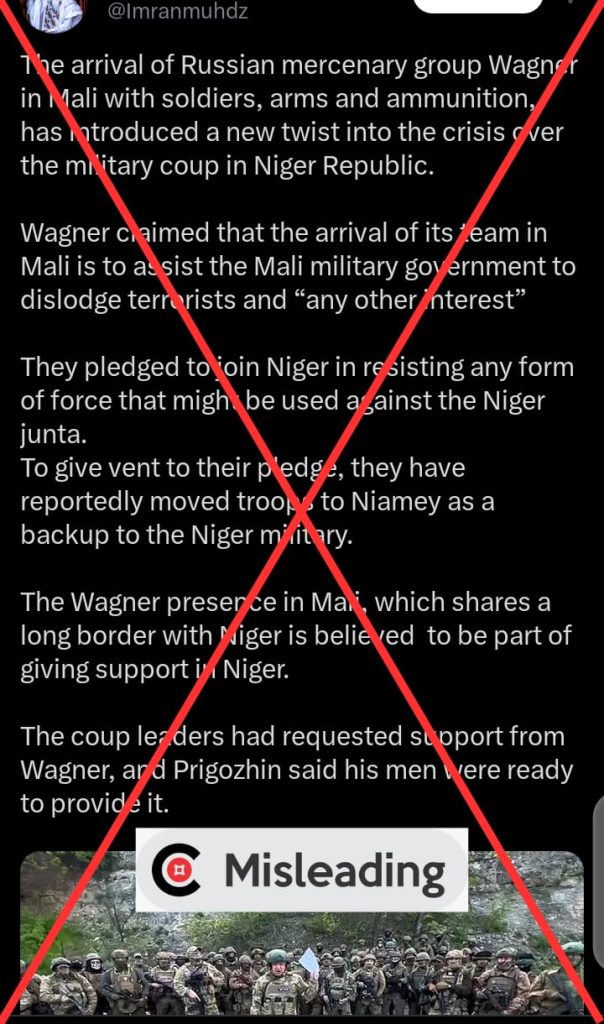
Screenshot of the viral post. INSERT: Misleading verdict.

THE FINDINGS

Findings by the FactCheckHub revealed that the claim is MISLEADING.

Wagner, the Russian private military company (PMC), arrived in Mali in December 2021 and it has its base in Bamako, the Malian capital.

The Centre for Strategic and International Studies reports that Wagner’s operations in Africa include paramilitary services and a broader network’s involvement in resource extraction, smuggling, influence operations, and other activities.

Mali had declared their support for the coup in Niger alongside Burkina Faso and Guinea earlier in August this year.

Burkina Faso and Mali had issued a joint statement to warn that any military intervention against Niamey would be considered a declaration of war against their nations.

Although Niger had solicited for help from the mercenary group, there have been no reports following Niger’s requests or the group assisting the Mali military government.

Further findings revealed that when this claim was made, the leader of the Wagner group was reportedly involved in a plane crash.

Similarly, when our researcher subjected the photo shared alongside the post to a Reverse Image search on Google and Yandex, the results show that the image has been on the internet some months back.

For instance, it was used as a feature image on an article published on Foreign Affairs website in May 2023, though it credited the photo to Reuters.

THE VERDICT

The claim that the Wagner group has arrived in Mali to provide support for the coup-led military regime in Niger is MISLEADING; checks show that the group has been in Mali since two years ago and there are no reports of  the group assisting coup-led military regime in Niger.

Photo of Obi in handshakes with Tinubu is FAKE!

0

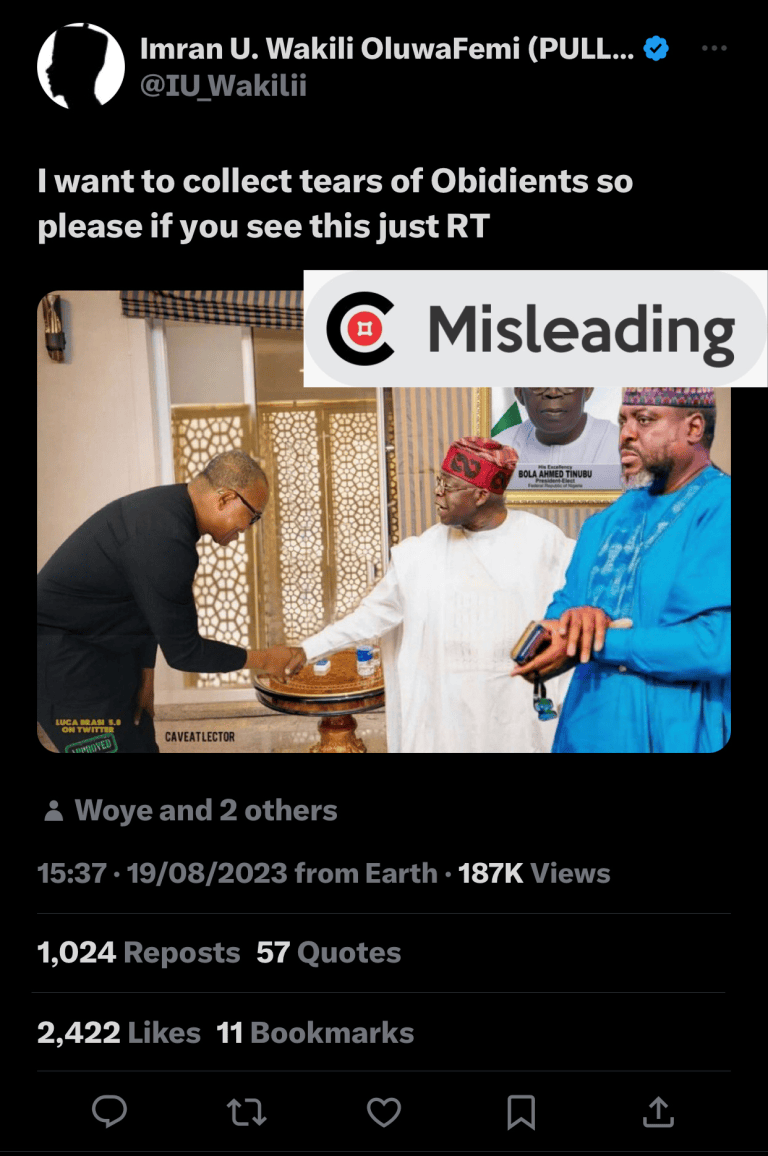
ON August 19, 2023, an X user, Imran U. Wakili posted a photo showing Peter Obi, the presidential candidate of Labour Party in Nigeria’s 2023 general election while bowing and shaking hands with Bola Ahmed Tinubu, the nation’s president.

Imran who is also an ardent supporter of Tinubu posted the photo with a caption that reads: 

“I want to collect tears of Obidients so please if you see this just RT.” 

The post has generated over 1,000 reposts and more than 2,000 likes as of Friday, August 25, 2023. 

Recalled that The FactCheckHub had earlier fact-checked a photo showing Obi conversing with Seyi Tinubu where our findings show that the photo was manipulated. 

The photos are being used to imply that Obi has given up his pursuit of justice at the Presidential Election Petition Tribunal over the results of the 2023 presidential election.  

CLAIM

Photo shows Obi exchanging handshakes with Tinubu.

Screenshot of the viral post. INSERT: Misleading verdict.

THE FINDINGS 

Findings by The FactCheckHub show that the claim is MISLEADING. 

Checks conducted using Google Reverse Image search show that the image has been edited using an image manipulation software.

The search led us to the original image which shows Tinubu exchanging pleasantries with business mogul, Aliko Dangote when the later paid Tinubu a visit at the Defence Headquarters on April 26, 2023.

Checks show that Dangote’s image has been cropped out and replaced with Obi’s image in the photo.

Further findings revealed that the photo was created by X account, @Luca-Brasi-5.0, on August 19, 2023. Analysis of the account shows that he often manipulates images of public figures and politicians, especially Obi and President Tinubu.

The photo was also customised with his name and a Latin phrase “Caveat lector” which means “Let the readers beware,” a pointer to the fact that the photo has been doctored.


THE VERDICT 

The claim the photo shows Obi exchanging handshakes with Tinubu is MISLEADING; checks show that the photo has been manipulated.

Somalia bans TikTok, Telegram, 1XBet, over horrific contents, misinformation

0

THE Somalian government has banned TikTok, Telegram and online-betting website, 1XBet, adding that the ban is aimed at curbing the spread of horrific contents and misinformation in the country.

According to Reuters, the development was disclosed in a statement by its communications minister, Jama Hassan Khalif.

Khalif stated that the said apps were responsible for indecent content, and helping terrorists spread “horrific” messages to the public, Reuters reports.

READ : TikTok announces measures to combat misinformation, hate speech ahead of Pakistan elections

The order gave internet service providers until August 24, 2023  to comply.

“The minister of communications orders internet companies to stop the aforementioned applications, which terrorists and immoral groups use to spread constant horrific images and misinformation to the public,” part of the statement read.

Members of insurgent group, al Shabaab, often post about their activities on TikTok and Telegram.

The decision comes days after Somali President, Hassan Sheikh Mohamud, said a military offensive against al Shabaab aims to eliminate the al Qaeda-linked group in the next five months.

1XBet is popular in Somalia for betting, especially on soccer matches.

TikTok, a Chinese owned video-sharing company, has been banned in several countries due to security concerns and the platform’s alleged sharing of users’ data with the Chinese government.

Claim that Lagos kicks off disbursement of ₦5bn palliative is FALSE!

0

A claim that the Lagos State Government has began disbursement of the ₦5 billion palliative allocated to each state of the federation by the Nigerian Government has been circulating on WhatsApp.

The federal government had on Thursday, August 17, 2023 announced that it will disburse ₦5 billion to each state to cushion the impact of the petrol subsidy removal.

The Cable had reported that the palliative would enable state governments to procure 100,000 bags of rice; 40,000 bags of maize and fertilizers to cushion the effect of food shortage across the country.

The claim was contained in a broadcast message sent to various contacts in a WhatsApp group. The message asked individuals to check if they are eligible to receive the palliative by clicking on a web link.

READ: Phishing scam: a misinformation tool threatening cyber security

The WhatsApp post read:

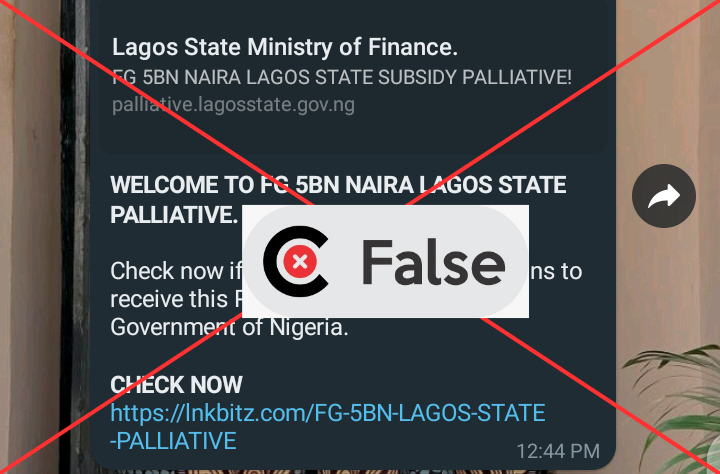
WELCOME TO FG 5BN NAIRA LAGOS STATE PALLIATIVE.

Check now if you are among the Lagosians to receive this Palliative from the Federal Government of Nigeria.

CHECK NOW

https://lnkbitz.com/FG-5BN-LAGOS-STATE-PALLIATIVE


CLAIM

Lagos state has begun disbursement of the ₦5 billion palliative.

Screenshot of the WhatsApp post. Insert: FALSE verdict.
Screenshot of the viral WhatsApp post. Insert: FALSE verdict.


THE FINDINGS

Checks by The FactCheckHub show that the claim is FALSE.

A careful look at the website link shows that the domain name has features synonymous with most phishing websites which The FactCheckHub had reported in the past.

Whenever users click the web link, it neither direct them to the official web page of the Lagos State Government or the Lagos State ministry of finance.

Rather, it asks you to fill in personal details like your name and bank details. Thereafter, you will be asked to share to groups and your phone contacts till a ‘green bar is full.’ This is a typical modus operandi of phishing websites and online scams.

READ ALSO: 5 common types of phishing and how to avoid being a victim

Media reports only stated that a ₦5 billion fund will be allocated to each state; but there is no report of Lagos state disbursing the palliative fund yet.

Moreover, the money allocated is to procure relief materials and not to give individuals cash.

To avoid falling victim to click baits by scammers or phishing websites, learn how to identify phishing scams and websites here.

You may also wish to learn how to verify viral WhatsApp messages too here.


THE VERDICT

The claim that the Lagos State Government has started disbursing the ₦5 billion fund it was allocated by the Federal Government is FALSE; findings revealed that the web link is a phishing scam.

Doctored image shows Peter Obi conversing with Seyi Tinubu

0

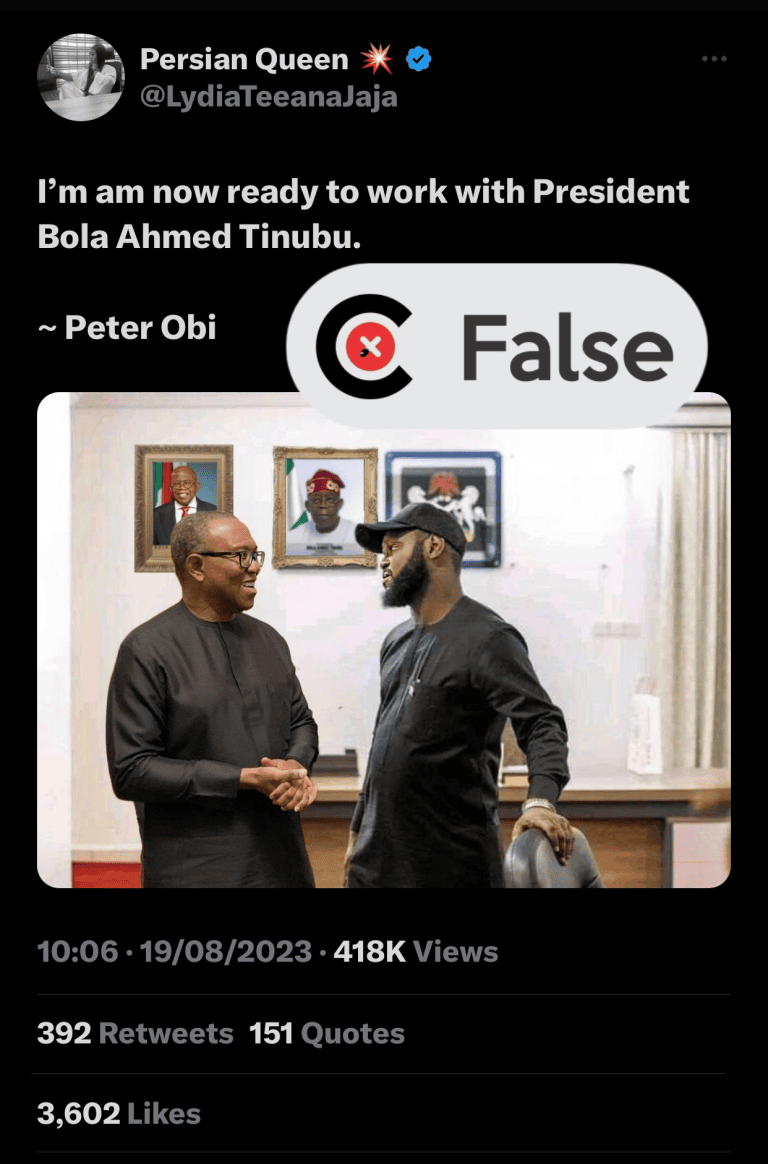
ON Sunday, August 20, 2023, a photo showing Peter Obi, the presidential candidate of Labour Party in Nigeria’s 2023 general election while having a conversation with Seyi Tinubu surfaced online.

The photo is being circulated alongside a claim that Obi has given up on his election-related court case and agreed to work with the nation’s president, Bola Ahmed Tinubu.

An X (formerly Twitter) user, Persian Queen (@LyndiaTeanaJaja) posted the claim with a caption that reads:

“I’m am now ready to work with President Bola Ahmed Tinubu – Peter Obi.”

The claim has generated over 400,000 views, 400 reposts and more than 3,800 likes as of Sunday evening, August 20, 2023. 

Another X user, Ikenga Africa (@apro_dawildcat) also reposted the claim with a caption thus: 

“Seyi,  your father is the winner of the 2023 presidential election, I only went to court to make Obidients feel important.  Nigeria will succeed under your father.  Peter Obi tells Seyi Tinubu.” 

The photo has also gone viral on WhatsApp, a messaging and video-calling app owned by Meta.

CLAIM 

Photo shows Peter Obi conversing with Seyi Tinubu.

THE FINDINGS

Findings by The FactCheckHub show that the claim is FALSE.

Checks conducted using Google Reverse Image search show that the image has been edited using an image manipulation software.

The search led us to the original image which reveals that the other person in the photo has been swapped with Peter Obi.

Similarly, the photo frames on the wall were also doctored, as they replaced the image of former President Muhammadu Buhari with that of President Tinubu to hide the fact that the picture is old. 

Analysis of the photo reveals that the person having a conversation with Seyi Tinubu is one Umar Faruk Lawal, who once contested for the post of the President of National Association of Nigerian Students (NANS). 

The original photo.

The photo was used as a feature image in a media report published in May, 2023  where Lawal led a coalition of some civil society groups to condemn Bloomberg’s report against Seyi Tinubu indicting him of fraudulently purchasing a property worth $11 million from former Nigerian minister, Diezani K. Alison-Madueke’s ally, Kola Aluko.


THE VERDICT

The claim that the photo shows Seyi Tinubu having a conversation with Peter Obi is FALSE; findings show that the image has been manipulated.

YouTube announces new policies to curb health misinformation

0

YouTube, a video-sharing platform, has announced a new framework aimed at combating medical misinformation that contradicts local health authorities or the World Health Organization (WHO) on the platform.

According to a recent blog post by the company, the move is an attempt to tackle medical misinformation on COVID-19, vaccines, reproductive health, harmful substances, and more.

The company announced its plans to simplify its current guidelines into three main categories: prevention, treatment, and denial. 

This means that YouTube will take down content that goes against established advice from health authorities on subjects like COVID-19, reproductive health, cancer, and dangerous substances, among other topics.

The platform has faced criticisms in recent years over how its algorithm direct viewers to misleading contents. In 2021, YouTube announced that it removed more than 1 million videos related to “dangerous coronavirus information” since the beginning of the outbreak in the U.S.

“We’re taking what we’ve learned so far about the most effective ways to tackle medical misinformation to simplify our approach for creators, viewers, and partners,” the company stated.

It also said it will remove content that contradicts guidance from health authorities on the prevention and transmission of certain conditions, including vaccines as well as content that contradicts guidance on treatments, including videos that tout unproven remedies in place of seeking care, and content that denies the existence of specific conditions, including COVID-19.

The platform said its new policies “will apply to specific health conditions, treatments, and substances where content contradicts local health authorities or the World Health Organization (WHO).”

“To determine if a condition, treatment or substance is in scope of our medical misinformation policies, we’ll evaluate whether it’s associated with a high public health risk, publicly available guidance from health authorities around the world, and whether it’s generally prone to misinformation,” it read. 

The post also highlighted new policies targeting cancer treatment misinformation. The company said it will begin to remove “content that promotes cancer treatments proven to be harmful or ineffective, or content that discourages viewers from seeking professional medical treatment.”

“This includes content that promotes unproven treatments in place of approved care or as a guaranteed cure, and treatments that have been specifically deemed harmful by health authorities.”

Citing an instance, the platform said a video that claims ‘garlic cures cancer,’ or ‘take vitamin C instead of radiation therapy’ would be removed from the platform.

5 common types of phishing and how to prevent being a victim

0

PHISHING attacks are fraudulent emails, text messages, phone calls or websites designed to trick users into downloading malware, sharing sensitive information or personal data (e.g., Social Security and credit card numbers, bank account numbers, login credentials), or taking other actions that expose themselves or their organizations to cybercrime.

Phishing is a form of misinformation in the sense that the hackers/scammers put out false information, but the people disseminating it believe it to be true. 

Phishing scams play out on multiple platforms, both offline and online and in different ways to get information and play attacks on unsuspecting audiences.

The FactCheckHub has published several fact-checks on phishing scams and tutorials on identifying phishing scams, websites and viral WhatsApp messages.

A common phishing scam technique is sharing phishing websites to closed WhatsApp group chats, as the message on the websites prompts individuals to share with their WhatsApp contacts.

These attackers always devise new methods to present to people, most times luring them with freebies or offers of partnerships or contracts for individual personal brands or businesses.

There are various types of phishing scams. There are over 10 types of phishing scams and attacks, but we would be focusing on the most common ones in our setting, how they work and how to prevent yourself from being a victim.

E-mail Phishing

This type of phishing takes place where attackers pose like an actual organization or entity. Most times, they operate by creating a fake domain name that mimics a real organisation or an organisation that does not even exist. 

In the case whereby the attacker is mimicking an actual organisation, the fake domain usually involves alphabets substitution. E.g. writing two letters ‘u’ to write ‘uu’ instead of ‘w’.

An example of e-mail phishing can be seen above.

source: FactCheckHub

Spear Phishing

Spear phishing is a more advanced form of email phishing. Unlike regular phishing, attackers conduct research on their victims, or they already have personal information about their victims, such as their name, place of employment, job title and specific information about their job role and craft messages specific to these details they have acquired.


Smishing

The word smishing comes from the combination of SMS and phishing. Attackers send deceptive messages to individuals using the short service messages (sms) feature. This kind of phishing attack takes place offline. A typical example is telling people that they have been considered for an opportunity and they should call a certain number for further details, just as seen in the image below. (Reference a possible research work)

Another example is sending fake bank alerts to vendors as payments for items bought or services rendered. A fast way to verify this is by checking your total balance after they claim the payment has been made, as it won’t reflect in your account. Another way is to log in to your bank app to check transaction details. Only genuine transaction details would appear.

Source: The Factcheckhub

Vishing

Vishing also stems from the combination of voice and phishing. Unlike smishing, this takes place via voice calls and conversations. These scammers use the Interactive Voice Response (IVR) technology that is commonly used by financial institutions to trick victims into divulging sensitive information.

A typical example is calling individuals and telling them there’s an upgrade on their account and tricking them into divulging their Bank Verification Number (BVN) to enable the hackers to have access to individuals’ money. Another example is calling individuals and telling them they need their services and they’re being contracted to supply an item but they have to make a deposit to get a sample.


Angler Phishing

This is the latest type of phishing, and it takes place in the comments section on social media. Dictionary.com defines an angler as someone who schemes to get things.

It manifests in the sense that the attacker comes to the comments section of a particular individual’s page and then tags an organization or entity, accusing them of incompetence on their part. Then they pose as the organisation asking the individual to check their Direct messages box (DMs) in order to resolve the issue. 

Individuals get deceived by this and tend to send messages to the fake organization when they have issues. Organizations have come out to debunk some of these mentions, but people still fall victim. 


In order to avoid being prey to these attackers, it is advisable for individuals to always pay attention and read messages carefully. There are always mistakes in most of these messages either in constructions or grammar. There could also be typographical error, and in some cases, the framing of the sentences might be unofficial. If it looks too good to be true, it is most likely false. 

If you didn’t apply for any grant, discard the messages that say you have won a gift or freebie. Lastly, when you receive phishing messages, mark them as spam so that in future, if you receive any message of the sort, it would automatically move it to spam and block.

Video does not show Nigerien president released after agreeing to resign

0

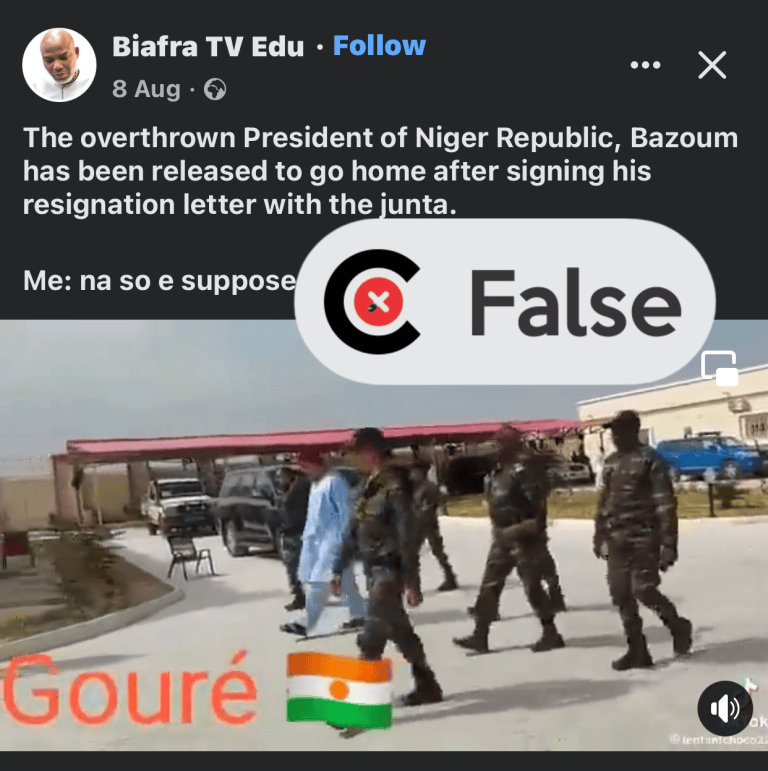
ON August 9, 2023, a video showing the ousted Nigerien president, Mohammed Bazoum accompanied by military personnel surfaced on the internet.

The footage claims the putschists were releasing the embattled president after he was forced to resign from his office.

A Facebook user, Blacks Region posted the video with a caption that reads : “VIDEO: After Signing His Resignation Letter With The Junta, the Overthrown Democratically Elected President of Niger Republic, Bazoum Has Been Released To Go Home.”

Another Facebook user, Sherifat Hasan posted with a caption that reads: “See how a Lion is converted into a cat; this life is temporary.  The overthrown President of Niger Republic, Bazoum, has been released to go home after signing his resignation letter with the junta.”

The video was also shared on Biafra TV Edu,  an online TV station operating on Facebook. The platform is located in Padua, Plateau in Senegal and has over 5, 600 followers, and more than 3, 200 likes.

The platform posted the video with a caption:

“The overthrown President of Niger Republic, Bazoum has been released to go home after signing his resignation letter with the junta.”

THE CLAIM 

Video shows Niger’s ousted president, Mohammed Bazoum released by military junta.

Screenshot of the viral posts

THE FINDINGS 

Findings by FactCheckHub show that the claim is FALSE.

Niger Republic has a population of about 27 million people. It shares borders with northern Nigeria, particularly the frontline states such as Sokoto, Katsina and Borno. The country derives its name from the Niger River, which flows through the southwestern part of its territory. 

On July 26, 2023, there was a successful overthrow of the government by the military, which occurred after President Mohamed Bazoum and his family were taken into custody. This event has garnered worldwide interest, leading to worries from nations belonging to the Economic Community of West African States (ECOWAS).

Following a string of sanctions imposed on the nation, indications show that both ECOWAS and the Nigerian government are moving closer to engaging in negotiations to address the conflict. A delegation of Nigerian Islamic scholars dispatched to Niger recently revealed that the military leadership has expressed willingness to engage in direct discussions with ECOWAS.

However, checks by FactCheckHub reveal that the video in circulation has been online before the military coup in Niger Republic.

A keyword search on social media led us to an earlier version of the video posted by a Tiktok user, @lenfantchoco22. Analysis of the post’s time stamp using Bellingcat shows that the video was uploaded on Wednesday, May 3, 2023 at 11:45 pm GMT ( UTC) before the July 26 coup d’etat in Niger Republic.

A latest BBC report published on August 14 confirmed that Bazoum is still held captive in the basement of his palace since the military staged a coup in the country about three weeks ago.

The report added that the military junta has announced plans to prosecute the ousted President for committing alleged high treason and undermining national security.


THE VERDICT

The claim that the video shows a moment the ousted Nigerien president, Mohammed Bazoum was released by the Military junta after being forced to resign is FALSE . Findings by FactCheckHub show that the video has been online prior to the military coup in Niger coup.

FactCheckHub at 3: Experts proffer solutions to tackling AI disinformation campaigns

Experts working in the disinformation space on Friday identified the need for more advanced methods in addition to the traditional fact-checking process to check the spread of misinformation.

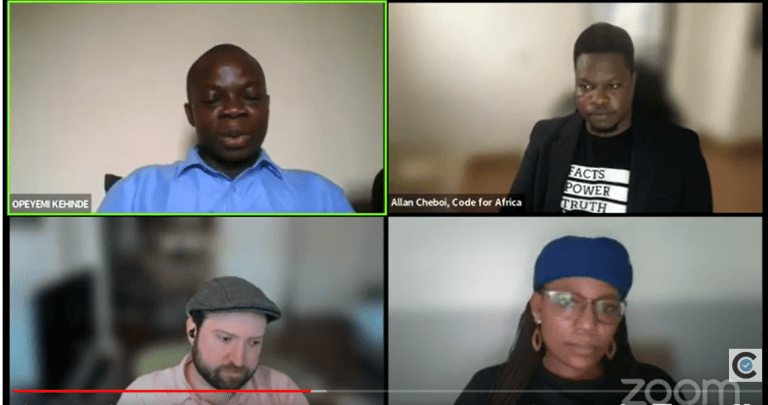
The experts spoke at the webinar FactCheckHub hosted as part of activities to mark the organisation’s third-year anniversary.

The webinar themed: The Impact of Artificial Intelligence and deep fake technologies on information space, had in attendance Christopher Guess, a Lead technologist at Duke Reporter’s Lab, a senior investigations manager at the Code for Africa, Allan Cheboi, David Ajikobi Nigeria editor of the Africa Check.

READ : Fact-checking not enough amidst disinformation and influence operations – Experts

During the webinar, the editor of the International Centre for Investigative Reporting,  Bamas Victoria , sought how fact-checkers could develop better capacity to address sophisticated online misinformation in the future.

Responding to the question, Guess raised the for fact-checkers to start investigating disinformation campaigns rather than individual pieces of disinformation content.

He said fact-checkers should consider investigating the source of disinformation campaigns, the motive behind the campaign, and who is funding it. 

Guess pointed out the need to incorporate investigative journalism in fact-checking, urging fact-checkers to combine fact-checking tools and investigative research in unravelling disinformation campaigns.

“Collaboration between fact-checkers and investigative journalists is going to be the next big win,” he added.

Giving tips on how to manually identify AI-generated images, Guess, highlighted that a common feature to note is the way some parts of the body look distorted in the images. 

He stated that AI-generated images are difficult to detect because they are generated from complete randomness.

“One way to identify AI images is to look at their hands, ears, shadows and edges. Instead of five fingers, the fingers may look twisted or three or four fingers instead. The ears are often missing. They are all telltale signs for the next few years.”

“One of the kickers as technology moves forward, a lot of these problems would be fixed is”

He added that looking at the text, language, and characters which are often gibberish is also away to tell an AI-generated image.

While sharing tools and techniques that can be used to fact-check AI-generated images, he stated that regular journalism techniques need to be deployed.

“The thing about artificial intelligence and generated AI images and texts is that you have to do regular journalism; you have to treat it just like it’s a politician that is lying to you but is an actual human being talking. 

“Assume and act like it’s fake. Regular journalism and fact-checking techniques that is what you want to do. Anything that has been purported has been real… how old is it? Has it appeared on the internet before? Was the person where it says they were? Does it make sense? Treat it like regular reporting and check it out,” Christopher emphasised.

On his part, Cheboi charged fact-checking organisations to devise technology that will promote easy identification of behaviours, narratives around disinformation contents and the actors behind its dissemination.

“When we focus on content alone, we will never beat the bad guys. Now that AI is here, they will keep churning out [false] contents that are very convincing, but you will never know,” he said. 

Flyer from the webinar

He urged stakeholders to tackle disinformation holistically by looking at the ABC template – Actors, Behaviour and Content,

He explained how disinformation actors use emojis, wrong spellings and other means to evade detection, adding that the actors need to be fished out using technology and research to unravel the source of a disinformation campaign.

Cheboi highlighted the struggles that social media platforms face in containing toxic content such as disinformation and hate speech across Africa. The reason being the context of the narratives are in the local vernacular.

“In Africa, we have more than 2,000 languages. In Nigeria alone, the number of languages can’t be estimated. In Kenya, we have about 42 languages. For the platforms to detect content that is created in all these languages, it’s really hard. That is why AI is becoming something that a lot of investment is being put in place for us to be able to do that.”

Citing examples of how  AI can be used for disinformation campaigns, he shared videos that were created by an extremist group with fictitious people pretending to be American pan-Africanists in support of what was going on in their countries while highlighting the influx of generated AI content in Africa.

“We’re talking about AI, and you know, maybe people imagine that in Africa, no one really produces AI to produce content that is divisive, content that at the end of the day would be polarising to citizens, but it is here, it is being used already, and that is the reason we are having this conversation,” Allan said.

Guess further stated that there is a need for disinformation experts to start discussing the policy, advocating and pushing for the criminalisation of misinformation, while Allan emphasised the need for social media platforms to invest more in the African region in order to counter disinformation, hate speech and polarising contents on their platforms.

You can watch the full video of the webinar here

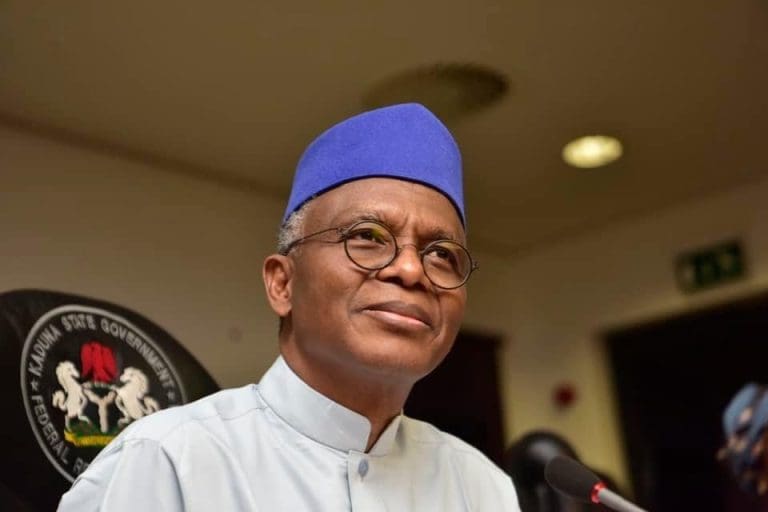
Ministerial screening: Fact-checking multiple claims by El-Rufai

0

ON Tuesday, August 1, the former governor of Kaduna State, Nasir El-Rufai appeared before the Senate following his nomination by the President, Bola Tinubu, as a minister in his cabinet. 

He was among a number of Ministerial nominees who were screened by the members of the National Assembly (NASS). 

El-Rufai shared his plans on how he intends to increase Nigeria’s electricity generation and distribution if made the power minister.

This was in response to a question posed to him by Abdulaziz Yari, the Senator representing Zamfara West Senatorial District, regarding revamping the power sector if approved as a minister. 

He said Tinubu’s vision in the next seven years is to achieve a constant power supply in the country. He made several other claims to affirm his competence and why he should be offered the job as a cabinet member.

In this fact-check, we examine four of his major claims while sharing his plans to stabilise the Nigeria power sector.

CLAIM 1

Nigeria has about 13000 MW of installed generation capacity 

THE FINDINGS 

Findings by FactCheckHub show that the claim TRUE.

Nigeria has been grappling with persistent power supply challenges for decades. The country’s generation capacity has consistently fallen short of demand, leading to frequent blackouts and load shedding. The country generates most of its power through hydro, gas and thermal. 

Between 2010 and 2022, reports showed the country recorded 222 partial and total power collapses. 

The inadequate generation capacity to meet the rising demand for electricity has been identified as primary challenge facing Nigeria’s power sector. It is also made worse by old transmission infrastructure.

Data obtained from the Nigeria Electricity Regulatory Commission (NERC) revealed the nation’s total installed capacity stands at 10,396 MW. But The FactCheckHub discovered the data is old because the website is hardly updated, except for its quarterly report. 

A check on the Nigeria Electricity System Operator, a platform under the Transmission Company of Nigeria (TCN) showed as of Wednesday, August 2, the total installed capacity of the grid as 13,014.14 MW.

The system provides information on the daily and hourly distribution and generation of power from the Gencos, among other detailed information. They basically monitor the functionality of the power systems. 

Though the former minister of power Abubakar was quoted as saying Buhari’s administration would leave an installed capacity of about 22,000 megawatts (MW) of electricity, the official data as of the time of the fact-check states otherwise. 

THE VERDICT 

The claim that Nigeria has installed power capacity of 13,000 MW is TRUE, according to data from Nigeria Electricity System Operator.

CLAIM 2 

Nigeria hardly generates 4000mw to 5000mw of electricity. 

THE FINDINGS 

Findings by FactCheckHub show that the claim is true. 

Nigeria produces an average of 5,000 megawatts of electricity which is insufficient for the consumption of about 200 million of its population.  

Successive governments have tried but failed to reform Nigeria’s energy sector. Nigeria’s former Minister of Power, Abubakar Aliyu admitted this fact before he left the office, attributing the challenge to the shortage of gas supply.

According to the latest NERC quarterly report, Nigeria’s average available generation capacity in the fourth of 2022 stood at 4,503.59MW.

THE VERDICT 

The claim that Nigeria still struggles to generate 4000-5000MW is TRUE according to public records.

 

Claim 3 

Eighty per cent of Nigeria’s electricity generation is from gas. 

THE FINDINGS 

Findings by FactCheckHub show that the claim is TRUE.

Natural gas is the primary fuel source for power generation in Nigeria. However, inadequate gas supply, pipeline vandalism, and pricing challenges have affected the availability of gas to power plants, leading to reduced electricity generation.

El-Rufai attributed the country’s epileptic power system to gas constraints, hampering the production capacities of generating companies (GenCos). He says 80 per cent of power generation is sourced from gas. 

Findings show that out of the 28 electricity generation companies (GenCos), merely three operate as hydro plants: Shiroro, Kainji, and Jebba. The rest are gas-fired power plants, which means they rely on a steady gas supply to produce electricity.

According to International Energy Agency , 80 per cent of power generation comes from gas; most of the remainder comes from oil. The latest quarterly report released by the NERC shows that approximately 75 per cent of the available generation capacity is gas-based. The report, made public on July 31, stated that most of the power plants in Nigeria’s Electricity Supply Industry (NESI) are dependent on “associated Gas.” 

Moreover, as of the last quarter of 2022, insufficient gas, according to NERC “resulted in the reduced generation from Geregu National Independent Power Project (NIPP) (97,201.07MWh), Olorunsogo (176,090.50MWh), Omotosho NIPP (106,295.57MWh), and Rivers IPP (156,890.67MWh).

THE VERDICT

El-Rufai’s position that gas is the major source of electricity in Nigeria is correct, and that 80 per cent of power generation comes from gas is mostly TRUE.


CLAIM 4

Banks have taken over 5 to 6 of our electricity companies due to liquidation.

THE FINDINGS 

Findings by FactCheckHub show the claim is TRUE.

Nigeria’s power sector was unbundled and privatised in 2013 with a view to creating a competitive market that would improve management and efficiency, attract private investment, increase generation, and provide a reliable and cost-efficient power supply.

However, the quest to deliver a cost-efficient power supply to Nigerians remains a pipe dream due to poor leadership and weak regulatory intervention.

The situation has defied successive governments as the sector continues to falter in inefficiency. Most private DISCos are also struggling financially to run the companies.

As a result, the federal government, in collaboration with Fidelity Bank and AMCON, took over the affairs of five electricity distribution companies, also known as DISCOs, over debts owed to Fidelity Bank.

The step is to save the companies from insolvency, among other reasons.

The affected companies are Kano Eectricity Distribution Company (KEDCO), Ibadan Electricity Distribution Company (IBEDC), Benin Electricity Distribution Company (BEDC), Kaduna Electric, and Port Harcourt Electricity Distribution Company (PHED).

THE VERDICT

The claim by EL-Rufai that about five to six DISCOs have been taken over by banks is TRUE, according to public records.