Please note that the FactCheckHub has not obtained any right from the authors or copyright owners of all third-party contents from embedded links and shall incur no liability in this regard.
Please note that the FactCheckHub has not obtained any right from the authors or copyright owners of all third-party contents from embedded links and shall incur no liability in this regard.
Please note that the FactCheckHub has not obtained any right from the authors or copyright owners of all third-party contents from embedded links and shall incur no liability in this regard.
Please note that the FactCheckHub has not obtained any right from the authors or copyright owners of all third-party contents from embedded links and shall incur no liability in this regard.
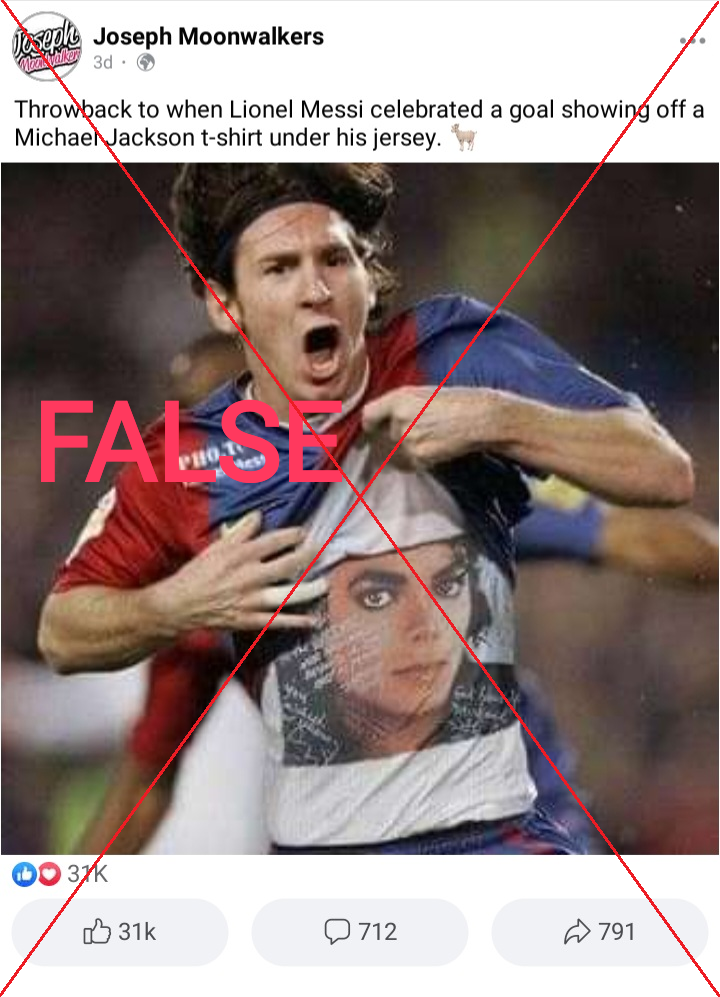
On November 3, 2023, a Facebook user, Joseph Moonwalkersclaimed that ace footballer Lionel Messi celebrated a goal by showing off legendary singer Michael Jackson’s T-shirt under his jersey.
The post has an image of the eight-time Ballon d’Or winner celebrating a goal by showing off a Michael Jackson’s T-shirt under his jersey.
“Throwback to when Lionel Messi celebrated a goal showing off a Michael Jackson T-shirt under his jersey,” the caption reads.
As of November 10, the post has gathered over 31,000 likes, 710 comments and 788 shares.
CLAIM
Lionel Messi celebrated a goal by showing off a Michael Jackson T-shirt under his jersey.
THE FINDINGS
The findings show that the claim is MISLEADING.
To verify the authenticity of the image, The News Digest Press subjected the image to Reverse Image Search on Yandex, Google Lens and TinEye.
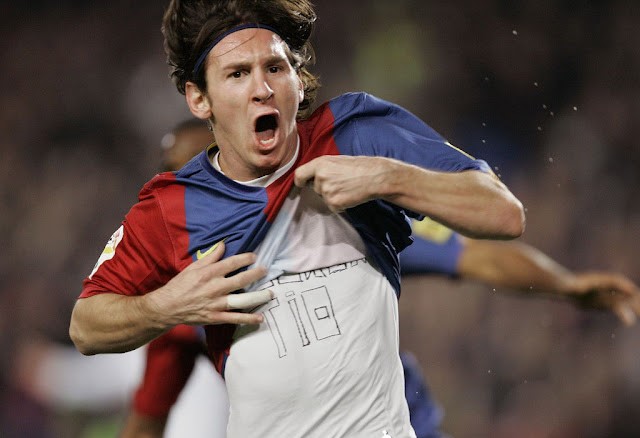
The results show that the former FC Barcelona captain Lionel Messi from Argentina celebrated his second goal during his Spanish League soccer match against Real Madrid at the Camp Nou stadium in Barcelona, Spain, Saturday, March 10, 2007.
The original image of Lionel Messi retrieved from BBC Sport.
However, no photo of a person is attached to the underwear T-shirt that the World Cup winner was wearing in the original image. It was just a pure white T-shirt with some inscription on it.
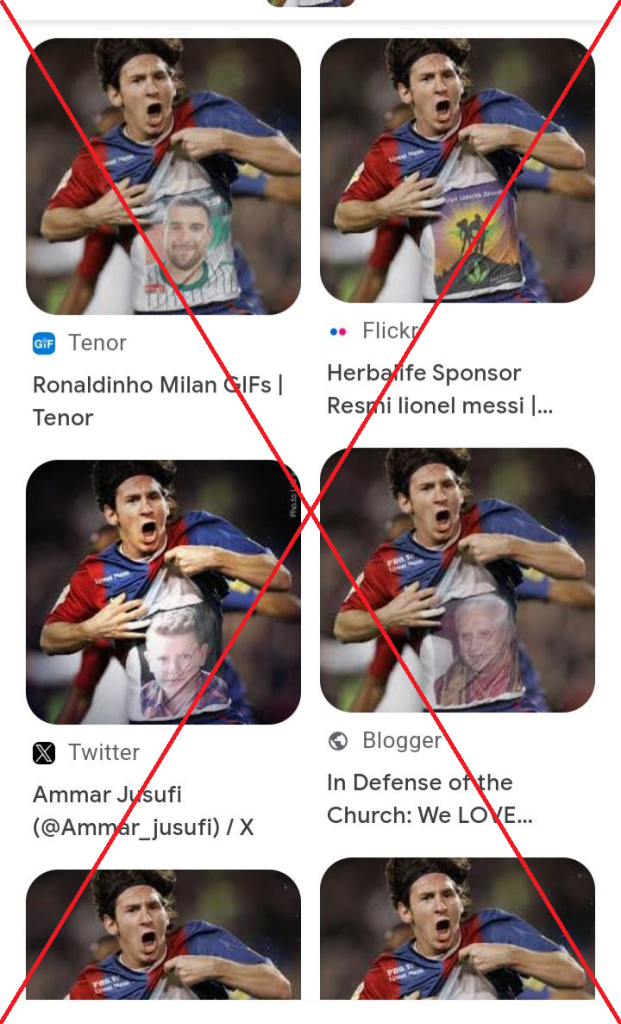
Meanwhile, The News Digest Press has obtained similar images with different people attached to the original image of the T-shirt.
The doctored ‘Lionel Messi’ images retrieved from the internet.
THE VERDICT
The image showing Lionel Messi celebrating a goal wearing Michael Jackson’s T-shirt under his jersey has been doctored and thus making the claim MISLEADING.
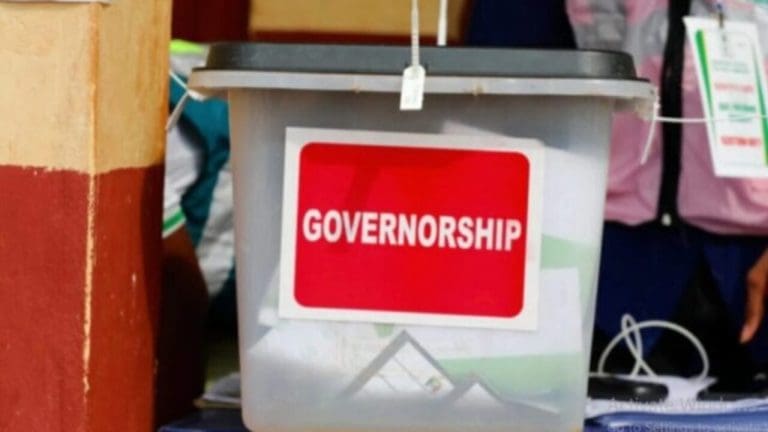
The off-cycle governorship elections announced by the Independent National Electoral Commission (INEC) are set to be held on Saturday, November 11, 2023 in Bayelsa, Imo, and Kogi states, where a total of 51 candidates are vying for the Number 1 citizen of their respective states.
To ensure the accuracy of information circulating during this period, the Nigerian Fact-checkers Coalition is carrying out a live fact-check to verify misleading information shared on social media and Television.
CLAIM: @McGingerIbeneme, an account on X (formerly Twitter), in now-deleted footage, posted a video marked with the logo and branding of TVC News indicating that the governorship candidate of the Peoples’ Democratic Party (PDP) in Imo state, Senator Samuel Anyanwu, has withdrawn from the race and asked his supporters to vote for the candidate of All Progressives Congress, Hope Uzodinma.
FINDING: An analysis of the video reveals that the footage has been manipulated. The audio in the video doesn’t match the lip movements of the individuals speaking –a common feature in deepfake videos. TVC News has also denied broadcasting the video and clarified that it is fake. Checks show that Mr Anyanwu debunked the footage via his verified Facebook Profile and clarified that he is “fully still in the race”.
CLAIM: A Facebook user, Muhammad B. Muhammad, claimed that the chairman of Lokoja LGA, Hon Muhammed Danasabe, died hours before the start of the Kogi governorship election. He said the politician was holding a meeting in the Kogi state government house yesterday when he complained of stomach ache, after which he was rushed to the hospital.
FINDING: Talba Lakwaja, the All Progressive Congress (APC) Public Relations Officer in Lokoja, confirmed the incident to Premium Times. He revealed that he slumped at his residence after a stakeholder meeting with party members at the Kogi government house on Thursday. The deceased was rushed to Shifa Hospital, where he was pronounced dead early Friday.
VERDICT: CORRECT
SOURCE: Premium Times
DATE: 10/11/2023
FACT-CHECK AUTHOR: Phillip Anjorin
EDITORS: OPEYEMI KEHINDE & SIMBIAT BAKARE
Claim 5
CLAIM: A viral video shared by “Area Papa Comedy” on Facebook on Nov. 9, 2023, claimed that there was war in Imo state a few hours before the governorship election.
FINDING: In a press conference broadcast on Arise News TV, Deputy Inspector General of Police Frank Mba said, “Imo is not a war zone, Imo is not on fire,” while asking the media and other stakeholders to fact-check fake news. Also, there was no media report about war in Imo state at 7:00PM on Friday.
VERDICT: INCORRECT
SOURCES: Deputy Inspector General of Police, Frank Mba
DATE: 10/11/2023
FACT-CHECK AUTHOR(s): Catherine Adeniyi
EDITORS: OPEYEMI KEHINDE & SIMBIAT BAKARE
Claim 4
CLAIM: Governor Hope Uzodinma of Imo State said, “When I came in 2020, we had an internally generated revenue profile of less than N500 million.”
FINDING: Internally generated revenue for states published by the National Bureau of Statistics (NBS) shows that Imo state’s internally generated revenue in 2019 was N16.095 billion, an average of N1.34 billion monthly. Between October and December 2019, the state generated N2.99 billion, an average of N996.67 million. It generated N3.08 billion from January to March 2020, an average of N1.03 billion monthly.
VERDICT: INCORRECT
SOURCES: NBS
DATE: 10/11/2023
FACT-CHECK AUTHOR(s): ALLWELL OKPI
EDITORS: DAVID AJIKOBI & SIMBIAT BAKARE
Claim 3
CLAIM: Brass local government PDP Chairman in Bayelsa, Bara Daniel, suffers head injury after brutalisation over election materials. The assailants were alleged to be APC thugs.
FINDING: News reports from Punch and Daily Trust say there was a clash in Twon-Brass jetty of Brass Local Government Area (LGA) in Bayelsa State between the Peoples’ Democratic Party and All People’s Congress. The platforms report that the incident happened when the Independent National Electoral Commission brought election materials to the LGA. However, a row ensued between the parties over where the materials should be kept. The PDP Chairman, Bara Daniel, sustained a head injury in the process, but no assailant was specifically identified.
VERDICT: PARTLY CORRECT
SOURCES: Punch and Daily Trust newspapers
DATE: 10/11/2023
FACT-CHECK AUTHOR(s): Cole Praise
EDITORS: OPEYEMI KEHINDE & SIMBIAT BAKARE
Claim 2
CLAIM: A Facebook post claims that MTN and the Imo State government have an agreement to switch off the former’s network services in strategic locations during the election day.
FINDING: MTN says it has no agreement with the Imo state government to switch off its network in parts of the state on election day. The network provider says its service “remains fully operational across Nigeria”. We also reached out to a special adviser to the Imo state governor, Collins Ughalla, who also denied the claim.
VERDICT: INCORRECT
SOURCES: MTN and Imo State government
DATE: 10/11/2023
FACT-CHECK AUTHOR(s): Muktar Balogun
EDITORS: DAVID AJIKOBI & SIMBIAT BAKARE
Claim 1
CLAIM: In a conversation with Arise TV, Eze Chikamnayo, the immediate-past commissioner for information and strategy in Abia, asserted that the Labour Party (LP) did not carry out primary elections for the 2023 Abia state gubernatorial election.
FINDING: According to ThisDay and The Guardian newspapers, Alex Otti secured the ticket of the Labour Party through a primary election held in Umuahia on June 8, 2022. Innocent Okeke acted as the Returning Officer. Mr Otti got 454 votes to become the candidate of the Labour Party for the 2023 Abia governorship election.
VERDICT: INCORRECT
SOURCES: ThisDay and The Guardian.
DATE: 10/11/2023.
FACT-CHECK AUTHOR(s): Sunday Awosoro.
EDITORS: DAVID AJIKOBI & SIMBIAT BAKARE
*This live-check was jointly researched and written by members of the Nigerian Fact-Checkers’ Coalition (NFC): Nurudeen Akewushola, Fatimah Quadri (FactCheckHub); Rosemary Ajayi (Digital Africa Research Lab); Daniel Adaji, Farida Salifu (NatureNews); Elizabeth Ogunbamowo, Lois Ugbede, Cole Praise, Temilade Onilede, Lateef Sanni, Sunday Awosoro, Philip Anjorin, Lade Aborisade, Maxine Danso (Dubawa); Catherine Adeniyi, Allwell Okpi, Fatimah Abubakar, Muktar Balogun, Semilore Adelola, Denzel Amobi, (Africa Check); Faruk Shuaibu (Daily Trust); Rejoice Ewodage, Hannah Ajakaiye (FactsMatterNG); Claire Mom (The Cable); Temiloluwa Erinle, Alefia Friday James, Muyiwa Adekojede (RoundCheck); Theophilus Adedokun; Shehu Olayinka, Blessing Otoibhi (ICIR).
It was edited and approved for publication by Kemi Busari, Simbiat Bakare (Dubawa), Motunrayo Joel, David Ajikobi (Africa Check), Ajibola Amzat (CCIJ), Opeyemi Kehinde (FactCheckHub) and Bamas Victoria (ICIR).
A claim that Rahama Saidu was expelled from Kebbi state College of Nursing Sciences over her social media posts has been circulating online.
Miss Saidu, a student of the nursing school in Kebbi state until recently, is a digital content creator on TikTok, Instagram and Facebook.
Towards end of October 2023, rumours spread on various social media platforms that she has been expelled from nursing school.
Multiple social media users on X, Instagram and Facebook made the claim online, alleging that it was due to her online posts and visual performance, especially on TikTok and Instagram. It was seen here, here, here, and here etc.
CLAIM
Rahama Saidu was expelled from Kebbi nursing school over her social media posts.
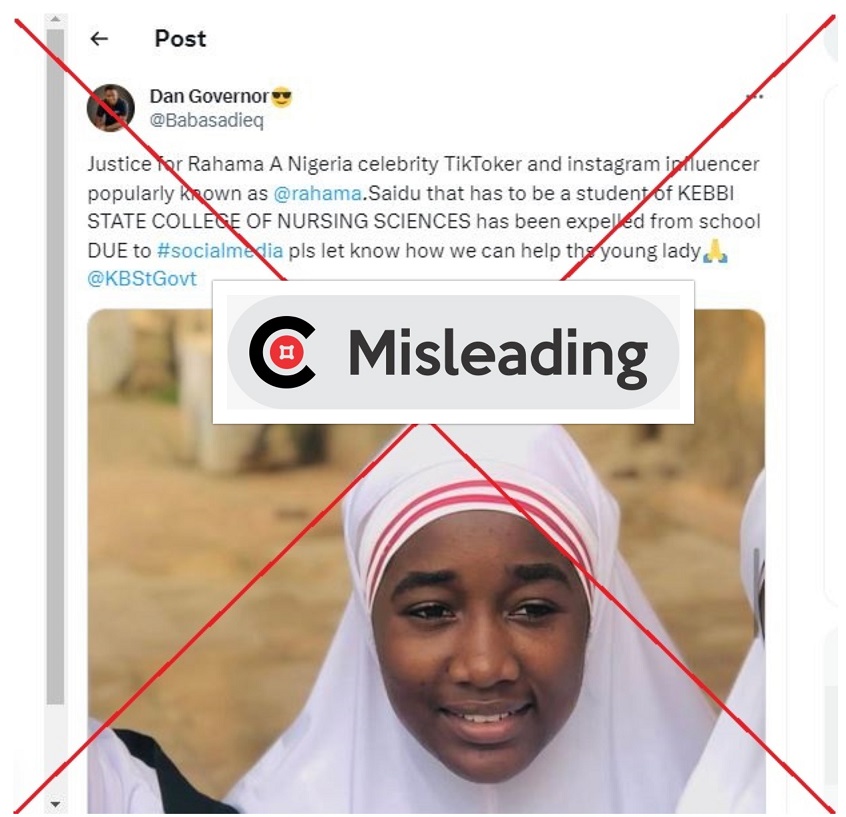
Screenshot from one of the posts claiming she was expelled from nursing college over her social media activities. INSERT: Misleading verdict.
THE FINDINGS
Checks show that the claim is MISLEADING.
Media reports revealed that Rahama Saidu was never expelled from the Kebbi state College of Nursing Sciences due to her social media presence or posts.
Daily Nigerian had reported that the Kebbi State College of Nursing Science in Birnin Kebbi, has denied expelling its student, Rahama Saidu, for indulging in social media activities.
Miss Saidu, a popular Tiktoker and Instagram sensation was rumoured to have been expelled by the school over her social media posts.
But the college dispelled the rumour, saying that Miss Saidu was expelled due to her failure to comply with the college rules and regulations.
According to the college, Miss Saidu was expelled from the school for failing her examination and refused to accept automatic repeat as enshrined in the school’s rules and regulations.
“According to the college rules and regulations, any student with 3 weeks’ absence from school or hospital without any genuine reason will automatically repeat that semester.
“Rahama Saidu failed exams 5 months ago, since then, she became absent from the school with no reason. She neither accepted the repeat, none of her query has been answered for several attempts which leads to her expulsion,” a viral statement released by the school revealed.
The statement, however, noted that the college does not know that Miss Rahama is a Tiktoker.
“Therefore, all the allegations labelled against the college by Rahama is false, baseless and mere accusations to tarnish the good image of the college which should be disregarded by the general public,” the statement added.
The nursing college also debunked the claim in a Facebook post on its official page.
THE VERDICT
The claim that Rahama Saidu was expelled from Kebbi nursing school over her social media posts is MISLEADING; findings show that the nursing college expelled her due to her poor academic performance and not related to her online posts.
POPULAR Nigerian blog, Instablog9ja, has claimed that Primate Elijah Ayodele’s prediction regarding Luton Town Vs Liverpool match of November 5, 2023 has come ‘true’.
The claim, posted on its X handle on the night of November 5, 2023, has garnered over a million views. The blog has over 3 million followers on its X account.
The post read: “Liverpool Vs Luton Town: Worldwide jubilation as Pastor Primate Ayodele’s prediction comes ‘true’.”
Primate Ayodele, a clergy, is the leader of INRI Evangelical Spiritual Church who made a series of football predictions in Game Week 11 of the English Premier League (EPL).
CLAIM
Instablog9ja says Primate Ayodele’s prediction on Luton Town Vs Liverpool match has come ‘true.’
Screenshot of the claim posted by Instablog9ja on X. INSERT: False verdict.
THE FINDINGS
Checks show that the claim is FALSE.
This reporter traced the video in which Primate Ayodele made the prediction to his TikTok account: @primateayodele.
The clergy had projected that Liverpool would beat Luton Town, but the prediction failed as the game ended in a 1-1 draw with the team at home. This is in contrast to the claim posted by Instablog9ja.
In Ayodele’s prediction, he had said that: “Liverpool versus Luton, Liverpool will beat Luton very well; Liverpool will beat them by more than two goals.”
This is not the first time the clergyman would be making predictions on sports, politics, and economy, among others.
In the past, the clergy had made a prediction that Manchester City would beat Bournemouth convincingly, which later turned out to be true as the game ended 6-1 in favour of Manchester City.
Media reports as published by Legit.ng and others revealed that netizens had mocked the clergyman following the failed prediction except for Instablog9ja which (erroneously) stated that his prediction came ‘true’. The blog, however, did not indicate if its post was a satire.
THE VERDICT
Instablog9ja’s post which claimed that Primate Ayodele’s prediction on Luton Town Vs Liverpool match has come ‘true’ is FALSE; as the football match ended in a draw.
ON a day when stars seemed at peace, Elsa (who requested that we use only her first name) fell for the oldest wooing trick in the game of romance. Sometimes, when a man wants to strike up a conversation with a lady, he pretends to know her from somewhere. Depending on her mood and response, he continues with his frolic.
Well, the 25-year-old student and fashion entrepreneur Elsa was in a good mood when Odalo contacted her; she responded nicely. It was April 17, 2022, and Odalo had sent her a Twitter (now X) direct message: “Heyy, did you attend MMAS by any chance?”
“Hiya, I’m a bit unsure what MMAS is,” Elsa responded.
“Lol, then it’s definitely not you. You look like a primary school classmate who used to tease me about my glasses so much; Murtala Muhammed Airport School,” Odalo wrote, asserting she doesn’t know him but at the same time introducing an interesting detail about his past.
Iriodalo Emmanuel Obhafuoso (Odalo) has been accused of cajoling women into sending him money by claiming a deadly illness. So, when DUBAWA came across his story on Twitter from some of his victims, we decided to investigate the depth of his relationship with Elsa, his tactics, and his claims.
The bait, the baiter, and the baited
A screenshot of the chat between Elsa and Odalo. It shows the day Odalo slid into her Twitter (now X) DM.
Elsa recounted to DUBAWA what ensued after the few minutes of her conversation with Odalo.
“After confirming I wasn’t the person he knew, he said, since I am here, let’s continue the conversation. So, we spoke for about a week before he said he had something to tell me. But before he brought it up, we have been talking every day,” she said.
Elsa and Odalo developed a friendship similar to a relationship between April and July of 2022. They talked a lot through consistent voice and video calls. However, because Odalo claimed to reside in Benin, she could not meet him in person. Their lack of physical meeting made Elsa hesitant to “officially date him,” but Odalo assured her they would soon move as he plans to be in Lagos soon because of a problem he needed to solve.
Like Lord Baelish, the cunning fictional character in the Game of Thrones, Odalo didn’t reveal his problem to Elsa immediately, but when prodded, “How are you,” he responded, “I’m not fine. I haven’t been fine.”
In the evening of that day, Elsa pushed again. She was curious to know what was wrong with her friend, maybe her lover.
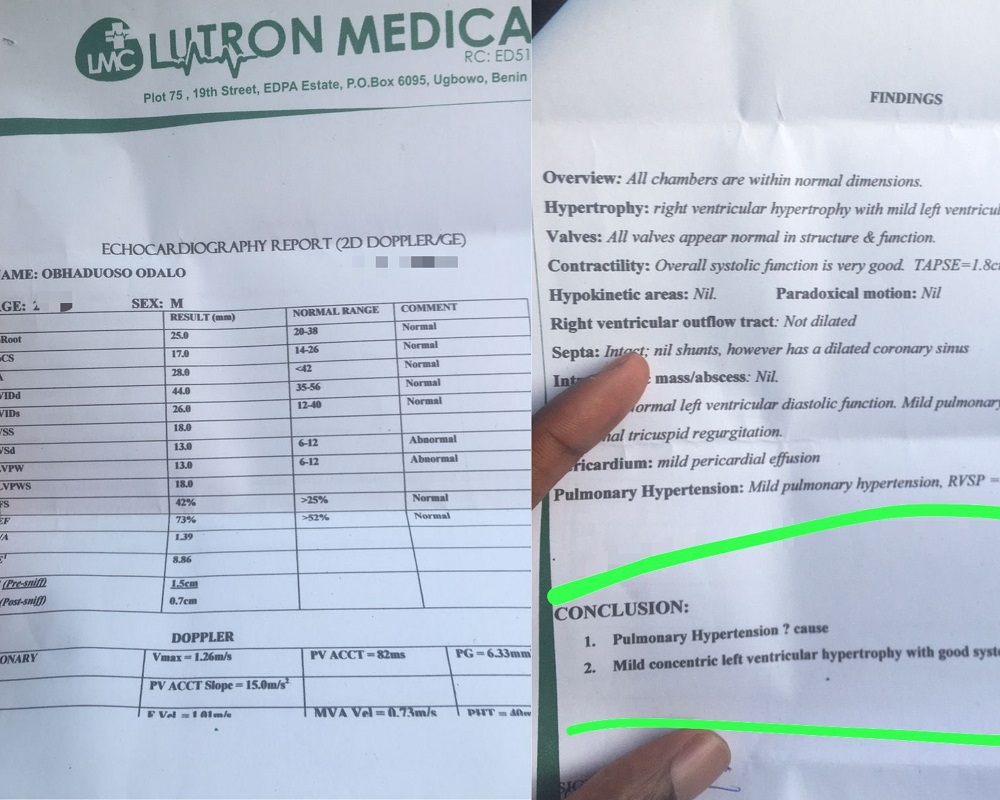
Odalo replied that he was very ill and had a heart condition. He also sent an echocardiography report as proof.
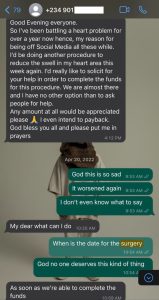
A screenshot of one of Elsa and Odalo’s conversations.
“The right side of my heart is swollen. It became pretty serious over the past few days,” he said.
He claimed he was in pain, the pills he had been taking weren’t helping him much, and that he needed surgery worth N3.3 million to remove “blood clots and reduce swelling.”
He further claimed that he had most of the money and needed N200,000 as balance – a manipulative strategy skilled scammers use to make victims feel at ease by acting like they have money and only need a little help.
Again, his tactic worked. Elsa asked for his account details, which he provided swiftly.
The account details he sent were: 0768696473, Access Bank, Obhafuoso Emmanuel Iriodalo.
Romance Scam: The beginning of billing
The moment Odalo sent his account details was the beginning of Elsa’s spending in a bid to get him healthy. Elsa said she crowdfunded about N30,000 for him on Twitter, but it was barely enough to cover his alleged health expenses, so she also sent him some of her savings. Elsa sent Odalo over N397,000 before she realised she was being scammed.
Some screenshots of Odalo’s message to Elsa.
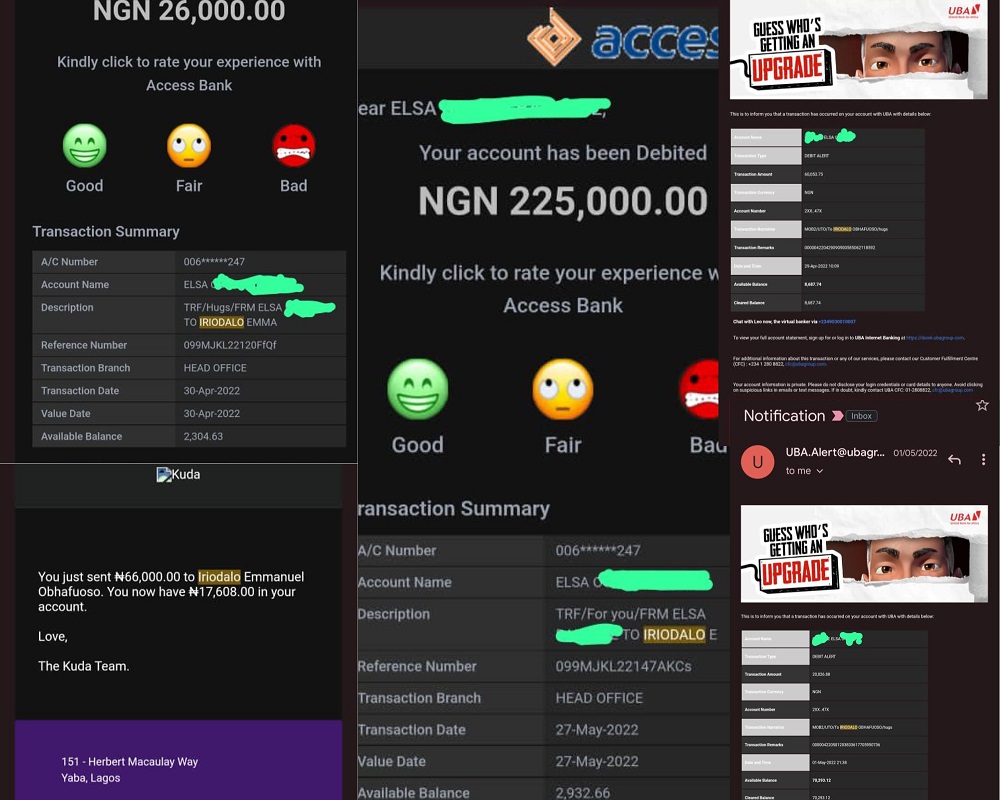
“Sixty thousand naira on April 29. That was the first money I sent. (I also sent) N26,000 on April 30. There was N20,000 on May 1st, N225,000 for the balance of surgery, and N66,000 for drugs on the 6th of July. There were some 1k sprinkled here and there,” Elsa recounted.
One morning in July, he expressed his love and gratitude to her:
“I love you. Thank you for being by my side this past couple of months. I really appreciate you.”
A screenshot of some of Elsa’s transfer receipts of monies sent to Odalo.
‘Every day is for the thief, but one day is for the owner’
During the relationship, Elsa said she always felt something was not right, but she couldn’t pinpoint it until one day when a mutual friend of hers and Odalo reached out.
“She said she saw that I tweeted something about how one of my friends has a heart condition and that she just put two and two together and that it is the picture of the person I tweeted about. She sent me a picture of Odalo, and I confirmed it was him. She then said okay, that they went to secondary school together, and they just found out he was a scam, and some boys in secondary school had gone to confront him,” Elsa said.
After the revelation, Elsa said she waited for Odalo to confess his fraudulent nature to her, but he never did. Suspecting he may never be honest, she confronted him. Days after the confrontation, in a message that appeared to be emotionally blackmailing, Odalo apologised for hurting her and lying to her to acquire money. He reassured her of his love and promised to be a better person.
Upon the confession, Elsa said she stopped sending him money. She also tried to forgive him and stay as friends, but she eventually blocked him as more secrets were unveiled.
“I genuinely tried to forgive him,” she told DUBAWA. “I thought it was a one-off thing, and I was the only woman. We weren’t texting as often because how I felt about him had drastically changed. I finally blocked him in December because I did not want to have any communication with him again,” she said.
Elsa stated that she deleted the crowdfunding message on social media and asked people not to send money to the account anymore. She also exposed him as a con artist.
“He was in my DM too”
A screenshot of Odalo conversation with another victim Gloria.
Odalo appears to use social engineering, a tactic used to manipulate people into making errors and giving away their valuables. After scrutinising the bios of the over 20 women on Twitter who said Odalo had contacted them too, we observed that he targets women in their 20s who have “entrepreneurs” in their profile or are vendors. Some of their stories can be found here, here, and here.
His strategies, when dealing with the women, appear identical. After forming a relationship, he sends a charming message, then claims he has a heart disease or any similar deadly illness. Odalo’s modus operandi transcends Twitter; he also shared his alleged illness with his contacts on WhatsApp.
One of his female friends, Gloria, after learning that he needed funds for a “heart surgery,” sent him N10,000.
“I have a story with this guy too. It’s sad mehn. I have known him for a long while as an artist & a friend. I’ll post my last chats I had with him. I sent him money too out of pity,” Gloria said.
Diving deep
Like he did with Elsa, Odalo sends an “Echocardiography Report” as evidence of his heart disease to possibly earn trust.
According to the National Library of Medicine, Echocardiography involves using ultrasound to evaluate the structural components of the heart in a minimally invasive strategy. The procedure allows the clinician to obtain real-time sizes, structure, and function of the heart during the cardiac cycle.
Odalo Echocardiography Report was allegedly conducted at Lutron Medical Centre Benin Photo source: Elsa
DUBAWA contacted a medical practitioner, Dr Richard Ogunlusi, to verify if Odalo’s Echocardiography report was genuine and if Odalo indeed had a heart disease.
“It’s difficult to say without seeing the patient and running another test elsewhere. The result could have been doctored. The ladies need to take him for an independent Echo/ECG test elsewhere to be sure,” the Public Health Medicine specialist, Dr Ogunlusi, said.
DUBAWA also contacted Lutron Medical Centre, where Odalo allegedly took the report and whose letterhead carried the result.
The Human Resources Manager of the private healthcare, Lotachukwu Ezeanom, after an internal investigation, told DUBAWA that although the report possibly emanated from their centre, the details, including the person’s name, have been altered. She further highlighted that the conditions diagnosed do not require surgery.
Forensic Analysis of Odalo’s “Echocardiography Report”
Various editing tools, including Photoshop and Affinity Photo, can be employed to manipulate images, while documents can be altered using modern apps with powerful personal items like Almanac.
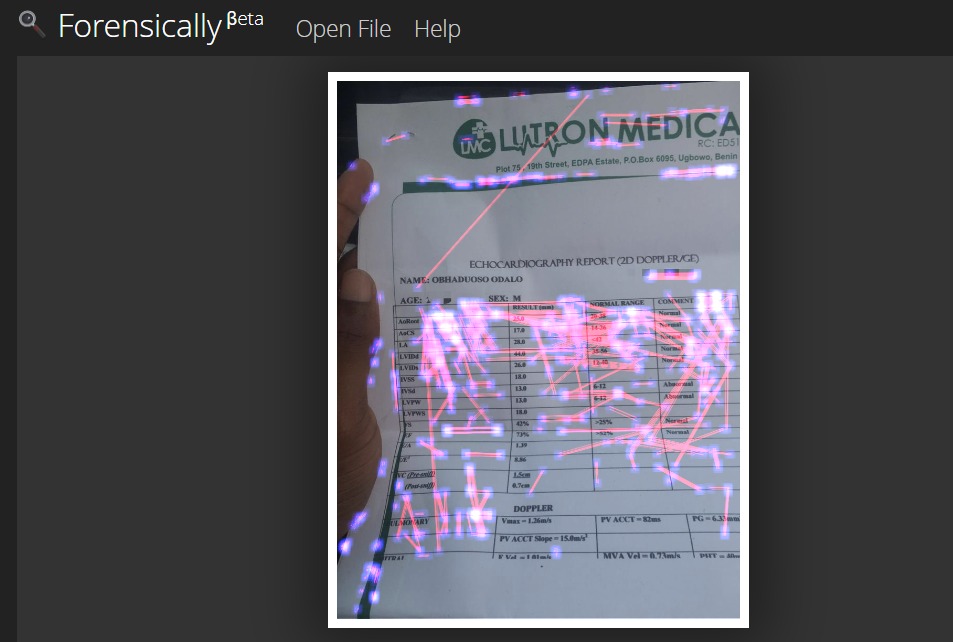
So, to ascertain if Odalo forged his echocardiography report, DUBAWA used the digital image forensics tool Forensically, to analyse it. A clone detection analysis with the tool showed that the document contained significant noise levels, meaning it had been manipulated. Consistent with Lutron’s hospital staff comment, details of the result have been altered at different points, particularly on the first page, where Odalo’s details appeared.
A screenshot of the forensic analysis of Odalo’s alleged echocardiography report carried out on Oct. 13, 2023.
Also, DUBAWA observed that there was neither a signature nor stamp on the document to ascertain that it had originated from the medical centre. The test date was also missing, suggesting it had been cut out, blurred, or unclear.
Odalo’s action is romance fraud, and here’s why
After investigating the authenticity of Odalo’s “heart result” from Lutron Medical Centre, and forensically, it is apparent that the document he presents as evidence is forged, and his “heart surgery” story is also fabricated.
However, when this reporter asked Elsa if she reported the case to the authorities, she responded in the negative.
“I have not attempted to report him to the authorities because, technically, he did not steal from me. I gave him the money freely,” she explained.
Elsa and many people may not realise that Odalo’s gesture is textbook “romance fraud.”
“Unfortunately, the Nigerian constitution does not define romance fraud or make provisions for it. Victims can only seek redress through another window like deceit or fraud,” lawyer Ifiok Uko said, reacting to DUBAWA’s findings.
However, Section 14(2) of the Cybercrime (Prohibition, Prevention, etc.) Act 2015 has been used to prosecute such people in the past.
“Any person who with intent to defraud sends electronic message materially misrepresents any fact or set of facts upon which reliance the recipient or another person is caused to suffer any damage or loss, commits an offence and shall be liable on conviction to imprisonment for a term of not less than five years and to a fine of not less than N10,000,000.00 or to both fine and imprisonment,” the Act states.
In recent past, the Economic and Financial Crimes Commission (EFCC) has also prosecuted romance scammers based on this act. Some cases can be found here and here.
DUBAWA sent a brief of our findings to EFCC to inspire enforcement.
Amidst the mask and lies, who is Odalo?
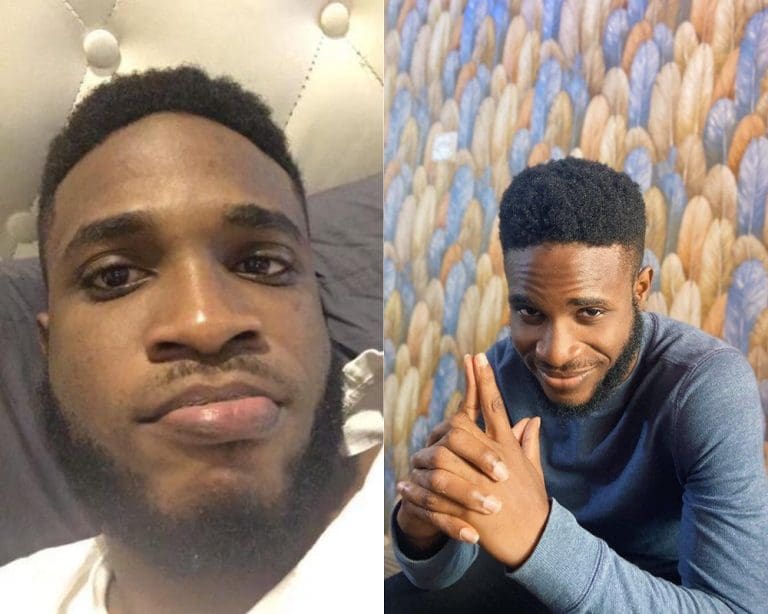
A photo of Odalo. Image source: Elsa.
DUBAWA contacted Odalo through multiple channels. He declined the calls we put through to him and has failed to respond to our messages and emails. He has also since deactivated the account linked to him, “@metaphourr,” on Twitter.
It is not certain who he truly is, as he shares different stories with multiple women. However, according to public records on YouTube, Odalo appears to be a rapper. He featured in the 2019 song “The Martell cypher.” Identifying as “Odyssey,” he rapped from 2:25 minutes to 3:46 in the 5-minute song.
He also attended the University of Benin Demonstration Secondary School (UDSS). In a footage published on Twitter, Odalo ‘admitted to dupping the UDSS 14’ set of their money– over N400,000 for an alleged surgery.”
Although Elsa would rather forget the ordeal Odalo put her through, there is room for victims to seek justice for romance scams in the country.
Moving on…
Elsa was embarrassed by the incident and has experienced severe mental and emotional stress. She told DUBAWA that she doesn’t believe in helping people anymore, particularly strangers.
“Right now, I don’t give anybody anything. I don’t care who you are,” Elsa said.
For Gloria, who sent Odalo N10,000, the experience has made her question her approach to people. “People like this (Odalo) make you question being a good person.”
Dr Ola Ibigbami, a mental health specialist and public health advocate, advised that victims who have suffered from romance scams can deal with the aftermath by focusing on their well-being, noting red flags for future occurrence, and surrounding themselves with supportive people.
“Seek your well-being first by taking time out to heal, spend quality time with good people, not necessarily the opposite sex, believe that other relationships will come with good benefits, have a checklist of what you really want in a relationship and don’t compromise!,” said Dr Ibigbami.
RESIDENTS of Kogi, Bayelsa, and Imo States will choose their new governors on November 11, 2023 respectively, when the Independent National Electoral Commission (INEC) holds the off-cycle governorship elections in the states.
It will be recalled that new governors were elected in majority of the Nigerian states during the 2023 general election held between February and March this year, however not all of them took part. This is because some states had off-cycle elections as a result of problems that surfaced during the election process previously.
In this report, we provide key information on the forthcoming November 11 off-cycle elections in Nigeria.
INEC Preparedness
The Independent National Electoral Commission (INEC) had said it would deploy 46,084 staff for the Nov.11 off-cycle governorship election in Bayelsa, Imo and Kogi states. The commission also reaffirmed that the Bimodal Voter Accreditation System (BVAS) for the elections are in safe hands and cannot be vandalised in any form before, during or after the election.
In October 2023, the chief press secretary of the commission revealed that non-sensitive materials have been delivered to these states and a mock accreditation exercise involving actual voters in designated polling units have been conducted.
He said the agency has accredited 126 national and international organisations collectively deploying 11,000 observers for the election. He also said 80 media organisations seeking to deploy 1,203 personnel made up of journalists and technical/support staff to report on the elections have submitted applications. Also, 137,934 agents made up of 130,093 polling and 7,841 collation agents will be deployed for the conduct of the elections.
Voter Registration
According data released by INEC, 5.2 million (5,169,692) people have been registered to vote in the three states.
The distribution for the three states revealed that in Bayelsa State, out of the 1,056,862 registered voters, 1,017,613 have obtained their PVCs, with 39,249 PVCs remaining uncollected. In Imo State, among the 2,419,922 registered voters, 2,318,919 have acquired their PVCs, and 101,003 are yet to be collected. Similarly, in Kogi State, out of the 1,932,654 registered voters, 1,833,160 have collected their PVCs, leaving 99,494 uncollected.
Who are the Top contenders?
There are sixteen political parties running for governor in Bayelsa, which means there will be sixteen candidates over all — two women and fourteen men. Among the candidates are Diri Duoye (PDP); Eradiri Udengmobofa (LP); Timipre Sylva (APC); and Ogege Mercy (APP), a female.
The Peoples Democratic Party (PDP) candidate Douye Diri, who has been Bayelsa State’s governor since 2020, is the current governor. In the 9th National Assembly, he served as the Senator for the Bayelsa Central Senatorial District from 2019 to 2020. He is up for re-election in the upcoming election for a second term.
In contrast, Kogi state has eighteen candidates—seventeen men and one woman. Leke Abejide (ADC), Dino Melaye (PDP), Malam Ahmed Ododo (APC), Idoko Ilona (APGA), and Suleiman Fatima (ZLP) are among the contenders.
The state’s current governor, Yahaya Adoza Bello, has held office since 2016. Bello, a representative of the All Progressive Congress, has held the position of Nigeria’s youngest governor for the entirety of his tenure.
There are 17 political parties and 17 candidates running for governorship in Imo state. Odunzeh Ben (NNPP), Achonu Nneji (LP) (PWD), Anyanwu Samuel (PDP), and Hope Uzodimmma (APC) are among the contenders.
The state’s current governor is Hope Uzodimma, a former Senator from Orlu (Imo West) and a member of the All Progressive Congress. Since 2020, he has held the position. Following the Supreme Court of Nigeria’s nullification of the election of the then-incumbent governor, Emeka Ihedioha, he was proclaimed the winner of the 2019 governorship contest. In the upcoming election, he is running for a second term. The full list can be read here.
Are there any security concern?
Nigerian elections have been plagued by various sorts of violence and irregularities ever since the country attained independence. The 2023 general elections that held in February and March 2023, respectively, were marked by a number of criminal actions, including shooting, thuggery, kidnapping, hate speech-induced crises, assassinations, ballot-box snatching, violent disruption, and arson etc.
Despite expressing confidence in the ability of its commission to conduct credible elections, Yakubu is concerned about the wave of insecurity and election-related violence in the three states.
In the same vein, a study by Kimpact Development Initiative (KDI) has shown that the elections in the states are likely to witness violence. The pre-election environment risk assessment conducted by the organisation shows that the states saw violence in previous governorship polls, as the factors that triggered such crises remained.
In Bayelsa, historically, electoral violence orchestrated by armed thugs has been a recurring issue, particularly in areas like Nembe, Brass, Ekeremor, and Southern Ijaw. The presence of militants in the South-South region poses a significant security threat, particularly in swampy hot-spots. During previous general elections, violence led to the postponement of voting in 141 polling units, with National Youth Service Corps members expressing fear. The Bayelsa Traditional Rulers Council has reported intelligence on planned politically-motivated violence, expressing concern about law enforcement’s role in preventing such acts.
In Imo, the activities of armed bandits linked to the proscribed group IPOB create insecurity, potentially disrupting the upcoming governorship election. Residents highlight IPOB’s deadly nature, especially in Orlu, a known base for the group. The INEC said it is committed to conducting election across all the Polling Units in the state despite insecurity.
Kogi, identified as a potential hot-spot for electoral violence, faced incidents after the general elections, such as the abduction of 100 INEC staff and an ad hoc official. The governorship candidate of the SDP, Muritala Ajaka, narrowly escaped an assassination attempt, and his campaign office was attacked.
Concern over election-related disinformation
There have been concerns over the potential impact of information disorder on the election with the commission’s chief stating that fake news was capable of having a negative impact on the management of elections in the country if not nipped in the bud.
The alarming prevalence of election-related misinformation, ‘fake news’, hate speech, and the weaponization of disinformation has become very worrisome to the Commission.
The National Commissioner and member of the Information and Voter Education Committee of the Commission, Kunle Ajayi was quoted as saying: “Disinformation is used to provoke religious, political, and tribal sentiments in an already polarized society such as ours, especially, during election season, which is often the leading cause of electoral violence and uprisings.
“Election-related disinformation has become a major strategy used by nefarious individuals and groups in the political space to manipulate the general public to their advantage, regardless of the consequential effect such propaganda may have on the peace and stability of the electoral process and the country at large.”
What do you need to vote?
In order to vote, an electorate needs a valid Permanent Voter’s Card (PVC), which essentially shows that you are registered to vote and proves your identity.
The PVC contains biometrical data of the voter, used for further verification on election day. This data is stored in the card.
How will voting be done?
Accreditation and voting is expected to start at 8:30am and end at 2:30pm.
Voters on the queue before 2:30pm will be accredited and allowed to vote. Even at 2pm, all those who are already on the queue will have the opportunity to vote.
The voting process at a polling unit involves several steps. First, you join the queue, where an INEC official checks if you’re at the correct Polling Unit and confirms the authenticity of your PVC. If you’re in the right place and have a valid PVC, you’re allowed to proceed. If not, you’re advised to find your correct Polling Unit.
Next, an INEC official verifies your PVC’s genuineness using Bimodal Voter Accreditation System (BVAS) and your identity through fingerprint verification. They also check if you’re listed in the Voter’s Register. If your name is in the register, your eligibility to vote is confirmed by marking your name and inking your finger.
The presiding officer then stamps, signs, and endorses your ballot paper, emphasizing the importance of doing this correctly to avoid making the ballot invalid. You receive the ballot paper rolled with the printed side inwards and proceed to a voting cubicle.
In the cubicle, you thumbprint, mark the box for your preferred candidate’s party on the ballot paper, roll it as instructed, and flatten it. Afterward, you exit the cubicle and drop the ballot paper into the ballot box, visible to others at the polling unit.
When will the results be announced?
The result of each Polling Unit shall be announced, uploaded and pasted at the unit for everyone to see. The overall results of the elections are usually announced within two to five days after the elections provided that there’s no glitches.
Elon Musk, the Chief Executive Officer of X (formerly Twitter), has said the platform introduced “Community Notes” to achieve a consensus-driven and non-censoring approach to ensuring accurate information on the platform.
He revealed this on Friday, November 3rd, 2023 during a conversation with Prime Minister of the United Kingdom, Rishi Sunak.
Recall that the platform has come under heavy criticisms from European Union and fact-checkers on how the platform’s policies amplify the spread of misinformation.
As part of its style of tackling misinformation on the platform, Musk had introduced community notes, a feature which helps people to provide context and flag misleading information and tweets on the platform. Recently, he announced that the platform will stop paying creators for posts corrected by the feature.
Speaking on the feature during the conversation, Musk said appointing an individual with biases as a censor gives them the power to control the flow of information and to avoid such, the platform introduced the concept of “Community Notes,” which employ people as correctors of misleading contents on the platform.
Musk explained that Community Notes differ from traditional censorship as they don’t delete content but instead provide additional context.
“But importantly, with Community Notes, everything is open source. So, you can see the software—every line of the software, all the data that went into a Community Note—and you can independently create that Community Note. If you see manipulation of the data, you can highlight that and say, “Well, this has to be some gaming of the system,” and you can suggest improvements. It’s maximum transparency, combined with the wisdom of the crowds,” he said.
He also emphasized importance of transparency and roles of Artificial Intelligence as a means to attain more accurate answers highlighting the unique feature of Community Notes which requires agreement from individuals with a history of disagreement for a note to be displayed.
“There’s a populated parameter space around each contributor to Community Notes. Everyone has these vectors associated with them, which are not as simple as right or left; it’s several hundred vectors because things are more complicated than something being right or left. We then do an inverse correlation, saying, ‘Okay, these people generally disagree, but they agree about this note.’ That gives the note credibility,” he said.
Reflecting on the platform’s performance, he expressed confidence in its effectiveness, noting that the platform barely allows incorrect notes to spend more than a few hours.
In response to concerns about the potential spread of disinformation through Community Notes, Musk challenged critics to provide instances, emphasizing the platform’s success in maintaining accuracy.
He explained that the overall goal of the platform is to inform and entertain the public while prioritizing accuracy and truthfulness. He expressed optimism that, by remaining committed to the truth, people would use the system to stay informed about current events.
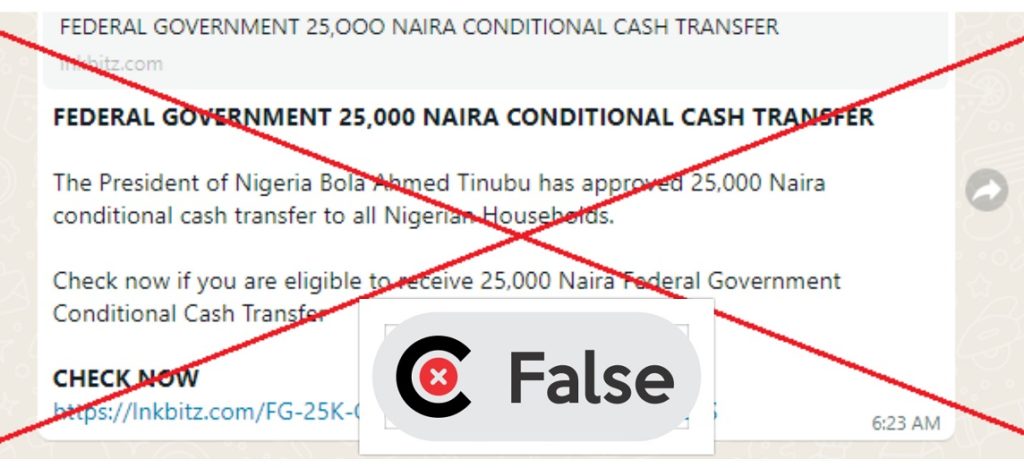
A link to a website with the tag: “FEDERAL GOVERNMENT 25,000 NAIRA CONDITIONAL CASH TRANSFER” is circulating widely in closed WhatsApp groups in Nigeria.
The message is being shared across different social media platforms and groups in the country recently.
“The President of Nigeria Bola Ahmed Tinubu has approved 25,000 Naira conditional cash transfer to all Nigerian Households. “Check now if you are eligible to receive 25,000 Naira Federal Government Conditional Cash Transfer”, the post reads.
Interested candidates are invited to answer a few questions by providing personal details and amount needed.
The post is circulating following the announcement by the Nigerian government on October 1, 2023 that it will give all federal workers and pensioners a grant of N25,000 each as palliatives to cushion the hardship Nigerians are facing as a result of the removal of fuel subsidy earlier in June 2023.
CLAIM
The Federal Government (FG) is giving each Nigerian N25,000 under its Conditional Cash Transfer programme.
THE FINDINGS
Findings by this writer revealed that the claim is FALSE.
A close look at the page after clicking the web link show that the website was created for phishing purposes to gather applicants’ details and possibly as a click-bait.
Screenshot of the phishing message retrieved from a WhatsApp group. INSERT: False verdict.
After entering your personal information on the application form and clicking “Proceed”, the website directs you to share the post with five WhatsApp groups or fifteen WhatsApp users in order to be taken to the payment portal, stating further that you will receive an email confirmation within 24 hours.
A thorough examination of the website reveals doctored comments allegedly from Facebook users that praise the government for allocating the funds and choosing them as recipients, along with the commenters’ corresponding image and stagnant likes. This is one of the features of a typical phishing website.
This writer observed that this is an click-bait scam often deployed by phishing scammers where users are encouraged to engage by leaving comments or sharing same message(s) with their contacts. The post’s reach increases the more people engage with it and circulate it.
When subjected to verification on Whois domain look up, the result displayed shows that the website was registered on April 19, 2022 and was last updated on April 9, 2023.
Similarly, it was observed that the domain name was redirecting from the initial lnkbitz.com to petpings.com; this is typical of several phishing websites that The FactCheckHub has debunked over time as seen here, here and here.
Screenshot of the web link who looked up using Whois domain tool.
Speaking with this writer, Halima Shehu, the national coordinator and chief executive officer of the National Social Investment Programme (N-SIP), stated that all payments made through the CCT initiative will be made directly from the Central Bank of Nigeria to the beneficiaries’ bank accounts.
She added that there’s no need for anyone to fill any online form as the agency already have records of prospective beneficiaries.
Be cautious online…
In a chat with this writer, Afeez Babatunde, a tech expert and Managing Director of HiQTek, said that phishing scams are easy ways to defraud people because of the rewards sometimes attached to such illegal activities.
He advised any individual who receives phishing messages or links to take the necessary precautionary measures as follows:
Whether it be over the phone or online, never respond to an unwanted request for your personal information. Phishing emails and websites may be made to seem just like the real thing. They could even feature a false version of the padlock icon, which is often used to indicate a secured website. You shouldn’t provide any information and shouldn’t start the conversation.
Get in touch with the banking institution directly if you think the communication could be real. On the monthly statements you receive from your financial institution, you can discover phone numbers and websites. You can also look up the business in a phone book or on the internet. The important thing is that you should contact your bank first.
Never give your password to a caller or in response to an unauthorised online request. No financial institution would ask you to confirm your account details online. If you give out your bank account and ATM pin or passwords, thieves or scammers may easily access your funds with that knowledge.
Check your bank account statements regularly to make sure all charges are legitimate. Call your banking institution to ask why if your account statement is delayed. If your bank institution allows for electronic account access, keep an eye out for any unusual behaviour by routinely reviewing your online banking activities.
THE VERDICT
The claim that the FG is giving each Nigerian N25,000 under its Conditional Cash Transfer programme currently is FALSE; findings show that the programme is yet to take off, as the web link in the claim is that of a phishing scam.
CHILDREN today are learning how to live, work, learn, contribute, and prosper in a digital society as they become more digitally literate and this exposes them to a lot of content whether fact or fiction.
For an adult, the advice on how to spot fake news would be obvious, but for kids, it can be tricky.
Misinformation and disinformation among parents, caregivers and educators can have a negative effect on children, even if the children themselves are not directly exposed to it, says UNICEF in its August 2021 report titled: “Digital misinformation/disinformation and children.”
The report added that the circulation of mis/disinformation has real-world, harmful consequences, such as violence against ethnic minorities or victimization of children and young people by spreading manipulated images that stereotype or discredit them.
Majority of adults believe that digital literacy encompasses more than just being able to use mobile devices,it is crucial for kids to analyze and filter the information they find online.
The criteria for comprehending the novel methods in which we receive and distribute information change as technology does and knowing how to identify fake news is one of those methods.
TheFactCheckHub recently published a report about how YouTube content creators use AI to spread science disinformation among children which an investigation by the BBC’s global disinformation team revealed.
Because children are socialized to believe what adults say from a very early age, gaining digital literacy can be challenging for them. Without ever being instructed on where to look or how to conduct research, students are frequently told to undertake research in school for assignments or projects.
Social media impacts these young ones throughout their adolescent years, and since friends frequently have a far greater power than parental or school authorities, it is important to understand how false information can spread quickly to them.
1. Fake news awareness
Informing your child or ward that fake news does exist is the first step in assisting them to recognize it. Even though it seems so obvious, many kids might not be aware that what they read might not be accurate. Informing kids that people spread falsehoods online is the first step because kids have a tendency to be more trusting and innocent than adults. Digital literacy education may also help the children stay informed trends in the society. Here are 10 things to know about digital literacy for kids, as curated by UNICEF.
2. Encourage your child to be inquisitive
Encourage your kids to question the veracity of content they read or watch online. Teach children to be critical consumers of the social media and mass media content they consume by helping them to comprehend the why, how, and what has been communicated with them.
Encourage inquiries like, How did you like the information? How was it communicated to you? Who is the author of the content? Who might gain or lose from it? How come they succeeded? Is this stuff being paid for by anyone? What is the news omitting to say? Is a portion of the narrative missing? Do you think the information you’re reading is accurate?
A boy and girl using laptop on a sofa. PHOTO CREDITS: Pexels.com
3. Prompt them to use different sources of information
It is crucial that kids are exposed to and engage with a variety of information sources, both traditional and digital. This is where libraries, schools, and books come in.
Look for trustworthy information provided in straightforward words from news sources that are expressly targeted towards children, such as educational newspapers and magazines.
4. Block websites and apps that produce false news
When you noticed that a specific website or app on your children’s device starts producing or publishing inaccurate or deceptive content on a regular basis, check the app settings. The website or app’s settings should be restricted by parents or guardians.
5. Imbibe the practice of “think before you share”
In addition to being content consumers, we also produce content. Don’t provide any information if you have any reason to believe that it may be incorrect, misleading, or damaging in some other manner.
If you believe that your child is prepared to use social media and start posting content, be sure to first establish clear guidelines and expectations. Encourage your friends and family to consider the information they provide, and feel free to hold people accountable if they spread false information.
6. Play while you learn
“Play is key to children’s learning, development, confidence and well-being,” says the Australian Parenting website: raisingchildren.net.au.
“It is a really important tool for children’s cognitive, physical, social and emotional development and also their imagination and creativity,” Ferdousi Khanom, an education and child development expert from the BRAC Institute of Educational Development at BRAC University told UNICEF.
According to the American Academy of Pediatrics: “Play is fundamentally important for learning 21st century skills, such as problem solving, collaboration, and creativity.” This can also include ability to spotting fake news.
Playing fun trivia games such as the Get It Right co-developed by the FactCheckHub, ICIR and the Digital Public Square would keep them abreast of new skills in spotting fake news while gaining new knowledge. Play the game by clicking HERE.
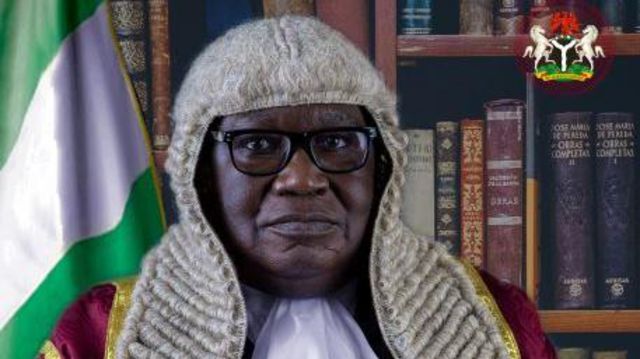
Multiple reports circulating online claim that Justice Haruna Simon Tsammani, the head of the five-man panel of the 2023 Presidential Election Petition Court (PEPC), is battling prostate cancer and has been confined to a wheelchair.
This is coming barely two months after the PEPC delivered its judgement on the petitions filed by Peter Obi, the candidate of the Labour Party, and Atiku Abubakar, the candidate of the Peoples Democratic Party (PDP), challenging Bola Tinubu’s emergence in Nigeria’s presidential election held on February 25, 2023.
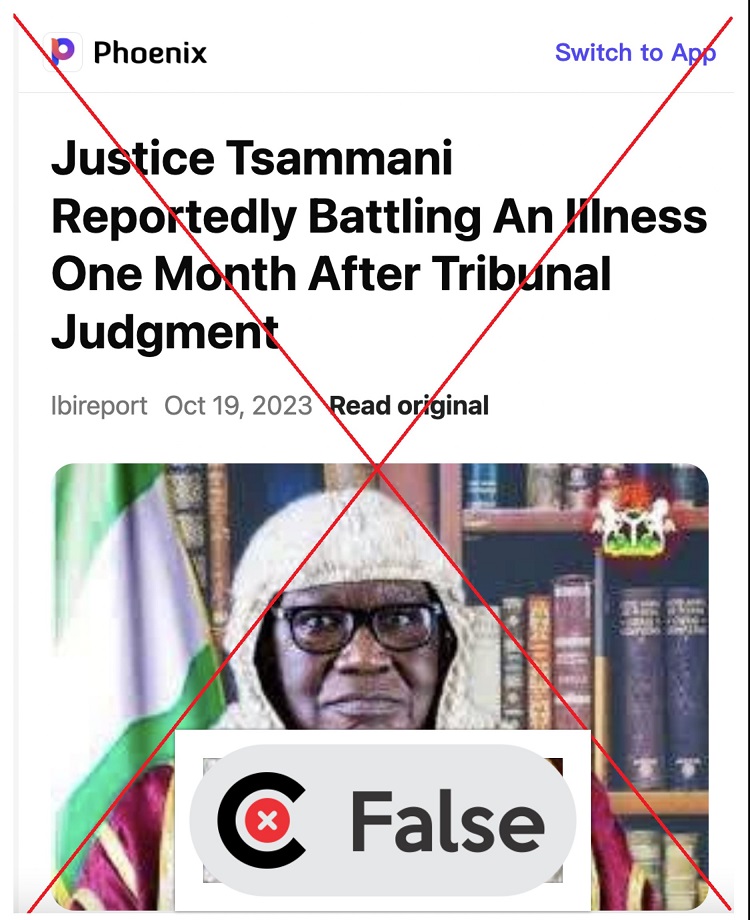
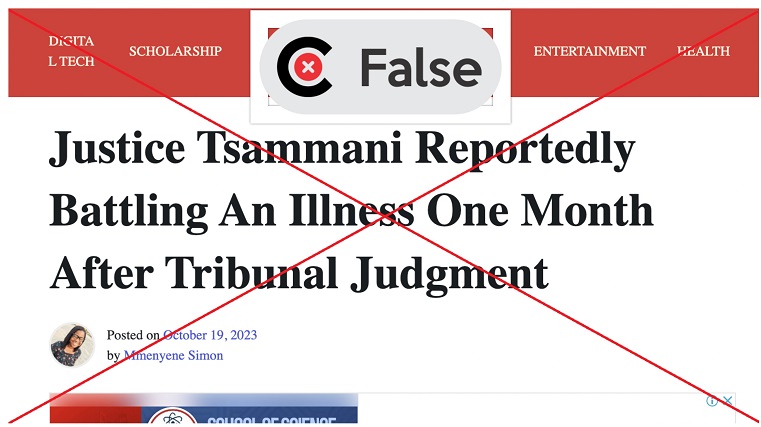
Screenshot from the online news blog, showing the claim. INSERT: False verdict.
According to the viral reports, archived here and here, Nyesom Wike, minister of the Federal Capital Territory (FCT), had travelled to visit Justice Tsammani in Paris, France.
The reports also stated that Justice Tsammani blamed Wike for his ailment after he returned from Paris.
Screenshot from another news blog, showing the claim. INSERT: False verdict.
CLAIM
Justice Tsammani is battling prostate cancer on a wheelchair.
THE FINDINGS
In an attempt to confirm the veracity of the reports, this researcher traced the source of the news to Jackson Ude, who made the claim in a post uploaded to X (formerly Twitter) on October 18, 2023.
Parts of Ude’s post read, “Justice Haruna Tsammani returned from Paris unable to fix his enlarged prostrate. He has been on a wheelchair and cannot walk, according to an informant at the Appeal Court.”
Screenshot from Jackson Ude’s post, showing the claim. INSERT: False verdict.
The post had garnered over 140,000 views, over 1,000 reposts, and more than 1,700 likes as of when it was retrieved from the micro-blogging platform.
The pidgin version of Ude’s post was posted by another verified X user, as archived here.
Screenshot from another X user, showing the claim. INSERT: False verdict.
To further verify the claim, this researcher contacted Kabir Akanbi, the deputy chief registrar of the Appeal Court in Abuja, who debunked the claim. According to him, Justice Tsammani has been consistently appearing in court.
This researcher also had a phone conversation with Justice Tsammani, which lasted over two minutes. In the conversation, the justice described the viral report as the work of mischievous makers and explained that his recent travel took him to Bauchi, where he visited his family.
The justice explained that he has become accustomed to bad actors propagating unfounded information about judges.
He further stated that he sat over a case regarding the November 11 off-cycle election in Bayelsa state on Monday, October 23, adding that he also sat on a case on Friday, October 27, 2023.
THE VERDICT
The viral claim that Justice Tsammani is battling prostate cancer on a wheelchair is FALSE; evidence shows that Justice Tsammani has been appearing in court contrary to the widespread reports that he is sick.