Please note that the FactCheckHub has not obtained any right from the authors or copyright owners of all third-party contents from embedded links and shall incur no liability in this regard.
Please note that the FactCheckHub has not obtained any right from the authors or copyright owners of all third-party contents from embedded links and shall incur no liability in this regard.
Please note that the FactCheckHub has not obtained any right from the authors or copyright owners of all third-party contents from embedded links and shall incur no liability in this regard.
Please note that the FactCheckHub has not obtained any right from the authors or copyright owners of all third-party contents from embedded links and shall incur no liability in this regard.
THE Nigerian Government has urged the United States to support efforts at instituting best practices in the media space, particularly fact-checking mechanisms towards curbing the spread of misinformation.
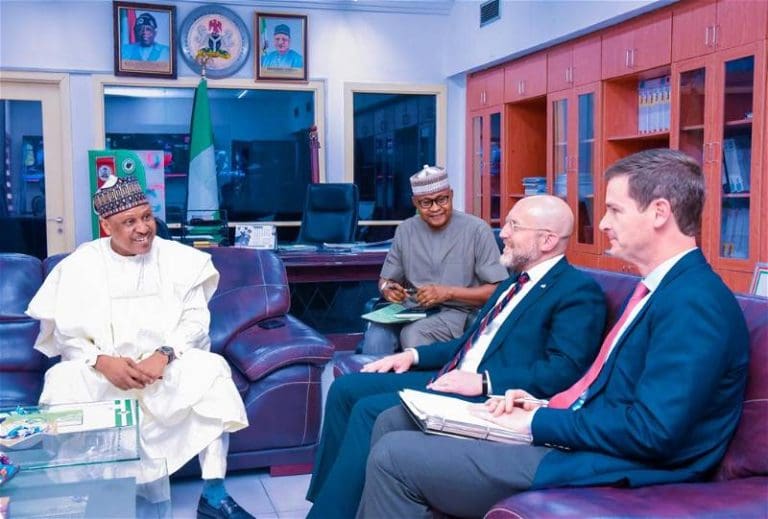
Nigerian minister of Information, Mohammed Idris, conveyed this message during a meeting with US Charge d’Affaires, David Greene, on Tuesday.
The minister also reaffirmed Nigeria’s unwavering commitment to the fundamental principles of press freedom, stressing its pivotal role in fostering a vibrant democracy and transparency in governance.
“While we are for press freedom, we also want to call on the government of the United States to support efforts at instituting best practices in the media space, particularly fact-checking mechanisms towards reducing the spate of misinformation, fake news, and mal-information,” Idris said.
The minister also emphasized Nigeria’s commitment to democracy, saying it was important for the United States, as a key ally, to deepen support for the Nigerian government and its efforts towards reviving the Nigerian economy.
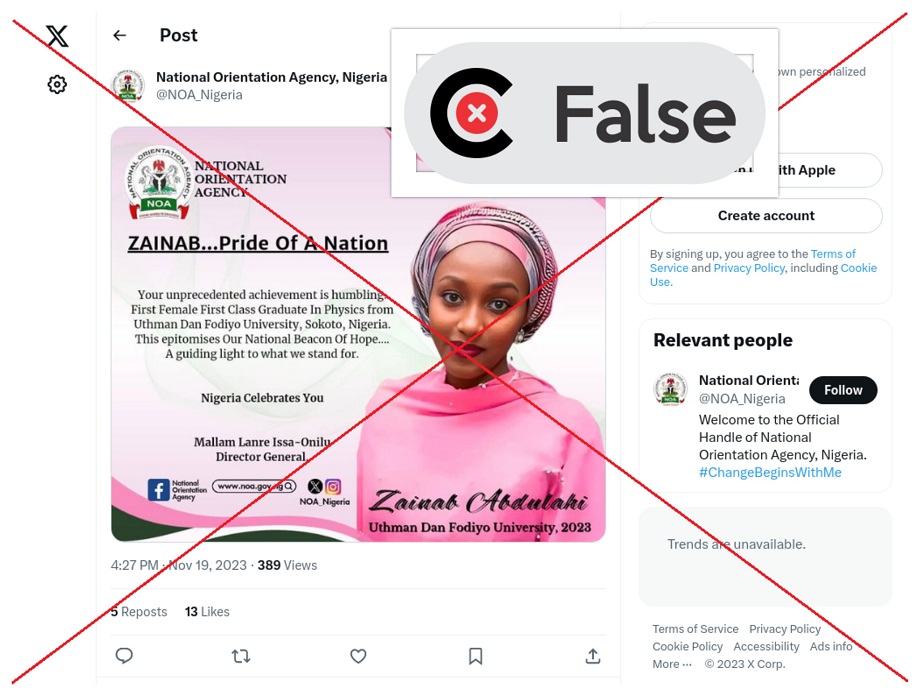
The agency made the claim on Sunday, November 19, 2023 in a flyer (archived here) signed by its Director General, Lanre Issa-Onilu.
“ZAINAB… Pride Of A Nation. Your unprecedented achievement is humbling. First Female First Class Graduate In Physics from Uthman Dan Fodiyo University, Sokoto, Nigeria. This epitomises Our National Beacon Of Hope. A guiding light to what we stand for. Nigeria Celebrates You(sic),” the flyer reads.
CLAIM
Zainab Abdullahi Bashir is the first female first-class graduate of Physics at UDUS.
Screenshot of the claim on NOA’s X account before it was deleted.
THE FINDINGS
Findings by The FactCheckHub show that the claim is FALSE.
Prior to NOA’s claim, several media platforms and blogs including Daily Trustand MySchoolNews have erroneously reported the claim in the past and as such, we deem it fit to set the record straight. It was also shared on Nairaland in April 2019.
In 2018, Zainab Abdullahi Bashir, an indigene of Katsina state bagged first class honour from Physics Department, Usmanu Danfodiyo University Sokoto having scored a Cumulative Grade Point Average (CGPA) of 4.87 out of 5.0.
File Photo: Happiness Ezeonuogu
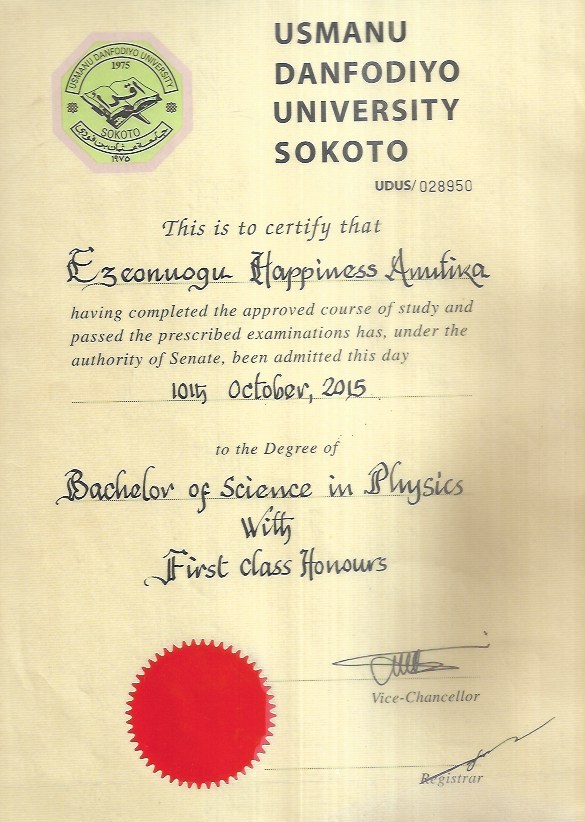
However, checks show that contrary to the NOA’s claim, she’s not the first to graduate with the feat in the university. Checks revealed that there was Ezeonuogu Happiness Anutika who graduated with the feat in 2015, about 3 years before Zainab did.
Documents obtained by The FactCheckHub show that Happiness graduated with a first-class honour in Physics at the university with a Cumulative Grade Point Average of 4.51, thus indicating that she graduated with the feat ahead of Zainab.
Speaking with The FactCheckHub, Happiness who is currently a technical adviser on Coiled Tubing expressed her dismay describing the news as false information which has been circulating for a long time.
Certificate of Ezeonuogu Happiness Anutika from Usmanu Danfodiyo University.
“I felt very sad, the first time I heard about the news, some years back. It was like, I lied to my family and friends about my result, and I told them what I am not.
“It is very important to get facts and figures right because no one can tell me that there are no databases which document students’ academic performances. I won’t call this an oversight,” she said.
THE VERDICT
The claim by the National Orientation Agency that Zainab is the first female student to graduate with first class in Physics at Usmanu Danfodiyo University, Sokoto is FALSE; findings show that Happiness had first class from the same department and institution in 2015.
A video showing some officials of the Economic and Financial Crimes Commission (EFCC) engaged in a brawl with two men in military uniform has gone viral online.
In the seven minutes long footage, three men wearing EFCC jackets and one man wearing a police jacket could be seen trying to raid an apartment while harassing a man and a woman.
At about 4 minutes, 51 seconds into the video, two men dressed in military uniform could be seen slapping and beating the ‘police officer’ and the ‘EFCC officials’.
The video has garnered over 6 million views, with over 9,000 comments and about 120,000 reactions on Facebook as of Monday, November 20, 2023.
The video has been trending on TikTok and X (formerly Twitter) since Friday, November 13, 2023, following news reports of men from the Nigerian Air Force (NAF) allegedly invading the EFCC office in Kaduna state to enforce the release of their colleagues from detention.
The suspects, which comprise one member of the Army and six members of the Nigerian Air Force, were taken into custody by the commission for additional investigation and potential legal action after being apprehended on Monday, November 13, 2023, by the anti-graft agency’s Kaduna Zonal office.
Channels Television reported that the invasion by the military personnel resulted in a confrontation between EFCC agents and NAF officers, who started yelling at each other and threatening to pull triggers on each other.
The suspects were released following a brief meeting between the leader of the Air Force team and the EFCC Zonal head after nerves were calmed.
The EFCC is Nigeria’s leading anti-graft agency charged with the responsibility of investigation and enforcement of all economic and financial crimes laws in Nigeria.
CLAIM
Viral video shows EFCC officials being harassed and molested by Army personnel.
THE FINDINGS
Checks by The FactCheckHub show that the claim is MISLEADING!
Searches conducted on TikTok using keywords such as ‘army slaps EFCC officials’ led us to multiple versions of the footage.
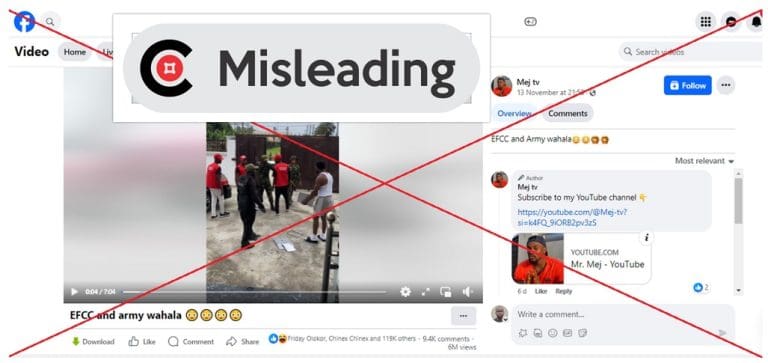
The video, produced by a content creator with the username: @mrmej_ on TikTok, was uploaded on Wednesday November 15, 2023 on the creator’s account on different platforms, including Twitter and Facebook. Only one minute, fifty eight seconds of the video was uploaded on TikTok, the full video which was over seven minute long was uploaded on Facebook.
The video however gained traction on Friday November 17, 2023 following the invasion of the EFCC Kaduna Zonal office by the NAF personnel which led to the several duets and videos posted by other TikTok users, thus contributing to the disinformation flow.
The anti-graft agency condemned the skit in an official press statement posted on their X (formerly Twitter) account same day the skit was released, reiterating its warning to skit makers and other social workers to desist from using the operational identities of the Commission illegally and irresponsibly.
EFCC PRESS STATEMENT
EFCC Condemns Unauthorized Use of Its Operational Identities for Skit Making
A video, code-named: “EFCC and Army Wahala” gaining traction across the social media, once again, compels the Economic and Financial Crimes Commission to reiterate its warning to… pic.twitter.com/U6WUVg6Xih
The viral video of EFCC officials being harassed and molested by army personnel is MISLEADING, as it is a comedy skit and unconnected to the recent brawl between EFCC officials and NAF personnel in Kaduna.
IN the build-up to the 2023 Lagos State Governorship election, a photo of a lady smoking hookah in the club went viral on social media. Within a short space, she was falsely identified as the running mate of the Labour Party gubernatorial candidate in the state, Abiodun Islamiyat Oyefusi.
While in Adamawa, the agitation for a female governor was condemned. Aishatu Dahiru Ahmed (Binani), the All Progressives Congress (APC) gubernatorial candidate on the state, was ostracized for vying for a leadership position as women are not allowed to rule in Islam.
Dr. Oby Ezekwesili.
When former Minister of Education, Dr Oby Ezekwesili, declared her intent to run for the presidential election in 2019, there were speculations of her starting unnecessary political battles as she lacked the emotional capacity to be elected President.
These kinds of attacks typify the concept of disinformation suffered by the female gender in Nigeria, which has made it difficult for women to attain leadership heights in the country.
In the 2023 general elections, Nigeria recorded a dearth of female participation, which led to a lesser fraction of elective positions. President Bola Ahmed Tinubu has also recently sent 47 ministerial nominees to the National Assembly (NASS) with just seven (7) women. His other appointments so far still show a wide disparity.
What is gendered disinformation?
Gendered disinformation is a subset of misogynistic abuse and violence against women that uses false or misleading gender and sex-based narratives, often with some degree of coordination, to deter women from participating in the Public sphere.
Dr. Kehinde Oyesomi, an Associate Professor of Communication and Media Studies at Covenant University, Ogun state says, “it is a serious problem that calls for concern and proactive action because of the possible harm and insecurity it poses on women. It could cause physical and emotional damage.”
It typically frames women as untrustworthy and unintelligent or pits women against other women.
Aishatu Dahiru Ahmed (Binani).
Gendered disinformation is a global threat to women’s participation in politics, elections and other sectors where women can attain leadership roles. When the act of sexualising or hyper-sexualising girls and women has failed, there is always an attempt to paint emotions as undesired traits for leadership.
In its thematic report published in August 2023, the United Nations Human Rights officenotes that gendered disinformation has implications for the right to freedom of expression, saying there can be no trade-off between women’s right to be safe and their right to speak.
Research findings written by Nina Jankowicz et al and published by the Wilson Centre have shown that gendered disinformation is not the same as gender-based violence, although both incite abuse which can cause harm and is targeted towards a particular gender. This is most times, a hurdle for women from engaging in politics and discourages young women who consider having a political career which may or may not be limited to leadership roles.
Recent examples of gendered disinformation in Nigeria
It has also encouraged the harassment and abuse of female politicians and public office holders – especially in the digital space. A typical example was the case of Oyefusi earlier mentioned.
Another instance is the Chairman of the Nigerians In Diaspora Commission (NIDCOM), Hon. Abike Dabiri-Erewa, who was bullied severally concerning the issue of the evacuation of Nigerians in Sudan.
“Remember the divorce story of the footballer who was said to have registered all his wealth in his mother’s name; that disinformation was believed across continents because people already hold biased opinions about women married to rich men and celebrities in Europe and America.
“Even news organisations published the disinformation. Their bias didn’t allow them to check the accuracy of that claim,” says Dr. Ganiyat Tijani-Adenle, a Senior Lecturer in Journalism Department, Lagos State University, Lagos.
Hon. Abike Dabiri-Erewa.
Gendered Disinformation manifests in several forms, including sexist and misogynistic content, criticizing feminism, posting fake sexualized information, images and videos that violate what is considered socially acceptable behaviour for men or women, and posting doctored images, videos and memes to discredit or ridicule women. Moreover, an example of this was when Elon Musk announced Linda Yaccarino as Twitter’s new CEO and AI-generated images of a lady with her cleavages were circulating claiming to be the new Twitter CEO which were false.
Gendered disinformation campaigns mostly use narratives on gender roles, gender equality and sexual orientation to disunite public discourse, undermine social cohesion and spread fear.
Most times, these gender narratives are often combined with narratives or roles to achieve the desired aim while employing special tactics. Some of these tactics include manipulating traditional stereotypes about women and men, promoting stereotypes of women as victims always in need of male protection while also occasionally showing women as aggressors, such as maintaining that a woman’s place is in the kitchen.
Dr Kehinde Oyesomi.
Another is creating myths and lies about gender equality, one of which is by mobilizing individuals around an anti-gender discourse which argues that gender equality is anti-family, pro-gay and anti-life ideology.
“It is important to create awareness on the danger of disinformation. Continuous sensitization and campaign are key.
“Everyone can be part of a disinformation campaign. This could be through engaging with social media bots, sharing manipulated and framed images, or watching deepfakes videos that have been digitally altered and many more,” Dr. Oyesomi opines.
Countering gendered disinformation in Nigeria – way forward!
To counter gendered disinformation, it is important to know the platforms and actors through which it emerges and is spread, as it would help in spotting the issues and challenging them. Some of the people who push gendered disinformation are not limited to religious extremists, trolls, foreign state and non-state actors.
After identifying the actors amplifying gendered disinformation, the following steps could be taken to address the challenges.
The ESCAPE formula
The first step is using the E.S.C.A.P.E formula, designed by Adelphi University with support from Facebook, which works by evaluating the information encountered (gendered disinformation) and attempting to provide answers to the six (6) critical questions below:
Evidence: Do the facts hold up? Look for the information you can verify, e.g. names, numbers, places, documents etc.
Source: Who made this, and can I trust them? Trace who has touched the story, Authors, Publishers, Funders, Aggregators, Social media users etc.
Context: What’s the big picture? Consider if this is the whole story and weigh other forces surrounding it, e.g. current events, cultural trends, political goals, financial pressures etc.
Audience: Who is the intended audience? Look for attempts to appeal to specific groups, image choices, presentation techniques, language content etc.
Purpose: Why was this made? Look for clues to the motivation. The publisher’s mission, persuasive language or images, money Making tactics, Stated or unstated agendas, calls to action.
Execution: How is this information presented? Consider how the way it is made affects the impact, style, grammar, tone, image choices, presentation and layout.
For illustration only. PHOTO CREDITS: Adobe.com
A clarion call…!
Another step is to provide alternative narratives on gender issues in line with the Nigerian government’s gender equality commitments. Also, a multi-stakeholders’ engagement with the gender policy implementers is essential to deploy tools needed for gender training to identify dimensions of disinformation and understand how to counter it.
Dr. Ganiyat Tijani-Adenle.
For Dr. Tijani-Adenle, who was also a 2021 postdoctoral fellow in information disorder with Dubawa, the first (immediate and short time) way to tackle gendered disinformation in Nigeria is to tackle it the same way all other forms of disinformation are tackled – fact-checks.
“The second (long term and sustainable way) to tackle gendered disinformation is gender equity focused media literacy. This means two things. The first is that we enlighten people generally about media literacy, how contents are created and published and how they can be weaponised by some people to achieve their selfish interests. Then we enlighten them about gender equity and the need to not see the opposite gender through the “us versus them” or “men versus women” lens.
“When people are open to equity for all genders and do not hold biased views and perspectives about particular genders, then they are more likely to query and fact-check the disinformation about that gender.
“People who are not media literate and who are biased about specific genders and more likely to believe disinformation and spread misinformation about the gender that they are biased against compared to people who are media literate and who do not hold biased opinions about specific genders,” she explains.
In addition, there should be measures in place to mitigate the risks attached to gendered disinformation, such as offering psychological support to journalists and researchers who may suffer from trauma while investigating disinformation on sexual violence and protecting personal data and additional security measures for journalists and contributors debunking disinformation on controversial gender issues.
In conclusion, if gendered disinformation takes place online, the public should actively get involved by reporting the accounts and contents. This would discourage people not to engage with the disinformation campaigns and constantly remind people of the roles they play in the society in the spread of contents that trivialize harassment, establish gender stereotypes, and denounce women’s capability in governance, elections and leadership roles.
If it takes place offline, you could dissuade from it by not interacting with sexist jokes and “talking to the individual constructively about their behaviour,” wrote Dr. Fiona O’Rourke and Dr. Craig Haslop, co-researchers from the University of Liverpool, England.
A video clip showing the candidate of the People Democratic Party(PDP) in Kogi State governorship election, Dino Melaye, has surfaced on Facebook with the claim that the former senator fainted following the announcement of the election result on Monday, November 13, 2023.
The video, which has the logo of Channels TV, shows Dino Melaye being assisted out of a car allegedly rushed to a place that looks like a hospital —a situation that did show the former senator might be suffering from a sickness.
The clip is circulating following the announcement of the results of the Kogi governorship polls on Monday.
Recall that the Independent National Electoral Commission(INEC) declared the candidate of All Progressives Congress Governorship candidate, Usman Ododo, as the winner of the 11th November governorship election in the State.
Ododo won the election with 446,237 votes, beating his closest rival, Murtala Ajaka of the Social Democratic Party who garnered 259,052, while Dino Melaye of PDP got 46,362 votes.
The video which was also published by Facebook page Diamond TV on Tuesday, 14th November 2023 with the caption: “Dino Melaye Fall Sick Immediately he lost the election.”
Additionally, a Facebook user, Specie posted the video on the Tuesday, 14th November, 2023 with the caption: “Dino Malaye fainted upon hearing his loss at Saturday poll. Thank God for those who were with him then otherwise he would have been a goner.”
Eden Isong also posted the video on Tuesday, 14th November on Facebook with the same caption.
CLAIM
Dino Melaye fainted after the announcement of the 2023 Kogi State governorship election result.
THE FINDINGS
Findings shows that the video is an old one, thus the caption attached to it is MISLEADING.
Using Google Reverse Image search to verify the video thumbnail, it shows that the footage has been online since at least January 2019.
Credible media reports including from Channels TV show that the incident was when men of the Nigeria Police Force laid siege on Senator Melaye’s residence in Abuja after locking himself indoor for eight days. This has nothing to do with the announcement of the governorship poll results by the electoral umpire. Other reports about it could be seen here and here.
THE VERDICT
The video showing Dino Melaye being assisted out of a car is an old footage which was first reported in January 2019.
On October 31, 2023, a Facebook user Gloryworldtv1 posted a 1 minute 17 seconds video claiming that palm oil can be used as lubricant for vehicles and motorcycles instead of the recommended oil.
And as of November 14, 2023, the video has garnered 1 million views, 13 thousand likes, and 14 thousand shares.
In the clip, a woman can be heard advising people to use palm oil as a lubricant for their vehicles and motorcycles. She however asked those using Benz not to use palm oil as it would only be suitable for Toyota cars and motorcycles. Viewers were also charged to share the video with others.
A cursory look at the comments beneath the video showed that while most people embraced the use of palm oil as an alternative, others feared what the effect of palm oil would be on their vehicles.
Full Text
A car comprises thousands of different moving parts, most of which are made of metal. There is inevitable friction and heat when one metal part moves against another. The heated parts will expand in size, and the friction will grow, resulting in greater wear and tear or the fusion or welding together of heated parts, thus, lubricating the car becomes essential.
Lubrication is the act of applying a substance such as oil or grease to an engine or component so as to minimize friction and allow smooth movement. The three major functions that lubricants perform are reducing friction, cooling and cleaning.
According to experts, the most common lubricants that cars use are:
Engine oil– Engine oil should be replaced every few thousand miles depending on the recommendation of your car manufacturer. The frequency for changing the engine oil could range from six months to one year, depending on the car’s model.
Transmission fluid – This fluid lubricates the components of the transmission for optimum performance. The transmission fluid in cars with automatic transmission also serves as a coolant. It is typically colored red or green to distinguish it from the other lubricants.
Grease – For the other parts of the car that are not lubricated by oil or fluids, grease is commonly used. The application of grease to moving car parts can help minimize the squeaks and groans that one typically hears from inside the car.
So, can palm oil be used as an alternative to engine oil as a lubricant?
CLAIM
A Facebook user (Gloryworldtv1) claimed that palm oil can be used as a lubricant for vehicles and motorcycles.
THE FINDINGS
Checks by The FactCheckHub show that the claim is MISLEADING.
According to research in the Chinese Journal of Engineering 2014, the formulated blends of palm oil show similar properties compared to commercial SAE 20W40 oil in terms of mechanical efficiency, brake thermal efficiency, and brake-specific fuel consumption (BSFC). The engine performance and fuel consumption for both lubricants showed no appreciable difference.
The study revealed that by using blends of 25% palm oil the NOx emission levels are reduced as compared to mineral oil. This simply means that the use of palm oil should not exceed 25 percent of the lubricating blend.
Another research by the World Journal of Advanced Research and Reviews 2023 states that there is potential in the exploration of palm oil as a lubricant because of the positive environmental impact of vegetable oils. However, the review adds that further study is required in the enhancement of palm oil bio-lubricants for future substitution of the non-degradable toxic mineral-based lubricants.
The study adds that palm oil has gained sufficient attention in the research to confirm its usage for machine lubrication, but some limitations to this development are its loss of friction-bearing capacity and susceptibility to shear at moderate thermal conditions. This calls for further investigation into the ways to further improve its properties to be adequately suited for machine lubrication.
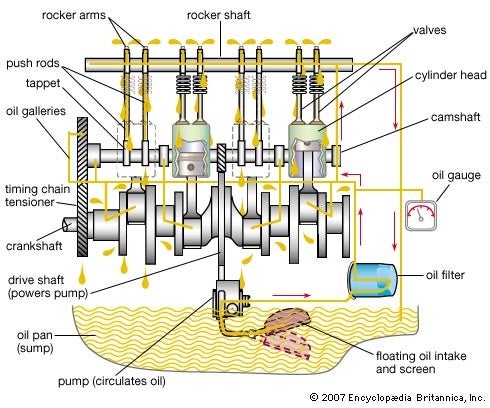
Screenshot of how oil flows through an engine Photo Credits: 2007 Encyclopedia Britanica, Inc.
An associate professor of Industrial and Production Engineering at the Federal University of Technology Akure (FUTA), Professor Olayinka Awopetu, said the Nigerians should ignore the claim adding that it is only possible when the oil has been tampered with.
“It is not possible because the temperature palm oil will burn is so low that when it gets to the engine, it is not oil that gets to the engine but powder and powder can not lubricate, so that can not work. Unless it is another palm oil that they have done to make it synthetic, but if it is the one used in cooking then it can’t work,” Professor Awopetu said.
Similarly, a professor of Mechanical Engineering at the Federal University of Technology Akure (FUTA), Professor Emmanuel Bello, said palm oil has different properties from engine oil thereby making it unsuitable as a lubricant for automobiles.
He said, “I doubt it can be successful – For emergencies, it can work but for long-term usage, it cannot work very well because palm oil has different properties from engine oil. For example, it contains water, it oxidizes easily, and at low temperatures, it will freeze and turn to solid, which cannot work in an engine. It is not suitable for use as an engine oil for motorcycles and vehicles.”
Professor Bello added that palm oil should only be used as a lubricant in cases of emergency but added that it is not suitable for continuous use as it could clog the flow of oil in the engine.
On his part, the Head of Department, Mechanical Engineering at the Federal University of Oye-Ekiti, Dr Bayode Olorunfemi said palm oil can be used to lubricate automobiles but advised against its use because concerned authorities have not regulated its usage adding that this could be disastrous in the long run.
THE VERDICT
The claim that palm oil can be used as a lubricant for vehicles and motorcycles is MISLEADING; as findings revealed that while it can be used in emergency cases, experts warn that the continuous usage of palm oil could clog the automobile engine.
A claim that the Human Papillomavirus (HPV) vaccine is dangerous for young girls and intended to depopulate Nigeria is making rounds both online and offline.
The claim which was contained in a video clip from the programme on YouTube has gone viral amongst individuals and various social media platforms. The viral clip from the 5-hour-long video began at 2:32:48.
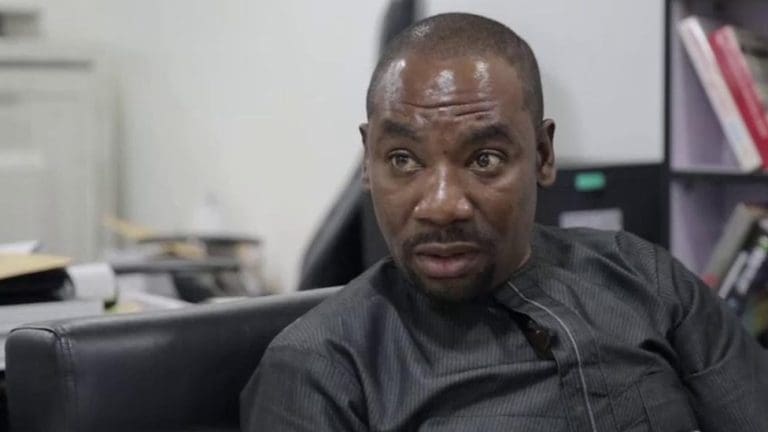
In the viral two-minute, 42-second footage, he was addressing his audience in pidgin English telling them not to allow their daughters to be vaccinated with the HPV vaccine.
…say make una sign, dem wan give cervical cancer vaccine to una daughters, make una no agree, America never get cure for cancer, China never get, UK never get, make una no forget wetin happen for Kano wey Pfizer kill many children. When the matter go court dem present document wey Parents sign… their defense be say na with the consent of the parents. Na Bill and Melinda Gate foundation na dem dey push this thing now…people wey talk say our population too much.
He stated that parents should not consent to let their daughters take the vaccine while referring to the incident in Kano where Pfizer was sued after some children died in a clinical trial when the state was hit by Africa’s worst ever meningitis epidemic in 1996.
He added that Bill and Melinda Gates Foundation were funding the vaccination and this is part of their plans to depopulate the country.
In October, the Nigerian government announced that it would vaccinate close to 8 million girls with the human papillomavirus (HPV) vaccine against the virus that causes nearly all cases of cervical cancer amongst women.
Cervical cancer, mostly caused by high-risk HPV infection through sexual contact, primarily affects the cervix and accounts for 99 per cent of cases.
According to WHO and UNICEF, there were 12,000 cases and 8,000 fatalities reported in 2020, making it the second most common cause of cancer-related mortality among women aged 15 to 44 in Nigeria.
CLAIM 1
HPV vaccine is harmful to young girls.
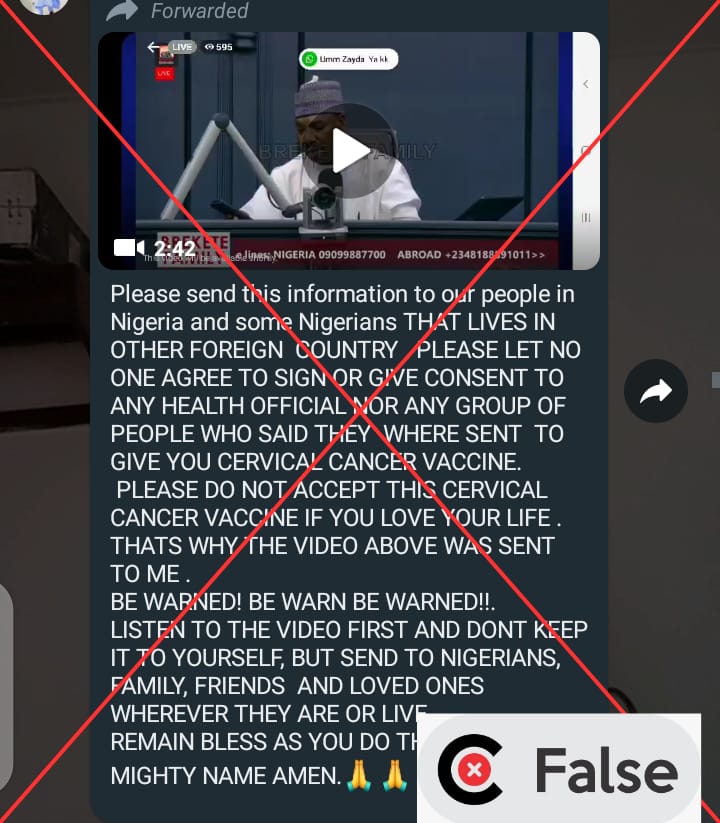
Screenshot of the viral video. INSERT: False verdict.
THE FINDINGS
Findings by The FactCheckHub show that the claim is FALSE.
A study by the United States Centre for Disease Control stated that the vaccine has been licensed by the Food and Drug Administration (FDA) and it is deemed safe and effective by the CDC.
According to the CDC, numerous studies involving hundreds of participants worldwide revealed there is no significant safety issues with the vaccination.
These studies’ moderate side effects included fever, dizziness, nausea, and pain where the shot was administered and as of March 2014, the United States had delivered more than 60 million doses of the HPV vaccination.
Zuliah Abdul-Azeez who specializes in Reproductive and Family Health at the Department of Health Promotion, University of Ilorin, Kwara state said the vaccine is safe and effective as there are over 160 studies demonstrating its safety.
“HPV vaccine is a product of scientific research that has been used for over 15 years in many developed and developing countries. Vaccinating a girl against cervical cancer with the HPV vaccine has been shown to be safe, effective and well tolerated, and one dose is protective against the cancer-causing HPV types,” she said.
The claim that the HPV vaccine is harmful to young girls is FALSE, as the vaccine has been endorsed by relevant Nigerian health authorities and is considered safe for administration.
CLAIM 2
The HPV vaccine is being sponsored by Bill and Melinda Gates Foundation to depopulate Nigeria.
THE FINDINGS
Findings by The FactCheckHub show that the claim is FALSE!
The World Health Organisation (WHO) alongside credible Nigerian media platforms such as The Cable and Premium Times reported that the vaccine is being provided for free by the Federal Ministry of Health through the NPHCDA with support from Gavi, the Vaccine Alliance, United Nations Children’s Fund (UNICEF) and WHO, among other partners.
THE VERDICT
The claim that the HPV vaccine is being sponsored by the Bill and Melinda Gates Foundation to depopulate Nigeria is FALSE, as it has the full backing of the Nigerian government through the Federal Ministry of Health.
ON November 15, 2023, the governorship candidate of the Labour Party in Lagos state during the 2023 general election, Gbadebo Rhodes-Vivour, claimed that the cost of buying Premium Motor Spirits also known as petrol has increased by 143% in Nigeria under President Bola Ahmed Tinubu-led Nigerian government.
Rhodes-Vivour made this claim while responding to an X user, @JohnKolawole20, who opined that the cost of living crisis is not peculiar to Nigeria but every part of the world.
“There is hike on everything in the world. In UK, we bought fuel for £1.38 now £1.52. 1kg chicken now £2.69 from £1.85. The world is going through one thing or the other. There was a protest in Germany, Italy and London for hikes,” Kolawole said.
“So you compare a 9.2% fuel increase in the UK to a 143% fuel increase in Nigeria. Then you ignore the social welfare net that exist for these people, the fact that these protesters have access to free, quality healthcare, Access to subsidized high-quality education, unemployment benefits. They have access to real student loans, not propaganda audio one , They have access to high paying jobs and an enabling environment to grow. They have a thriving, productive economy, and their currency is not in a nose dive. Stop comparing apples and bitterleaf.”
CLAIM
The cost of PMS increased by 143% in Nigeria under Tinubu government.
THE FINDINGS
Findings by The FactCheckHub show that the claim is MOSTLY TRUE.
The President had unequivocally declared that ‘fuel subsidy is gone’ in his inaugural speech at Eagle Square, in Abuja, on May 29, 2023, stating that the country could no longer sustain the subsidy regime due to drying financial resources.
The ICIRreported that the removal of the subsidy has led to a spike in the pump price of petrol, which also resulted in an increment in the cost of goods and services. The development has led to a surge in transport fares across the country, leaving commuters in great agony.
The move pushed the price of PMS from about N198/litre in May to the current rate of N617/litre. This represents a 211.6% increase higher than 143% quoted by Rhodes-Vivour. The increase has been attributed to the fall of naira coupled with the rise in crude oil prices which are all mounting pressure on the cost of PMS.
In addition, the NBS data obtained show that the average retail price paid by consumers for Premium Motor Spirit (Petrol) in May 2023 before Tinubu became the Nigerian president was N254.06. As of September, 2023 the average pump price stood at N626.21. This marks 146.481% increase, also higher than the figure quoted by Rhodes-Vivour.
THE VERDICT
The claim by Gbadebo Rhodes-Vivour that the price of PMS has increased by 143% is MOSTLY TRUE, as data obtained from the NBS show that the figure is slightly higher.
PETER Obi, the presidential candidate of Labour Party in the 2023 general election, has claimed that Nigeria’s debt profile rose from N12.6 trillion in 2015 to N87 trillion in 2023.
Obi made the claim while reacting to a statement by President Bola Ahmed Tinubu that his government inherited liabilities from his immediate predecessor, Muhammadu Buhari.
Reacting, Peter Obi, in a post on X, questioned why Tinubu failed to give details of the liabilities inherited from the previous government.
His words partly read: “Recall that the previous APC government made a similar claim in 2015 against the PDP administration that handed over to them without telling the nation what it actually inherited. Instead, they took our debt profile from N12.6 trillion in 2015 to N87 trillion in 2023 when they left office without improving on any indices of development: Education, Health, Poverty eradication, and Security.”
CLAIM
Nigeria’s debt profile rose from N12.6 trillion in 2015 to N87 trillion in 2023.
THE FINDINGS
Findings by The FactCheckHub show that the claim is TRUE.
To verify the claim, we used data from the Debt Management Office (DMO), the agency officially responsible for managing Nigeria’s debt.
Established on December 4, 2000, the Debt Management Office (DMO) of the Federal Government of Nigeria is responsible for managing and storing information regarding the country’s local and international debts.
Nigeria’s debt profile also known as total public debt is calculated by summing the total domestic and external debts of the federal government of Nigeria, the thirty-six states and the Federal Capital Territory.
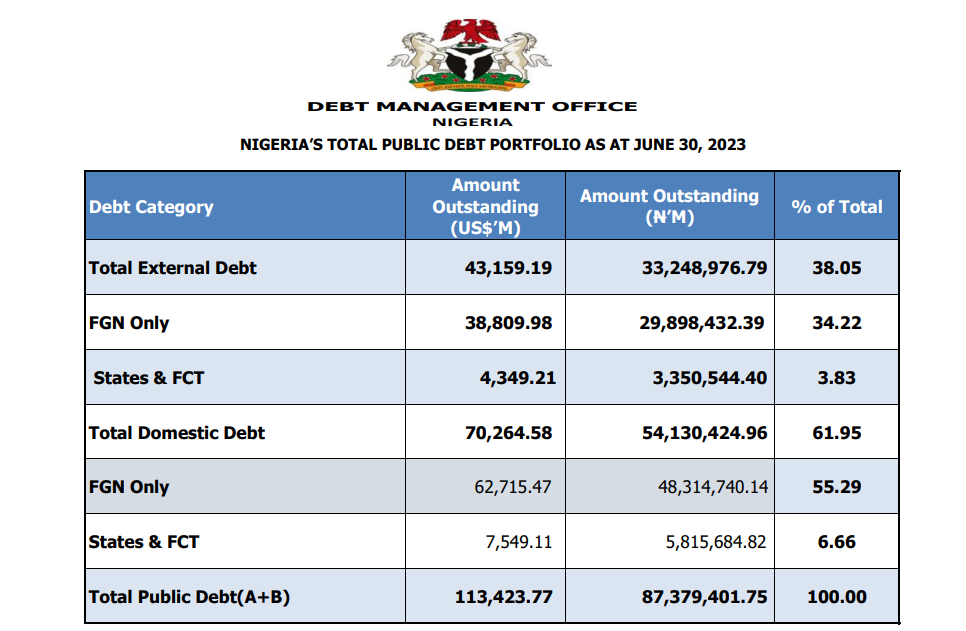
In its latest report, the debt office says Nigeria’s total debt stock as of June 30, 2023 stood at N87.38 trillion. The total domestic debt accounts for 61.95 per cent or N54.13 trillion and total external debt contributed N33.25 trillion representing 38.05 per cent.
Nigeria’s debt stock in 2023. Source: DMO
In 2015, DMO reported that the total public debt as of December 31, 2015, stood was N12.6 trillion. The external and domestic debt stock for federal government and external debt for states was N10.9 trillion while the domestic debt of states was N1.655 trillion.
Nigeria’s debt stock in 2015/ Source: DMO
Both figures correlate with the statistics quoted by Obi in the statement.
THE VERDICT
The claim by Peter Obi that Nigeria’s debt stock increased from N12.6 trillion in 2015 to N87.3 trillion is TRUE, as data from Nigeria’s Debt Management Office revealed.
SOME influential Nigerian politicians shared false information in the build-up, amid and after the just concluded off-cycle elections in Bayelsa, Imo, Kogi states held on November 11, 2023.
Though now concluded, the elections were allegedly marred by a lot of irregularities such as allegations of pre-filled election results and vote-buying among others.
In Imo state, the incumbent governor, Hope Uzodinma emerged as the winner of the gubernatorial election with 540,308 votes to defeat its major opponents – Samuel Anyanwu of the Peoples Democratic Party (PDP), who scored 71,503 votes, and Anthony Nnaji of the Labour Party (LP), who scored 64,081.
In Kogi state, the All Progressives Congress (APC) candidate, Usman Ododoemerged the winner having polled 446,237 votes to defeat the candidate of the Peoples Democratic Party (PDP), Dino Melaye, and his Social Democratic Party (SDP) counterpart, Murtala Ajaka, by a wide margin.
Douye Diri emerged winner in Bayelsa state where he polled 175,196 votes to defeat his closest opponent and candidate of the All Progressives Congress (APC), Timipre Sylva.
The spread of misinformation was a major turn-off that characterized the poll. There were also credibility concerns due to reported cases of vote-buying, pre-filled election results and cases of violence.
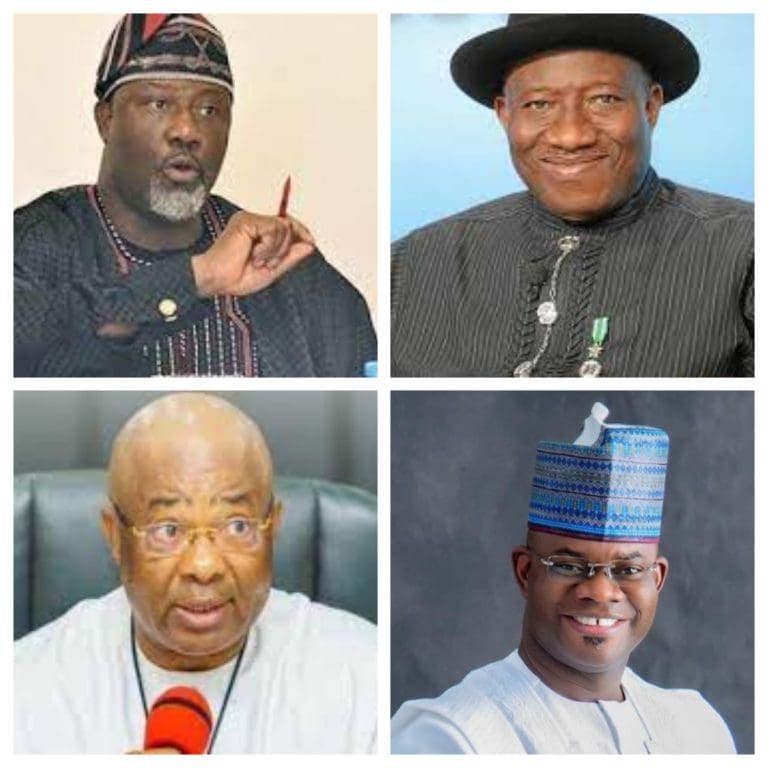
Nevertheless, observations by The FactCheckHub show that spin doctors and fake news purveyors took advantage of the poll to share false information to undermine the poll. Among them are notable political figures with strong influence.
In this analysis, we take a look at some of the key politicians who were caught sharing false information during the election.
1. Dino Melaye
The gubernatorial candidate of the People’s Democratic Party (PDP) in Kogi state, Dino Melaye was one of the major persons whose ox were gored. In the build-up to the Kogi state gubernatorial election, Melaye tweeted a press statement that the Labour Party and People’s Democratic Party have formed an alliance in Kogi and have resolved to adopt him as the candidate for both parties.
Dino Melaye.
“Today, I announce to you an alliance between the People Democratic Party (PDP) and the Dominant Group of Labour Party (LP) in Kogi State for the betterment of our state. After a wide consultation and in the interest of our dear State, the Labour Party on this day has resolved to adopt the PDP Gubernatorial Candidate, Senator Dino Melaye as its candidate for the November 11th Kogi State Governorship Election,” he wrote.
However, when contacted, the spokesperson of the Labour Party, Yinusa Tanko debunked the claim. He said he’s unaware of such an alliance and there’s also no such press release on the LP’s website or social media pages.
Dino also shared another claim again in the heat of the election which was found to be TRUE, according to election observers. Dino claimed in a video uploaded on his X (formerly Twitter) handle that INEC officials have filled result sheets ahead of voting, resulting in people’s refusal to vote in the Ogori-Magongo local govt area of Kogi state.
YIAGA Africa, a civil society organization committed to promoting democratic governance in Africa, raised alarm over pre-recorded election sheet in the governorship poll. The Election Observer group had raised alarm over pre-recorded election sheets in PU 004, Eni ward of Ogori/Magongo and PU 020, Eika/Ohizenyi of Okehi LGA of Kogi state, Kogi state before the commencement of voting in the areas.
Reacting to the alarm, the commission said it viewed the situation very seriously and would investigate the matter. No update was given by the agency till the results were announced.
2. Yahaya Bello
The outgoing governor of Kogi state, Yahaya Bello was among the political figures fact-checked by the Nigerian Fact-checkers’ Coalition (NFC). Speaking with journalists after casting his ballot, Bello claimed that the reports of electoral violence under his leadership are untrue.
Yahaya Bello.
“You will discover that the regime of Governor Yahaya Bello’s conduct of elections has been the most free, fair, credible, and violence-free elections. So the issue of violence in our election in Kogi State is a media creation,” Bello stated.
Findings show that several cases of electoral violence were recorded under Bello’s leadership. The Centre for Democracy and Development, in its 2019 post-election document after an off-cycle poll conducted in Kogi, reported ten deaths and 79 cases of violence and election malpractices across the 21 LGAs in the state.
Similarly, Nextier Violent Conflict Database in its report titled “Nigeria’s 2023 State Elections: Mirroring Hotspot States“, listed Kogi as one of the states with a propensity for electoral violence based on historical evidence and the existing security situation.
After the general elections in March 2023, 100 INEC staff and an ad hoc official were abducted on March 19, 2023 on their way to the Constituency Collation Centre in Lokoja from Kupa North area of Kogi state.
On June 3, 2023, the governorship candidate of the Social Democratic Party (SDP) in Kogi State, Muritala Ajaka, escaped assassination by the whiskers after his convoy was attacked by gunmen. In July 2023, the same candidate’s campaign office was attacked twice, destroying billboards showing the picture of President Bola Tinubu alongside the governorship candidate.
3. Goodluck Jonathan
Former Nigerian president, Goodluck Jonathan, also shared misleading claim during the election. After casting his vote in Bayelsa state, Jonathan claimed that seven Nigerian states hold off-cycle elections.
Off-cycle elections are elections conducted outside the general election cycle (marked by a quadrennial presidential election). Since Nigeria returned to democracy in 1999, general elections have been every four years since then. But, for differing reasons, courts have overturned or changed some election results, which has affected the elected official’s specified tenure.
File photo: Former Nigerian President, Goodluck Jonathan
In Nigeria at the moment, all off-cycle elections are gubernatorial elections, particularly when connected to contests overseen by the Independent National Electoral Commission (INEC). According to Section 180 (2) of the Nigerian Constitution, a governor must leave office four years after taking the oath of office for the first time.
Since the governor would have been sworn in on the previously scheduled date, the term usually continues, especially in situations when the governor is already in office and wins in a tribunal or court.
This, however, alters if the court’s ruling results in the election of a new governor, particularly if the new governor is a member of a different political party than the ousted governor. As a result, this leads to a new swearing-in date to ensure that the term does not exceed or fall short of the four-year term specified in the constitution.
Contrary to Jonathan’s claim, there are currently eight off-cycle governorship elections in Nigeria. The trend started when Peter Obi, of the All Progressives Grand Alliance (APGA) then, was inaugurated as governor of Anambra state in 2006. Before that, Obi had challenged the results of the 2003 general elections, which had supported Chris Ngige, then of the People’s Democratic Party (PDP). Since then, the state has held elections every other year, with the next one scheduled for 2026.
The 2007 election outcomes caused the most disruption to the off-cycle governorship elections, as multiple outcomes were reversed by the courts. In Bayelsa and Kogi, the governors were temporarily replaced by the speakers of the house, before returning in elections held later in the year. Also following the 2007 elections in Edo, Ondo, Ekiti and Osun, where the winning candidates were from different parties and started their terms after the relevant ruling.
The Supreme Court’s declaration of a different candidate as the winner of the 2019 Imo governorship election following months after the election caused the most recent disruption to this cycle.
4. Hope Uzodinma
The Governor of Imo State, Hope Uzodinma of Imo State said when he came to office in 2020, Imo state had an internally generated revenue profile of less than N500 million. He stated this during a special interview held with TVC News on November 9, 2023.
Hope Uzodinma.
According to the National Bureau of Statistics (NBS), Imo state’s internally generated revenue in 2019 was N16.095 billion, an average of N1.34 billion monthly. Between October and December 2019, the state generated N2.99 billion, an average of N996.67 million. It generated N3.08 billion from January to March 2020, an average of N1.03 billion monthly. These are less than the amounts quoted by Uzodinma during the interview with the Television channel.
* This analysis was based on the fact-checks published by the Nigerian Fact-checkers’ Coalition (NFC) during the off-cycle governorship elections in Bayelsa, Imo and Kogi states held on November 11, 2023. The full list of fact-checks can be read here, here and here.













 In the clip, a woman can be heard advising people to use palm oil as a lubricant for their vehicles and motorcycles. She however asked those using Benz not to use palm oil as it would only be suitable for Toyota cars and motorcycles. Viewers were also charged to share the video with others.
 According to research in the