Home Blog Page 10

No, photo does not show Malami’s recent Umrah trip amid probe

0

AN image circulating on social media claims that the embattled former Attorney General of the Federation, Abubakar Malami, travelled to Saudi Arabia for Umrah and would spend the rest of Ramadan amid his ongoing trial.

The claim was made, accompanied by a photo showing Malami seated on an aircraft with a woman believed to be his wife.

The post surfaced amid ongoing public discussions about Malami’s legal troubles.

A verified x user, @NuhuSada0 shared on February 23 2026, with the caption:

“Breaking: Haters: Abubakar Malami SAN Travels to Saudi Arabia for Umrah Nothing, Not Even the 001, Can Stop Him! He Will Spend the Rest of Ramadan There…. See More”

As of February 23, the post has generated over 140,000 views, 750 likes, and 53 reposts.

READ: Old report on female kidnapper’s arrest resurfaces online

CLAIM

Post claims that Abubakar Malami recently travelled to Saudi Arabia for Umrah and will spend the rest of Ramadan there.

screenshot of the viral post on x

FINDINGS

Findings by The FactCheckHub show that the claim is MISLEADING.

The Economic and Financial Crimes Commission is prosecuting the former AGF on a 16-count charge bordering on money laundering.

The anti-graft agency had, in December 2025, said it traced properties worth N212 billion to Malami as part of an investigation into his tenure in office.

The assets, reportedly including hotels, residential buildings, schools, land and a printing press, are located in Kebbi, Kano and the Federal Capital Territory (FCT).

A reverse image search conducted by The FactCheckHub traced the circulating photo to a post made on Instagram by the user @fatimamalamiwomensupport on May 24, 2024, congratulating Malami and his wife as they departed for Hajj.

This indicates that the image predates his subsequent legal issues.

READ ALSO: Malami joins Nigerians to defy ban, access Twitter using VPN

Punch reported on January 19 that the ex-AGF was re-arrested by operatives of the Department of State Services immediately after being released on bail from the Kuje Correctional Centre, Abuja, where he had been remanded.

There is no credible evidence showing that he recently travelled to Saudi Arabia for Umrah or that the image reflects a current trip. The photo being circulated is from May 2024 and relates to a Hajj pilgrimage, not a Ramadan Umrah trip in 2026.

VERDICT

The claim that Abubakar Malami recently travelled to Saudi Arabia for Umrah and will spend the rest of Ramadan there is MISLEADING. The image used was first posted in May 2024 and it predates his reported arrest and remand at Kuje Correctional Centre. There is no evidence that he is currently in Saudi Arabia.

Will Nigeria replace Naira with Eco currency in 2027?

0

A viral claim circulating widely on WhatsApp, TikTok and other social media platforms suggests that Nigeria will abolish the naira and replace it with a regional currency called the “Eco” in 2027. 

According to the claim, this change is imminent and will coincide with Nigeria’s 2027 general elections. The claim has generated anxiety, debate and confusion among Nigerians.

But is there any truth to this claim? The short answer is no, at least not in the way it is being presented online. There is a grain of truth behind the broader topic, because West African countries have for decades discussed a regional currency named the Eco.

To understand why this claim is misleading and what the real story is about the Eco, we need to unpack the facts.

What is Eco currency?

The Eco (short for the Economic Community of West African States single currency) is a proposed common currency that West African countries plan to adopt in place of separate national currencies.

It is being developed by the ECOWAS to make trade and business easier among its member countries. The idea is that if countries like Nigeria, Ghana, Senegal, and others use the same currency, it would reduce exchange rate problems, lower transaction costs, and strengthen economic cooperation in the region.

The idea of a single regional currency in West Africa, originally called the “Eco”, has been around for decades. It stems from a long-standing policy goal of ECOWAS to foster deeper economic integration among its 16 member states, including Nigeria, Ghana, Senegal, Togo, Sierra Leone and others.

A common currency is intended to make trade easier, reduce transaction costs, enhance monetary stability and strengthen the economic ties across the region.

To accelerate the regional integration, on April 20, 2000, the Heads of State of five West African countries (Gambia, Ghana, Guinea, Nigeria and Sierra Leone), decided to establish the West African Monetary Zone (WAMZ) in Accra by signing the ‘Accra Declaration’ which defined the objectives of the Zone as well as, an action plan and institutional arrangements.

It is planned to merge this zone with the West African Economic and Monetary Union (WAEMU) to form a single monetary zone in West Africa. The eight (8) French-speaking members of WAEMU are using the CFA franc since 1945.

In the early 2000s, leaders of the bloc proposed monetary union as a step toward these goals. Over the years, various plans, frameworks and convergence criteria were agreed upon to guide the process.

Part of that plan included meeting specific economic conditions, such as low inflation, controlled fiscal deficits and stable foreign reserve positions, collectively known as convergence criteria. These are designed to ensure that nations joining a single currency have sufficiently aligned economic fundamentals.

The West African single currency was initially planned to be launched in January 2003. However, this was postponed several times, to 2005, 2010, 2014 and now 2027 due to Member States’ inability to maintain a single digit inflation rate at the end of each year; a fiscal deficit of no more than 4% of the GDP; a central bank deficit-financing of no more than 10% of the previous year’s tax revenues and a gross external reserves that can give import cover for a minimum of three months as the four primary criteria for the single currency to be implemented.

At the 11th ECOWAS Convergence Council in Abuja in March 2025, Wale Edun, Nigeria’s finance minister and coordinating minister of the economy, emphasised the need for monetary and fiscal discipline, citing security challenges, inflation, and global economic disruptions as hurdles to the region’s monetary convergence.

“This is our opportunity to shape the future of our region. We must work together to drive economic stability, growth, and prosperity,” Edun stated.

According to him, the successful implementation of the Eco currency will not only enhance regional integration but also position West Africa as a major global economic player, driving growth and innovation for generations to come.

However, it is important to note that this timeline was always conditional, not automatic. It depends on countries meeting economic criteria and finalising operational frameworks such as how the currency would be governed, managed and introduced without causing financial disruption.

These conditions have proven difficult to meet consistently, and they remain a key part of the discussion.

Misconceptions in the viral claim

Despite the 2027 timeline mentioned in some official plans, none of the following is true:

1. Nigeria will not automatically abolish the naira in 2027

There is no official statement from the CBN, the Federal Government or ECOWAS declaring that the naira will cease to be legal tender in 2027. The claim circulating online misrepresents the status of the Eco project.

READ : Viral video does not show bundles of naira notes in warehouse

2. Nigeria’s adoption of the Eco is not guaranteed

Even if the Eco were introduced, Nigeria, like other member countries, would have to meet defined convergence criteria and voluntarily agree to join the monetary union as part of the larger ECOWAS framework. Adoption would not be automatic or unilateral.

3. The 2027 target date is a goal, not a legal deadline

While ECOWAS leaders reaffirmed a push to have the Eco introduced in 2027, this is a target date tied to long-term monetary planning and has been delayed in the past. Previous launch timelines for the Eco were postponed because member states failed to achieve the convergence benchmarks required for a smooth rollout.

For instance, the proposed Eco currency has had multiple launch dates since the early 2000s, 2003, 2005, 2009, 2015, 2020, and all were postponed due to failure to meet economic convergence criteria and policy disagreements. It is now tentatively targeted for 2027.

4. No official communication confirms the immediate end of the naira

Neither the presidency nor the Central Bank of Nigeria has released a policy statement indicating that the naira will be replaced by any single currency in 2027. The viral claims have no basis in official announcements or legally binding policy documents.

In essence, the viral claim takes an ongoing regional economic integration plan and reframes it as an imminent national policy, which it is not.

What the Eco plan really means and what it doesn’t

1.It’s still a project, not a switch-over date

The plan for a single currency has been evolving for years and requires extensive policy alignment among ECOWAS members. Recent meetings of finance ministers and central bank governors, including those involving Nigeria, reaffirmed the intention to continue working toward the Eco’s introduction by 2027. These discussions emphasise macroeconomic reforms, fiscal discipline and institutional preparation, not abrupt currency replacement.

2.It depends on meeting economic benchmarks

Before any common currency can be launched sustainably, countries must meet agreed convergence criteria covering inflation, fiscal deficits, external reserves and other economic indicators. Progress has been uneven across the region, with some countries lagging. Achieving these benchmarks is considered essential to avoid destabilising any potential unified currency system.

For context, Wale Edun clarified that to launch the Eco currency, each ECOWAS Member State must meet specific convergence criteria (four primary and six secondary) as set by the West African Monetary Institute (WAMI), some decades ago.

The primary criteria include a single-digit inflation rate at the end of each year; a budget deficit of not more than 4% of GDP; Central bank deficit-financing limited to 10% of the previous year’s tax revenues; and Gross external reserves sufficient to cover at least three months of imports.

The Secondary Criteria are, prohibition of new domestic debt arrears and liquidation of existing ones; tax revenue equal to or greater than 20% of GDP; wage bill to tax revenue ratio of 35% or less; public investment financed from internal resources equal to or greater than 20% of tax revenue; a positive real interest rate; and a stable real exchange rate.

According to WAMI, meeting these criteria is essential for achieving macroeconomic stability and facilitating the successful adoption of the single currency.

3.It would require institutional frameworks

A shared currency requires governance structures, for example, a regional central bank or monetary authority to manage policy and stabilise the currency. None of these institutional arrangements is fully in place yet, and they require careful negotiation and legal groundwork.

4.Its introduction, if it happens, would be phased

Even discussions around the Eco acknowledge that rollout might happen in phases, such as first among a subgroup of countries forming a West African Monetary Zone (WAMZ). The process would not be a single event on one date, but a gradual integration requiring coordinated implementation efforts.

READ ALSO : Dangote refinery no dey sell fuel for Naija markets for dollars

5.Participation may be voluntary

Not all ECOWAS members have historically fully embraced the Eco plan at the same pace. In 2020, Nigeria and several other countries even objected to unilateral actions around the currency before a comprehensive roadmap was agreed.

What this means for the Naira

For now, the naira remains Nigeria’s official currency and legal tender. The CBN continues to manage monetary policy, issue banknotes and regulate the financial system under the existing framework. There is no policy directive from the CBN or the Federal Government indicating an imminent replacement of the naira.

Economic discussions around the Eco are part of a long-term regional integration goal, not an immediate threat to the naira’s existence in 2027.

#FCTDECIDES2026 : QUICK media & information literacy for FCT area council elections 2026

0

Topic 2 : 5 Steps to Protect Your Vote After Casting It

Voting is just the beginning. In the FCT Area Council elections, your participation doesn’t end once you drop your ballot. Staying engaged after voting helps ensure transparency, protects your vote, and strengthens democracy.

Here are five things every voter should do after casting their vote:

1. Monitor the Election at Your Polling Unit
After voting, stay around your polling unit and observe activities peacefully. Monitoring the process ensures that votes are handled correctly and protects the integrity of the election.

2. Verify the Ballot Box and Materials
Check that the ballot box is properly sealed and that all election materials are accounted for. Ensuring these safeguards are in place prevents tampering and strengthens the credibility of the election in your polling unit.

3. Wait for Results Collation
Observe how votes are counted and collated at the polling unit. Tracking the results helps ensure transparency and allows you to verify that your vote is properly recorded. You can also take note of the official results sheet (Form EC8A) for reference.

4. Report Irregularities Immediately
If you notice ballot mishandling, intimidation, or procedural violations, report them promptly to security officials, accredited election observers, or trusted media outlets. Quick reporting helps protect your vote and prevent fraud.

5. Engage and Stay Updated After the Election
Even after the winner is announced, your civic role continues. Follow official announcements, track complaints, and support accountability measures in your Area Council. Active citizens help build a culture of transparency and ensure that democracy is strengthened.


Topic 1 : How to Locate Your Polling Unit in the FCT Using INEC’s Polling Unit Locator

As voting begins in the FCT, some residents say they are struggling to locate their polling units. To avoid last-minute confusion and delays, here’s a quick step-by-step guide to finding your polling unit using the INEC Polling Unit Locator:

Step 1: Go to the official INEC Polling Unit Locator website via : https://pollingunitlocator.inecnigeria.org/

Step 2: Select Your State e.g FCT

Step 3: Select Your Local Government Area (LGA) known as Area Council e.g., Municipal, Bwari, Gwagwalada, etc.

Step 4: Select Your Registration Area (Ward)

Step 5: Scroll to find and select your specific polling unit.

Step 6: Click the green “Get Directions” button to see the approximate location and map directions.

LIVE-CHECK: FCT 2026 area council elections

0

THE FCT Area Council Elections kick off Saturday morning as voters across the Federal Capital Territory cast their ballots to elect chairpersons and councillors in their respective Area Councils.

Our team of journalists, researchers, fact-checkers, social media monitors, editors, and OSINT experts are on ground working to debunk election-related misinformation and disinformation aimed at suppressing voter turnout, inciting violence, or influencing the outcome of the polls.

Do you have an election-related claim you want us to fact-check?

Share it with the FactCheckHub via WhatsApp here.

This page will be updated continuously with verified fact-checks and Media Literacy Articles. Kindly scroll down to read the latest updates :

CLAIM 2

An X user, @ADCVanguard_,posted two letters alleging that the PDP and APC chairmanship candidates for Gwagwalada Area Council in the 2026 FCT Area Council Elections have withdrawn from the race.

FINDINGS

A reporter with The ICIR covering Gwagwalada Area Council, Nanji Nandang, confirmed that the chairmanship candidates of both parties are still in the race. Further analysis by FactCheckHub shows that the two letters contain nearly identical wording and structure, indicating they were fabricated.

VERDICT:
INCORRECT

Sources:
ICIR reporter; FactCheckHub analysis

CLAIM 1

A Facebook user, Porthacourt Force, shared a video claiming that the Minister of the Federal Capital Territory, Nyesom Wike, is feeding people ahead of the 2026 FCT Area Council elections.

FINDINGS

The FactCheckHub subjected keyframes in the video to Google Reverse Image search and the result shows that it has been online since 2023. It originally documented former Senate President, Senator Bukola Saraki, visiting the Minister at his Abuja residence in October 2023. The video is unrelated to the ongoing FCT elections.

VERDICT: MISLEADING

SOURCES: The Cable, Daily Trust
DATE: 21/02/2026


No, Seyi Tinubu did not rebrand stolen COVID-19 palliative packages

0

A verified X user, @RealQueenBee__, has claimed that food items distributed under Seyi Tinubu’s humanitarian outreach were originally COVID-19 Emergency Food Relief from the “Mandella Foundation,” allegedly stolen and withheld since 2019.

She made the claim on February 18, 2026, suggesting that the relief materials, which recently resurfaced as part of Seyi Tinubu’s Ramadan humanitarian efforts, were diverted while many Nigerians suffered hunger.

The post appeared to reference an earlier post by @abdullahayofel, an All Progressives Congress (APC) supporter, who had shared images of what was presented as Seyi Tinubu’s recent Ramadan food relief distribution through the Noella Foundation.

She quoted the post with the caption:

Was this not COVID-19 Emergency Food Relief from The Mandella Foundation meant for the people?

They stole it since 2019 and many people died due to hunger. Now it has become Seyi Tinubu Humanitarian efforts. Shame on you!

These people are very wicked.”


As of February 19, the post had generated over 135,000 views, 2,650 likes, and 1,584 reposts.

READ: Old video of people jostling for food resurfaces online

CLAIM

Seyi Tinubu’s humanitarian outreach packages were originally COVID-19 Emergency Food Relief from the Mandella Foundation, allegedly stolen since 2019 and recently rebranded.

screenshot of the viral post

FINDINGS

Findings by The FactCheckHub show that the claim is FALSE.

A reverse image search traced the circulating photos to an original post made by Seyi Tinubu in 2020 on his verified Instagram page during the COVID-19 lockdown.

The food boxes in the images are clearly labelled “Emergency Food Box – Noella Foundation,” not “Mandella Foundation” as claimed in the viral post.

Further checks show that similar images first appeared on April 11, 2020, during a COVID-19 relief effort organised in partnership with the Noella Foundation and supported by public figures including Olamide Adedeji, popularly known as Olamide Badoo and Adedamola Adefolahan, also known as Fireboy DML.

The exact images currently circulating were first posted on April 25, 2020, on Seyi Tinubu’s verified Instagram page as part of COVID-19 and Ramadan relief distribution efforts aimed at easing hardship during the lockdown period.

READ ALSO: Old video falsely presented as Tinubu’s 2026 new year address

There is no evidence that the items were withheld since 2019, stolen, or recently rebranded. The claim appears to have stemmed from a misidentification of the foundation’s name.


VERDICT

The claim that Seyi Tinubu rebranded stolen COVID-19 relief food from the Mandela Foundation is FALSE. The images originated from a 2020 COVID-19 and Ramadan relief initiative by the Noella Foundation and were originally shared by Seyi Tinubu in 2020.


Viral video of Adamu Garba removing APC flag is from 2022, not recent

0

A video circulating on social media claims to show a chieftain of the All Progressives Congress (APC), Adamu Garba, removing the party’s flag from his office, suggesting he recently left the ruling party.

The clip shows Garba taking down an APC flag mounted inside an office space.

An X user, BUCOS, shared the video with a caption suggesting that the footage was recent and that the former presidential aspirant had dumped the All Progressives Congress.

“BREAKING!!! ONE OF THE ARDENT SUPPORTERS OF APC, ADAMU GARBA JUST DUMPED THE PARTY.. He removed APC flag from his office and bid them farewell. According to him, the party under Tinubu has derailed and no longer doing what the people want. More to follow!!!”

READ: Adamu Garba shares doctored image of Peter Obi with alcoholic drink

As of February 18, 2026, the post had generated over 300 reposts and more than 1000 likes, with users speculating about possible political defections ahead of the 2027 general elections.

 CLAIM

The video shows Adamu Garba recently removing the APC flag from his office to signal his exit from the party.

screenshot of the viral post

THE FINDINGS

Findings by The FactCheckHub show that the claim is MISLEADING.

The video resurfaced amid heightened political activity and speculation about defections ahead of the 2027 elections. With politicians repositioning and parties strategising, old political content can easily be recirculated to fit new narratives.

A keyword search conducted by The FactCheckHub traced the video to May 2022. At the time, Garba announced that he would not purchase the APC presidential nomination form for the 2023 election, which was priced at N100 million.

Following that decision, he publicly criticised the party, stating that it had “lost its moral bearings,” and briefly distanced himself from it.

However, records show that he rejoined the APC in July 2022, explaining that he believed supporting the party’s presidential ticket was in Nigeria’s best interest. A video, posted in July 2022, later showed him putting the flag back in his office.

READ ALSO : From economic protests to coup agitation: How Nigeria’s hunger march took a radical turn

In reaction to the recent circulation of the clip, Garba described claims that the video is recent as “FAKE NEWS.”

“These bot-trons want to drag me back on this street with their mercantile Fake News. I’m still very much a full member of the APC. Please allow me to write my books and do my business in peace,” he added.

VERDICT

The claim that the video shows Adamu Garba recently removing the APC flag from his office is MISLEADING. The footage dates back to May 2022 and is being recirculated out of context.

AI-generated image surfaces online as muslims arrested for eating during Ramadan in Kano

0

A viral picture circulating on social media claims that nine Muslims were arrested in Kano State, northern Nigeria, after being caught eating during Ramadan fasting hours by the Islamic police, known as Hisbah.

The image was shared by the facebook page The People’s News Africa with the caption:

9 Arrested in Nigeria 🇳🇬 for Eating. 

Nine Muslims have been arrested in Kano State, northern Nigeria, after being caught eating during the Ramadan fasting hours. The arrests were made by the Islamic police known as Hisbah during routine patrols in restaurants, markets and public areas”.

As of February 20, 2026, the post has garnered over 500 likes, 515 comments, and 70 shares, with some commenters asking the law behind such arrest.

READ: 12 AI tools to use in 2026 to work smarter, sell faster, compete globally

Claim

The post claims that the Hisbah police arrested nine individuals in Kano for eating during Ramadan fasting hours.

screenshot of the viral post on facebook

Findings

Findings by The FactCheckHub show that the claim is MISLEADING.

The post coincides with the current 2026 Ramadan fast, which is ongoing as of February 20. While there have been historical and recent reports of Hisbah arresting 9 Muslims in Kano, enforcing fasting regulations in northern Nigeria, the specific image being circulated as proof of this arrest is a digital fabrication. BBC reported that seven males and two females were arrested by Hisbah police a day ago for eating after feigning ignorance that Ramadan has begun, while the two events might have occured in the same state, one revealed the actual incident and the other is a fabricated story  of the incident using AI.

READ ALSO: Viral video of American soldiers eating Egusi soup in Nigeria is AI generated

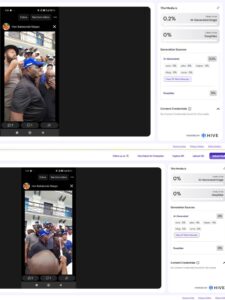
Further checks show that the image, when subjected to analysis using the specialized AI detection tool Hivemoderation, returned a high probability score of 97.8%. This result confirms that the image is a product of Artificial Intelligence rather than a real-life photograph.

AI detection tool result

Visual anomalies within the picture further give away its synthetic nature. A close inspection reveals that several of the seated men share the exact same facial features, expressions, and posture, which is a common error in AI-generated imagery. Additionally, the uniforms of the officers in the background contain distorted insignias.

Verdict

The claim that the viral picture shows nine Muslims recently arrested in Kano for eating during Ramadan is MISLEADING. The image is an AI-generated fabrication of BBC News reported a day ago.

Viral video of American soldiers eating Egusi soup in Nigeria is AI generated

0

A viral video circulating on social media claims to show American soldiers currently stationed in Nigeria enjoying a meal of Egusi soup and fufu.


The clip shows men in the U.S. Army uniforms sitting at a table while a woman serves them the popular Nigerian delicacy.


A verified X user @DrCroc28 shared the clip with that caption:


American Soldiers currently in Nigeria enjoying éggussi soup.”


As of February 19,2026, the post has generated over 211,000 views, 3020 likes and 821 reposts.

READ: Video claiming Dubai launched AI salon is AI generated

CLAIM

The post claims that the U.S. Army is enjoying themselves by eating one of the popular delicacies in Nigeria.

screenshot of the viral post

FINDINGS

Findings by The FactCheckHub show that the claim is FALSE.


A reverse image search traced the circulating video to the original source of the clip, which bears a watermark for the TikTok account @naked_ghost_ai. A review of this account shows a consistent pattern of posting AI-generated content. The “AI” suffix in the username itself serves as a disclosure that the content is digitally manipulated.

READ ALSO: AI Chatbots struggle to detect AI-generated videos – Report

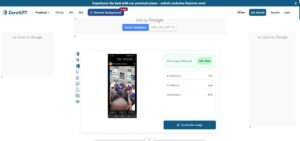
Further checks show that screenshots from the video, when analyzed using the specialized AI detection tool Illuminarty, returned a high probability score of 90.2%. The result confirms that the footage is a product of Artificial Intelligence rather than a real-life occurrence.

screenshot of the AI detector result

Visual anomalies common in AI generation are also present, including distorted facial features of the soldiers, blurred textures on the military uniforms, and inconsistent hand movements while interacting with the food.

The AI generated video is gaining traction following an NBC News report on February 16 which stated that about 100 U.S. troops, along with equipment, arrived in Nigeria to help train soldiers as the government fights against Islamic militants and other armed groups, according to a Nigerian military announcement on Monday


VERDICT

The claim that the video shows American soldiers currently in Nigeria eating Egusi soup is FALSE. The video is an AI-generated fabrication and does not depict real-life occurrences.

FCT elections: Key responsibilities of Area Council chairpersons

AS residents of Nigeria’s capital prepare for the next Area Council elections in the Federal Capital Territory (FCT), there is growing public interest in what elected chairpersons at the grassroots level are exactly responsible for.

Local government elections, known as Area Council elections in the FCT, are conducted under the supervision of the Independent National Electoral Commission and play a crucial role in shaping everyday life in communities across the territory.

While national politics often dominates public attention, decisions taken at the area council level directly affect roads, markets, schools, healthcare centres, sanitation, and local services that citizens interact with daily.

Many residents, however, mistakenly blame the federal government or the FCT Administration for problems that legally fall under the authority of area council chairmen. This confusion has weakened accountability over the years, allowing service delivery failures to persist without consequences.

Area councils were created to bring governance closer to the people — ensuring that local needs are addressed faster and more efficiently than higher levels of government could manage. When properly run, they serve as the foundation of development, public health, education, and community welfare.

In the FCT, there are six area councils: Abuja Municipal Area Council, Bwari Area Council, Gwagwalada Area Council, Kuje Area Council, Kwali Area Council and Abaji Area Council. Each is headed by a chairman elected to manage local affairs and oversee community-level development.

This explainer outlines the core duties of area council chairpersons as provided in the 1999 constitution:

1. Construction and maintenance of local roads and drainage

Area councils are directly responsible for building and maintaining community roads, streets, street lighting, drains, parks and public open spaces. 

When inner roads are damaged, flooded, poorly lit or abandoned, it is primarily the duty of the area council leadership to intervene. 

  1. Management of primary and adult education

Local governments participate in the provision and maintenance of primary schools, adult literacy centres and vocational education facilities. This includes school infrastructure, basic learning environments and community education programmes. Poor classrooms, collapsed buildings and neglected schools reflect a failure of grassroots governance.

3. Primary healthcare services

Area councils are tasked with maintaining health centres, dispensaries, maternity clinics and preventive health services in their communities. When clinics lack basic equipment, sanitation or staff support, responsibility largely lies at the local government level.

4. Environmental sanitation and refuse disposal

Waste collection, sewage management, gutter clearing and sanitary inspections fall within the area councils’ authority. Persistent refuse heaps, blocked drainage systems and unhealthy neighbourhood conditions signal breakdowns in local administration.

5. Regulation and development of markets, motor parks and public conveniences

Area councils establish, manage and regulate markets, slaughter slabs, motor parks and public toilets. These spaces are both economic centres and revenue sources. Their cleanliness, safety, orderliness and maintenance are direct reflections of council performance.

6. Registration of births, deaths and marriages

Local governments are legally responsible for registering vital events within their jurisdictions. Proper documentation helps in population planning, school enrolment, inheritance matters and access to government services.

7. Community development projects and social welfare

Area councils are expected to provide community centres, recreational parks, public libraries, water supply in rural and semi-urban areas, and support homes for the destitute, infirm and orphans. These services improve the quality of life and social stability.

8. Support for agriculture and natural resources development

Local governments participate in agricultural extension services, veterinary clinics and rural development programmes aimed at boosting food production and livelihoods, excluding mineral exploitation, which remains outside their control.

9. Regulation of shops, food outlets, advertising and local businesses

Area councils license and regulate kiosks, bakeries, restaurants, laundries, outdoor advertising, liquor sales and other small businesses to ensure public safety, hygiene and order in communities.

10. Town planning and building control

They help regulate buildings, name streets, number houses, and support local planning efforts to prevent disorderly development and unsafe structures.

11. Collection and management of local revenues

Area councils collect property rates, market levies, motor park fees, parking charges and other local taxes. These funds are meant to be reinvested into infrastructure, sanitation, health services and community projects. Poor development despite steady revenue collection is a major accountability issue.

12. Public safety support and basic emergency services

Local governments participate in fire services, environmental protection, traffic and community safety efforts in collaboration with higher authorities, helping maintain peace and respond to local emergencies.


Old video of people lining up for bread in Lagos resurfaces online

0

A video circulating on social media purports to show residents of Lagos State receiving a loaf of bread each amid worsening economic hardship in Nigeria.

The footage captures a crowd gathered around a truck, stretching out their hands to collect bread, while armed security personnel stand by to maintain order during the distribution. The video has been shared alongside claims linking the scene to the administration of the APC and President Bola Ahmed Tinubu.

A verified X user @Omoluabi1sq, shared the video on February 11, 2026 with the caption:

”Nigerians lining up in Lagos State to collect one loaf of bread as economic hardship worsens.”

READ: Old video of people jostling for food resurfaces online

As of February 12, the post has generated over 133,000 views, 457 likes, 420 reposts and hundreds of comments.

CLAIM

Video shows residents of Lagos State lining up recently to collect one loaf of bread as economic hardship worsens.


screenshot of the viral post

FINDINGS

Findings by The FactCheckHub show that the claim is MISLEADING.

READ ALSO: Old video of Fubara saying Rivers assembly members do not exist resurfaces online 

The claim surfaced amid the continued economic situation in Nigeria, with rising food prices and government interventions through periodic distribution of relief materials. These initiatives have often attracted large crowds, making such videos easily believable when shared out of context.

A reverse image search conducted on keyframes from the viral clip shows that the video is not recent. The earliest version obtained by FactCheckHub was originally published online by the Instagram account, tiwalayoofficial, on October 3, 2024, by multiple sources (here, here and here).

Further review of the clip indicates that the bread distribution took place as part of activities marking Nigeria’s Independence Day celebration (October 1).

There is no credible evidence showing that the video was recorded in February 2026 or that it was directly linked to a sudden economic crisis occurring recently, as implied by the recent post.

VERDICT

The claim that the video shows a recent bread distribution in Lagos is MISLEADING. The footage was originally published on October 3, 2024.